

Every EV ranked, from worst to best
156 cars appraised by CAR ‘s expert road testers: the most exciting, the most disappointing, the fastest, the weirdest, and the ones that can convert even the most die-hard petrolhead

156 Citroën Ami
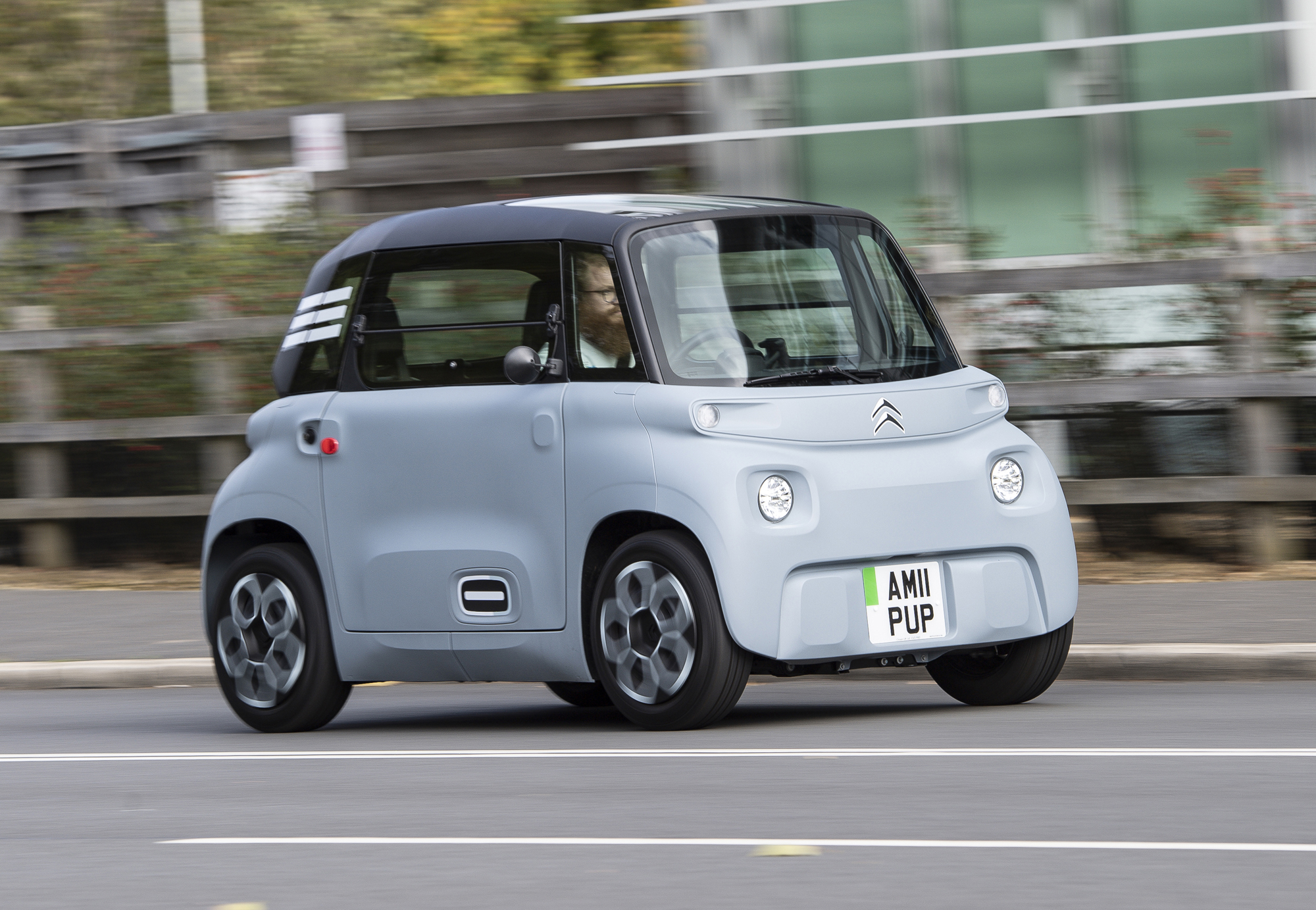
THE GOOD: It’s unique
THE BAD: It’s uniquely limited
THE UGLY: 28mph flat out!
NEED TO KNOW: Bottom-rated again. Afraid so. But this needs putting in context. The Ami isn’t, strictly speaking, a car, or not as defined by UK vehicle licensing regulations, where it’s regarded as a quadricycle. We’ve included it because it’s from a car maker, it’s sold by car dealers and it might well be considered as an alternative to an actual car by a prospective purchaser.
The fact that we’ve included this but excluded some other similarly fringe cases is perhaps unfair and illogical, but we had to draw the line somewhere, and here is where we drew it.
Like a lot of the vehicles in the lower reaches of this ranking, it’s not bad as such; it has a purpose, and performs its rather limited function just fine, but it’s sorely lacking in anything the car enthusiast would find appealing.
The Ami does have its attractions: its symmetrical design is both cute and clever and 16-year-olds can drive it so the parental taxi gets more downtime. And at 2.41 metres long, it has a tiny turning circle. But approached with a shred of rationality, it’s a nightmare. On a 40mph dual carriageway you’re as welcome as a tax demand, the ride is brutal, the steering slow and it’s noisy, especially when you put on the fan heater. Yes, prices start below £8k in the UK, but the novelty will wear off after five minutes. Owners say it makes people smile: guys, the pedestrians are laughing at you, not with you.
THE ONE TO BUY: A bus pass
KEY DATA: Range 47 miles; efficiency 7.8 miles per kWh (est); charging 240 minutes 0-100% on a 230-volt domestic plug
155 Dacia Spring
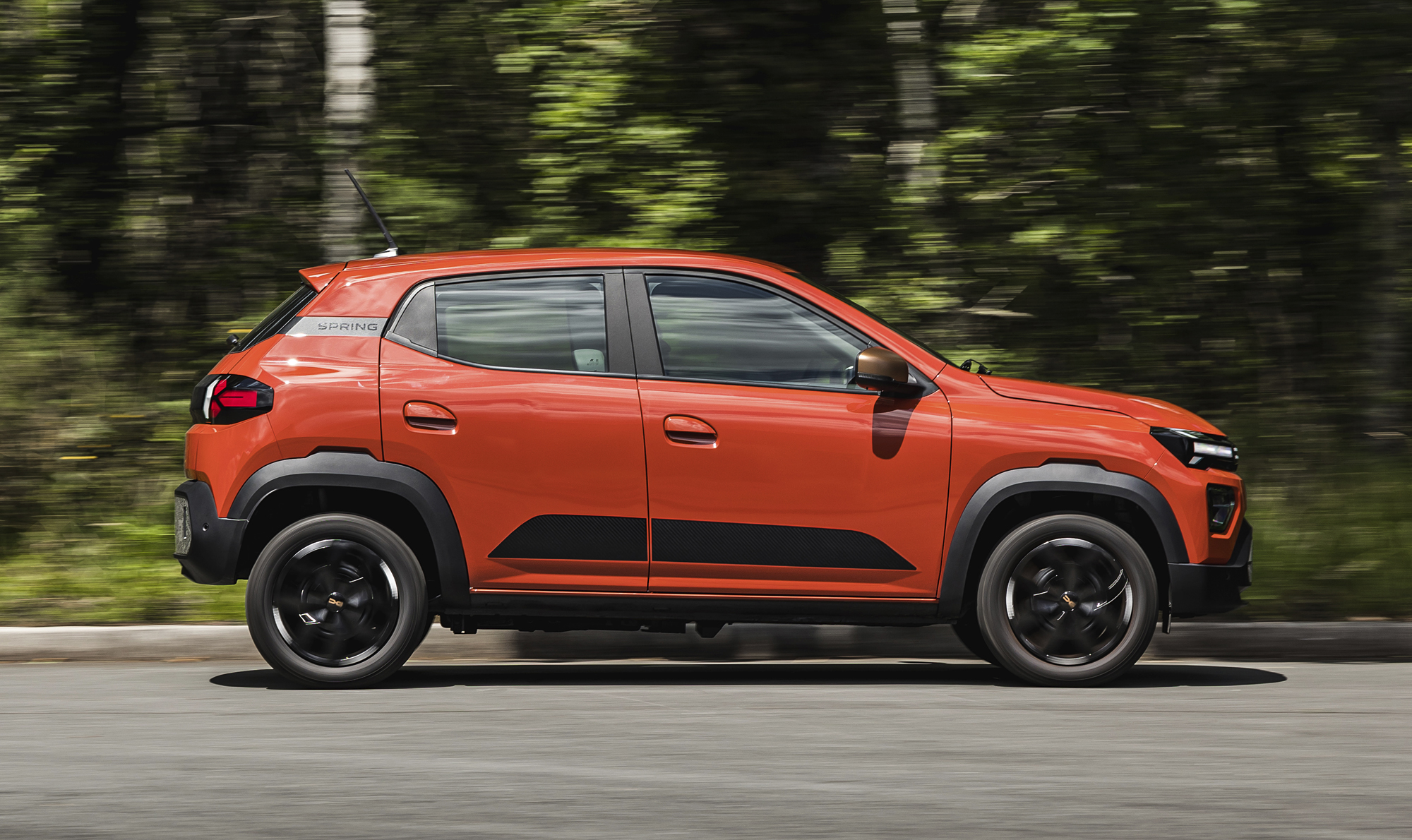
THE GOOD: It’s cheap; seats four; keeps the rain off your head
THE BAD: How long have you got?
THE UGLY: Being terrified by car with 64bhp
NEED TO KNOW: Need to know: A new electric car for under £15,000 in the UK sounds too good to be true, and that’s because it is. Yes, it’s technically correct, but this doesn’t feel like a car designed and built in the 21st century. You could blame Dacia’s decision to base the Spring on the Renault Kwid, a car designed as cheap transport for emerging markets, but it feels like much more could have been done to at least make it drive better. The 140-mile range and sluggish performance are forgivable for the price. The woeful handling is not.
THE ONE TO BUY: A lightly used Vauxhall Corsa Electric
KEY DATA: Range 140 miles; efficiency 5.6 miles per kWh; max DC charging 45 minutes 20-80%
154 Skywell BE11
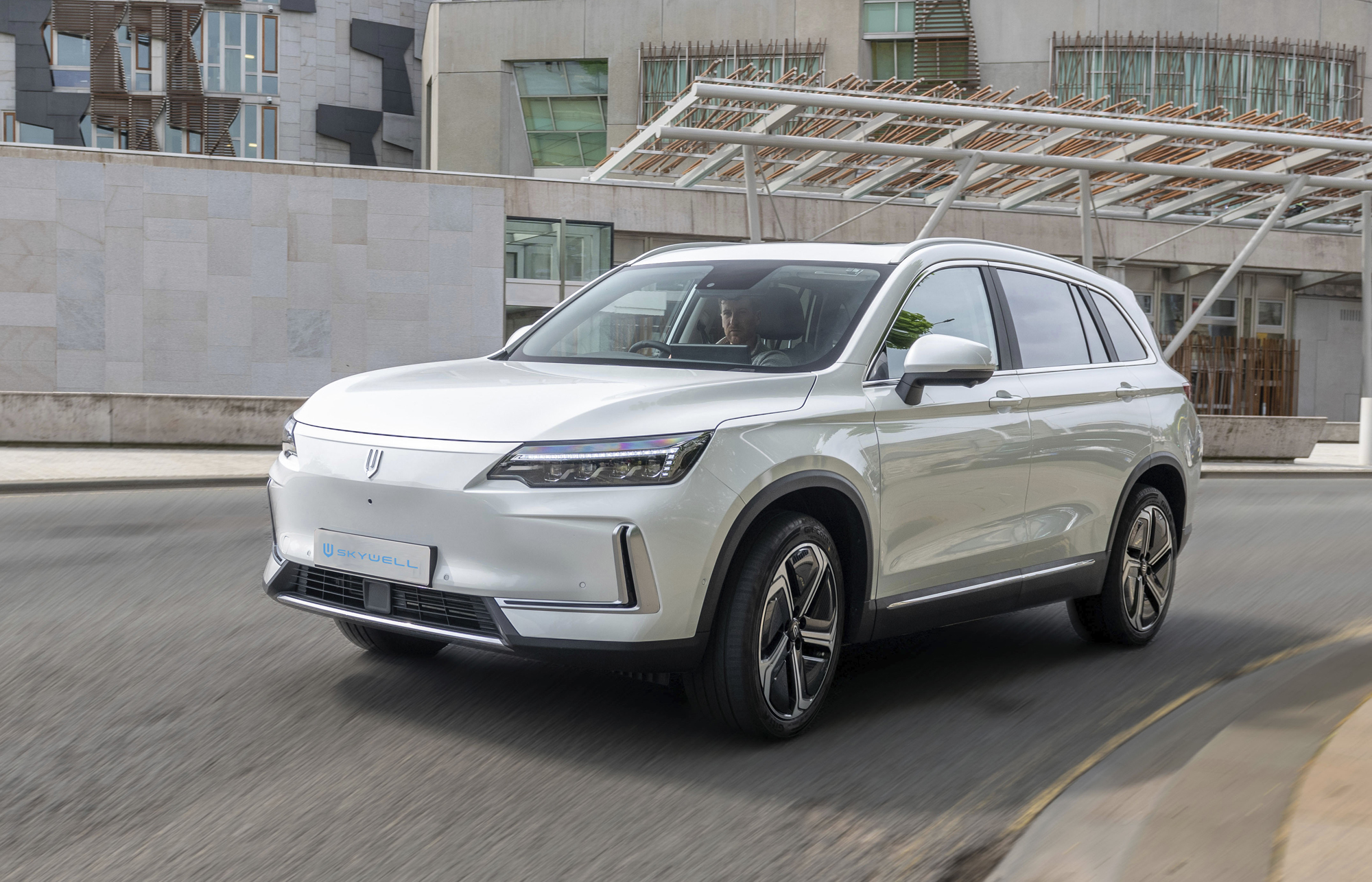
THE GOOD: Sensible size; roomy inside
THE BAD: Lacks refinement; interior materials feel cheap
THE UGLY: Not a great price for what you get
NEED TO KNOW: You’re buying a roomy cabin and a big boot, with a large central information screen. You have a choice of battery sizes feeding a 201bhp electric motor that g
THE ONE TO BUY: Go for the larger battery to get the range
KEY DATA: Range 304 miles; efficiency 3.5 miles per kWh; max DC charging 45 minutes 20-70%
153 Peugeot E-Traveller
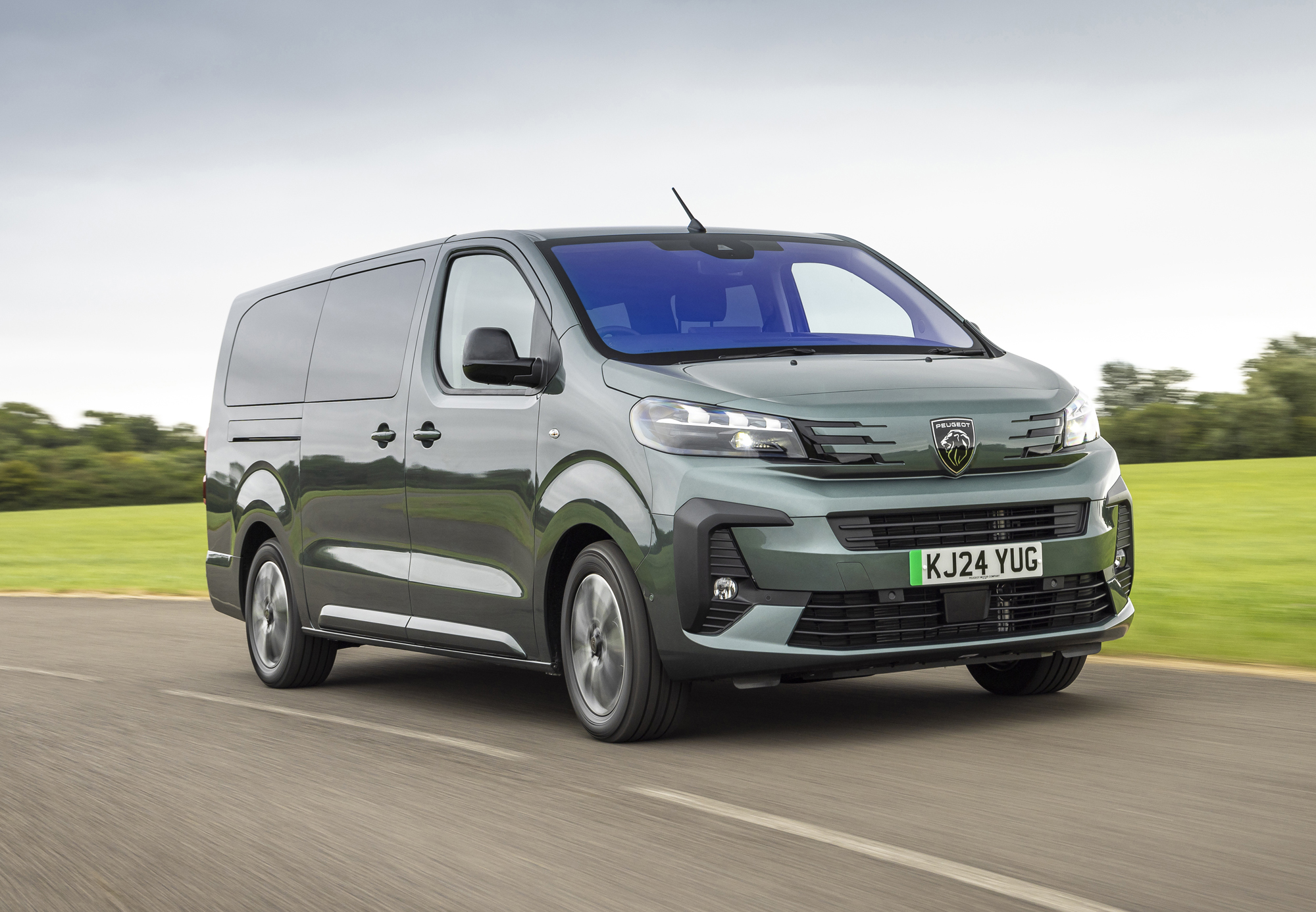
THE GOOD: Lots of seats
THE BAD: It’s like an E-Spacetourer but more expensive
THE UGLY: Trying to overtake anything
NEED TO KNOW: A Citroën E-Spacetourer with the Peugeot family face, and like the Citroën it’s benefitted from improvements over earlier versions, chiefly a bigger battery. It’s not quite as dowdy as the Citroën but is more expensive as a result. Best for ferrying lots of people across a town, not across the country.
THE ONE TO BUY: Active is the entry-level model but still gets the basics including alloy wheels – not a given on one of these van-based MPVs
KEY DATA: Range 217 miles; efficiency 3.0 miles per kWh; max DC charging 45 minutes 10-80%
152 Vauxhall Vivaro Life Electric
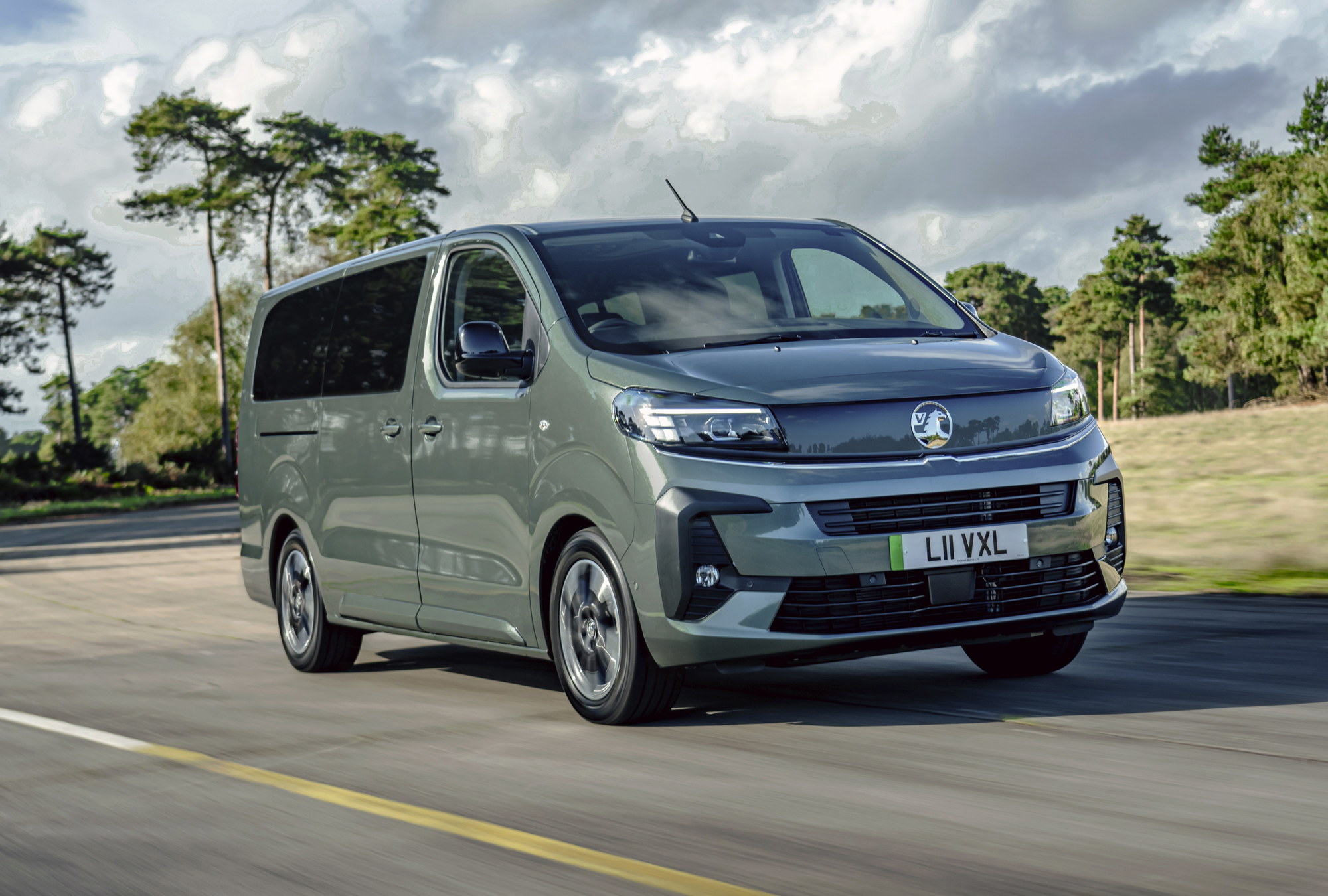
THE GOOD: Usefully big
THE BAD: Better range than the previous model, but still not great
THE UGLY: It should be so much more useful than it is
NEED TO KNOW: Now with a choice of configurations giving up to nine seats, and with a longer claimed range than before, but this still feels like a poor relation of some of Vauxhall’s vans and MPVs from the not so distant past.
THE ONE TO BUY: Combi trim’s bare steel wheels are charming, but Design is the best value; go for the 75kWh battery, not the 49
KEY DATA: Range 214 miles; efficiency 2.9 miles per kWh; max DC charging 45 minutes 5-80%
151 Citroën E-Spacetourer
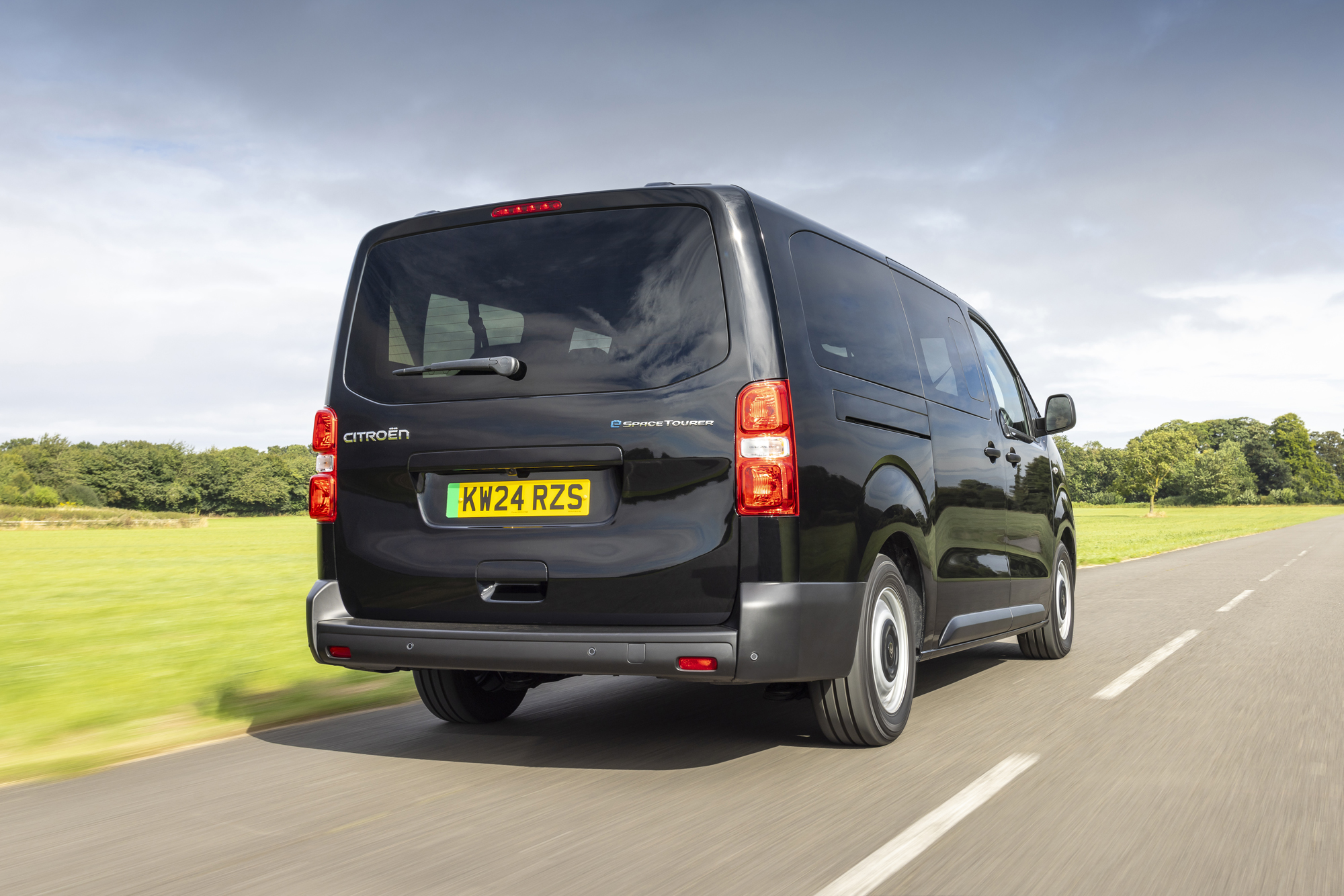
THE GOOD: Spacetourer? Makes it sound much groovier than it is
THE BAD: Underwhelming figures
THE UGLY: It’s a van, and a narrow one at that
NEED TO KNOW: Choice of lengths, choice of seating configurations, choice of battery sizes – it’s like the Vivaro and E-Traveller, but with a tiny hint of extra niceness because it’s a Citroën.
THE ONE TO BUY: Entry-level spec is now called You! That’s enough to drive you to Max, which still has a choice of body lengths but sticks to the 75kWh battery, wisely
KEY DATA: Range 215 miles; efficiency 2.7 miles per kWh; max DC charging 45 minutes 5-80%
150 KGM Torres EVX
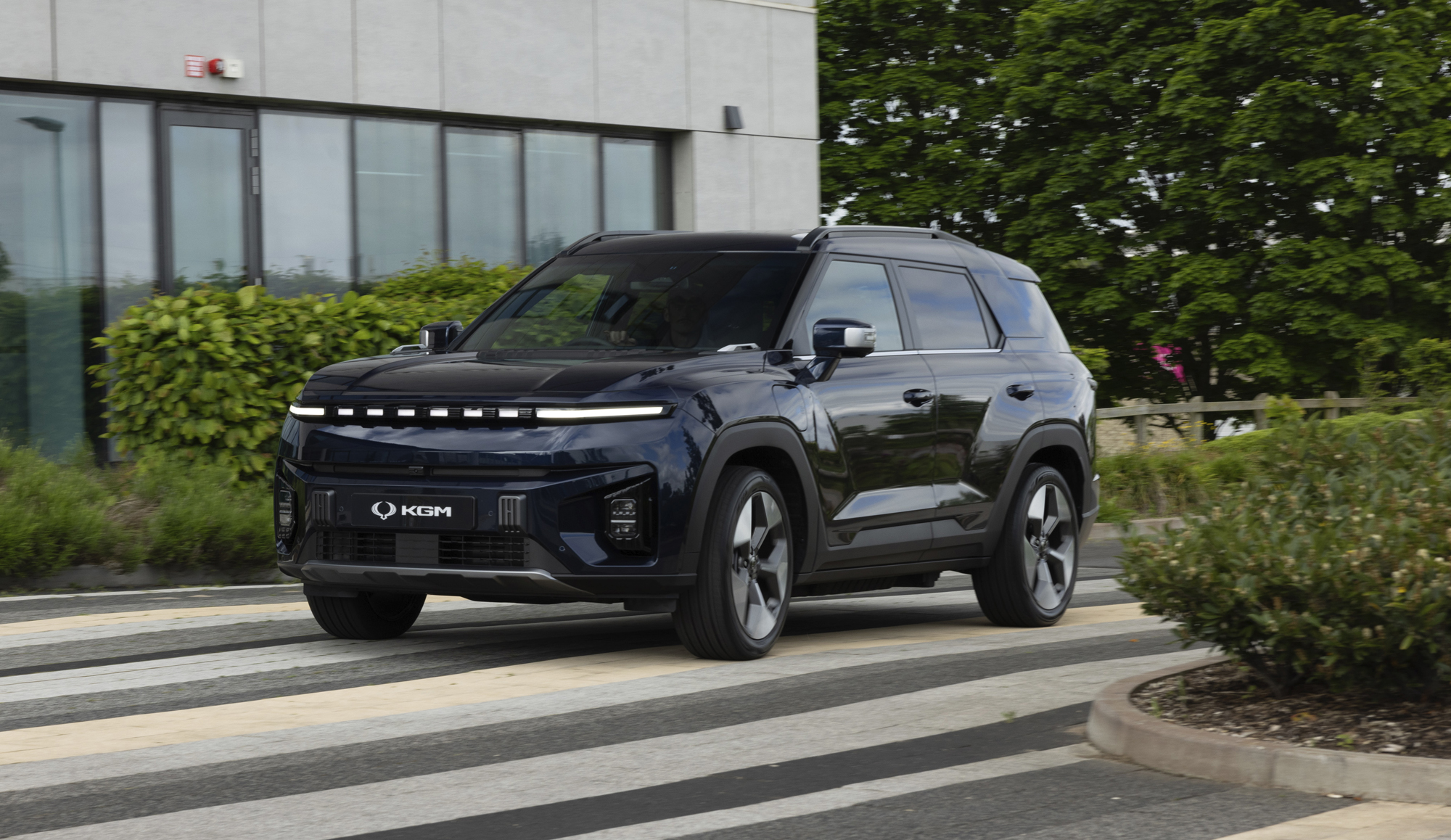
THE GOOD: Neat design; huge list of standard features; very roomy
THE BAD: Sloppy dynamics; poor grip; clunky infotainment
THE UGLY: Looks so much better than it drives
NEED TO KNOW: KGM is the new name for Ssangyong, the value-focused Korean brand that’s been in Europe for years but hit choppy financial waters in 2022 before reaching dry land with a new identity.
Ssangyongs used to be widely thought hilariously ugly, but they’ve been getting much more agreeable to look at, and the Torres (available as a combustion car as well as the electric EVX) continues that welcome direction of travel.
A 73.4kWh battery (supplied by BYD) powers a single e-motor driving the front wheels, good for 204bhp and a 0-62mph time of 8.1 seconds – a respectable time. KGM is also keen to point out the Torres can tow up to 1.5 tonnes with a braked trailer, or 500kg unbraked.
Two specs are available. The K30 is all you ever need, as it features heated front and rear seats, a heated steering wheel, cruise control, a 12.3-inch infotainment system with Apple CarPlay and Android Auto, a reversing camera, dual-zone climate control and a load of safety tech. K40 adds a heat pump, larger 20-inch aerodynamic wheels, proper leather upholstery, a 360º
parking system and even more safety tech.
Inside it’s clean and neat, but very short on physical buttons, especially as the digital interface isn’t very responsive or intuitive.
Ditto the driving experience: the steering lacks feel and precision. That’s just not good enough when for similar money you could get a Skoda Enyaq.
THE ONE TO BUY: K40 trim brings real leather, powered tailgate etc, but cheaper K30 has plenty of kit as standard
KEY DATA: Range 287 miles; efficiency 3.3 miles per kWh; max DC charging 28 minutes 10-80%
149 GWM Ora 03
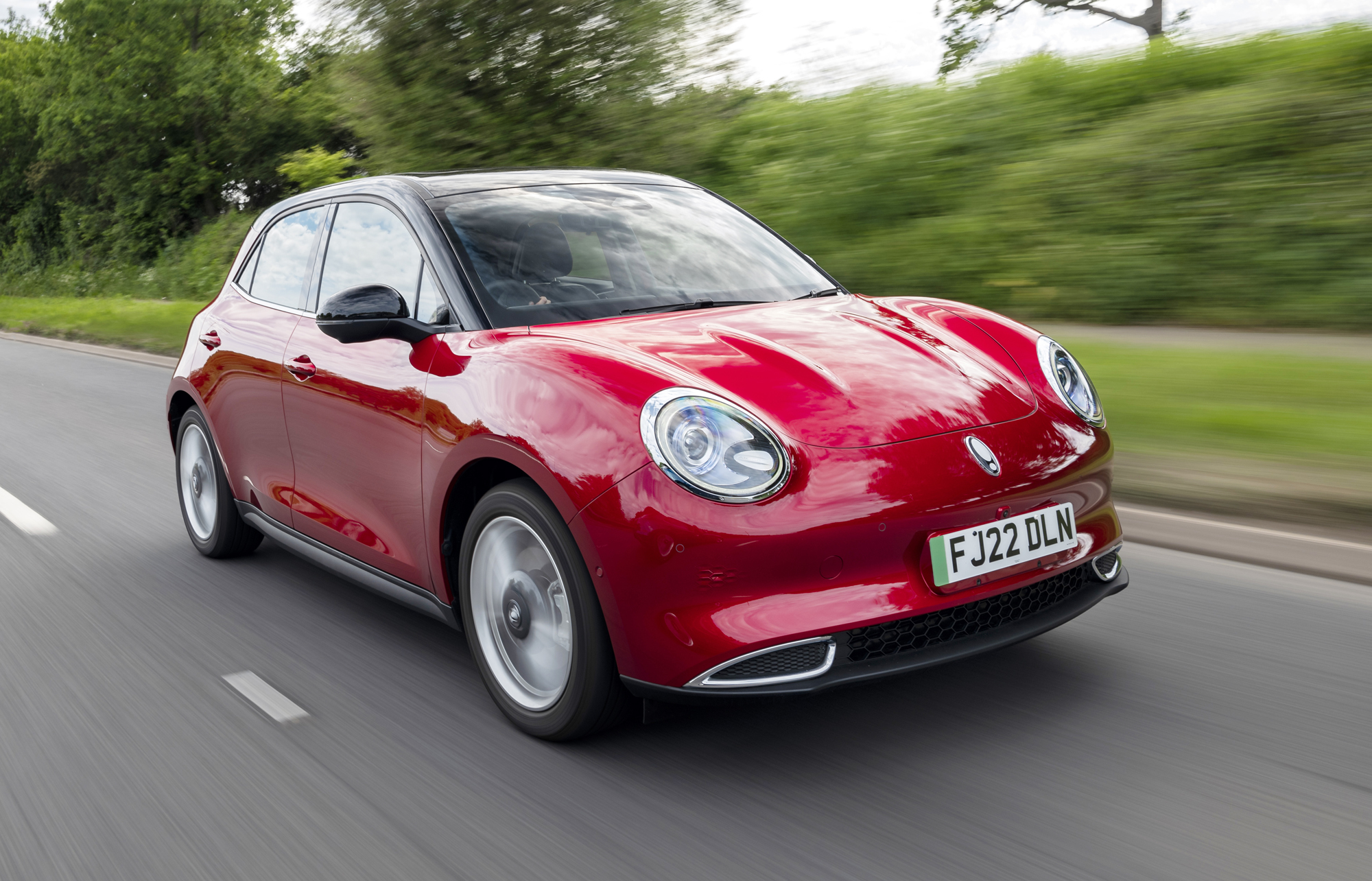
THE GOOD: Plush interior; rarity; sprightly performance
THE BAD: It’s always a bad idea to get your ADAS systems from wish.com
THE UGLY: Used to be called Funky Cat, which remains the most interesting thing about the 03
NEED TO KNOW: Chinese pick-up specialist Great Wall Motors thinks the way to Europe’s heart is this quite cute retro-styled hatch. Having sampled its horrendously intrusive driver assistance systems, tiny boot, awkward touchscreen and slow charging, we’re inclined to disagree.
THE ONE TO BUY: There are two battery sizes, 48 or 63kWh, but we’d go for Pure+ with the smaller battery to keep the price reined in
KEY DATA: Range 193 miles; efficiency 4.0 miles per kWh; max DC charging 43 minutes 15-80%
148 Mercedes-Benz EQV
THE GOOD: A genuinely luxurious electric van
THE BAD: Also genuinely expensive
THE UGLY: Not a smart choice for private buyers
NEED TO KNOW: The EQV is luxurious and good to drive, but it’s expensive and the range is limited. You can have long or extra long, and up to seven seats, but posher versions go for luxurious captain’s chairs. You can see why luxury shuttle companies love them, but as a family car it’s one-dimensional.
THE ONE TO BUY: Executive Long is executive enough and long enough
KEY DATA: Range 213 miles; efficiency 2.2 miles per kWh; max DC charging 45 minutes 10-80%
147 Omoda E5
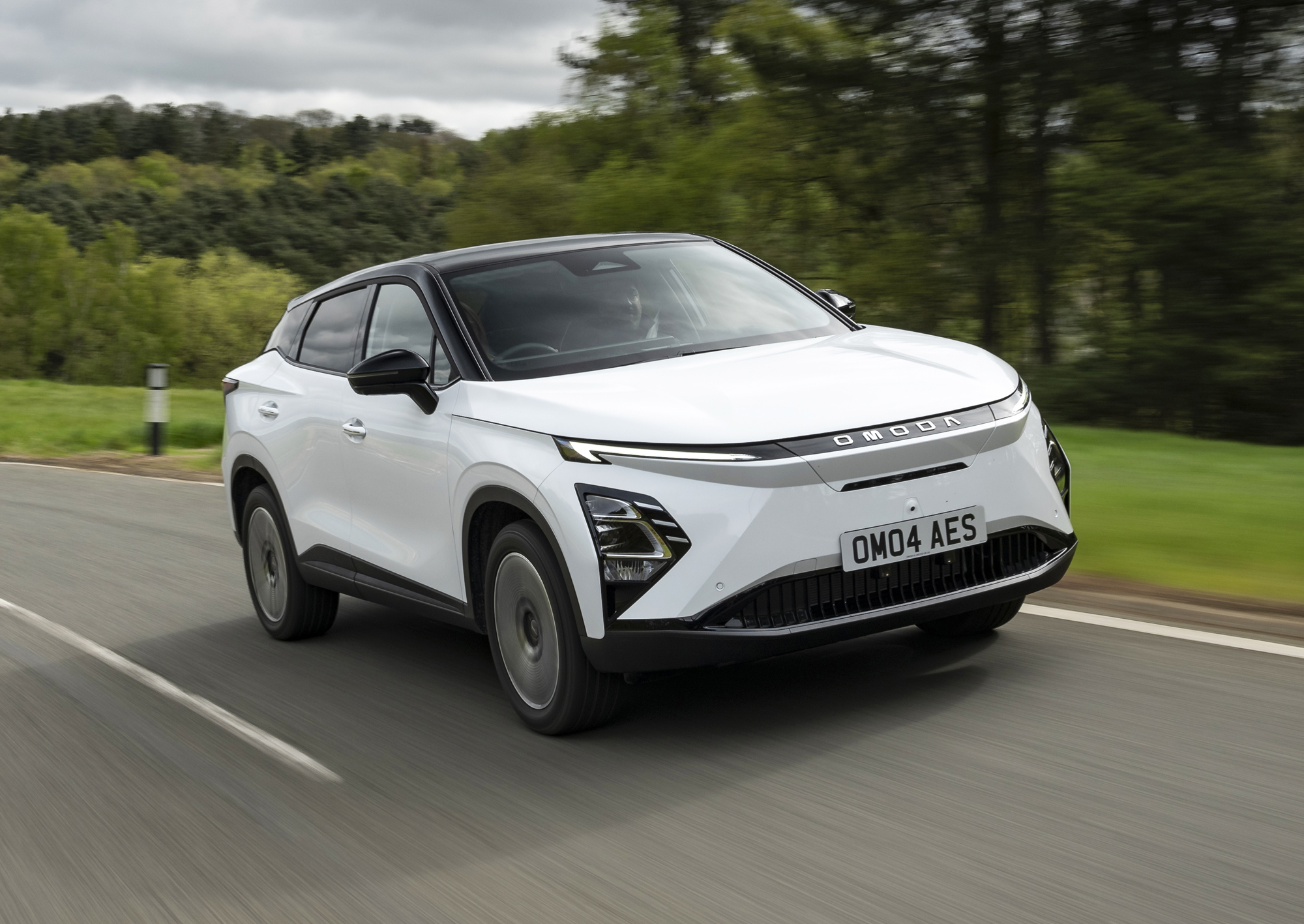
THE GOOD: Keenly priced for a family SUV; proper dealer network
THE BAD: Slow to charge; infotainment is poor; small boot
THE UGLY: Price and dealer network should help it sell, meaning a lot of people will find their first EV ownership experience less than optimal
NEED TO KNOW: The E5 has a 61kWh battery and a single electric motor putting 201bhp to the front wheels. Its steering and ride are better than the petrol version, actually benefitting from the EV’s additional weight, but there’s nothing rewarding or engaging about the driving experience, and it’s difficult to brake smoothly. There’s also a lot of road noise.
THE ONE TO BUY: There are two trim levels, Comfort and Noble, the latter gaining a Sony audio system, 360º camera and more electric seat adjustment; but the Vauxhall Frontera is a better buy if price is your priority
KEY DATA: Range 257 miles; efficiency 4.1 miles per kWh; max DC charging 28 minutes 30-80%
146 Honda e:Ny1
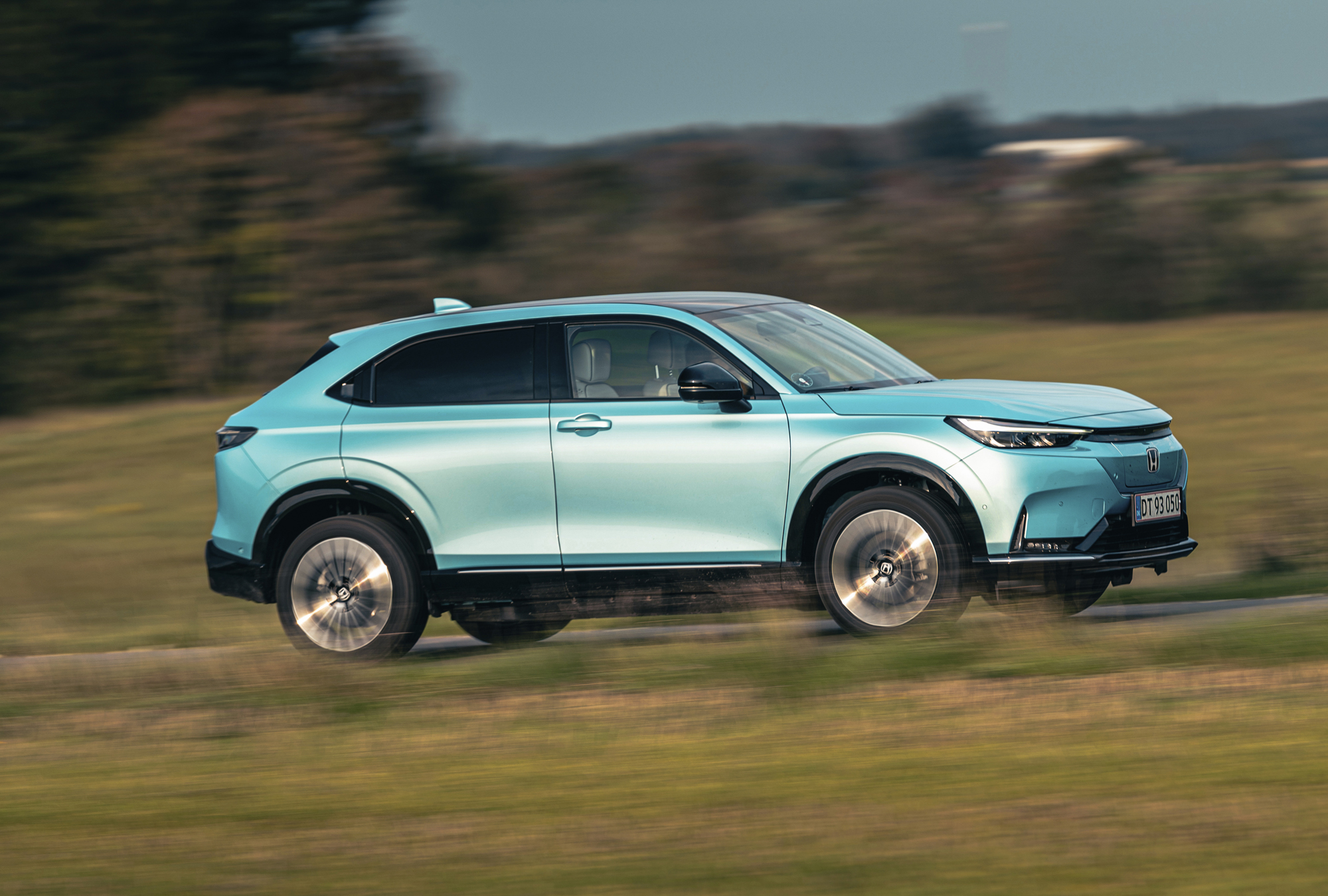
THE GOOD: Honda sensibleness and dependabilty
THE BAD: None of the pleasing quirkiness you sometimes get with Hondas
THE UGLY: Accidentally exiting junctions in a flurry of wheelspin
NEED TO KNOW: While Honda is renowned for its combustion-car engineering, it’s not so hot when it comes to EVs. Unremarkable at best in most areas, it’s behind the curve when it comes to driving dynamics and charging performance. And this doesn’t even possess the now departed Honda E’s charm.
THE ONE TO BUY: Stick to Elegance. You really don’t want to pay any more than you have to
KEY DATA: Range 256 miles; efficiency 3.7 miles per kWh; max DC charging 45 minutes 10-80%
145 Jaecoo E5
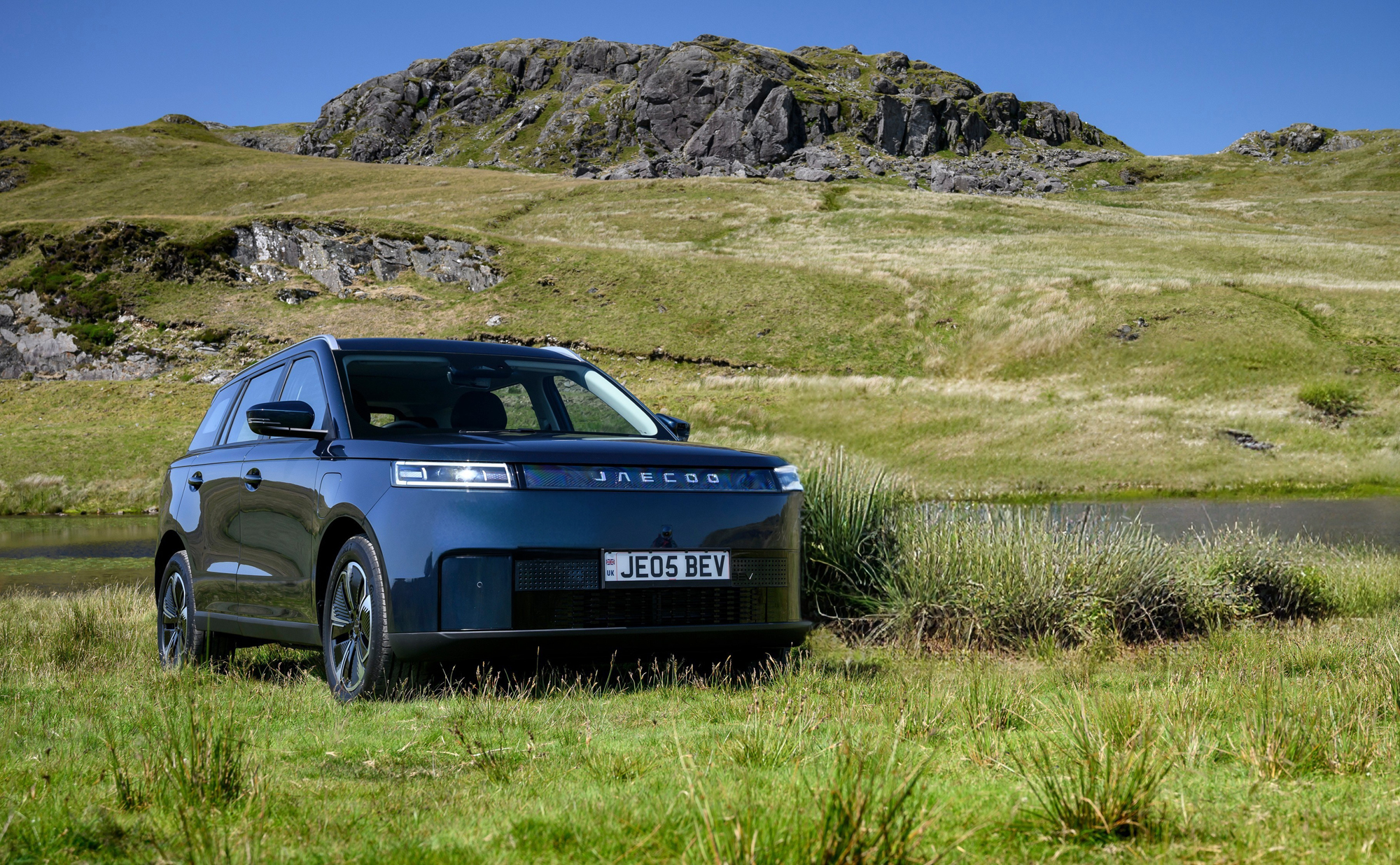
THE GOOD: Smart; roomy up front; big boot; very well kitted out
THE BAD: Not great to drive; range isn’t huge
THE UGLY: Too many functions rely on the touchscreen
NEED TO KNOW: There are better small electric EVs around than the Jaecoo E5. They offer more refinement, longer range and in some cases a lower price, but none can offer such a long list of premium features for the money. It’s a magpie approach to selling a car, but has its appeal. We like the large and useful boot, the space up front, and the fit and finish. But the driving experience and reliance on touchscreens jar.
THE ONE TO BUY: Pure is fine, but Luxury trim brings a lot of agreeable fanciness
KEY DATA: Range 248 miles; efficiency 4.0 miles per kWh; max DC charging 27 minutes 30-80%
144 Peugeot E-Rifter
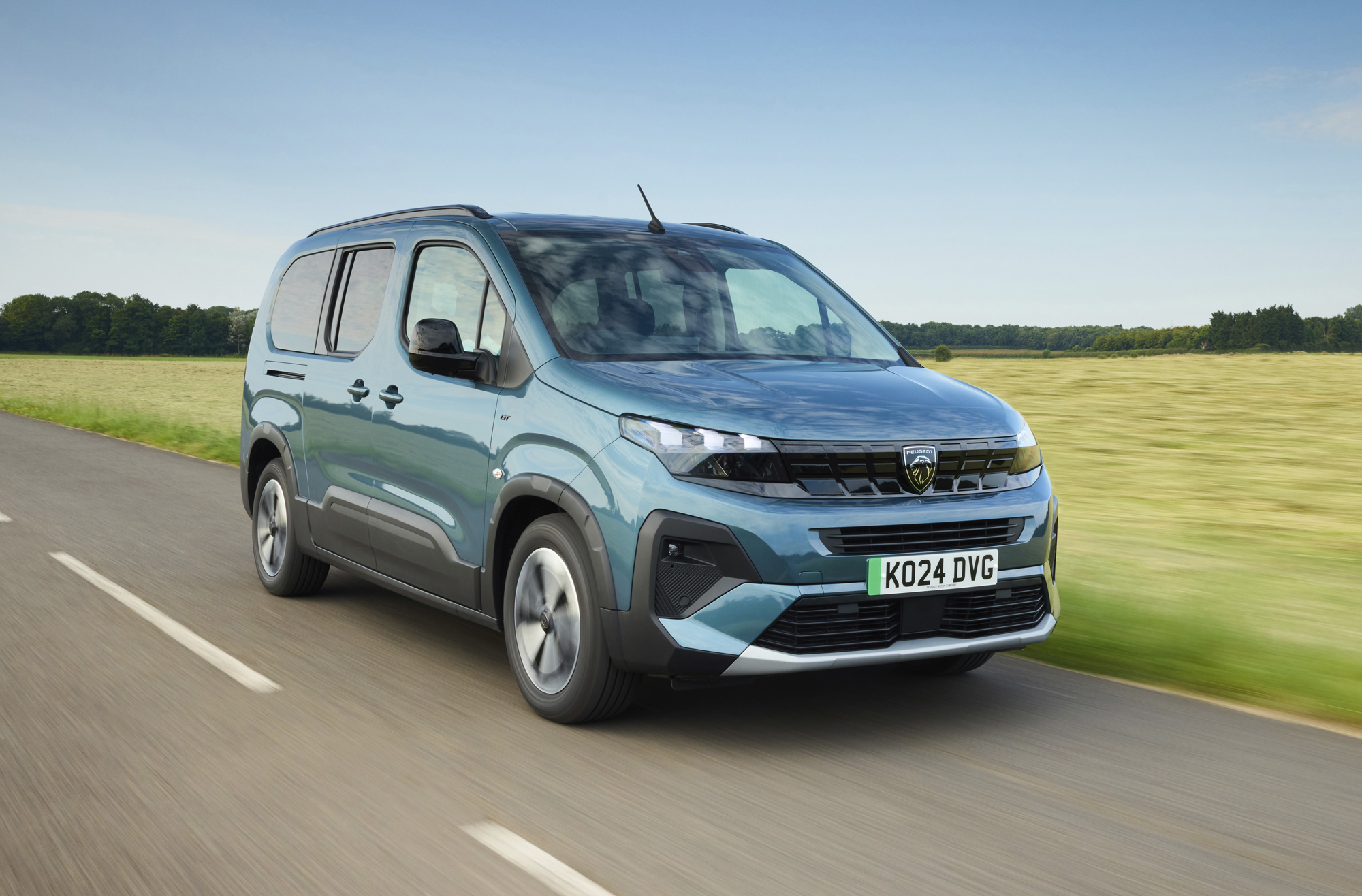
THE GOOD: Incredibly roomy; great value; drives better than it needs to
THE BAD: Range has improved recently, but still way short of the old diesel
THE UGLY: Just don’t kid yourself it’s anything other than a nicely car-ified van
NEED TO KNOW: Drives well, has immense bag space – even the standard-length version – and is refreshingly simple and characterful next to most SUVs or lingering MPVs. Lack of e-range from the 50kWh battery limits its relevance for some people, unfortunately.
THE ONE TO BUY: Basic Allure trim is fine, and five-seater still has sensational boot space
KEY DATA: Range 199 miles; efficiency 2.7-3.2 miles per kWh; max DC charging 38 minutes 0-80%
143 Vauxhall Combo Life Electric
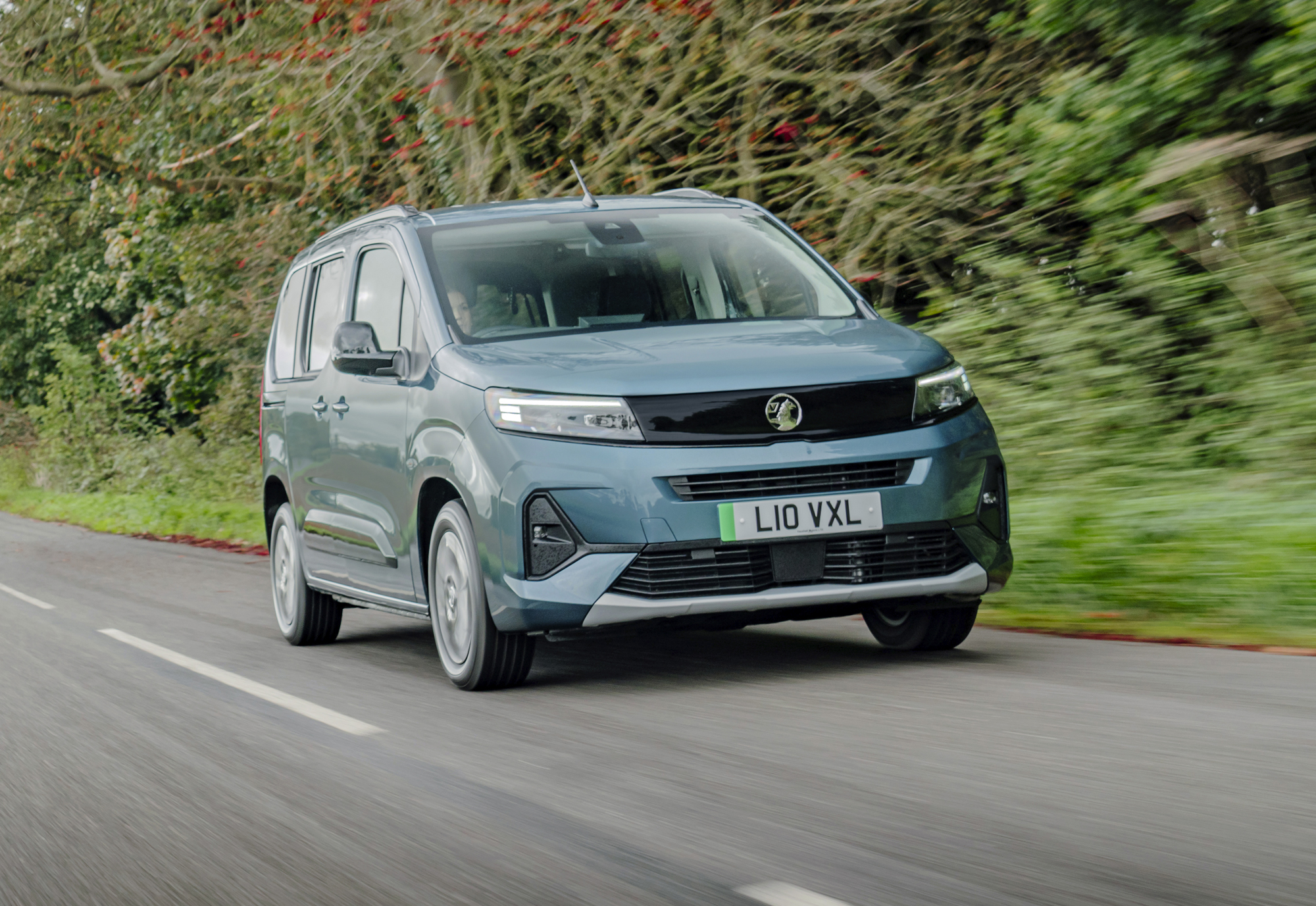
THE GOOD: Loads of space; seven seats available
THE BAD: Range and performance
THE UGLY: Lacks appeal
NEED TO KNOW: It’s a Vauxhall-flavoured small Stellantis van, with all the pros and cons that implies.
THE ONE TO BUY: It’s so cheap for its size that you might as well push the boat out and get Ultimate trim; the seven-seater gets worse range and performance, so stick with the still spacious five-seater if you can
KEY DATA: Range 211 miles; efficiency 2.7-3.2 miles per kWh; max DC charging 30 minutes 0-80%
142 Citroën e-Berlingo
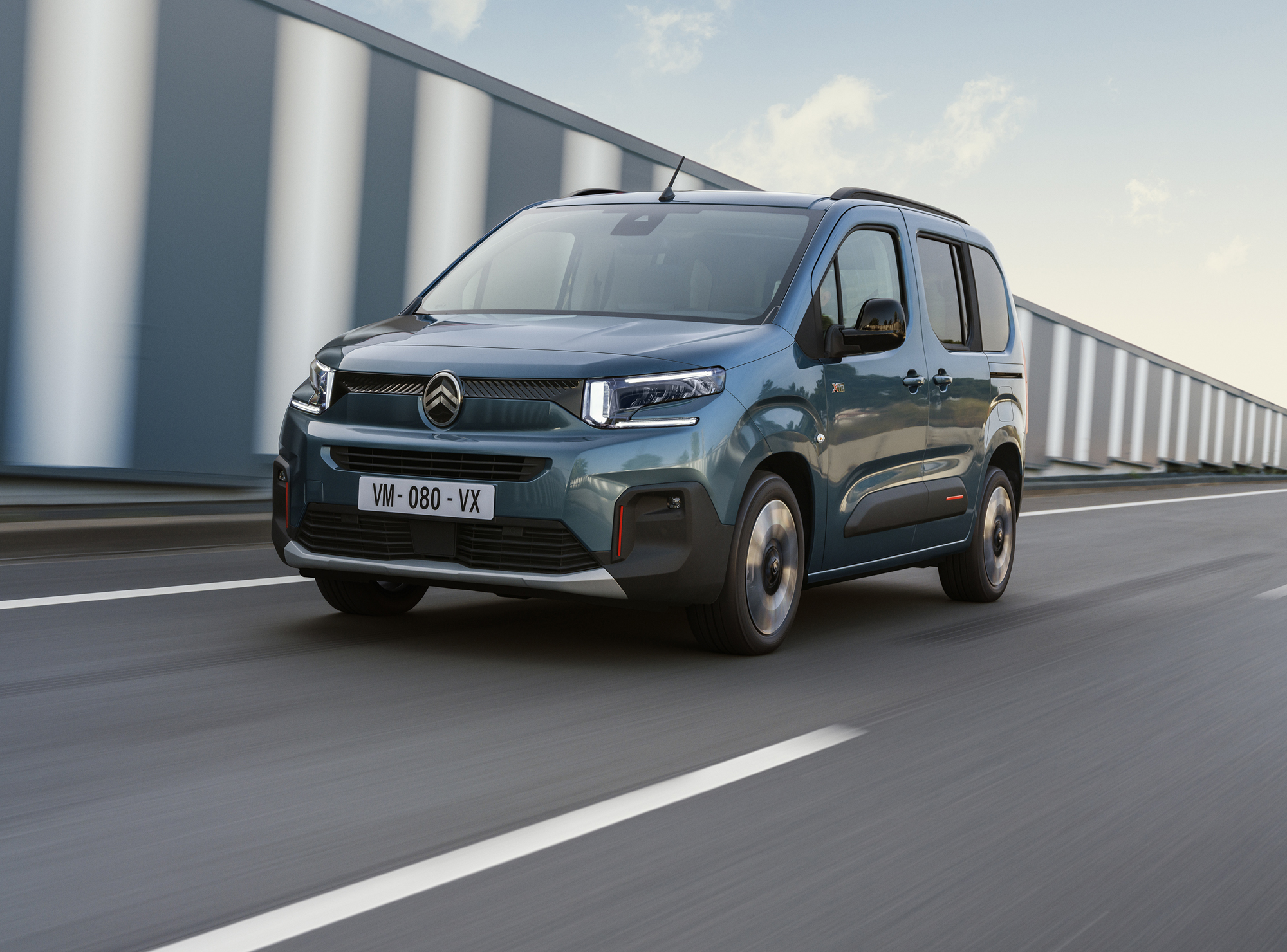
THE GOOD: The best of three virtually identical vans
THE BAD: It’s not a high bar to leap over
THE UGLY: The petrol and diesel versions are more practical for many
NEED TO KNOW: This doesn’t quite have the range or appeal you’d hope for in a van-based car. The boxy silhouette and sliding doors are very child-friendly, and there are even some quite cool paint jobs available.
THE ONE TO BUY: XL variants have seven seats but reduce range; basic trim is bleak so opt for Max
KEY DATA: Range 212 miles; efficiency 3.5 miles per kWh; max DC charging 30 minutes 0-80%
141 VW ID. 5
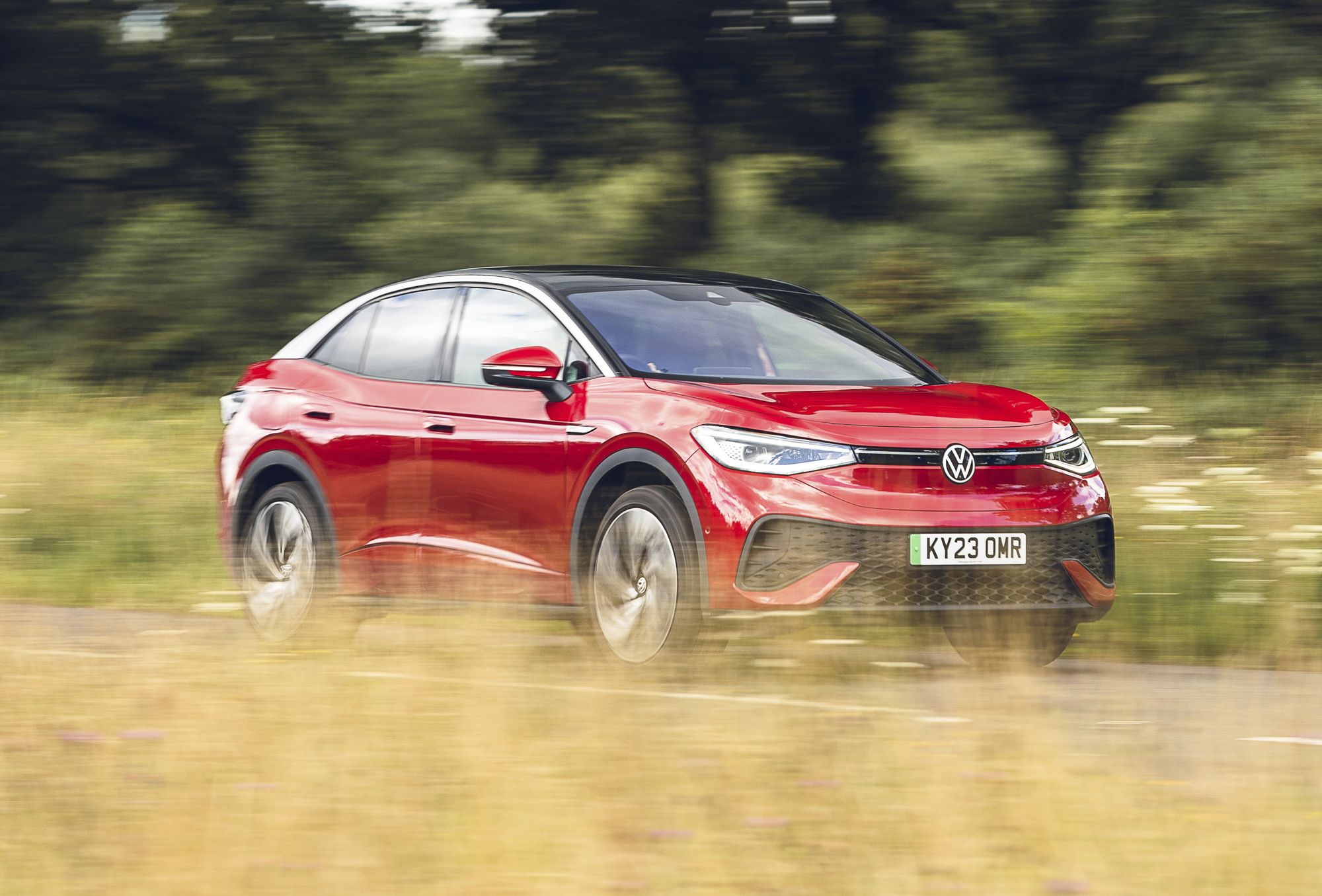
THE GOOD: Inoffensive to drive
THE BAD: Uninteresting to drive
THE UGLY: It’s just so meh
NEED TO KNOW: Essentially a less practical but more expensive ID. 4, this coupe-SUV does at least have a slightly better range on account of improved aerodynamics. As with its sister VW, you’re better off with the cheaper and roomier Skoda Enyaq equivalent. Compared to earlier versions, it now has an improved rear e-motor, new touchscreen and some software upgrades.
THE ONE TO BUY: We’re struggling to recommend any; keep it simple with the entry model, the Match Pure with the 52kWh battery
KEY DATA: Range 226 miles; efficiency 4.1 miles per kWh; max DC charging 30 minutes 10-80%
140 Vauxhall Mokka Electric
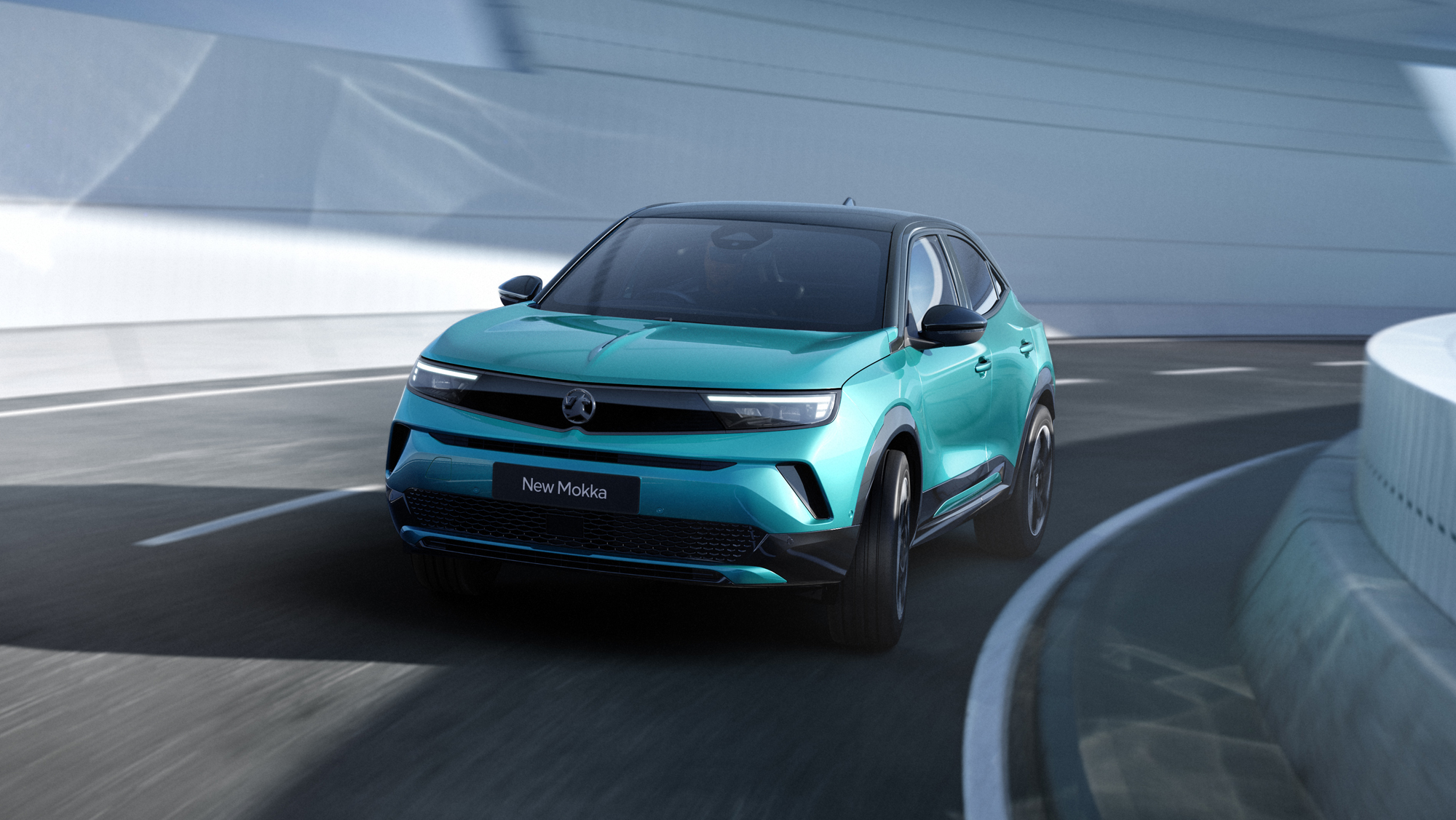
THE GOOD: Those smart looks; sensible interior
THE BAD: It’s slow; the boot is pretty small; dynamics are only so-so
THE UGLY: Other cars on the same platform are still more desirable
NEED TO KNOW: A small electric crossover that trades on its looks and little else. Not that the Mokka is bad, but it’s not particularly competitive in any important area – performance, range, value, practicality – and other cars on the same e-CMP platform manage to be more charming.
THE ONE TO BUY: Only one powertrain but four trims: Design, GS or Ultimate or GSE. The hot GSE is impressive in many ways, but go for more sensible, big-value GS
KEY DATA: Range 209 miles; efficiency 3.8-3.9 miles per kWh; max DC charging 30 minutes 0-80%
139 Tesla Model X
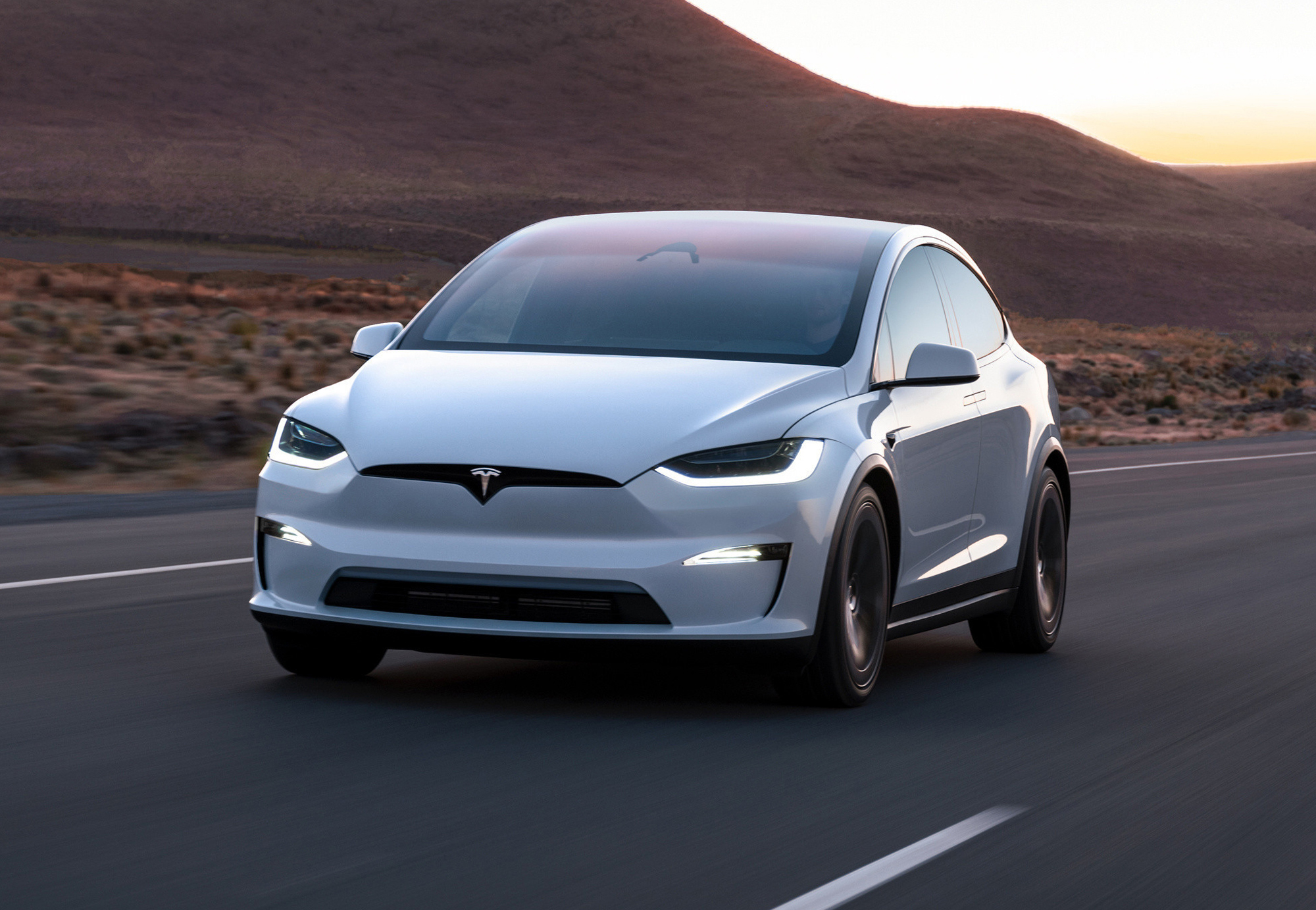
THE GOOD: Hypercar-humbling performance…
THE BAD: …until you get to a corner
THE UGLY: Quality still behind the curve
NEED TO KNOW: For a long time the fastest-accelerating seven-seater in the world, and fitted with those unique/crazy falcon-wing doors that help access to the rear – what’s not to like? Well, the sloping roofline that’s great for efficiency is less helpful to third-row space, although there’s ample room in rows one and two. It’s not the most engaging car to drive, despite the shock factor of a sizeable SUV doing 0-60mph in less than three seconds in the case of the Plaid version. Upgrades eventually improved interior quality, just not enough, while the Silicon Valley minimalism is something you’ll either love or hate.
THE ONE TO BUY: No longer available new in the UK, but plenty of good used ones. Regular Model X is plenty quick enough for a three-row SUV
KEY DATA: Range 358 miles; efficiency 3.7 miles per kWh; max DC charging 30 minutes 10-80%
138 Lexus UX 300e
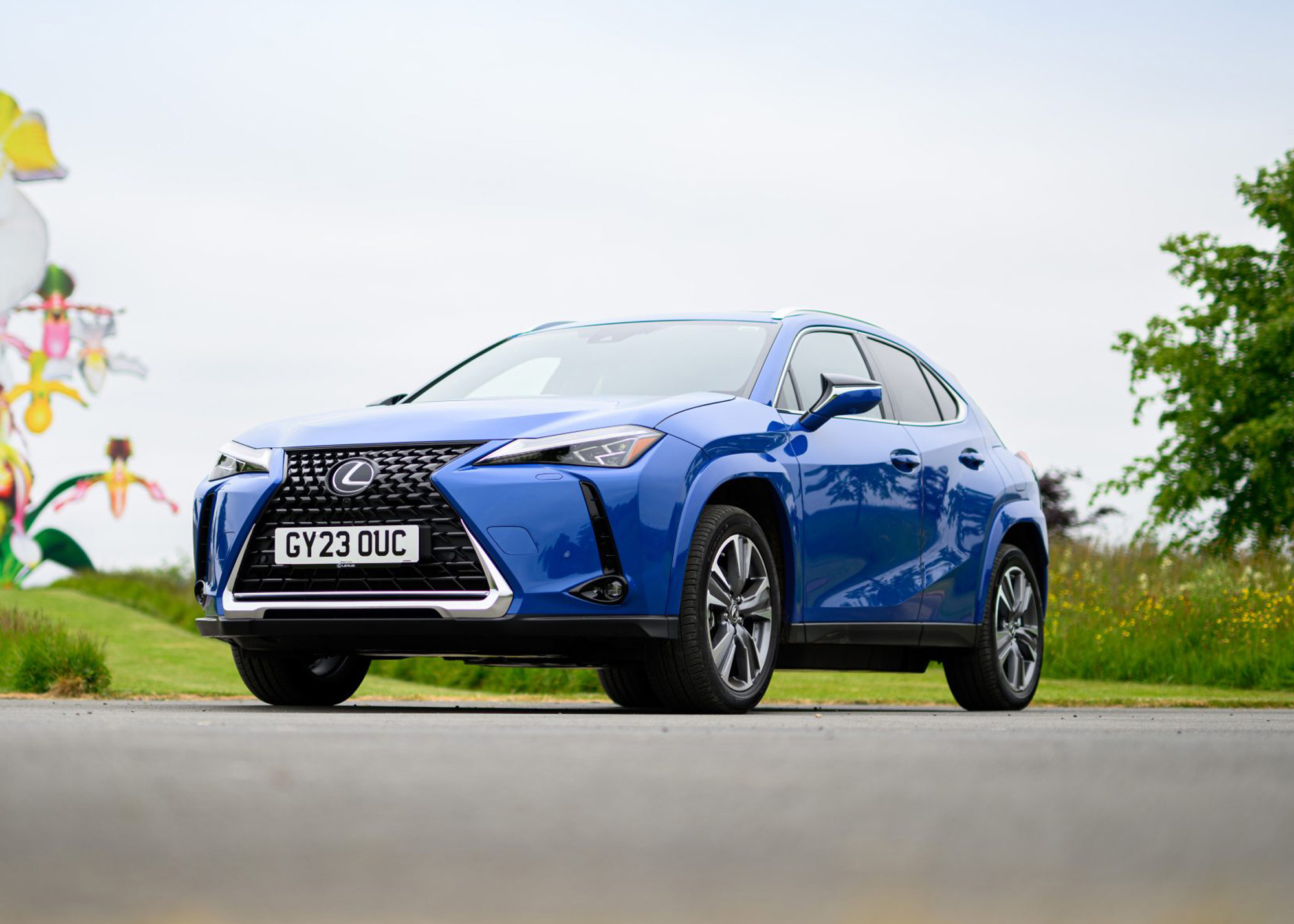
THE GOOD: Peerless Lexus quality and aftercare
THE BAD: Travel light – the boot is the size of a shoe
THE UGLY: Charging speeds are stuck in the Dark Ages
NEED TO KNOW: A midlife facelift gave this a bigger battery and a nicer interior, but couldn’t address a few of the UX’s shortcomings. The tiny boot we can just about live with – but not the 50kW charging speed. EVs may be saving the ice caps but whole glaciers could melt in the time this thing takes to top up.
THE ONE TO BUY: You’ll want the mid-spec Premium Plus pack
KEY DATA: Range 279 miles; efficiency 3.8 miles per kWh; max DC charging 81 minutes 10-80%
137 Changan Deepal SO7
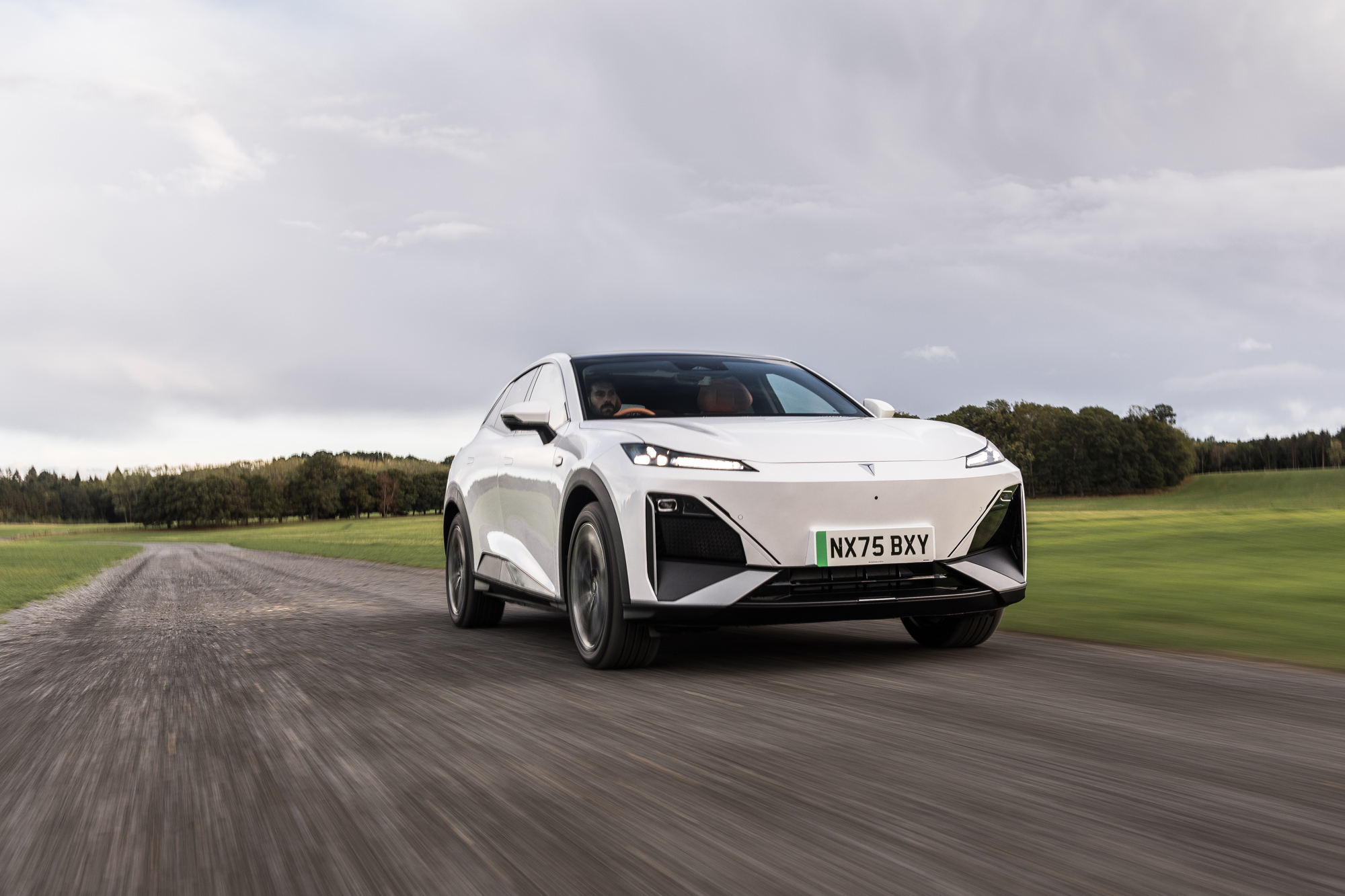
THE GOOD: Roomy in the back; very well equipped for the money
THE BAD: Not very efficient or quick to charge; harsh ride
THE UGLY: Lots of road noise
NEED TO KNOW: Changan has been around for ages, but this car is new. Its underpinnings are shared with the Mazda 6e, and it’s a rival for better cars such as the BYD Sealion 7 and Skoda Enyaq. It’s well equipped and roomy, but it doesn’t ride or handle well.
THE ONE TO BUY: There’s only one version, and the only option’s a towbar
KEY DATA: Range 295 miles; efficiency 3.3 miles per kWh; max DC charging 48 minutes 10-80%
136 Peugeot E-3008
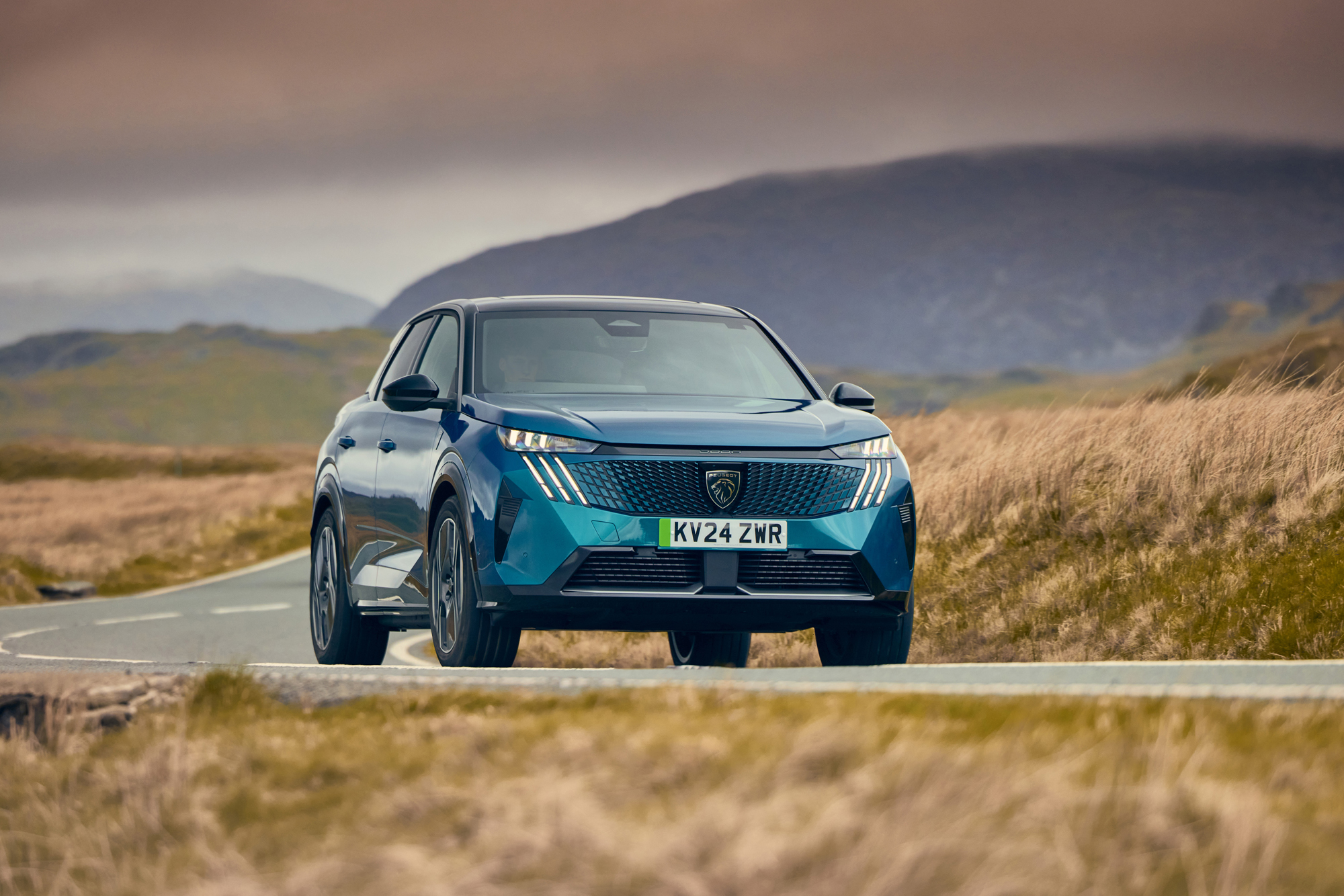
THE GOOD: Big boot; sharp looks; long warranty
THE BAD: The price; the way it drives
THE UGLY: Others weigh less yet go further to a charge
NEED TO KNOW: The E-3008 is a key part of Peugeot’s attempt to push further upmarket. It seemed off to a good start with two batteries offering 326 and 422 miles of range, which is a refreshing change from the usual 250-ish miles of range that Stellantis has stuck with for a few years. The interior is rather lovely, too, and the new touchscreen does what you need it to do (which is more than some Peugeot touchscreens from the olden days).
But, unfortunately, the E-3008 is something of a pudding to drive; even the smaller-battery car is 200kg heavier than the Renault Scenic, despite the Renault having a bigger battery, longer range and much lower price. There’s also a twin-motor version that’s quicker, and generally better to drive, but the range suffers.
It looks cool, and the eight-year warranty now covers the car as well as the battery provided you service it with Peugeot, but it still misses the mark in this super-competitive class.
THE ONE TO BUY: The 73kWh Allure offers the best balance of value, range and equipment
KEY DATA: Range 326 miles; efficiency 4.47 miles per kWh; max DC charging 30 minutes 20-80%
135 Volvo EC40
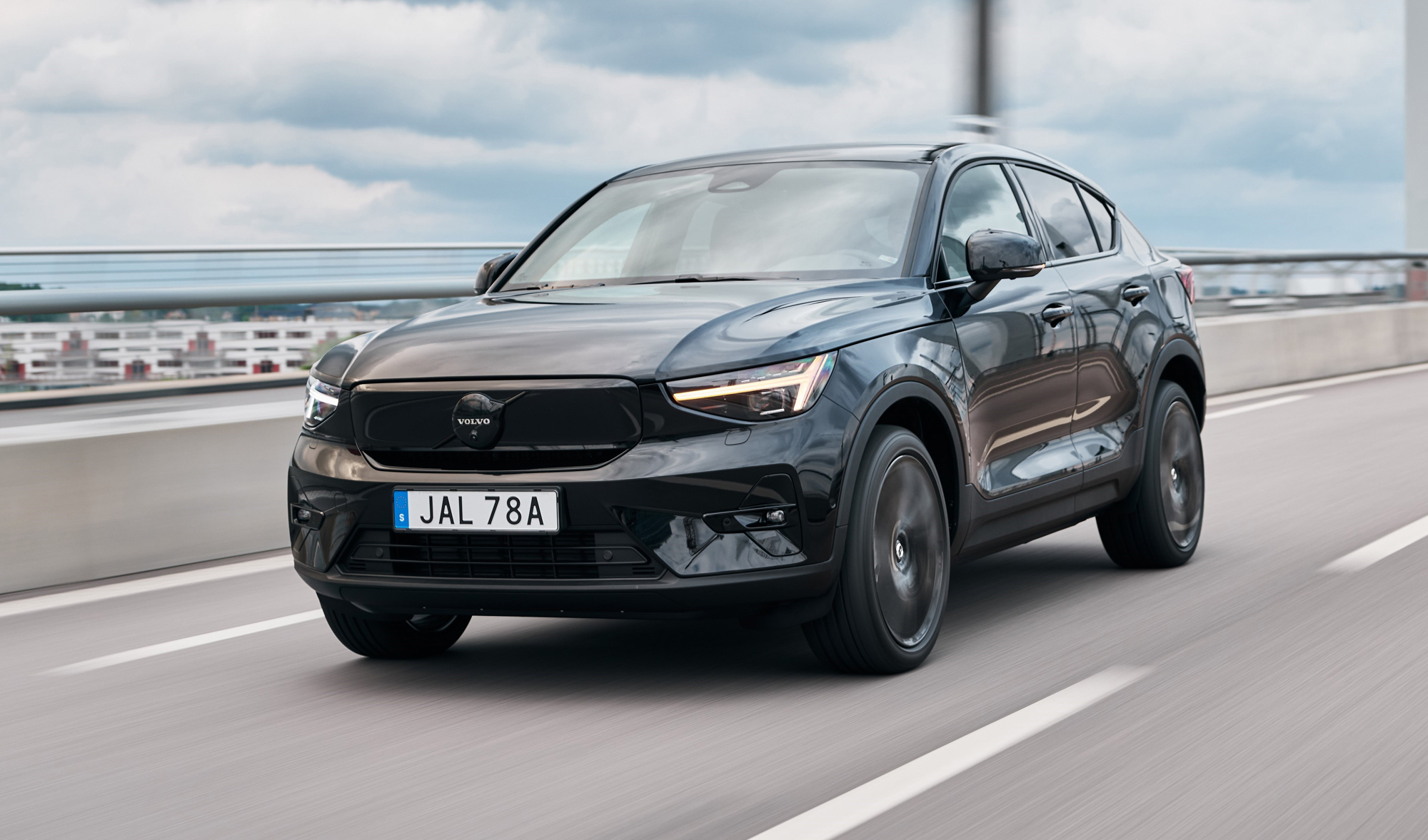
THE GOOD: Swift twin-motor model; plush interior
THE BAD: Inefficient electrics
THE UGLY: More money for a less good EX40
NEED TO KNOW: The EX40’s slightly slinkier sibling is available with one or two motors, although even with over 400bhp you won’t have a great deal of fun. The interior is an oasis of calm, which is handy, as in our experience you’ll need to go easy to boost efficiency on a motorway run.
THE ONE TO BUY: Single motor gives an acceptable range and is slightly nimbler
KEY DATA: Range 301 miles; efficiency 4.5 miles per kWh; max DC charging 27 minutes 10-80%
134 Geely EX5
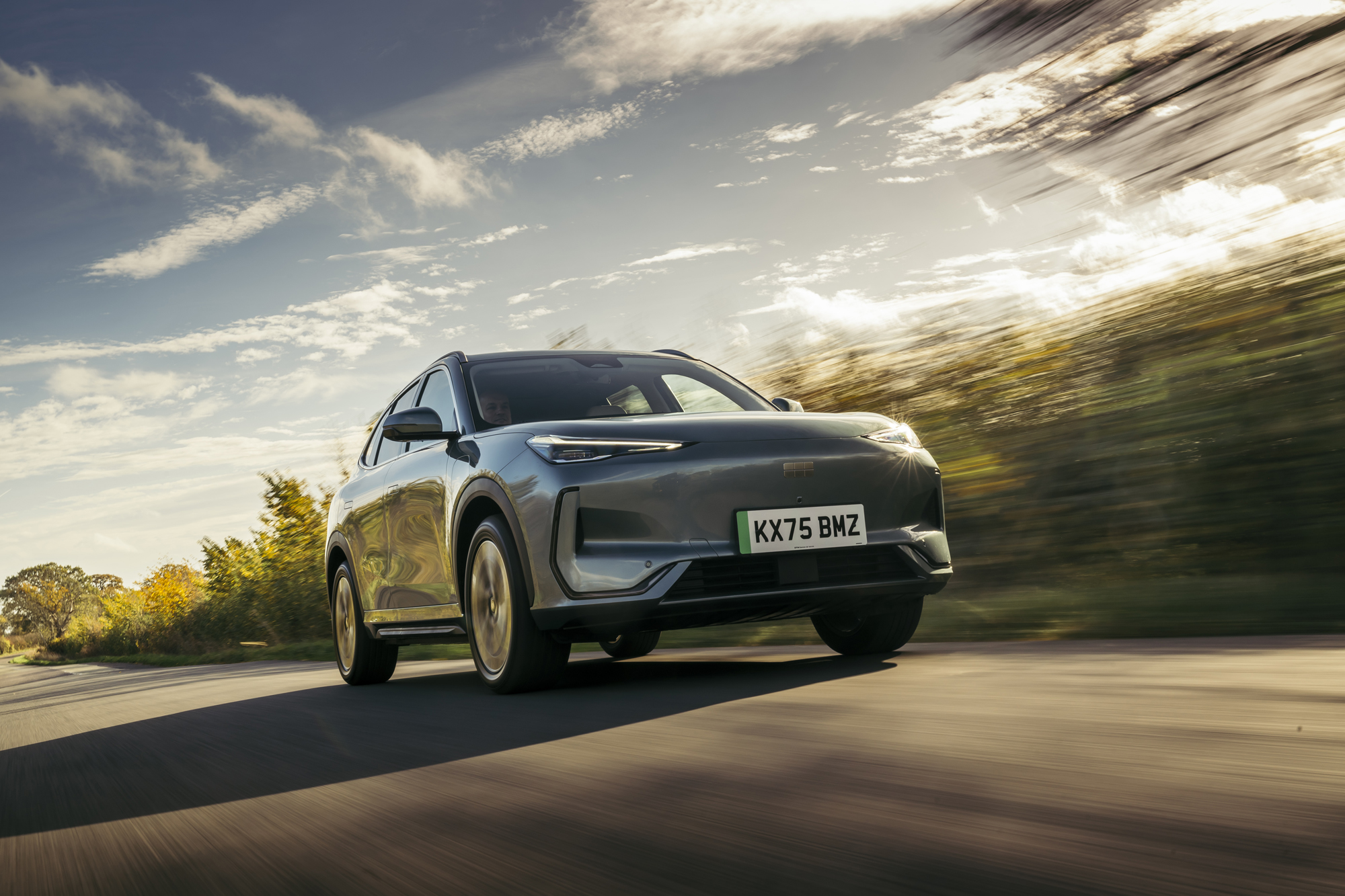
THE GOOD: Generous equipment; good interior quality and rear space; quiet
THE BAD: Unsettled ride; fiddly infotainment
THE UGLY: So-so effiency is just not good enough for a newcomer
NEED TO KNOW: As a group that includes Volvo, Polestar and Lotus, Geely has become a familiar name. But what about Geely’s own-brand cars? The EX5 is its first car for Europe. It’s a five-seat family crossover, initially with just one powertrain: 60.2kWh battery, single 215bhp motor driving the front wheels. There’s a choice of trim levels, but all are hampered by over-fiddly infotainment.
THE ONE TO BUY: Single motor gives an acceptable range and is slightly nimbler
KEY DATA: Range 267 miles; efficiency 3.9 miles per kWh; max DC charging 30 minutes 10-80%
133 Mercedes-Benz EQA
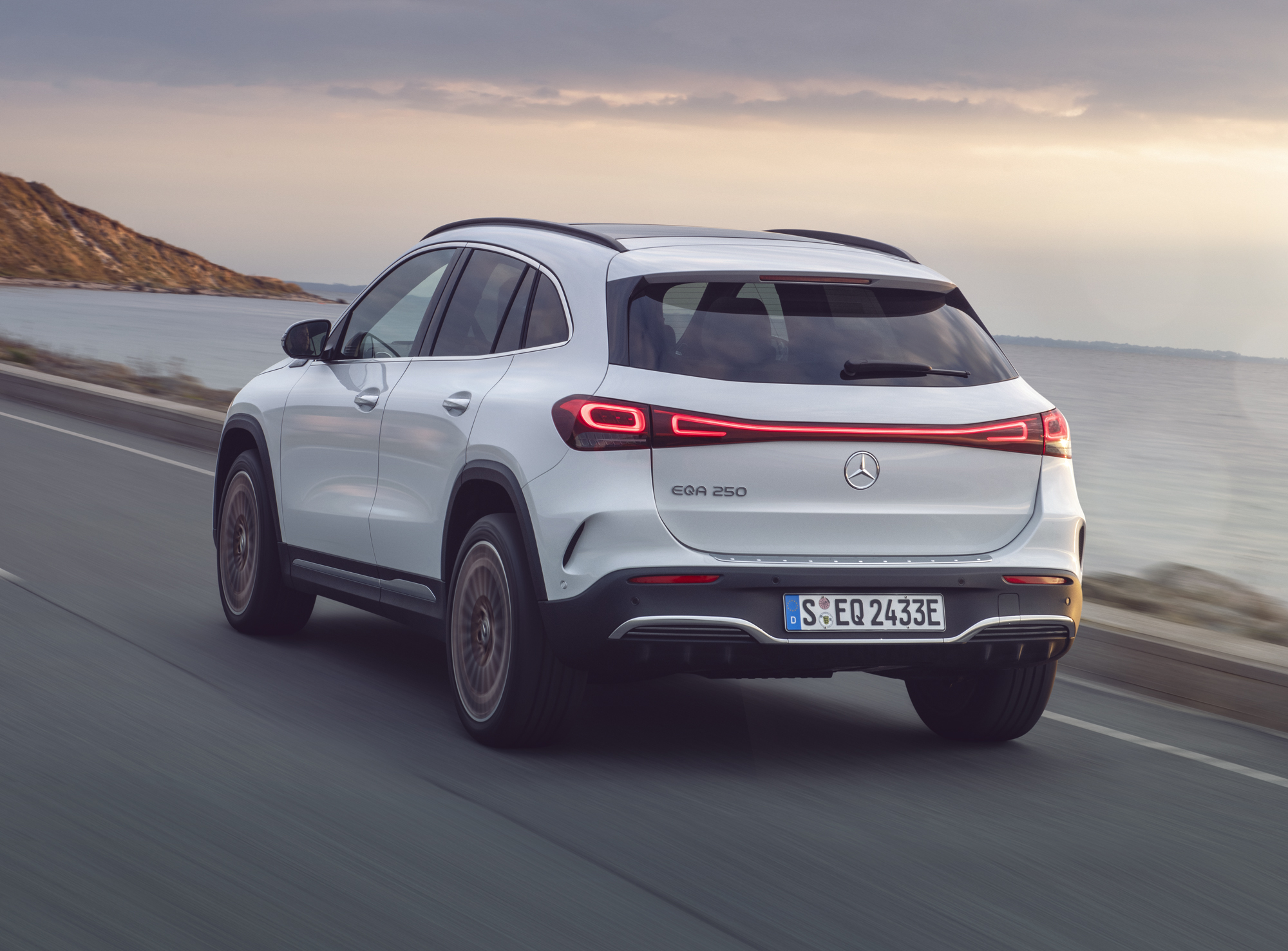
THE GOOD: Reasonable range, drives okay, allure of the three-pointed star
THE BAD: Sub-par interior without much space
THE UGLY: It’s depressingly unambitious (but much better EVs from Mercedes are starting to arrive)
NEED TO KNOW: The EQA is a great example of why Mercedes has had to rethink its approach to making EVs. There’s nothing wrong with it, but it fails to shine in any way at all. The figures are not terrible. The price isn’t bad. But 100-plus alternatives are more appealing.
It’s essentially a GLA with the engine taken out and an electric powertrain put in. Nobody much cares about the GLA either, so to that extent Mercedes did a great job.
You can be sure that whatever comes along next from Mercedes to fill this slot will be much better. So if you want an electric Mercedes of this size and shape, be patient.
THE ONE TO BUY: 250+ AMG Line is slow, but has all the kit you need
KEY DATA: Range 324 miles; efficiency 4.0 miles per kWh; max DC charging 29 minutes 10-80%
132 Volvo EX40
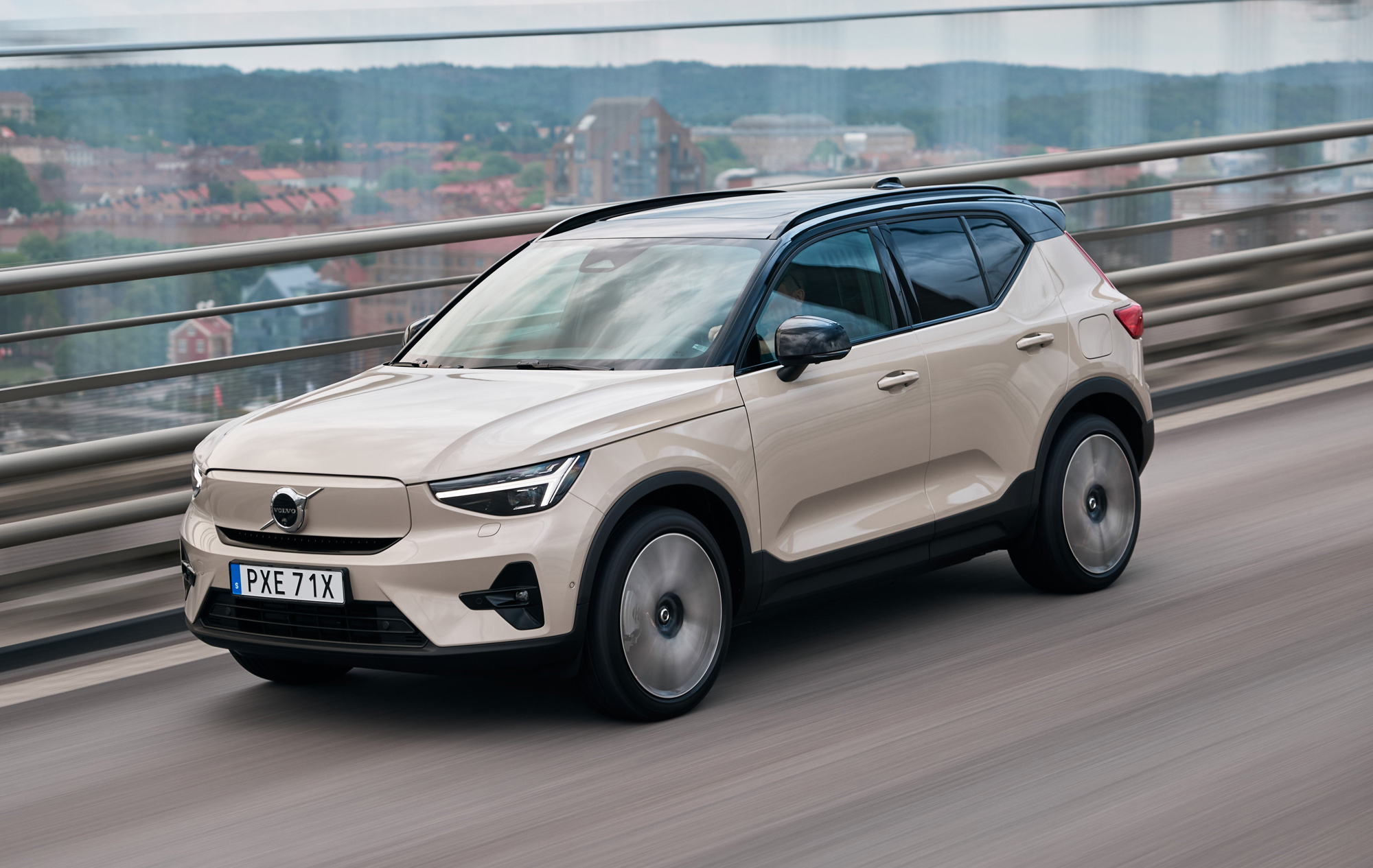
THE GOOD: Lovely interior, and a general look and feel that’s reassuringly conventional
THE BAD: Expensive, although more affordable versions arrived after the initial XC40 phase
THE UGLY: Some of the sustainable materials used in the interior aren’t that pleasing to touch
NEED TO KNOW: The all-electric EX40 makes everything easy: buying, owning, driving, charging. Most significantly, it makes the switch to EV extremely simple. It’s okay but not great to drive, with more bodyroll than some rivals, but beautifully calm and smooth, and the Google-based infotainment is ace.
THE ONE TO BUY: Go for the entry-level single-motor, rear-drive version
KEY DATA: Range 296 miles; efficiency 3.7 miles per kWh; max DC charging 27 minutes 10-80%
131 Subaru Solterra
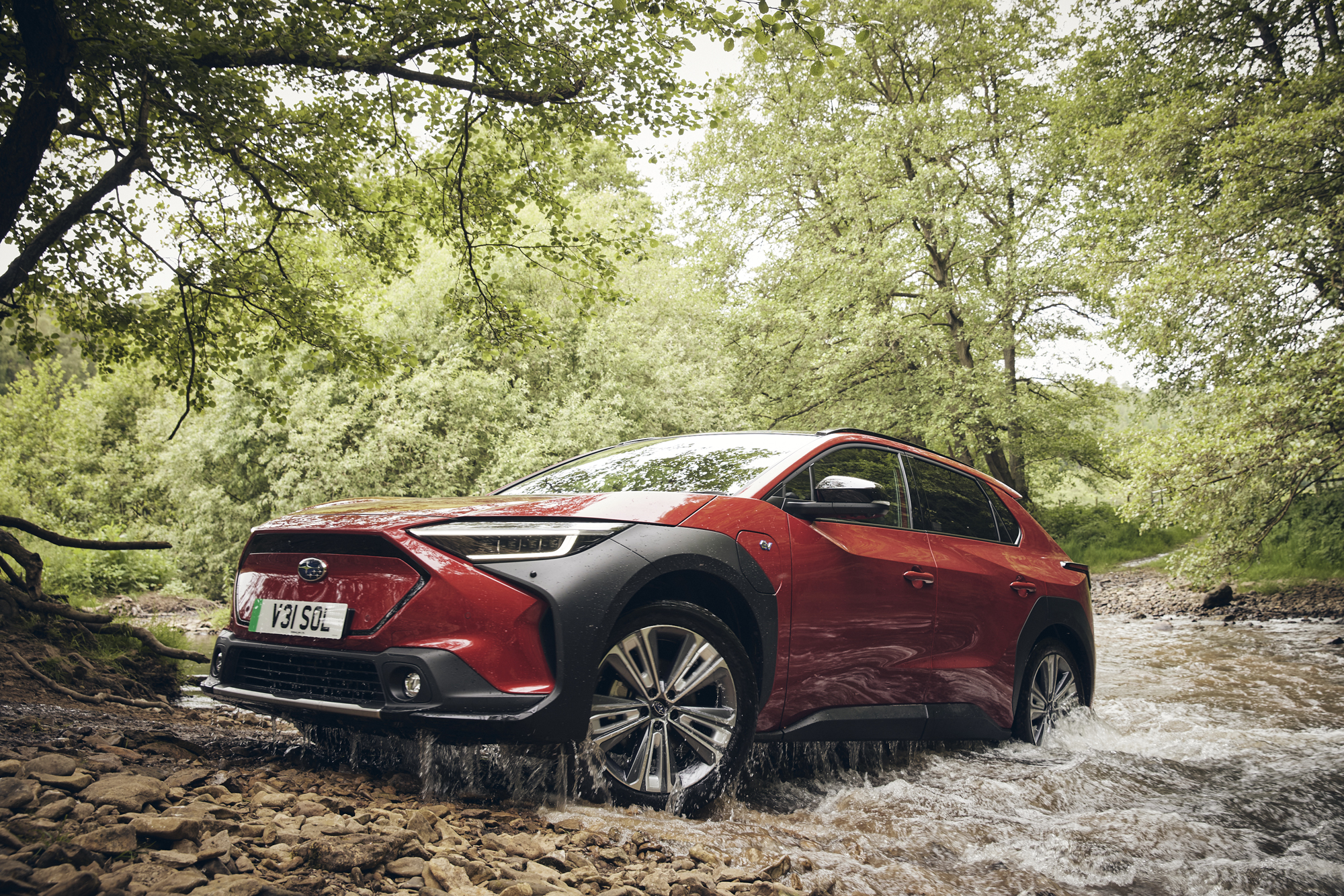
THE GOOD: Drives very nicely…
THE BAD: …for a few miles at a time
THE UGLY: Don’t even try to use the heater if you want to arrive within a week
NEED TO KNOW: Don’t be fooled by the official range figure. Drive the Solterra in anything other than ideal conditions and you’ll see more like 160 miles. It’s the same car as the Toyota bZ4X but with no front-wheel-drive option and significantly worse warranty cover.
THE ONE TO BUY: Limited spec – name, not description – only misses out on a wireless charger and a big glass roof
KEY DATA: Range 289 miles; efficiency 4.0 miles per kWh; max DC charging 28 minutes 10-80%
130 Toyota bZ4X
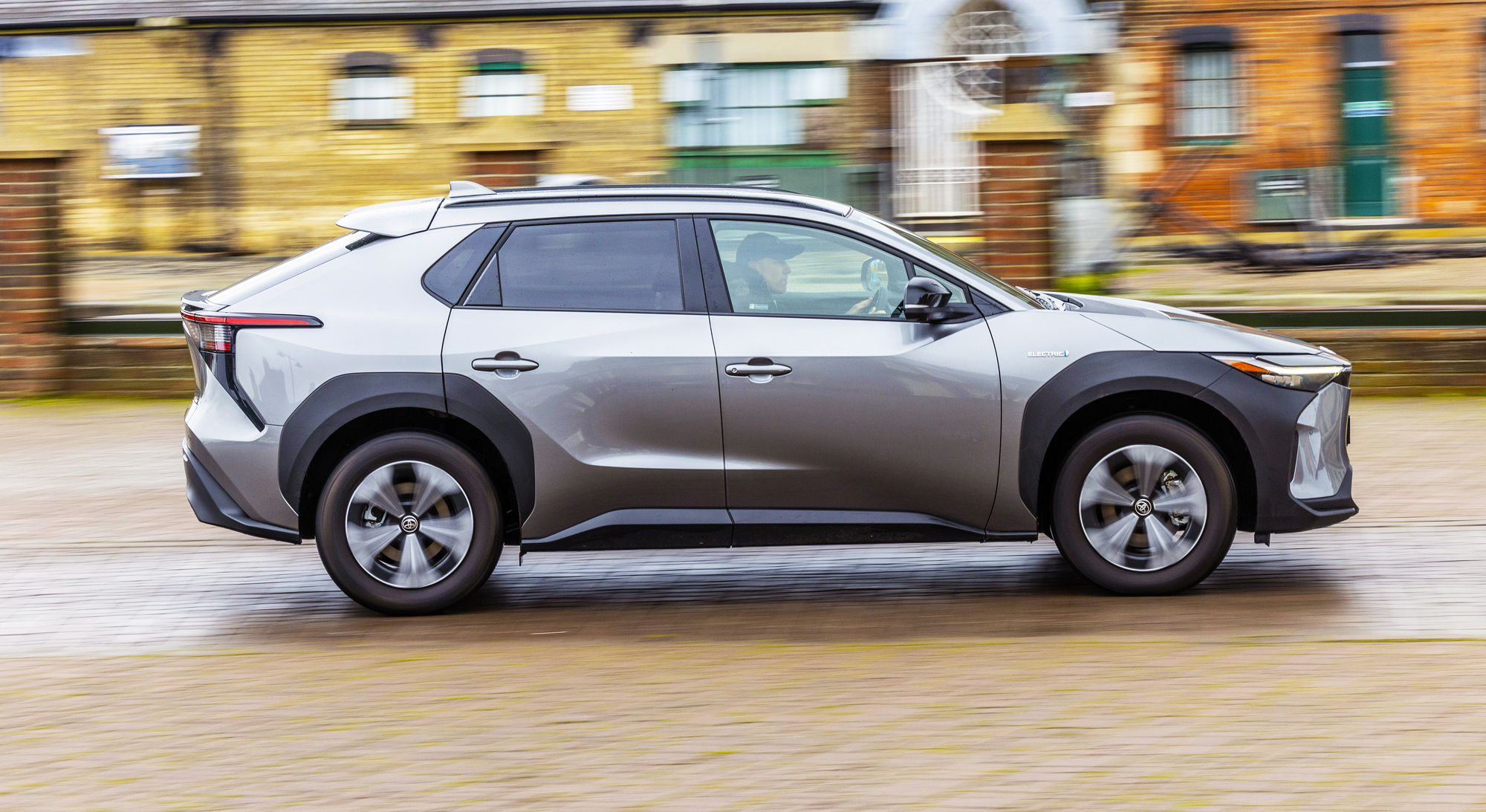
THE GOOD: Painless to own; good infotainment; refined
THE BAD: Fails to stand out in a packed class
THE UGLY: Toyota can do much better
NEED TO KNOW: We’ve driven the much-improved revised version of the bZ4X, but at the time of writing that hasn’t yet arrived in dealer showrooms, so it’s the disappointing first attempt that we’re rating here.
It’s a mass-market mid-sized crossover, and quite wacky looking: the interior has more tiers than a wedding cake, with small and distant driver’s instruments, a massive steering wheel and a centre console so high you’ll think you’ve shrunk. While it’s a little tame to drive – having an electric platform that’s a cousin of the hybrid RAV4 will do that – it’s calm and quiet on the move, and rides well even on big wheels. Go for a twin-motor version and it has some off-roading ability.
But where the bZ4X falls down is its inefficient powertrain, which is evident in its rather low claimed efficiency figure. Every time we’ve driven one, we’ve never even come close to hitting its range claim, and its pessimistic range predictor carves even more range off if you want to use the heater or air-con.
THE ONE TO BUY: Stick with the single-motor version
KEY DATA: Range 318 miles; efficiency 2.6.7 miles per kWh, max DC charging 32 minutes 10-80%
129 DS 3
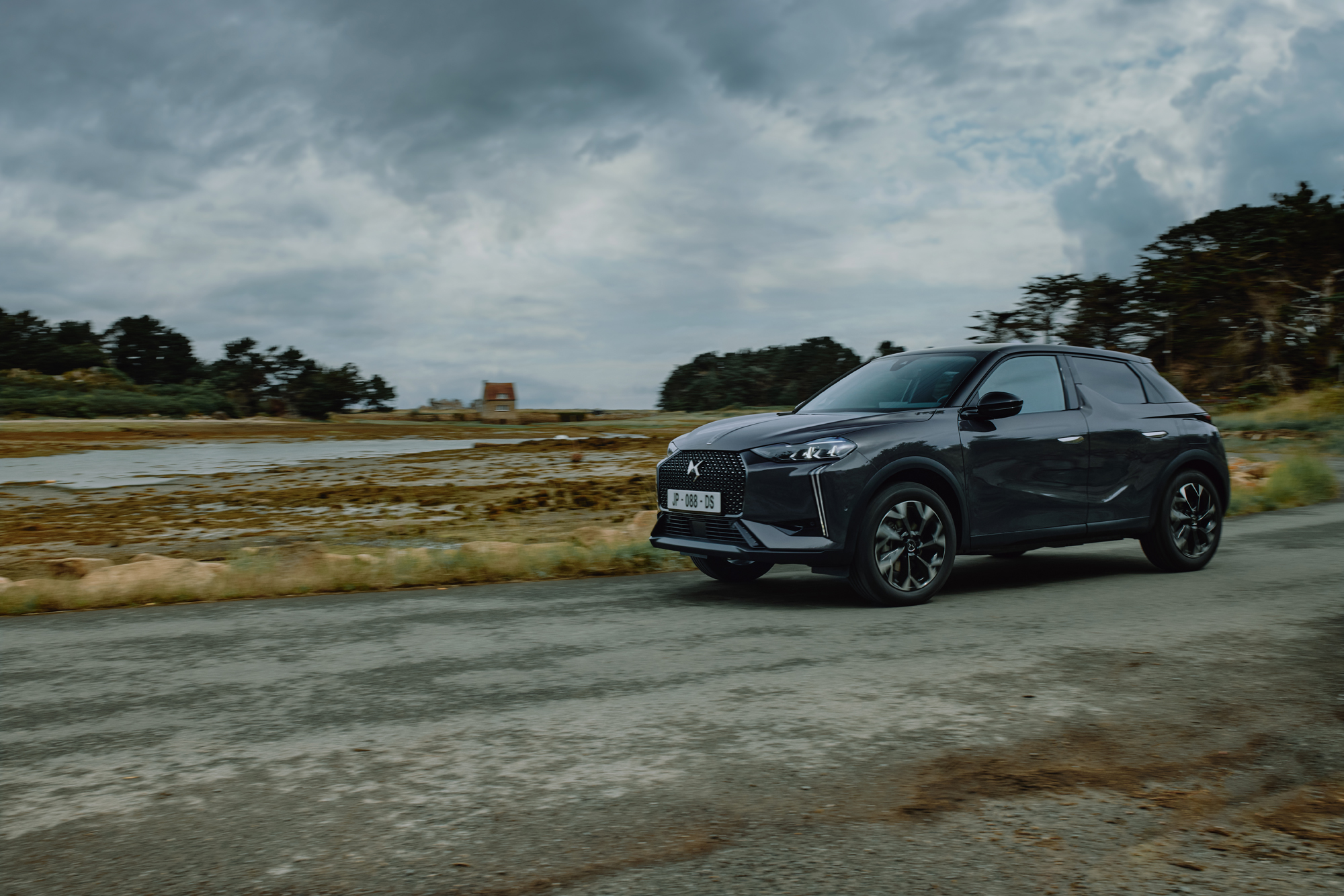
THE GOOD: Comfy, compact and classy
THE BAD: Rear seat space is tight
THE UGLY: Still on the tardy side, despite upgrades
NEED TO KNOW: The DS 3 started life as a Citroën, then became the smallest member of the DS line-up, and has since been improved inside, outside and under the skin. The idea remains the same: a classy compact electric car, also available as a hybrid. If it seemed a bit expensive when it first arrived, that’s less the case now. It looks and feels nice, but it’s let down by sluggish performance, and various alternatives offer more space in the back for less money.
THE ONE TO BUY: Choice of two trims, Pallas or Étoile, which is worth the extra two grand
KEY DATA: Range 246 miles; efficiency 4.0 miles per kWh; max DC charging 30 minutes 10-80%
128 Leapmotor B10
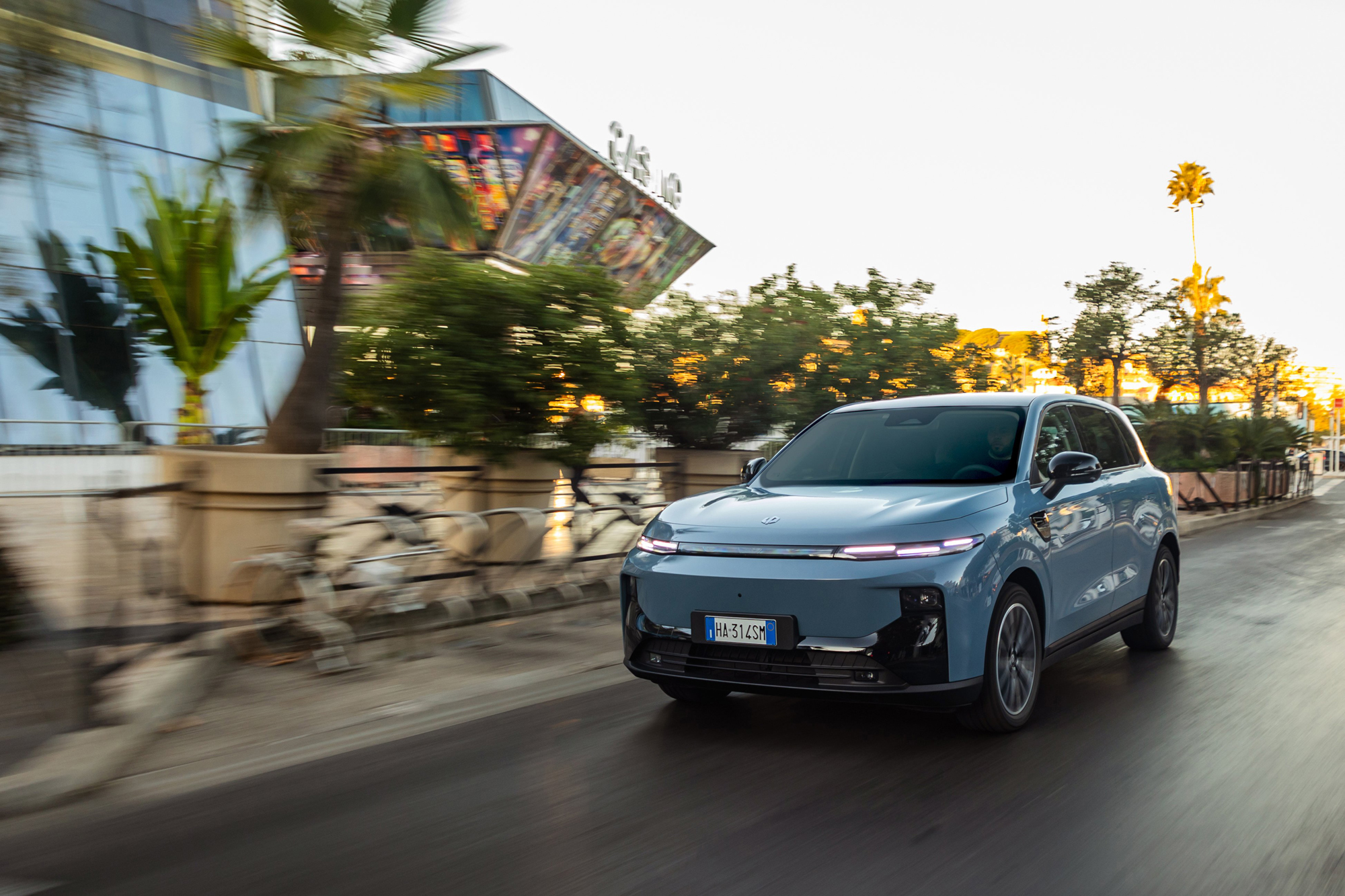
THE GOOD: Good ride quality; roomy cabin; lots of equipment
THE BAD: Nothing special to drive; touchscreen dominates the controls
THE UGLY: It’s cheap, but not much cheaper than the bigger C10
NEED TO KNOW: China’s Leapmotor has an arrangement with the Stellantis group for European sales, which may seem risky from a business point of view but adds a certain reassurance that the new name should be trusted because it has the backing of the people behind the very well established likes of Fiat, Peugeot and Citroën.
The B10 itself is a family-orientated compact crossover, a rival for cars such as the Kia EV3 and Skoda Elroq. It has a 67.1kWh battery, a 216bhp motor and rear-wheel drive.
It’s roomy and rides well, but there’s little fun or driver engagement, and a lot of the driver aids are intrusive.
THE ONE TO BUY: There’s only one powertrain and one trim level
KEY DATA: Range 270 miles; efficiency 4.0 miles per kWh; max DC charging 20 minutes 30-80%
127 Vauxhall Grandland Electric
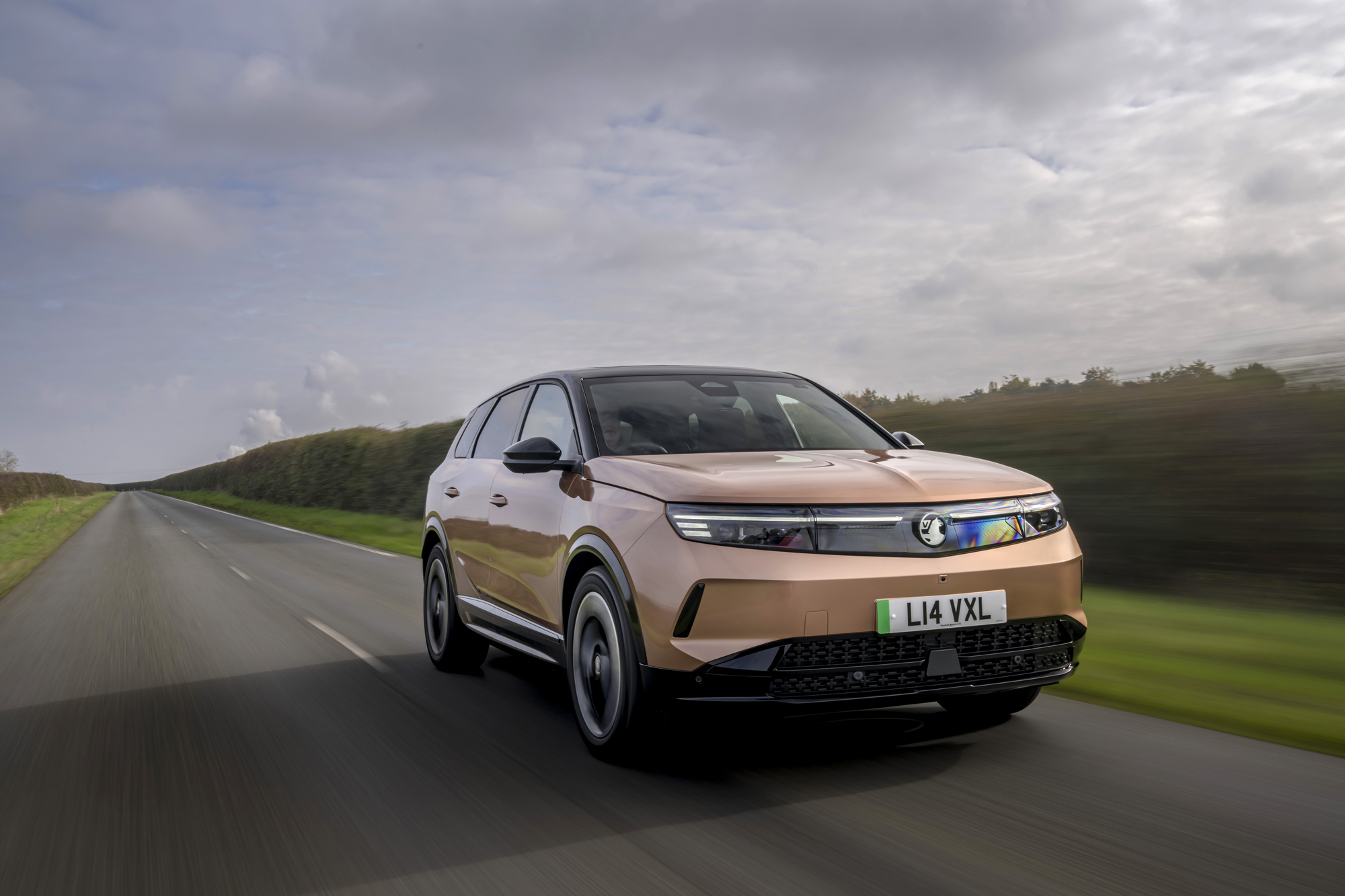
THE GOOD: Good amount of car for your money
THE BAD: Fidgety ride; fiddly infotainment; not much fun
THE UGLY: Fails to shine in any way
NEED TO KNOW: It’s a name that’s been around for a few years now, but this latest Grandland is significantly different from its predecessors, and not just in how it looks. Under the skin it shares underpinnings with the Peugeot 3008, and like the French car it’s available as a hybrid as well as this EV.
There’s a choce of two powertrains: front-wheel drive making 210bhp, with a range of 319 miles, or a 321bhp all-wheel-drive set-up with an official range of 304 miles. It handles well, although the ride quality isn’t great, and it’s comfortable and largely user-friendly inside.
THE ONE TO BUY: Keep it simple and keep your costs down, with the lower output and Design trim
KEY DATA: Range 319 miles; efficiency 3.7 miles per kWh; max DC charging 26 minutes 20-80%
126 Lexus RZ

THE GOOD: Offbeat Japanese luxury makes this a lovely place to sit
THE BAD: Revised, but still not as good as you’d hope
THE UGLY: Lots of annoying alerts, however well you drive
NEED TO KNOW: The RZ has recently undergone a series of revisions. It looks a little different inside and out, but the bigger changes are under the skin, aimed at improved efficiency and performance.
There’s a choice of three power levels, badged 350e, 500e and 550e. The basic single-motor 350 is probably all you need, because the main appeal of the RZ is its cabin, not its performance. The 500e has two e-motors and all-wheel drive. Like the 350 it’s offered in Premium and Premium Plus specification, while the sportier 550e comes with F Sport trim and steer-by-wire.
THE ONE TO BUY: The 221bhp entry-level version is fine
KEY DATA: Range 353 miles; efficiency 3.8-4.3 miles per kWh; max DC charging 30 minutes 10-80%
125 BYD Sealion 7
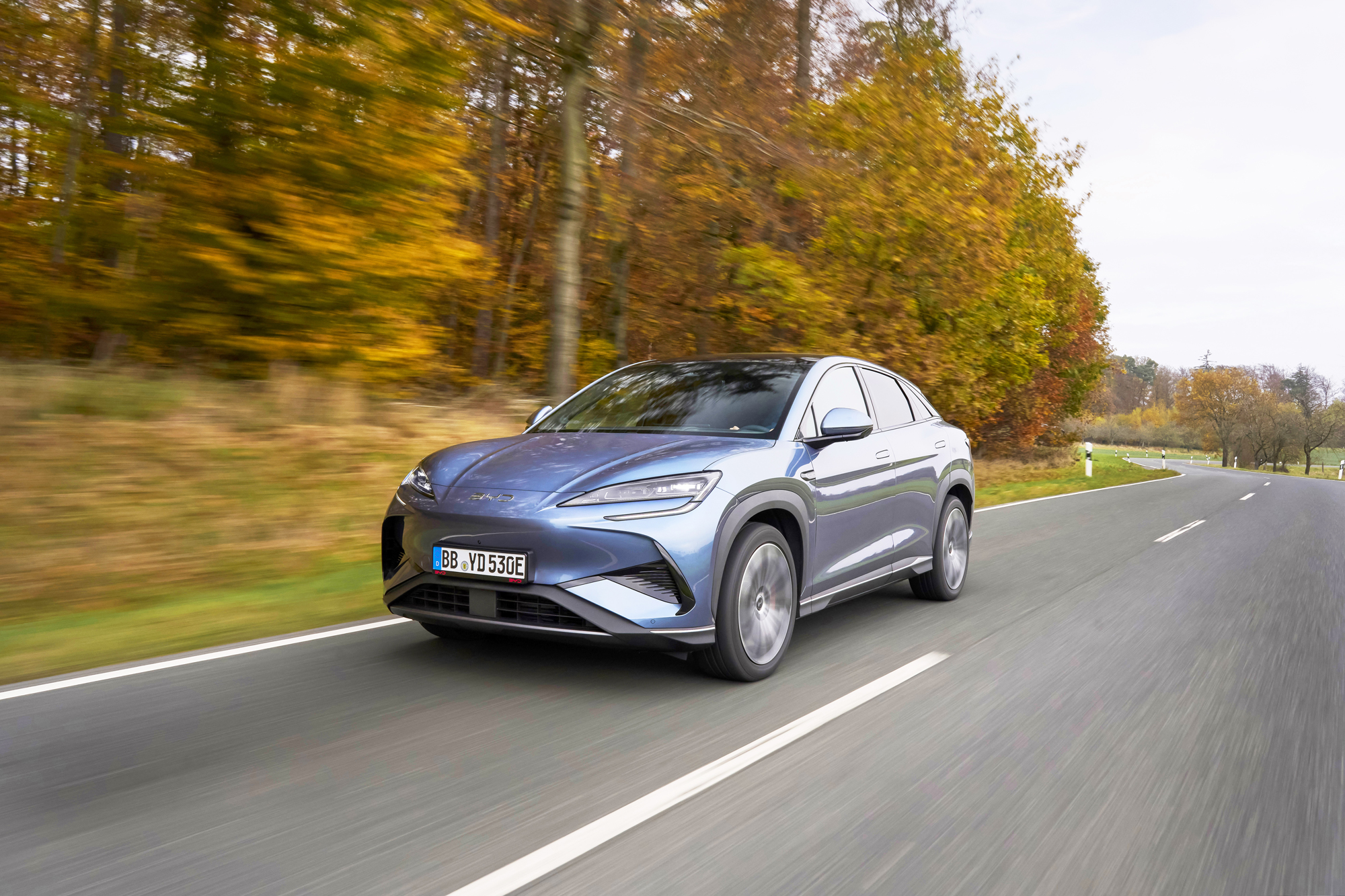
THE GOOD: Roomy and comfortable
THE BAD: Numb steering; lacks polish
THE UGLY: Only the range-topper gets full fast charging
NEED TO KNOW: BYD at the time of writing offers a choice of six EVs in the UK, and by the time you read this it might be even more. As well as being an impressively quick roll-out from a business point of view, the standard of the cars is pretty good too. Good but not great.
This taller variant on the Seal is fine: transport for five and their bags, and pretty quick too. But there’s little to detain the keen driver or the bargain hunter.
There are three versions: Comfort, plus two with all-wheel drive, Design and Excellence.
THE ONE TO BUY: Go for the Excellence AWD to get the performance and the most rapid charging… but also the big price
KEY DATA: Range 312 miles, efficiency 2.8 miles per kWh, max DC charging 24 minutes 10-80%
124 Leapmotor C10
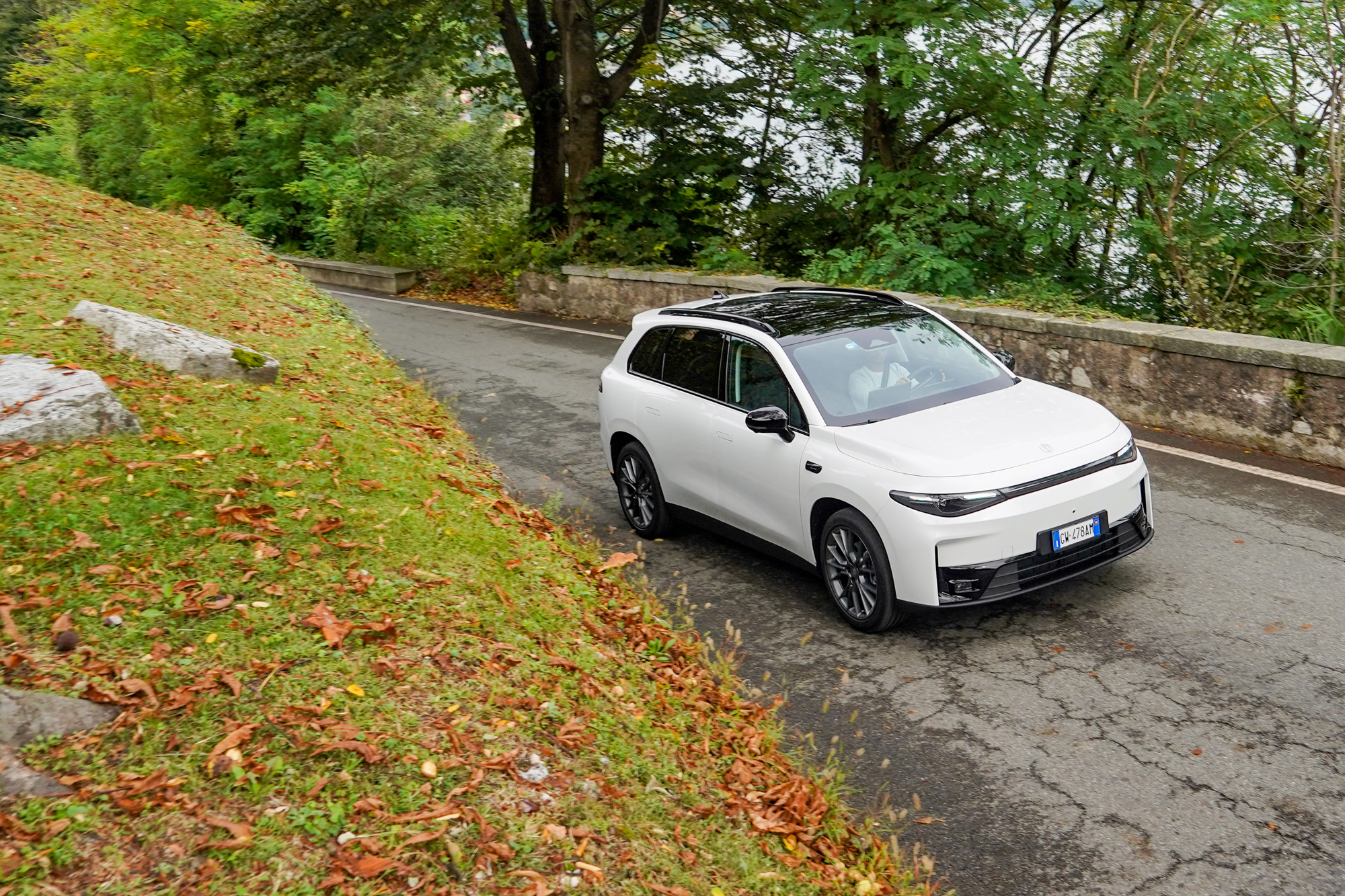
THE GOOD: Low cost; lots of kit; huge passenger space
THE BAD: Unbearable assistance systems; uninspiring to drive; complex touchscreen
THE UGLY: Slow charging speeds of 84kW will feel painful on a long journey
NEED TO KNOW: Leapmotor is a Chinese tech brand that’s been selling hundreds of thousands of cars in China for some years, and now it’s in the UK under the umbrella of car-making giant Stellantis. The C10 is a Tesla Model Y or Skoda Enyaq rival, a big electric SUV that undercuts both of those alternatives on price, yet offers loads more equipment for the money including a huge panoramic roof and much more.
It’s also vast inside, with limousine-rivalling rear legroom. However, it does feel cheap in some areas, not least the overly intrusive safety assistance systems that – at least in the car we drove – were unbearable. Over-the-air software updates may well help to remedy this, but the wind- and tyre noise, not to mention the comparably very slow charging times, aren’t going away any time soon.
Ultimately this is a lot of space and equipment for the money, but the Leapmotor will never let you forget that you chose the really cheap option. You’re much better off buying a great used electric car, at this sort of money.
THE ONE TO BUY: There’s only one variant of all-electric Leapmotor C10, which comes with rear-wheel drive and a 0-62mph time of 7.5 seconds – so best to go for that one, then. An all-wheel-drive version with longer range is offered in some markets
KEY DATA: Range 263 miles; efficiency 3.8 miles per kWh; max DC charging 45 minutes 10-80%
123 Fiat 600e
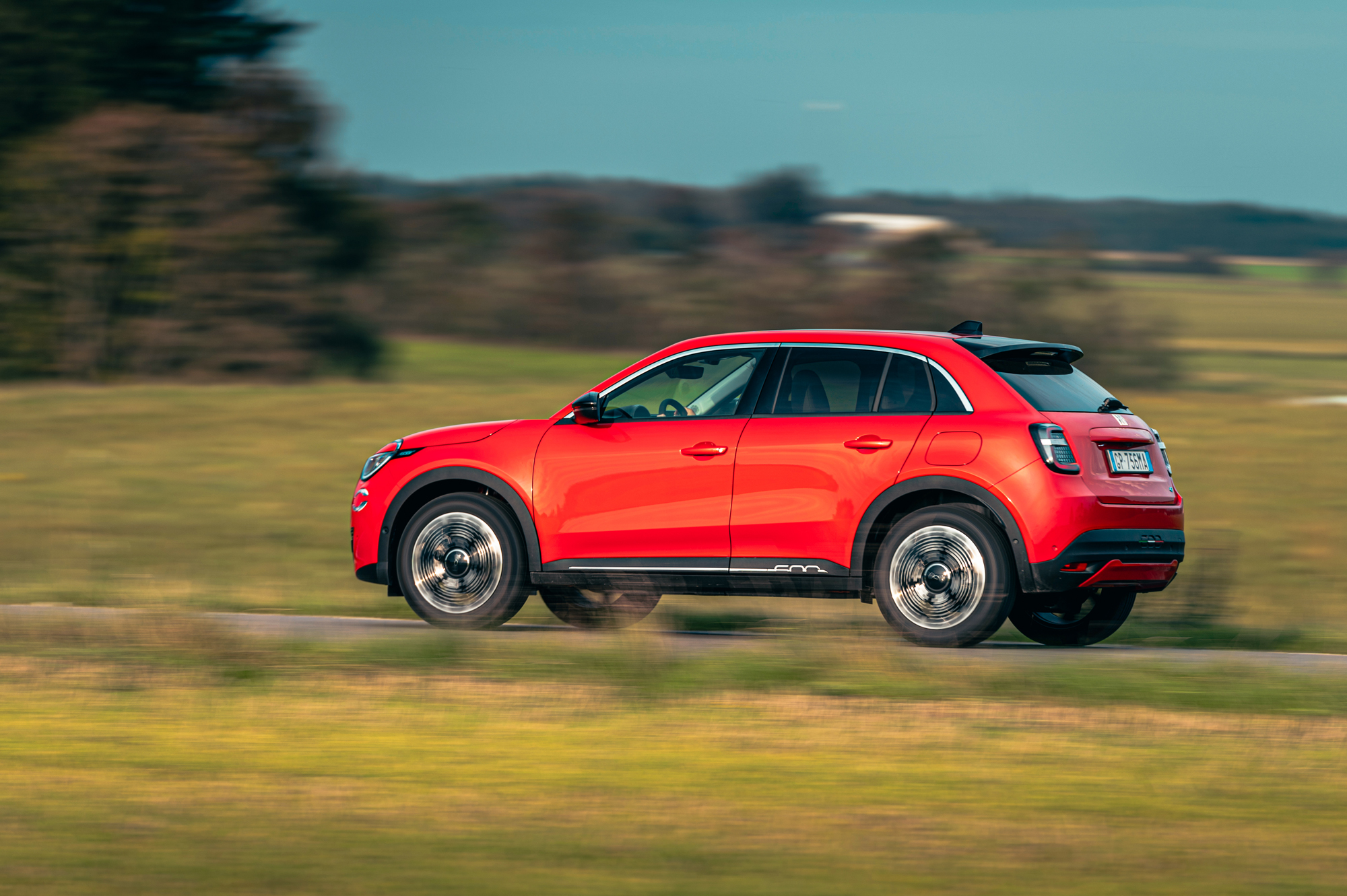
THE GOOD: Ride quality and refinement
THE BAD: Drive is indistinguishable from Jeep’s Avenger
THE UGLY: In orange, it looks like Garfield the Cat
NEED TO KNOW: We like Fiat’s 500e but the 600e is a.n.other identikit Stellantis small crossover. It has the same quiet, comfy suspension as the related Jeep Avenger and the same lightweight, sloppy steering. Ultimately it’s a case of which design you like best; the simple-to-use interior is the same. There’s now a hybrid version too.
THE ONE TO BUY: Jeep Avenger
KEY DATA: Range 252 miles; efficiency 4.09 miles per kWh; max DC charging 26 minutes 10-80%
122 Mercedes-Benz EQE SUV
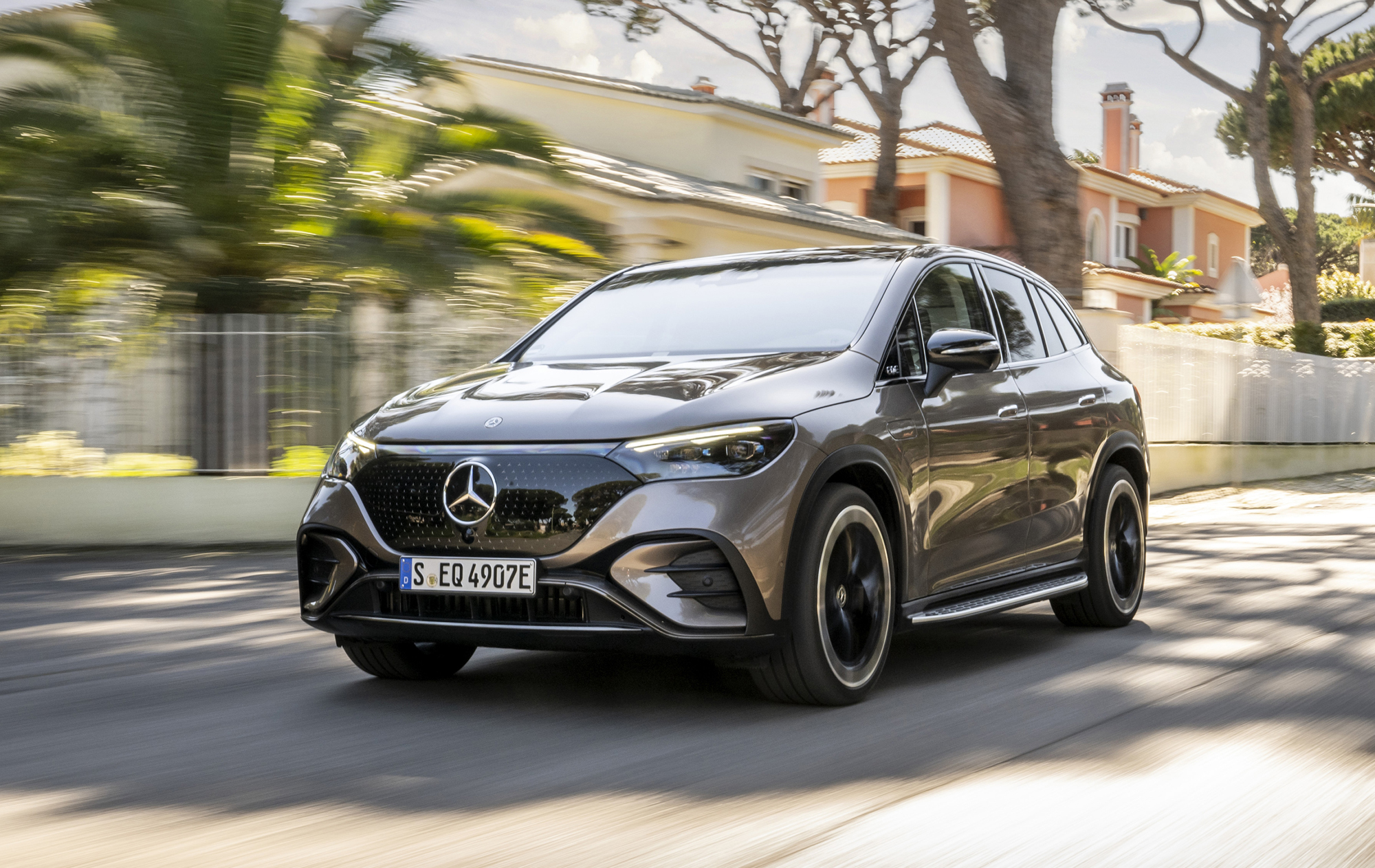
THE GOOD: Rear-wheel steering gives amazing low-speed agility
THE BAD: Unsettled ride and lolloping handling; pricey
THE UGLY: Interior downright flimsy in places
NEED TO KNOW: The GLE’s electric equivalent doesn’t get seven seats but does cost significantly more. There’s an impressive tech and spec list, yet the whole car feels a bit unfinished. That’s especially true of the wallowing road manners, unnervingly long brake pedal and interior quality.
THE ONE TO BUY: The 350 4Matic costs the least, goes the farthest and has performance that’s respectable enough
KEY DATA: Range 334 miles; efficiency 3.7 miles per kWh; max DC charging 32 minutes 10-80%
121 Mazda 6e

THE GOOD: Cabin comfort; efficiency; smart colours
THE BAD: Uninspiring drive; irritating touchscreen; slow rapid charging
THE UGLY: The smaller-battery Mazda 6e is recommendable, but the big-battery car is nearly
impossible to justify
NEED TO KNOW: The Mazda 6e is the Japanese brand’s second crack at an EV (after the MX-30), but it’s quite an odd one. There are two versions of the Mazda 6e. The short-range model has a 68.8kWh LFP battery pack and a single electric motor on the rear axle with 254bhp. It’s good for a 0-62mph time of 7.6 seconds, and a top speed of 109mph.
The long-range model gets an 80kWh NMC battery and a slightly less potent 242bhp electric motor. Interestingly, both cars weigh the same at 1962kg, so the only thing to dull the long-range model’s 0-62mph time is the power deficit. And even then, it’s only by a couple of tenths. Weirdly, the smaller-battery Mazda 6e can charge much more quickly – at up to 165kW – while the more expensive, big-battery car only manages 90kW rapid charging. Things only get weirder when it comes to range, as the small-battery 6e will do 300 miles official range, while the big battery manages just 345 miles, so there’s not much in it. It’s all just very peculiar, really.
Still, the Mazda’s interior is very spacious. You get more room than you do in a Tesla Model 3, although the saloon boot opening on the Mazda means that a Polestar 2 or VW ID. 7 will likely be more useful with their hatchback boots. It’s just okay to drive: fast enough, and the handling is okay, but don’t expect any of that Mazda handling magic.
THE ONE TO BUY: UK pricing hasn’t been confirmed yet, but you’d be mad to go for the big battery. Stick with the 68.8kWh version, which benefits from decent rapid charging
KEY DATA: Range 300 miles; efficiency 4.4 miles per kWh; max DC charging 24 minutes 10–80%
120 Genesis Electrified G80
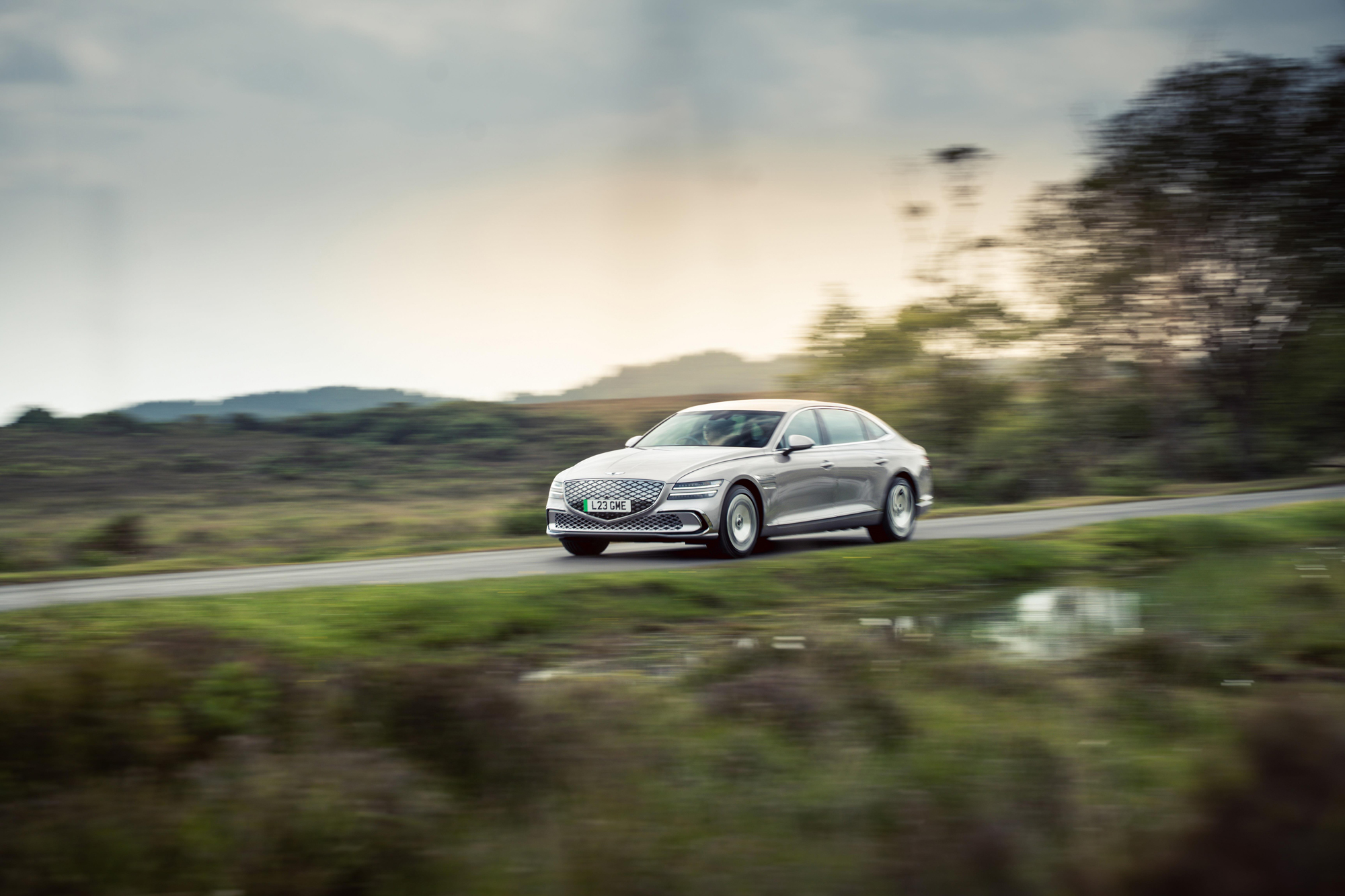
THE GOOD: Surprisingly accomplished EV luxury and reasonably good value
THE BAD: Dull drive
THE UGLY: One day you’ll be next to a BMW i7 in traffic and you’ll be sad
NEED TO KNOW: Luxury to rival the Germans and quality to eclipse them, for a surprisingly reasonable price – the G80 splits the i5 and i7 in size but is cheaper than either. It’s comfy but lacks the dynamic sharpness those cars have. The current version is significantly improved over the previous one, and is now available in long-wheelbase only.
THE ONE TO BUY: There’s only one powertrain and one trim level, but various packs can be added as optional extras
KEY DATA: Range 354 miles; efficiency 3.4 miles per kWh; max DC charging 25 minutes 10-80%
119 BYD Atto 3
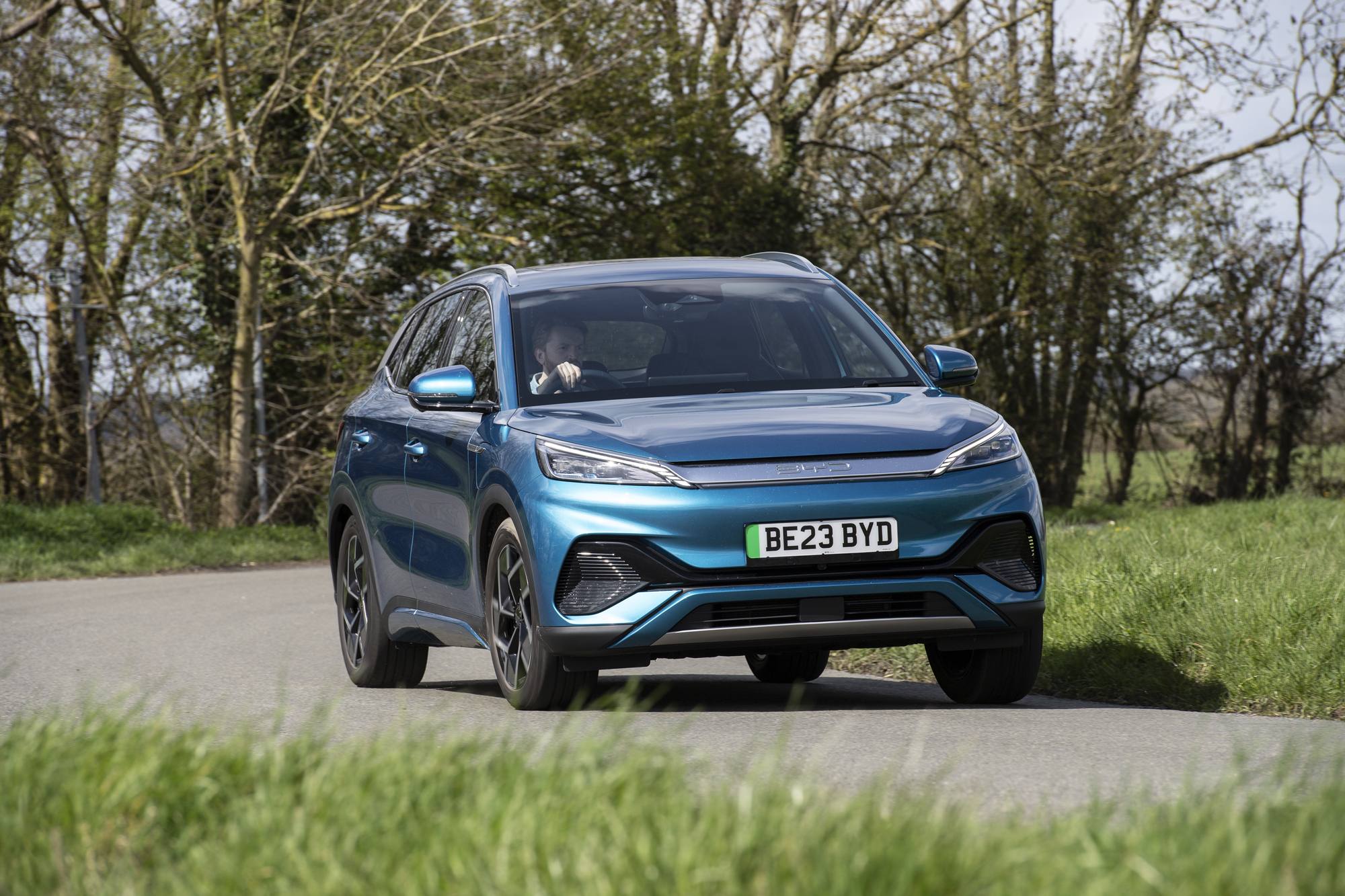
THE GOOD: Efficient and well-equipped Kia Niro rival
THE BAD: Driver assists will make you mad
THE UGLY: Your children constantly twanging the elastic on the door bins
NEED TO KNOW: BYD’s first mainstream effort isn’t the cheapest in its class but does come stacked full of equipment. The interior is also plusher than other Chinese offerings, although it’s also very Marmite. Performance and efficiency are good, but someone needs to finish tuning the suspension.
THE ONE TO BUY: Entry-level Active has everything you need and more. Pay a little more for Comfort if you’ve access to 11kW charging
KEY DATA: Range 260 miles; efficiency 3.9 miles per kWh; max DC charging 29 minutes 30-80%
118 Zeekr 7X
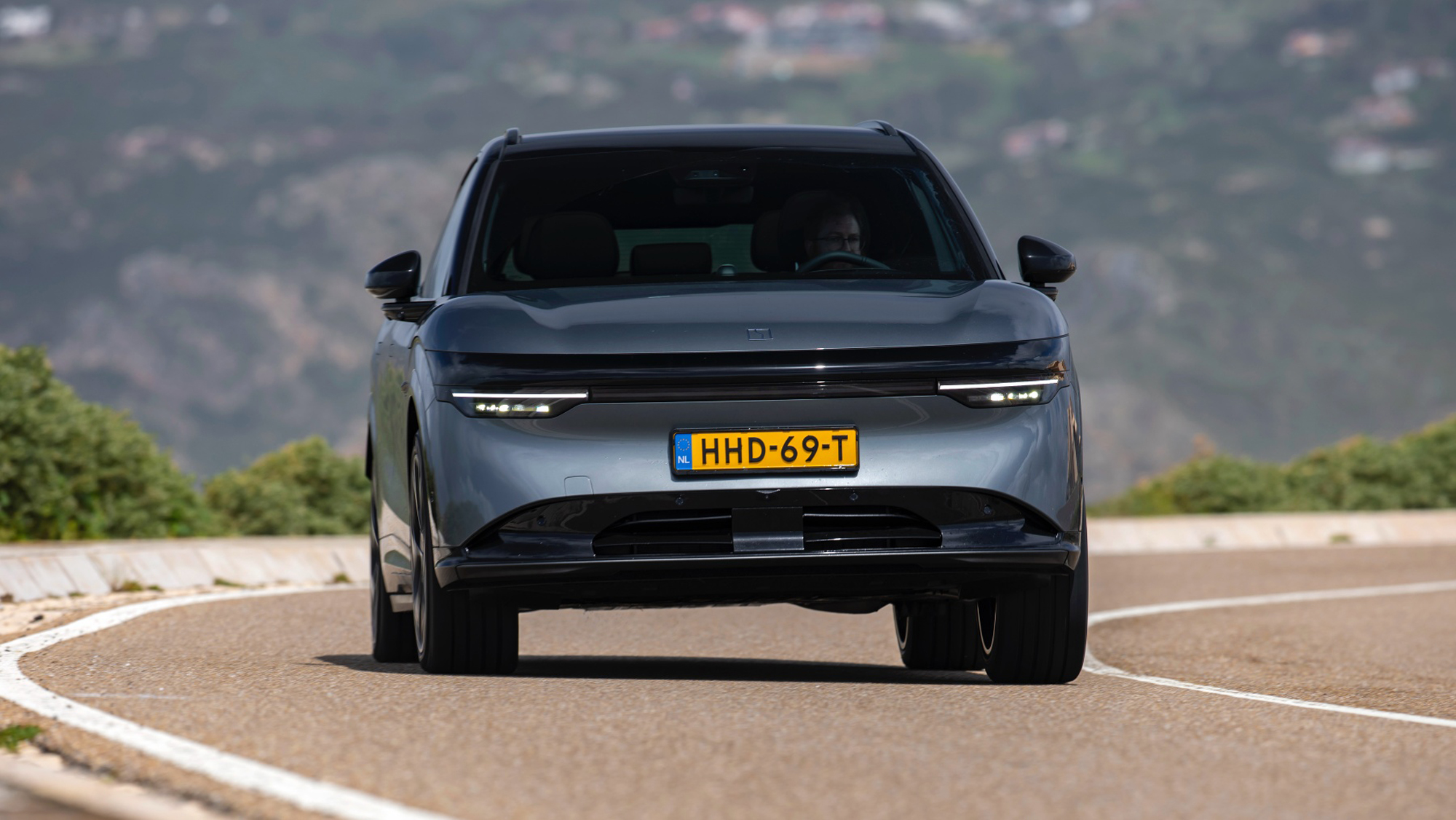
THE GOOD: Rapid; good ride comfort; tech-filled interior
THE BAD: Numb steering; over-complicated touchscreen
THE UGLY: There’s something a bit unfinished about the whole car
NEED TO KNOW: Zeekr is a new brand that’s under the Geely portfolio – just like Smart, Volvo, Lotus, Volvo and now Geely-branded cars too. The Zeekr 7X itself is a large premium electric SUV that’s targeted at the Tesla Model Y, while underneath it’s closely related to the Smart #5. This is no budget offering. When it comes to the UK in 2027, the Zeekr 7X will be a premium car to take on the Tesla, Audi Q6 e-Tron, BMW iX3 and more – albeit undercutting those rivals on price while offering a huge array of tech.
Ranging from the 36.2-inch head-up display, through to DC rapid charging hardware that’s capable of juicing up the batteries at up to 480kW (making this one of the fastest-charging cars in the world), the Zeekr 7X is all about the tech. Having said that, it does feel classy inside. We’d say that the Zeekr’s interior is plusher than in a Model Y, if not quite what you get in the BMW iX3 Neue Klasse.
UK specifications and model line-up haven’t been confirmed, but if Zeekr’s offerings in other European markets are anything to go by we’ll be getting the 7X Core with a 75kWh LFP battery and 298-mile WLTP range, plus a punchy 410bhp going to the rear wheels for 0-62mph in 6.0 seconds. The Long Range RWD gets an NMC battery with 100kWh of capacity, boosting range to a much healthier 382 miles, using the same power and performance.
The top-spec AWD Privilege keeps the 100kWh battery and boosts power to a heady 630bhp, going to all four wheels and dropping the 0-62mph time to 3.8 seconds. Range falls to 337 miles. This is the version of the Zeekr that we’ve driven, and it is incongruous in the way that it feels like a mundane yet refined family SUV with soft suspension and lots of bodyroll, that will then fire up the road fast enough to make your kids cry. It doesn’t feel confident enough to deal with so much power.
THE ONE TO BUY: The sheer unnecessariness of the Privilege model’s performance would suggest that the mid-range Zeekr 7X Long Range RWD is the one to go for
KEY DATA: Range 382 miles; efficiency 4.1 miles per kWh; max DC charging 11 minutes 10-80%
117 DS Nº4 E-Tense
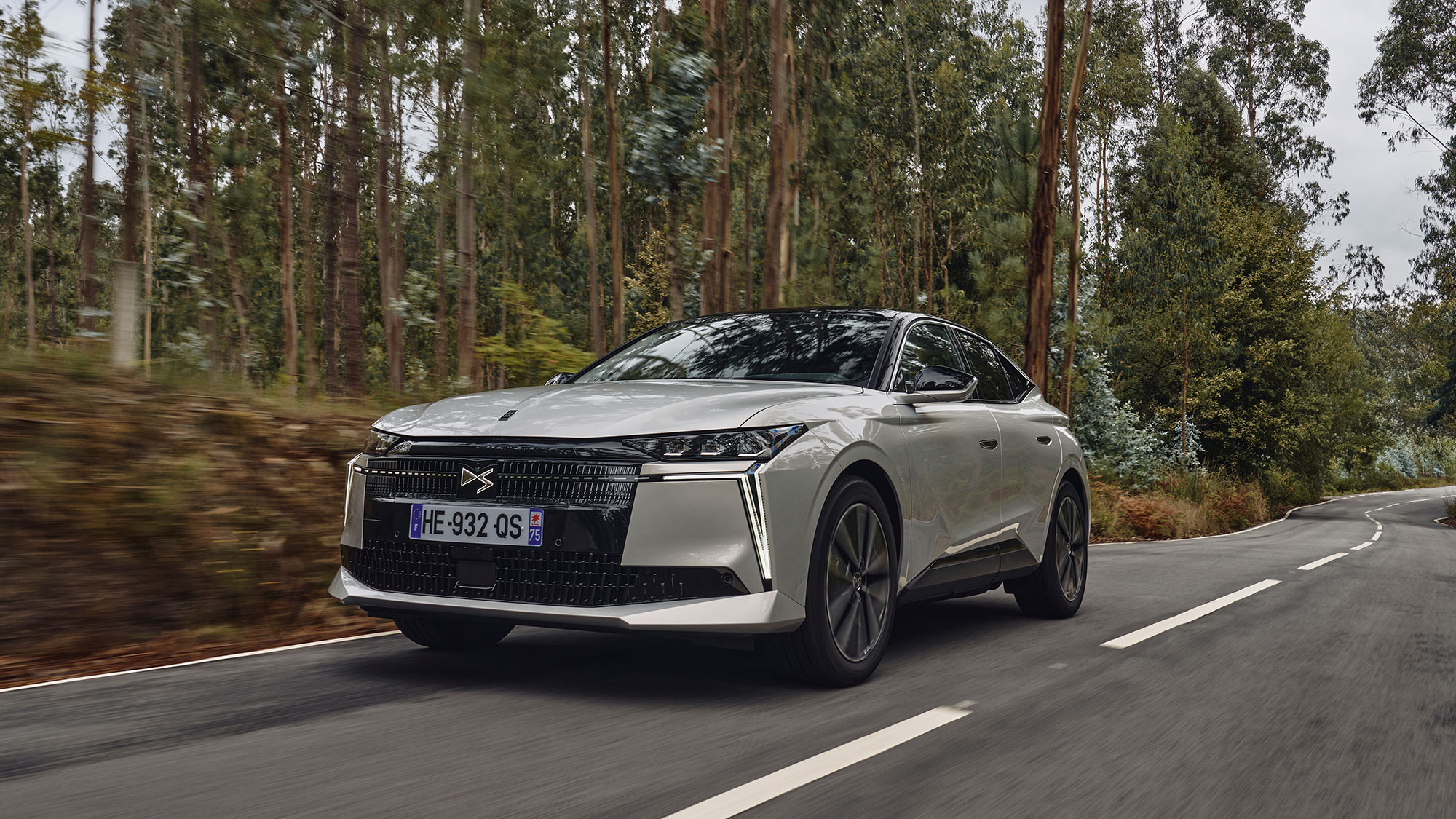
THE GOOD: Plush upholstery; quirky design; comfortable ride
THE BAD: Tardy dynamics; not much rear headroom; clunky infotainment
THE UGLY: Useless storage tray in the centre console sums up the challenges of being stylish and compact
NEED TO KNOW: What used to be the DS 4 has not just acquired a more complex name, it has new styling that draws on the larger Nº8 fastback SUV, plus an interior update and a new electric powertrain that’s a big step up.
The general idea is the same: an upmarket electric hatchback. But the execution is rather more wholehearted this time around. Chrome is ditched in favour of gloss black. There’s a new digital instrument cluster and a new central touchscreen that houses more controls than before.
It has fundamentally the same EMP2 underpinnings as the Vauxhall Astra Electric, but replaces that car’s 54kWh battery with a 61kWh unit. You get more range, more power and better acceleration.
The overall orientation is comfort, which is generally welcome, but it seems to be at the expense of the handling, which lacks sharpness. There’s lots of bodyroll.
THE ONE TO BUY: Entry-level Pallas is more than plush enough
KEY DATA: Range 280 miles; efficiency 4.8 miles per kWh; max DC charging 30 minutes 20-80%
116 GMC Hummer EV
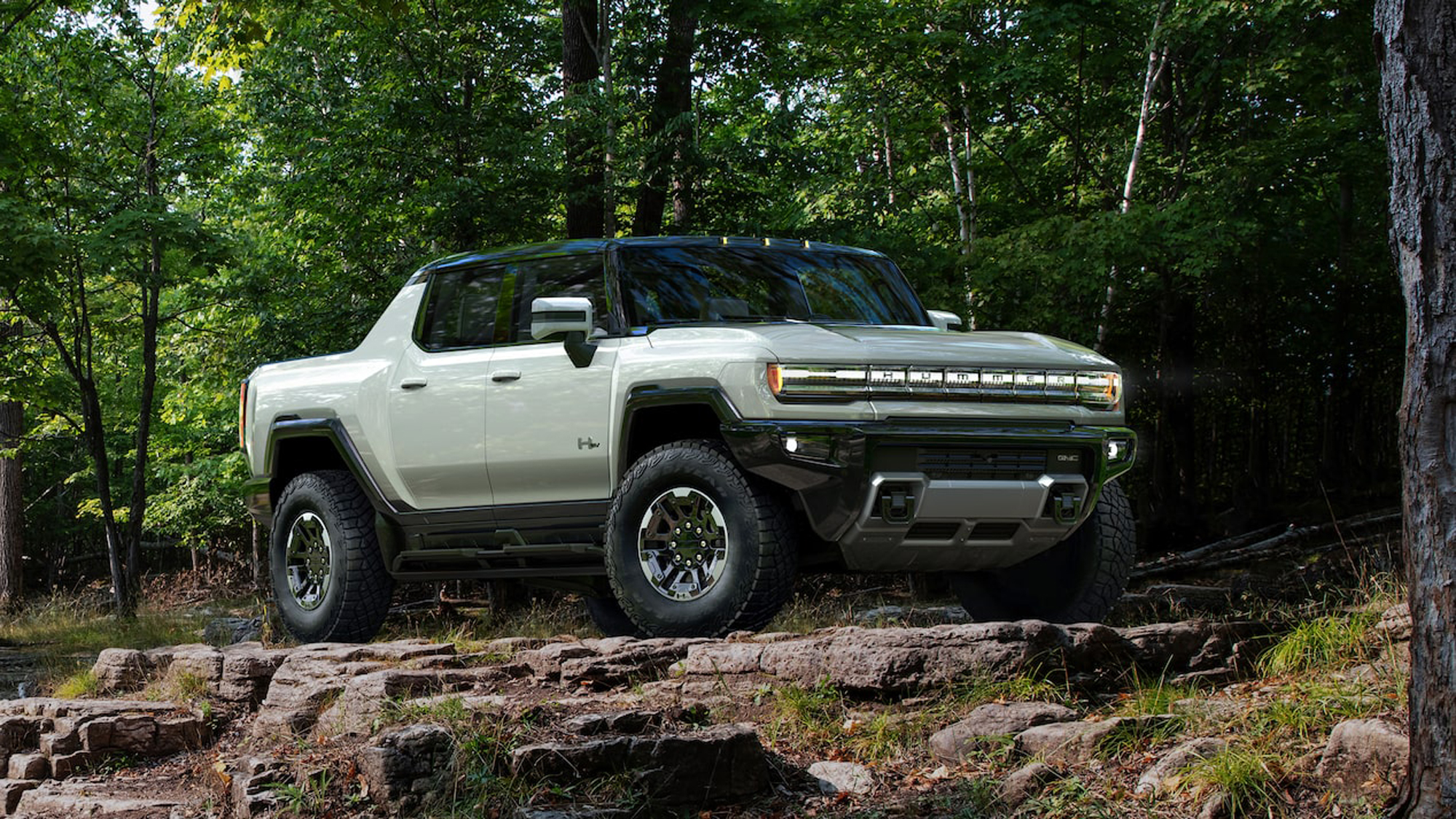
THE GOOD: Quick and capable
THE BAD: Big and heavy
THE UGLY: Too darn wide
NEED TO KNOW: There’s something highly amusing about the beyond-the-pale Hummer being reincarnated as an EV, in line with former superfan Arnold Schwarzenegger’s belated embrace of a greener outlook. It’s still… a bit much. It weighs more than four tonnes.
There’s now a choice of pick-up truck or SUV, in EV2X and EV3X forms: two motors for the 2X, three for the 3X. They are all highly capable off-road, and highly Hummer-like on road… if you can find a road wide enough.
It can go very quickly – 0-60mph in the region of three seconds – and it can crab walk. The whole thing is a remarkable technical achievement – a very good answer to a very daft question.
THE ONE TO BUY: Your decision is a matter between you, your maker and your therapist. It feels a bit futile to argue that the two-motor version is enough, and its 319-mile range makes it superior to the triple-motor’s 310 miles
KEY DATA: Range 319 miles; efficiency 2.0 miles per kWh (est); max DC charging 31 minutes 10-80%
115 Ford F-150 Lightning
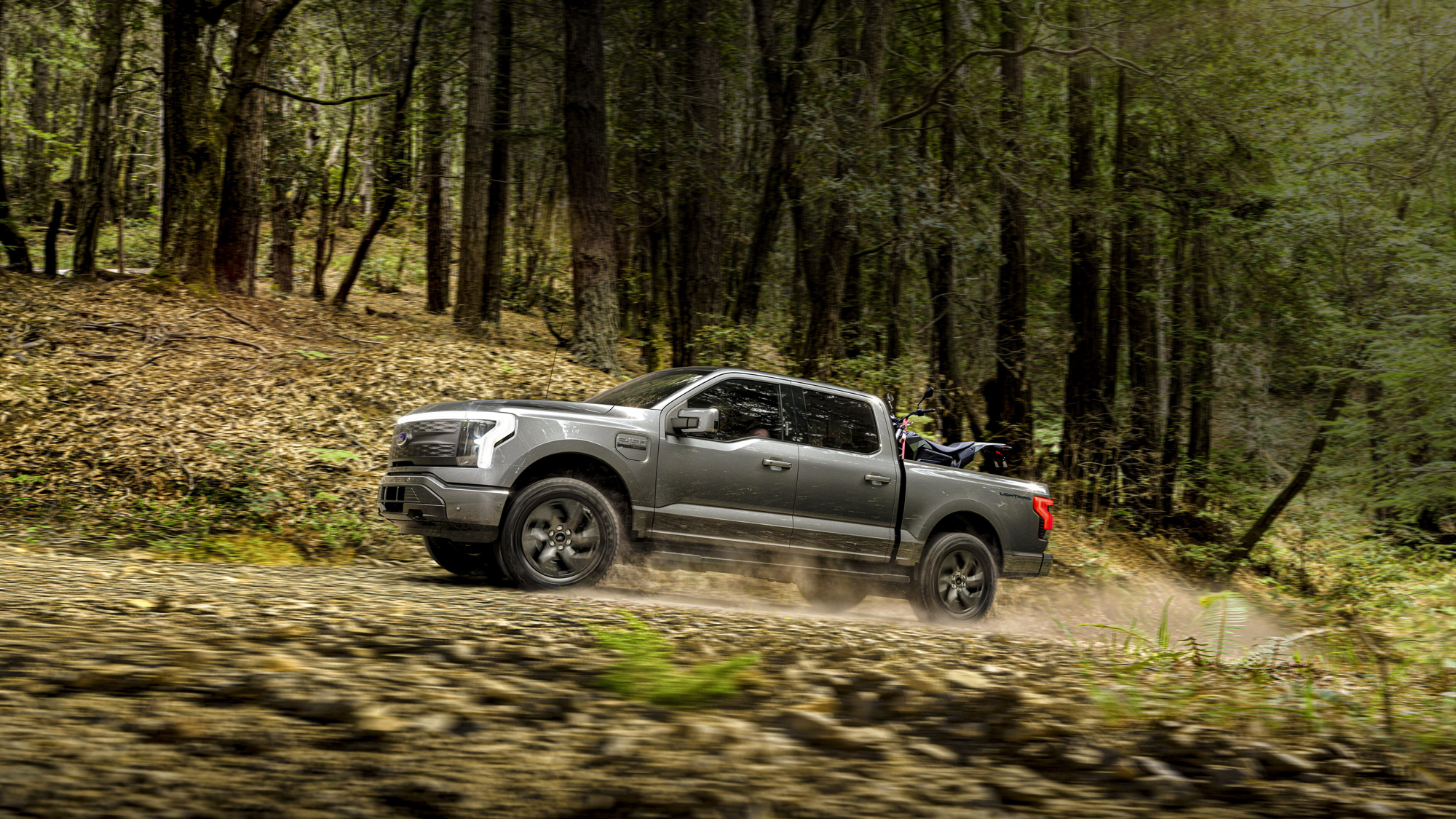
THE GOOD: Useful, in ways the regular version can only dream of
THE BAD: Heavy; range isn’t a match for that regular truck
THE UGLY: A spirited attempt that hasn’t really taken off
NEED TO KNOW: This works much better than it should. Ford didn’t create a ground-up clean-sheet electric pick-up truck, instead opting to adapt the huge-selling combustion version.
And yet it drives well, with half-decent range (depending on the version), and it’s fab for powering your campsite, home etc.
THE ONE TO BUY: It’s a work truck at heart, so go for the Pro rather than a fancier version you might worry about getting dirty
KEY DATA: Range 300 miles; efficiency 2.0-2.5 miles per kWh (est); max DC charging 32 minutes 15-80%
114 Leapmotor T03
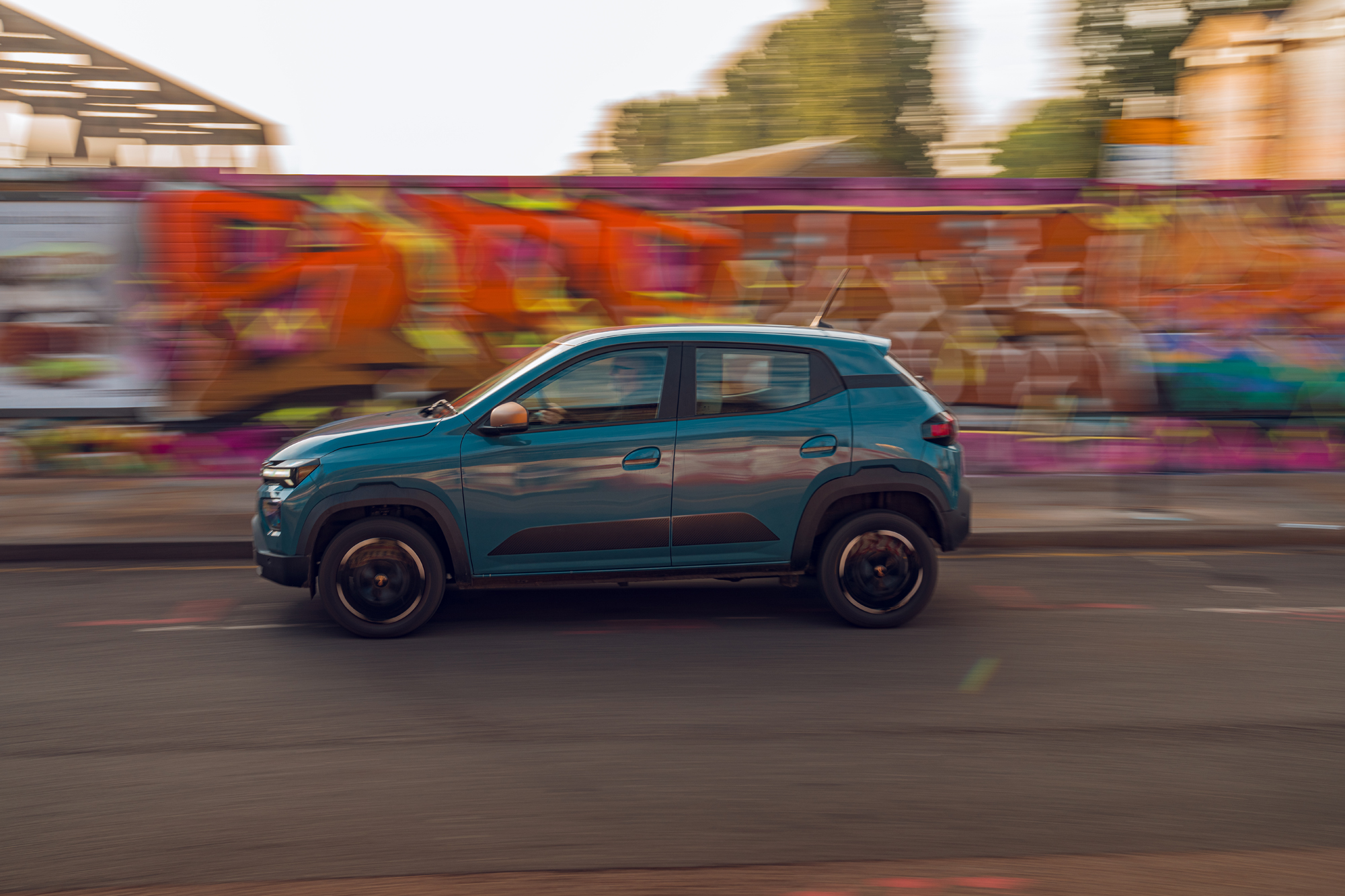
THE GOOD: Cheap; efficient; more kit than a Dacia Spring
THE BAD: Cheap, and not just in the good way
THE UGLY: The beeps and the bongs
NEED TO KNOW: Leapmotor is a new (to the UK, anyway) Chinese brand that’s being distributed in Europe by Stellantis. The T03 is its dinky urban electric runabout, which gets a 37.3kWh battery for a WLTP range of up to 165 miles, and is a direct rival to the Dacia Spring. It’s actually not too bad to drive, and feels a bit more substantial than the budget Dacia EV, and its range isn’t too bad in the context of town use. We managed an average 3.1 miles per kWh in mixed driving on a winter run, too, which isn’t terrible and suggests a cold-weather real-world range of around 115 miles. Again; not too bad, given that this is the cheapest five-door electric car that you can buy.
However, it does feel incredibly cheap. The electric motor emits a fierce whine at almost any speed, the wind- and road noise is a constant companion, the materials are unmistakably budget, and it all just screams ‘I’m cheap’ all of the time. That’s fine, in its own way, and we’re pleased that there are truly attainable new EVs coming to market. Plus, you get a 10-inch touchscreen, loads of safety kit and even a panoramic roof – yes, on a £16,000 electric car. Pretty remarkable, really.
THE ONE TO BUY: The T03 is all about saving money, so go for the cheapest one. Or go for a used electric car (a Renault 5, a Fiat 500, a Honda E, anything at all…) that doesn’t have overly intrusive safety assistance systems and headache-inducing refinement. Your call
KEY DATA: Range 165 miles; efficiency 4.4 miles per kWh; max DC charging 53 minutes 10-80%
113 Polestar 4
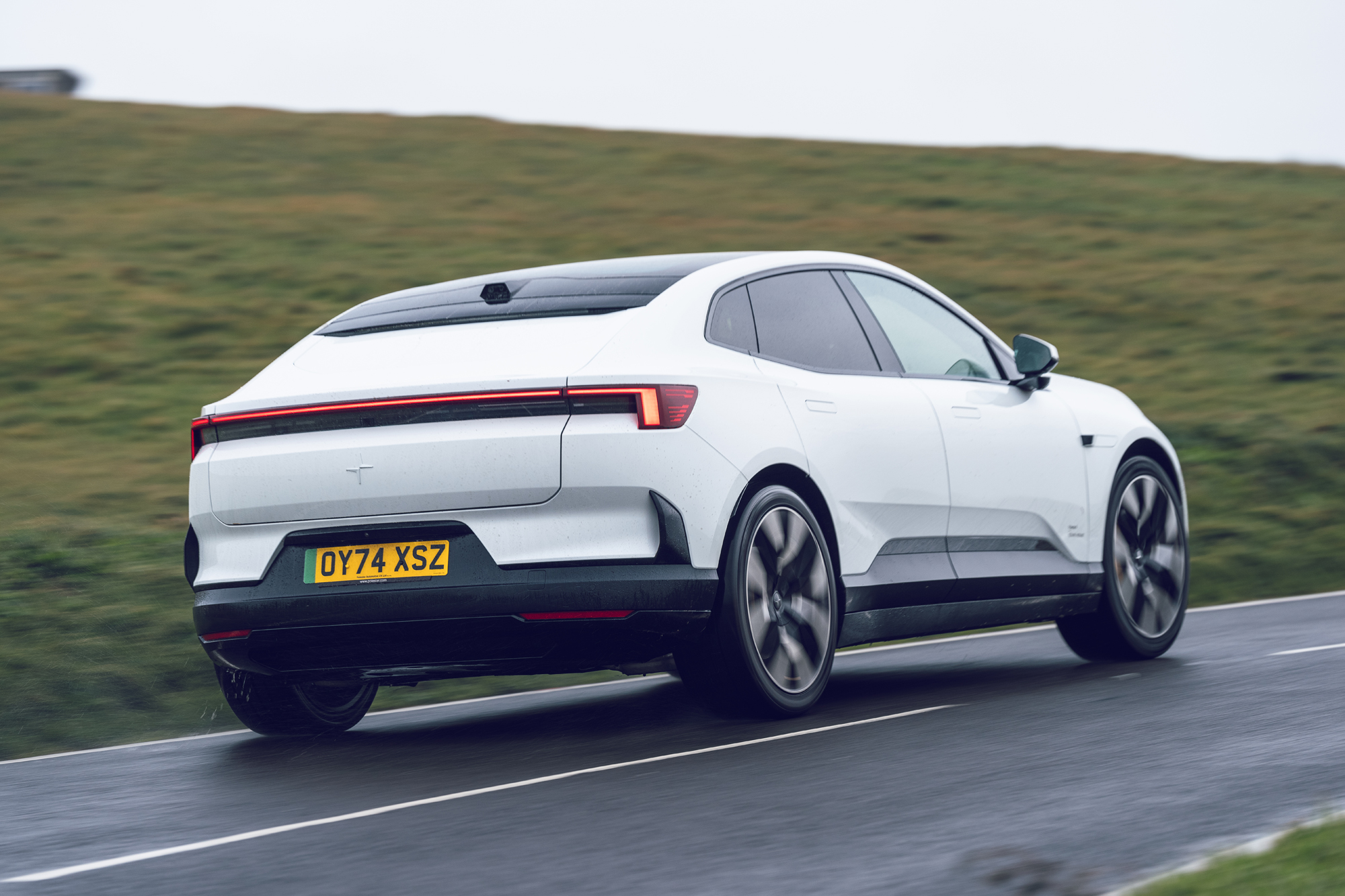
THE GOOD: Nice interior, decent ride comfort, good range
THE BAD: A Porsche Macan is more fun; others have a bigger boot
THE UGLY: Rear windscreen not included
NEED TO KNOW: Perhaps confusingly given the number system, the Polestar 4 is smaller than the Polestar 3 in the line-up, but it’s still a fairly big, high-performance, low-slung electric SUV-fastback that rivals the Tesla Model Y and Porsche Macan. The sci-fi looks divide opinion, but it’s certainly futuristic, and the interior is really lovely and goes to prove that Tesla hasn’t got a patch on the Scandinavians when it comes to cabin design and aesthetics. It’s fun to drive, too. The Long Range Single Motor gets 268bhp, 0-62mph in 7.1sec and an official range figure of 379 miles, while the Dual Motor adds a second identical motor to the front axle to hike power to 536bhp and all but halve the 0-62mph time to 3.8sec. The official WLTP range figure drops to a still-respectable 360 miles.
It’s taut and responsive to drive, with ride comfort that lets you know what’s happening on the road surface while never becoming jarring, and steering that has a nice heft to it. It all feels nicely weighted and satisfying, if not as outright fun and well balanced as the Macan. Then there’s that rear window… Sorry, camera. No window. Just a camera, with a constant video feed to the rear-view ‘mirror’. It’s disconcerting when you’re not used to it, but with familiarity you do begin to trust it and get used to it. Even so, we much prefer a proper rear windscreen.
THE ONE TO BUY: The Polestar 4 Single Motor Long Range is the sweet spot; longest range, best handling and best value
KEY DATA: Range 379 miles; efficiency 3.5 miles per kWh; max DC charging 30 minutes 10-80%
112 Peugeot E-2008
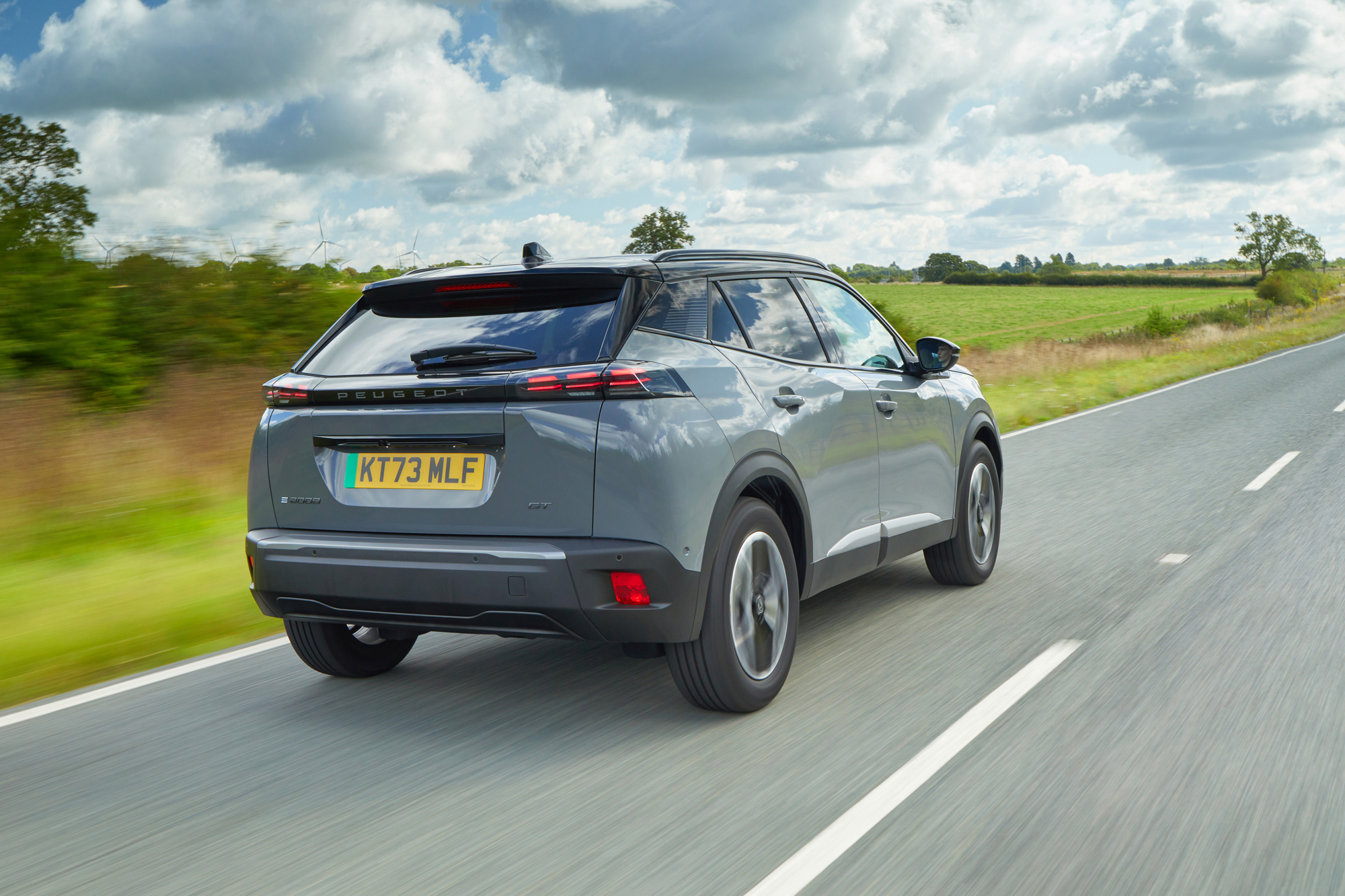
THE GOOD: Very smart interior; good ride
THE BAD: So-so handling; average range
THE UGLY: You know there’s better on the way from Peugeot
NEED TO KNOW: Stylish exterior, classy interior, and the E-2008 rides well. But, like most cars on this platform, the cost vs performance equation makes it hard to recommend.
THE ONE TO BUY: Base-spec Allure gives you plenty of kit
KEY DATA: Range 248 miles; efficiency 3.8-4.4 miles per kWh; max DC charging 30 minutes 0-80%
111 Vauxhall Astra Electric
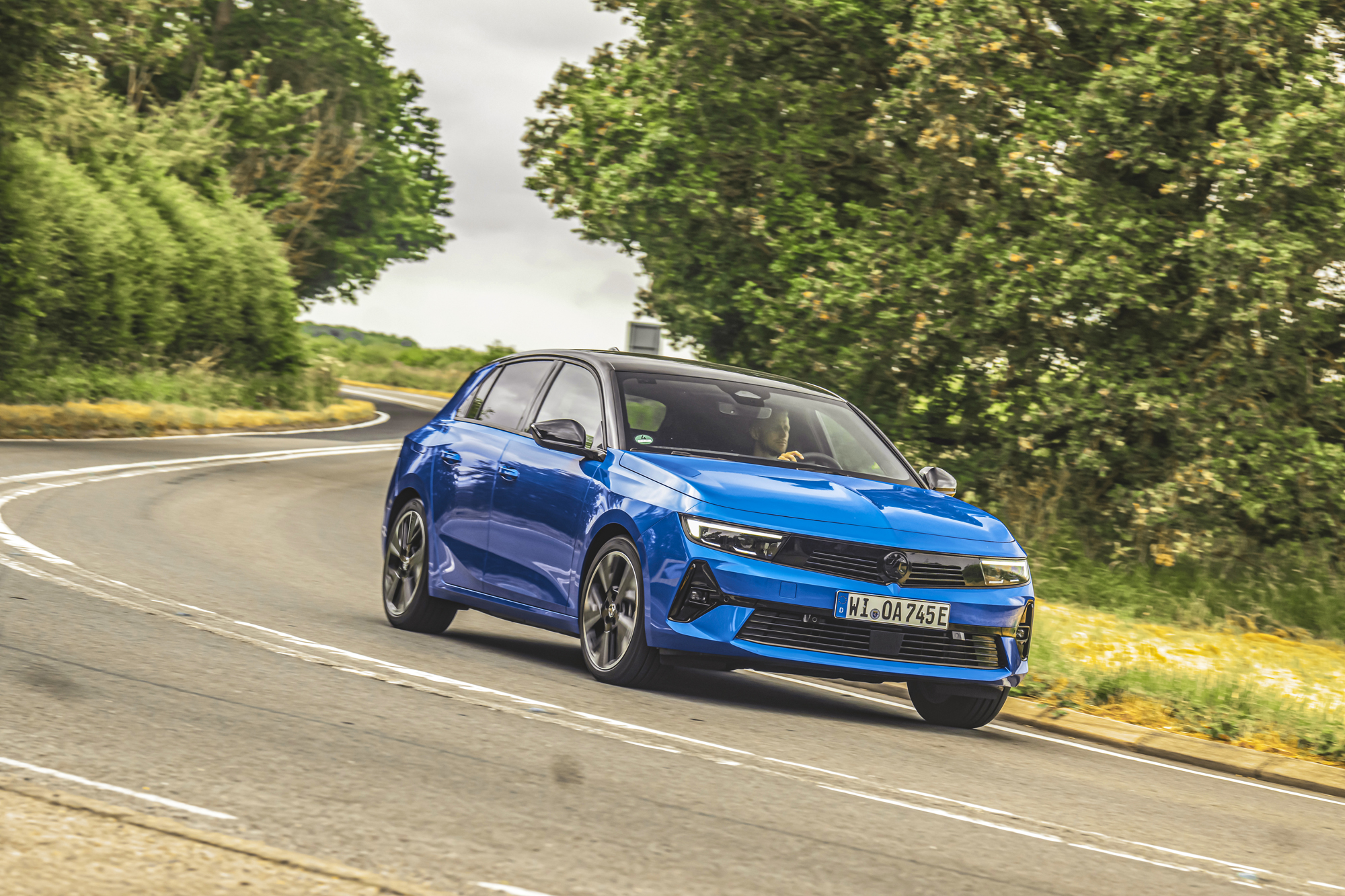
THE GOOD: Efficient; spacious; available as hatch or estate
THE BAD: Slow; too expensive; bit dull
THE UGLY: Not the biggest boot
NEED TO KNOW: This is the EV you should buy if you have high blood pressure. Its 0-62mph time of 9.2 seconds feels as urgent as an ocean liner – combine that with the strait-laced interior and you’re in danger of nodding off. That’s good news for efficiency, which allows this big car to get a decent range from a comparatively diddy battery pack. The Peugeot E-308 is much nicer inside, and better to drive, but is somehow even more expensive and even slower. Both are challenged by their Model 3-rivalling prices.
THE ONE TO BUY: Only one battery/motor; go mid-spec as base Design trim looks half-finished
KEY DATA: Range 258 miles; efficiency 4.2 miles per kWh; max DC charging 30 minutes 10-80%
110 Citroën ë-C4
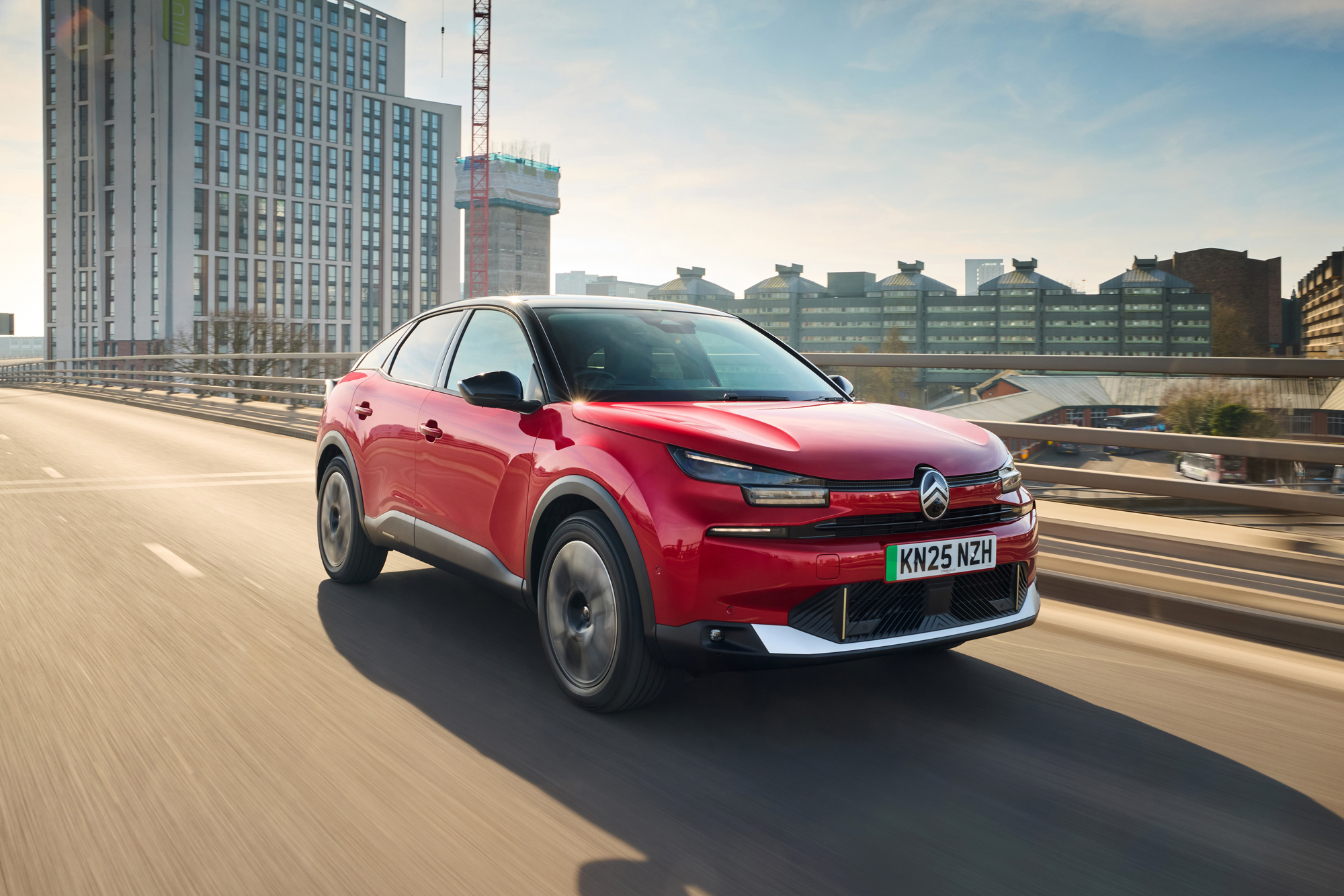
THE GOOD: Great value; spacious; efficient
THE BAD: Weird styling; clunky infotainment
THE UGLY: Not interested in hurrying
NEED TO KNOW: The Citroën e-C4 is Citroen’s electric family hatchback, taking on the likes of the VW ID. 3, Kia EV3, Skoda Elroq, Nissan Leaf and Hyundai Kona Electric. A recent facelift has seen the quirky, slightly abstract SUV-fastback styling toned down a bit, so it’s now less head-turning, even if few would call it handsome. The ë-C4 is available with a choice of motors, paired with a 50kWh or 54kWh battery. That’s good for a WLTP range of 220 to 260 miles, while 0-62mph arrives in 10.0 or 9.2 seconds respectively. It’s no firecracker, then, but even the slower of the ë-C4 variants still feels urgent enough when you want it to.
The soft seats and wafty ride lend themselves to more chilled progress, though, and we rather like the ë-C4 for that. In fact, it’s a really calm, quiet long-distance companion, and while other electric family cars offer better range, if you can live with the ë-C4’s more modest range, this is peculiarly charming family car.
There’s also the e-C4 X, if you fancy a saloon boot and a bit more luggage space, but the 380-litre hatchback on the standard ë-C4 will be okay for most family users.
THE ONE TO BUY: Given the impressively low price, the ë-C4 Standard Range is the one to go for. Plus trim adds a reversing camera, head-up display and upgraded infotainment
KEY DATA: Range 219 miles; efficiency 4.05 miles per kWh; max DC charging 30 minutes 10-80%
109 Cupra Tavascan
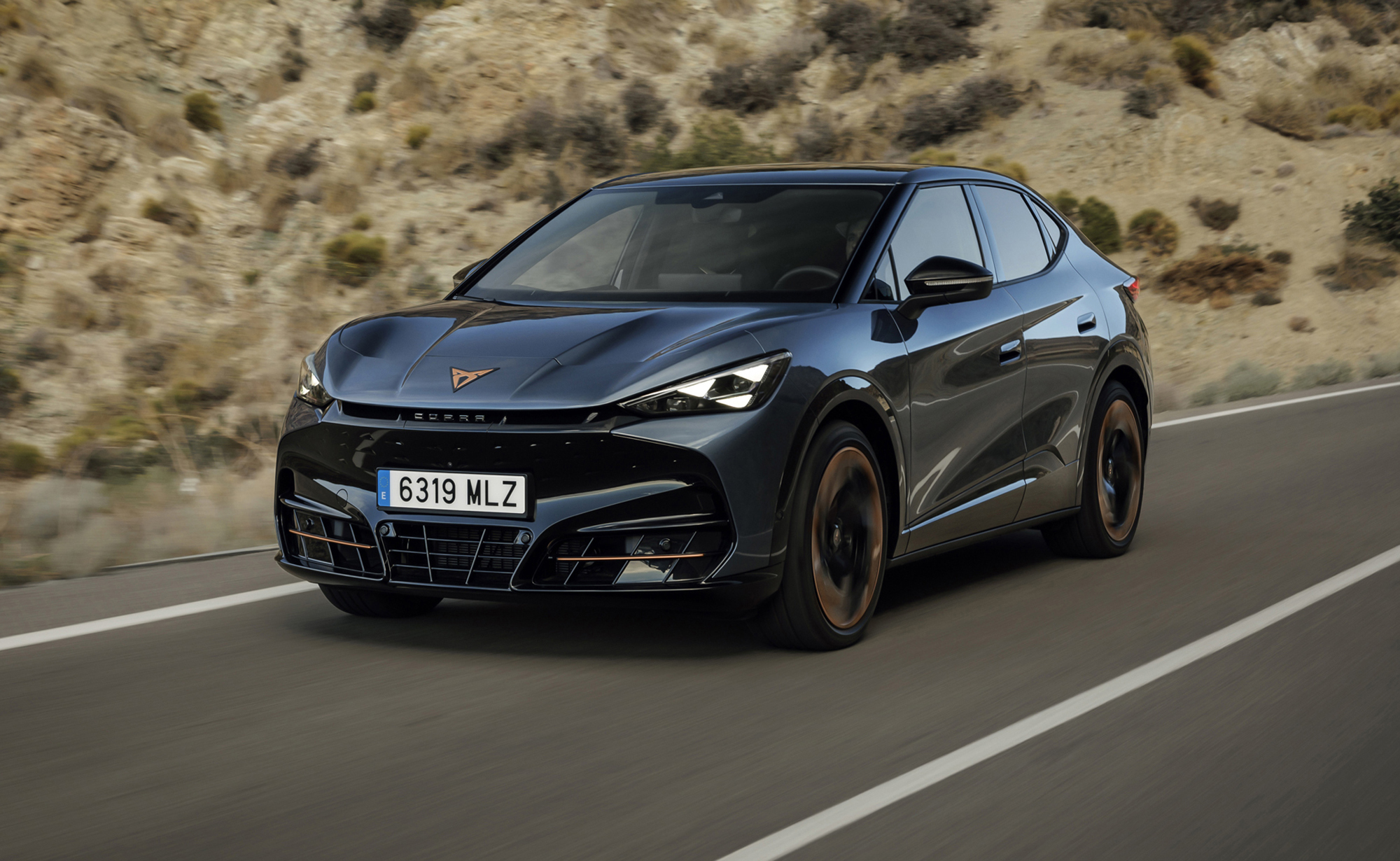
THE GOOD: Sharp handling; big info screen
THE BAD: Interior can feel cheap in places
THE UGLY: If you don’t squint just so, it still looks like a VW ID. 4
NEED TO KNOW: In exactly the same way that the Born is Cupra’s version of the VW ID. 3, the Tavascan is Barcelona’s take on the slightly larger ID. 4. So an electric-only crossover built on the MEB platform, with a lot of Cupra finishing touches and a few dynamic improvements.
The suspension set-up benefits from new spring and damper rates, and the steering has been tweaked for more feedback.
There’s one battery (77kWh) but a choice of rear-wheel drive and single motor or all-wheel drive and twin motors, with the latter formula also cranked up into the spicier VZ range-topper, which makes 335bhp and 402lb ft, and can provide very lively acceleration.
THE ONE TO BUY: Might as well go VZ1, so you have the performance and range to back up the looks
KEY DATA: Range 320 miles; efficiency 3.9-4.1 miles per kWh; max DC charging 28 minutes 10-80%
108 MG Cyberster
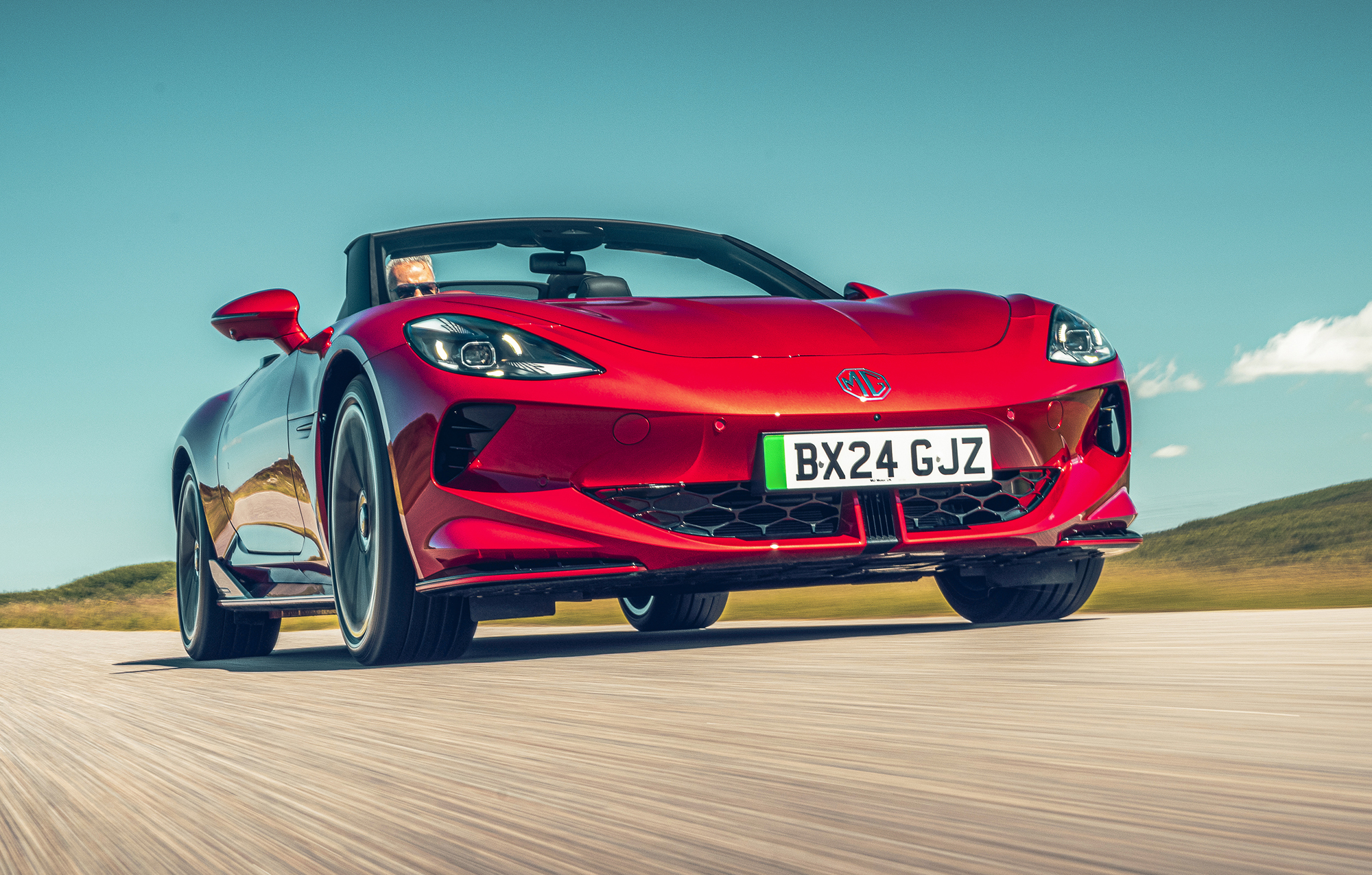
THE GOOD: Refreshingly different from anything else on the market; quick enough; striking looks
THE BAD: Terrible interior ergonomics; poor damping; not the sports car we hoped for
THE UGLY: Getting frustrated by the electric scissor doors in public
NEED TO KNOW: You can have your Cyberster with rear-wheel drive and 335bhp, or spend a little more to get another motor for the front wheels for a total of 503bhp. That’s Z4 money, although the combustion-engined BMW feels far more like a sports car than the surprisingly soft and under-damped MG. If that doesn’t put you off, the ridiculously high driving position and user-unfriendly interior probably will.
THE ONE TO BUY: Keep it cheap with the base Trophy
KEY DATA: Range 276-316 miles; efficiency 3.3-3.7 miles per kWh; max DC charging 38 minutes 10-80%
107 Mercedes-Benz EQE
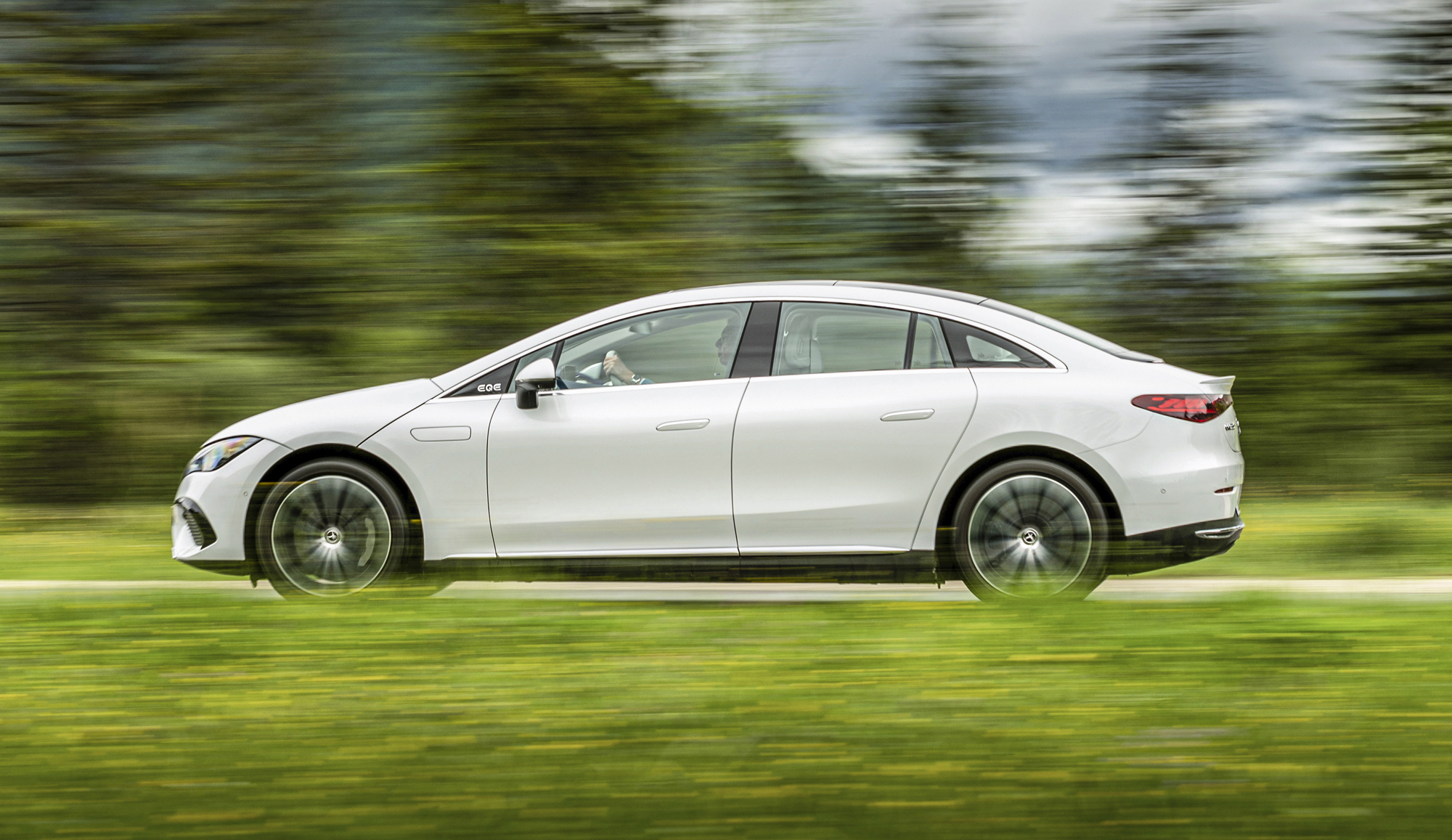
THE GOOD: Pretty close to classic E-Class virtues, which is quite an achievement, and sharper to
drive than the bigger EQS
THE BAD: Lacks that authentic Merc magic, with some oddly cheap materials in the back
THE UGLY: Almost as expensive as a BMW i5, not as good
NEED TO KNOW: How wowed you are by the EQE depends to a large extent where you’re coming from. If you’re a long-term fan of the combustion-engined E-Class, you’ll probably be very impressed by the performance and handling, which are in the same ballpark, especially in the case of the AMG version – although you’ll wonder why they didn’t quite finish the job properly, having piled the tech very high but not bothered with making the rear seating area particularly nice. If you’re comparing it to the EQS, you’ll be glad of the cost saving and favour the way it drives, unless you really, really want the bigger car’s ultra-plushness. But next to a Tesla Model 3, you’ll wonder if the Merc’s modest size advantage is worth so much extra cash.
THE ONE TO BUY: Go to the top of the range: the AMG 53 drives very well, if you can find the money
KEY DATA: Range 280 miles; efficiency 2.7 miles per kWh; max DC charging 30 minutes 10-80%
106 Denza Z9 GT
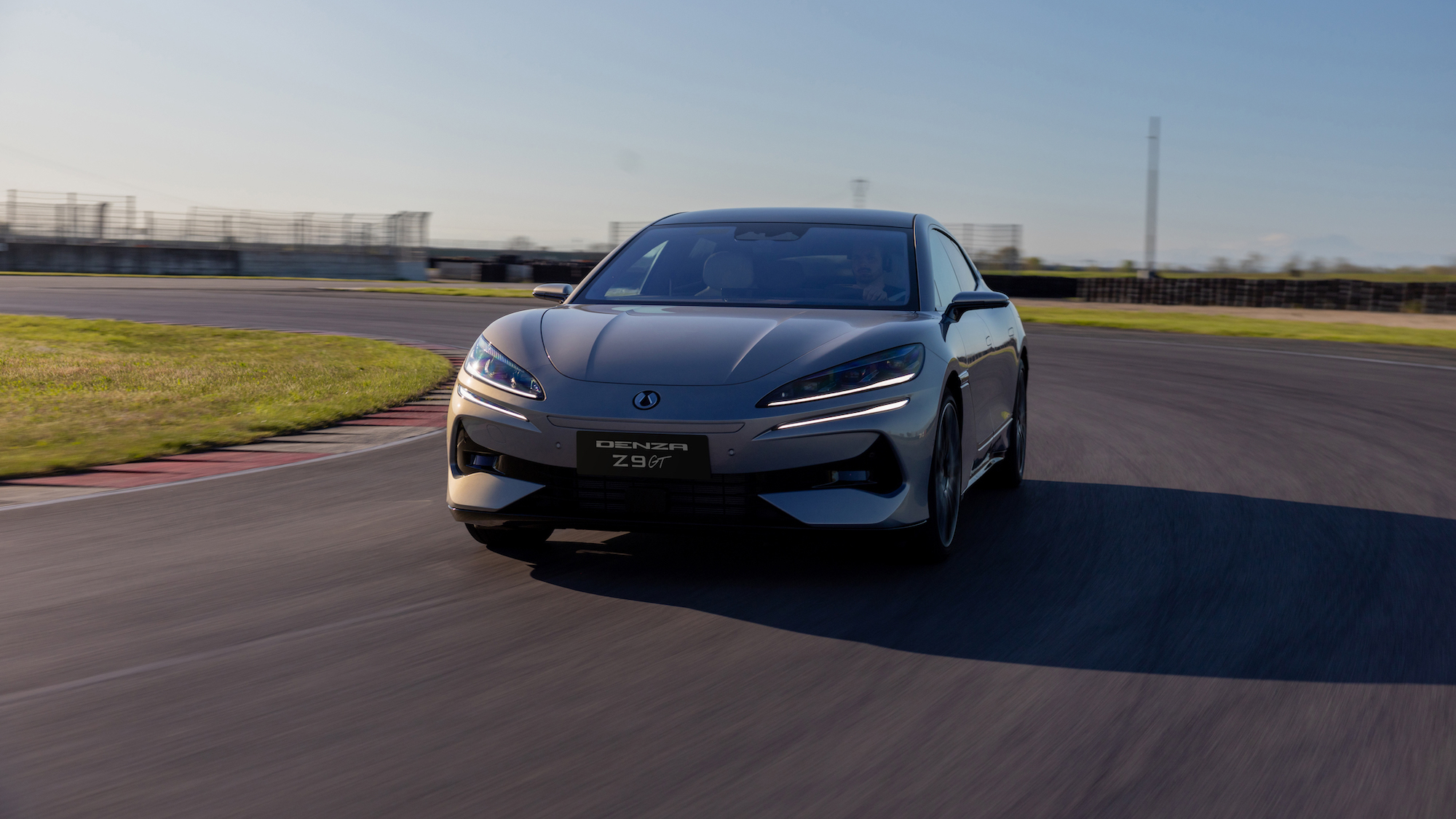
THE GOOD: Panamera-inspired styling; comfortable ride; lots of tech
THE BAD: Brakes and steering not great on the car we drove
THE UGLY: Nothing like as good as a Porsche
NEED TO KNOW: Denza, new to Europe, is a posher BYD spin-off brand, but not as posh as Yangwang. The aim is to offer an alternative to premium German brands. It sits on BYD’s 800-volt architecture, with a 100kWh battery, three e-motors, all-wheel drive and all-wheel steering. The interior, roomy and comfortable, is dominated by a huge touchscreen.
THE ONE TO BUY: Pro version is slightly cheaper than Max, and has all the key tech
KEY DATA: Range 390 miles; 3.9 miles per kWh; max DC charging 19 minutes 30-80% (all est)
105 Pininfarina Battista
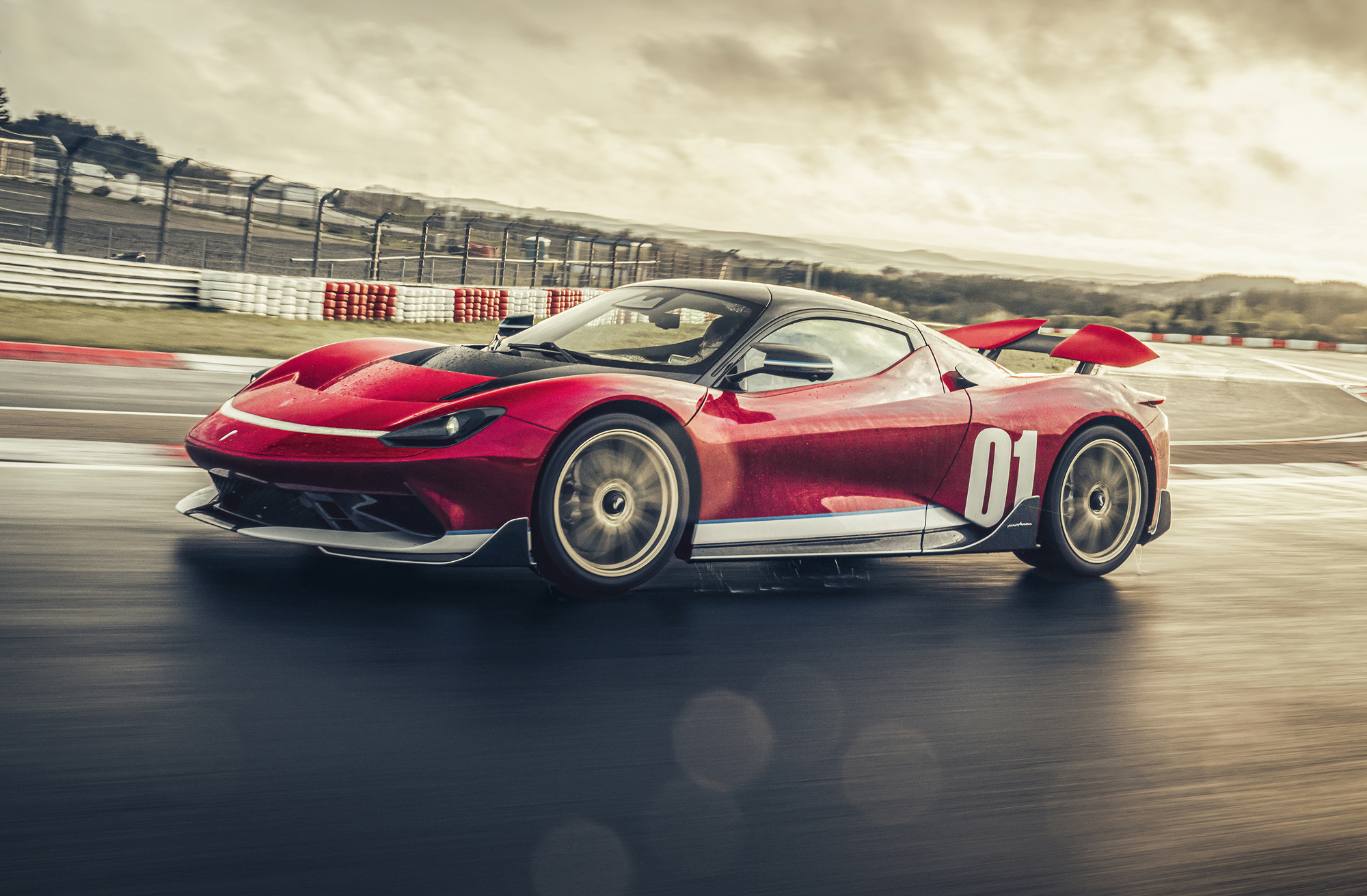
THE GOOD: Pretty like a sunrise on Everest; fast in a way no other car is
THE BAD: So expensive you could buy an island for the same money
THE UGLY: Plenty of potential to get carried away – and the accident would be vast
NEED TO KNOW: Essentially a sister car to Rimac’s mind-altering Nevera, Pininfarina’s Battista clothes the same rulebook-pulping technology in an infinitely prettier body (you’d expect nothing less from a name synonymous with automotive beauty) and recalibrates the hardware and software to be more road focused.
Remarkably given the absence of a physics-battering, filling-rattling combustion engine, almost every aspect of the established supercar driving experience is present and correct here – an astonishing achievement. There’s style to stop city streets. There’s that thrilling sense of anticipation as you climb abord, the butterflies in your belly going wild as you fire it up and experience the Battista’s sonic signature – a curious but not unpleasant ‘idle’ that pulses at a frequency you feel as much as hear and that grows more intense as you delve into the car’s otherworldly performance, waxing and waning with changes of throttle position and speed. It’s a weird idea on paper, inspired in practice.
The numbers here are massive: 1874bhp – that’s way more than an F1 car – and £2.65m in the case of the Edizione Nino Farina. But the Battista holds your hand, with a number of drive modes that progressively up the power output and a dreamy driving position that builds confidence. Thanks to the T-shaped battery (there’s no slab of cells below you), you sink into position behind the wheel and instantly feel part of the very structure of the car, such that you’re not so much sitting in it as wearing it.
How does it drive? You start out just rocketing between corners before emergency braking for them, too scared at first to carry any meaningful corner speed. But soon enough the Pininfarina taps you on the shoulder: ‘Everything you think you know?’ it mutters, ‘Forget it. I have re-written the rules. Let’s play.’
Start to trust this extraordinary machine and it redefines your understanding of how a car can accelerate, brake and turn, elevating your driving to a level you didn’t even know existed. The performance advantage it confers over every other car on the road is quite ridiculous. And like a quad-motor black hole, the Battista is a gateway to forces, speeds and sensations well beyond anything you’ve experienced before. As such it is wildly, maddeningly addictive.
THE ONE TO BUY: The gorgeous Edizione Nino Farina. The roof-less, screen-less B95 appears not to make a shred of sense
KEY DATA: Range 296 miles; efficiency 2.55 miles per kWh; max DC charging 30 minutes 10-80%
104 Rimac Nevera
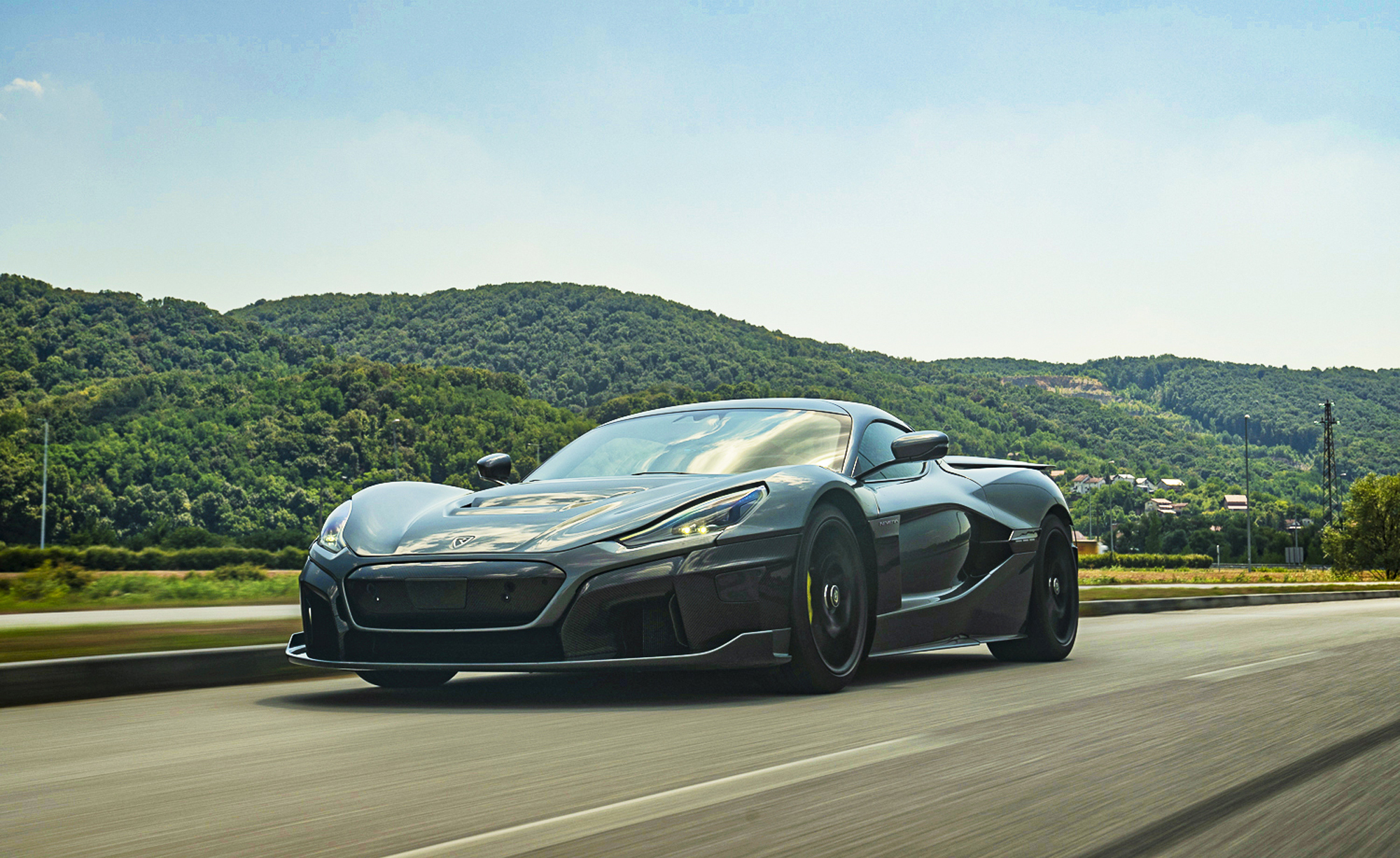
THE GOOD: Handles like the electric love child of a Lotus Exige and Nissan GT-R
THE BAD: How much?!!
THE UGLY: Your local Rimac servicing centre probably isn’t very local
NEED TO KNOW: The Rimac Nevera is chiefly the work of engineer and entrepreneur Mate Rimac, who – in a remarkably short timeframe – has gone from an unknown businessman to the owner of a globally renowned automotive manufacturer and engineering business, and the overall decision-maker at Bugatti following a recent merger. If the all-electric Nevera hypercar is anything to go by, the forthcoming Bugatti-Rimac models will be astonishing.
The Nevera is a carbonfibre-tubbed work of genius, not only because of the 1888bhp and sub-2.0 second 0-62mph time but also because it feels like a big, monstrously powerful Lotus to drive. Eerily comfortable, and utterly remarkable in its handling. Mind you, it does linger rather low on our list because it costs somewhere around £2 million to buy. It’s a phenomenon to drive, so if you’re the Sultan of Brunei then we’d recommend you buy at least two, so that we’ve got a better chance of seeing one in the wild.
THE ONE TO BUY: We’ve not driven the new Nevera R, but we can’t comprehend the idea of a faster version – it’s like when you’re not an astrophysicist but are nevertheless trying to work out how a black hole works. You’ll be fine with the ‘ordinary’ (nothing ordinary about it) Nevera
KEY DATA: Range 303 miles; efficiency 2.1 miles per kWh; max DC charging 19 minutes 10-80%
103 BMW iX2
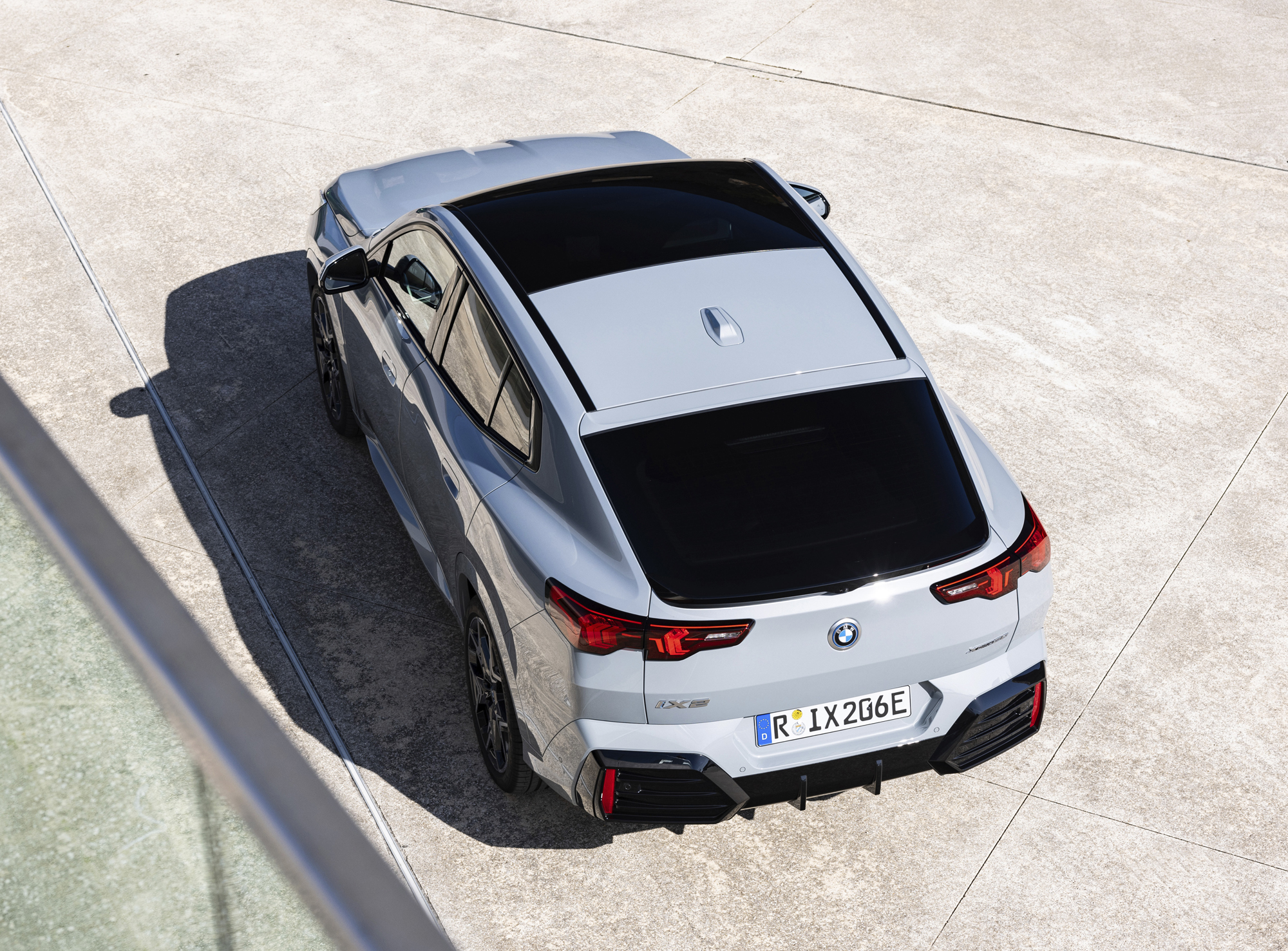
THE GOOD: Better than a petrol X2; all of the technology; spacious for a coupe-SUV
THE BAD: Iffy ride quality; quite expensive
THE UGLY: The light-up grille is still just as hideous now as when it was first revealed
NEED TO KNOW: The iX2 is the more stylish twin to the more sensible iX1, albeit stretched more than a usual coupe-SUV to create a surprisingly practical family car.
It’s quite expensive to buy, especially compared to the iX1, but it justifies the cost with its tech-laden interior and sporty driving manners. Particularly the top-spec xDrive30 model, which can hit 0-62mph in 5.6 seconds. An entry-level, front-wheel-drive eDrive20 model is also available but feels slow and knocks around 50 miles off the range with its smaller battery. For once, it pays to get the range-topper.
THE ONE TO BUY: You’ll be grateful for the extra power of the xDrive30 model. Less so its higher price
KEY DATA: Range 267 miles; efficiency 3.6 miles per kWh; max DC charging 29 minutes 10-80%
102 Abarth 500e
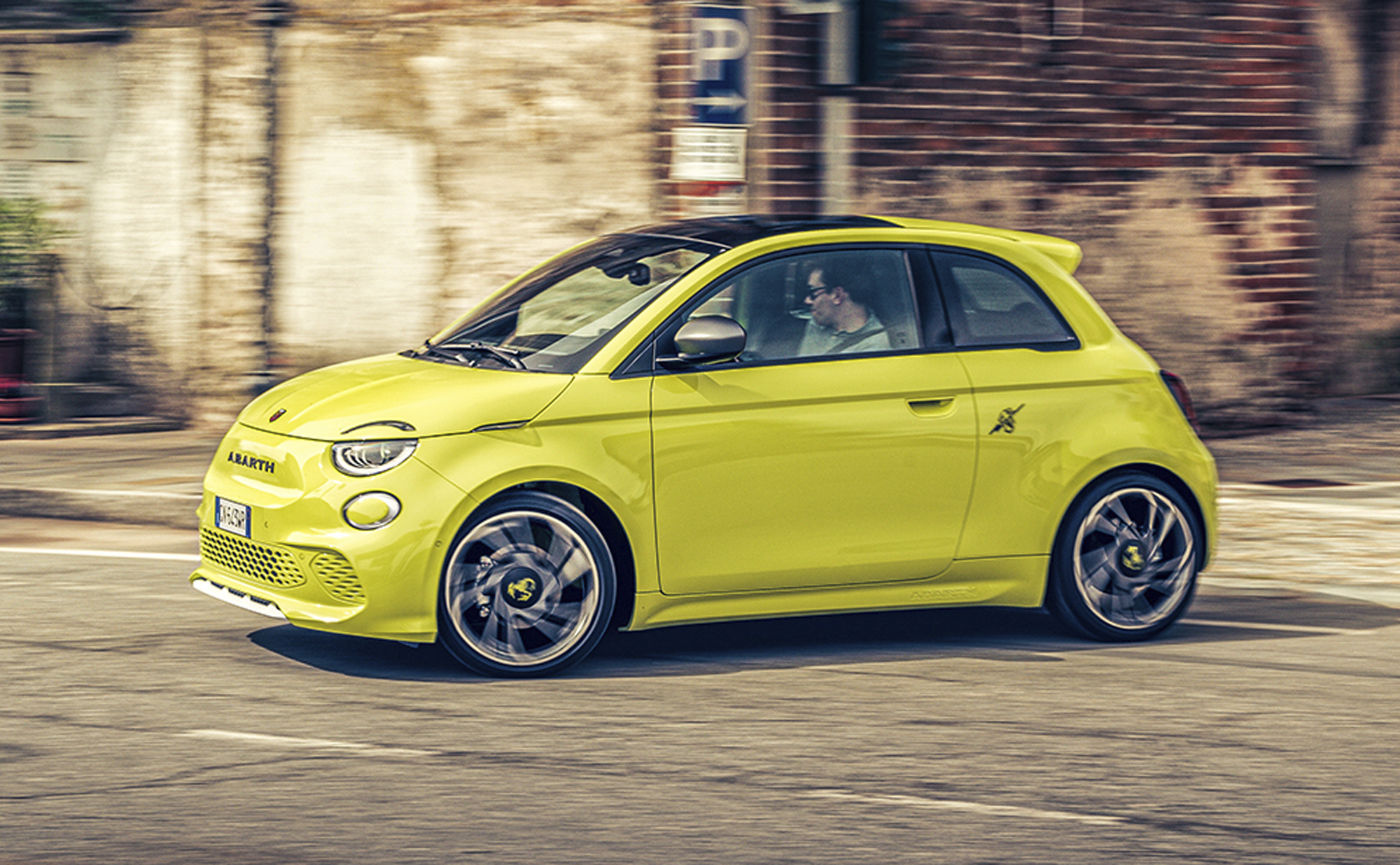
THE GOOD: Great colour palette
THE BAD: Even shorter range than the Fiat 500e
THE UGLY: A combustion-engined Abarth is more fun, and its petrol soundtrack is real
NEED TO KNOW: If you’re hoping this is an affordable EV hot hatch, think again. It’s not particularly cheap, and while quicker than a combustion Abarth around a track, isn’t as much fun on the road. Think of it as a regular Fiat 500e with a slightly plusher interior and more punch, and it makes more sense. Shame the already meagre range takes quite a hit, especially if you drive it on the door handles. Thankfully it can charge reasonably quickly, so just make sure your preferred B-road has a reasonably beefy charger at either end.
THE ONE TO BUY: The Turismo gets awfully close to £40k, so keep it simple and (relatively) cheap with the base Abarth 500e
KEY DATA: Range 164 miles; efficiency 3.9 miles per kWh; max DC charging 35 minutes 10-80%
101 VW ID. 4
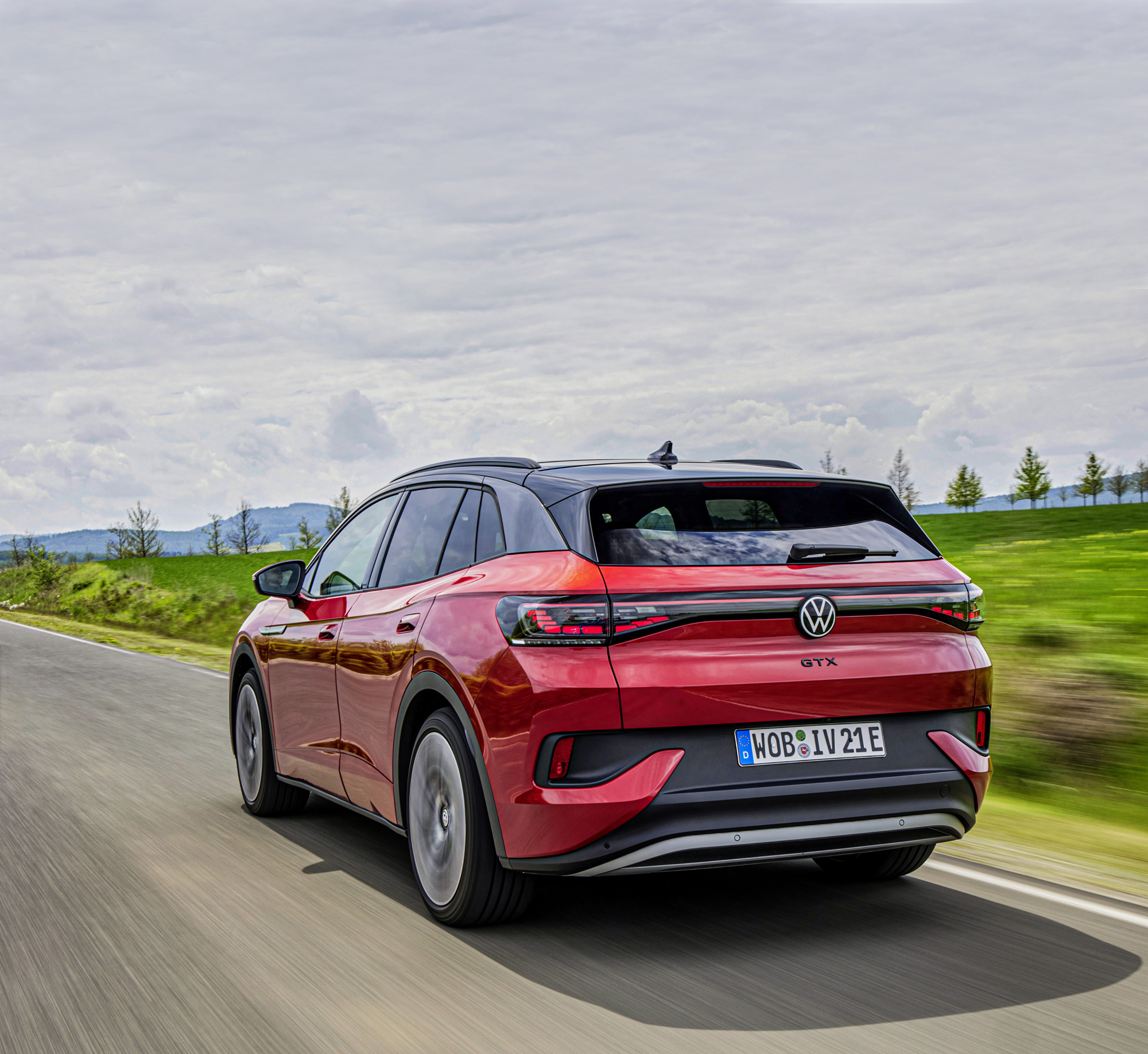
THE GOOD: Quiet; comfortable; roomy; failsafe range predictor
THE BAD: Placid to drive; bland to be in and look at
THE UGLY: The nagging feeling that you’ve bought an appliance rather than a car
NEED TO KNOW: An ID. 3, but bigger. It’s a crossover-ish SUV with plenty of room inside and a very quiet ambience while you’re on the move. A relatively early update gave it some of the luxuries the ID. 3 also got, including a slicker and much less rage-inducing infotainment system. The GTX version is supposedly the GTI of the electric world – in VW’s dreams.
THE ONE TO BUY: There’s a 52kWh battery but the 77kWh has a much more sensible range
KEY DATA: Range 323 miles; efficiency 3.8 miles per kWh; max DC charging 28 minutes 10-80%
100 Ford Capri
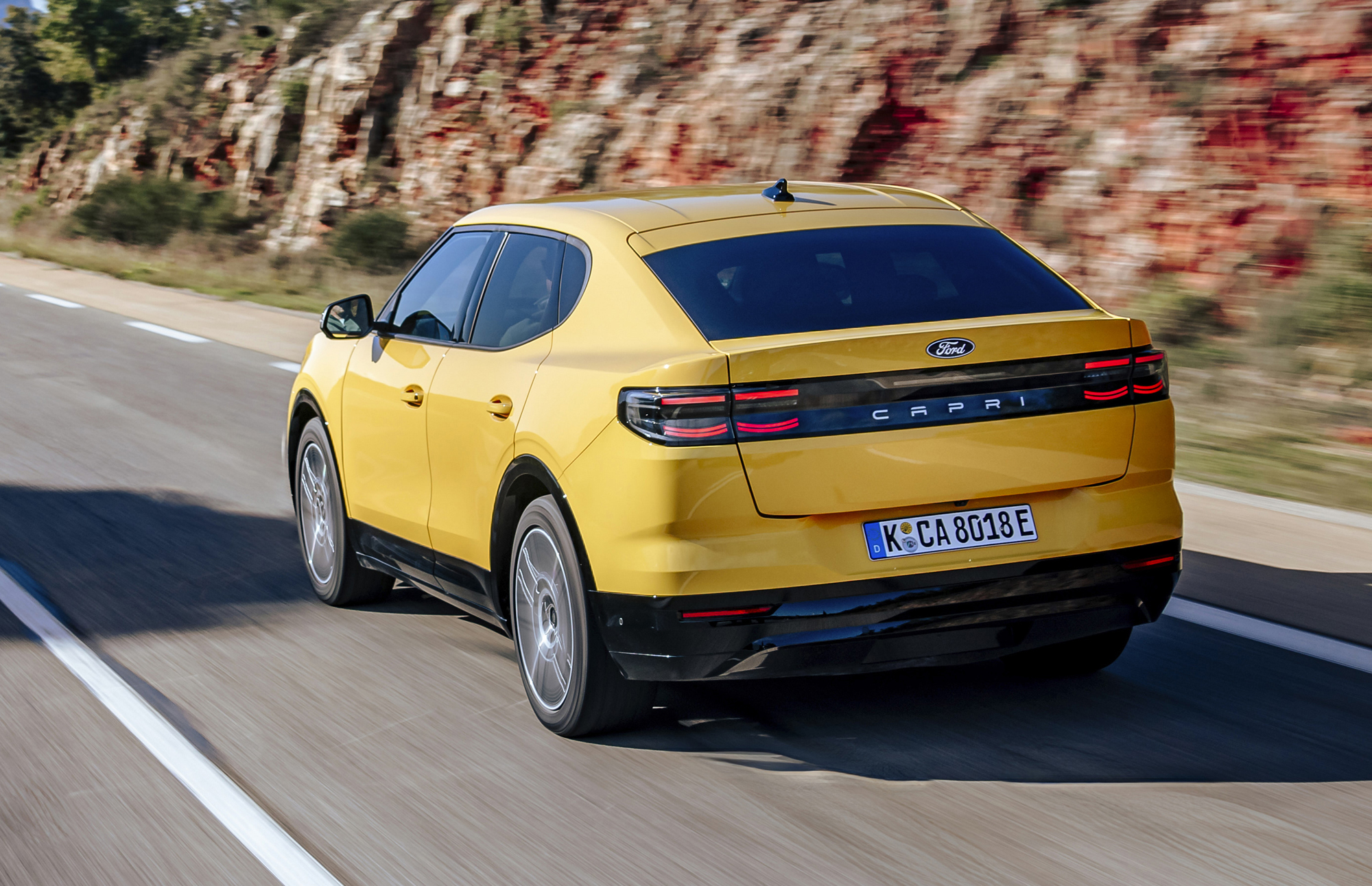
THE GOOD: Neat design, big boot and decent dynamics
THE BAD: You have to pay extra for a heat pump
THE UGLY: Why is it called a Capri? It’s not a Capri. A silly distraction
NEED TO KNOW: It’s essentially a Ford Explorer (the electric European one, based on VW’s MEB tech, not the US combustion one) but longer and lower, and with a bigger boot.
There’s a Standard Range model with 168bhp and a 52kWh battery, with a claimed range of 242 miles. Better is the 77kWh battery pack and a single electric motor on the rear axle. It produces 282bhp and 402lb ft of torque, which is enough to punch the Capri to 62mph in 6.4 seconds. It has a maximum range of 389 miles.
Extended Range AWD models come with a slightly larger 79kWh battery pack and an additional electric motor on the front axle to bump power up to 335bhp. Torque remains the same, but the added traction from the extra driven wheels trims the Capri’s 0-62mph time down to 5.3 seconds. Maximum range falls to 368 miles, however. The steering and brakes aren’t great, but the suspension set-up is better than any of VW’s own attempts with the donor MEB platform.
The cabin is like a tidied-up version of an electric VW – a little bit Polestar in its fresh, clean look, but still very screen-based.
THE ONE TO BUY: Go for Select and rear-wheel drive, which gives maximum range and plenty of performance at a lower price
KEY DATA: Range 389 miles; efficiency 4.67 miles per kWh; max DC charging 28 minutes 10-80%
99 Ford Explorer
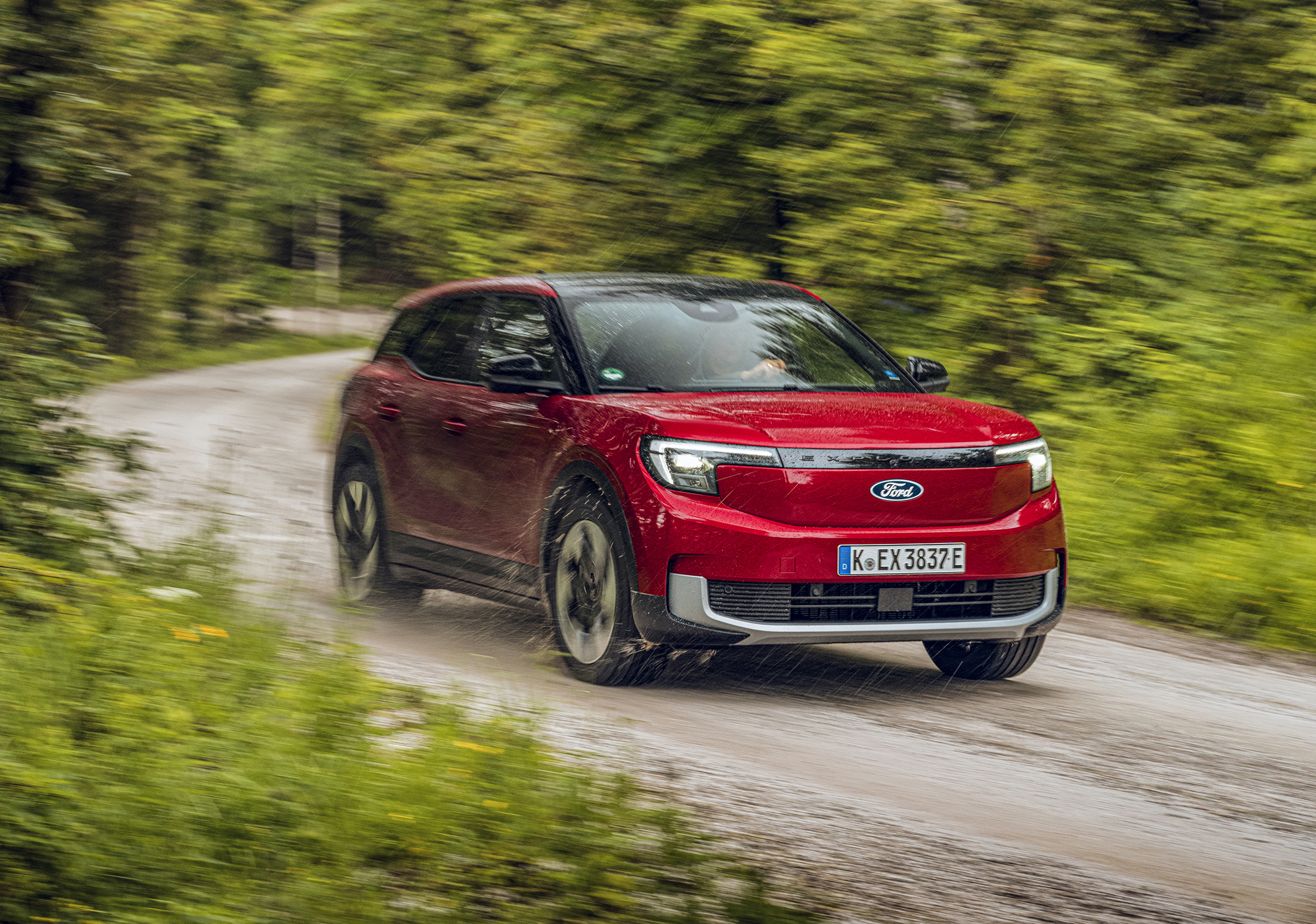
THE GOOD: Sharp looks; tidy ride and handling; roominess
THE BAD: Boot size is a bit mediocre, some of the annoying MEB switchgear has made it across from VW
THE UGLY: Fiddly infotainment
NEED TO KNOW: Unless you’ve managed to unplug from the Matrix over the last few years, you’ll probably know that the Explorer is a Volkswagen ID. 4 underneath. It’s the first Ford passenger vehicle to come from the collaboration that sees VW using Ford commercial platforms, and Ford using VW’s EV platforms, but the good thing is that the Explorer looks and feels very different to VW’s ID series. Sure, there’s some familiar switchgear including the annoying window switches and touch-sensitive light controls, but otherwise the Explorer has its own style inside and out, and even has its own infotainment software. At 4.4 metres long, it’s a touch smaller than the VW ID. 4 and Skoda Enyaq, but is spot-on for the Renault Scenic E-Tech. It’s one of the nicest cars in the class to drive, and it looks tidy, but the Renault is cheaper and gets a heat pump as standard (unlike the Explorer) so it’s got a lot to prove.
THE ONE TO BUY: Go all-wheel drive if you’re happy to dig deep in return for impressive pace and handling, but the 77kWh RWD Extended Range in Select trim is the best balance of comfort, range, equipment and price
KEY DATA: Range 374 miles; efficiency 4.47 miles per kWh; max DC charging 28 minutes 10-80%
98 Vauxhall Corsa Electric
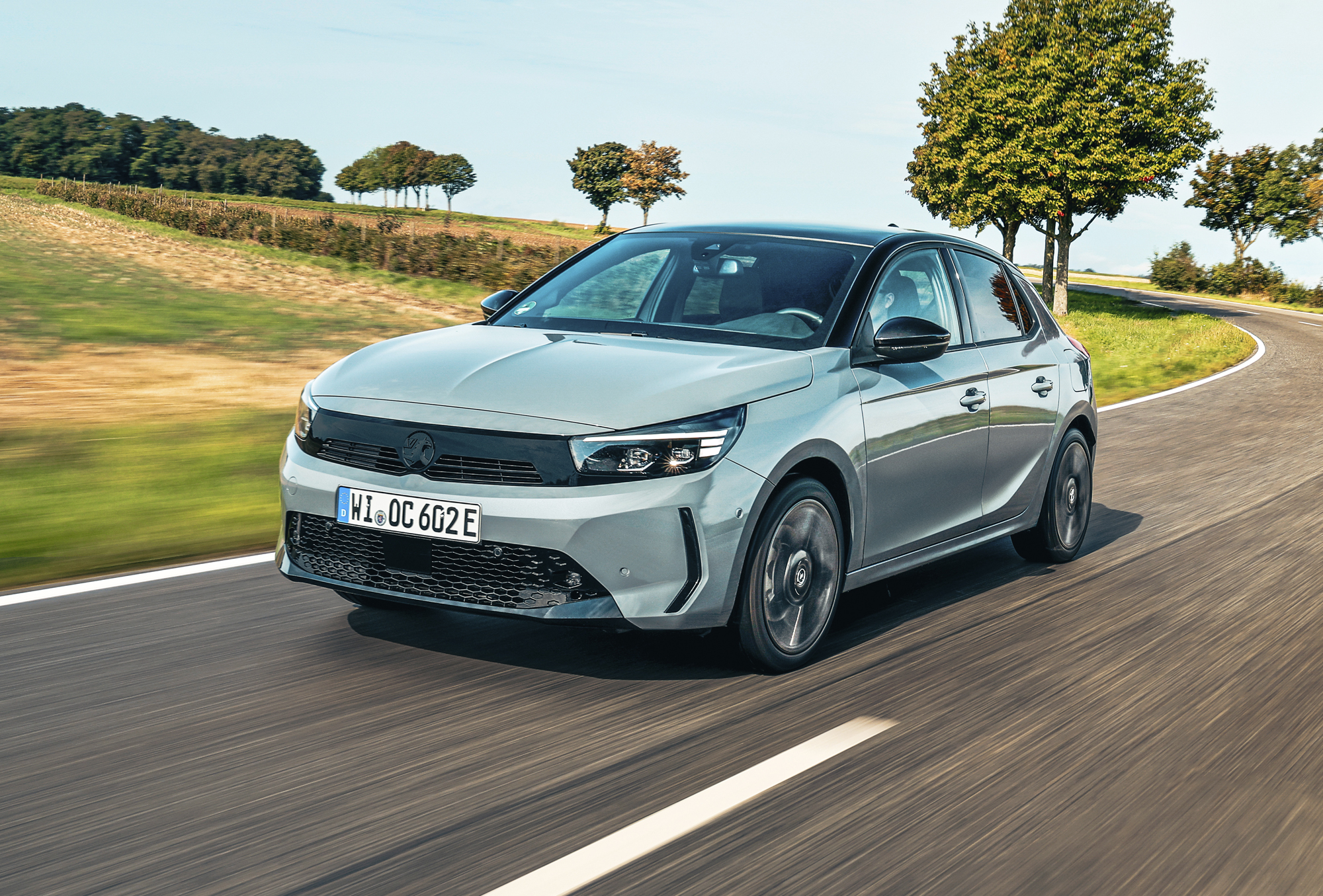
THE GOOD: A perfectly serviceable supermini EV with a reassuringly familiar name
THE BAD: Dour interior design and finish; cramped back seats
THE UGLY: The Peugeot 208 is just that bit more appealing, from basically the same ingredients
NEED TO KNOW: The current Corsa has a smarter face, bigger battery and more powerful motor than the previous version.
THE ONE TO BUY: Design trim and the lower power output give you that keen price
KEY DATA: Range 221 miles; efficiency 3.8-3.95 miles per kWh; max DC charging 30 minutes 0-80%
97 Mini Aceman
THE GOOD: Zingy handling; funky interior
THE BAD: Firm ride; high price
THE UGLY: Not as spacious as you might be hoping
NEED TO KNOW: The Aceman is the car for you if you like the style and perkiness of the little electric Mini Cooper (which is three-door only), yet want five doors for a bit more usefulness without stepping up to the ‘mum and dad’s taxi’-spec Countryman. It has some SUV-ish styling cues in the standard roof rails and chunky arches, but that’s where the SUV traits end. The interior is pretty wild.
The front-wheel-drive Aceman is based on the same platform as the Cooper (and gets the same two-battery line-up for a range of either 185 or 252 miles) and is very much a compact hatchback – both in its bubbly handling and in its limited practicality.
THE ONE TO BUY: Which battery suits you comes down to lifestyle, but we’d go for the SE as it gets the longer range, more power and standard head-up display
KEY DATA: Range 252 miles; efficiency 4.4 miles per kWh; max DC charging 30 minutes 10-80%
96 Jeep Avenger
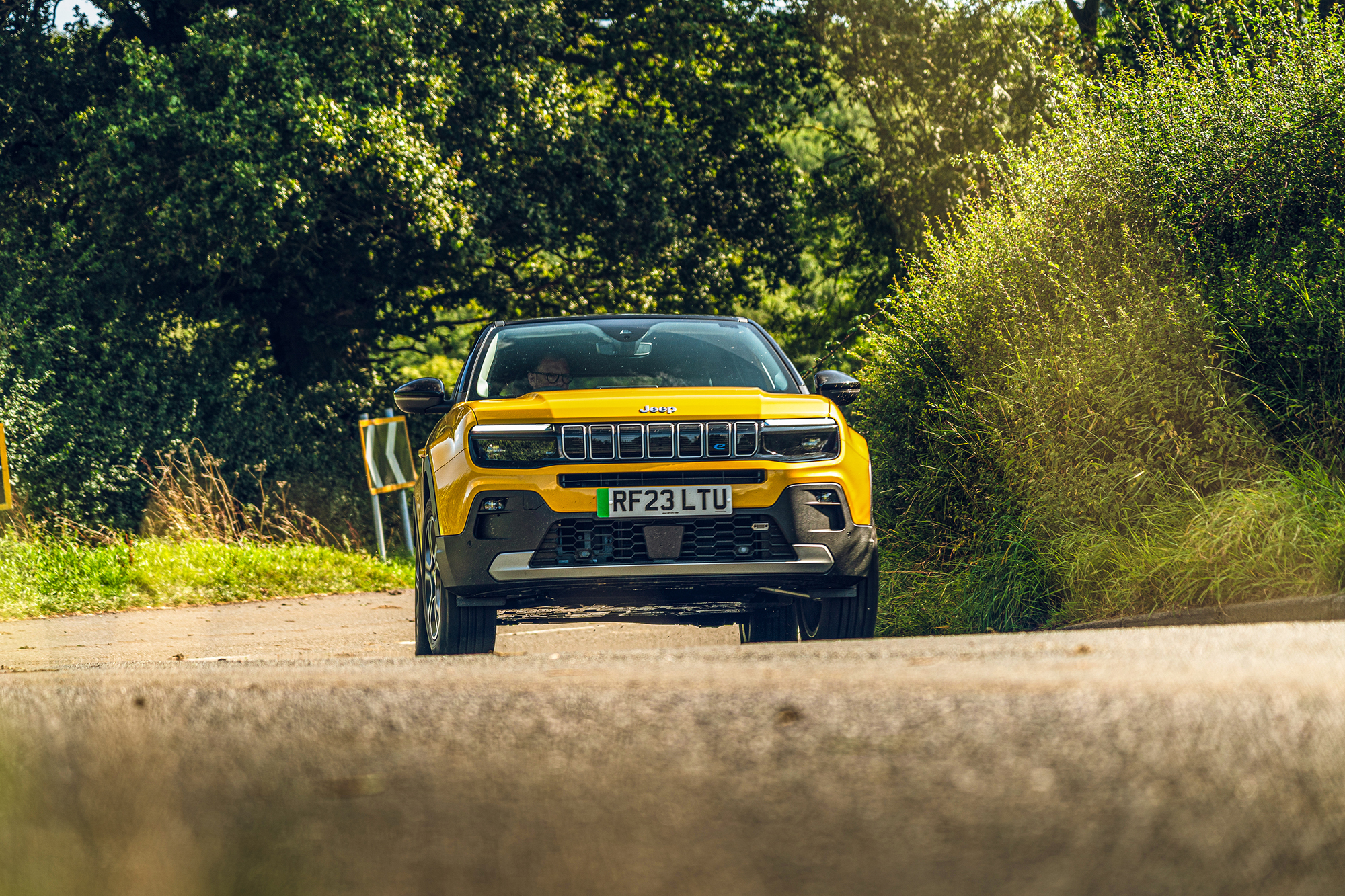
THE GOOD: Refined; looks fantastic; better efficiency than other cars on same platform
THE BAD: Not quick; plain to drive; poor rear seat space
THE UGLY: The lower dashboard plastics
NEED TO KNOW: One of many cars on Stellantis’s E-CMP platform, but the best small-SUV iteration. Unlike some of the others, the Avenger manages to be more than the sum of its parts with its chunky looks and likeable character. The interior is funky and smart, too, with clever use of physical controls and neat details like an (optional) cubbyhole cover that’s straight off an iPad. Jeep claims it’s tougher than most baby crossovers and has included some extra off-road modes, and our off-piste excursions show the strictly front-drive Avenger has a little Jeep DNA.
Behind the façade, though, the Avenger isn’t that special – it boasts better efficiency figures than other E-CMP cars but drives as plainly as the Peugeots or DS 3 on this list that use the same tech.
THE ONE TO BUY: Base Longitude is more than enough
KEY DATA: Range 249 miles; efficiency 4.0 miles per kWh; max DC charging 24 minutes 20-80%
95 BYD Dolphin Surf
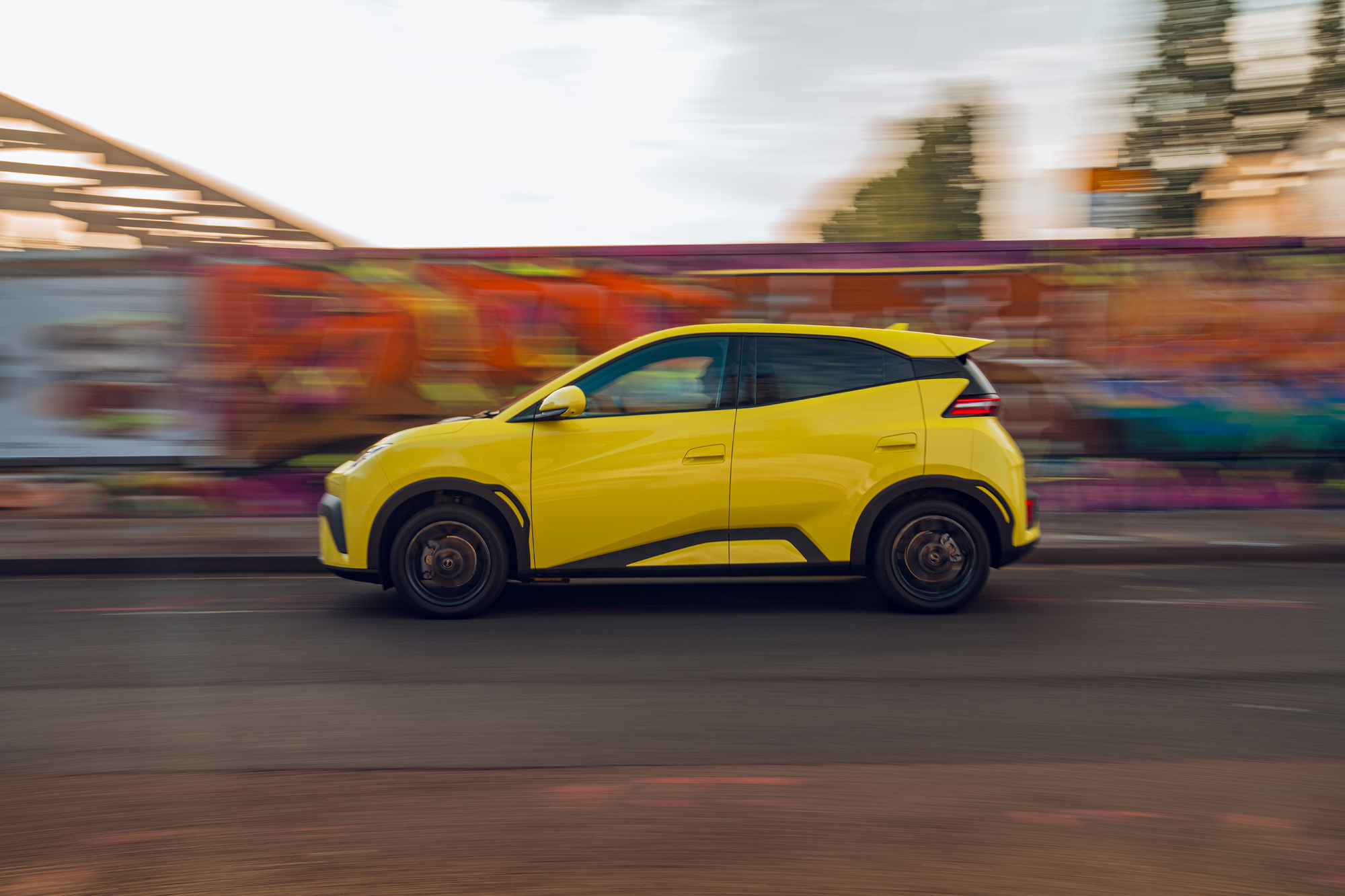
THE GOOD: Cheap; roomy; two battery options
THE BAD: Slow charging; short range; busy ride comfort
THE UGLY: The way it looks is… divisive? And weirdly like a Lambo supermini
NEED TO KNOW: The Dolphin Surf is BYD’s entry-level model, and is an impressively affordable electric small car. At just under 4.0 metres long it’s a very similar size to the Renault 5 and Citroen ë-C3, and has five doors as standard, making this actually pretty roomy and practical for a supermini EV.
You can have either a 30kWh or 42kWh LFP battery pack, delivering WLTP range of 137 or 189 miles, which makes it a touch shorter range than those rivals. It’s got loads of equipment, though; you even get vehicle-to-load charging, which is often a pricey option on cars that cost three times the Surf’s list price. It’s okay to drive, too.
The entry-level Active and midrange Boost models both get 87bhp and will do 0-62mph in 11.1 seconds, which isn’t fast but it still feels fine around town if a bit gutless on faster roads. The Dolphin Surf Comfort gets usefully more power and hits 62mph a couple of seconds quicker, so that’s the one to go for. Both are front-wheel drive, but that’s par for the course with most small cars. Ride comfort is a bit fidgety and bouncy around town, but it’s not bothersome enough to be a deal breaker.
Ultimately, if you can get a good deal (you’ll be able to) and don’t need long range or faster charging, the Dolphin Surf can be a perfectly adequate short-range EV.
THE ONE TO BUY: Don’t rule out the smaller-battery Dolphin Surf; it seems a short range, but you may well be able to live with that easily if you have home charging. Having said that, the bigger-battery Boost is a good balance of longer range at a reasonable price, so is the sweet spot in the range. The top-spec Dolphin Surf Comfort strays well into Renault 5 and Citroen ë-C3 price territory, which makes it hard to justify.
KEY DATA: Range 200 miles; efficiency 4.6 miles per kWh; max DC charging 30 minutes 10-80%
94 Audi Q6 e-Tron
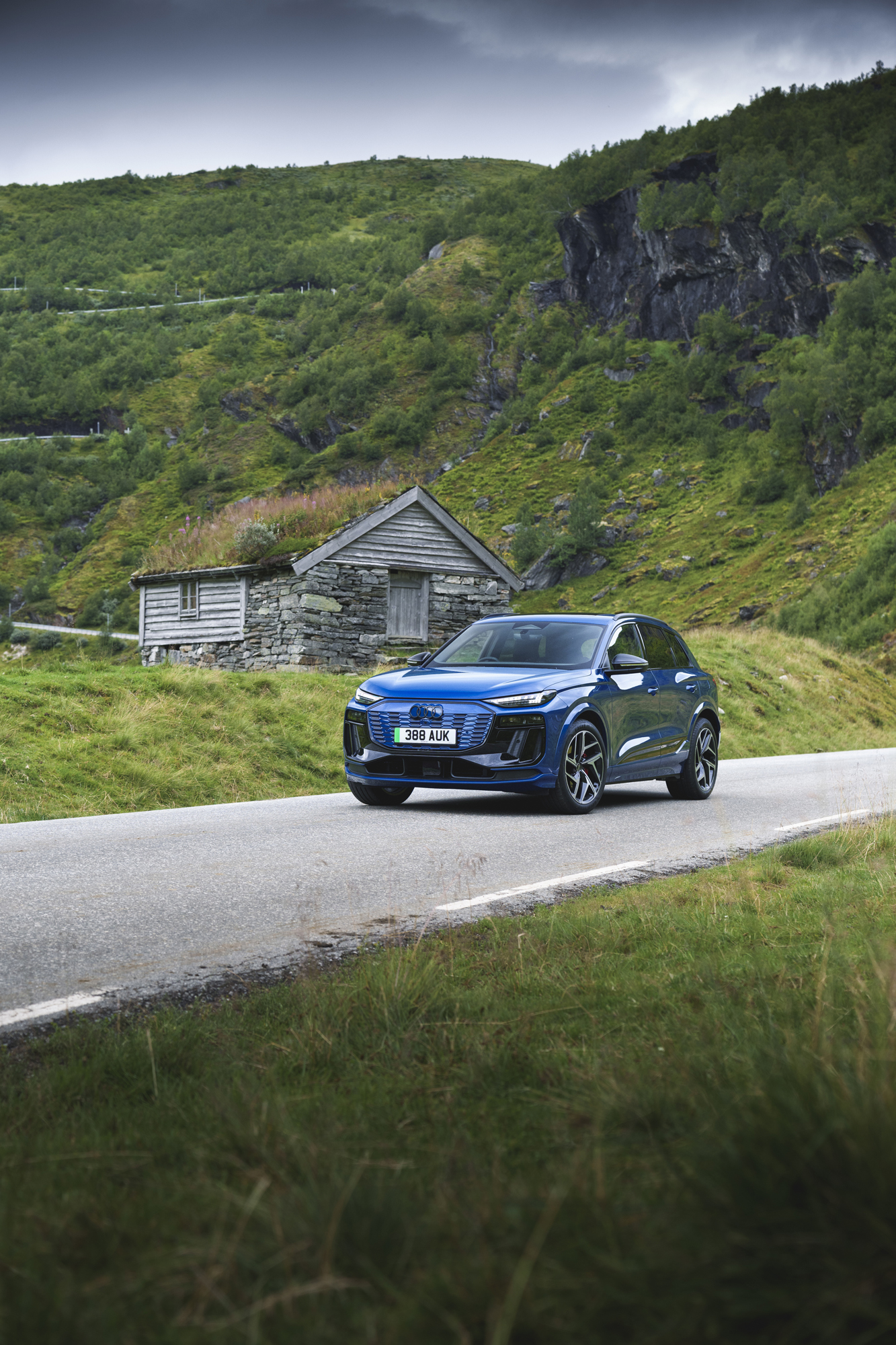
THE GOOD: Techy; high-def HUD; decent range
THE BAD: Firm ride; so-so handling; haptic buttons
THE UGLY: Perceived quality inside isn’t what you’d hope for
NEED TO KNOW: The Audi Q6 e-Tron is the middle electric SUV in Audi’s range – above the Q4, and below the Q8. It gets the recent PPE platform, which also underpins the Porsche Macan Electric. Battery options include 75.8kWh or 94.9kWh NMC packs for an official WLTP range of between 290 and 391 miles, but in our experience of the big-battery Q6, real-world range will be much closer to 300 miles in most conditions. You do get ultra-rapid charging of 270kW for when you need a top-up, which is useful.
More than that, you get a wall of combined screen and touchscreen infotainment in the cabin, a high-definition head-up display in higher spec cars, and it’s all reasonably easy to use and fast to react. It certainly feels like a very techy car when you sit in it, and it’s got all the features you want. It’s just a bit disappointing to drive, really.
Only the rapid and expensive SQ6 e-Tron gets air suspension in the UK, while the rest of the range uses steel springs that give it a firm ride and quite heavy-feeling body movement. It’s refined and absolutely fine for everyday pottering, but compared to sharper and more natural-feeling rivals like the BMW iX3, Polestar 3 and Porsche Macan, the Q6 is a bit of a pudding to drive – regardless of which powertrain you go for.
THE ONE TO BUY: Go for the Q6 Sport Performance, which makes do with rear-wheel drive but gets the big battery for a long range, and plenty of standard equipment
KEY DATA: Range 391 miles; efficiency 3.7 miles per kWh; max DC charging 22 minutes 10-80%
93 Cadillac Lyriq
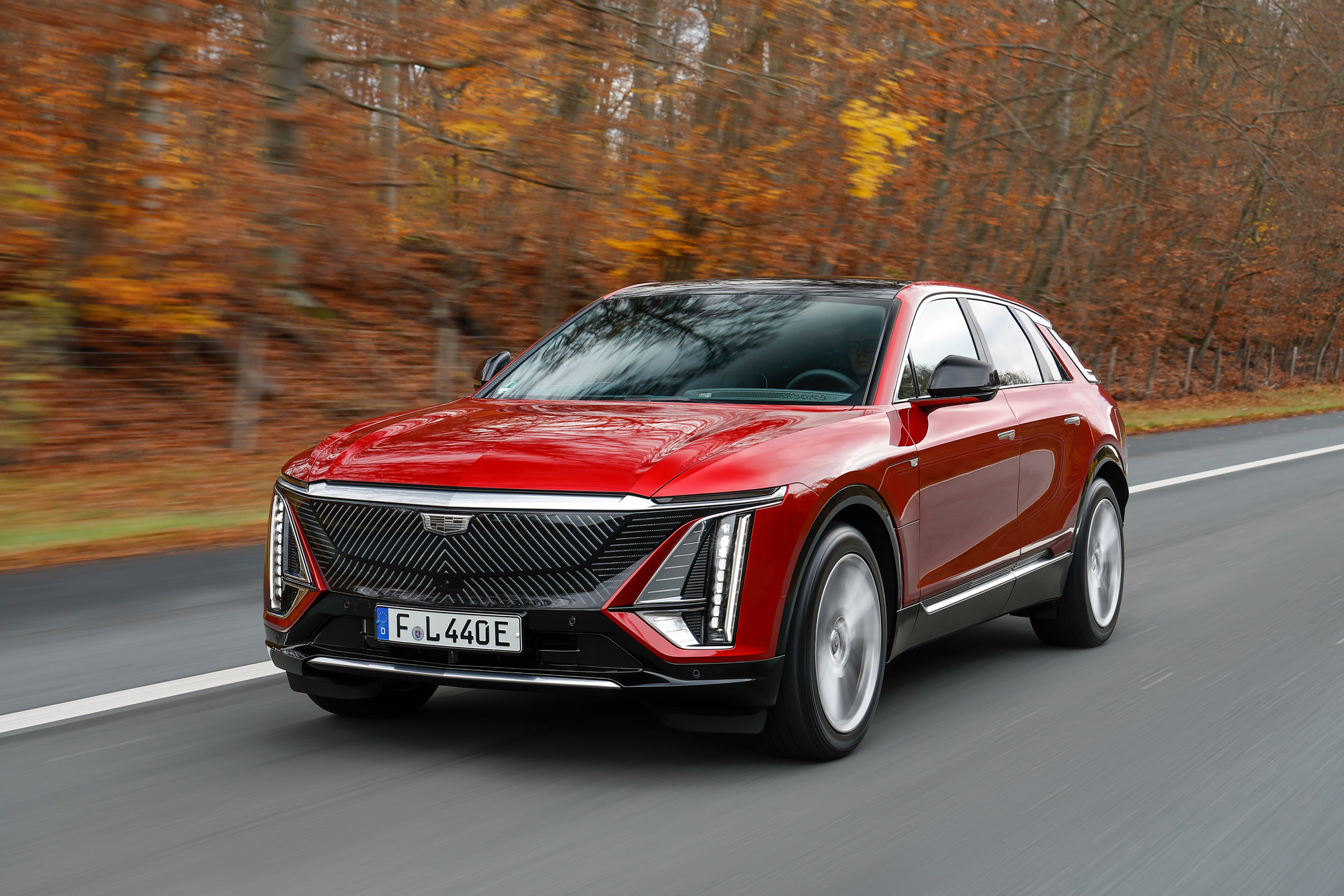
THE GOOD: Imperiously refined and smooth; looks like a concept car; high-quality interior
THE BAD: Fiddly tech; roly-poly suspension; slow European rollout
THE UGLY: Is it too different and quirky to really warrant buying one over the European or Korean or US rivals?
NEED TO KNOW: Cadillac’s first EV of a new era feels like a relative slam dunk. It’s dramatically styled in an Art Deco sort of way, is right-sized for both the US and Europe’s premium car buyers and rides as if potholes don’t exist. It does, however, feel as if Cadillac’s engineers believe corners don’t exist either, with the Lyriq rolling around like you’re sat on a half-filled water bed.
THE ONE TO BUY: There’s only one power variant for now – the 600 E4 – with your choice being Sport or Luxury trim for the same price
KEY DATA: Range 329 miles; efficiency 2.63 miles per kWh; max DC charging 25 minutes 10-80% (est)
92 Peugeot E-308

THE GOOD: Refined; classy interior; efficient
THE BAD: Slower than the Astra
THE UGLY: i-Cockpit remains a taste that some never acquire
NEED TO KNOW: A couple of years into its life, the E-308 has just had a substantial refresh. The visual changes don’t amount to much – new wheels and lights, mostly – but crucially there’s an improved battery. It’s still a modest-looking 52kWh, but a more efficient one. Range has gone up from 257 to 279 miles.
And – marvellously – it’s had a significant price cut.
THE ONE TO BUY: SW version is more practical than the hatch; entry Allure trim is fine
KEY DATA: Range 279 miles; efficiency 4.1 miles per kWh; max DC charging 32 minutes 20-80%
91 BYD Dolphin
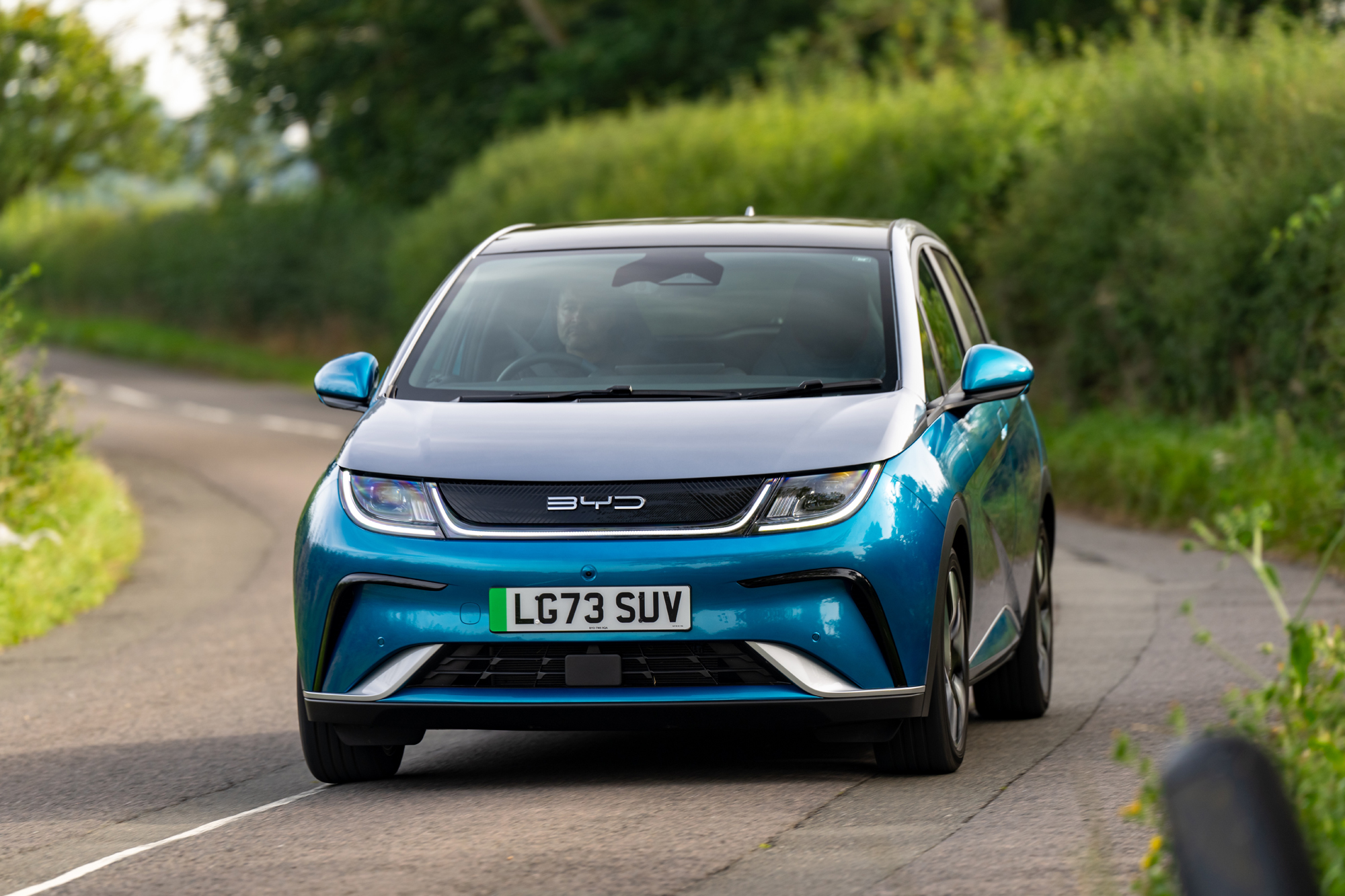
THE GOOD: Spacious; long range for a small car
THE BAD: Feels cheap; slow charging
THE UGLY: Not as cheap as you might expect
NEED TO KNOW: The BYD Dolphin sits below the Atto 2 and above the Dolphin Surf in BYD’s line-up but, as is typical of BYD, it’s actually quite a bit bigger than direct rivals like the Renault 5 and Citroën ë-C3. In fact, at just under 4.3m long it’s very nearly the same size as the Atto 2, but the straightforward hatchback stance and slightly lower price put it beneath the Atto 2 (according to people in a BYD boardroom, anyway). Anyway, it’s a rival for the Renault 5 supermini class, as well as various small EVs including the Renault 4, Puma Gen-E and Vauxhall Frontera.
There are two LFP batteries on offer, with WLTP driving range from 193 to 265 miles depending on which one you go for. It’s not bad to drive. If you can get over the marine-themed model name, it’s comfortable and responsive enough to feel confident around town or even out on the motorway. You get decent equipment, too – the Design even gets a panoramic roof, while all Dolphin models get a big touchscreen with the usual phone integration apps and media functionality as well as over-the-air software updates.
However, the Dolphin does feel cheap. The perceived quality of the materials is a bit questionable, as is the build quality, and you never forget that you went for a budget option. A Renault 4 or Jeep Avenger would be far nicer to drive, look at and spend time in.
THE ONE TO BUY: Go for the top-spec BYD Dolphin Comfort, which gets the 60.4kWh battery for a long range, plus plenty of equipment
KEY DATA: Range 265 miles; efficiency 3.8 miles per kWh; max DC charging 50 minutes 10-80%
90 Peugeot E-208
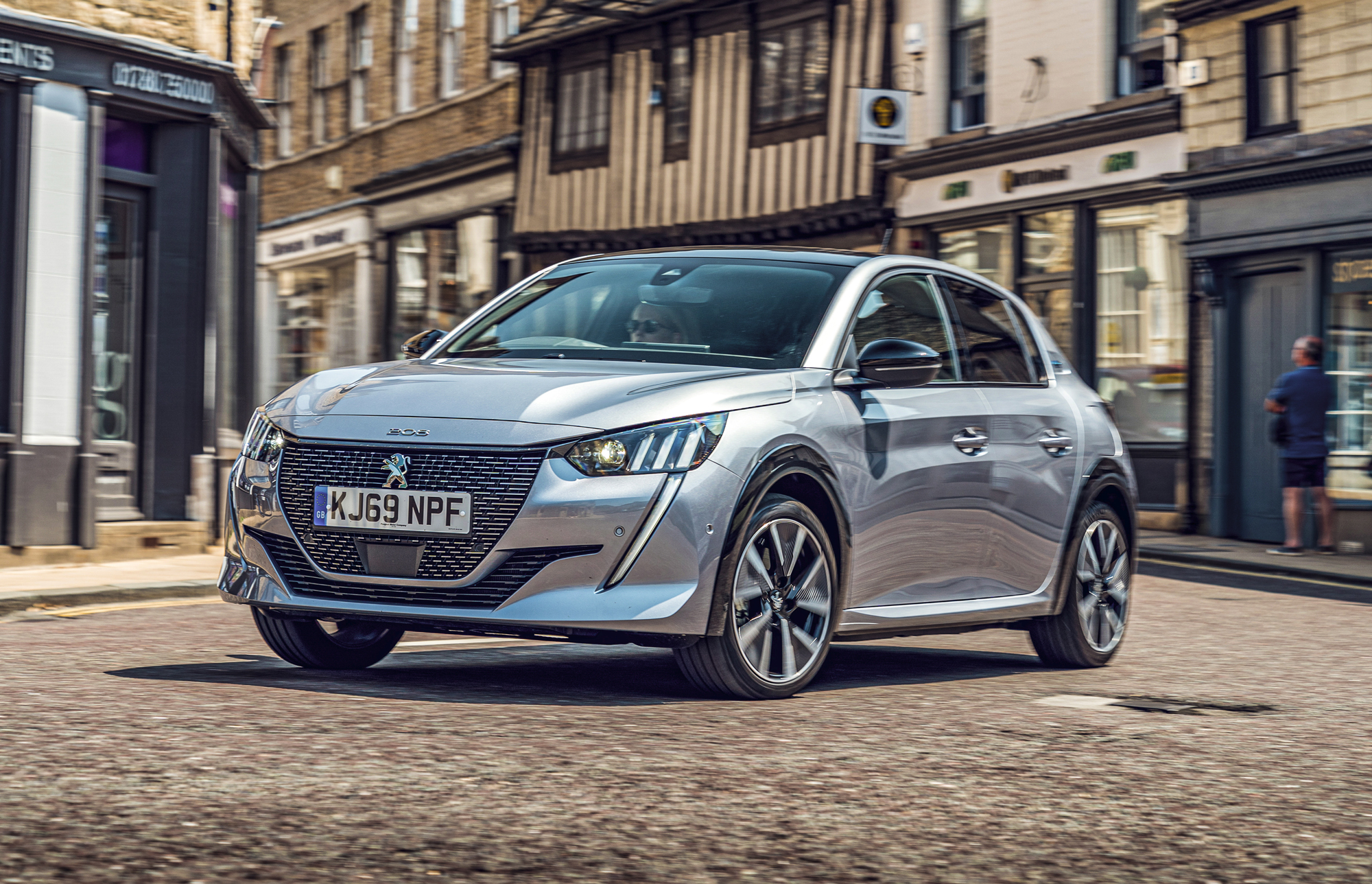
THE GOOD: Very stylish, and now more keenly priced
THE BAD: Little cramped in the cabin
THE UGLY: Doesn’t quite live up to the Peugeot hatchback tradition
NEED TO KNOW: Facelift keeps the E-208 looking fresh, but plenty of rivals now do the same things better.
THE ONE TO BUY: E-208 Allure with the 50kWh battery
KEY DATA: Range 224 miles; efficiency 3.5-4.5 miles per kWh; max DC charging 30 minutes 10-80%
89 Mercedes-Benz EQS SUV
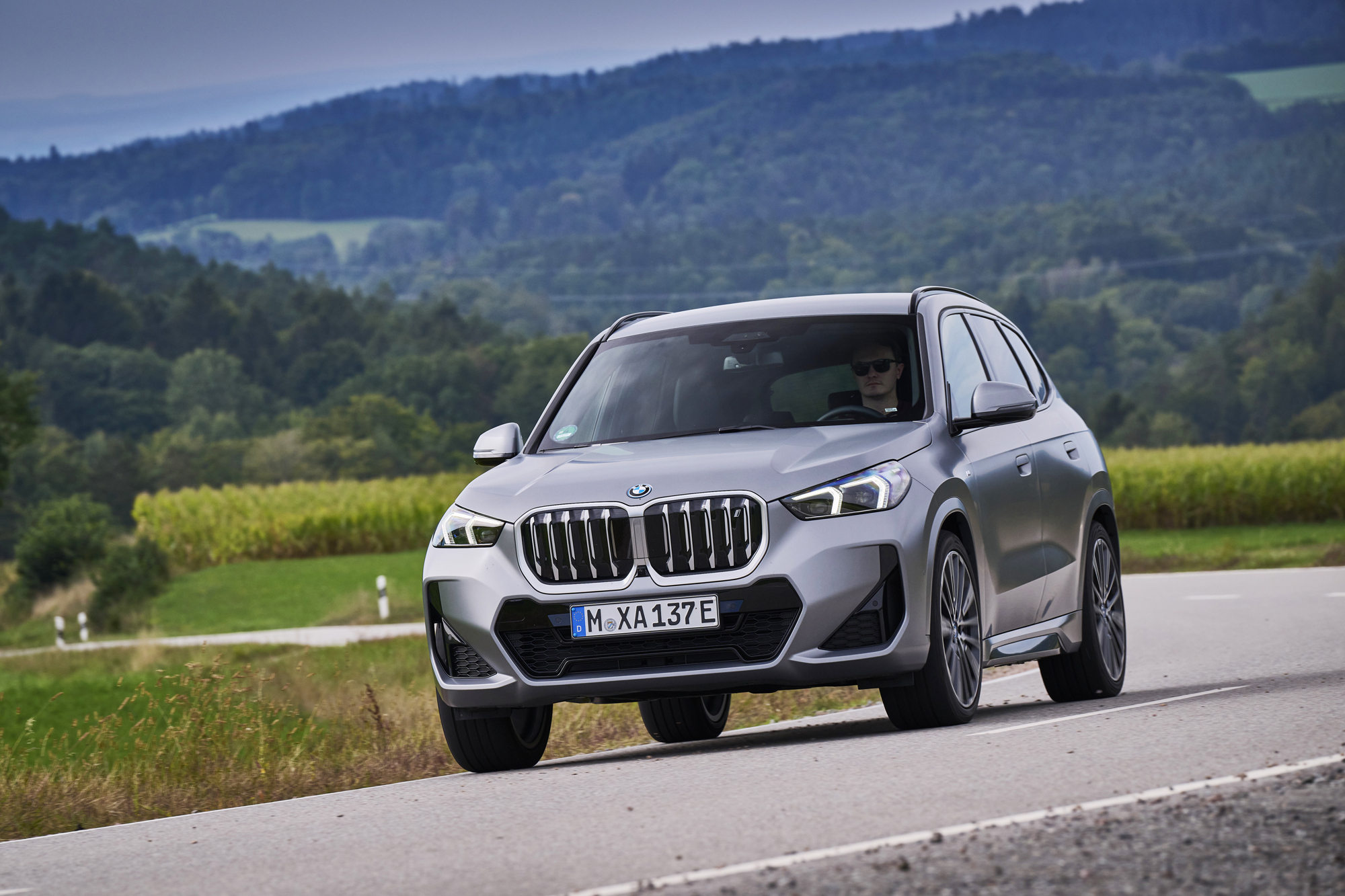
THE GOOD: Seven seats; bags of space; punchy performance
THE BAD: Friday-afternoon suspension tuning
THE UGLY: The interior is shockingly flimsy in places
NEED TO KNOW: Available in Benz and Maybach flavours, the EQS SUV sits joint-top of the company’s electric SUV range, although it barely recognises its G580 cousin. It’s very spacious inside and is available with seven seats, although it can’t match the quality feel of the cheaper BMW iX.
THE ONE TO BUY: The 450 is quick enough really; you’d do well to spend the extra on a higher trim level to ramp up the luxury
KEY DATA: Range 362 miles; efficiency 3.3 miles per kWh; max DC charging 31 minutes 10-80%
88 Suzuki e-Vitara

THE GOOD: Comfortable; rides well; 4wd available
THE BAD: Too much happening via touchscreen
THE UGLY: The whole project feels a bit rushed
NEED TO KNOW: The eVitara doesn’t owe much, mechanically, to the familar Vitara. Rather, it leans heavily on the hardware of the Toyota Urban Cruiser. Size-wise it’s a rival for the Ford Puma Gen-E.
There are two battery sizes, 49kWh and 61kWh, and two trim levels, Motion and Ultra, plus a choice of two- or all-wheel drive. The combination of small battery and two-wheel drive gets you efficiency of 4.2 miles per kWh and a range of 213 miles. The bigger battery takes those figures to 4.1 and 264 miles. Add all-wheel drive and you’re looking at 3.7 miles per kWh and 245 miles of range.
It rides well, and the handling is reassuringly sturdy in all conditions, but it’s not very quick, and the touchscreen is even slower, not to mention very fiddly.
THE ONE TO BUY: Suzuki is at its best with all-wheel drive, so might as well go for the Motion Allgrip-e
KEY DATA: Range 245 miles; efficiency 3.7 miles per kWh; max DC charging 45 minutes 10-80%
87 Ford Mustang Mach-E
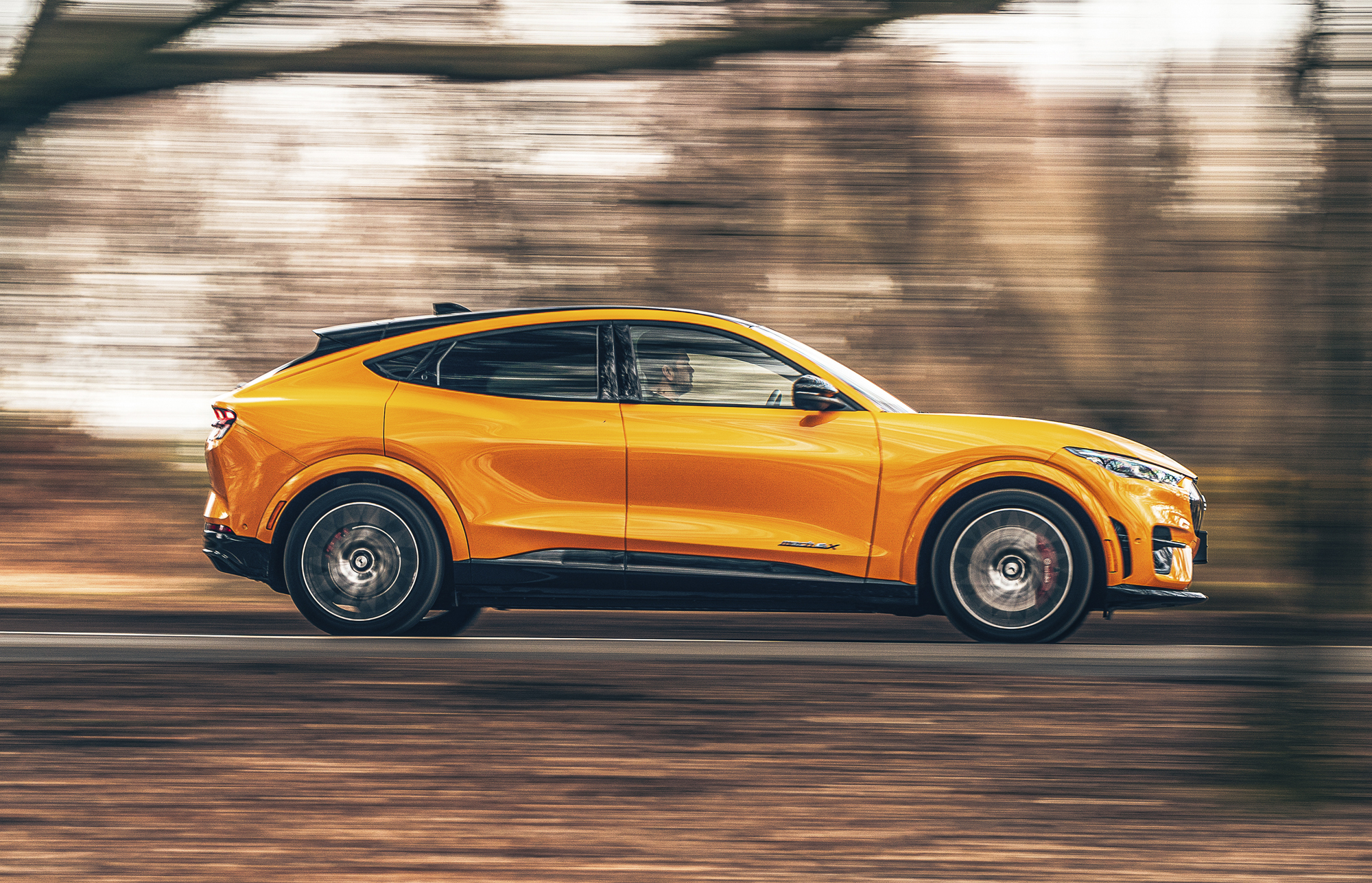
THE GOOD: Roomy, easygoing and can be quite engaging to drive
THE BAD: Clunky ride quality
THE UGLY: Feels a bit secondhand from day one, although keen pricing can help you forgive that
NEED TO KNOW: Forget the Mach-E GT, which tries too hard to be sporty (with the emphasis on hard). And avoid the marginal dynamic gains of the all-wheel-drive versions. Forego even the heavier, near-100kWh battery and pointless posh spec. Instead just enjoy the roominess, user-friendliness and no-nonsense nature of the Mach-E, which may not be much of a Mustang but sits well in the long tradition of functional family Fords.
You’re placed high and upright in a minimalist cabin dominated by a large and reasonably straightforward touchscreen, and you really don’t need to worry much about any EV cleverness – Ford has made the transition as painless as possible.
THE ONE TO BUY: Go for the basic Standard Range with rear-wheel drive and the 72kWh battery
KEY DATA: Range 273 miles; efficiency 3.6 miles per kWh; max DC charging 38 minutes 10-80%
86 BYD Atto 2
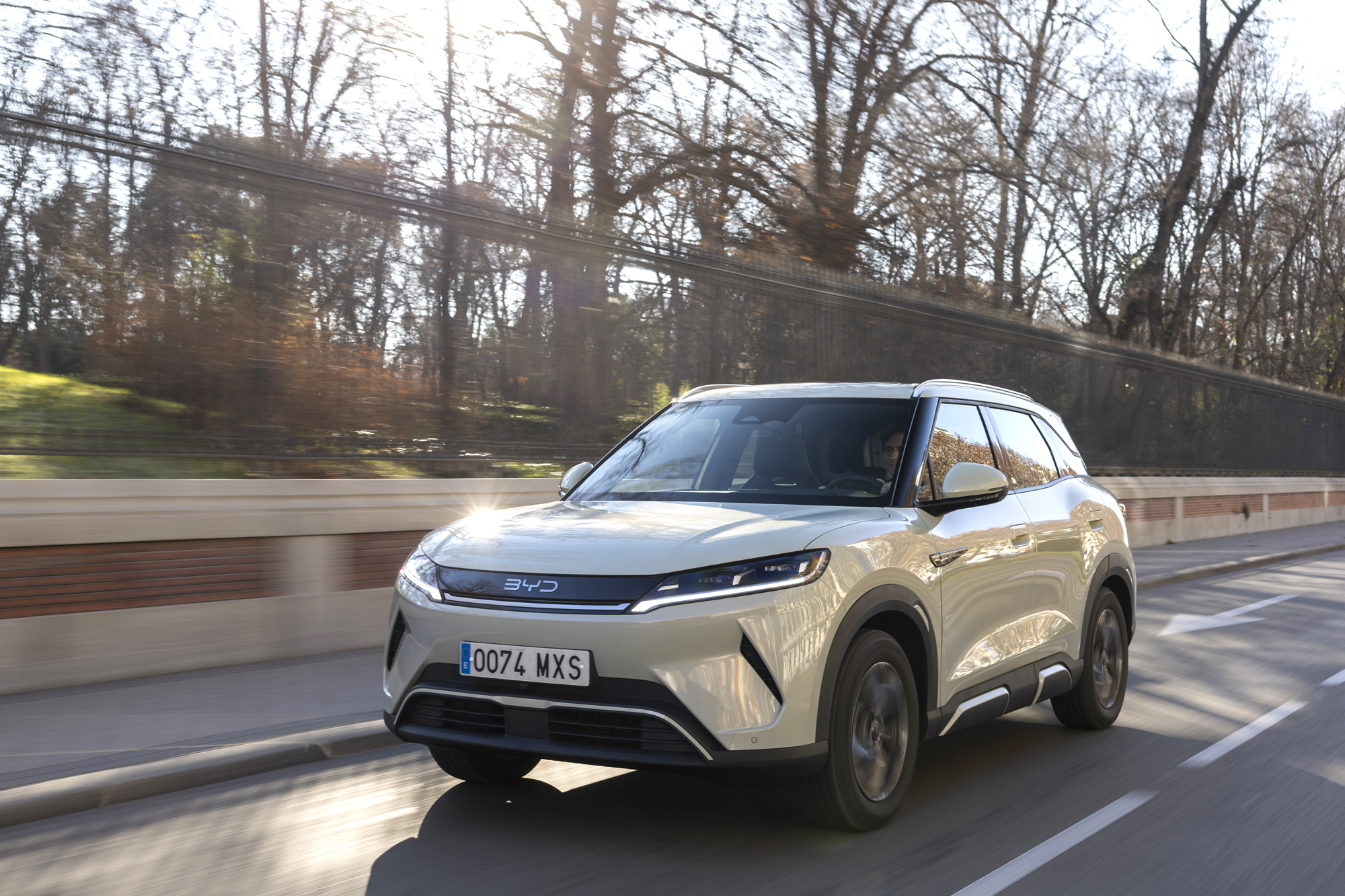
THE GOOD: Great finance deals; lots of kit; loads of passenger space
THE BAD: Underwhelming dynamics; middling boot size
THE UGLY: Weird driver’s read-out
NEED TO KNOW: The BYD Atto 2 is a compact electric SUV that’s out to take on the likes of the Jeep Avenger and Renault 4. Entry-level Boost trim gets a 51.1kWh battery for a WLTP range of 214 miles, while the Comfort model steps up to a 64.8kWh pack for a range of 267 miles. Both use BYD’s LFP Blade battery, which is made in-house by this huge Chinese manufacturer.
The Atto 2 is one of those cars that’s just… fine. It looks very inoffensive, and there’s loads of space in the back for the kids. Plus, there’s decent infotainment courtesy of the big touchscreen that rotates to portrait or landscape mode at the push of a button, and offers all the features you want including nav, wireless Apple CarPlay and Android Auto. Other standard kit highlights include a heat pump for better winter range, and vehicle-to-load that lets you charge your devices from the car’s high-voltage battery.
But the Atto 2 is verging on unpleasant to drive, with very light steering, sloppy body control and a surprising amount of noise from the suspension and wind. There’s also no one-pedal mode, so brake regen is more limited than it is on some rivals. The current monthly finance deals might well make up for that, though, as the Atto 2 will do the job if you’re not fussed about how the car drives, so long as it’s safe, well-equipped and good value.
THE ONE TO BUY: Go for the bigger-battery Atto 2 Comfort. It’s not a huge additional cost to get usefully faster charging (155kW for the Comfort vs 82kW for the Boost) and longer range
KEY DATA: Range 267 miles; efficiency 3.8 miles per kWh; max DC charging 30 minutes 10-80%
85 Peugeot E-5008
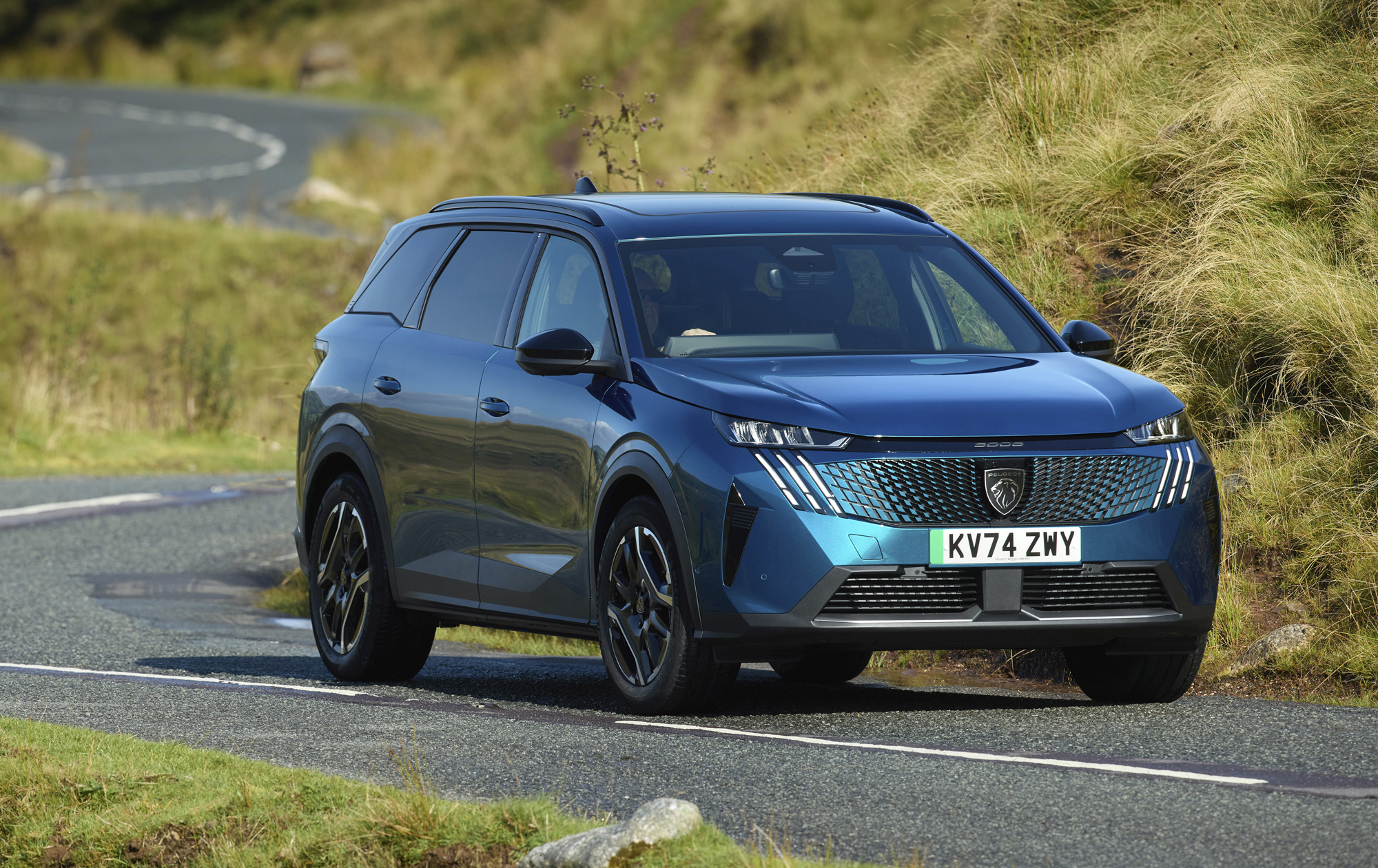
THE GOOD: A seriously spacious seven-seat EV for a good price
THE BAD: Third row is best for kids only
THE UGLY: Touchscreen can be annoying
NEED TO KNOW: You want a proper seven-seat electric SUV but you don’t want to spend an absolute fortune? Here’s your answer. The E-5008 is usefully roomier and more versatile than the Mercedes EQB, and you can get seven adults in if those in the third row aren’t too tall and don’t mind feeling a bit cramped – and probably hot, since there are no vents back there. But for a family car that gives the freedom of occasional seven-seat transport, plus an enormous boot in five-seat mode, loads of standard kit and decent prices? This is a great package. It’s comfortable and chilled to drive, too, and has a decent range so you don’t have to panic about the family holidays. Keep it serviced with Peugeot and you even get an eight-year warranty (on the car as well as the battery). No need to fund that Kia EV9, after all.
THE ONE TO BUY: The long-range 97kWh battery and base Allure trim is best for balance of cost, comfort and range
KEY DATA: Range 435 miles; efficiency 4.1 miles per kWh; max DC charging 30 minutes 10-80%
84 Audi Q4 e-Tron
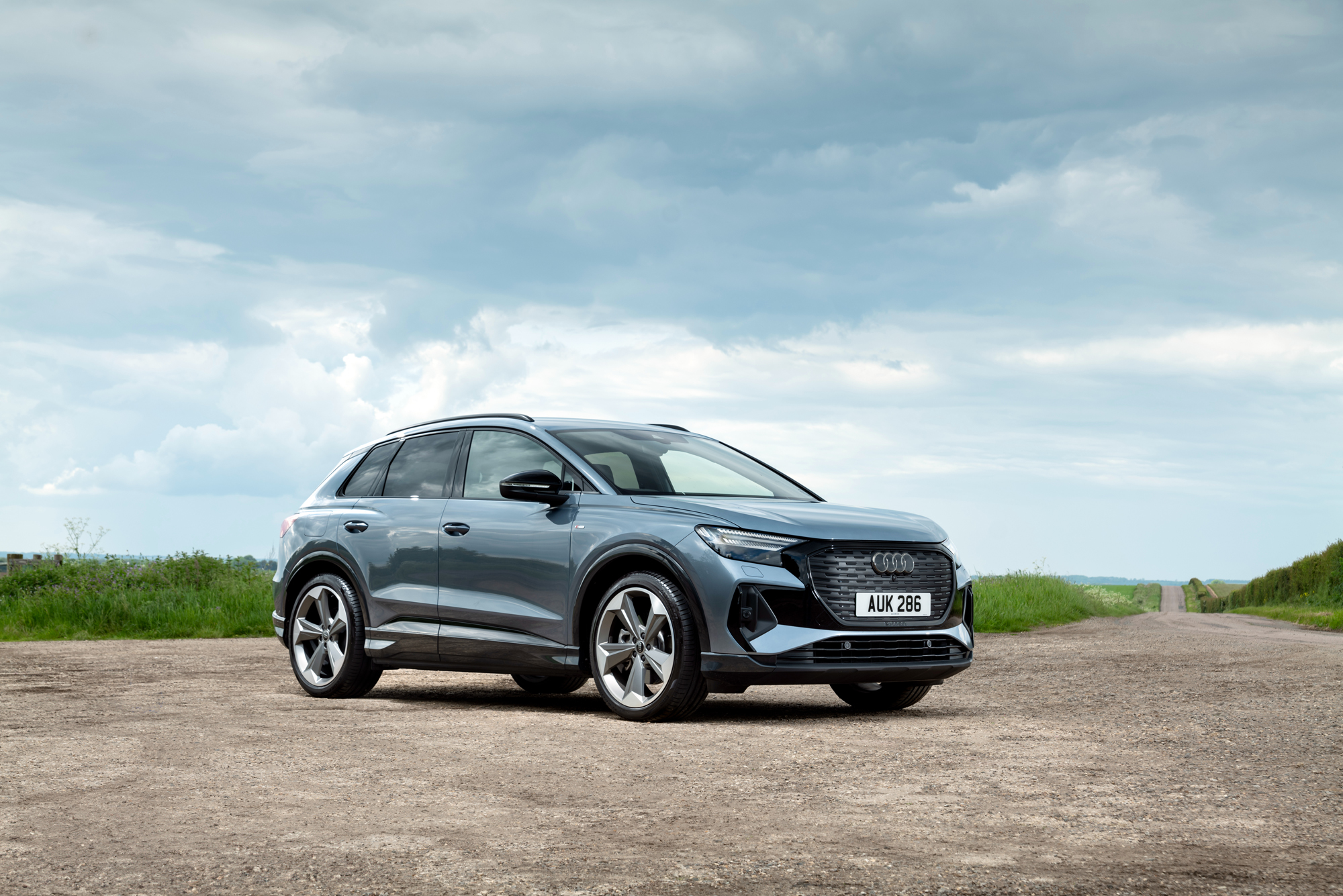
THE GOOD: Refined; well equipped; trustworthy range read-out
THE BAD: Derivative looks; fiddly steering wheel
THE UGLY: A Skoda Enyaq does the same job a bit better and for less money
NEED TO KNOW: The Audi Q4 e-Tron is a popular electric family SUV in the UK, and in plenty of other markets. But to be honest it’s a little hard to understand why, given that it’s just…. fine. Nothing more, nothing less. You get the choice of a 59kWh or 77kWh NMC battery and the option of rear- or all-wheel-drive models that manage WLTP range of between 250 and 338 miles. And it’s very inoffensive to drive, regardless of which variant you go for. It’s quiet and comfortable enough, and performance is more than punchy enough for a daily family SUV like this, so it’s easy to see why buyers like the confidence and ease of it all. There’s always the Q4 Sportback if you want to pay more for a slightly coupe-ish silhouette and less practical boot space, too.
The difficulty is that the Q4 e-Tron doesn’t have a USP. It’s just a perfectly adequate electric SUV, so you get a lot more for your money with the Skoda Enyaq or VW ID. 4, both of which are usefully cheaper and do precisely the same job. We’d actually say that the Enyaq has a slightly better interior finish and a more user-friendly infotainment system, too.
THE ONE TO BUY: Go for the Q4 Sport 45 e-Tron. It gets the bigger battery for a useful real-world range of around 250 to 300 miles, and monthly costs aren’t that much more than for the smaller-battery models. You can have four-wheel drive for a very reasonable £1500, too, which is a good option if you’re worried about winter conditions
KEY DATA: Range 338 miles; efficiency 3.8 miles per kWh; max DC charging 18 minutes 10-80%
83 Genesis GV70 Electrified
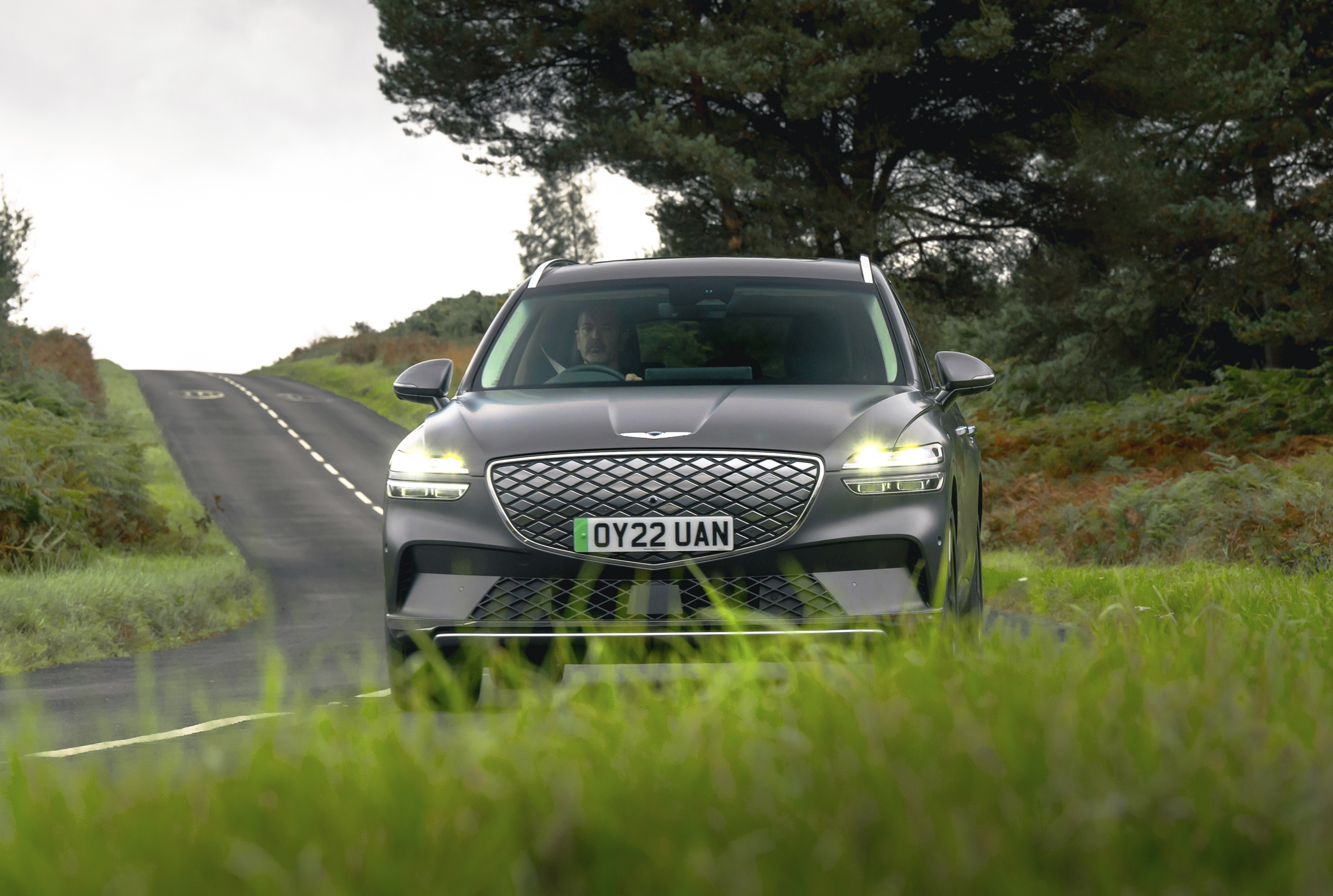
THE GOOD: Fabulously chintzy and beautifully screwed together
THE BAD: Wouldn’t you rather have a BMW?
THE UGLY: Get used to people asking you what it is then not caring about the answer
NEED TO KNOW: ‘It’s a Genesis.’ ‘What’s that?’ ‘It’s a posh Hyundai.’ ‘Oh, okay. The badge looks like a Bentley’s.’ ‘I’m sure that was the intention.’ ‘Is it fast?’ ‘Yes, actually, it’ll do 0-62mph in…’ ‘Hang on, is the key quilted?’ ‘Yes.’
THE ONE TO BUY: There’s only one – the £65k ‘Sport’
KEY DATA: Range 283 miles; efficiency 3.2 miles per kWh; max DC charging 18 minutes 10-80%
82 Tesla Model Y
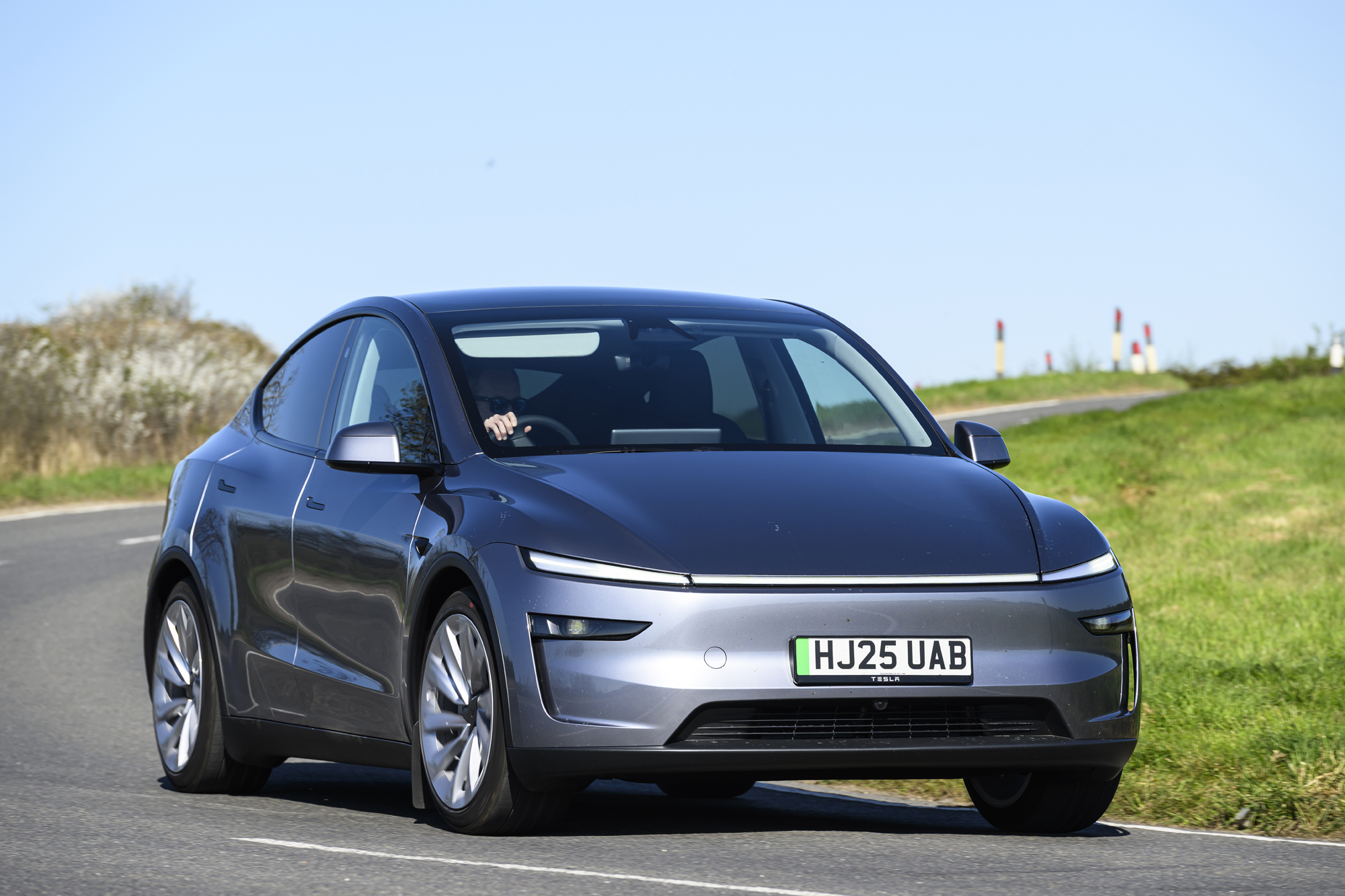
THE GOOD: Full of Tesla goodness: battery tech, software, charging network
THE BAD: Clanking ride; hyperactive steering
THE UGLY: Even with a refreshed look, it’s still dated
NEED TO KNOW: The Model Y takes the Model 3’s platform, jacks it up and fits a taller, more practical body. While fast steering feels good in the hunkered-down 3, the Y’s edgy responses will unsettle some, and the suspension just cannot cope with poor roads: fit 20-inch wheels at your peril.
THE ONE TO BUY: Rear-drive is good value, but Long Range has AWD, more punch and longer range
KEY DATA: Range 331 miles; 3.26 miles per kWh (tested); max DC charging 27 minutes 10-80%
81 Nissan Ariya
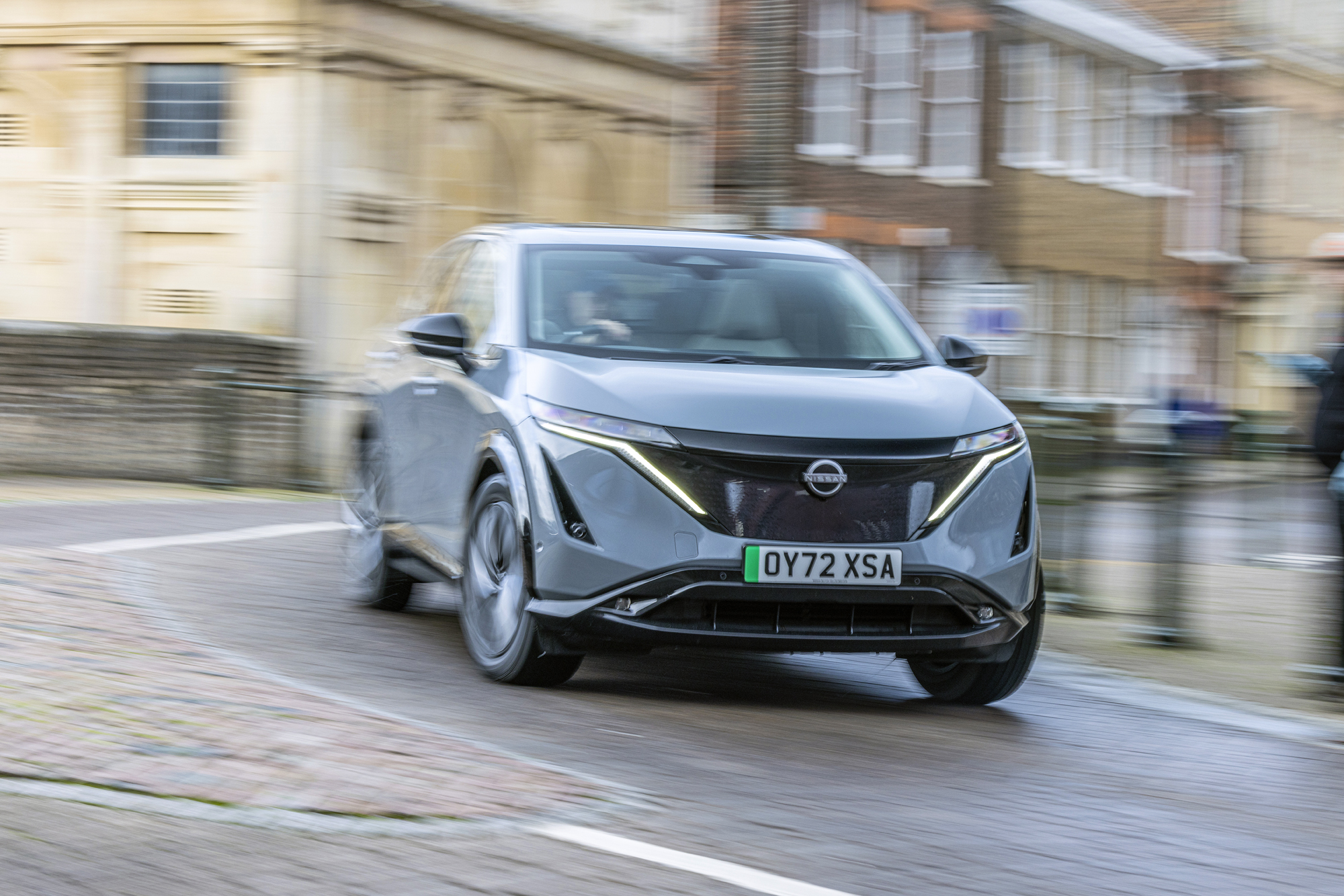
THE GOOD: Fabulously fresh design inside and out
THE BAD: Lumpy ride; leaden steering
THE UGLY: Missed opportunity given Nissan’s head start
NEED TO KNOW: The Ariya has one of the best mainstream EV interiors, with its Japanese lantern-inspired lighting, sliding centre console and tasteful pale wood. It’s pretty efficient and offers Nissan’s trademark one-pedal driving, triggering serious brake regen, and ProPilot driver assistance. But the fidgety ride and inconsistent steering mean it’s best for aesthetes not racers.
THE ONE TO BUY: Ariya 87kWh Advance
KEY DATA: Range 329 miles; efficiency 3.41 miles per kWh; max DC charging 30 minutes 20-80%
80 Mercedes-Benz EQS
THE GOOD: Extremely long range; imperious motorway refinement
THE BAD: Drives like a barge; doesn’t feel as high-quality as it should
THE UGLY: All that hype about the expensive Hyperscreen infotainment
NEED TO KNOW: The wheeled bar of soap with a three-pointed star on its nose. Merc’s flagship EQS feels a bit like top-end Mercs of old: it’s brimming with cutting-edge technology, it wears an ultra-exclusive price tag and falls apart dynamically when you take it off an autobahn.
A recent facelift and fiddle gave it, among other things, a bigger battery (for the 450 and AMG 53, but not the entry 350), which helps with range, but doesn’t transform it into the electric S-Class it should always have been.
THE ONE TO BUY: The 450+ in AMG Line Premium spec – yours from £112,560
KEY DATA: Range 440 miles; efficiency 3.25-3.55 miles per kWh; max DC charging 31 minutes 10-80%
79 Polestar 2
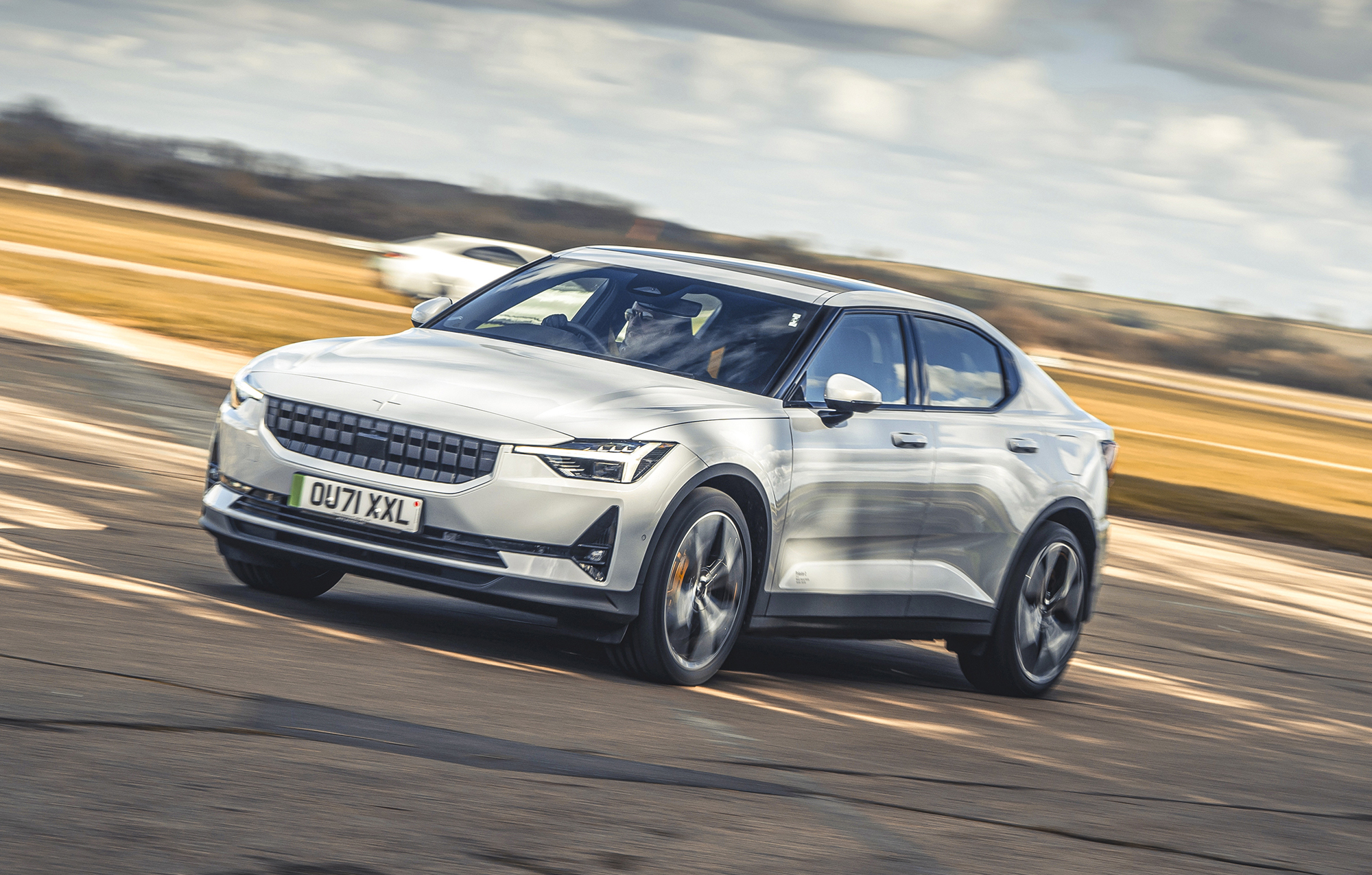
THE GOOD: Wonderful looking car, best enjoyed with the rear-drive powertrain
THE BAD: Not as roomy as you’d hope for a car this chunky
THE UGLY: Image can feel a bit too cool for its own good, like it’s trying too hard to be a Scandi Tesla
NEED TO KNOW: Polestar recently added a rear-motor, rear-wheel-drive choice, and at the same time introduced a more efficient set of electrics, but didn’t mess with the gorgeous looks. No point in going for the more powerful option, as the chassis doesn’t like it. And the ride is brittle at the best of times.
THE ONE TO BUY: Standard Range, Single Motor: the slowest Polestar 2, but still quick enough, currently just under £43k
KEY DATA: Range 344 miles; efficiency 3.9-4.2 miles per kWh; max DC charging 26 minutes 10-80%
78 Peugeot E-408

THE GOOD: Refreshingly odd to look at; handles well; roomy in the back
THE BAD: Performance isn’t very lively
THE UGLY: For a car launched so recently, that range isn’t great
NEED TO KNOW: The 408 has been around since 2022, and still looks bracingly unusual. Coupe? Crossover? Tall hatch? And finally there’s an electric version.
Mechanically it’s related to the smaller, more conventional E-308, but with a bigger battery and more power – but not enough performance or driving range to stand out.
THE ONE TO BUY: The base Allure is better value; GT spec brings mostly cosmetic changes
KEY DATA: Range 281 miles; efficiency 4.1 miles per kWh; max DC charging 30 minutes 20-80%
77 Mini Countryman
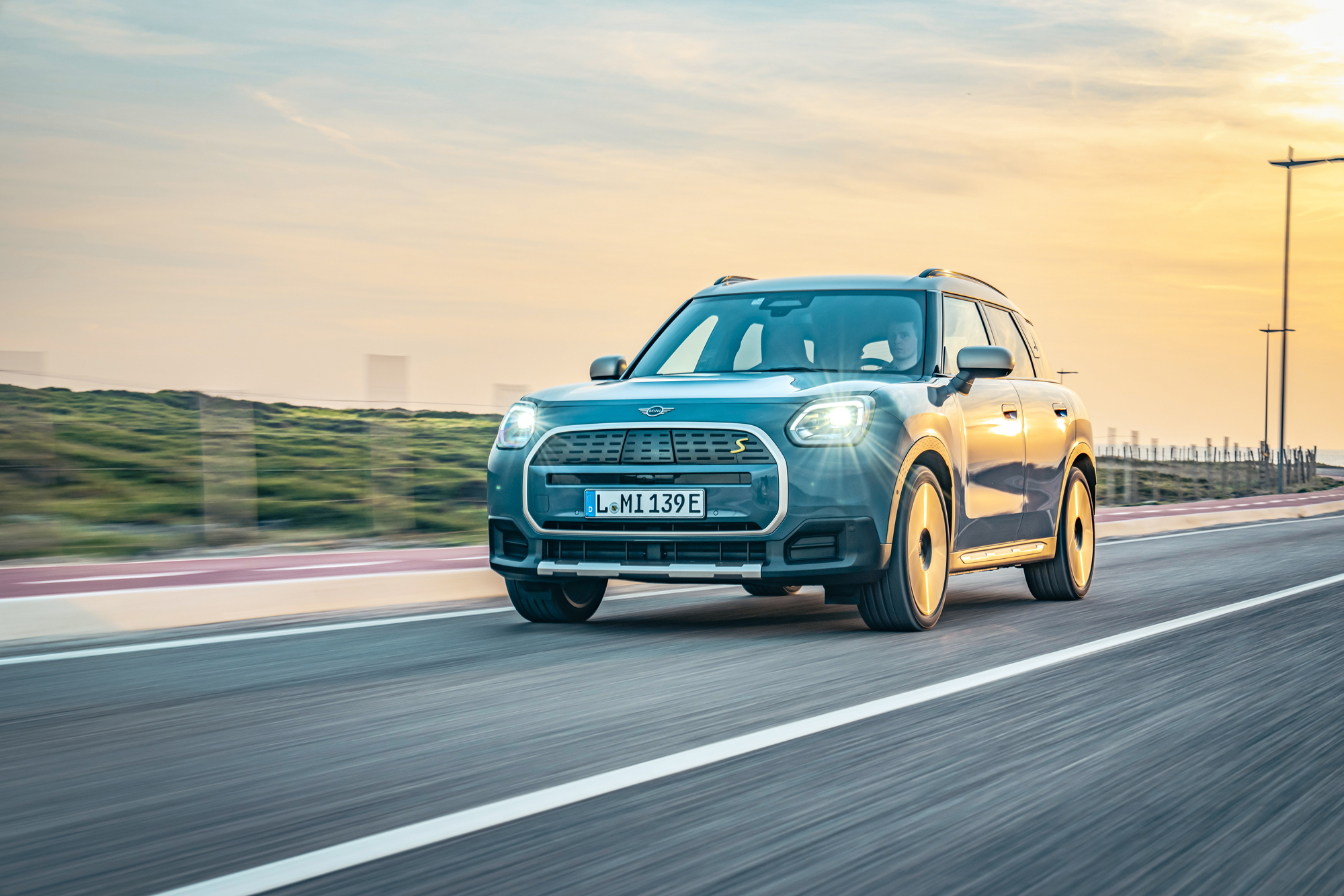
THE GOOD: BMW’s excellent eTech gubbins for less cash; tidy to drive; cool looks
THE BAD: More buttons would be good
THE UGLY: Some rivals offer longer range
NEED TO KNOW: The Countryman is Mini’s equivalent of the BMW iX1. It gets the same platform, battery and motors, only at a usefully lower price. That means a WLTP range of up to 287 miles, which is alright even if rivals like the Volvo EX30 and Kia EV3 have longer-range options. The real reason you’d buy the Countryman is because it looks more interesting than most other compact electric SUVs, and has a classy, interesting interior with colourful, knitted (no, really) textiles around the cabin. It’s also a bit pointier and more direct handling than most equivalent family EVs, especially if you go for the SE All4.
THE ONE TO BUY: We’d go for the SE All4, as it gets usefully better performance, all-wheel drive and quite a bit more equipment
KEY DATA: Range 266 miles; efficiency 3.9 miles per kWh; max DC charging 29 minutes 10-80%
76 Fiat 500e

THE GOOD: Brilliant looks; pleasant drive; cabrio option
THE BAD: Small rear seats; dinky boot
THE UGLY: Felt like a groundbreaking EV at launch, but it’s now outclassed for range and affordability
NEED TO KNOW: The Fiat 500 Electric is a masterclass in car design. It’s a sensitive modernisation of the brilliant petrol-powered 500, with smoother edges and a slightly more mature stance. And it looks fantastic regardless of spec, colour, or whether you’ve washed it in the last few years. But it was launched a few years ago now, and the rest of the EV world has moved on. The three-door
500’s two battery options and WLTP range of 118 or 199 miles suddenly look a touch behind the times, with similarly desirable small electric cars like the Renault 5, Hyundai Inster and even Fiat’s own Grande Panda delivering more range and practicality for less money. Even so, if it’s an urban-focused EV that you’re after, the Fiat 500e’s dinky dimensions, tight turning circle and achingly cute styling still appeal. Monthly finance deals tend to be keen, too, so check those out before you dismiss the 500 based on comparably punchy brochure prices.
THE ONE TO BUY: Go for the 500e (RED), and pick whichever battery suits your lifestyle: 42kWh with 199-mile range gets a bit more power and usefully faster rapid charging
KEY DATA: Range 199 miles; efficiency 4.4 miles per kWh; max DC charging 35 minutes 10-80%
75 VW ID. Buzz
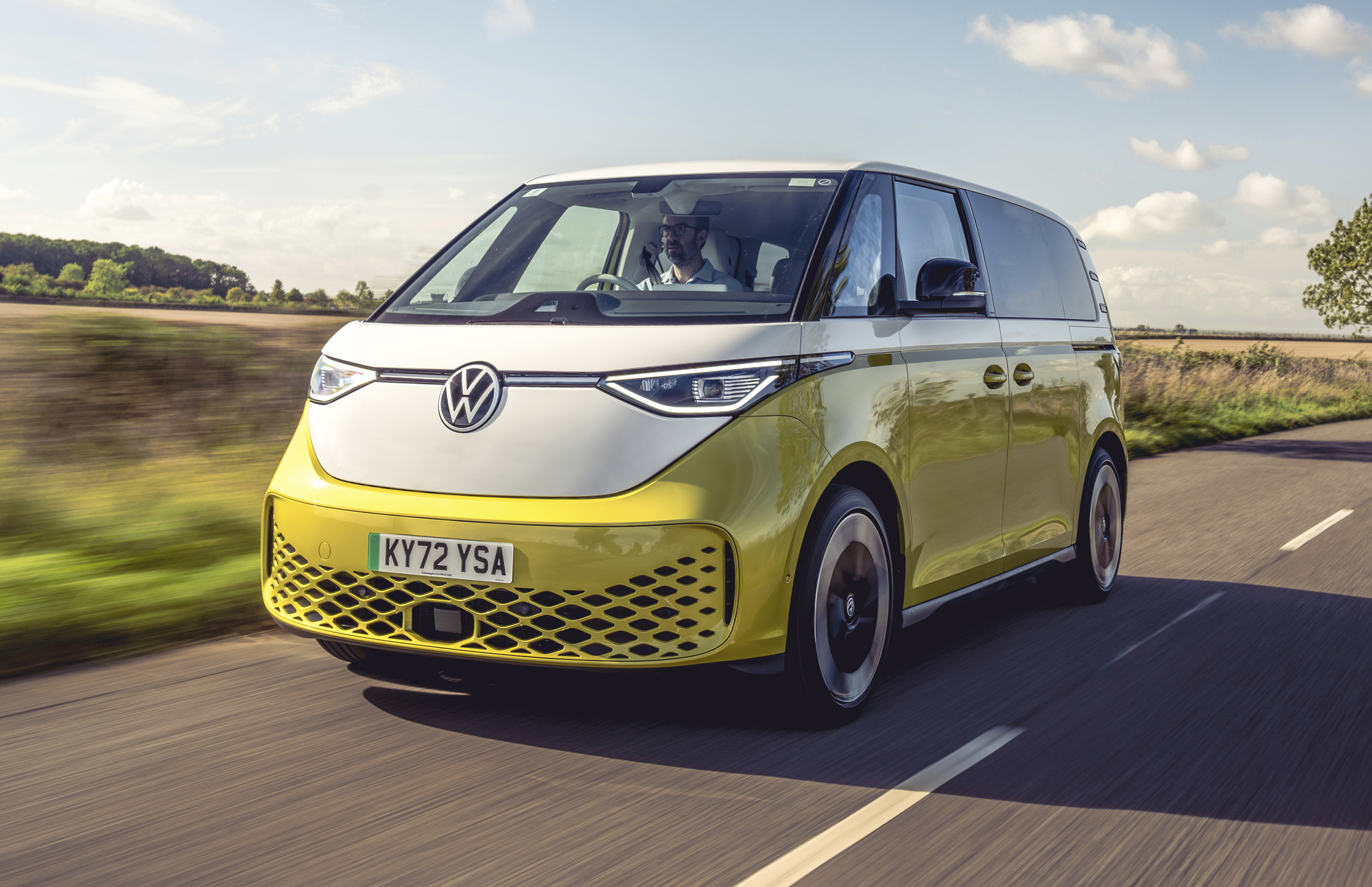
THE GOOD: Utterly charming; drives like a car; interior feels solid
THE BAD: The five-seater isn’t as practical as it looks, sullied by VW’s older and maligned infotainment
THE UGLY: Everyone wants to buy them secondhand and then go roadtripping, which only works if someone buys them new
NEED TO KNOW: After a few failed starts, we finally got that revived VW Microbus. And what an adorable thing the ID. Buzz is – we think VW’s nailed the charm of it without making it too twee or retro. It’s much the same as the VW ID. 3 and ID. 4 underneath, and drives like a car (complete with a low centre of gravity and plenty of grip) but that brick-like body shape and gargantuan weight hobble efficiency.
The range now consists of your basic Buzz, the even more basic Cargo, the long-wheelbase seven-seater and the hotter GTX. Batteries and e-motors have also been upgraded since the Buzz first arrived.
THE ONE TO BUY: Seven-seater makes the most of the family-and-friends feelgood factor
KEY DATA: Range 258 miles; efficiency 3.3 miles per kWh; max DC charging 30 minutes 10-80%
74 Tesla Model S
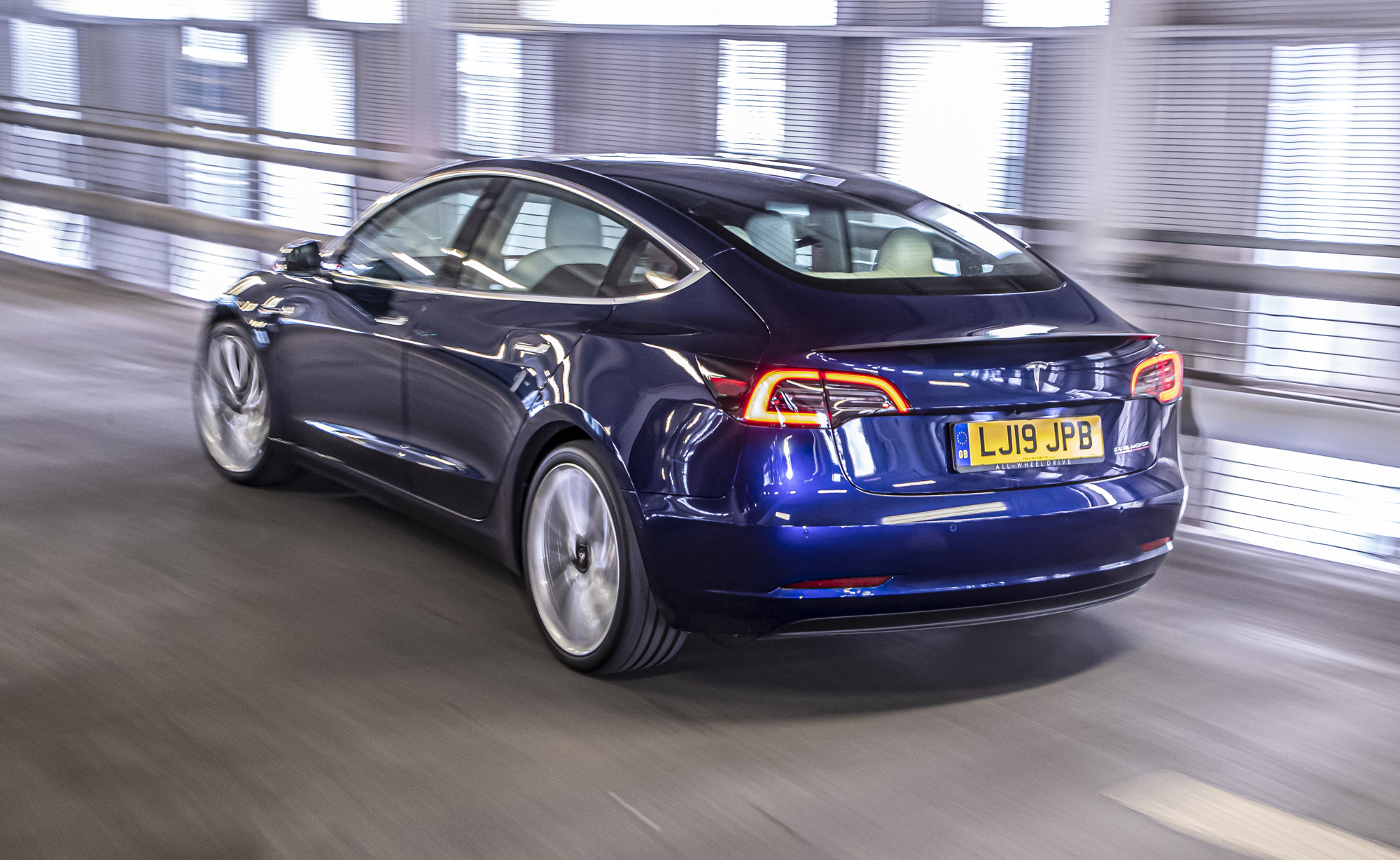
THE GOOD: Bugatti-beatingly fast
THE BAD: Not Taycan-beatingly fun
THE UGLY: That bloody yoke is a joke
NEED TO KNOW: Even by electric car standards the Model S Plaid is shockingly quick, although the 1.99sec 0-62mph time should be taken with a pinch of salt. (Instead of being measured from a standstill, that figure removes the first foot of movement, although it’s still comfortably faster than even a Bugatti Chiron to this speed and a bit beyond.)
However, the Plaid isn’t a laugh-a-minute in the corners, so keen drivers will have far more fun in a much slower Taycan variant. You might not get the raw speed, but it’ll be more involving and sharper, making it the better driver’s EV
Not that Plaid is entirely a one-trick pony. It’s more practical, with loads more passenger and cargo space and a longer range, too – so long as you don’t mind that new cars are strictly left-hand drive. A boon is Tesla’s Supercharger network making long-distance drives far less of a concern. There’s loads of them and they’re more reliable than the public charging network.
THE ONE TO BUY: It has to be Plaid, doesn’t it? Only slightly less range than the regular car and hypercar-humbling acceleration. Be aware that the S is no longer offered in right-hand drive in the UK
KEY DATA: Range 373 miles; efficiency 3.7 miles per kWh; max DC charging 29 minutes 10-80%
73 BMW iX3
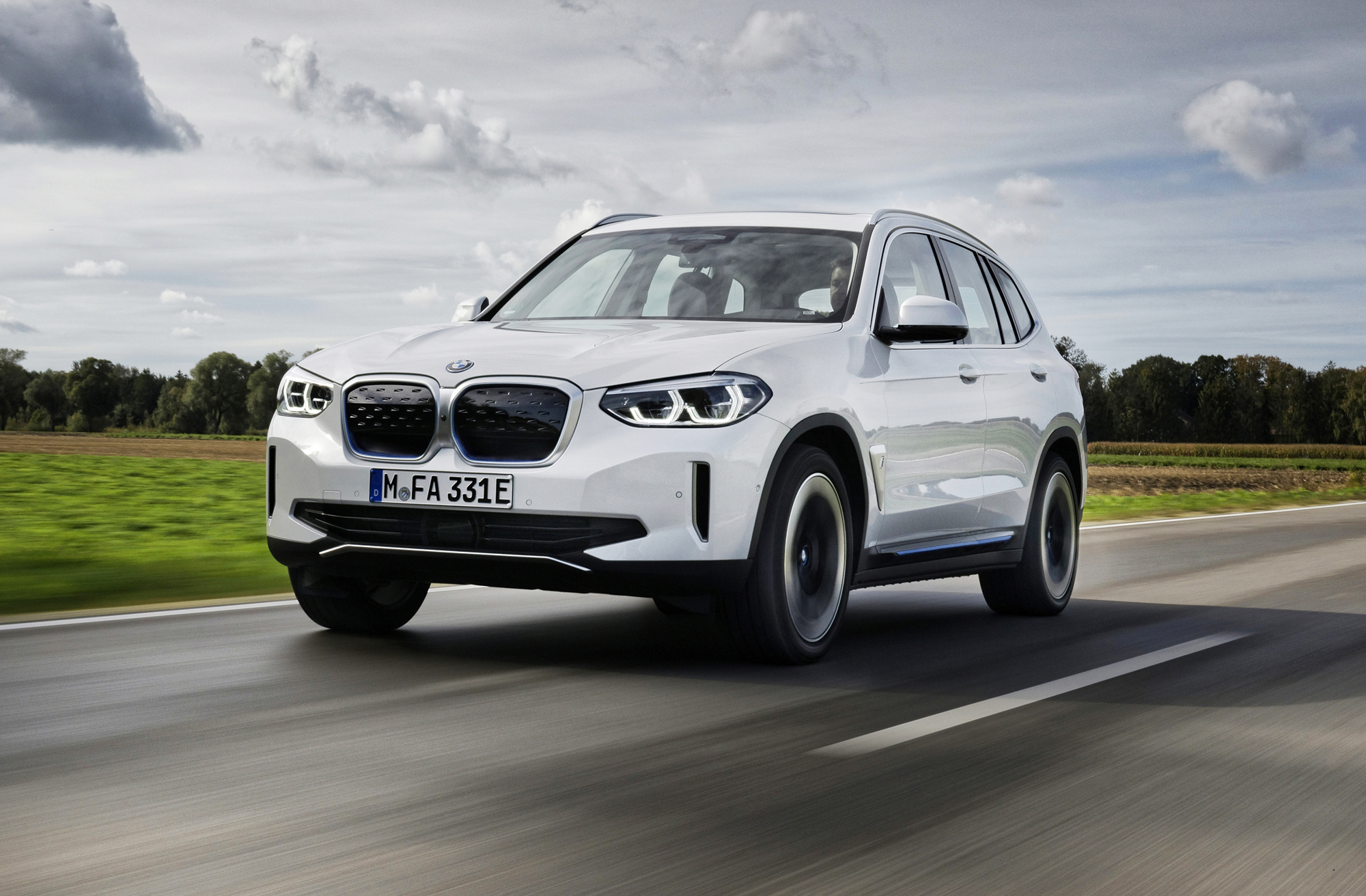
THE GOOD: Handles sharply; supremely accurate and dependable range
THE BAD: Dated interior; hard ride; stupid powertrain noises
THE UGLY: It’s quite a lot of dosh for what feels like an old car
NEED TO KNOW: We’ve come a long way since the original electric i3, but BMW’s current iX3 proves we’ve also come a long way since retrofitting a combustion car’s platform with batteries was the norm. Still, the iX3 drives well and manages a good range so we won’t complain too much.
And it’s about to be replaced by an entirely new iX3, the first of a new breed of electric BMW, that’s sensationally good – trust us. The next time we do this ranking, it will be much higher.
THE ONE TO BUY: There’s only one power output, and the high-spec M Sport Pro adds generous extra kit
KEY DATA: Range 288 miles; efficiency 3.5 miles per kWh; max DC charging 31 minutes 10-80%
72 Rivian R1T
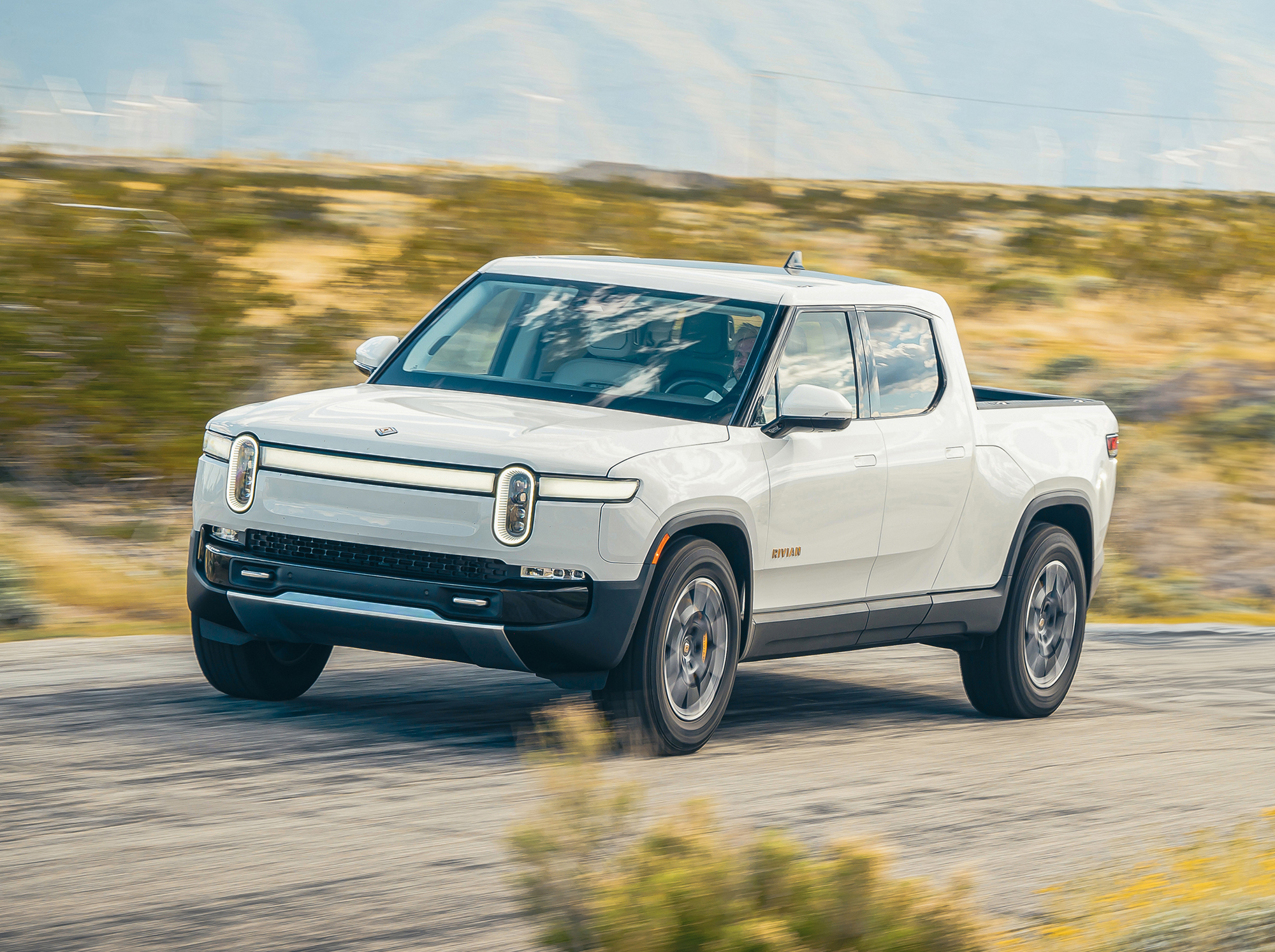
THE GOOD: Climate-friendly with styling to match; better at being a regular truck than Cybertruck
THE BAD: Almost too normal – it even has indicator stalks. How very 1993…
THE UGLY: Cybertruck owners will look a lot meaner than you
NEED TO KNOW: American start-up has hit the ground running, building both the R1T and R1S, as well as countless EV vans for Amazon, all of which seem to be selling well. Rivian is the friendly face of EV trucks Stateside – even the design makes you go all gooey. Body-on-frame but air suspension, it should appeal to the more traditional truck market in the US, at least on the coasts. Removable Bluetooth speaker in the dash makes every picnic a party.
THE ONE TO BUY: 1050bhp Quad-motor is impressive, but you’ll be able to make do with the 553bhp dual-motor
KEY DATA: Range 258-420 miles; efficiency 2.5 miles per kWh; max DC charging 30 minutes 10-80%
71 Telsa Cybertruck
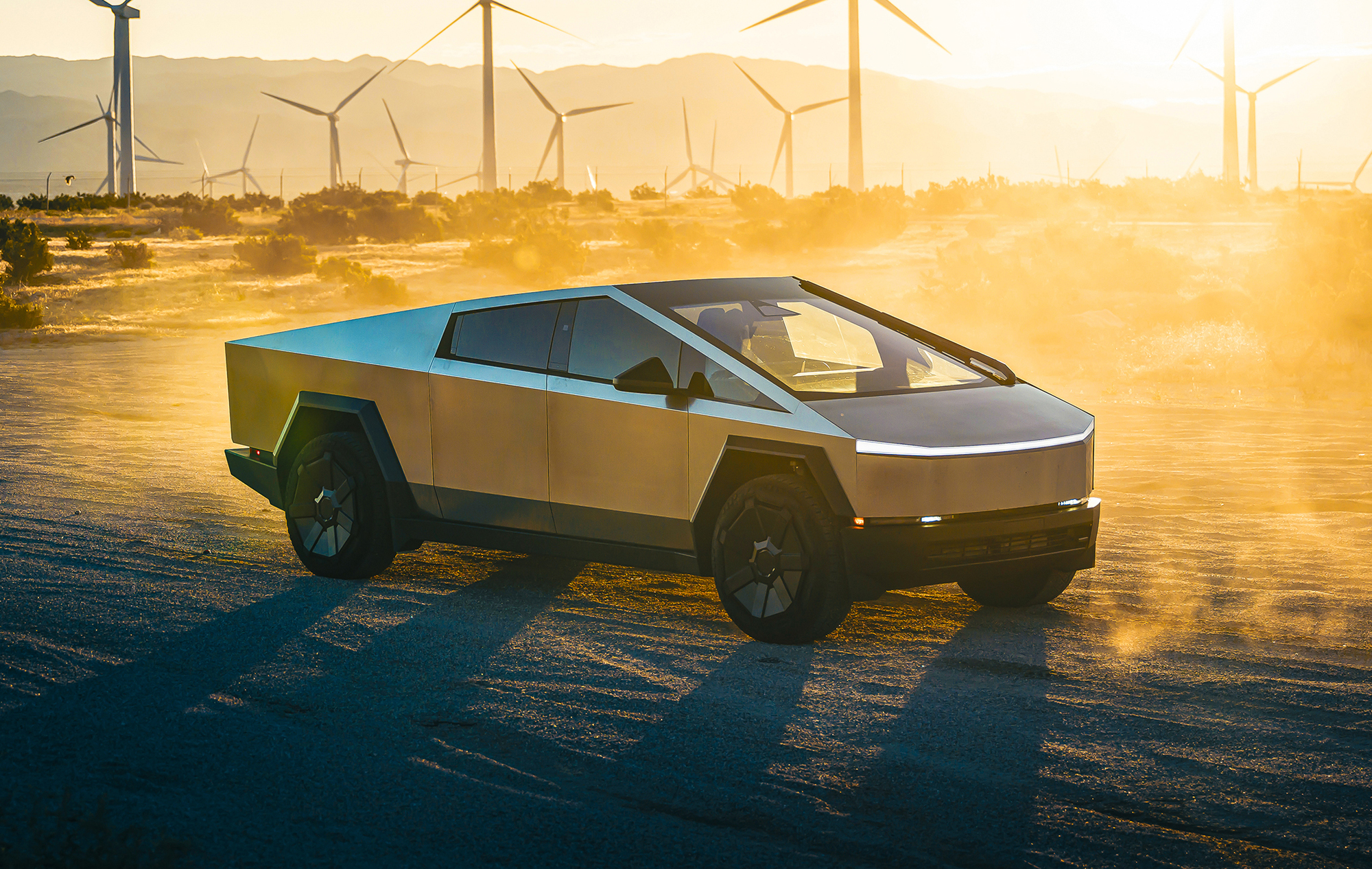
THE GOOD: Complete strangers want to talk to you; shocking pace
THE BAD: Complete strangers want to talk to you
THE UGLY: Huge amount of hype but you still don’t see many of them on the roads
NEED TO KNOW: Is this Musk’s greatest moment of madness (at least when it comes to Tesla)? The most ridiculous car we’ve driven recently, with a single-minded focus on delivering to the brief that no other company could match. Hard to get past the looks but when you do, the Cybertruck is really accomplished. Pace that few can match, four-wheel steer makes it incredibly manoeuvrable, comfortable air suspension – for something that looks totally alien, it drives remarkably normally.
THE ONE TO BUY: Has to be the 845bhp Cyberbeast – if you’re going to go all in, go all in
KEY DATA: Range 320-340 miles (USA); efficiency 2.3 miles per kWh; max DC charging 22 minutes 10-80% (est)
70 Ford Puma Gen-E
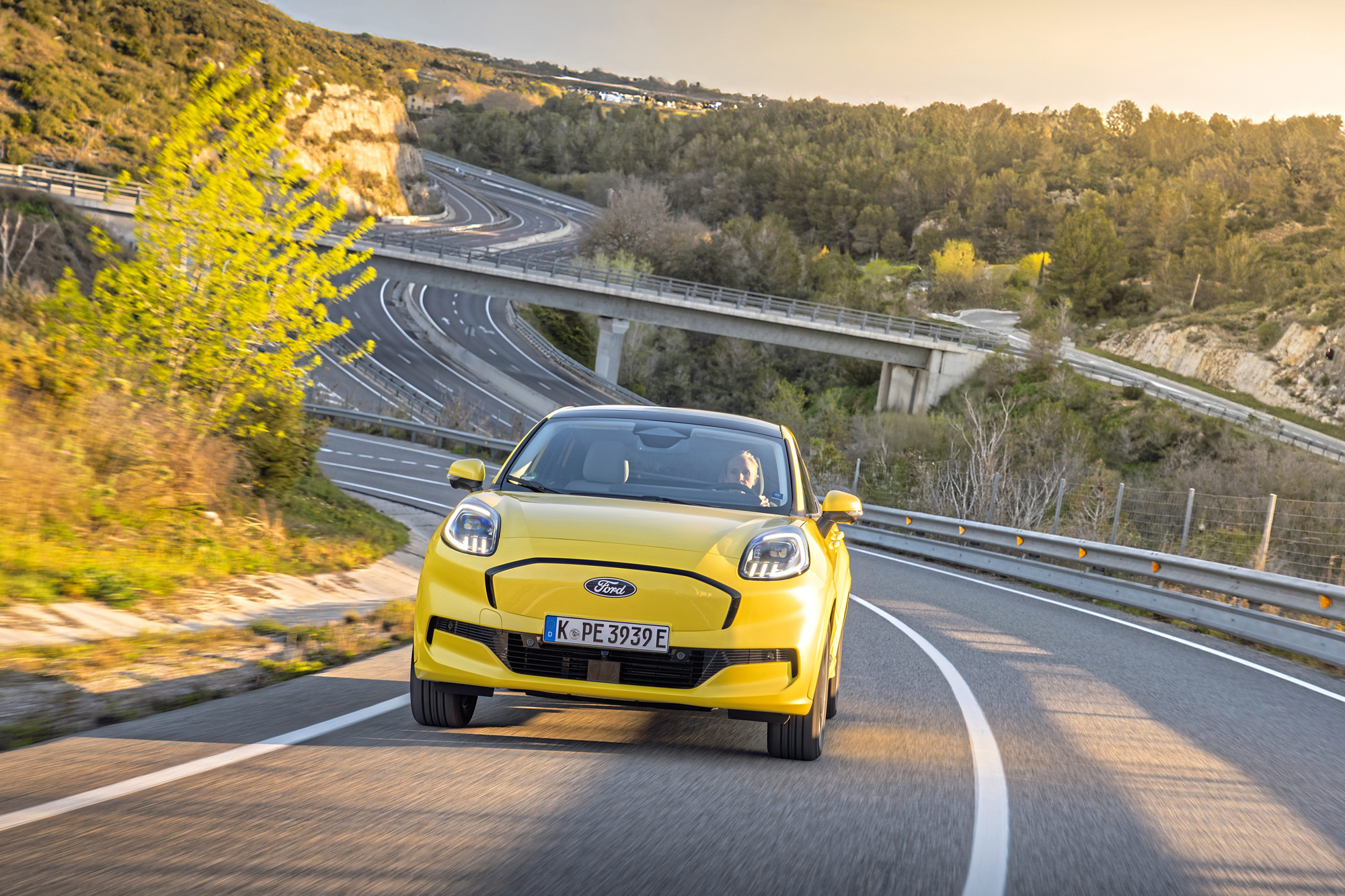
THE GOOD: Huge boot; tidy handling; low price
THE BAD: Middling range: so-so infotainment
THE UGLY: The dashboard: it looks old fashioned, and making it two-tone doesn’t solve that
NEED TO KNOW: The Ford Puma Gen-E is one of the best small EVs to drive. The control weights are pretty spot-on, it’s supple yet responsive, and you can have fun when you want to while just letting it get on with transporting you home safely and conveniently the rest of the time. It’s really well sorted, and Ford should be proud of that. It’s also got a huge 574-litre boot, which isn’t far off what you get in big SUVs like the Skoda Enyaq and VW ID. 4, despite the Ford’s reasonably compact 4.2-metre long body and circa £30,000 price making it a direct rival to the likes of the Kia EV3, Skoda Elroq and Renault 4 E-Tech.
It’s also a very efficient car. You’ll get over 4.0 miles per kWh in real-world use, meaning you’ll see around 180-200 miles pretty easily, despite the small 43kWh battery capacity.
Unfortunately, other small electric SUVs will go further. Possibly more problematic is that the rear seats are pretty cramped by the standards of this class, and the dash is distinctly old-fashioned, too. The infotainment does what you need it to do, but that also feels a bit dated.
THE ONE TO BUY: There are only two trims, but the Puma Gen-E Select is the one to go for as it gets keyless entry and LED matrix headlights at a very good price. You get a free home wallbox and five years’ free servicing, too
KEY DATA: Range 233 miles; efficiency 4.5 miles per kWh; max DC charging 23 minutes 10-80%
69 Kia Niro EV
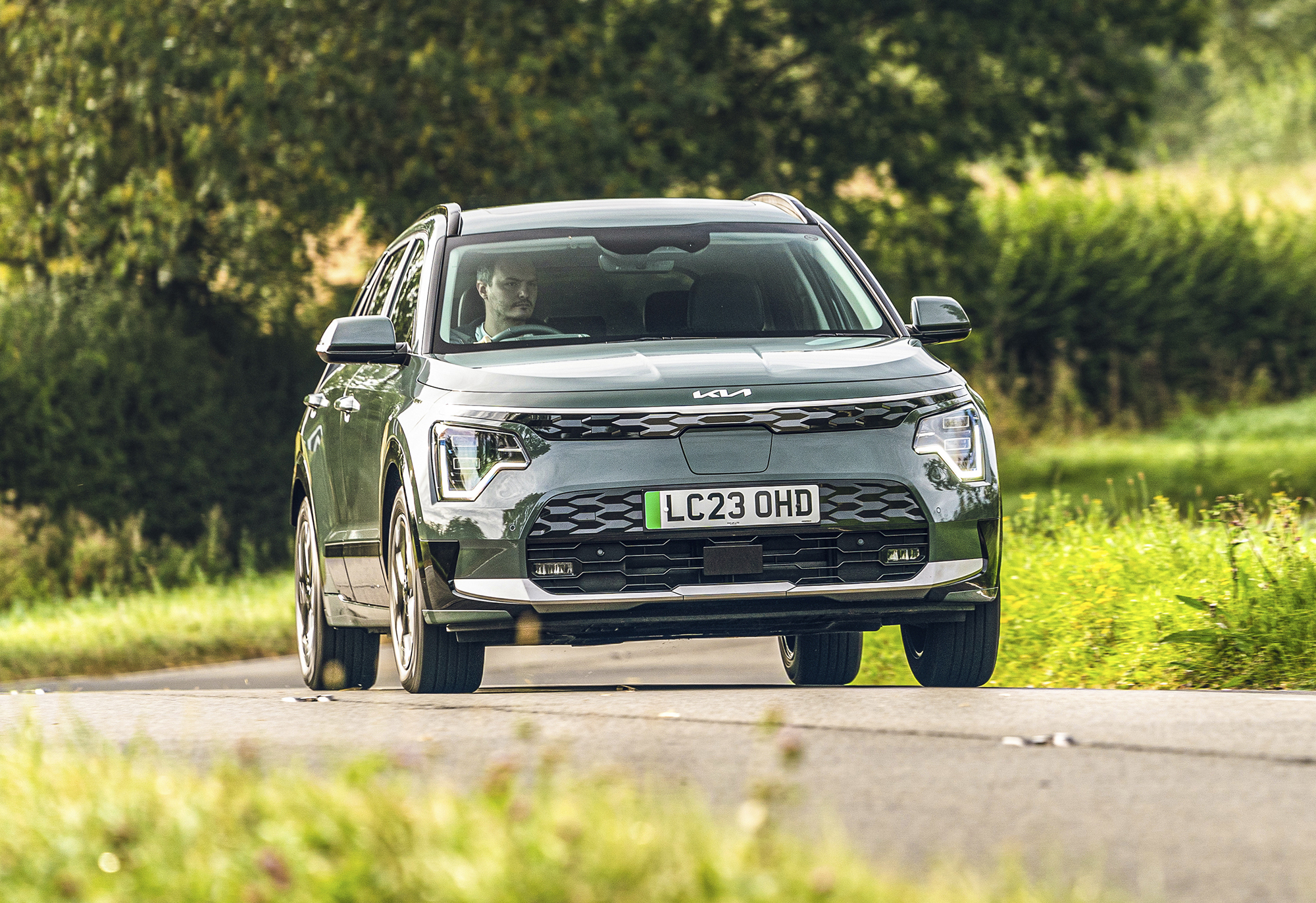
THE GOOD: Definitively sensible, and better in every way than the Mk1 Niro
THE BAD: Rear seats and boot aren’t massive
THE UGLY: Not part of Kia’s new era, and works just fine as a continuing highlight of the old era
NEED TO KNOW: The Niro is shaped to also be compatible with two flavours of hybrid powertrain, so in EV form it feels very conventional, with none of the space-age mould-busting of the EV6, 3 and 9. It plays to traditional Kia strengths: easy to get on with, utterly trustworthy, okay to drive, efficient.
THE ONE TO BUY: Trim levels 2, 3 and 4 all offer the same battery, but the significantly better-equipped 4 is available with a heat pump
KEY DATA: Range 285 miles; efficiency 3.8 miles per kWh; max DC charging 43 minutes 10-80%
68 Volvo ES90
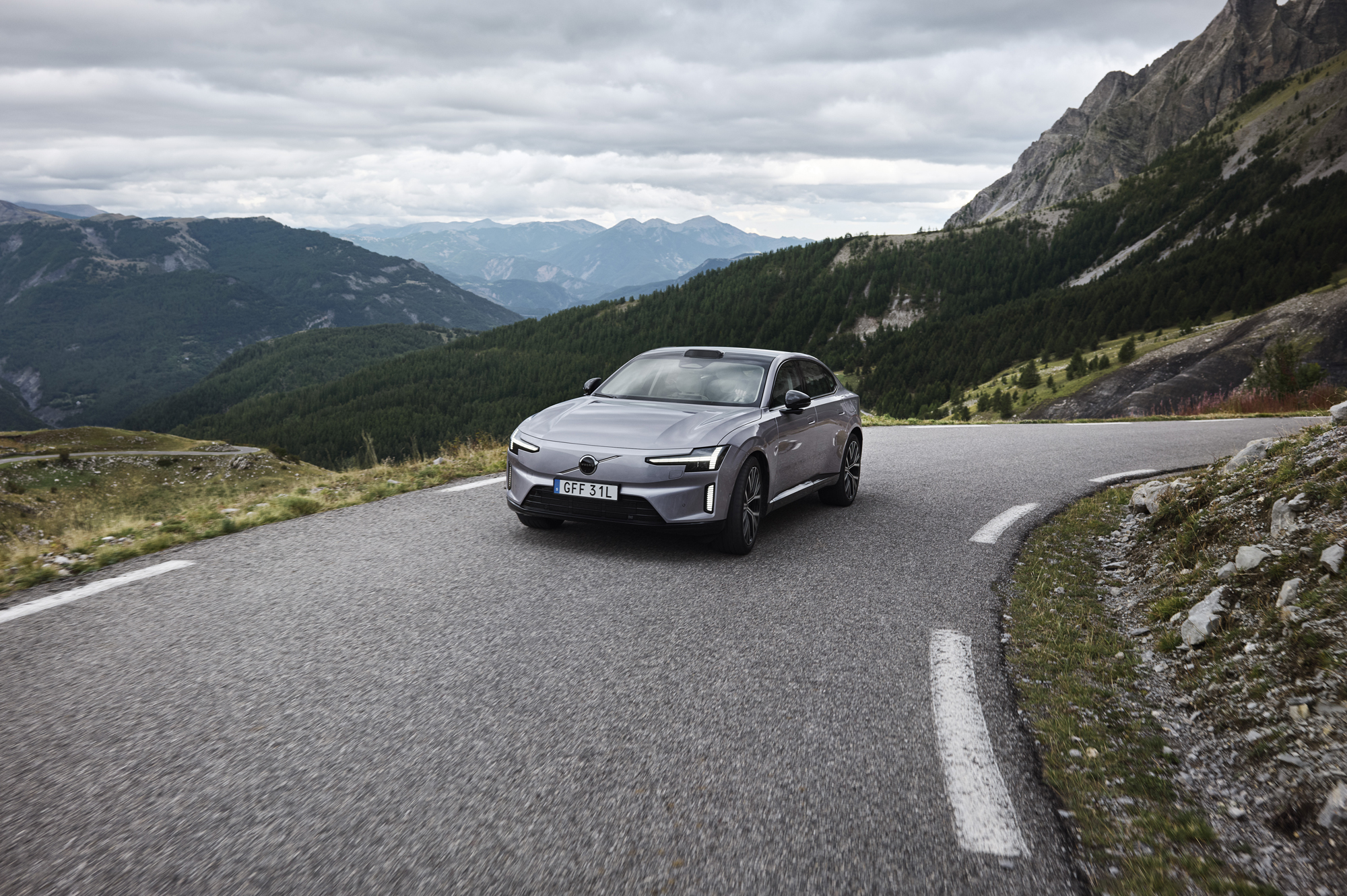
THE GOOD: Not an SUV; refinement; range; roominess; fast charging
THE BAD: Not really a saloon either; terrible rear visibility
THE UGLY: Volvo knew many of us would hate the touchscreen-reliant infotainment, but went ahead with it anyway
NEED TO KNOW: The ES90 uses the same SPA2 platform as the EX90 and Polestar 3, but an upgraded version that’s benefitted from early mistakes and software problems. So it goes straight in with 800-volt electrical architecture, not the 400-volt system they started with.
There are three powertrains (Single Motor Extended Range, Twin Motor, Twin Motor Performance), each of which gets a different battery. There are two twin levels, Plus and Ultra (and a more basic Core in some markets).
Think of it as an Audi A6 e-Tron rival and it’s there or thereabouts, in a slightly uninspiring way.
THE ONE TO BUY: Single Motor Extended Range is all the performance and range you need, and Plus spec is plenty fancy enough
KEY DATA: Range 401 miles; efficiency 3.4-3.9 miles per kWh; max DC charging 22 minutes 10-80%
67 Mercedes-Benz EQB
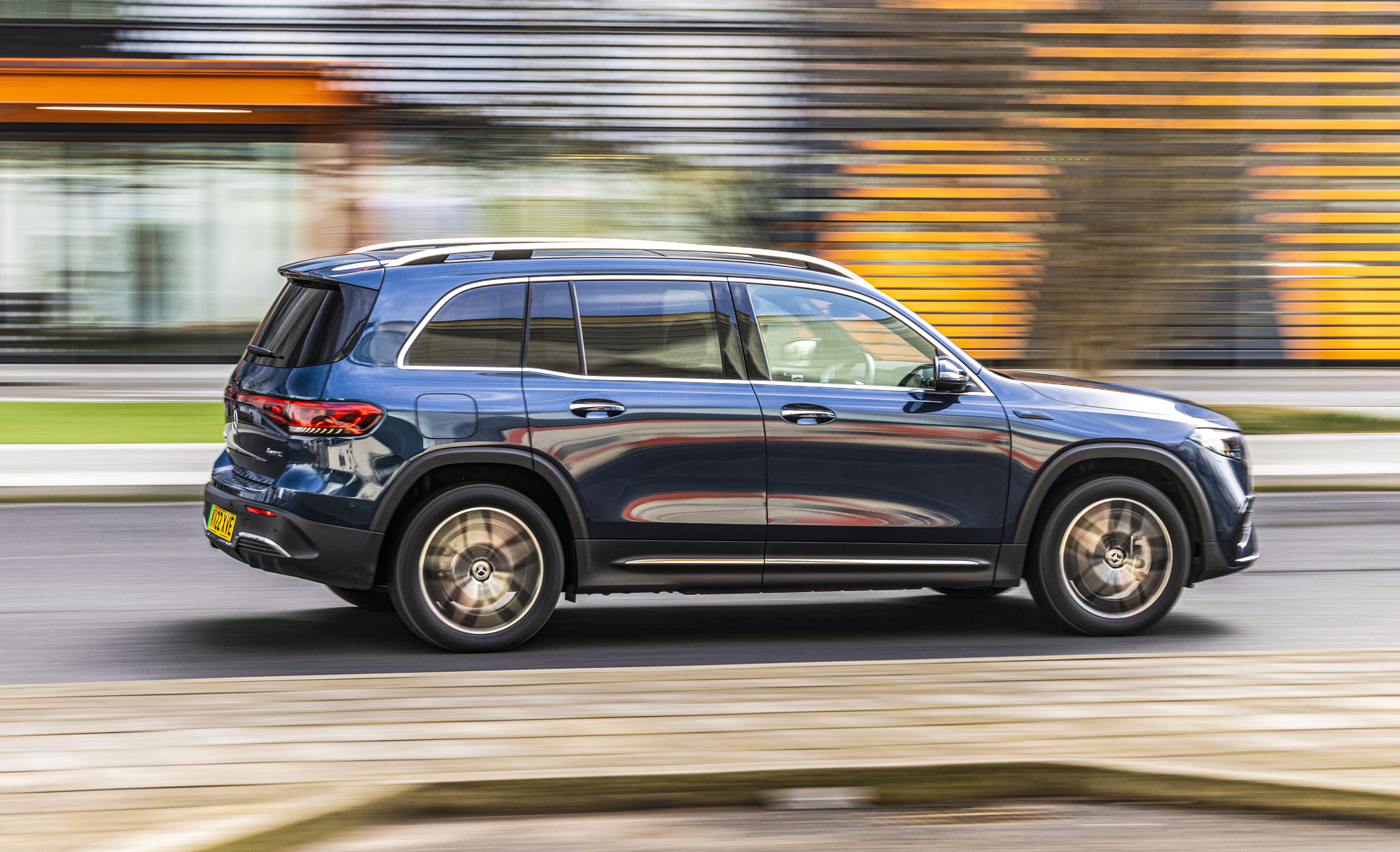
THE GOOD: Seven-seats in a genuinely compact package
THE BAD: Range and powertrain a bit off the pace now
THE UGLY: Glitzy dashboard has more creaky bits than HMS Victory
NEED TO KNOW: The first mainstream electric seven-seater. Compared with a Tesla Model X, the Merc’s price seems relatively bargainous, and being based on the EQA it’s not a bad steer either. The 250-mile range is a bit modest these days, as is the 100kW max charge speed, but it’s comfy and big enough for family car duties. As ever with Mercs, interior quality is hit and miss.
THE ONE TO BUY: They all look the same, so save some money with the 300 powertrain in AMG Line trim
KEY DATA: Range 252 miles; efficiency 3.3 miles per kWh; max DC charging 32 minutes 10-80%
66 Hyundai Kona Electric
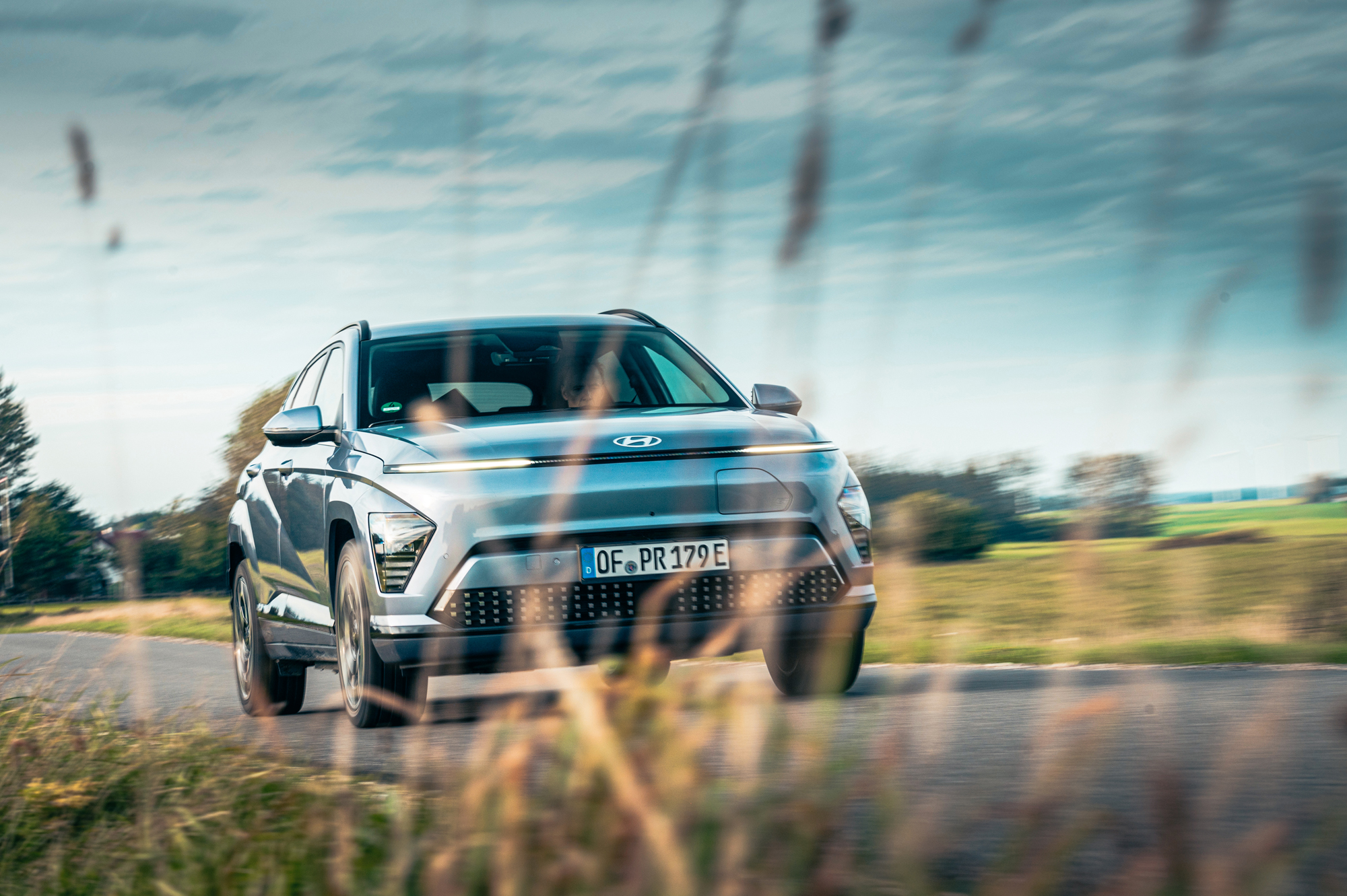
THE GOOD: X-Men styling meets useful range and performance
THE BAD: A bit cramped; a bit contrived
THE UGLY: You’ll soon forget how cool it looks and subconsciously uncouple
NEED TO KNOW: The Kona’s full-width LED strips front and rear do give a real Cylon look that’s certainly eye-catching. The interior has its moments, too. But let’s be real – you’ll buy a compact Hyundai SUV because of its excellent range and five-year warranty, not because it plucks insistently at your heartstrings. It beat the Fiat 600e and Honda e:NY1 in one of our group tests.
THE ONE TO BUY: Get the big battery; N Line is the cheapest trim with heated seats
KEY DATA: Range 319 miles; efficiency 4.3 miles per kWh; max DC charging 41 minutes 10-80%
65 Subaru Uncharted
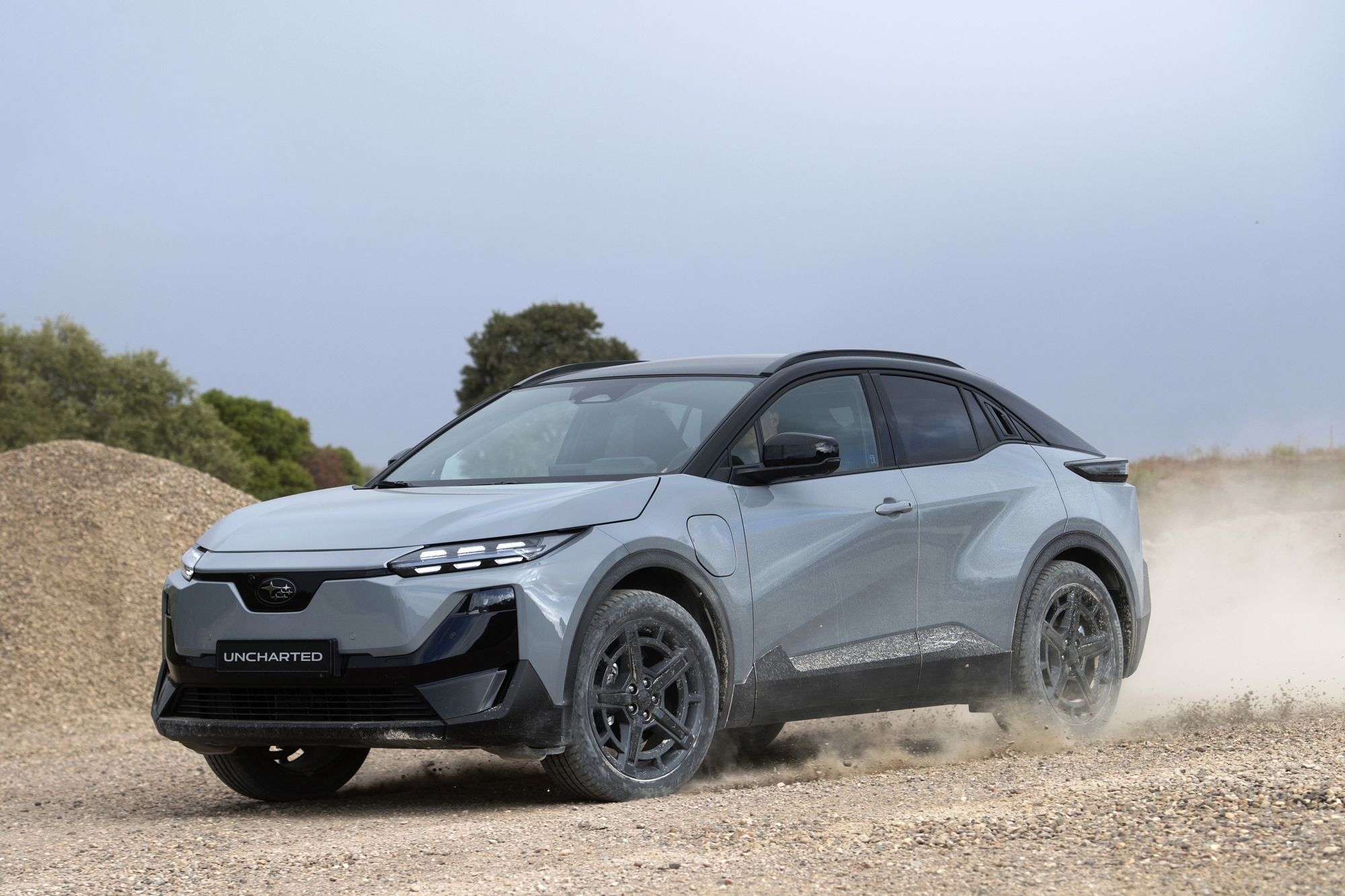
THE GOOD: Smooth; efficient; good off-road; well built
THE BAD: Small boot; cramped in the back; charging could be quicker
THE UGLY: Another silly steering wheel
NEED TO KNOW: Uncharted is a new name for Subaru. Think of this SUV as the electric replacement for the Crosstrek, or a slightly smaller alternative to the Solterra. It’s also closely related to the Toyota C-HR+, as part of an ongoing collaboration between the two Japanese car makers.
There are two front-wheel-drive versions, but to us the Uncharted makes most sense in all-wheel-drive guise, where it has some of the any-road ability that is part and parcel of Subaru’s traditional rugged do-it-all appeal.
THE ONE TO BUY: Go for all-wheel drive, because it’s a Subaru
KEY DATA: Range 328 miles; efficiency 4.8 miles per kWh; max DC charging 30 minutes 10-80% (figures all est)
64 DS Nº8
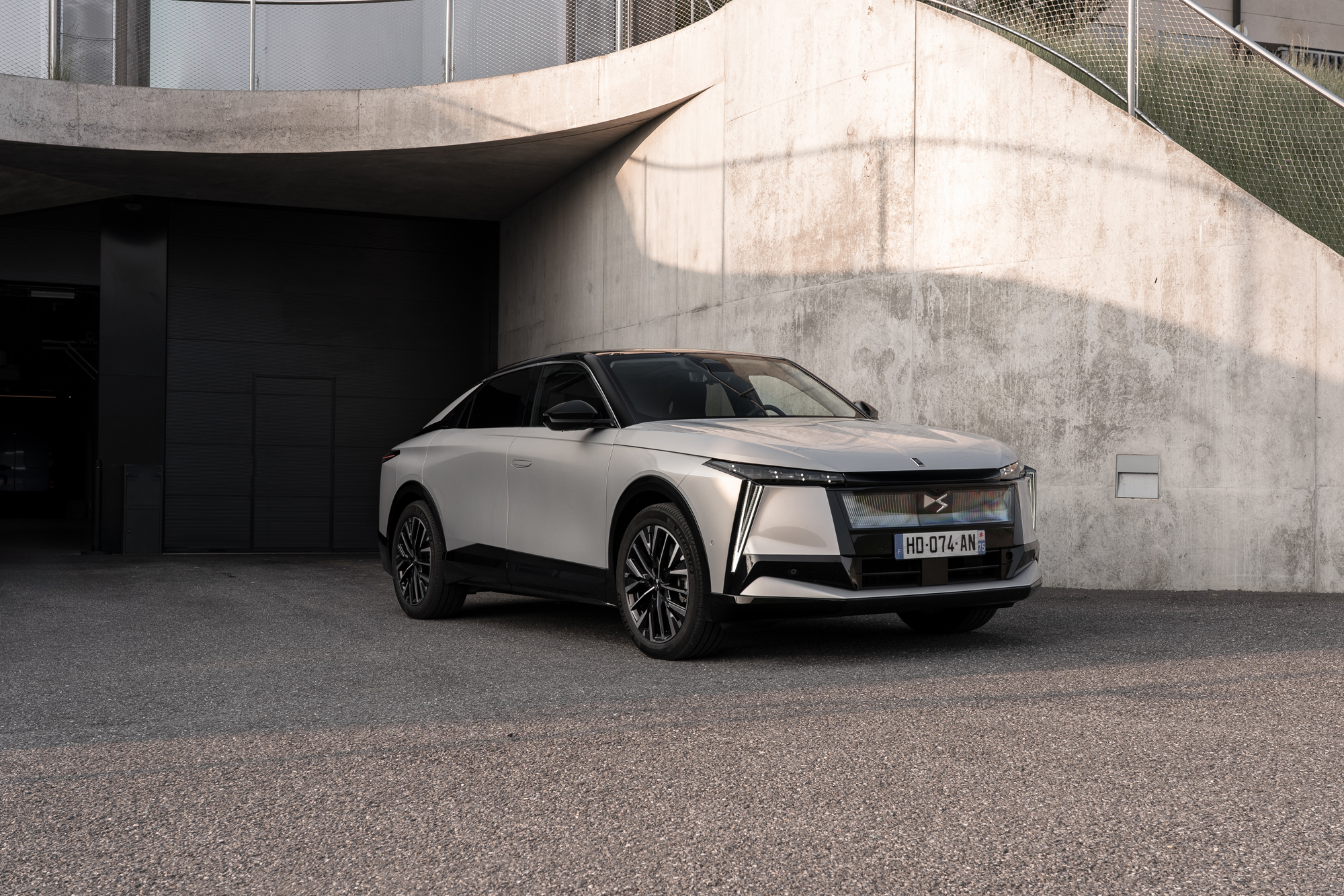
THE GOOD: Feels defiantly different; good electric efficiency; long range
THE BAD: Firm ride
THE UGLY: Steering wheel looks cool but is ergonomically terrible
NEED TO KNOW: The DS Nº8 is a car that you will only buy if you are determined to be different. That’s really the whole selling point of the brand, not just this big electric executive. After all, if you want an electric executive car with usefully over 400 miles of range, you’re almost certainly going to look straight at Tesla, Polestar or Mercedes. They offer good range and plenty more besides.
The DS Nº8 is pretty impressive on range, with a huge 446-mile claimed WLTP combined figure from the biggest battery, or 358 miles if you go for the smaller battery pack. You can also have a dual-motor, all-wheel-drive variant, and 160kW rapid charging is good enough for a 100-mile top-up in under 10 minutes.
DS remains a very quirky brand. The Nº8 is a great case in point. The battery allows for a very competitive range, the equipment is generous and there are some design details that wouldn’t look out of place in a jewellery shop window. Yet the ride is firm, the weird steering wheel looks very artisan yet isn’t actually terribly nice to use in everyday driving, the infotainment isn’t as user-friendly as in most rivals, and the ride is oddly busy. Oh, and it costs a lot more than a Tesla Model 3 or Polestar 2… While the Nº8 is charmingly distinctive, it is not a logical choice.
THE ONE TO BUY: If your heart is set on a DS Nº8, stick with the entry-level Etoile, but go for the front-wheel-drive Long Range to get perfectly decent driving manners and the longest range available
KEY DATA: Range 446 miles; efficiency 5.9 miles per kWh; max DC charging 25 minutes 10-80%
63 BYD Seal
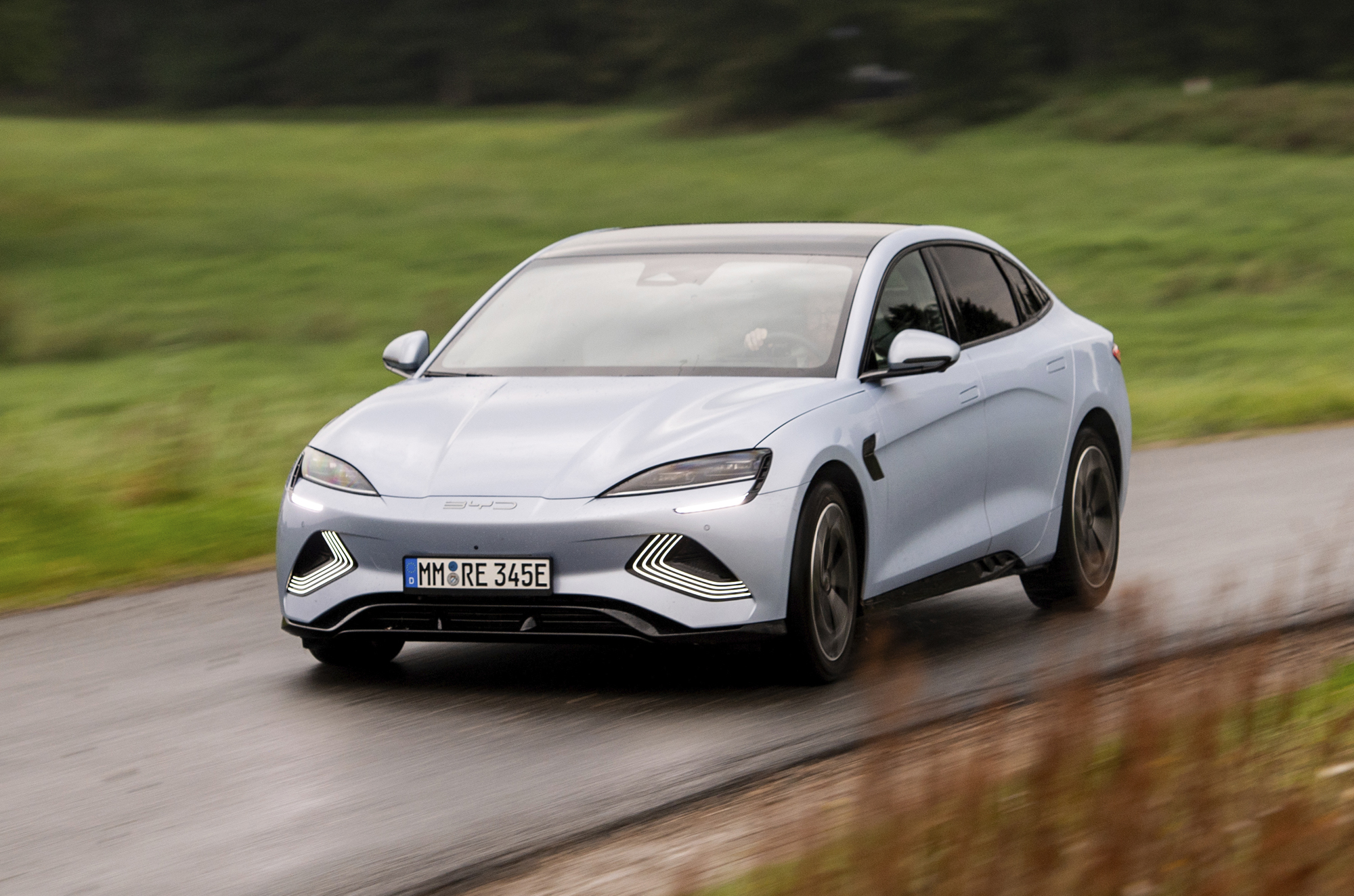
THE GOOD: Decent to drive; smart looks; loads of kit
THE BAD: Odd interior design; a Tesla has better range
THE UGLY: Fussy dash design
NEED TO KNOW: The BYD Seal is the best car BYD currently makes, and our highest rated in this countdwon. It’s a rival to the Tesla Model 3, though it’s a touch bigger than the Tesla so strays into VW ID. 7 territory too. There’s only one battery option, which gives it a WLTP range of up to 354 miles, but you can choose from rear-wheel drive or a potent all-wheel-drive model. Both versions feel pretty sophisticated to drive, with decent ride comfort and satisfying handling, plus you get generous equipment levels and a big, rotating touchscreen with all the infotainment functions and phone integration you want. It really is a viable alternative to the Model 3, then, but the big problem is that the official range now lags behind the Model 3, which will do well over 400 miles to a charge by official standards.
THE ONE TO BUY: Stick with the rear-wheel-drive Seal Design. It’s well equipped, it drives well, it has the longest range of the two models on offer, and it’s a good price
KEY DATA: Range 354 miles; efficiency 3.9 miles per kWh; max DC charging 35 minutes 10-80%
62 Smart #1
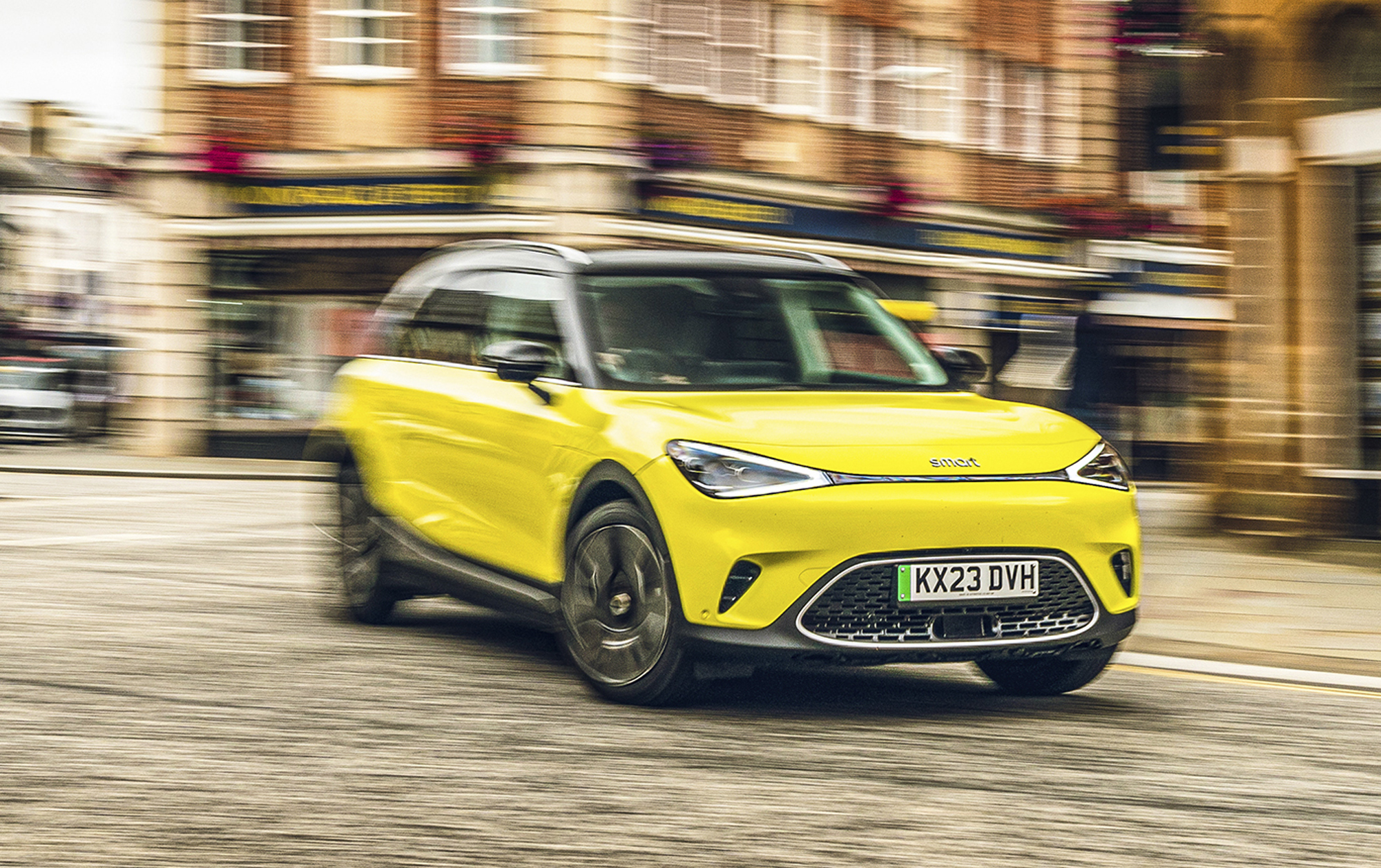
THE GOOD: Strong acceleration, reasonable range and plenty of space
THE BAD: The boot is tiny if you have the rear bench slid all the way back
THE UGLY: Very irritating name; trying to hustle the Brabus version down a B-road
NEED TO KNOW: If you loved the original Smart, look away now. Instead of building another tiny (and niche) city car, Smart has produced a Mini Countryman-sized five-seat electric SUV on a platform shared with Volvo’s EX30. The #1 has loads of space inside, a sliding rear bench to give more legroom or a bigger boot, and decent quality. The rear-drive models will hit 62mph in 6.7 seconds, while the four-wheel-drive Brabus takes just 3.9 seconds. Sadly the suspension can’t keep up, so it’s a wild ride on twisting tarmac.
THE ONE TO BUY: Premium brings a heat pump, head-up display, leather seats and audio upgrade
KEY DATA: Range 273 miles; efficiency 4.4 miles per kWh; max DC charging 30 minutes 10-80%
61 Lotus Eletre
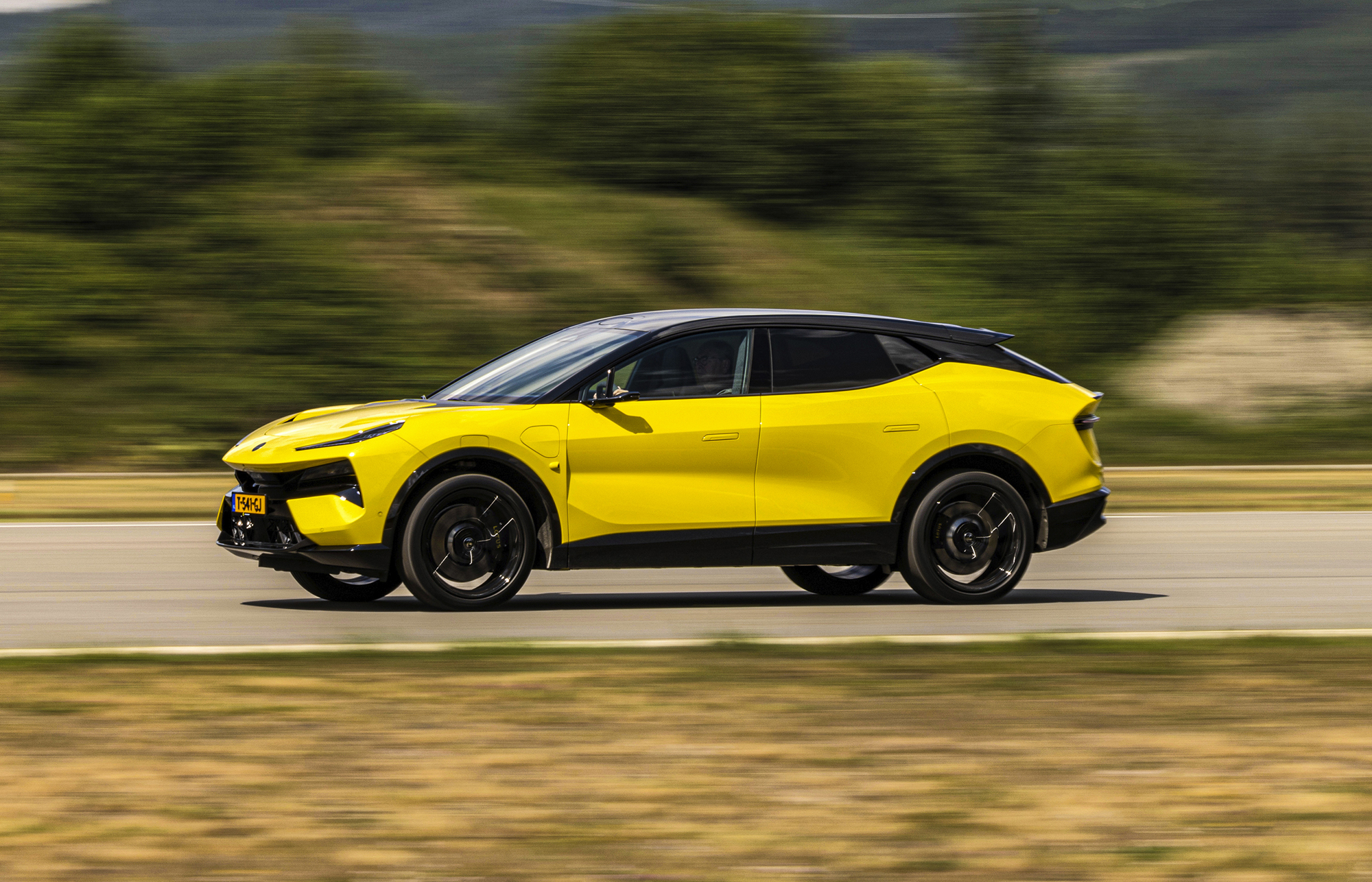
THE GOOD: Luxurious interior; spacious
THE BAD: Where’s the clever engineering?
THE UGLY: It weighs almost as much as two hippos
NEED TO KNOW: Lotus likes to describe the Eletre as an ‘electric Hyper-SUV with racecar DNA’. This is stretching the truth a tad. Yes, the regular Eletre 600 can get from zero to 62mph in 4.5 seconds, but you need the 900 for truly noteworthy performance (0-62mph in 2.95sec) befitting the word ‘hyper’. We could live with this if the handling was even half as engaging as a trad Lotus, admittedly not easy in an electric SUV.
Helped by stiff springing and clever suspension tech it doesn’t lean a great deal, but the steering isn’t brimming with Lotus feedback and the chassis majors on lashings of safe understeer. A BMW iX isn’t exactly an adrenaline pump either, but at least there’s a bit more connection and a better balance. It’s a shame, as the interior feels well put together and undoubtedly luxurious, plus there’s plenty of space for people and luggage. But not because of clever packaging – it’s just massive.
THE ONE TO BUY: If you just want a posh SUV with a sporting badge, a 600 is fine. Those looking for thrills are better served by the 900
KEY DATA: Range 354 miles; efficiency 3.2 miles per kWh; max DC charging 25 minutes 10-80%
60 Volvo EX30
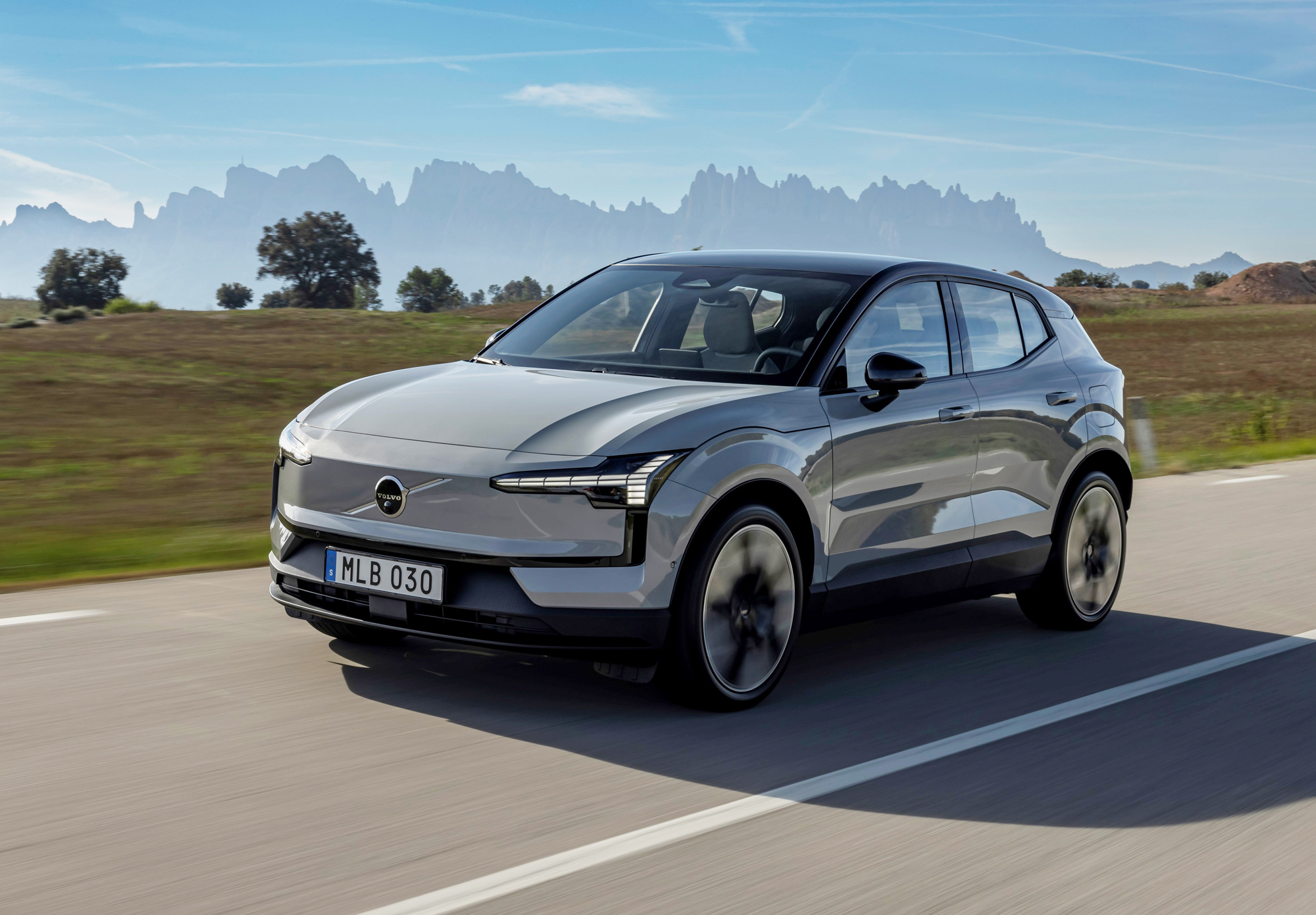
THE GOOD: Stonking value; impressive performer
THE BAD: Not particularly spacious; Performance model doesn’t handle its power well
THE UGLY: Shuns Volvo’s safety ethos by putting everything on one honking great touchscreen
NEED TO KNOW: Premium/sensible Volvo, the thinking liberal’s alternative to the German crowd, has put its name to an electric SUV that costs less than a VW ID. 3, is loaded with clever touches and, in its Twin Motor configuration, will do 0-62mph in 3.6 seconds. What?
Cost savings come from the Geely platform, shared with Smart and Zeekr, but the EX30 is significantly more polished than either, with more than acceptable dynamics and a sheen of Volvo magic on the inside. Props to any brand that can make recycled materials look so chic, and double props for including such delightful chunky chrome door pulls. It’s the small things.
Single Motor models are quick, and the 422bhp Twin Motor Performance is unnecessarily powerful for a compact SUV. It is also under-braked and lacking in the chassis poise to make it an enjoyable steer, so we’d keep it simple and go for the Single Motor with the biggest battery. You’ll still be undercutting almost every competitor.
The price tag helps you overlook a lot. We can’t quite square the all-touchscreen cabin with Volvo’s insistence on its cars being the safest on the road, though. The central unit contains not only all of the switchgear, but also the gauge cluster. Overlook that and this is stunning value for a posh, small and slightly quirky EV SUV.
THE ONE TO BUY: Single Motor Extended Range worth the price jump and is nicer to drive than Twin Motor
KEY DATA: Range 294 miles; efficiency 3.7 miles per kWh; max DC charging 26 minutes 10-80%
59 Toyota C-HR+
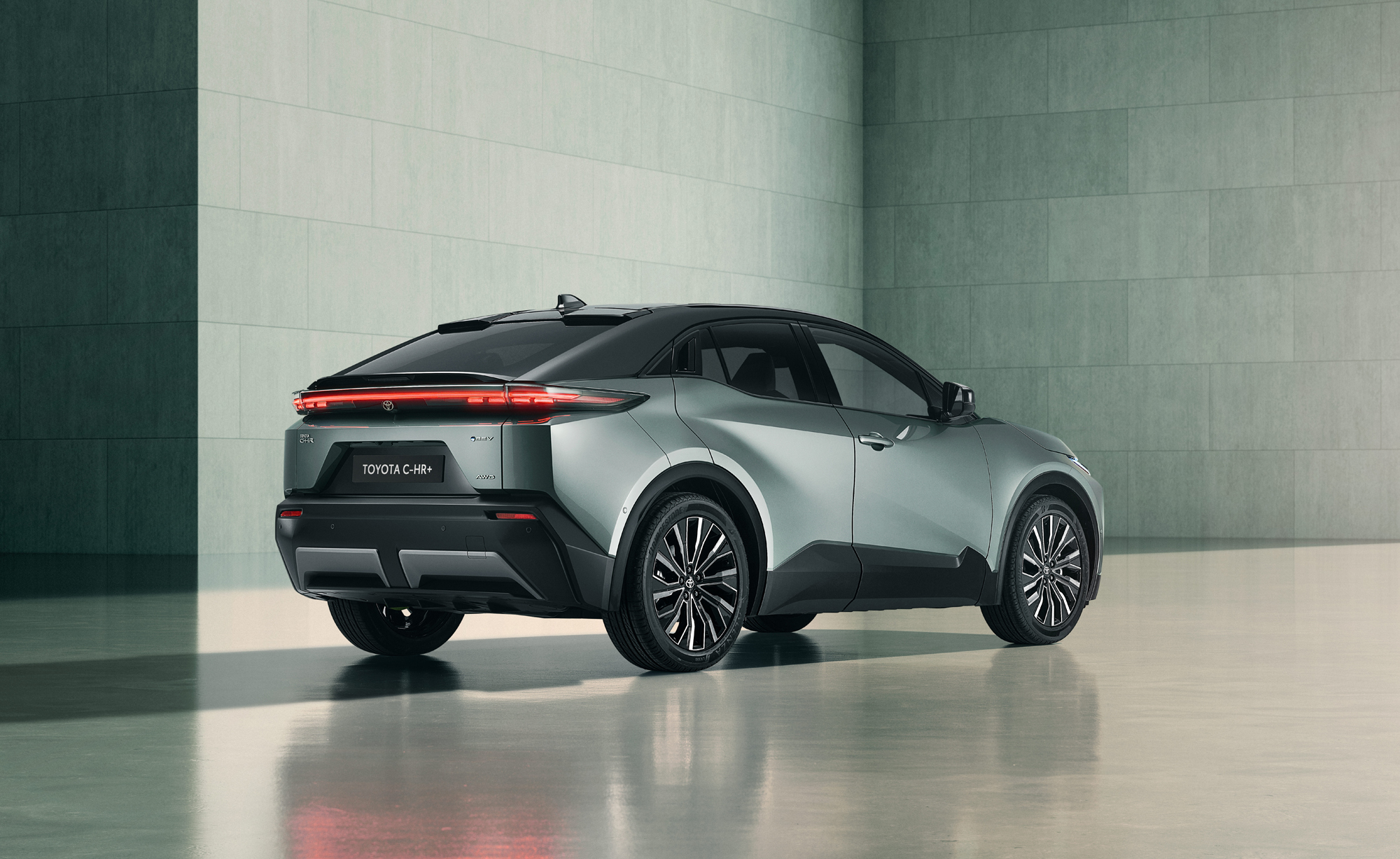
THE GOOD: Solid feel; roomy cabin; sure handling
THE BAD: Annoyingly intrusive safety warnings
THE UGLY: Toyota is still struggling to stand out in the EV world
NEED TO KNOW: After decades of success with hybrids, Toyota has been a reluctant and unimpressive entrant into the EV market. The C-HR+ is mechanically similar to the Subaru Uncharted. It slots into the Toyota range below the bZ4X and above the Urban Cruiser.
There’s a choice of battery sizes; both are front-wheel-drive only.
It drives pretty well and is generally easy to get on with. It’s fine. But when you’re up against the Skoda Elroq and Kia EV3, that’s not really good enough.
THE ONE TO BUY: The 77kWh battery gives much more range; Mid+ spec is a good balance
KEY DATA: Range 378 miles; efficiency 4.0 miles per kWh (est); max DC charging 30 minutes 10-80%
58 Alfa Romeo Junior

THE GOOD: Joyous handling for the Veloce version
THE BAD: Cramped rear seats; not cheap; underwhelming range
THE UGLY: Divisive looks
NEED TO KNOW: The Alfa Junior Veloce is to the standard Junior what the GTI is to the VW Golf – it’s a far bigger departure than you might expect, with a diff, suspension changes, more power and generally a thoroughly overhauled driver experience. A great experience, too. By hatchback standards – never mind the electric compact SUV class that the Junior falls into – this is a responsive, fizzy car that relishes diving into corners and hanging on with terrier-like stubbornness.
The way it drives isn’t the Alfa’s problem, for sure. It’s more that this is not the roomy, useful car that you might hope of a small SUV-ish thing; it’s pretty cramped in those back seats, to the point where an Alpine A290 is just as useful despite being a smaller car (but then again the Alfa’s 400-litre boot is much more practical). You’ll also be lucky to get 200 miles out of the Veloce, even in gentle real-world driving.
THE ONE TO BUY: The lesser models are cheaper but the Veloce is the one; it comes with most of the stuff that you want, but add a sunroof as it’s dark in there without it
KEY DATA: Range 207 miles; efficiency 3.8 miles per kWh; max DC charging 30 minutes 10-80%
57 Mini Cooper: best city car
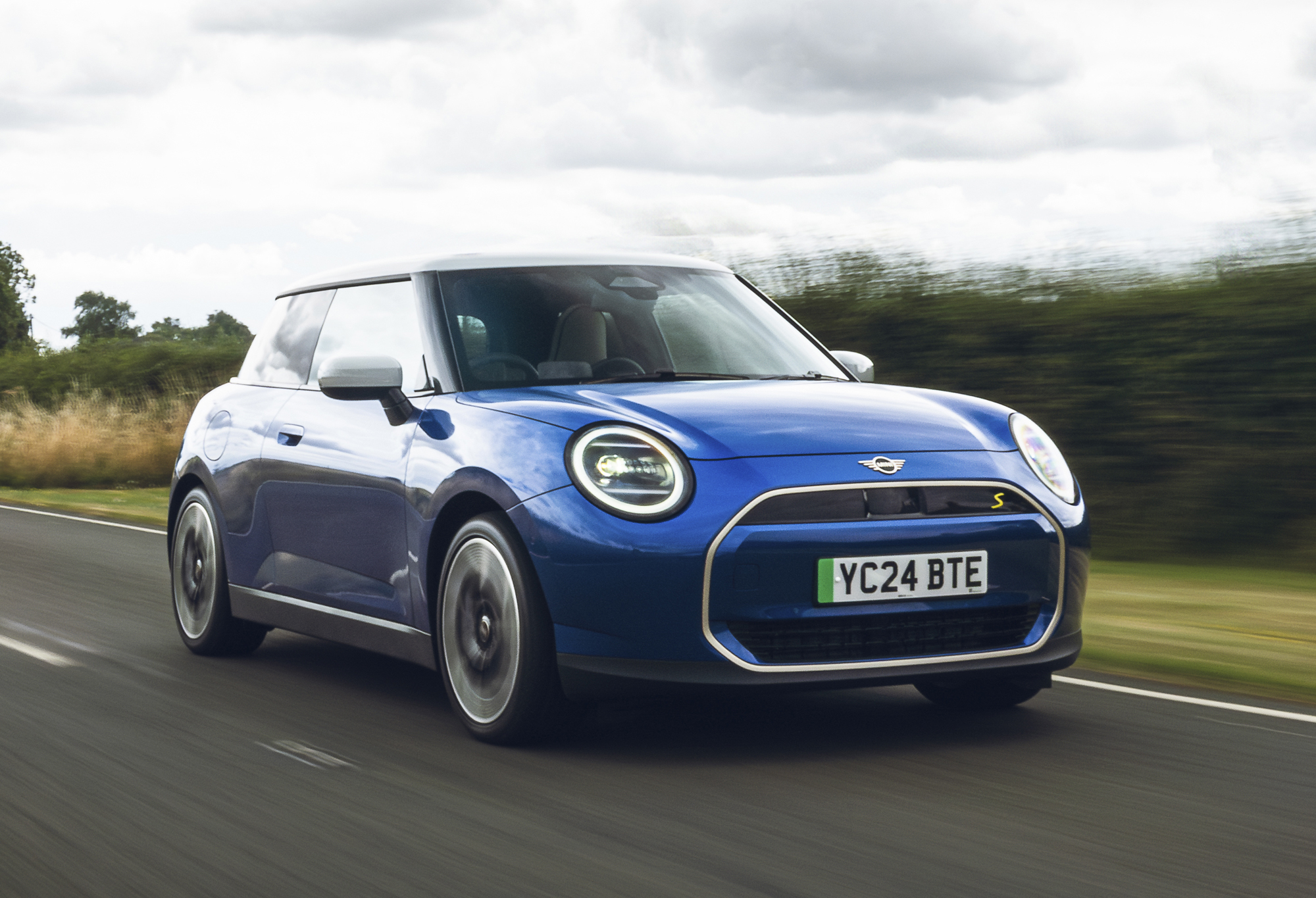
THE GOOD: Zingy handling, funky interior
THE BAD: Restless ride, high price
THE UGLY: No speed read-out in the driver’s eyeline on base cars
NEED TO KNOW: There’s nothing else like a Mini, is there? It’s always had its own appeal, and that’s as true of the new electric Mini Cooper as it is of any modern Mini. Even with new rivals like the Renault 5 E-Tech shaking things up, the Mini definitely has the premium end of the small, fun-but-grown up electric car market cornered. Two batteries offer a range of either 190 or 250 miles, with the latter getting faster charging, more power and more kit, although neither is slow and both get the darty, urgent handling that Mini buyers relish. You’ll notice the fidgety ride comfort, too, although the SE with its heavier battery and slightly softer suspension is more settled.
THE ONE TO BUY: The Mini Cooper SE for its longer range, faster charging, standard head-up display and comfier ride
KEY DATA: Range 250 miles; efficiency 4.5 miles per kWh; max DC charging 30 minutes 10-80%
56 Maserati Grecale Folgore
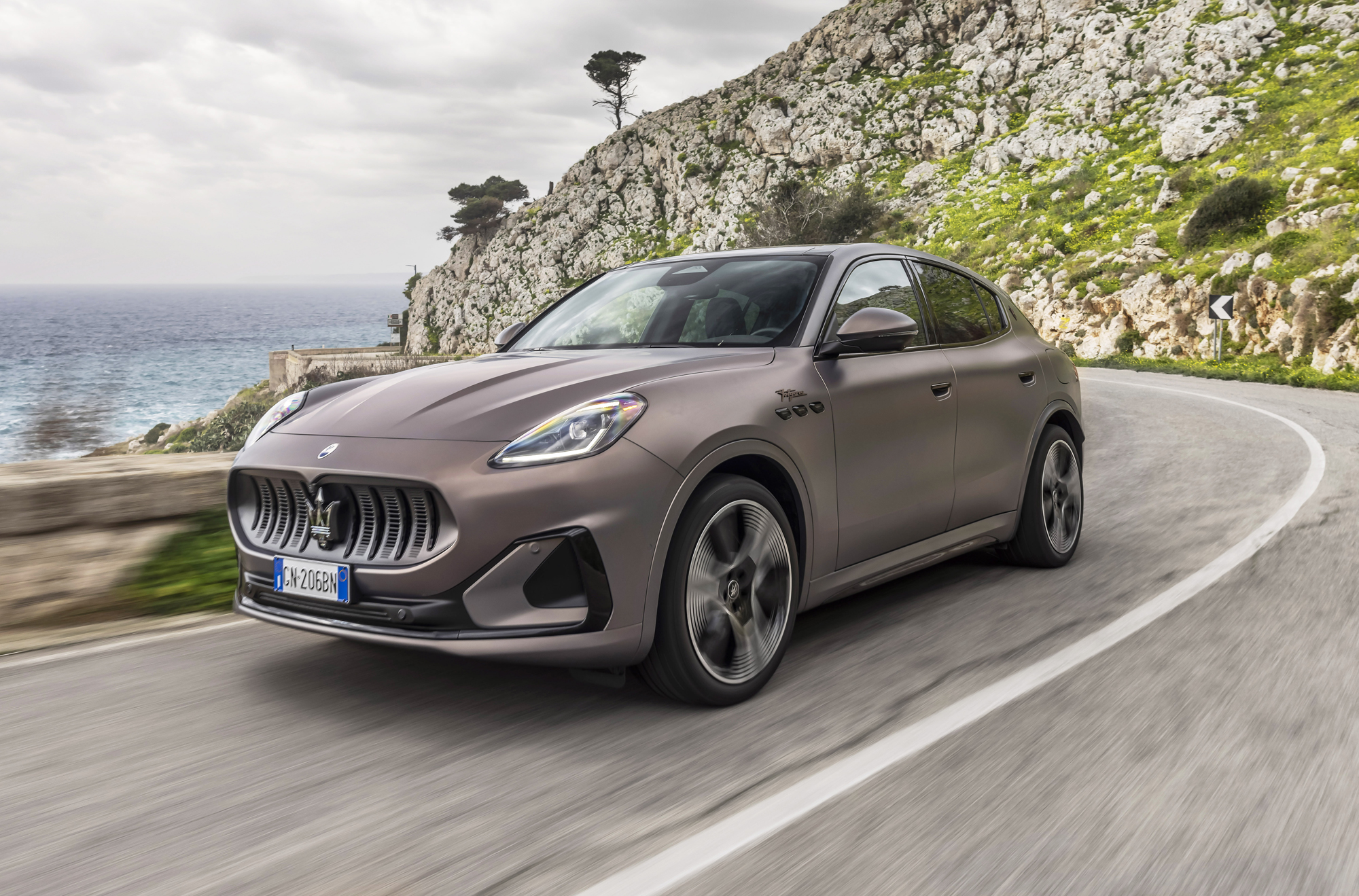
THE GOOD: Rare, roomy and well equipped
THE BAD: Rare at least in part because it’s so expensive
THE UGLY: Combustion versions are way less expensive, and so’s the entry-level Porsche Macan Electric
NEED TO KNOW: Maserati has embraced battery-electric with an enthusiasm that surprised many, given how traditional the trident-badged cars have generally been. It now offers electric versions of half of its line-up, all badged Folgore.
And Maserati’s embrace of the SUV body style is also slightly out of left field, if you think of it as a maker of fast, sophisticated saloons and coupes. It’s useful shorthand to think of Levante and Grecale as being Maserati’s equivalent to the smash-hit Porsche Cayenne and Macan, but in reality the Italian cars are closer in size and much less neatly demarcated than the Germans. The elderly Levante is not available in electric form.
The Grecale Fologre has two electric motors, one at each end, between them producing 550bhp and 605lb ft from a 105kWh battery. You can get to 62mph in 4.1 seconds.
Folgore means ‘lightning bolt’ in Italian, but really the electric Grecale’s charm comes as a family runabout with a focus on comfort and mile-munching, and the ride quality is generally good on the standard air suspension.
THE ONE TO BUY: There’s just the one electric version of the Grecale; it’s highly spec’d, and it really has to be, at more than £100k (and if you want it in the colour scheme that’s only available on the EV, that’s more money)
KEY DATA: Range 311 miles; efficiency 2.6 miles per kWh; max DC charging 29 minutes 20-80%
55 Alpine A390
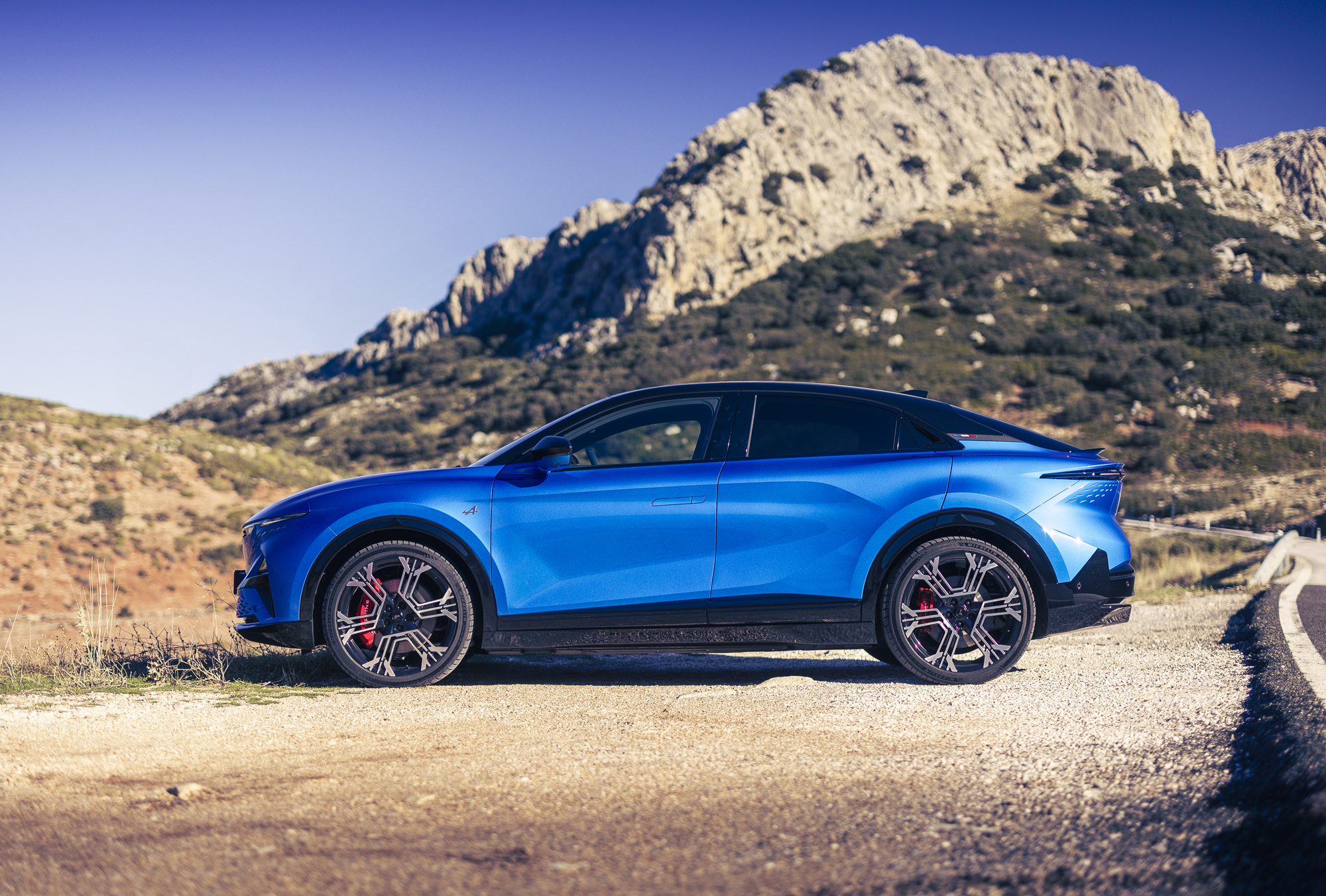
THE GOOD: Agile handling; practical-ish; striking styling
THE BAD: A bit punchy on the price; rear passenger space is cramped
THE UGLY: The interior doesn’t feel good enough for the price
NEED TO KNOW: The Alpine A390 is an electric fastback-GT-SUV kind of thing. Let’s just call it a sports-focused executive five-door, eh? With its 4.6-metre body, 518-litre boot and room for four, it’s usable day to day yet still channels Alpine’s sporting DNA. Its 89kWh NMC battery delivers up to 345 miles of WLTP range, while three (count them – three!) electric motors give 395bhp in the GT and 463bhp in the GTS, for a 0-62mph time of 4.8sec and 3.9sec respectively.
On the road, the A390’s balance and precision stand out. Passive dampers keep it taut yet supple, giving crisp steering and playful handling that even a BMW i4 will struggle to match; there’s an edge of Lotus-esque purity to the A390’s handling that really thrills. Only the Porsche Taycan and Hyundai N cars come close, in the scheme of electric performance cars. Having said that, you have to push the A390 quite hard to discover that purist tactility and response, so you may be a little disappointed that it doesn’t deliver a bit more flair and sparkle at normal road speeds.
Ride comfort is surprisingly decent, though. This is a tightly sprung car, so you know what’s going on with the road surface, but the damping keeps things pliant enough for enjoyable everyday progress. The real issue is that the A390 is quite expensive – it’s well into Polestar 4 prices, and is getting on for base Porsche Taycan territory – yet the interior feels… well, like it’s from a Renault. Which it is. There’s a bit more passenger room and boot space in some rivals, too.
THE ONE TO BUY: The entry-level A390 GT is a lot cheaper yet promises much the same experience, so we’d be tempted to stick with that one
KEY DATA: Range 345 miles; efficiency 3.26 miles per kWh; max DC charging 25 minutes 10-80%
54 Smart #3
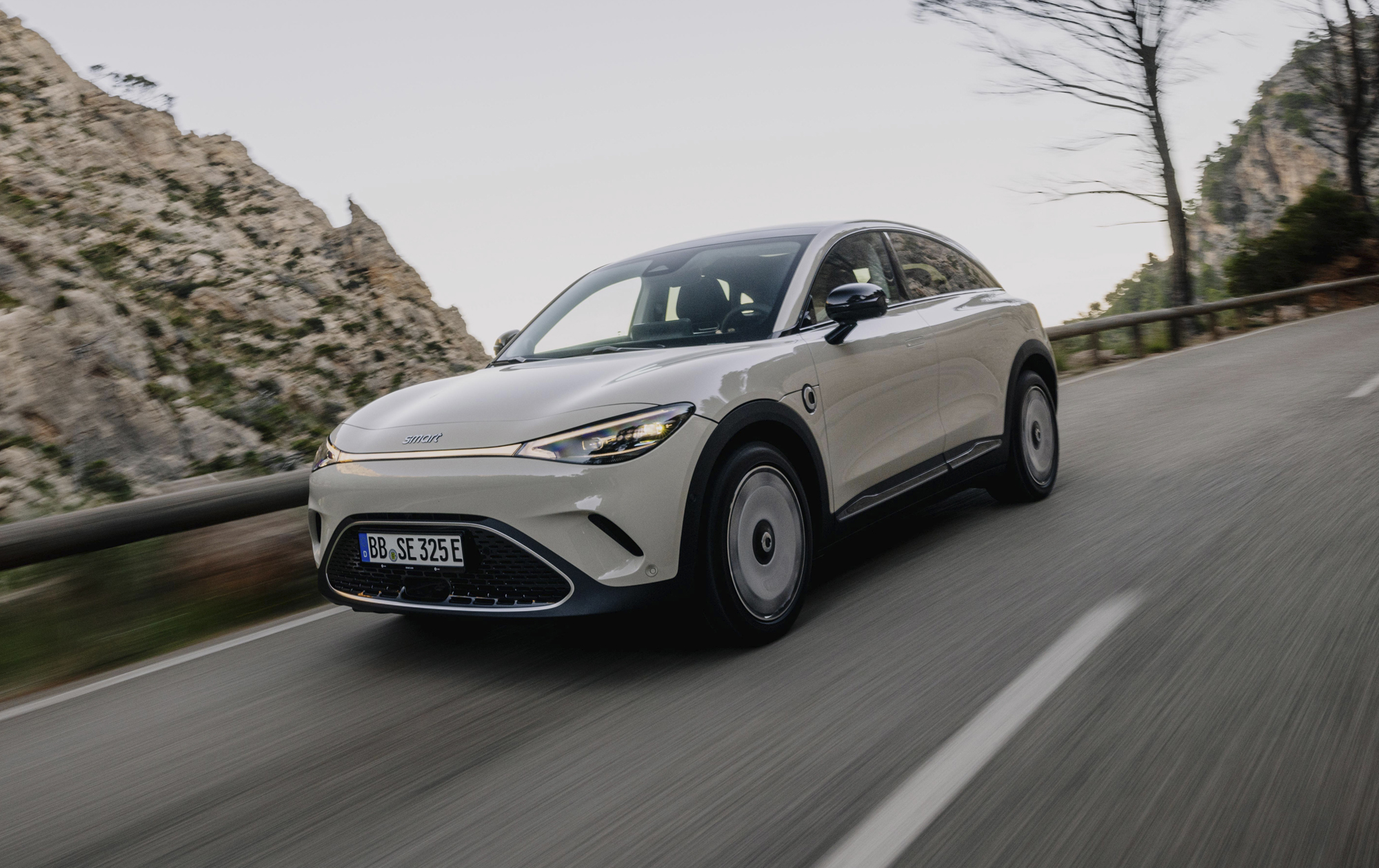
THE GOOD: Decent value; well-built interior; quiet; comfortable
THE BAD: Utterly infuriating software; less rear space than the #1; looks like melted ice cream
THE UGLY: The shrill noise of the hyperactive, paranoid fatigue-warning system
NEED TO KNOW: A coupe-SUV from the brand we all thought was dead. This trades some rear space for a sleeker profile compared to the awkwardly shaped #1 but, underneath, is exactly the same as it. Plenty of choice in terms of performance and battery sizes, and it’s calm and quiet on the move. Right up until you need to use the overly quirky and unnecessarily complicated infotainment software or get screamed at by hyperactive safety alerts.
THE ONE TO BUY: While the Brabus is hilariously fast, stick with Premium (around £40k) for the most kit and the longest range
KEY DATA: Range 283 miles; efficiency 3.8 miles per kWh; max DC charging 30 minutes 10-80%
53 Abarth 600e
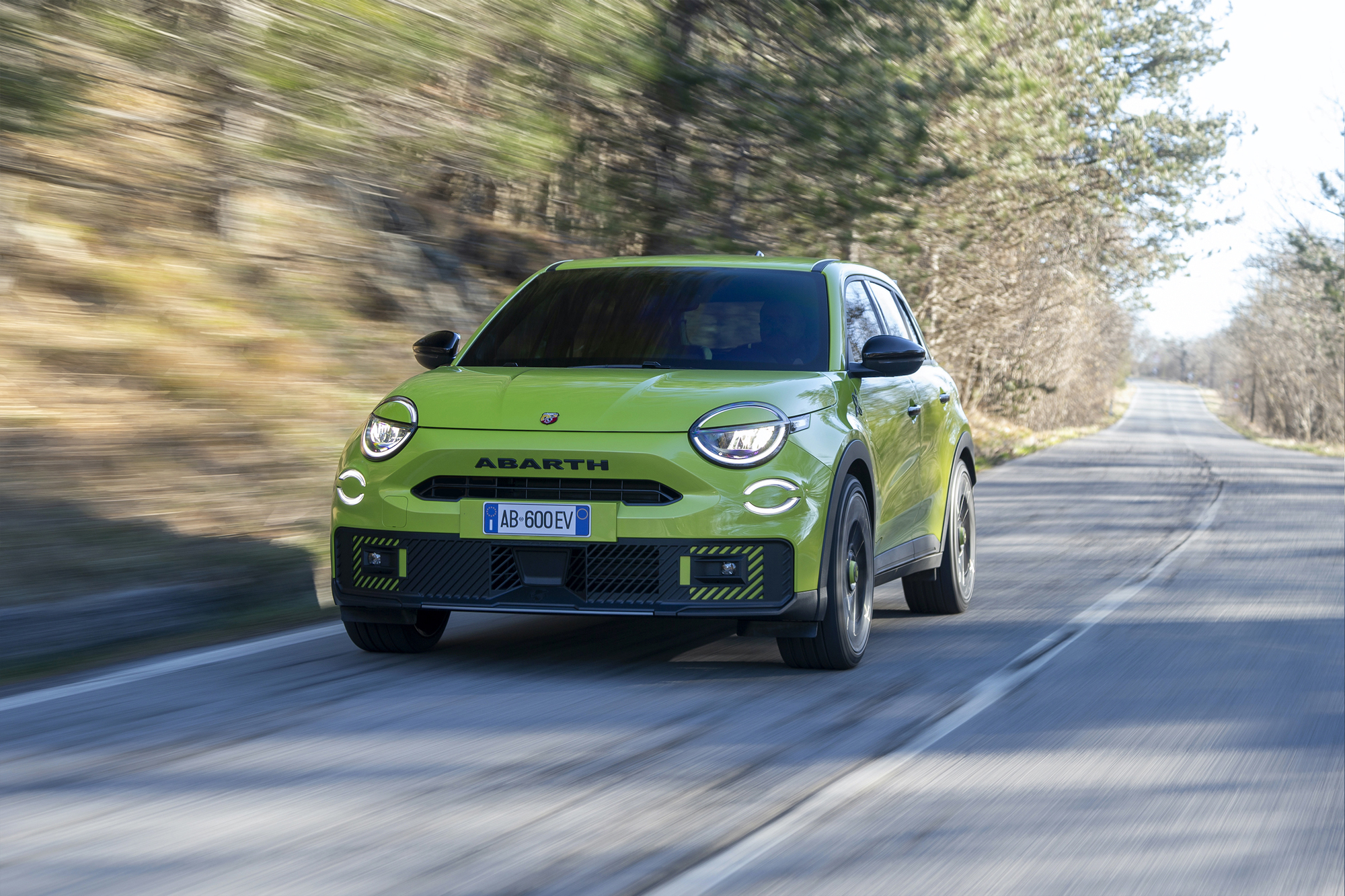
THE GOOD: Looks cool; fun to drive; surprisingly practical
THE BAD: Real-world range; price
THE UGLY: Depreciation isn’t fun
NEED TO KNOW: The Abarth 600e is, of course, based on the electric Fiat 600 – which is itself based on the same platform as the Vauxhall Mokka, Alfa Junior and many others. None of this is what you’d necessarily expect to be a great basis for a hot hatch, but the Abarth is a genuine riot to drive. With 237bhp going to the front wheels – or 278bhp if you go for the Scorpionissima – it’ll do 0-62mph in 6.2 or 5.9 seconds respectively. But it’s not about outright pace, because both versions of the Abarth 600e get a Torsen limited-slip diff and suspension upgrades, all of which adds up to surprisingly alert and playful handling. Plus, the Abarth is quite theatrical; you can have it in purple, and it even pipes fun engine noises to an external speaker, if you want it to. So that you can rev your electric car at the lights, innit?
The real problem with the Abarth 600e is that it’s not cheap to buy, and the real-world range provided by its 51kWh NMC battery is fairly poor; you should only expect around 130 to 180 miles miles depending on conditions and how you’re driving.
THE ONE TO BUY: We’d go for the Scorpionissima – less for the extra power than for the upgraded interior bits, which include uprated seats, upholstery and styling. The extra punch is just an added bonus
KEY DATA: Range 199 miles; efficiency 3.4 miles per kWh; max DC charging 35 minutes 10-80%
52 Hyundai Ioniq 6
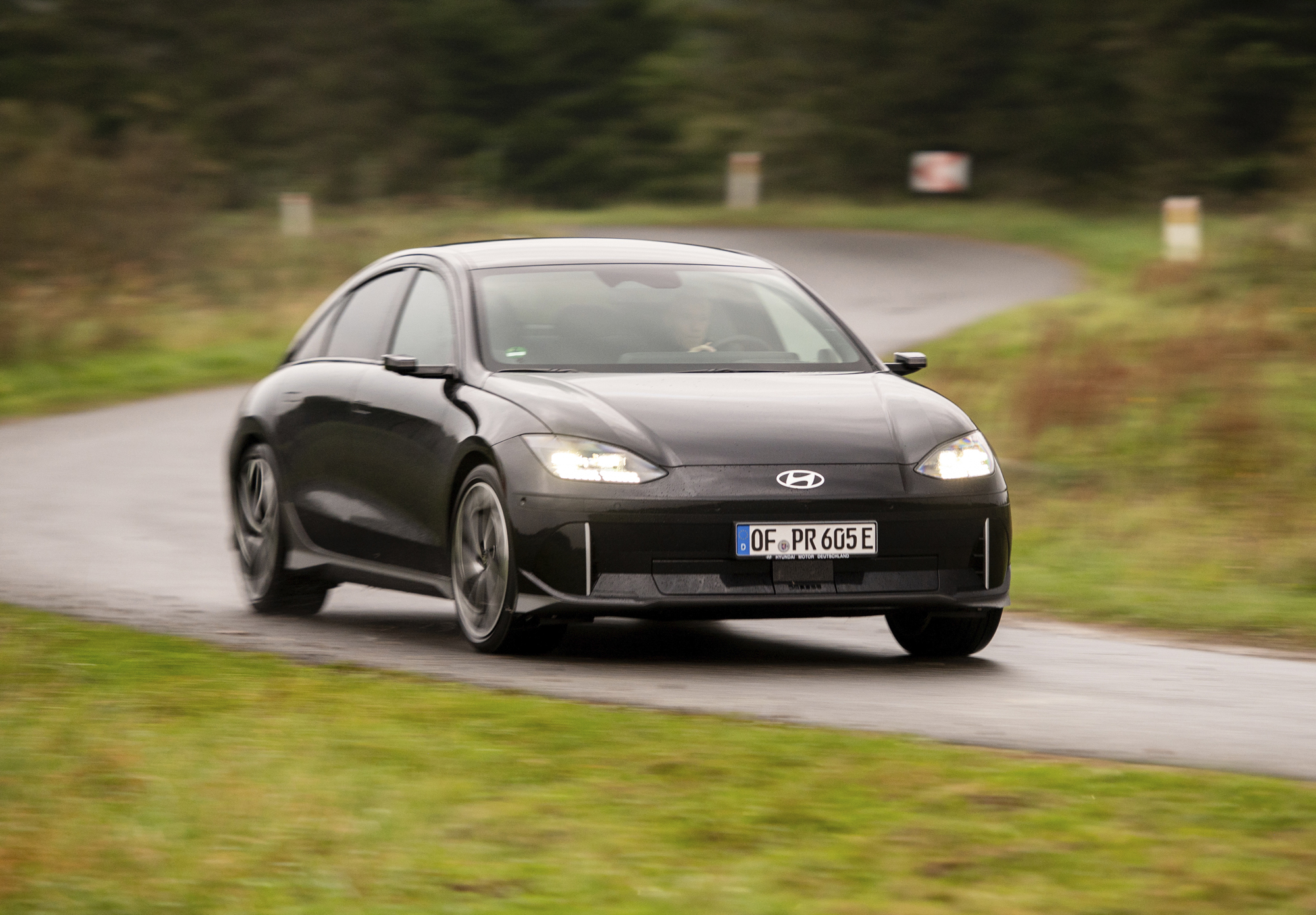
THE GOOD: Tidy handling; top battery tech
THE BAD: Dynamically beaten by Tesla’s Model 3 and BYD’s Seal in our group tests
THE UGLY: Mis-shapen rear would give Quasimodo the hump
NEED TO KNOW: One particular drive, 500 miles in a day, made the Ioniq 6’s strengths clear: good efficiency, quick DC recharging, engaging steering. But while its body control is better than the Ioniq 5’s, the big wheels transmit too much shock and awe to occupants. If you love the looks, go for it. If you want more performance, try the N, reviewed and ranked separately.
THE ONE TO BUY: 77.4kWh rear-wheel-drive Premium
KEY DATA: Range 338 miles; efficiency 3.88 miles per kWh; max DC charging 24 minutes 10-80%
51 Vauxhall Frontera
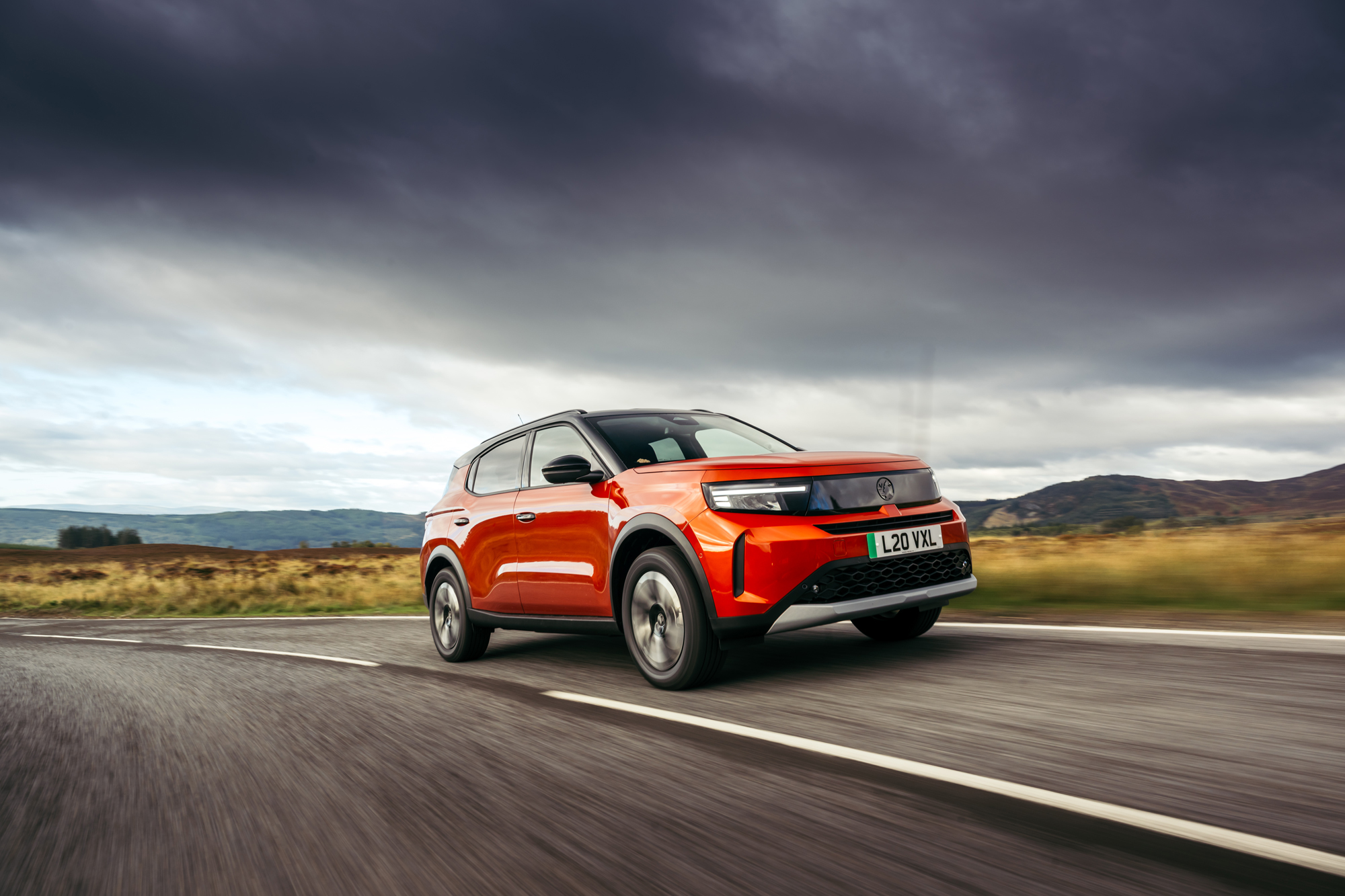
THE GOOD: Great value; very roomy; comfortable
THE BAD: Range could be better; interior feels cheap; oddly noisy
THE UGLY: Will make you feel guilty for buying a more costly EV
NEED TO KNOW: The Frontera debuted Vauxhall’s policy of price parity: this EV cost the same as the hybrid version. It’s a strong statement, and very good value. Okay, in some ways it feels like the cheap car it is, and there’s limited driving pleasure to be had, but as trusty family transport that happens to be electric, it’s fantastic.
THE ONE TO BUY: They all have a 44kWh battery, so rein in your range expectations. GS spec is still a decent price, and looks smarter
KEY DATA: Range 186 miles; efficiency 4.2 miles per kWh; max DC charging 28 minutes 20-80%
50 Citroën ë-C3 Aircross
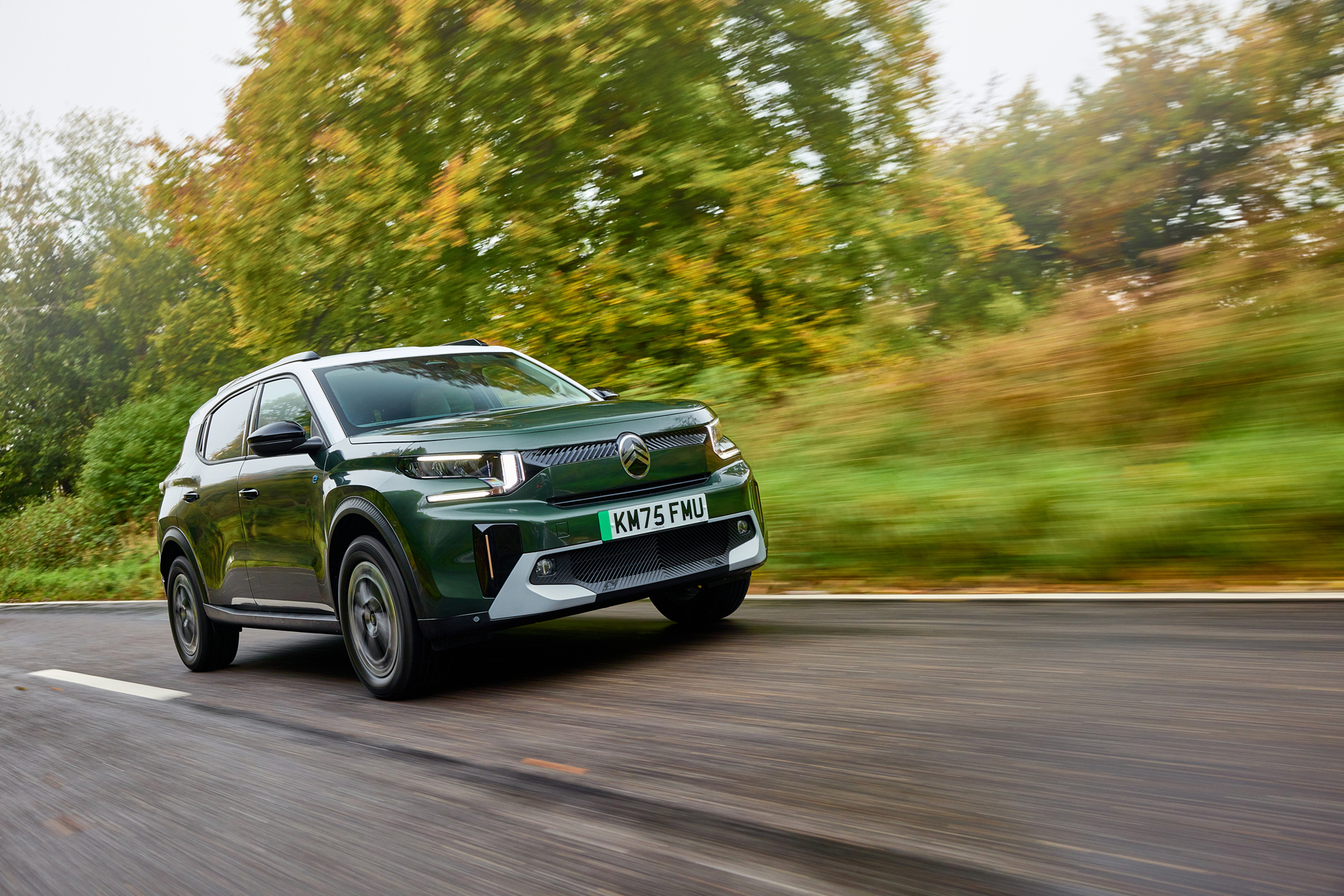
THE GOOD: Fantastic value; loads of space
THE BAD: Range read-out is hard to find; no seven-seat option on the EV
THE UGLY: Real-world range on the motorway
NEED TO KNOW: The Citroën ë-C3 Aircross is a small-ish electric car which, at 4.4 metres long, is a similar size to cars like the Ford Puma Gen-E, Renault 4, Kia EV3 and Jeep Avenger. It’s a lot cheaper than most of them, though, being pitched as a budget option for families who want a simple, honest EV with enough room for daily life but at a good price. And that’s exactly what it does.
It gets much the same interior as the smaller non-Aircross ë-C3, which it shares a platform with; the Aircross is basically just a bigger take on the ë-C3, after all. It does get slightly different battery options, though, with either a 44kWh or 54kWh LFP pack offering official WLTP range of between 188 and 249 miles.
As with the smaller ë-C3, the Aircross is perfectly tidy to drive. There’s lots of bodyroll, but the ride comfort is nice and soft, it steers neatly enough and the driving position is pretty decent so you won’t mind covering longer journeys. The kids can come along, too, as there’s a surprisingly roomy rear bench, and the boot is big enough for the labrador to get comfortable.
Just leave time to charge regularly if you are doing higher miles in your ë-C3, as the efficiency on the motorway drops quickly and you’ll be lucky to see 150 miles from the 54kWh car on the motorway, while the smaller-battery car will be more like 100 miles per charge. Even so, this is a cheerful and honest family EV that’s pleasant to drive and easy to live with provided you aren’t expecting it to do a lot of long journeys.
THE ONE TO BUY: If you only want this as a second car, mostly for shorter trips, stick with the smaller battery but go for Max trim as it gets heated seats and auto wipers
KEY DATA: Range 188 miles; efficiency 4.3 miles per kWh; max DC charging 35 minutes 10-80%
49 Volvo EX90
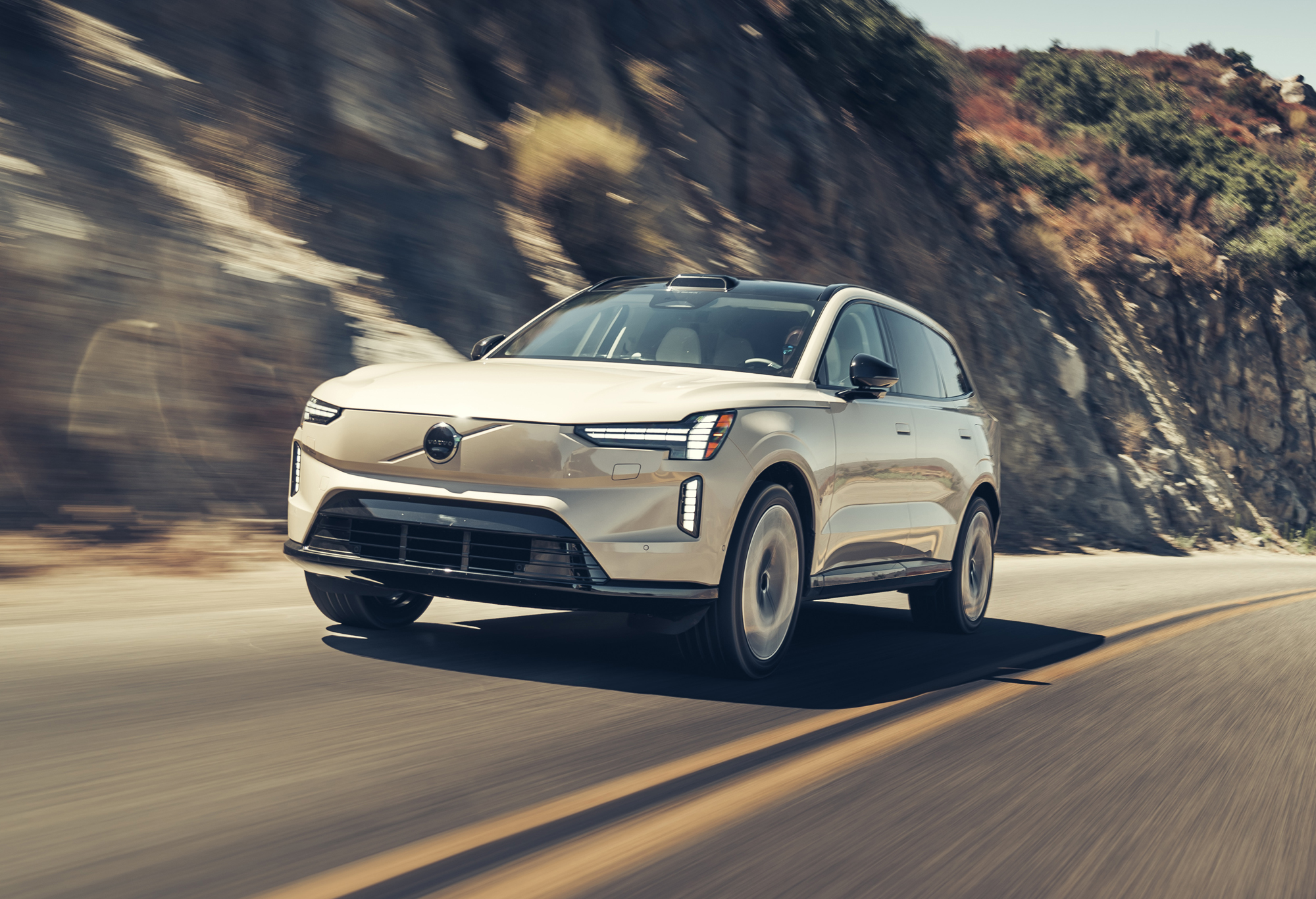
THE GOOD: All the safety you could ever need; beautiful Scandi styling; whisper quiet
THE BAD: Great for families, but little personality
THE UGLY: The literal ugly – you can’t delete the lidar sensor on the roof, so expect to be hailed like a cab everywhere you go
NEED TO KNOW: Volvo’s family-friendly SUV now also made climate-friendly. Great styling and practical seven-seat layout will appeal to the chattering classes, but prices are on the lofty side and there’s zero dynamic appeal in the chassis. Whisper quiet and rides very well, so if that’s what’s on your tick list, it’s perfect. A great Volvo for the 2020s, although some early EX90s had software problems.
THE ONE TO BUY: The cheapest, when it comes along. Until then, starting prices are near-£100k
KEY DATA: Range 375 miles; efficiency 2.96 miles per kWh; max DC charging 30 minutes 10-80%
48 Citroën ë-C3
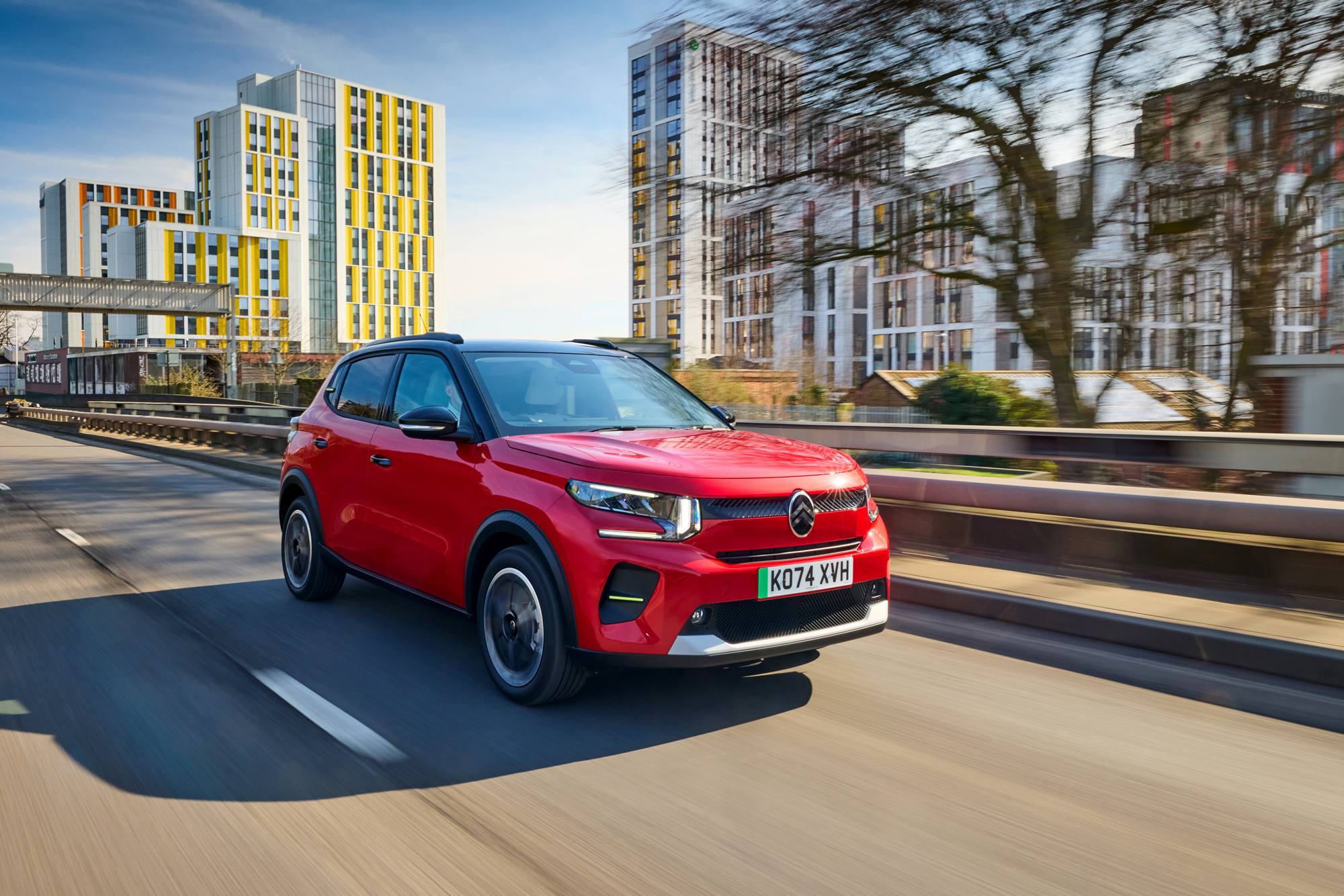
THE GOOD: Spacious; cute; good value, comfy
THE BAD: Range read-out is hard to find; motivational interior labels
THE UGLY: Motorway efficiency
NEED TO KNOW: The Citroën ë-C3 is a small, cute and surprisingly roomy electric car. It’s a rival to other small EVs including the Renault 5, BYD Dolphin Surf and Hyundai Inster, and you can choose from a couple of different batteries that offer a WLTP range of between 124 and 199 miles. It’s front-wheel drive, and while it only gets 111bhp for a 0-62mph time of 11 seconds, it picks up well around town and is generally a smooth and enjoyable little car. In fact, it feels quite a bit more mature and confident than the BYD Dolphin Surf, and is in another league to the Leapmotor T03 for feeling secure and pleasant. You’ll even feel happy enough on the motorway in the ë-C3 when you’re up to speed, although the real-world range drops very quickly at higher speeds so you’ll only see around 110 miles to a charge even from the bigger-battery ë-C3 if you’re on a steady motorway drive.
That’s not really what the ë-C3 is about, though, and as a car that’ll mostly be used for shorter hops like the school run and trip to the shops it’s good. Soft ride comfort, a smart interior, decent driving position… It’s one of the best small EVs at the price, and while the Renault 5 is way more fun and a lot more desirable, the ë-C3 is much more spacious and has its own appeal.
THE ONE TO BUY: Go for the entry-level ë-C3 with the bigger battery, for the best balance of value, range and comfort. Every model gets little tags sewn into the doors that say things like ‘Be Happy’, which is kind of cute for the first few days, but will likely make you yearn for a pair of scissors when you’re staring at it while tired and stressed in a rainy traffic jam
KEY DATA: Range 199 miles; efficiency 4.5 miles per kWh; max DC charging 35 minutes 10-80%
47 Alpine A290
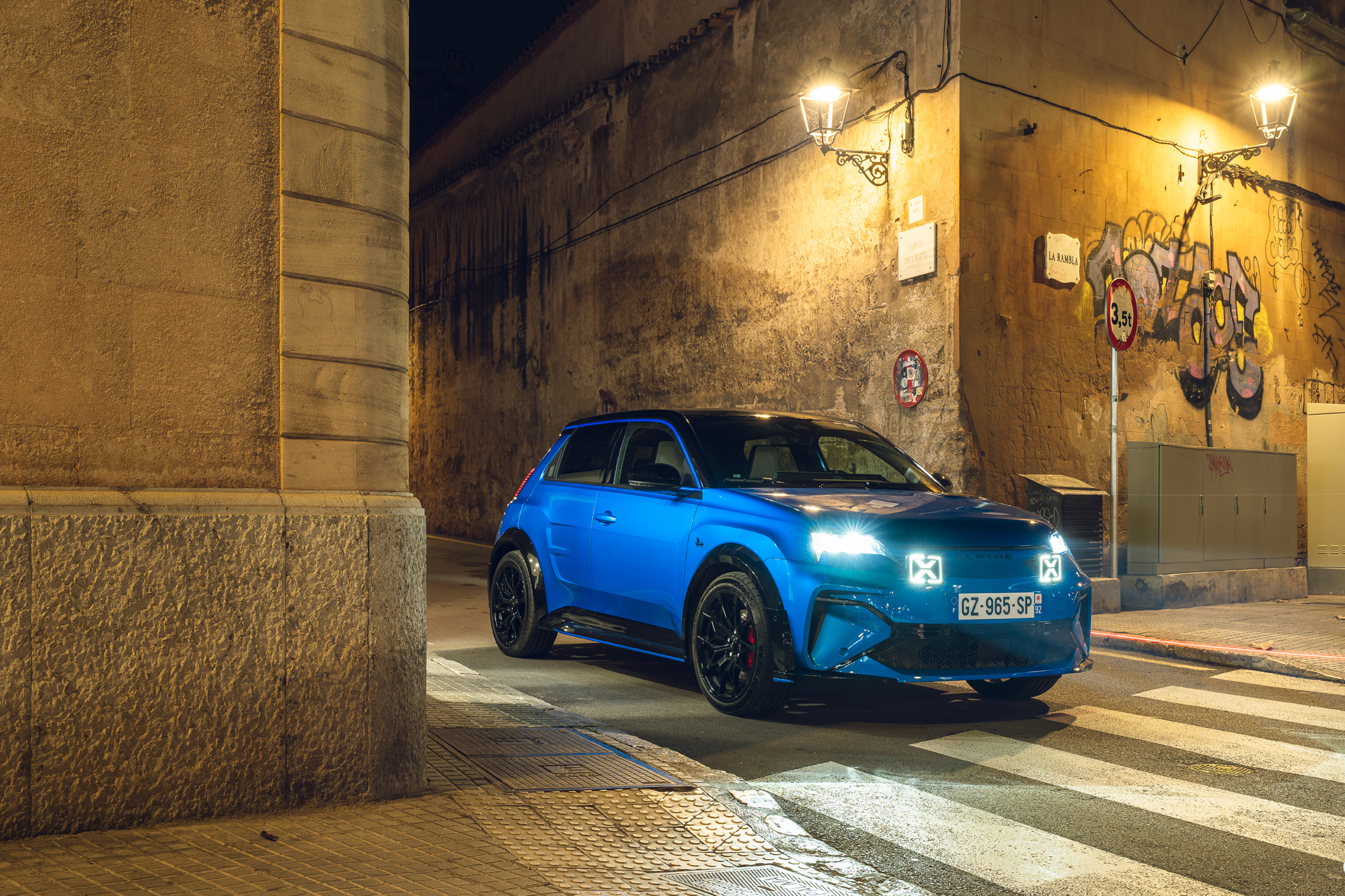
THE GOOD: Brilliant fun; looks like a tiny rally car
THE BAD: Not as practical as the 600e; no cupholders
THE UGLY: Real-world range can be limiting
NEED TO KNOW: You know the electric Renault 5, right? Bit of a gamechanger for affordable EVs. Well, the Alpine A290 is more of the same, only faster and more fun. The wider tracks, flared wheelarches, an air dam on the bonnet and the cross-design LEDs that mimic a rally car’s foglamps all look properly special; chunky and purposeful in all the right ways. Thankfully, it backs that up with being fantastic fun, too.
You can get the Alpine A290 in a few different guises. The entry-level A290 GT and GT Premium get 178bhp for a 0-62mph time of 7.4sec, while the GTS and GT Performance models get 217bhp for a 0-62mph of 6.4sec. It’s not that rapid, then, but that’s fine because it’s scrappy and agile, and just great fun to drive. It’ll even give you a dab of lift-off oversteer, if you want. And while the straight-line pace is perhaps a bit short on emotive engagement, despite the option of two soundtracks, the fact that you can enjoy the Alpine’s mobile but unintimidating chassis at normal road speeds is just a joy.
Sure, you’re getting more practicality and pace with the Abarth 600e than you do with the Alpine A290, but for sheer ‘want one’ factor, and outright handling tactility and fizz, the Alpine definitely wins.
THE ONE TO BUY: The A290 GT Performance is the best balance of equipment, performance and cost, so that’s the one we’d go for
KEY DATA: Range 226 miles; efficiency 3.8 miles per kWh; max DC charging 35 minutes 10-80%
46 31 BMW iX1: best mid-size SUV
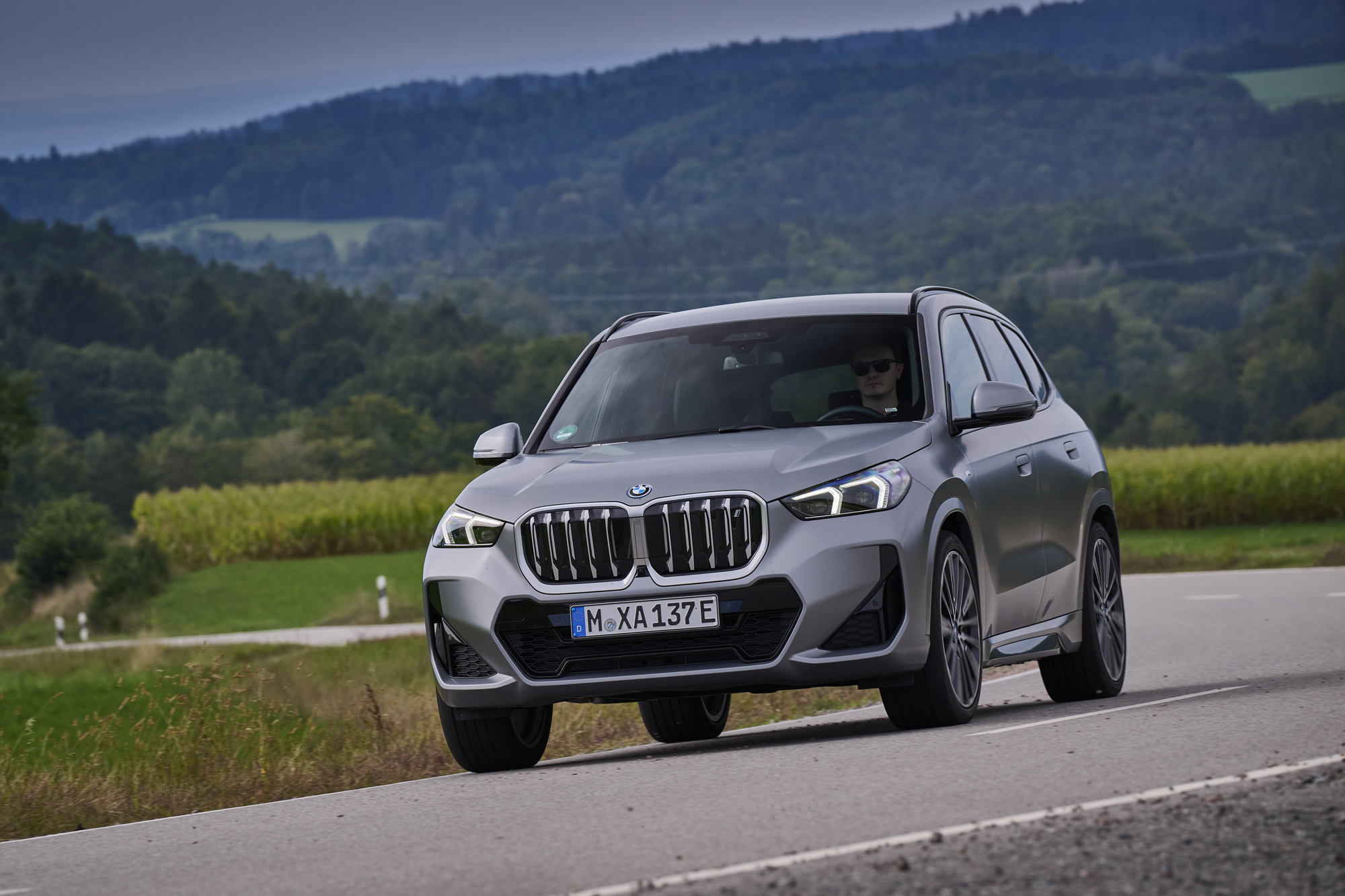
THE GOOD: Engaging to drive, just like the X1 it’s paired with
THE BAD: Current BMW cabin thinking is a step back over the previous generation; just give us proper iDrive, please
THE UGLY: This replaced the i3 – pioneering, ingenious but pricey to build
NEED TO KNOW: The X1 is an oddly under-rated member of the BMW line-up, and the iX1 is its all-electric sibling. It has all the virtues – good package, very good chassis, lively-enough performance – and the extra benefit of being all electric. So it’s utterly inoffensive around town, where it just gets on with smoothly and calmly transporting a (small) family around. But unlike many other £50k-ish electric SUVs, it really enjoys being driven with a bit more brio when you’re out of town and don’t have young kids in the back.
The ride is a bit firm for some tastes, but to us that seems like the right choice to make if the alternative is more bodyroll and wallowing. This is a premium car for enthusiasts, albeit enthusiasts currently prioritising their families. It’s easy to talk yourself out of the iX1 by over-thinking it. Okay, it replaced the clever i3 in the range, but you can’t really blame BMW for wanting to make a profit on a mainstream, potentially big-selling car. And okay, the infotainment, drive modes etc are all a bit too clever for their own good, and can seem like a step backwards from the previous-generation X1. But the reality is you get used to it. The less-powerful, single-motor versions are fine, but the xDrive30 is just that bit livelier. The iX1 is greater than the sum of its parts, much like a VW Golf.
THE ONE TO BUY: xDrive30 M Sport is good to drive and decent value
KEY DATA: Range 259-272 miles; efficiency 3.4-3.7 miles per kWh; max DC charging 29 minutes 10-80%
45 MG S5
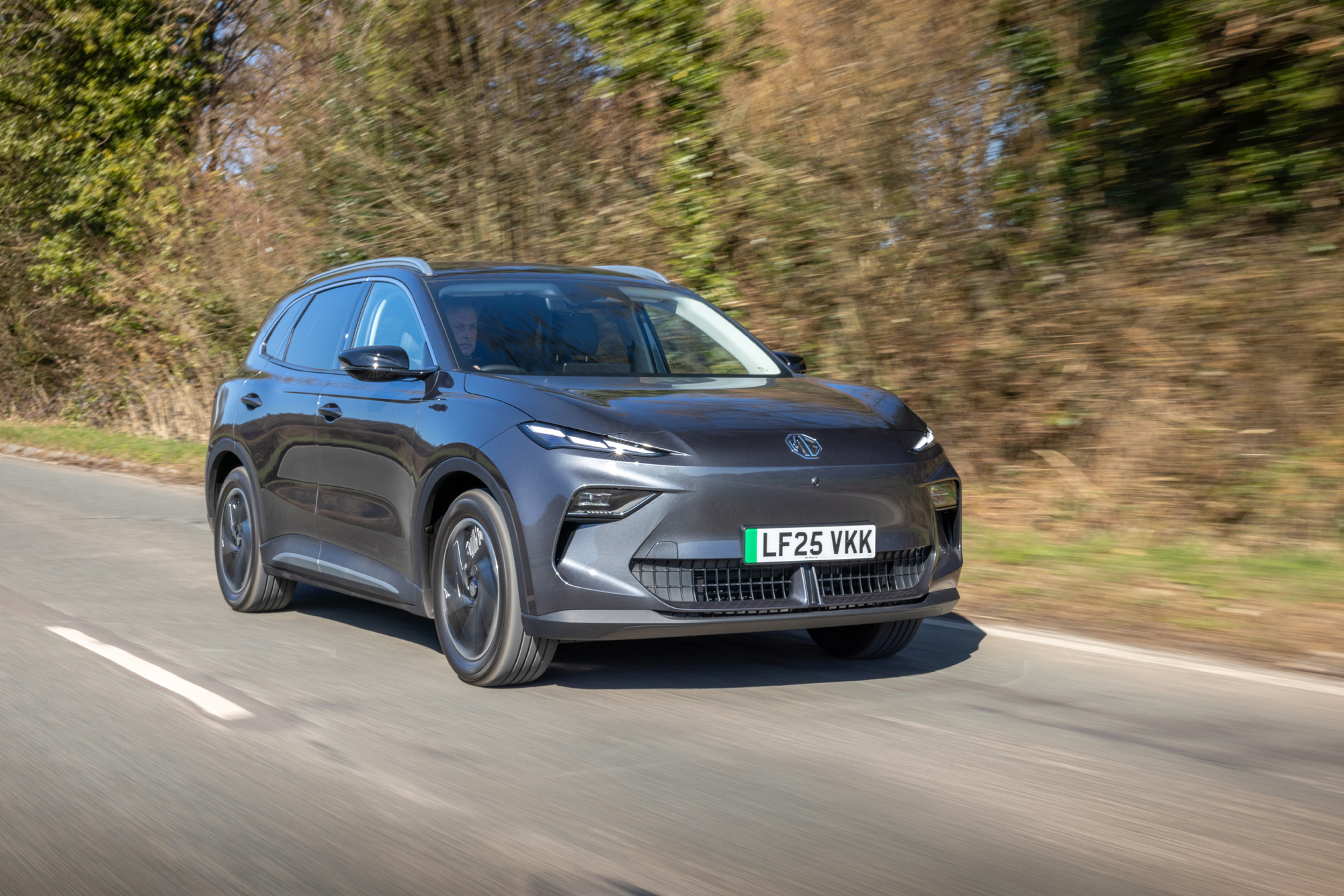
THE GOOD: Loads of space; low price; reasonable WLTP range
THE BAD: Bland to look at; bland to drive; bland interior
THE UGLY: It’s certainly no beauty
NEED TO KNOW: The MG S5 is a car for people who don’t care about cars, but it’ll do a perfectly fine job of keeping you and the kids on the road, and for decent money. You get a choice of two batteries in the MG S5, which manage official WLTP range of 211 or 298 miles respectively, and every S5 is pretty well equipped and has loads of space inside. You’re getting more space – and more range – than similarly priced rivals like the Renault 4 and Ford Puma Gen-E.
As long as you don’t mind a sinfully boring car, the MG S5 is a solid and recommendable family electric SUV. You even get a healthy five-year warranty.
THE ONE TO BUY: Trophy Long Range is the best pick. Sure, it’s the most expensive, but you get all of the equipment that you could want, slightly faster charging, a decent real-world range of around 250 miles or so, and it all comes at a seriously good price
KEY DATA: Range 298 miles; efficiency 3.9 miles per kWh; max DC charging 28 minutes 10-80%
44 Citroën ë-C5 Aircross
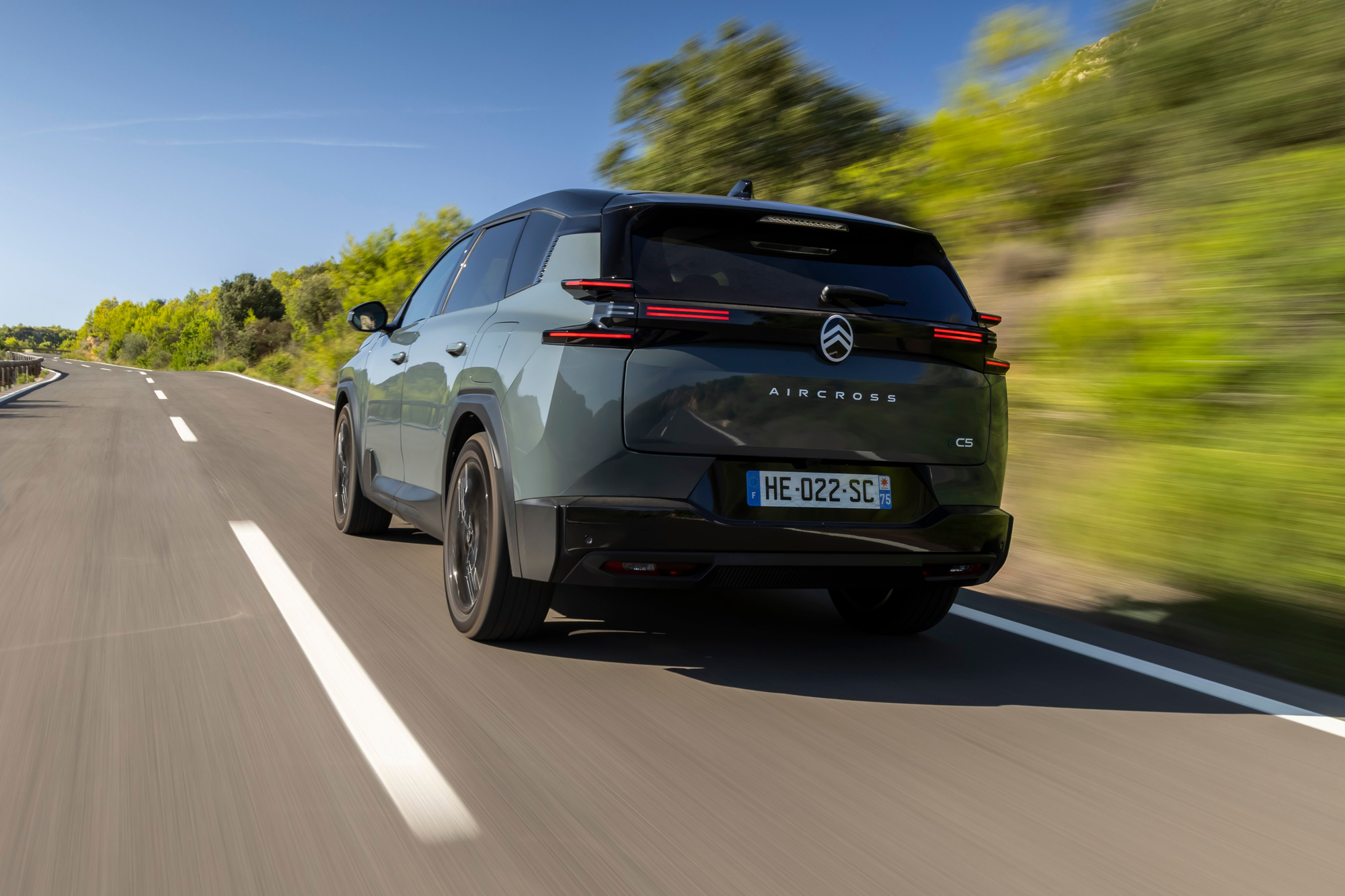
THE GOOD: Smart cabin; long-range option; great price; big boot
THE BAD: Sluggish infotainment; others go further to a charge
THE UGLY: The old C5 Aircross had three individual middle-row seats and Isofix, but that’s now gone in favour of a normal rear bench
NEED TO KNOW: The ë-C5 Aircross is Citroën’s big, family electric SUV. You can only get it with five seats, sadly. If you want seven seats you’ll have to look at the Peugeot E-5008 instead, which shares the Citroen’s platform and battery options. You’ll pay a lot more for the Peugeot, though; the ë-C5 Aircross is a bargain by the standards of fairly big family SUVs, like this.
Two battery options give a WLTP range of 322 or 421 miles, and every one of those miles is cushy and relaxed. The ë-C5 Aircross really is a lovely, refined way to make progress. It’s not terribly quick, and the steering is a bit too light in Comfort mode and is short on feedback regardless of which mode you choose, but this isn’t a car that you want to drive in a spirited fashion, anyway.
There’s also a new infotainment system in the ë-C5, which is a big improvement over previous Citroën infotainment systems; it uses a huge portrait touchscreen, complete with big icons and fairly straightforward menu layouts. It’s a bit slow to respond to your prod sometimes, but it has all the functionality that you want. Spacious rear seats and an impressive 651-litre boot makes this a really decent family car.
THE ONE TO BUY: We’d go for the ë-C5 Long Range in top-sec Plus trim, which adds a reversing camera and keyless entry among a few other useful standard features
KEY DATA: Range 421 miles; efficiency 3.9 miles per kWh; max DC charging 35 minutes 10-80%
43 Skoda Elroq
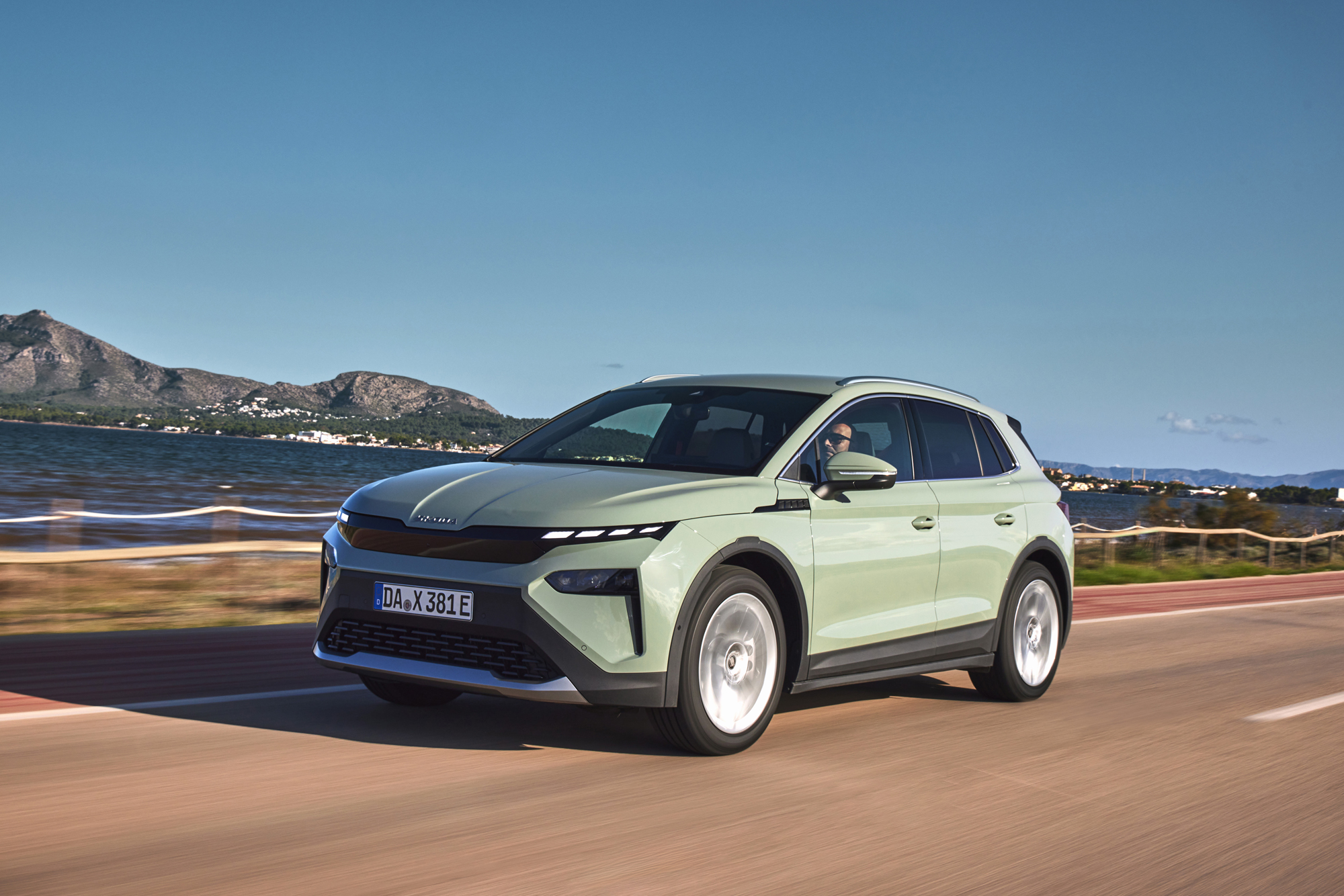
THE GOOD: Roomy; good interior quality; fun to drive
THE BAD: Not as cheap as you might suppose
THE UGLY: The new family look debuts here, unspectacularly
NEED TO KNOW: Like an Enyaq, but smaller – which is very good news for those of us who have noted how impressed everyone is by the Enyaq, but who have no need for its cavernous space. It sits on the VW Group’s ubitquitous MEB platform, but is the smallest VW Group EV so far.
There’s a choice of three powertrains for now, all rear-wheel drive. If you want the most range and power, go for the Edition 85. Packing a big 77kWh battery and electric motor with 282bhp and 402lb ft of torque, it’s quicker than most of its rivals with a 6.6-second 62mph sprint time. The 360-mile range is also the longest of any electric Skoda, if just behind the 375-mile figure of a Kia EV3.
THE ONE TO BUY: The range starts at £31,500, but you can end up spending quite a bit more in search of the bigger battery and more kit. If money isn’t your main concern, go for the top model, the Edition 85
KEY DATA: Range 360 miles; efficiency 3.8-4.1 miles per kWh; max DC charging 28 minutes 0-80%
42 Kia PV5
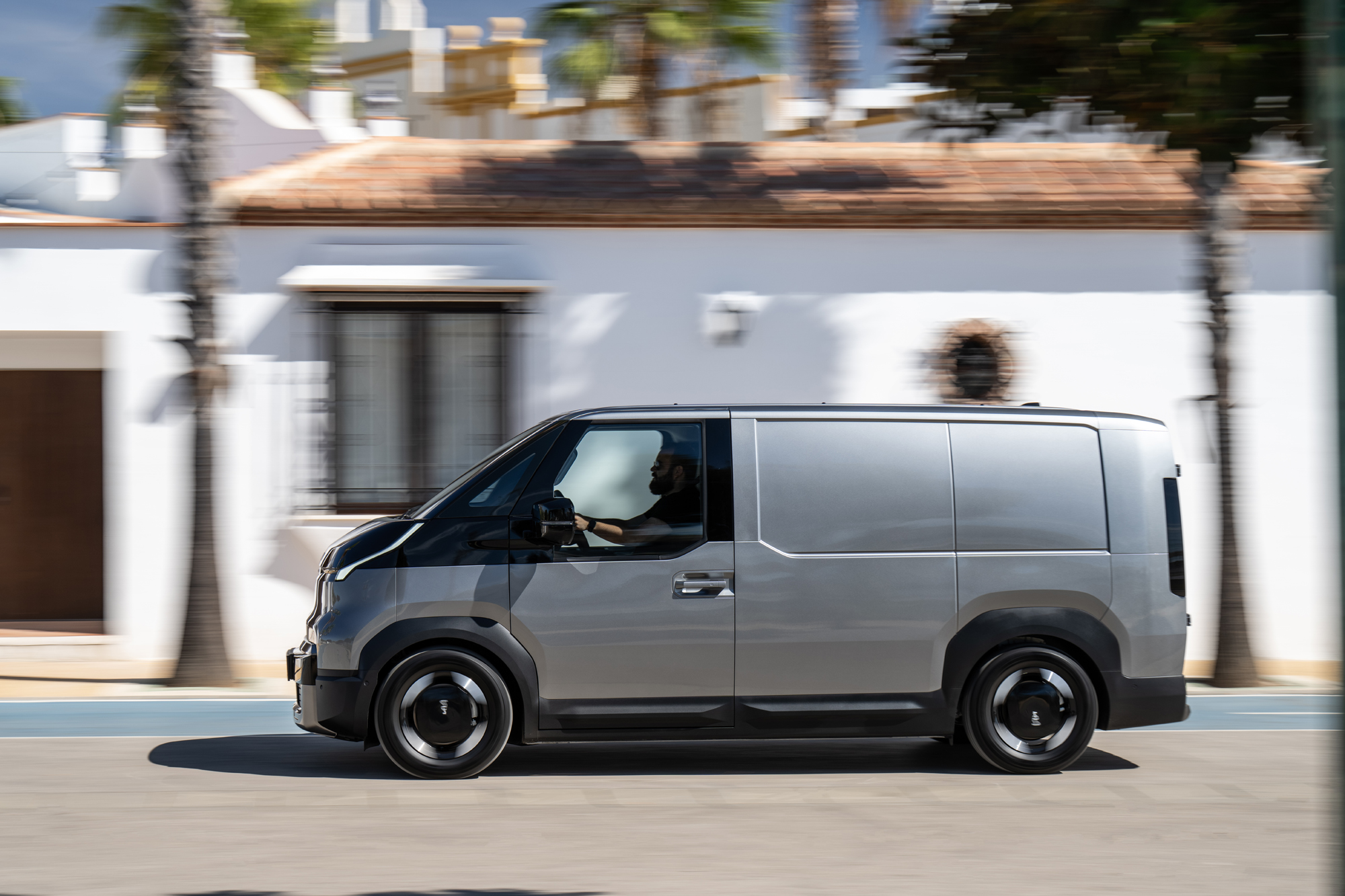
THE GOOD: Great value; comfortable cabin; enjoyable to drive
THE BAD: Some rivals have more useful space
THE UGLY: We have to wait for the camper version
NEED TO KNOW: Kia has entered the van market for the first time, in some style. The electric PV5 is an eye-catching and modern van that’s also genuinely useful – a bit like the VW ID. Buzz Cargo. It will be available with two batteries, two trim levels, two lengths, two heights, a passenger version, and various other spin-offs.
For all its fresh style and modern tech, it’s very much a van, so don’t expect wonders in terms of performance. And as a van, this first version isn’t the hugest, and access to the load area isn’t without its head-bashing, knuckle-grazing challenges.
THE ONE TO BUY: Go Long Range and keep the trim simple
KEY DATA: Range 258 miles; efficiency 3.5 miles per kWh (est); max DC charging 30 minutes 10-80% (est)
41 Genesis GV60
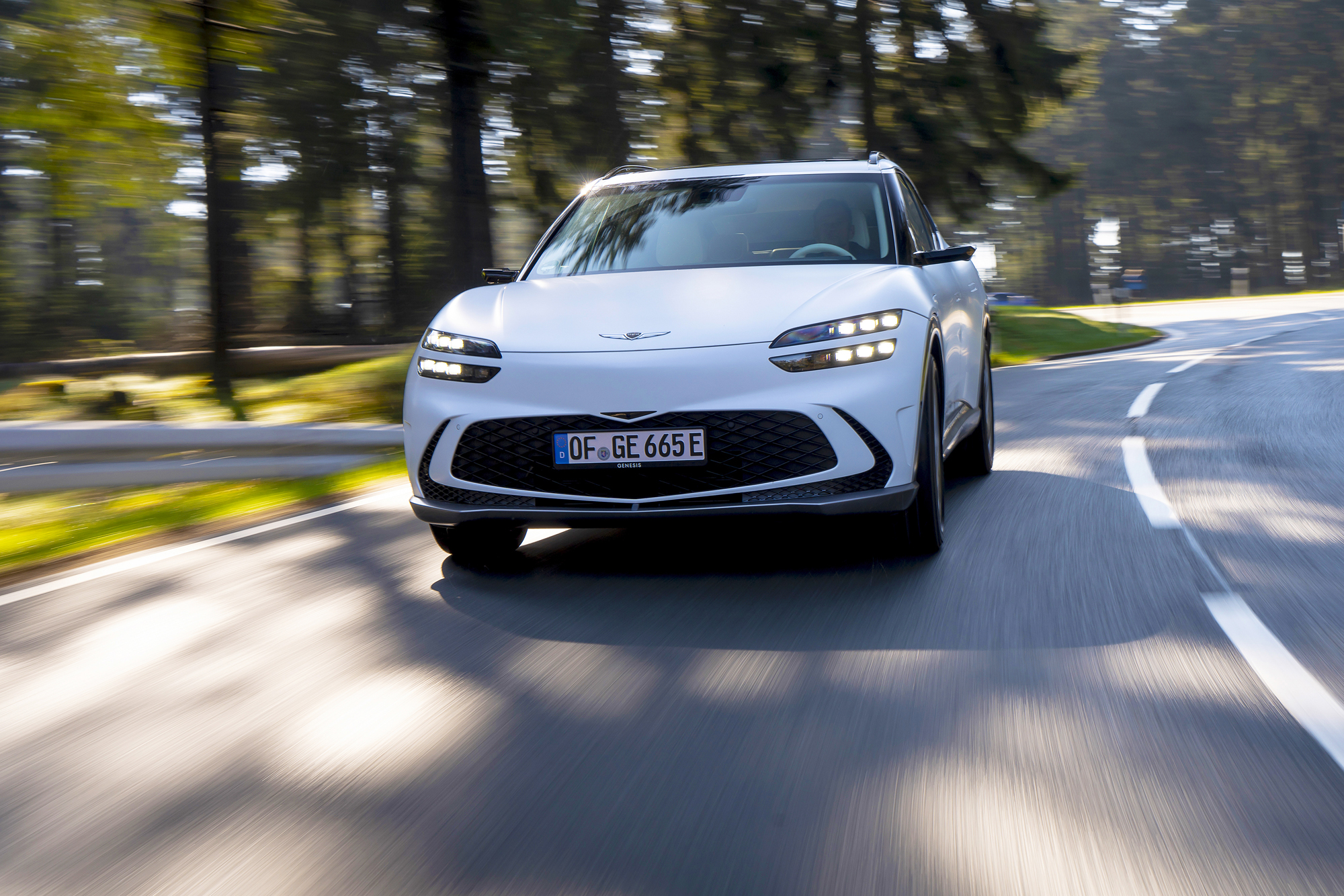
THE GOOD: Loads of kit; plush cockpit; handles neatly; drift mode is standard
THE BAD: Silly ‘Face Connect’ security tech; Fisher-Price interior design details
THE UGLY: The nagging feeling that you should have just bought an EV6 for less instead
NEED TO KNOW: The plushest and glitziest sibling to the Kia EV6 and Hyundai Ioniq 5. Shares almost all the same tech but throws in a few unnecessary extras, like unlocking the car with your face. Still drives well and manages a big range, but spec it carefully.
THE ONE TO BUY: The base RWD Premium is already loaded with toys for £54,105
KEY DATA: Range 321 miles; efficiency 3.7 miles per kWh; max DC charging 18 minutes 10-80%
40 Audi A6 e-Tron
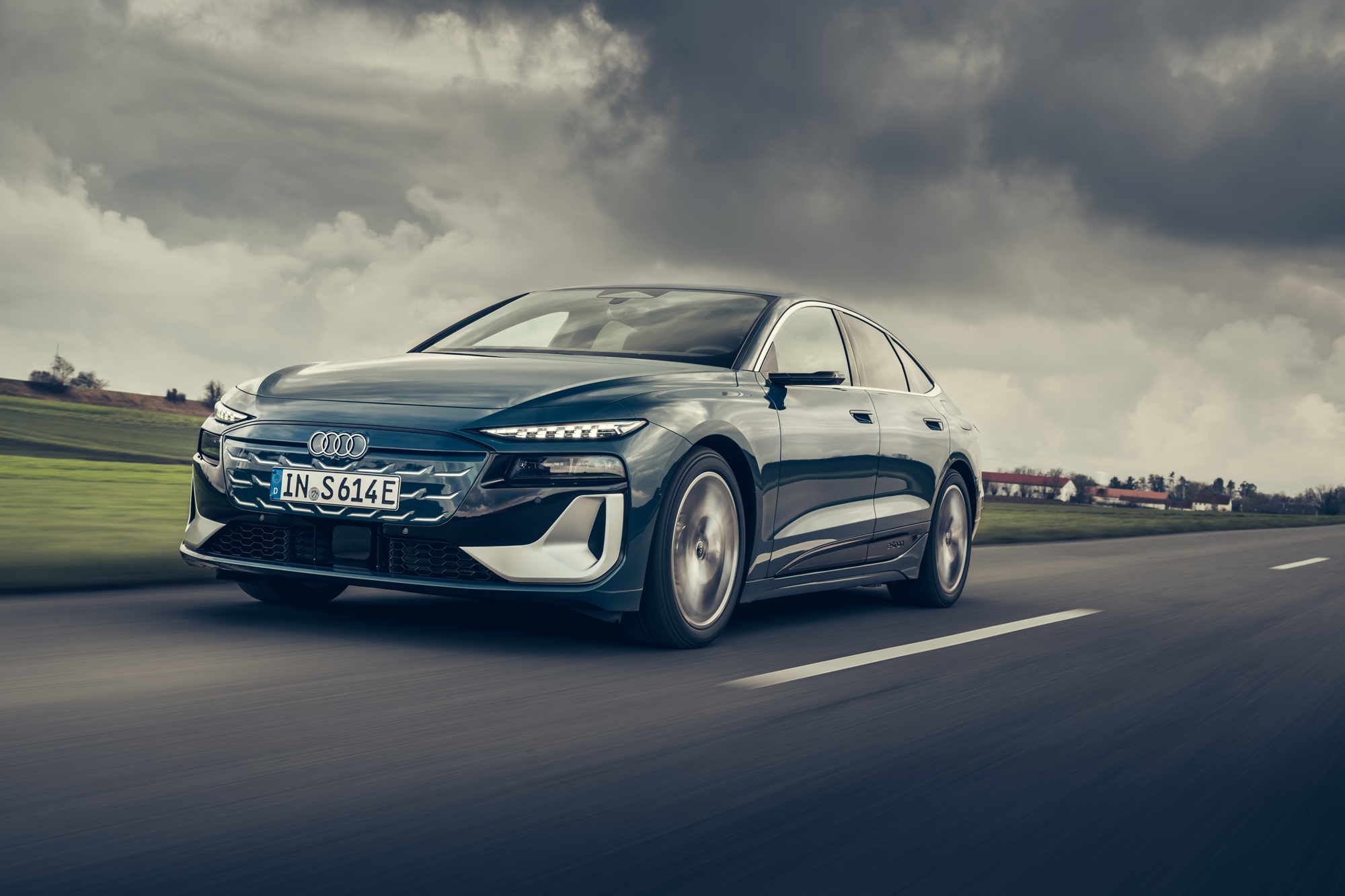
THE GOOD: Long range; sportback or estate body; infotainment
THE BAD: Odd styling: boot isn’t as big as you might think
THE UGLY: All-wheel drive is only on expensive, high-performance models
NEED TO KNOW: The Audi A6 e-Tron is the saloon or estate equivalent to the Audi Q6 e-Tron: it gets the same platform, infotainment and tech, and is offered with the same choice of 75.8 or 94.9kWh battery, and because it’s more aerodynamic it’ll cover an impressive WLTP range of up to 463 miles (or a bit less if you go for the estate).
It’s a lot nicer to drive than the Q6 electric SUV, though, which just goes to prove that estates and saloons still have something going for them. That lower centre of gravity still makes for tauter handling and we were surprised by how much more natural and enjoyable the A6 is to drive than its SUV equivalent. The S6 is rapid and quite fun, too, although we’d settle for the standard A6 quattro, which is vastly cheaper than the S6 but still gets a 0-62mph time of 4.5 seconds, so is hardly slow. Having said that, the BMW i5 is a bit sharper to drive than any A6 e-Tron, and has a smarter cabin, too; the Audi’s interior feels a tiny bit plasticky and chintzy. Mind you, the huge screens, impressive infotainment and ultra-rapid charging leave you in no doubt that you’re still in a premium car.
You can choose between the sleek, hatchback A6 Sportback body shape, or the slightly boxier A6 Avant estate. Both have boots that will be more than good enough for the average family, but you get more luggage space in alternatives like the VW ID. 7 and ID. 7 Tourer.
THE ONE TO BUY: We’d go for the A6 e-Tron Avant with the smaller battery, because we just love a big estate. Stick with the Sport for the best value and range, and add a few choice extras. It’s a shame that all-wheel drive is only offered on the performance model, as it’d be good to be able to add it to the everyday models – as you can with the Q4 e-Tron
KEY DATA: Range 361 miles; efficiency 4.2 miles per kWh; max DC charging 21 minutes 10-80%
39 BMW iX
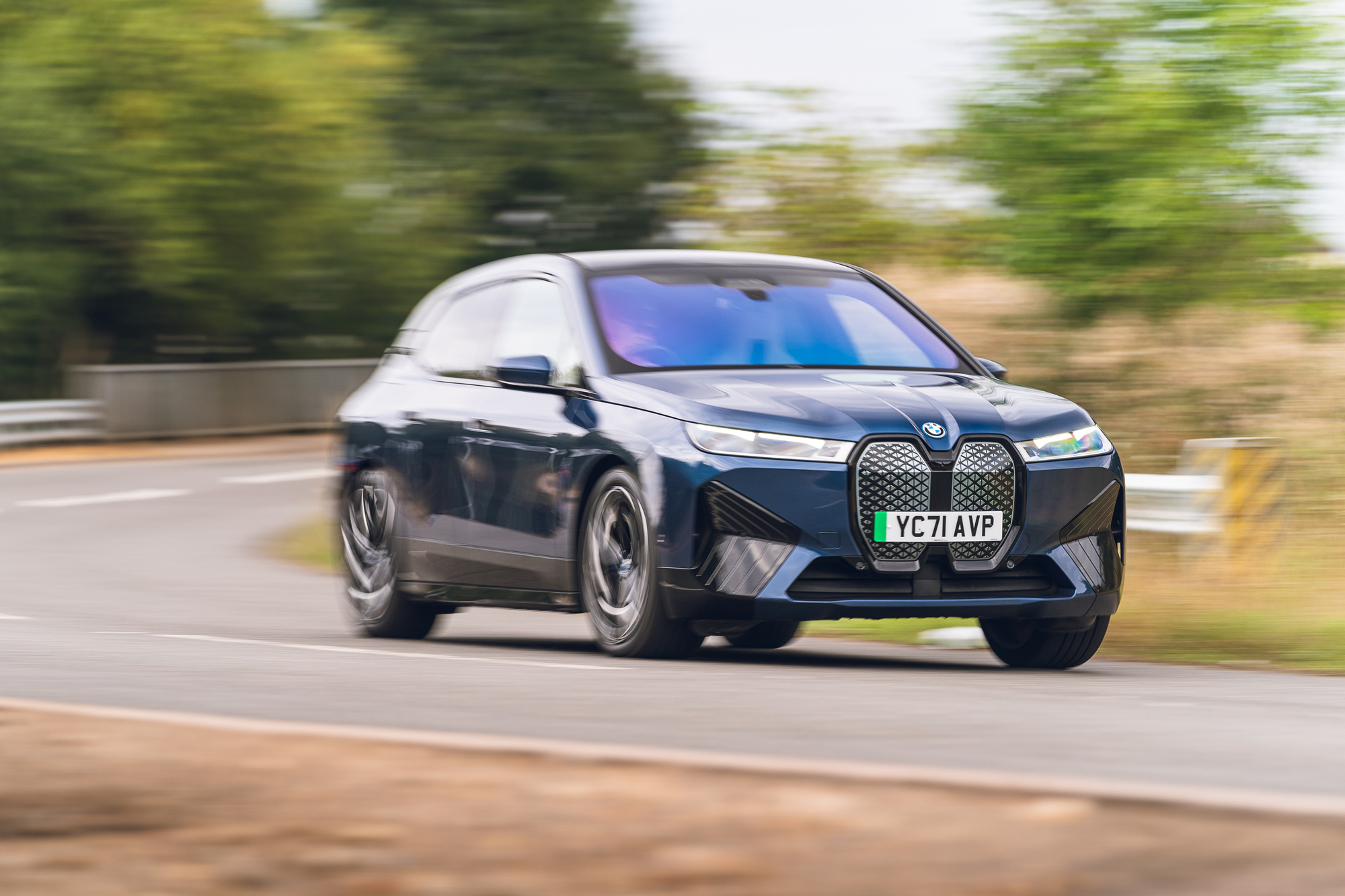
THE GOOD: Glorious interior and even more glorious to drive
THE BAD: The best version is the most expensive version
THE UGLY: Considerably better to look at on the inside than the outside
NEED TO KNOW: Most electric BMWs currently available share their fundamentals with combustion-engined cars. In some cases the EV gubbins has been squeezed into a pre-existing model; in others, the two have been designed together. But the iX is a standalone electric-only model that is not linked to anything else. That’s the same idea that gave us the revered i3 supermini, although that’s not a happy precedent as the i3 was binned for being too expensive to produce. Let’s hope the iX has a happier fate, because it really is very good.
It looks a bit like the XM, the big hybrid SUV that nobody likes very much and which costs a quite outrageous sum. But the iX is everything the XM is not: brilliant handling, with a responsive and quick powertrain, and the most wonderful, airy interior, including some very fancy touches but fundamentally simple and straightforward to operate. The iX takes full advantage of its EV-only status by being very spacious for its size, as it doesn’t need to leave room for engine and transmission hardware. The xDrive40’s range and performance are a little disappointing, but the xDrive50 is a very fine package. If, however, you can stretch to the full-on M60, you’ll be glad you did. It just works tremendously well, and is a joy to drive while simultaneously being both delightful and practical for passengers. The M60 might be excess all areas but we’re very glad it – and the iX as a whole – exists.
THE ONE TO BUY: Our pick is the flagship M60, if you can afford £125k
KEY DATA: Range 348 miles; efficiency 2.8 miles per kWh; max DC charging 35 minutes 10-80%
38 Kia EV4
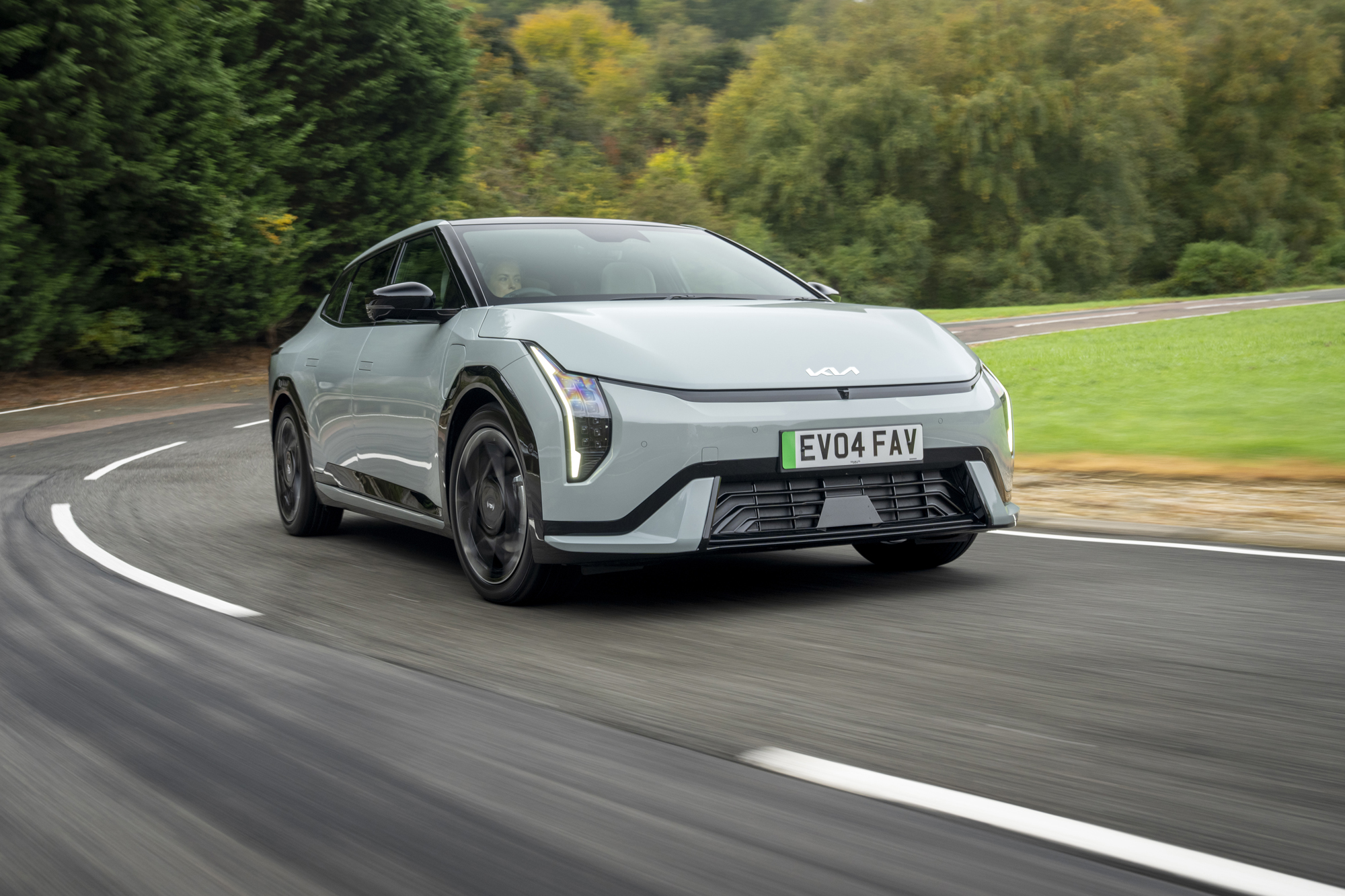
THE GOOD: Comfortable; well built; good range and efficiency
THE BAD: Some versions are costly
THE UGLY: A choice of body styles, both of them ungainly compared to other Kia EVs
NEED TO KNOW: Like various other Kia, Hyundai and Genesis EVs, the new EV4 is built on the Hyundai group’s E-GMP underpinnings, but it uses 400 volts rather than the 800 volts of the bigger cars. It’s available with one electric motor, but a choice of battery sizes.
The cabin feels modern and well built, and is easy to operate, for the most part. The whole package is very agreeable and won’t let you down or make you regret going electric.
THE ONE TO BUY: Basic spec, called air, comes on smaller wheels and rides better, so get that in conjunction with the big battery
KEY DATA: Range 391 miles; efficiency 4.7-4.8 miles per kWh; max DC charging 31 minutes 10-80%
37 MG IM6
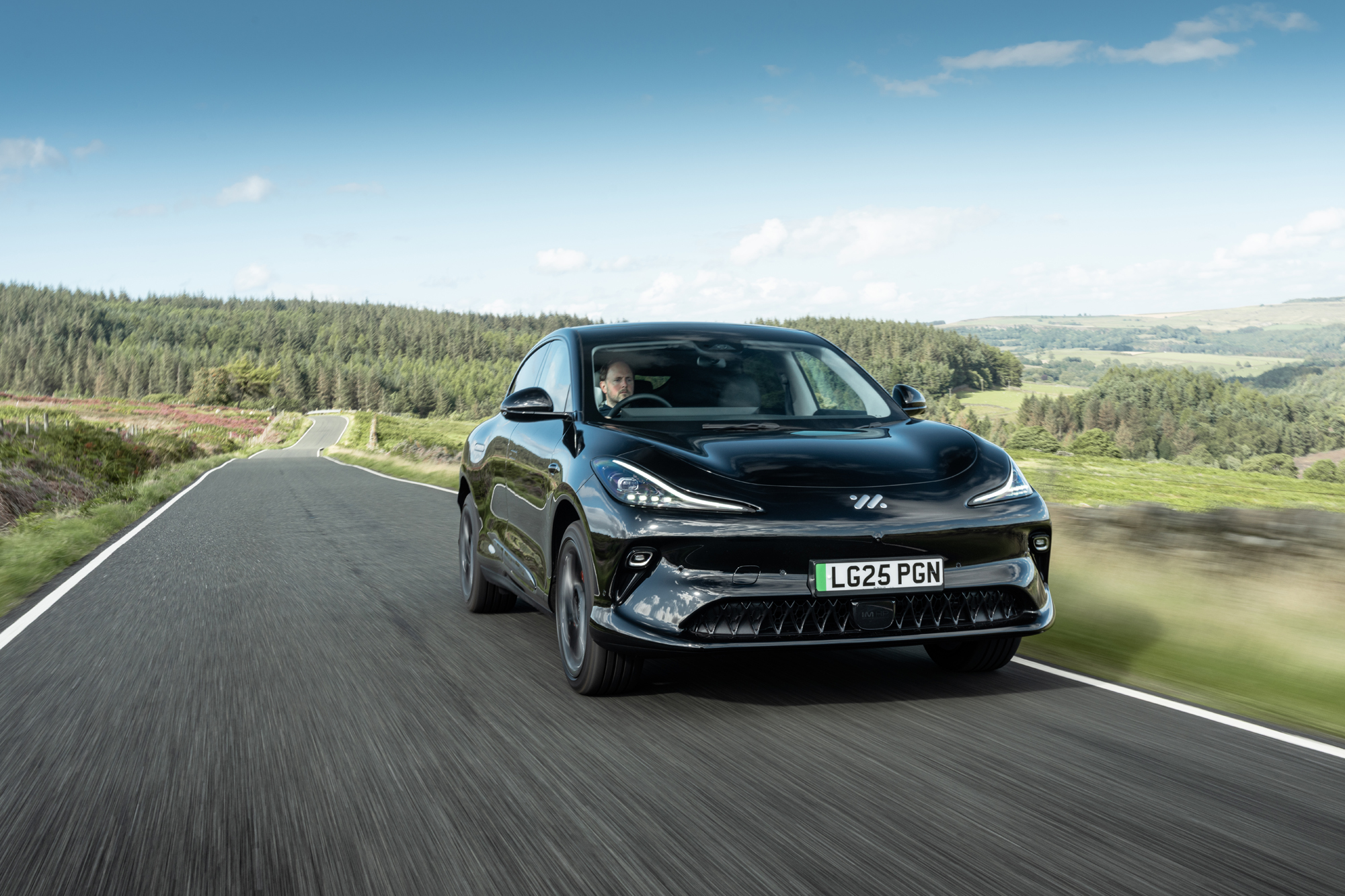
THE GOOD: Rapid; technologically advanced
THE BAD: Ride quality has room for improvement, as do the steering and brakes
THE UGLY: Needs a bit of Kia interior magic
NEED TO KNOW: Like the IM5 hatchback, ranked separately, the IM6 SUV is an ambitiously upmarket new EV from MG. Think of it as a rival – and a largely successful one – to the BYD Sealion and Tesla Model Y.
It has a 100kWh battery and 800-volt architecture: a big battery that can be recharged quickly. There’s an all-wheel-drive Performance version and a rear-wheel-drive Long Range alternative, which itself is no slouch. The powertrain is better than the chassis, which doesn’t excel when it comes to steering, ride or braking.
THE ONE TO BUY: Go for the rear-wheel-drive, big-battery IM6 Long Range, which focuses on decent range and performance you can actually use
KEY DATA: Range 441 miles; efficiency 3.4 miles per kWh; max DC charging 17 minutes 10-80%
36 MG 4
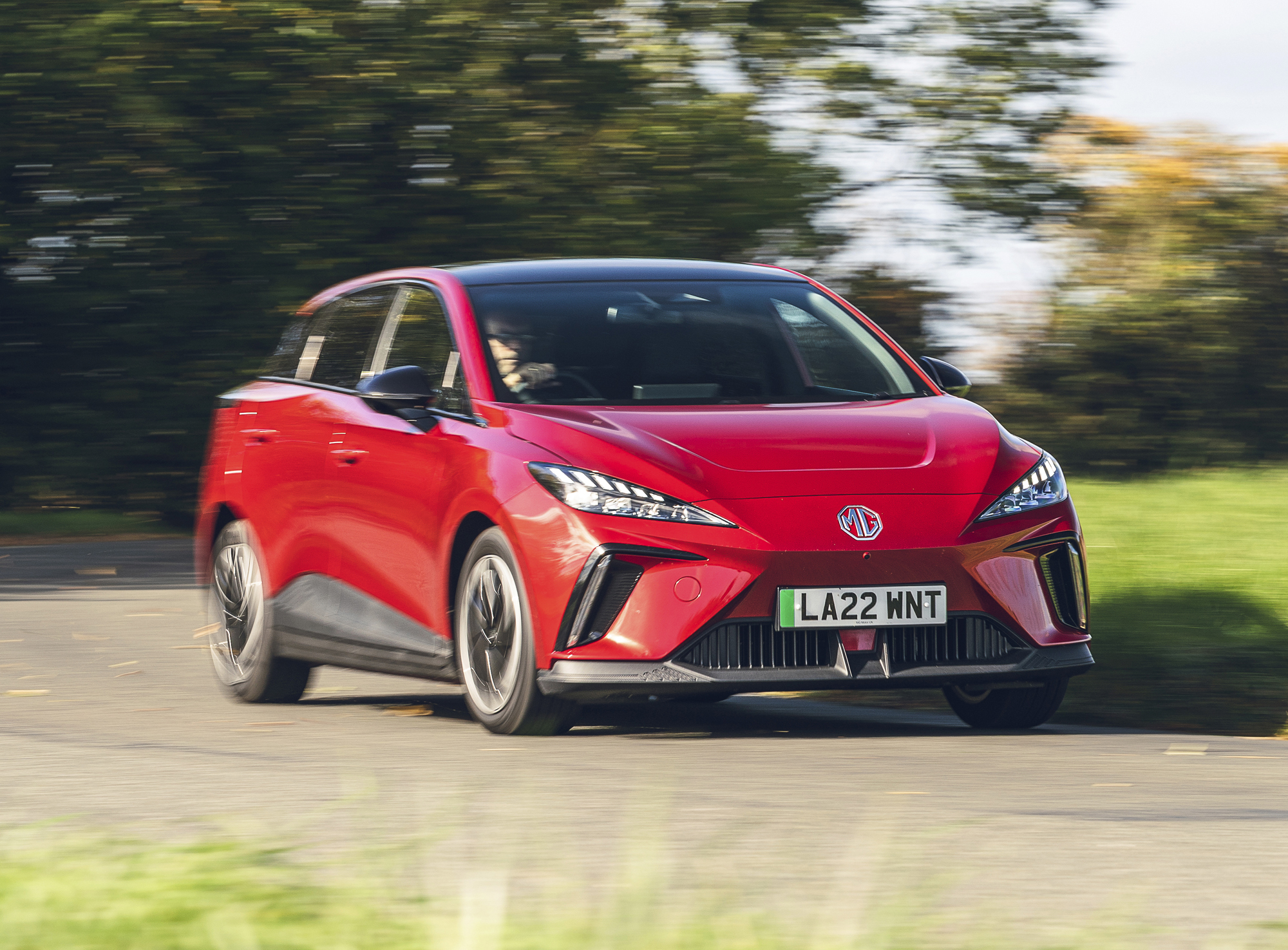
THE GOOD: One of the best all-round EVs at any price
THE BAD: Small and fiddly touchscreen
THE UGLY: Chinese imports existentially threaten Europe’s car makers
NEED TO KNOW: The MG 4 was a revelation when we first drove it in summer 2022, and it’s still among the best compact electric hatchbacks. Keenly priced, too. But it’s the dynamic performance that elevates the 4, thanks to a sweetly set-up rear-wheel-drive chassis.
Go for a Long Range SE version, with a bigger battery and punchier motor. The SE’s wheels span just 17 inches and the suspension is soft, which makes for a comfortable ride and a quiet motorway cruiser too. The steering is nicely weighted and gives decent feedback, and the motor sends 201bhp to the rear wheels, sufficient boost for a bit of playful slip and 0-62mph in a spritely 7.7sec. The 4 is efficient too: when we took nine EVs on a brutal winter range test, only the MG and Tesla Model Y managed to top 3.0 miles per kWh. The cockpit is spacious enough but the touchscreen’s icons are too small and it’s a bit laggy too.
There’s also a go-faster XPower flagship, with 429bhp and all-wheel drive. But aside from its rapid acceleration, it’s as one-dimensional to drive as its cosmetic upgrades are understated.
THE ONE TO BUY: SE Long Range unlocks 61.7kWh battery but keeps price just under £30k
KEY DATA: Range 281 miles; efficiency 3.8 miles per kWh; max DC charging 35 minutes 10-80%
35 Nissan Leaf

THE GOOD: Efficiency; improved infotainment; built in the UK
THE BAD: Tight rear headroom; there’s little for enthusiast drivers; rivals have bigger boots
THE UGLY: Other family EVs are more practical
NEED TO KNOW: The all-new, third-generation Nissan Leaf sits on a modified version of the CMF-EV platform used by the Nissan Ariya and Renault Megane. It gets the option of two NMC batteries with capacities of 52kWh or 75kWh, but it says a lot for the Leaf’s impressive aerodynamic and powertrain efficiency that it manages WLTP range of 271 and 386 miles respectively – giving it better official efficiency than the Kia EV3 or Skoda Elroq.
It also looks… kind of cool? A bit SUV-ish from the front, maybe, but the back of the Leaf is all about the aerodynamics, has some great retro-inspired 3D LED light signatures and a ducktail spoiler, giving it an appealingly modern yet slightly ’90s-inspired look. It’s tidy to drive, too, and there’s some great tech in the interior including user-friendly infotainment and – in high-spec cars – a speaker in the driver’s headrest that announces nav guidance.
The big problem is that headroom in the back seats is a touch restricted, and the boot isn’t as big as in some rivals. So, while it’s a likeable and very environmentally-friendly choice (given the efficiency and UK-based production) there are more practical options.
THE ONE TO BUY: The Leaf is good value and well equipped. Don’t discount the smaller battery if it’ll fit your lifestyle, but we’d favour the long-range car for ease of use and better residual values
KEY DATA: Range 386 miles; efficiency 4.5 miles per kWh; max DC charging 30 minutes 10-80%
34 BMW i5
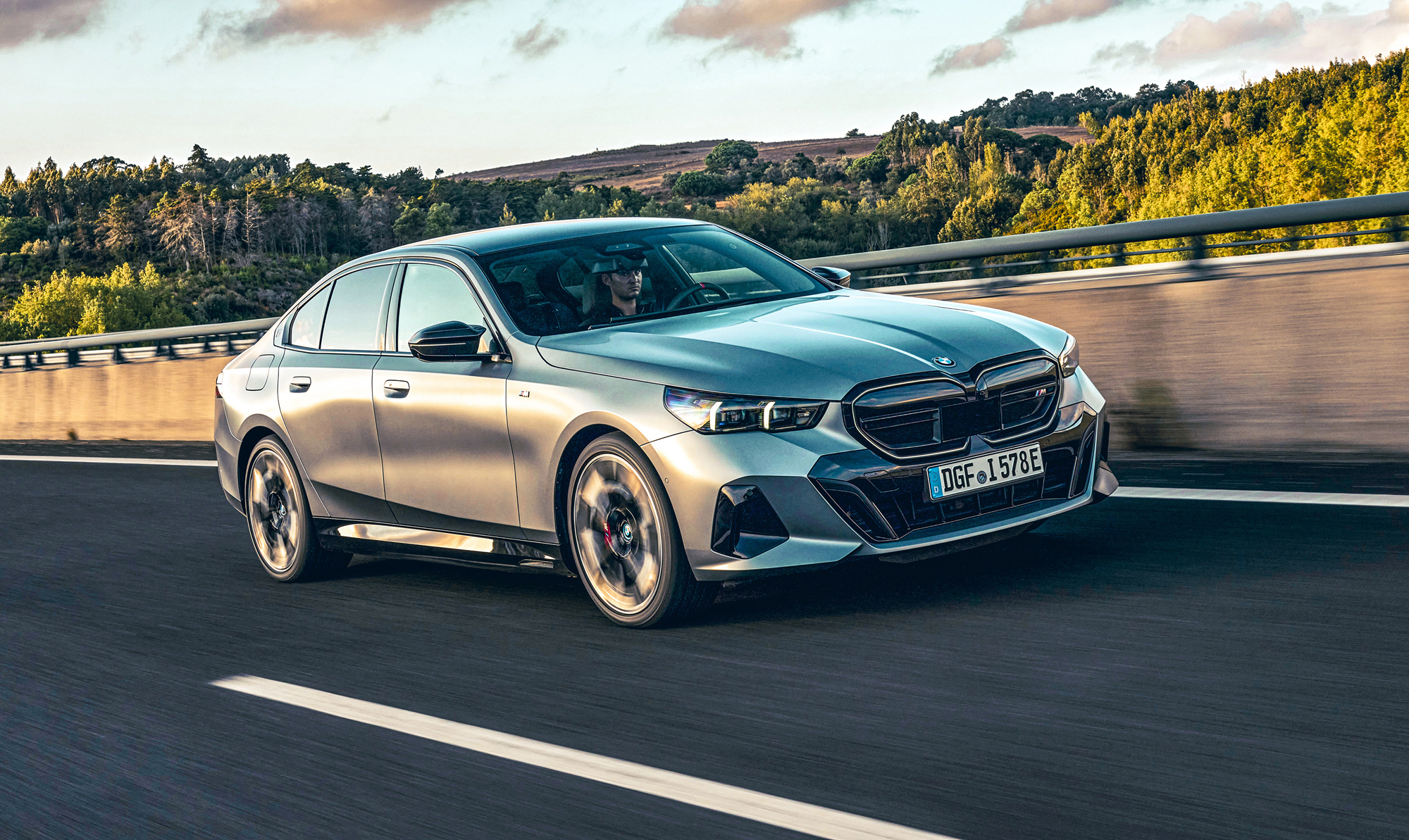
THE GOOD: Taut chassis; great interior; agreeable range and performance
THE BAD: Tower-block proportions; not as playful as previous 5-series
THE UGLY: It’s a non-M 5-series that can cost over £100k
NEED TO KNOW: Mercedes is yet to smash it with big electric saloons but BMW appears to have cracked the formula. The i5 sits alongside pure petrol and plug-in hybrid versions of the 5-series but doesn’t at all feel like an awkward exercise in shoehorning – it impresses in all the ways the Mercs disappoint.
Both entry-level eDrive40 and top-spec M60 are great to drive: tied down, responsive and purposeful, with a gourmand’s taste for B-road bends. It’s not exactly playful, size and weight besting physics in this instance, but immensely satisfying to drive, especially if you’ve stepped out of the wobbly EQE.
The interior borrows a huge amount from the i7/7-series – the good (great seats, a physical infotainment controller, fantastic build quality) and the bad (touchscreen everything else, inexplicable crystal) and cements the 5’s place as more of a replacement for the now departed short-wheelbase 7-series. The estate version is a brilliant additon to the line-up.
That positioning helps it justify the price; 25 per cent more than a base i4, and after adding a couple of choice options to the top-spec M60 you’ll be knocking on the door of £100k. It’s good, then, that the rear-driven eDrive40 is the sweeter and more pragmatic choice while still being more than quick enough. You can go faster and further for less, but after driving the i5 you probably won’t want to.
THE ONE TO BUY: Rear-driven eDrive40 is a cracker
KEY DATA: Range 357 miles; efficiency 3.9 miles per kWh; max DC charging 30 minutes 10-80%
33 VW ID. 3
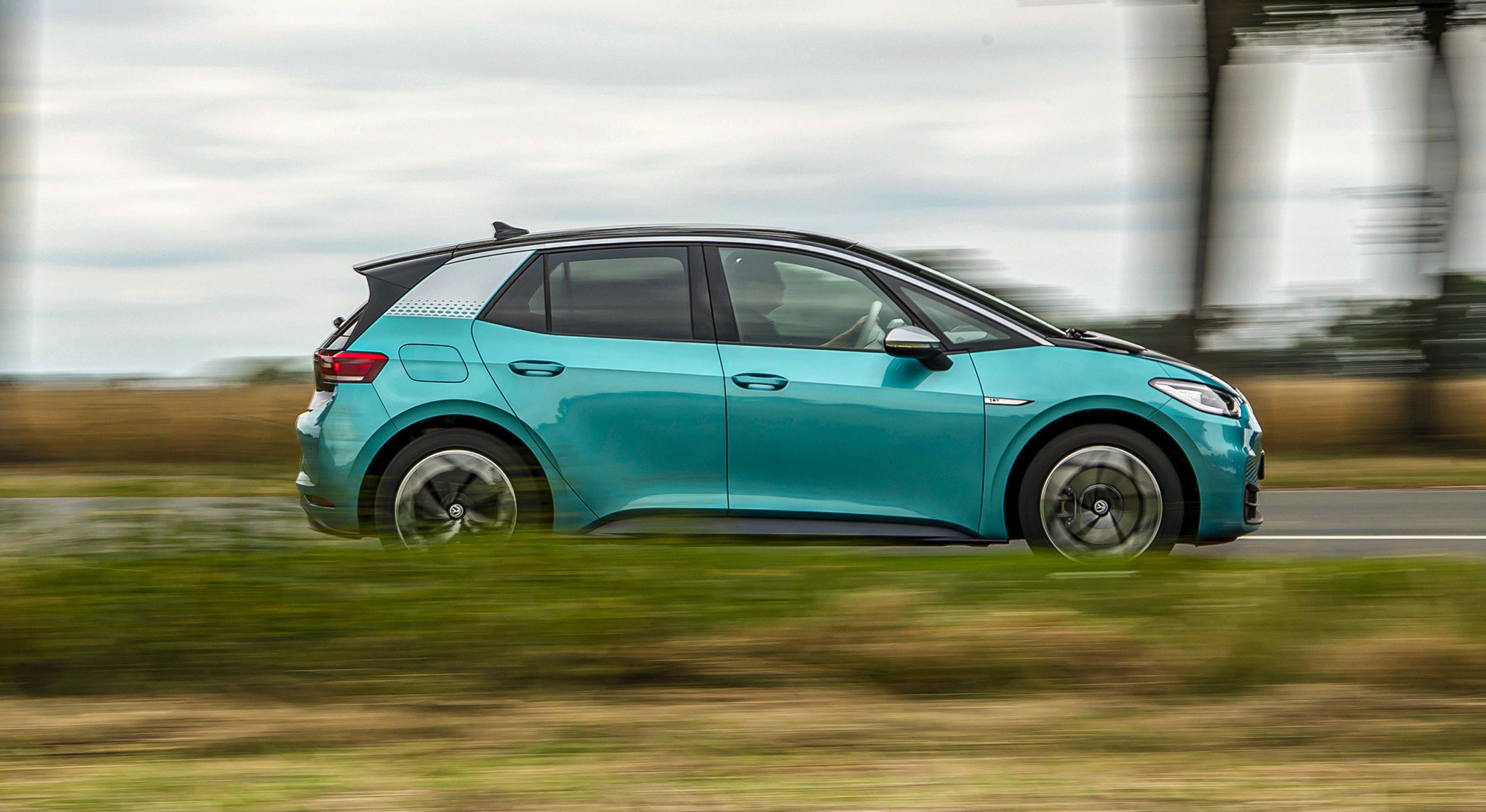
THE GOOD: Well engineered beneath the skin
THE BAD: Pricier than several key rivals
THE UGLY: Interface has been improved, but not enough
NEED TO KNOW: Despite a few annoying quirks, the ID. 3 is a highly recommendable EV hatch. Base 58kWh models are good for over 200 miles without breaking a sweat, while the 77kWh model achieved very nearly 300 miles of range in our testing. If we’d have avoided the motorway a bit more, it’d have done 300-plus with ease.
Stick to the 58kWh unless you really need the extra range. Its lighter weight helps the ride and handling, while all versions have a polish that’s missing from theoretically similar cars like the BYD Dolphin. That’s both in terms of the driving experience and overall feel of the car inside and out.
Recent revisions gave a welcome lift in interior quality, so the ID. 3 feels more like it’s worth its asking price, while it’s just as practical as ever. A good all-round electric car.
THE ONE TO BUY: Stick to the 58kWh model for better ride and handling plus five seats. Chunkier 77kWh models only seat four, but will do 300 miles on a charge in the real world
KEY DATA: Range 269 miles; efficiency 4.36 miles per kWh; max DC charging 32 minutes 10-80%
32 MG IM5
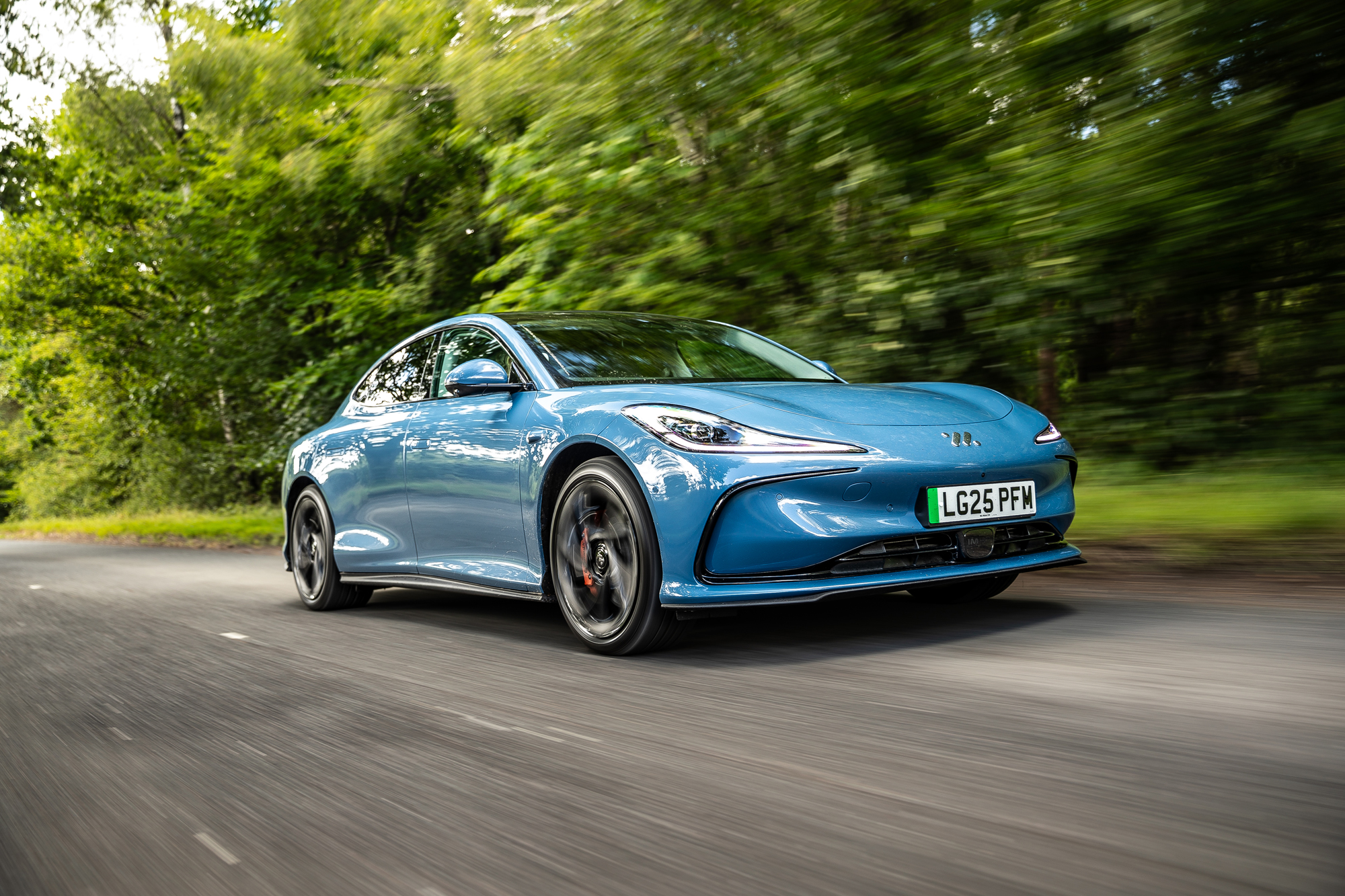
THE GOOD: Insane performance; tech extravaganza; lots of car for the money
THE BAD: Odd steering; brakes could be more robust
THE UGLY: The interior materials are fine, but the swoopy design is all a bit ’90s
NEED TO KNOW: The MG IM5 is a new car – and sort of a new brand. IM is a separate brand in China, but it’s owned by SAIC, the same company that owns MG. With MG aiming to go more upmarket and more hi-tech, it made sense to use the more upmarket cars that IM already produces. And so here we are with the IM5; a Tesla Model 3 rival, but actually a bit bigger so also treading on the toes of the VW ID. 7.
The MG IM5 range starts off with the 75kWh LFP battery and a 400-volt system with 158kW charging and a range of 304 miles. Then there’s a 96.5kWh car with an 800-volt system for DC rapid charging of nearly 400kW, which you can have with rear-wheel drive in the IM5 Long Range, which gets a 441-mile WLTP range, or with all-wheel drive in the IM5 Performance, which gets an incongruous amount of power for a WLTP range of 357 miles.
The Performance really is a frothing lunatic in terms of its sheer straight-line pace. It’ll do 0-62mph in 3.2 seconds, yet peculiarly it’s never a car that you really want to drive quickly – and if you do, the braking performance doesn’t feel good enough for a car that can carry speed like this. The ride is okay at higher speeds, though, and the cabin is roomy and full of tech and standard features.
THE ONE TO BUY: The rear-wheel-drive, big-battery IM5 Long Range is the sweet spot: a good price, masses of range and tech, and not unnecessarily overpowered
KEY DATA: Range 441 miles; efficiency 3.5 miles per kWh; max DC charging 15 minutes 10-80%
31 Cupra Born
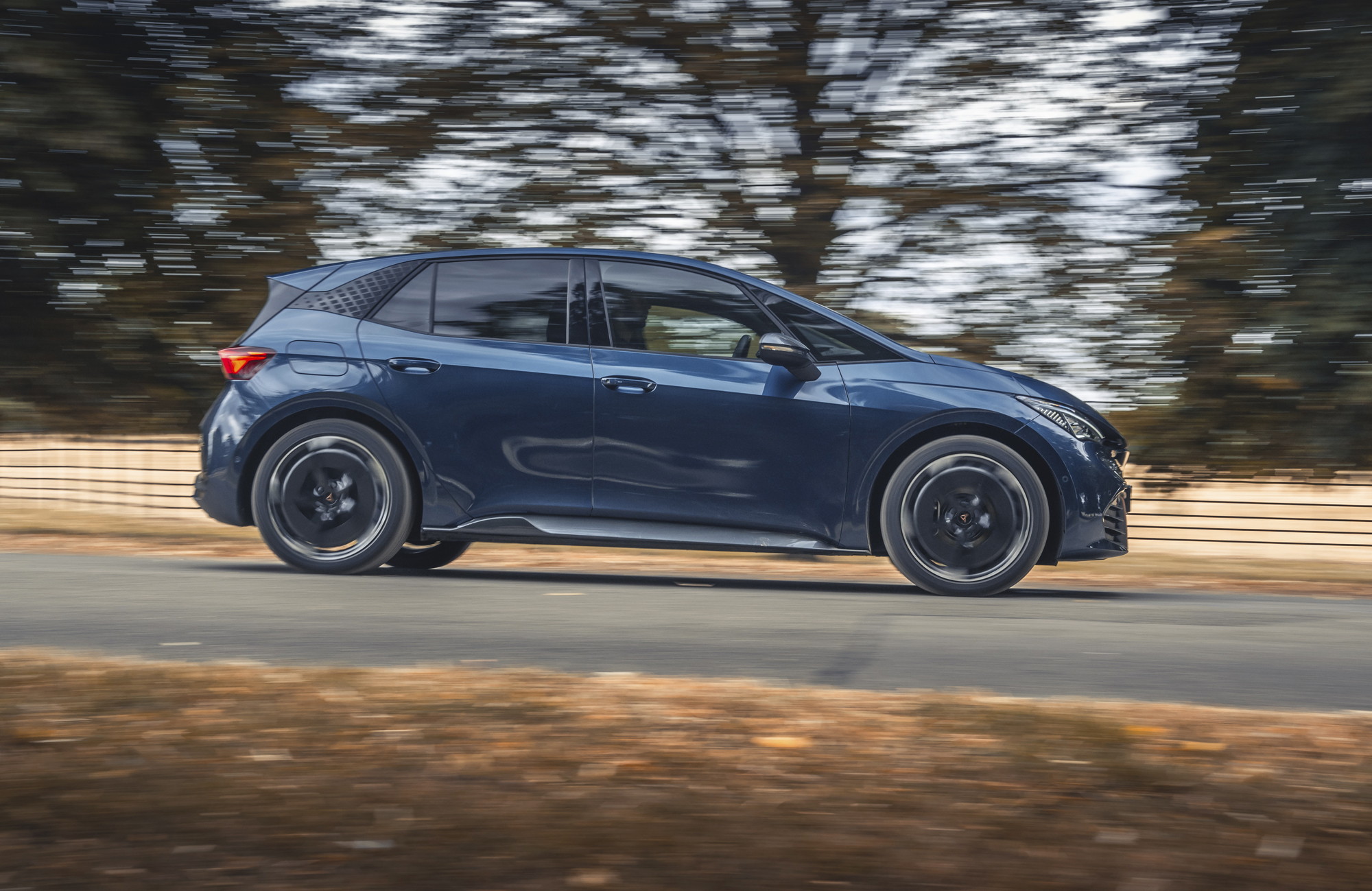
THE GOOD: Like a VW ID. 3 but with sportier steering and chassis settings, and nicer interior too, especially on the range-topping VZ variants
THE BAD: Not great value, and not all that different from the VW
THE UGLY: Too much of the infotainment shares VW’s over-reliance on fiddly touchpad controls
NEED TO KNOW: If the problem with the VW ID. 3 is that it looks a bit anodyne, has a bland interior, is short of driver engagement and has terrible infotainment, the Born from sister brand Cupra fixes three out of the four. Unfortunately the infotainment remains very annoying, and those improvements come at a price, particularly to ride quality.
THE ONE TO BUY: Best compromise is big-battery (77kWh) in V2 spec
KEY DATA: Range 307-342 miles; efficiency 3.5-4.0 miles per kWh; max DC charging 30 minutes 5-80%
30 Smart #5
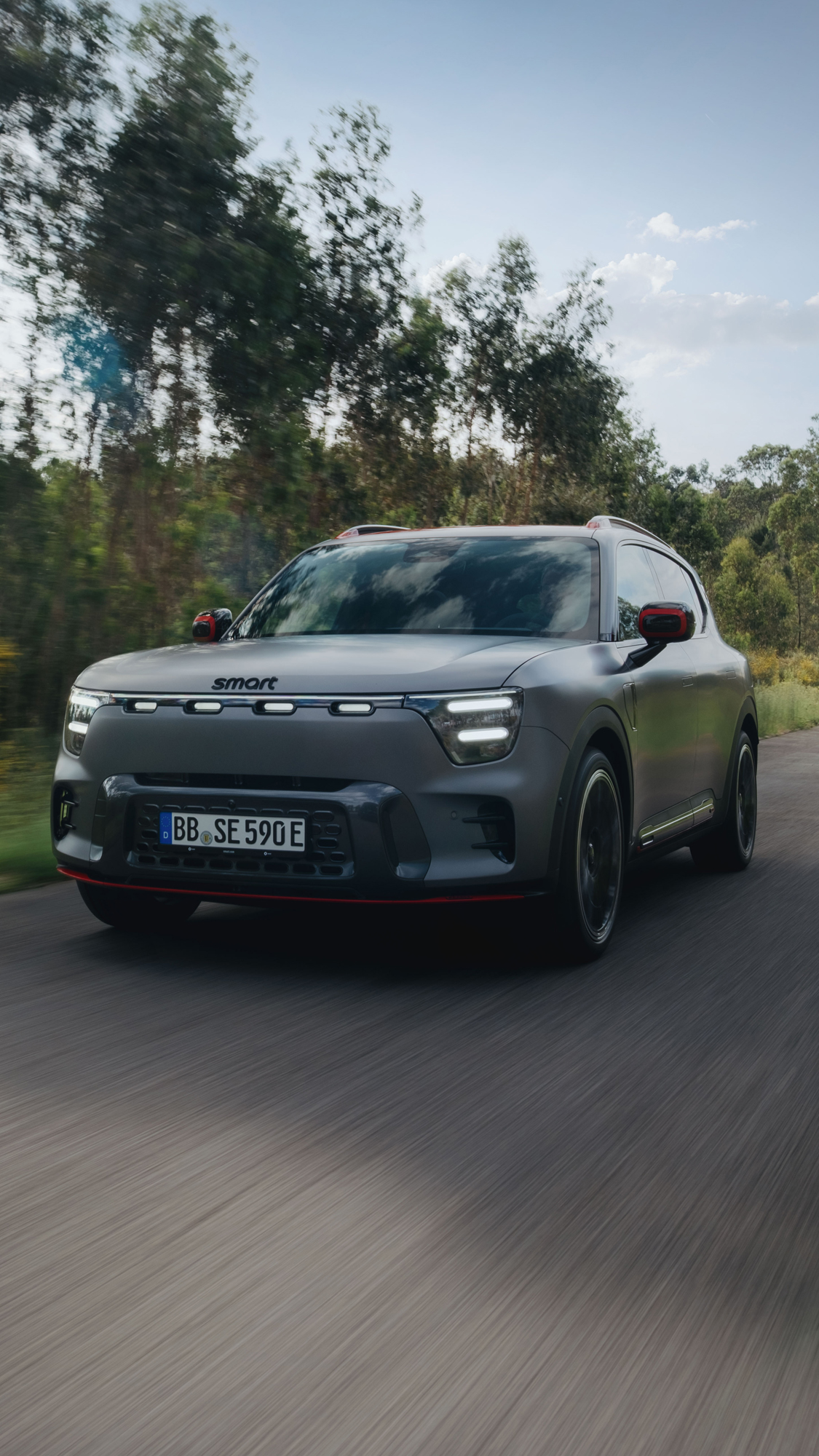
THE GOOD: Roomy and classy interior; quick; comfortable ride
THE BAD: Not very efficient; not the sharpest handling
THE UGLY: Smart was a good idea. This is a good car… but it’s not a Smart
NEED TO KNOW: The biggest car to ever wear the Smart badge, the Chinese-made #5 is a roomy, sophisticated electric crossover. It’s available in various forms, with different battery sizes, two or four driven wheels and various levels of trim – Pro, Pro+, Pulse, Premium and Summit, and a wild high-performance Brabus.
THE ONE TO BUY: Pro+ is the best mix of price, equipment and performance
KEY DATA: Range 366 miles; efficiency 3.4 miles per kWh; max DC charging 18 minutes 10-80%
29 Lucid Air
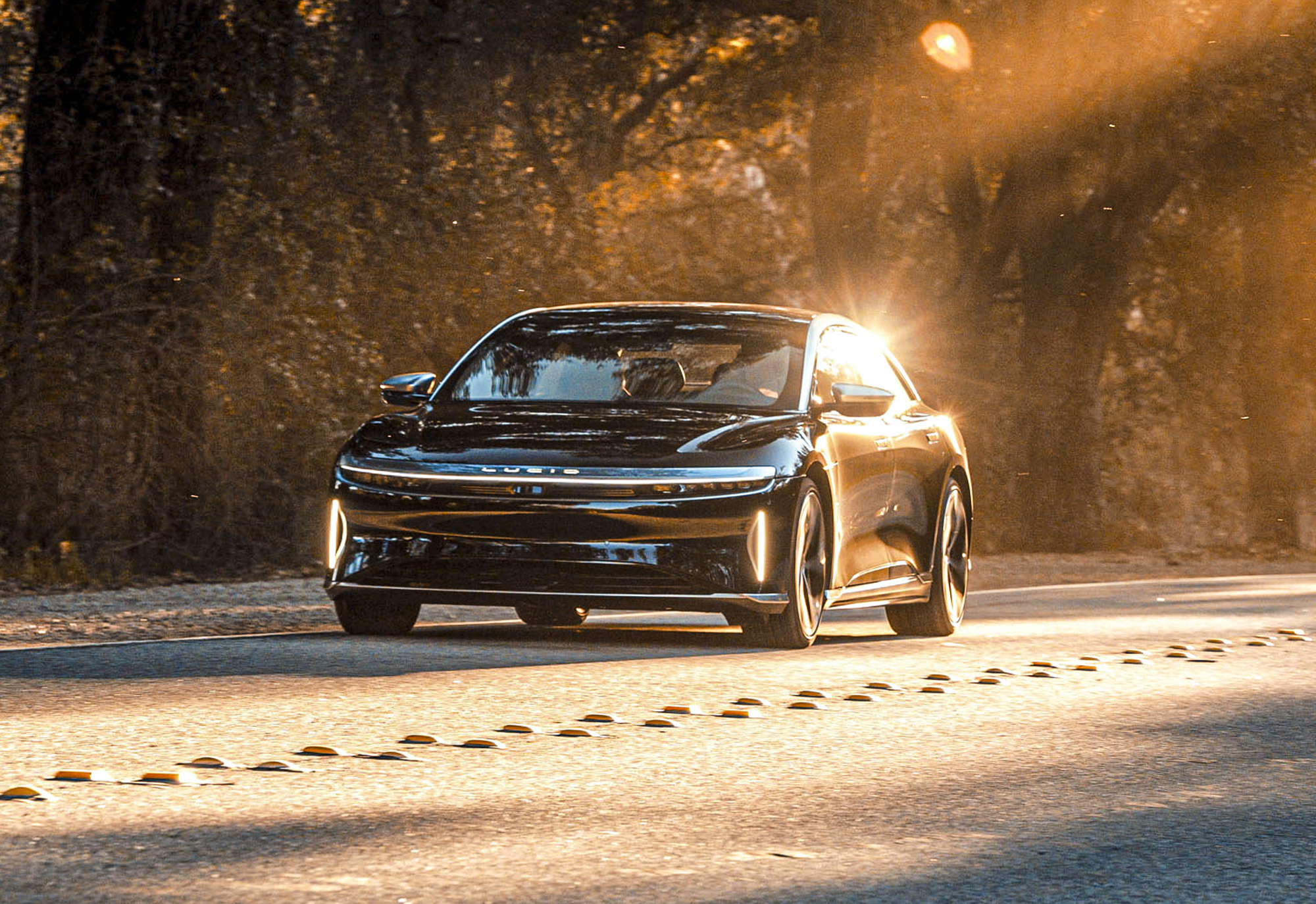
THE GOOD: Space efficiency; energy efficiency; rock-solid build quality; driving dynamics
THE BAD: Expensive, and for now only left-hand drive
THE UGLY: Why aren’t all EVs this efficient?
NEED TO KNOW: The arrival of Lucid in Europe coincides with the new ‘decontented’ two-wheel-drive Pure version; it shrinks the battery capacity down to 88kWh, drops the second motor and culls the price to a more attractive €85,000.
The Air is the same length as the Tesla Model S but narrower, and it’s as roomy as a Mercedes S-Class. There’s a choice of four battery sizes, and rear- or all-wheel drive.
The ride is smooth, the cornering superb and the pace quite remarkable – yet you’re always in a bubble of refined, sophisticated calm. It’s a quite remarkable car.
THE ONE TO BUY: Pure is plenty
KEY DATA: Range 400 miles (est); efficiency 5.0 miles per kWh (claimed); max DC charging 25 minutes 10-80% (est)
28 Maserati GranTurismo/GranCabrio Folgore
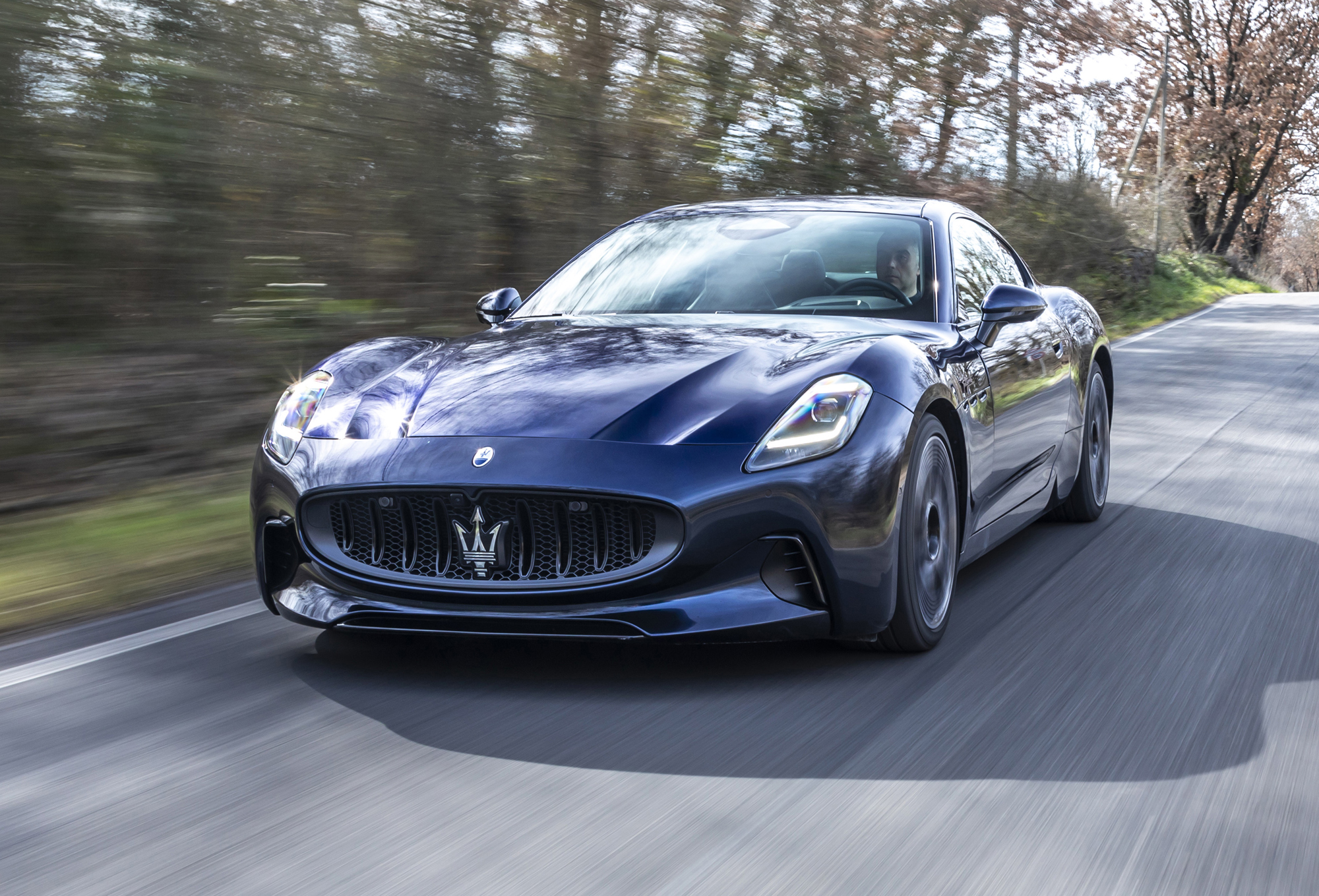
THE GOOD: Stunning looks; lovely to drive
THE BAD: The price; the range
THE UGLY: The depreciation
NEED TO KNOW: The Maserati GranTurismo is a classically beautiful sports coupe (or convertible if you go for the GranCabrio), with the kind of timeless design that manages to be understated yet also unmistakably expensive. It’s also available with a fully electric powertrain, when it’s called the Folgore and gets a huge 751bhp courtesy of three electric motors – good for 0-62mph in 2.8 seconds. That’s getting on for supercar pace, of course, despite this being very much a GT car. The clue is in the name, and also in the way this big 2+2 super-GT drives. For a car weighing around 2.3 tonnes, it holds itself remarkably well through direction changes, delivers enough tactility and communication to be reassuring yet fun, and is rather sublime to drive. Perfect for tooling around the Riviera, but also surpisingly agile and capable on a damp British country road.
However, while the sumptuous drive and styling live up to expectations, the 83kWh battery only manages to deliver a WLTP range of 280 miles. Even the usefully rapid 270kW DC charging isn’t going to make up for a six-figure sports car that you have to stop and charge every 200 miles or so. Apart from anything else, it’ll give you more time to think about the depreciation.
THE ONE TO BUY: If you’re going to buy an electric Maserati super-GT, you may as well buy one with a folding fabric roof and opt for the GranCabrio Folgore, for the full, smug Continental luxury GT experience. If your kids are small they might even be able to fold themselves into the back seats for short trips
KEY DATA: Range 279 miles; efficiency 2.68 miles per kWh; max DC charging 19 minutes 10-80%
27 VW ID. 7: best estate car
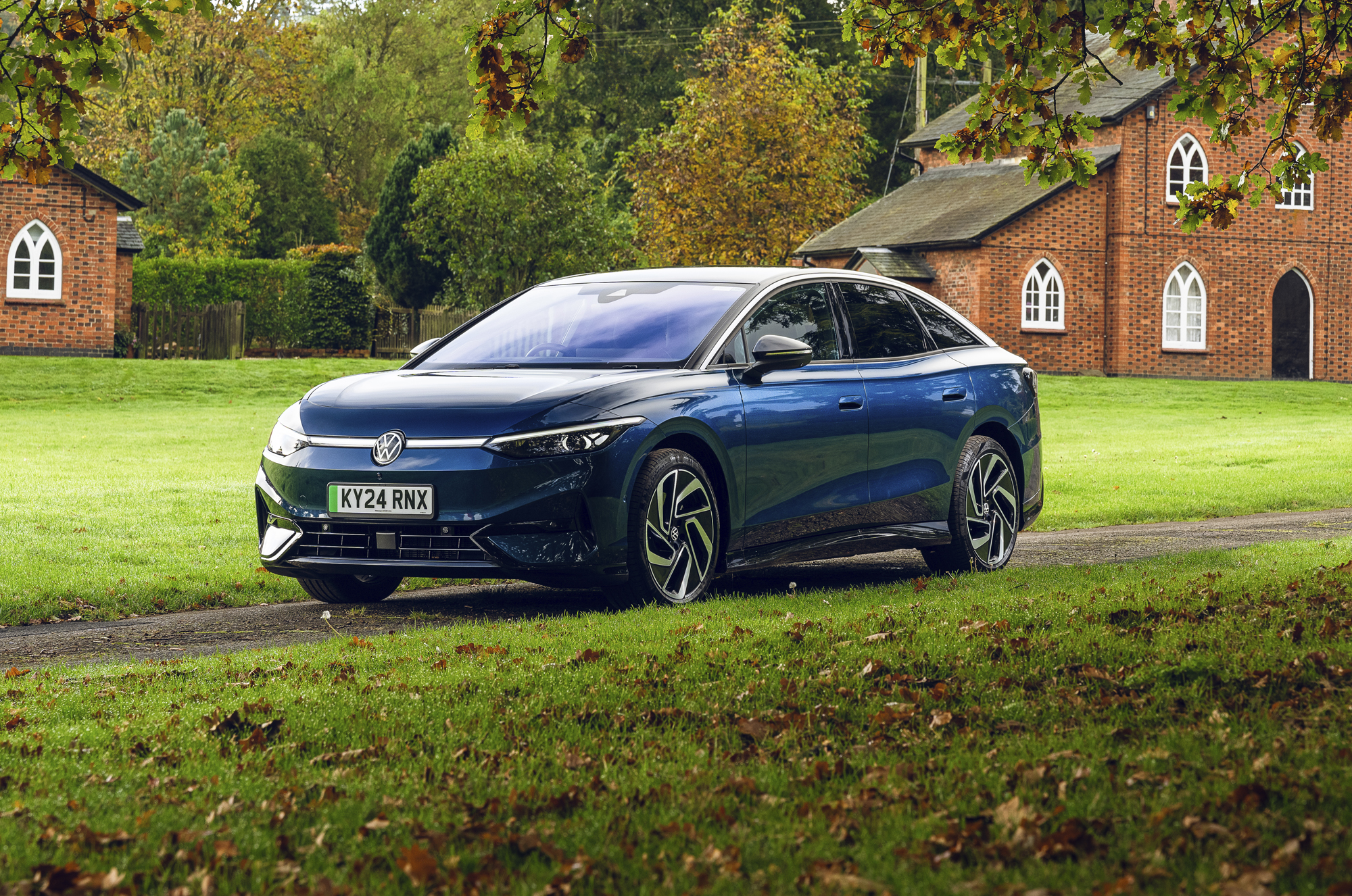
THE GOOD: Huge boot, long range, wafty ride
THE BAD: Heat pump costs extra
THE UGLY: Still some irritations with the touchscreen
NEED TO KNOW: We’ve all made a lot of fuss and fanfare about the Buzz, with its retro styling and joyful vibes but, d’you know what? The ID. 7 is the better car. For a start, it’s efficient. Even in real-world use, the slippery shape means that it makes economic use of the energy lurking in its 77 or 86kWh batteries, so that even the chunkier ID. 7 Tourer manages a very decent 373 miles of official range. Sure, the bigger battery ekes that out to a 424-mile WLTP figure, but rapid charging of 200kW means that the longer range isn’t so necessary anyway. More than that, it’s a wafty delight to live with – whisper quiet, seriously comfy and absolutely massive inside. And it’s not an SUV. Good news all round.
THE ONE TO BUY: Stick with the basic Pro Match model; it’s even got massage seats, so it’s not really that basic. Add the interior pack for Harman Kardon audio and upgraded upholstery and seat adjustment
KEY DATA: Range 373 miles; efficiency 4.4 miles per kWh; max DC charging 26 minutes 10-80%
26 Kia EV9
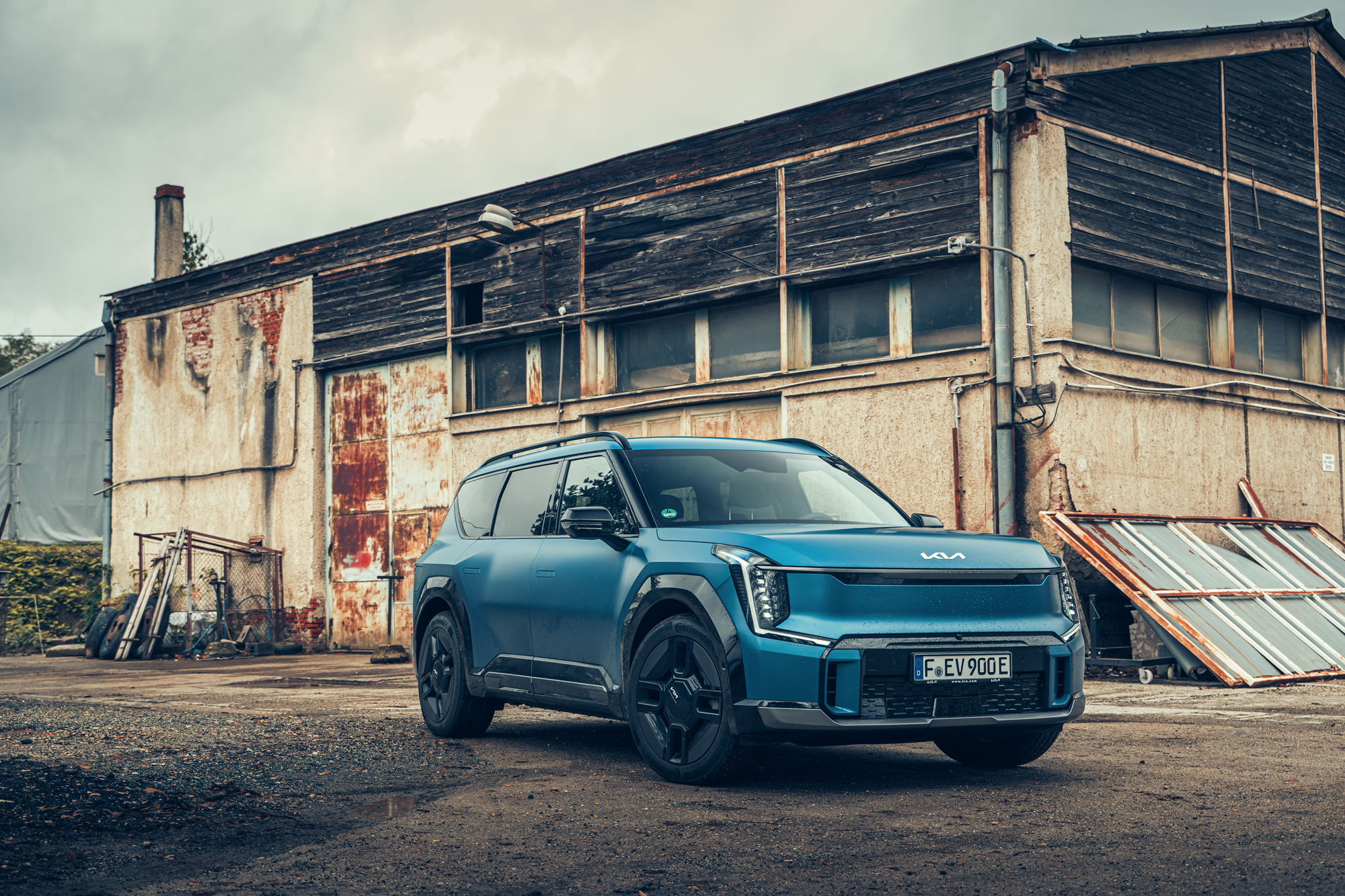
THE GOOD: Sharp looks; huge interior; long warranty
THE BAD: An Ioniq 9 goes further; some cheaper-feeling materials inside
THE UGLY: Never mind the Ioniq 9; a Peugeot 5008 goes further for less…
NEED TO KNOW: Kia is on a roll with its EVs, and its halo car – the seven-seat EV9 – is a perfect example of why. Sure, sister brand Hyundai has squeezed an even bigger battery into the Ioniq 9 for a longer range, which makes the Ioniq 9 our choice over the Kia. But the EV9 arguably has sharper looks, as well as the longer seven-year warranty. It’s also huge inside, with classy enough materials that it feels luxurious enough to (just about) justify the price. You’ll get seven adults in there, and it feels huge and comfortable. Performance is fast enough regardless of which variant you go for, and you can have rear-wheel drive or all-wheel drive if you wish. Ride comfort is remarkably good given that the big Kia doesn’t get air suspension, but the standard springs make it feel just as cosseting.
A range of up to 350 miles and ultra-rapid 800-volt charging also means that long journeys are easy – even if the real-world range will be more like 250 to 300 miles.
THE ONE TO BUY: Don’t discount the single-motor EV9 Air. It’s a smart and confident car, and the best-value model in the EV9 range. But we’d go for the better-equipped GT-Line AWD, as the extra punch to the performance and the all-wheel-drive assuredness are ideally suited to Kia’s big electric seven-seater
KEY DATA: Range 318 miles; efficiency 3.1 miles per kWh; max DC charging 24 minutes 10-80%
25 BMW i7: best large saloon
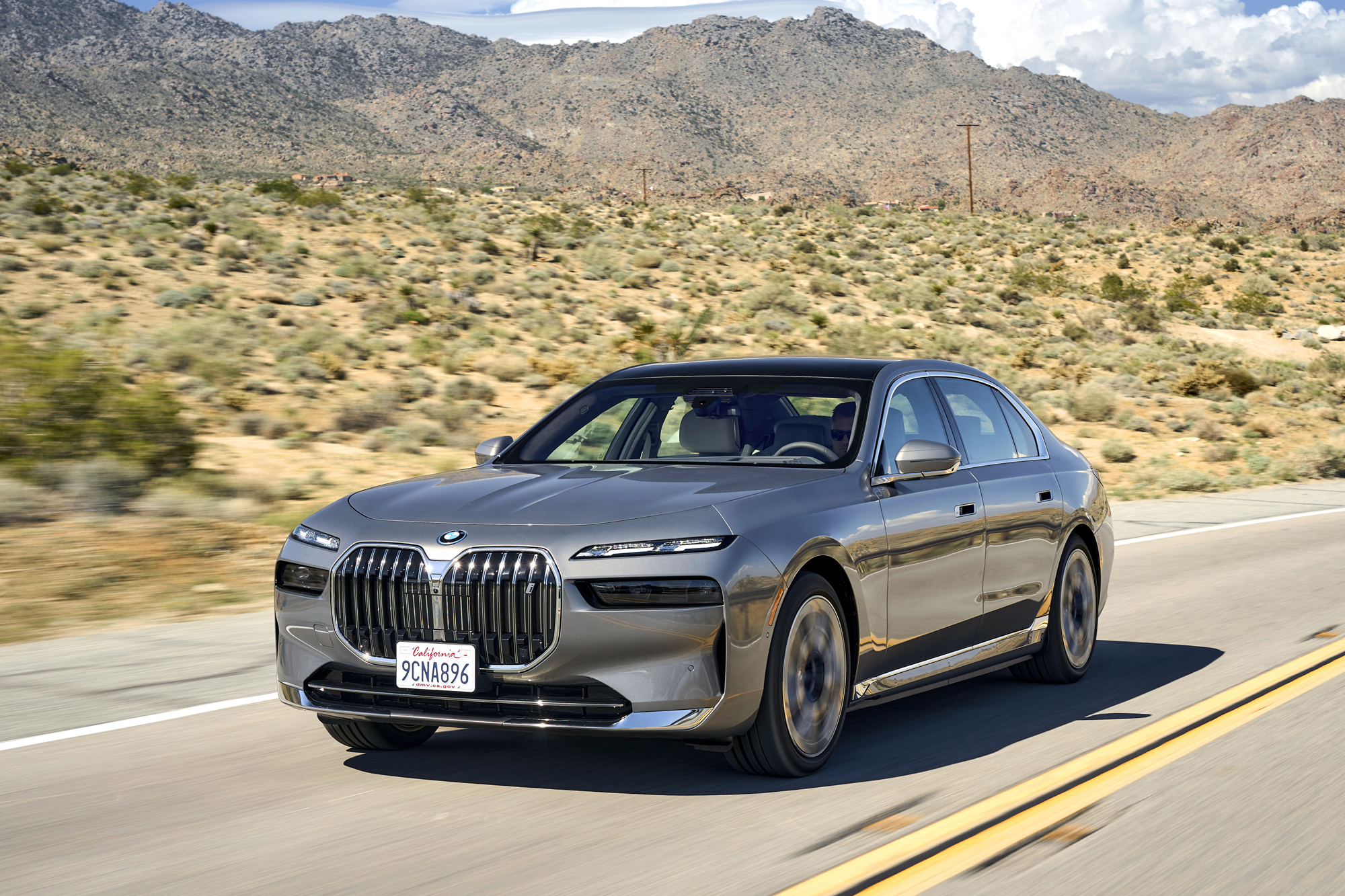
THE GOOD: Removing engine noise makes a luxurious limo even more so
THE BAD: Cabin equipment seems to prioritise passengers over the driver; size and weight can make parking and manoeuvring difficult
THE UGLY: We can be quite literal here. Get a dark colour else that face will be burn your retinas
NEED TO KNOW: A face only a Predator mother could love hides a very good luxury EV – there’s enough space to keep the longest-legged of CEOs happy and enough pace to whisk them between meetings. Don’t bother with the hugely powerful M70 as it’s not worth the additional £40k.
THE ONE TO BUY: xDrive60 has more than enough power; M Sport looks slightly less tragic than base spec
KEY DATA: Range 384 miles; efficiency 3.3 miles per kWh; max DC charging 34 minutes 10-80%
24 Mercedes G580: best off-roader
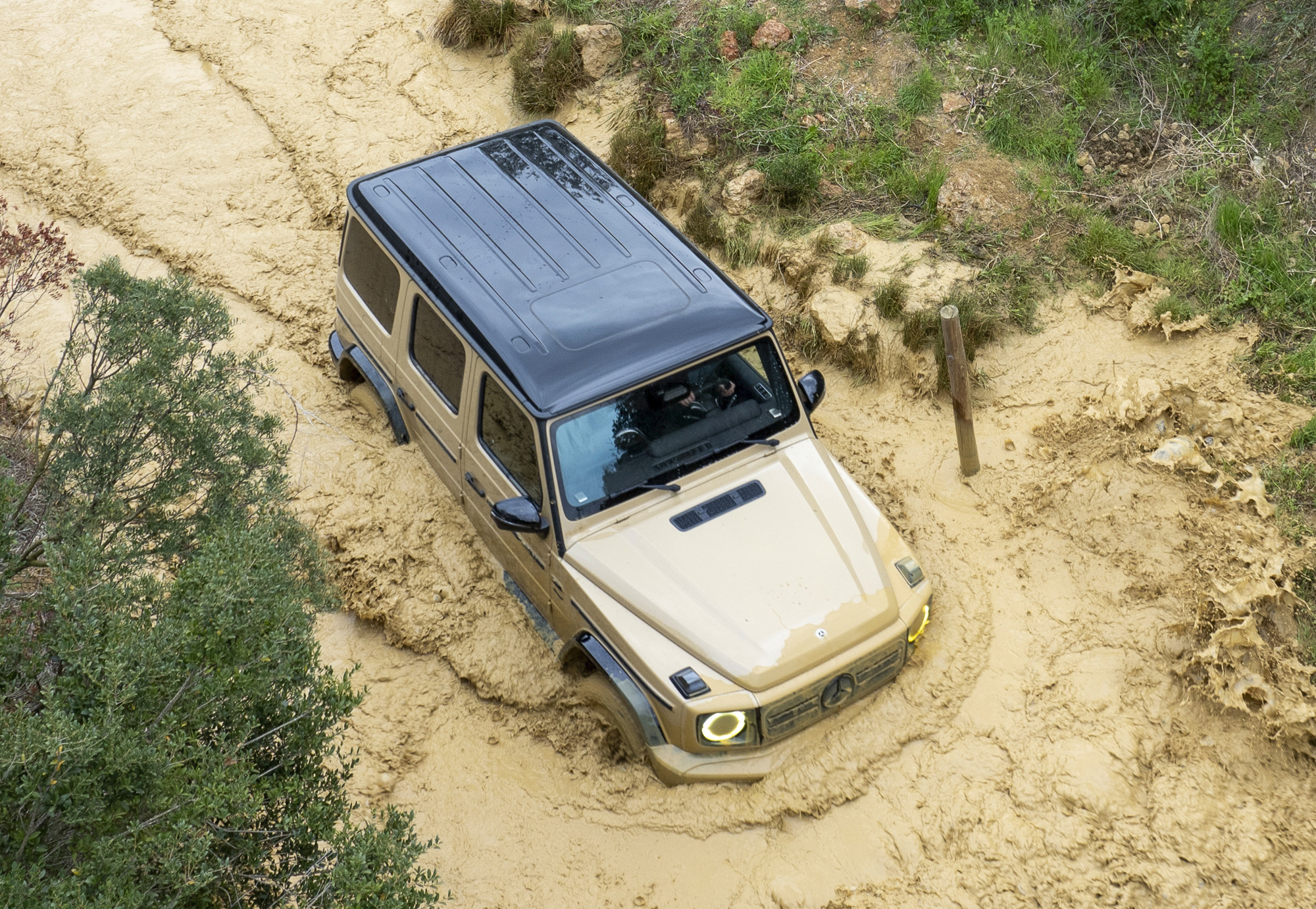
THE GOOD: Remarkably capable and enjoyable on- and off-roader
THE BAD: It can’t perform miracles when the weight/aero challenge is so steep, leaving it with a poor efficiency figure
THE UGLY: £180,860 in the UK, and similarly giddy in other markets
NEED TO KNOW: Merc knew what it was doing when it decided to call its electric G-Class not the EQG but G580, aligning it not with other EQs (general view: they’re okay) but with other G-Wagens (general view: they’re great). Like the rest of the revised G line-up, it’s expensive and not all that roomy, but it is well equipped. And like them, it’s very good.
That includes off-road as well as on. It weighs 3085kg, so it must be leaving quite a dent in the countryside, but it feels like it’s floating. With four electric motors, a two-speed transmission and all-wheel drive, and suspension as close as the engineers could make it to the rest of the line-up, it’s very much at home in deep ruts, up steep slopes, on sand, mud, anything. There are many mode settings, but the fundamental rightness of the chassis, and the get-you-out-of-anything 859lb ft of torque, make it way overqualified for pretty much anything this side of a round-the-world expedition.
And it can spin within its own length, which is nice.
THE ONE TO BUY: There’s just the one electric version of the G-Class, strictly speaking the G580 with EQ Technology Edition One. It comes with… everything
KEY DATA: Range 283 miles; efficiency 2.5 miles per kWh; max DC charging 32 minutes 10-80%
23 Renault Megane E-Tech
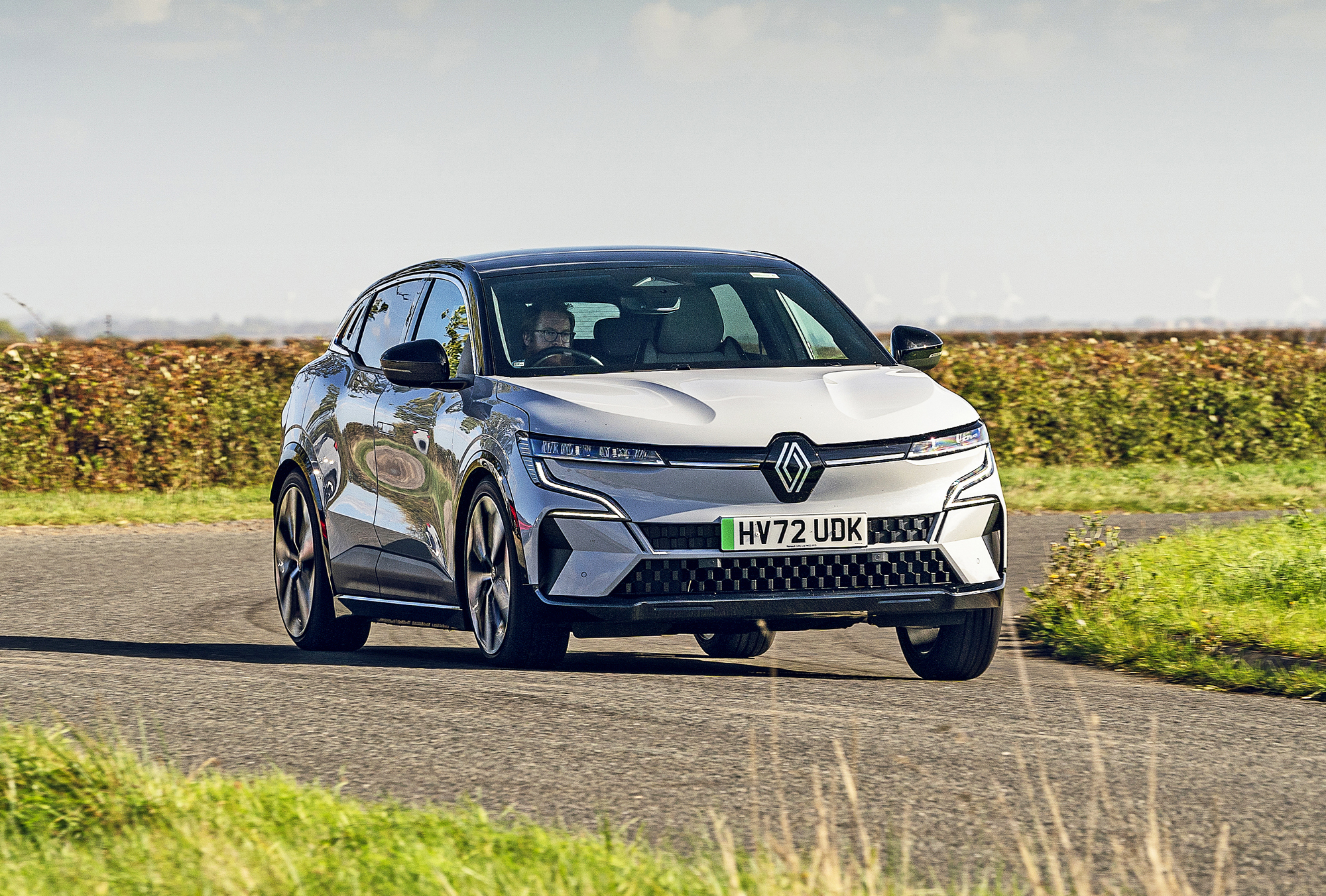
THE GOOD: Spacious cabin with some clever use of materials; good ride quality
THE BAD: Not that quick; awkwardly shaped boot
THE UGLY: Only top two trims get a heat pump
NEED TO KNOW: The Megane E-Tech may not have very much to do with any previous Megane – a long and varied line of humdrum to wildly sporty hatchbacks – but this all-electric crossover does have a lot to do with Renault’s decades-long tradition of making keenly priced cars that are just that little bit quirkier, cooler and better to drive than they need to be.
THE ONE TO BUY: Entry-level Equilibre; only one powertrain available
KEY DATA: Range 280 miles; efficiency 3.9 miles per kWh; max DC charging 30 minutes 15-80%
22 Lotus Emeya
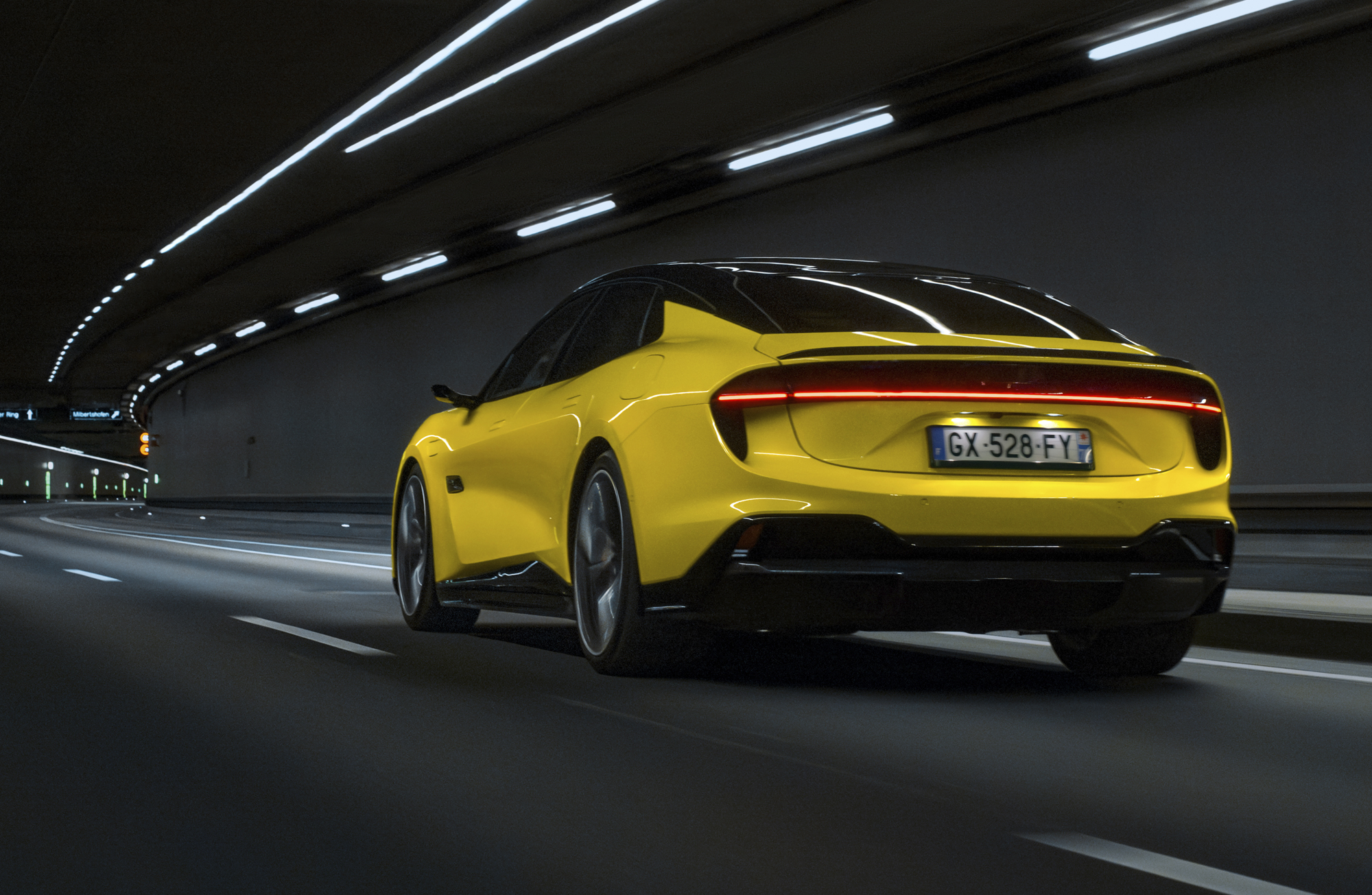
THE GOOD: Sumptuous interior, comfortable and vivid to drive
THE BAD: Easy to get carried away with options
THE UGLY: There is something of a Hallowe’en pumpkin about the Emeya’s frowning face…
NEED TO KNOW: The Emeya is Lotus’s big, comfy saloon. It’s over 5.1 metres long, which makes it quite a bit chunkier even than a BMW i5, but of course it’s also a Lotus and that comes with serious expectations even of a luxury electric tourer, like this.
Thankfully, it lives up to them. The Emeya 900 gets an unholy 900bhp, but the entry-level Emeya 600 is the real gem. With 603bhp and a 4.0sec 0-62mph, that’s enough performance for us in 2.5 tonnes of nearly-a-limo, and it’s more the linear deployment of that power, the oily slickness of the steering response and the beautifully controlled air suspension that make the Emeya feel worthy of the Lotus badge. It really is a joy to drive, and while the Porsche Taycan still has the upper hand for purist handling effervescence, the Lotus is a sumptuous delight whether you’re on your way to the board room, or your next PB lap time.
THE ONE TO BUY: Anything but the 900
KEY DATA: Range 379 miles; efficiency 3.5 miles per kWh; max DC charging 20 minutes 10-80%
21 Hyundai Ioniq 6 N

THE GOOD: Pace; handling; comfort; fake gear changes
THE BAD: Over-complicated modes and settings
THE UGLY: It’s an eye-catching design, but not in a good way
NEED TO KNOW: The Ioniq 6 N is more than the sum of its parts. It’s essentially a hot version of the Ioniq 6, in the same way that the Ioniq 5 N is a hot version of the Ioniq 5, but in the couple of years since the N version of that ungainly big hatchback came out, Hyundai’s performance division has learnt a few things about how to make a fast EV even more engaging and exciting.
There’s been a lot of work on the aerodynamics, suspension, weight distribution, cooling and much else besides, including the controversial but successful fake gearchanges. There have also been advances in the modes and settings available to the driver – to the point of overkill, in fact.
The end result is a car that’s okay as a family saloon, and very good as a high-performance oddity. It feels more mature than the 5 N, for better or worse.
THE ONE TO BUY: There’s just the one version so far
KEY DATA: Range 303 miles; efficiency 3.3 miles per kWh; max DC charging 18 minutes 10-80%
20 Skoda Enyaq
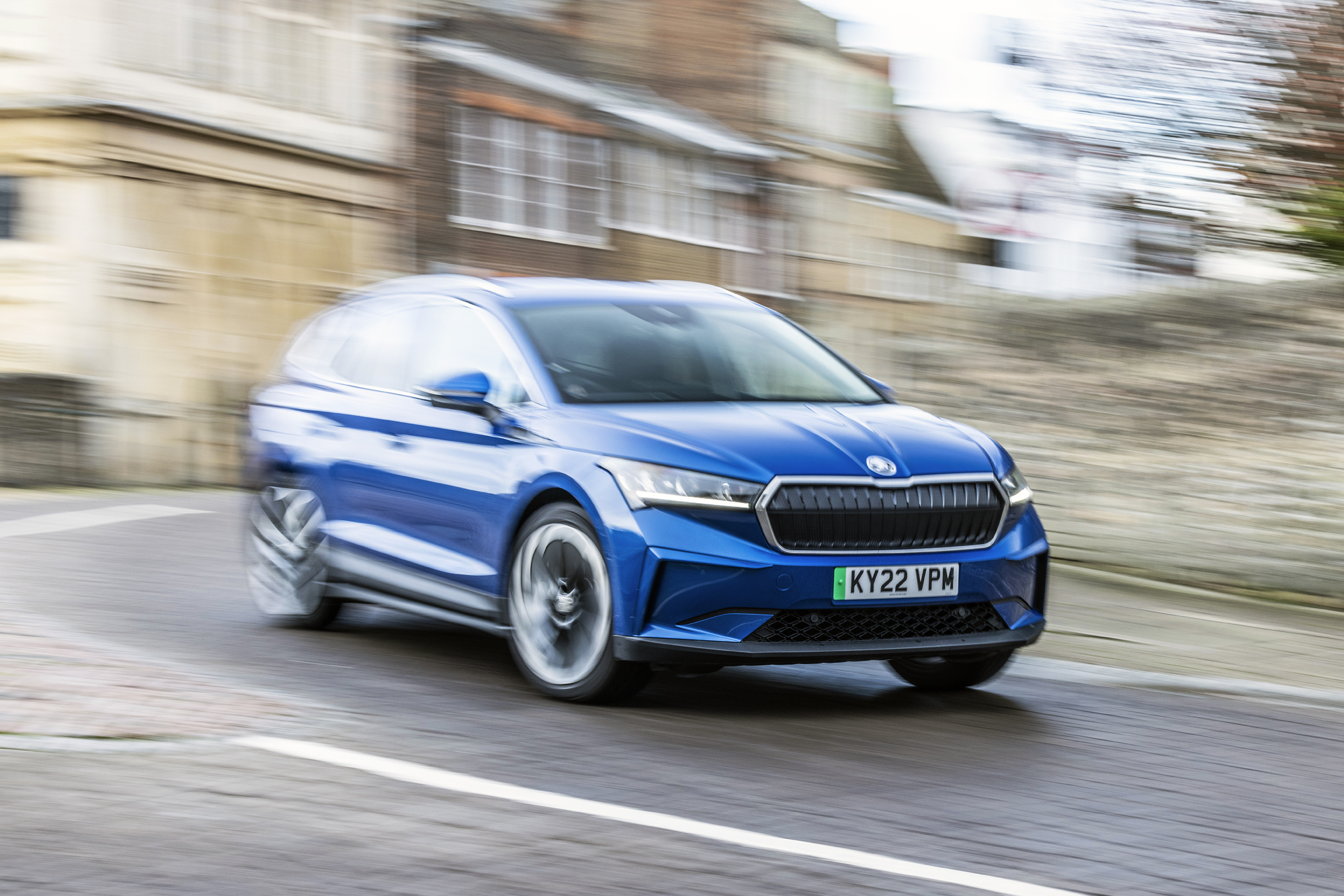
THE GOOD: Posh interior embarrasses equivalent VW; long range; decent dynamics
THE BAD: Touchscreen-driven; a few bugs; a bit too sensible
THE UGLY: Optional illuminated grille is as much ‘Skoda’ as spinning rims
NEED TO KNOW: It’s a Volkswagen ID. 4, but bigger, cheaper and with additional clever bits. Pretty much the Skoda template we know and love, then, but in this case it also comes with a far nicer interior (fabric trim and light colour options beat black on black on black any day) and better looks. Though opting for the ‘Crystal Face’ does diminish the latter point.
THE ONE TO BUY: Don’t bother with the slinkier but less practical Coupe or the not-a-hot-hatch vRS; 85 Edition has 300+ miles of real-world range for realistic price
KEY DATA: Range 348 miles; efficiency 4.1 miles per kWh; max DC charging 29 minutes 10-80%
19 Porsche Macan Electric
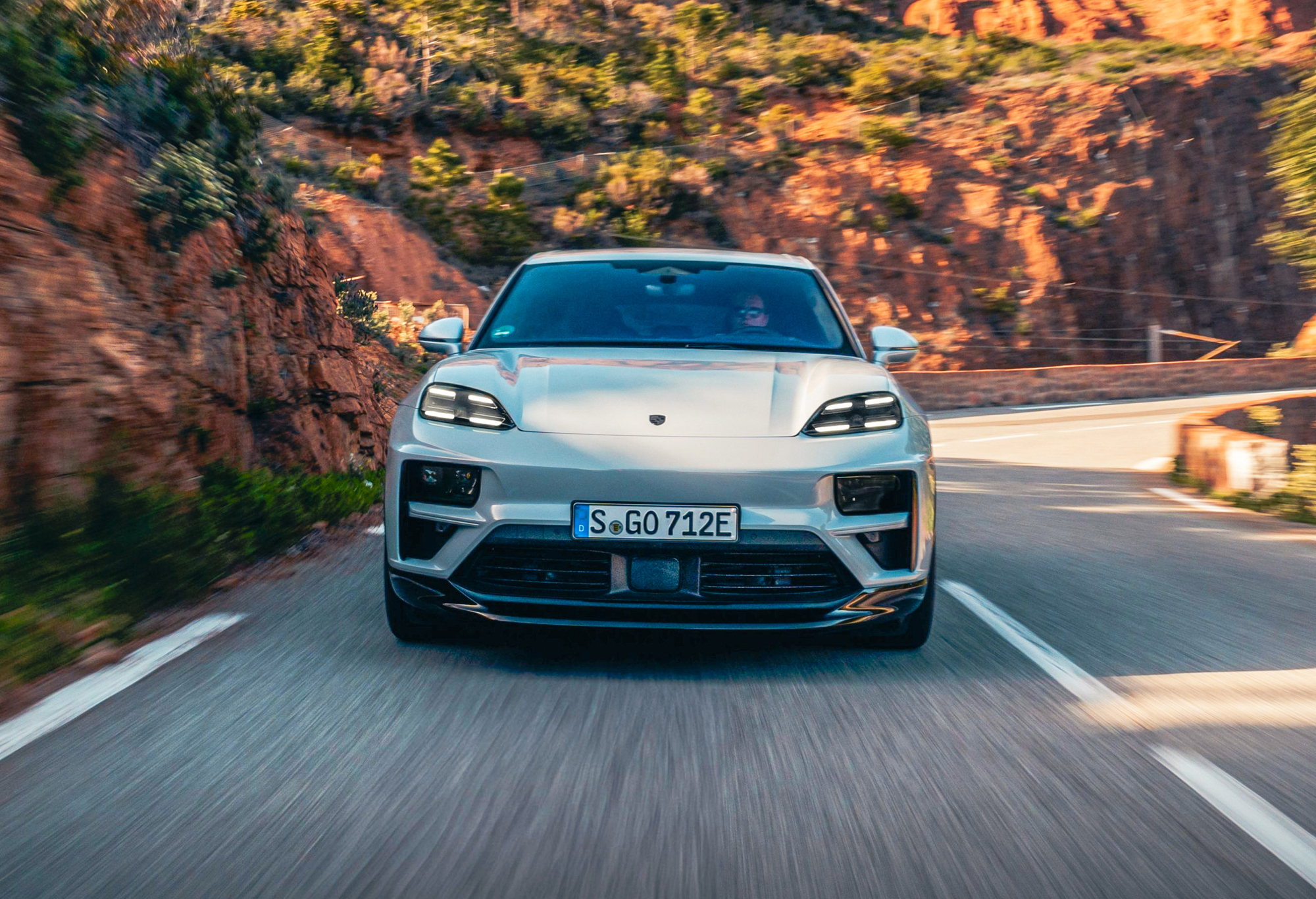
THE GOOD: One of the best-handling SUVs; interior quality; breadth of powertrains
THE BAD: Real-world efficiency could be better
THE UGLY: The prices on that options list
NEED TO KNOW: The electric Porsche Macan shares its new PPE platform with the Audi Q6 e-Tron, so you get ultra-rapid 800-volt charging and a powertrain to suit everyone whether you’re happy with the rear-wheel drive and 355bhp of the base Macan, the 630bhp and all-wheel drive in the Turbo – or any of the in-between variants. We favour the base car; it’s still more than fast enough, and you get the direct, feelsome steering that Porsche manages so much better than Audi with the Q6. A bit less mass and no drive on the front wheels makes the entry-level, rear-wheel-drive Macan the sweeter-handling car, too.
Regardless of which model you favour, the Porsche’s interior with its frameless driver read-out and simple yet precise design is one of the best in the class. It’s worth adding the air suspension for the best ride comfort, and be careful with the options, as you can get carried away.
THE ONE TO BUY: The basic rear-wheel-drive Macan with a few select options and some decent winter tyres
KEY DATA: Range 399 miles; efficiency 3.7 miles per kWh; max DC charging 21 minutes 10-80%
18 Rolls-Royce Spectre: best luxury car
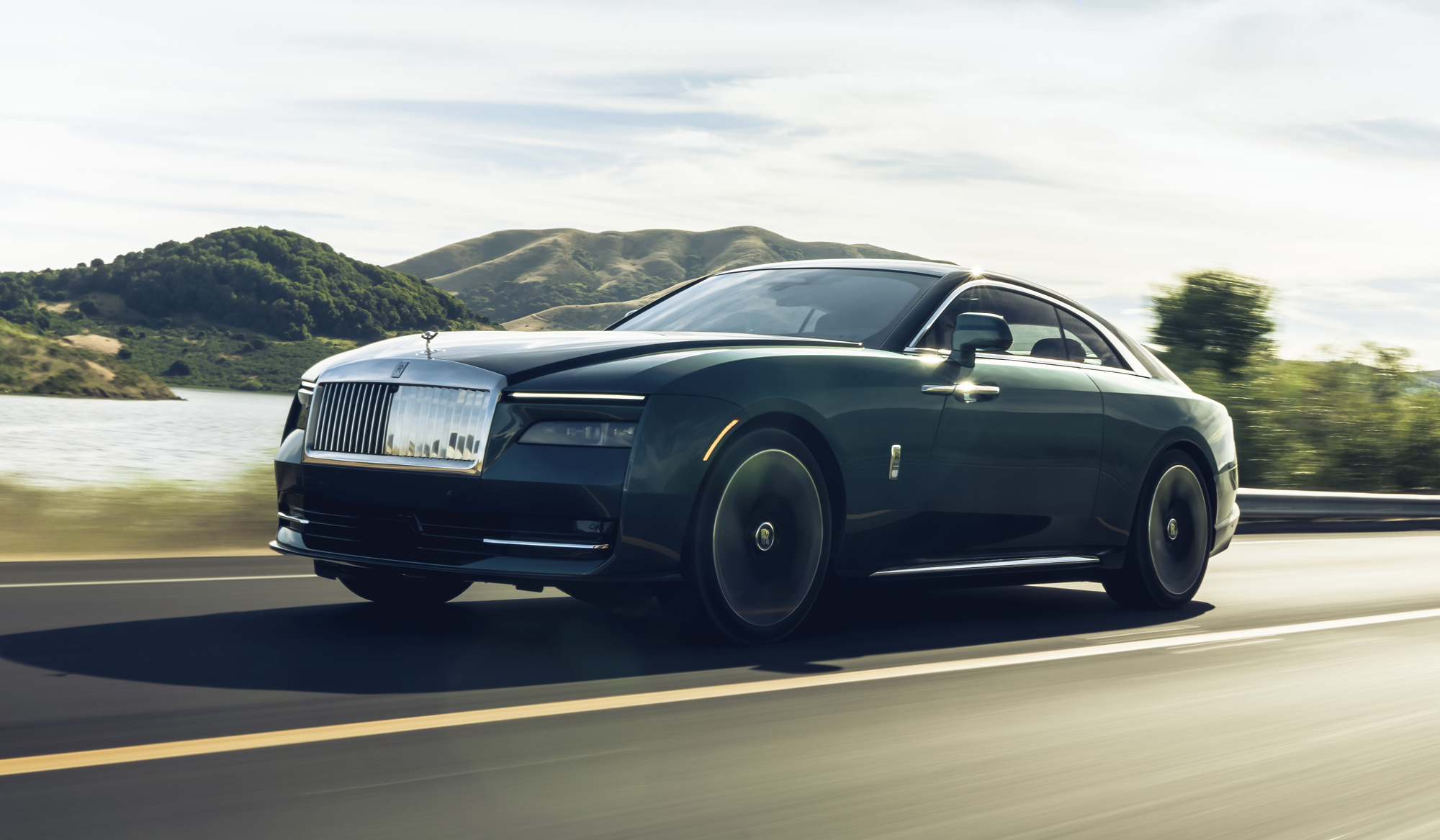
THE GOOD: So refined and responsive that you’ll wonder why other Rolls-Royces still have V12s
THE BAD: For such a big car, rear passengers really don’t get the room they might expect
THE UGLY: Such a shame that so few people will ever benefit from this brilliant craftsmanship and engineering
NEED TO KNOW: It’s not difficult to find fault with the general idea of the Rolls-Royce Spectre. A huge, heavy two-door car that costs getting on for half a million pounds is hardly a difficult target. But you’ll find it much harder to find fault with the execution. And that is why this absurd yet glorious coupe from Goodwood is our Best Luxury Car. It’s quiet and sophisticated, but doesn’t seal you off from the outside world; it feels attached to the road, rather than gliding over it like the magic carpet some less sporting luxury cars aim towards. It’s the sort of big, comfortable GT that you’d want to drive across the Alps, just so long as you’ve plotted a route that involves lunch stops and hotels with chargers.
The cabin is exquisitely finished and a treat for the senses. It’s quite traditional inside, with a version of the BMW iDrive infotainment system lurking behind a well-thought-through array of physical switches and dials. Like combustion-engined Rolls-Royces, this is not a car that asks a lot of the driver – no need for drive modes or adjustable suspension when you have masses of torque and a well calibrated chassis. We’ve not driven the Spectre back to back with the i7, which shares some of its electronic componentry and know-how, but the Spectre is the one car that outclasses the excellent BMW in a whole bunch of ways that don’t matter.
THE ONE TO BUY: There’s only one, a 2+2 two-door priced from £330,000
KEY DATA: Range 329 miles; efficiency 2.6-2.8 miles per kWh; max DC charging 34 minutes 10-80%
17 Hyundai Ioniq 9
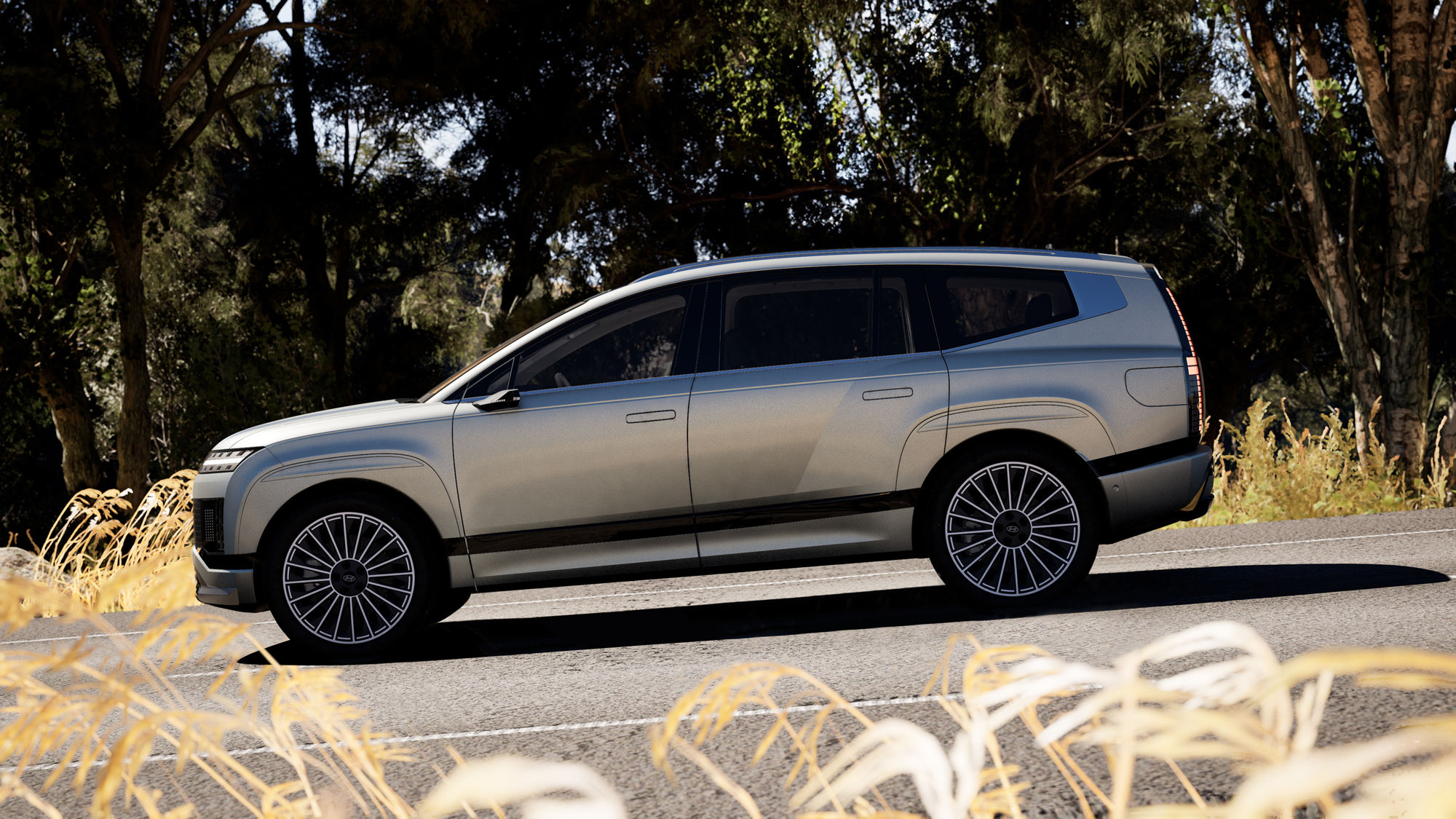
THE GOOD: Luxurious to drive and sit in; long range; spacious seven-seat interior
THE BAD: Not cheap; feels heavy to drive; efficiency
THE UGLY: Tight parking spots can be tricky; four-wheel steer would be useful for additional manoeuvrability
NEED TO KNOW: Imagine what you think an electric, seven-seat Range Rover would feel like – only with a five-year warranty and half the list price – and you’re probably not far off what the Hyundai Ioniq 9 is offering. This is a full-sized luxury(ish) SUV that’s got a spacious interior that you can have with a family-friendly seven-seat layout or even an executive six-seat layout if you’re willing to go for the top spec.
Every Ioniq 9 gets ultra-rapid 800-volt charging, as well as a vast 110.3kWh NMC battery, which gives this heavyweight 5.06-metre long SUV a WLTP range of up to 385 miles, or a bit less if you go for the dual-motor Performance variant that gets an incongruous 5.2sec 0-62mph time. Even if you go for the fast one, it feels heavy. You don’t get air suspension on the Ioniq 9 but the standard springs are surprisingly good at delivering cushy, luxurious ride comfort – the trade-off being the significant lean that you’ll notice in corners. Even so, it’s still a fine beast to drive and spend time in, and if we have any criticism it’s that we’d like four-wheel steer to help make it more manoeuvrable in a tight spot. Otherwise, the combination of space, finish, equipment and range that you get in the big Hyundai really does make you wonder why you’d pay the extra for an electric Range Rover.
THE ONE TO BUY: Mid-spec Long Range AWD is the sweet spot. That extra peace of mind in poor weather conditions will be welcome, and the price feels reasonable for what you’re getting
KEY DATA: Range 376 miles; efficiency 3.1 miles per kWh; max DC charging 24 minutes 10-80%
16 Fiat Grande Panda

THE GOOD: Practical yet compact; retro looks; comfortable and composed
THE BAD: Questionable real-world range; rear passenger space
THE UGLY: It isn’t fast, and can sometimes feel a bit underpowered
NEED TO KNOW: The Fiat Grande Panda is a boxy delight. An affordable, 4.0-metre long small EV that rivals the Hyundai Inster and Renault 5, with some retro-ish styling, a fun and comfortable interior, and cheerful dynamics. You can get the Grande Panda with a 44kWh battery that’s good for a 199-mile WLTP range, although our experience suggests you’ll only see around 100 miles or so on a motorway journey, while slower and more varied use will see a real-world range of more like 150 miles. That’s lagging behind the range in some rivals, but it’s still enough for most people who’re looking for small, useful EV.
Given neat details like the springy AC charging cable that’s hidden neatly in the nose of the car, colourful plastic finishes around the cabin and a surprisingly useful boot, it’s easy to see why the Fiat is proving to be a popular car.
It’s sweet to drive, too. It’s not fast. With 111bhp going to the front wheels, the Grande Panda manages 0-62mph in 11 seconds, which feels absolutely fine around town but a bit wheezy when you try for a rapid merge onto the motorway. But the ride comfort is decent and the steering light but confident enough, so you can have fun while making easy progress.
THE ONE TO BUY: Go for the Fiat 500e (RED), and pick whichever battery suits your lifestyle. The 42kWh battery with 199-mile range makes sense, especially as it gets a bit more power and usefully faster rapid charging
KEY DATA: Range 199 miles; efficiency 4.4 miles per kWh; max DC charging 30 minutes 10-80%
15 Hyundai Inster
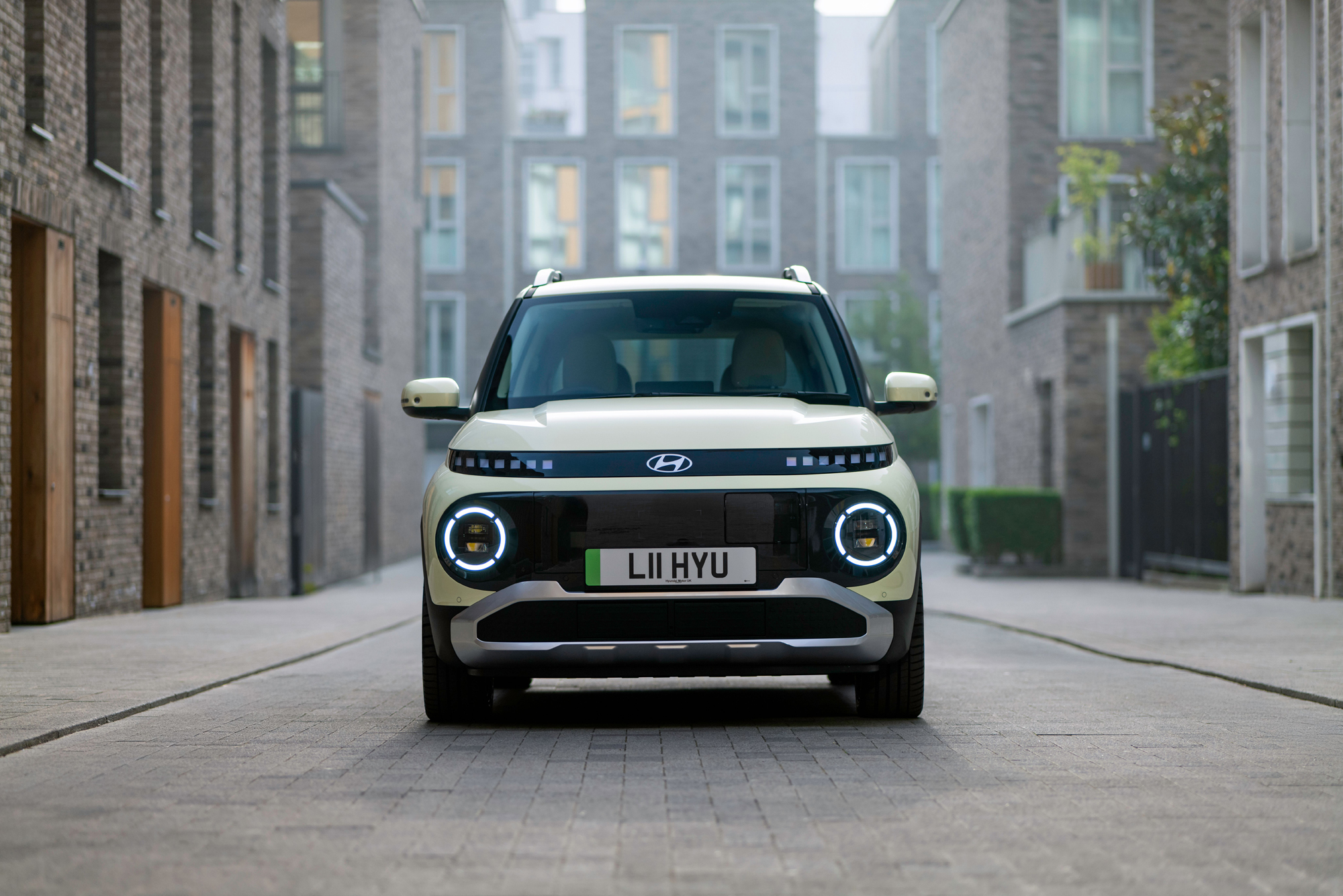
THE GOOD: Great to drive; versatile interior; cool retro styling
THE BAD: Shorter range than other small EVs; only four seats
THE UGLY: If it were cheaper the Inster would be hard to fault. But it’s not
NEED TO KNOW: The Hyundai Inster is a super-cute electric city car that measures just over 3.8 metres long, yet has a useful 351-litre boot and two rear seats that – in the top-spec version, at least – can slide fore and aft. Even the front passenger seat can be folded flat, so you can use it as a table. It’s a supremely clever and thoughtful little EV, even if it only seats four.
It’s also great fun to drive. Rear-wheel drive, and with enough poke for a 0-62mph time of around 11 seconds (a bit more if you go for the smaller battery Inster 01, or a bit less if you go for the bigger-battery and slightly more powerful Inster 02), it feels light and nimble yet confident enough to be happy even on the motorway.
Two battery options allow for a WLTP range of either 186 or 223 miles, which is a way off what you can get in some rivals at this price. If we’re looking for criticisms, the dash design is a touch uninspiring and some of the materials in the lighter interior (which is available with an brilliantly retro houndstooth cloth) mark easily.
THE ONE TO BUY: We’d go for the top-spec Inster 02, with the big battery. It has all the comforts and conveniences of a big car, gets a heat pump as standard, and is more than good enough to do bigger journeys in provided you don’t mind making use of the 120kW rapid charging fairly often. You might be surprised by how capable this little car is
KEY DATA: Range 223 miles; efficiency 4.7 miles per kWh; max DC charging 30 minutes 10-80%
14 BMW i4
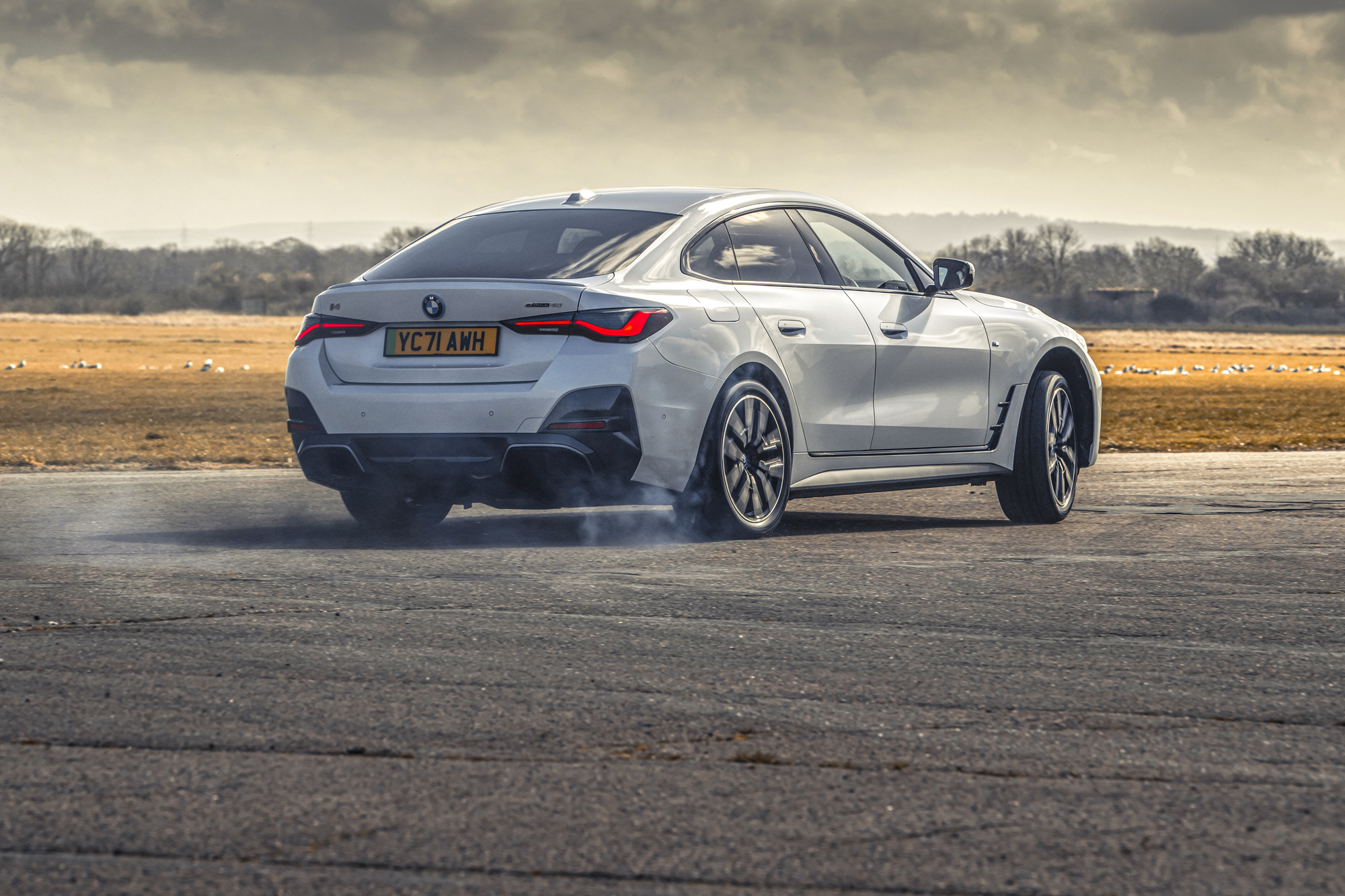
THE GOOD: A better steer than the Tesla Model 3
THE BAD: Pricier and much less efficient
THE UGLY: Optional 20-inch wheels knock 50 miles of range from the M50
NEED TO KNOW: Essentially a battery-powered 4-series Gran Coupe, the BMW i4 is a Tesla Model 3 rival that’s well worth considering. What it lacks in range and efficiency it makes up for in punchy performance, driving dynamics and usability, although for most the Model 3 is the more sensible option.
THE ONE TO BUY: The 35 could do with a bigger battery and the M50 is pricey and inefficient. We’d go for the eDrive40 for just under £60k
KEY DATA: Range 365 miles; efficiency 3.9 miles per kWh; max DC charging 31 minutes 10-80%
13 Audi e-Tron GT
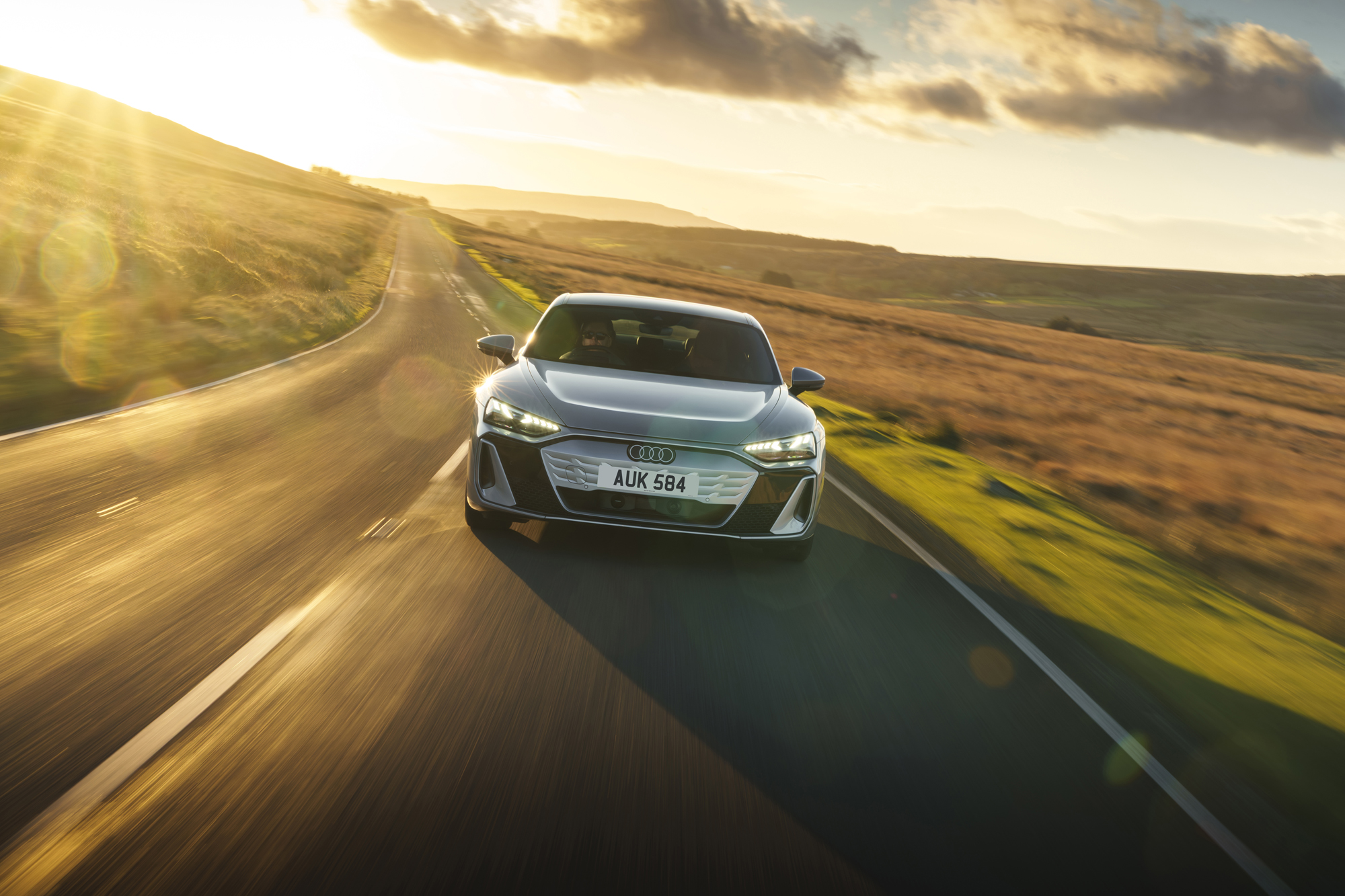
THE GOOD: Smart looks inside and out; slick to drive
THE BAD: Taycan is better to drive; others go further to a charge
THE UGLY: Steep depreciation
NEED TO KNOW: The e-Tron GT is Audi’s answer to the Porsche Taycan, so you’re getting a big, low-slung executive GT. WLTP range varies, but since a 2024 facelift the e-Tron GT has been able to do between 360 and 386 miles depending on whether you go for the straightforward GT, the midrange S e-Tron GT or the range-topping RS e-Tron GT or GT Performance, the latter of which is the most powerful roadgoing Audi ever – complete with an eye-watering 912bhp and a 0-62mph time of 3.4 seconds.
It’s a very slick car. It doesn’t have the same handling poise as the Taycan, but it’s a fantastic long-range electric car that feels sumptuous and cosseting, while also having much more satisfying handling than any SUV equivalent. The interior is gorgeous, and in many ways you’re getting a lot more car for your money than you are with the Porsche Taycan that shares the e-Tron GT’s platform and powertrains. You’ll get a couple of adults in the back seats, and a set of golf clubs in the boot, so you could even use this as a family car if that helps you justify it.
THE ONE TO BUY: We’d stick with the entry-level e-Tron GT. It gets a very healthy 576bhp, all-wheel drive and a 0-62mph time of 4.0 seconds, not to mention the ultra-rapid charging capability. Plus it’s some £20,000 cheaper than the next level of e-Tron GT, so you can probably afford to be a bit spendy with the optional extras
KEY DATA: Range 386 miles; efficiency 3.5 miles per kWh; max DC charging 18 minutes 10-80%
12 Hyundai Ioniq 5
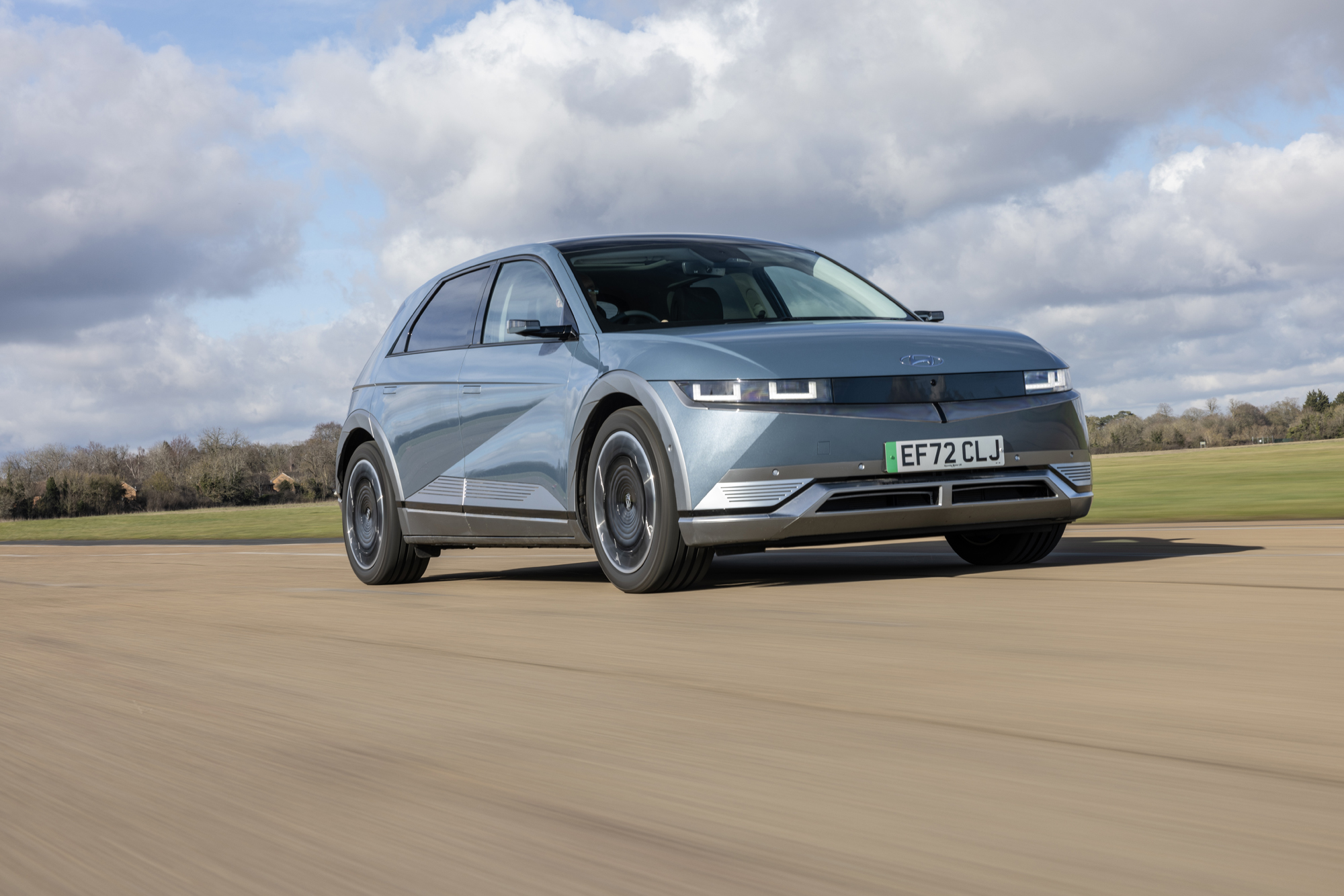
THE GOOD: Great interior ambience, with loads of space and neat details
THE BAD: Not the biggest boot considering this is a chunky car
THE UGLY: All that bonging and beeping can get annoying
NEED TO KNOW: The Ioniq 5 is that rare thing: a striking-looking retro-futurist car that sells well. But it’s in fact the interior that’s the greatest achievement: airy, spacious, clad in some lovely fabrics and very occupant-friendly, if slightly given to tech overkill. Dodge the expensive camera mirrors, but opt for the heat pump if you can, and regard the N as a distinct model: actually this is modern, enjoyable family transport, lively but not particularly rapid, and very efficient once you acquire the necessary smoothness.
THE ONE TO BUY: N (ranked separately) is sensational as a hot hatch, but for the regular Ioniq 5 the entry-level Premium spec but Long Range battery makes most sense
KEY DATA: Range 295-315 miles; efficiency 3.45 miles per kWh; max DC charging 18 minutes 10-80%
11 Nissan Micra
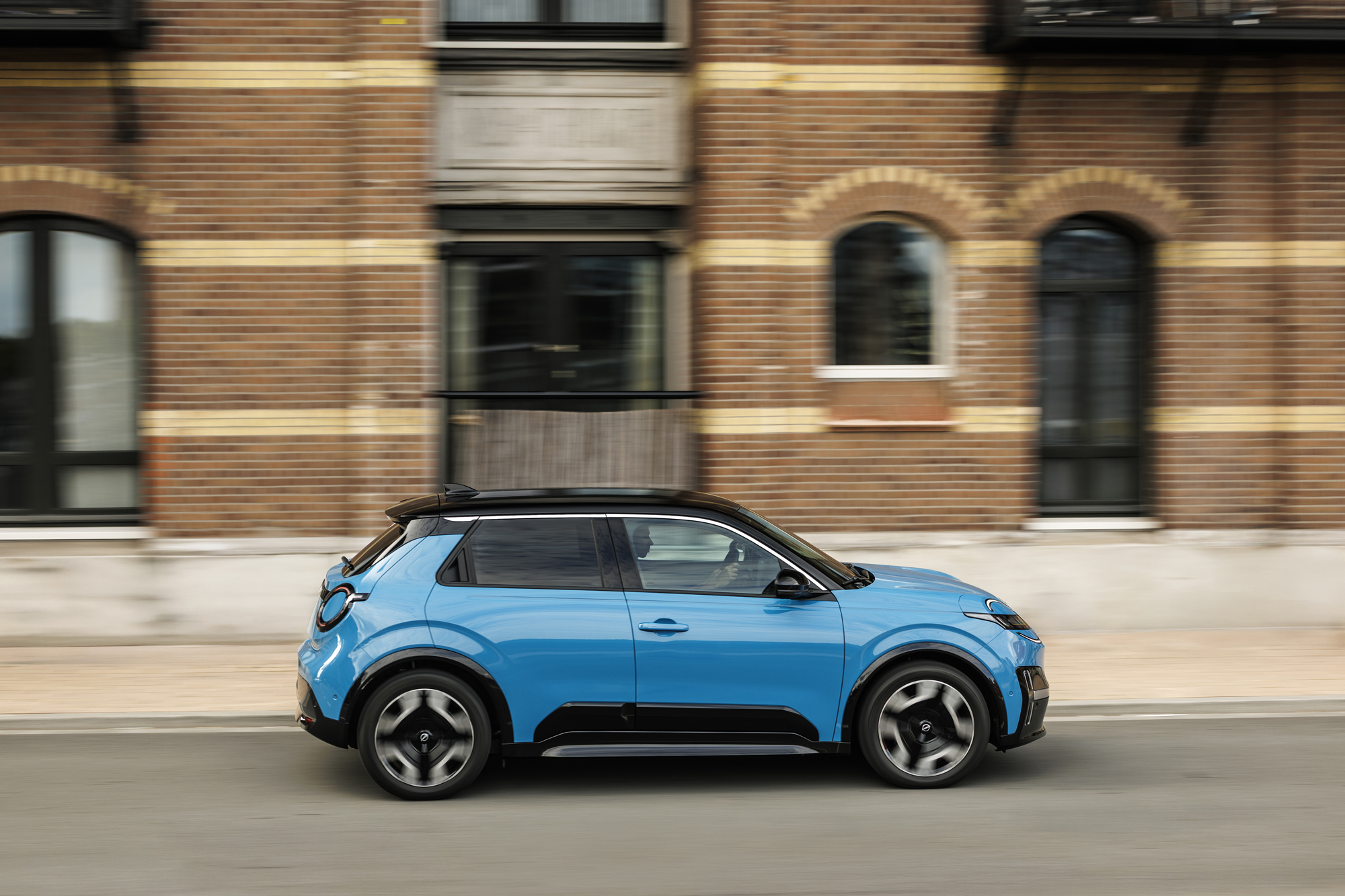
THE GOOD: It’s a Renault 5 underneath; cute looks; good value
THE BAD: It’s a Renault 5 underneath; cramped rear seats
THE UGLY: A Renault 5 costs the same and is more desirable
NEED TO KNOW: The Nissan Micra is an icon of affordable motoring, and now in its sixth generation it’s gone all-electric. It’s a reskinned Renault 5 – which isn’t a bad thing as the Renault 5 is one of the best small cars you can buy, but you may be a touch disappointed if you’re looking for some Nissan originality. Still, externally the Micra’s panels have been changed and the distinctive headlights hark back to the Micra’s heritage, while the interior just gets a retrim and a few Nissan badges. It also gets paddles behind the steering wheel to alter the regen level and trigger one-pedal mode, if you go for midrange Advance trim (now also on the Renault 5). All of that means the Micra is keen to drive, well priced and practical enough for a small family – albeit with fairly cramped rear seats.
There’s the choice of two batteries with either 198 or 260 miles of WLTP range, all of which makes this a really great all-round small EV. But it is priced the same as the Renault 5, which I arguably more desirable, so the Micra may struggle to justify itself next to its more glamorous cousin.
THE ONE TO BUY: The 52kWh Nissan Micra in mid-spec Advance trim is the happiest balance of range, comfort and value
KEY DATA: Range 260 miles; efficiency 4.1 miles per kWh; max DC charging 30 minutes 10-80%
10 Kia EV6: best mid-size hatch
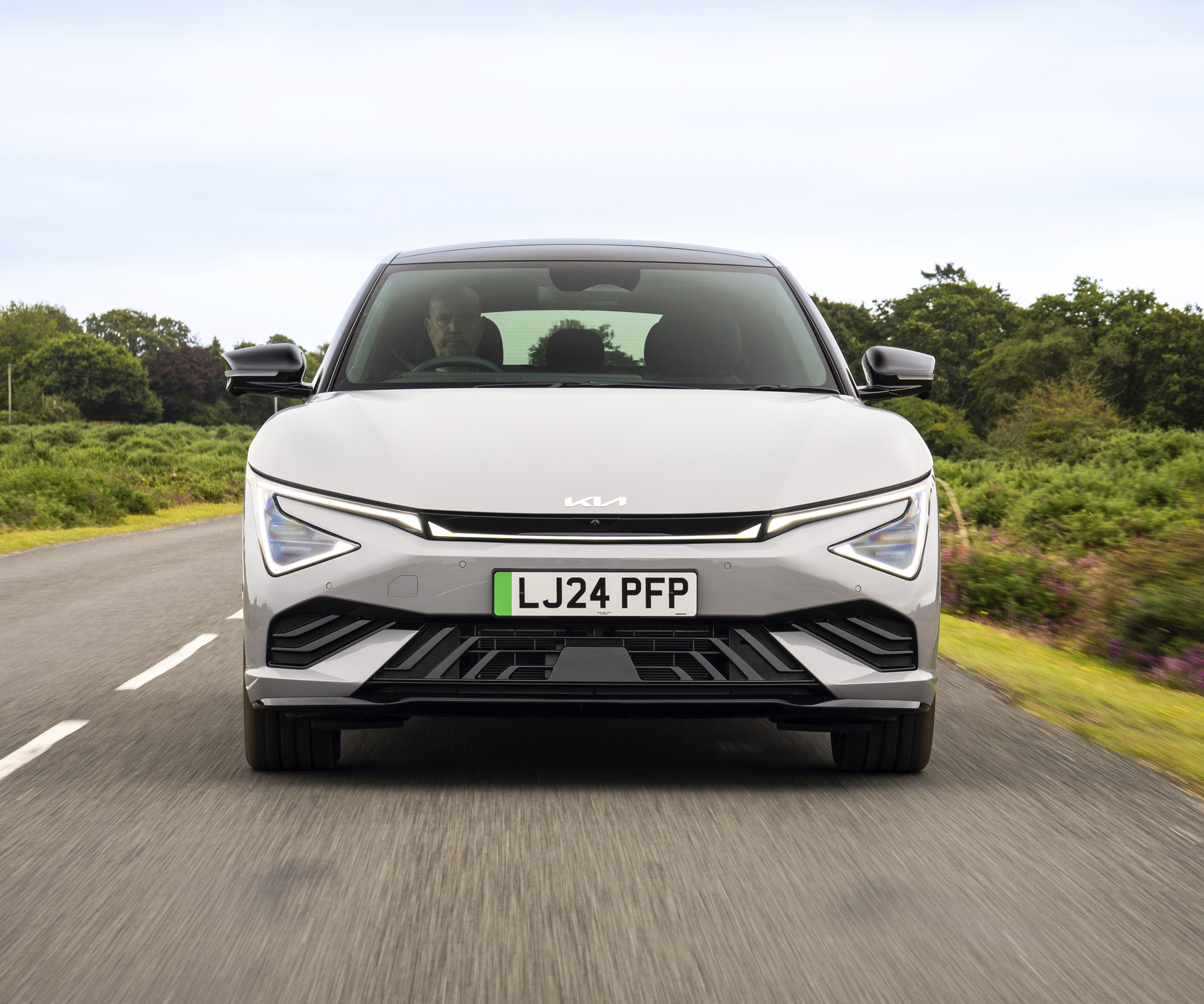
THE GOOD: Design inside and out; efficient performance; it’s practical and good value
THE BAD: Kia’s rather long waiting list
THE UGLY: The high-powered GT isn’t as good as we wanted it to be
NEED TO KNOW: It’s not only the best (quite large) mid-size electric hatch, but one of the best EVs you can buy full stop. Kia has nailed it with the EV6, crafting something that’s the right size and has the right range for the right amount of money – no wonder there continues to be a lengthy waiting list for it.
It’s a great place to spent time, with one of the most robust, modern and premium-feeling interiors Kia’s ever produced, comfortable seats and plenty of standard technology. Like the Hyundai Ioniq 5 and Genesis GV60, you can even power things or even charge another EV with the EV6’s vehicle-to-load technology.
Your range starts from about £45k for an entry-level Air model, which brings a good amount of kit and a good range to boot. But if you want a heat pump – a key bit of additional tech that’ll help your EV6’s battery survive winter a bit better – you need to step up to GT-Line. There’s also a flagship EV6 GT that’s bristling with performance and aggro looks, but all of that extra shove means a massive price and withering efficiency.
Go for a more sensible one, though, and you’ll have an electric car that can do around 300 miles on a charge, and is capable of extremely quick charging speeds when you have access to the most potent chargers on the UK network. Overall, Kia’s nailed the brief of providing a smooth, clever, neatly dressed and packaged electric car that doesn’t cost the earth
THE ONE TO BUY: Sweet spot is the RWD GT-Line with the handy, winter-ready heat pump
KEY DATA: Range 328 miles; efficiency 3.77 miles per kWh; max DC charging 18 minutes 10-80%
9 Tesla Model 3: best mid-size saloon
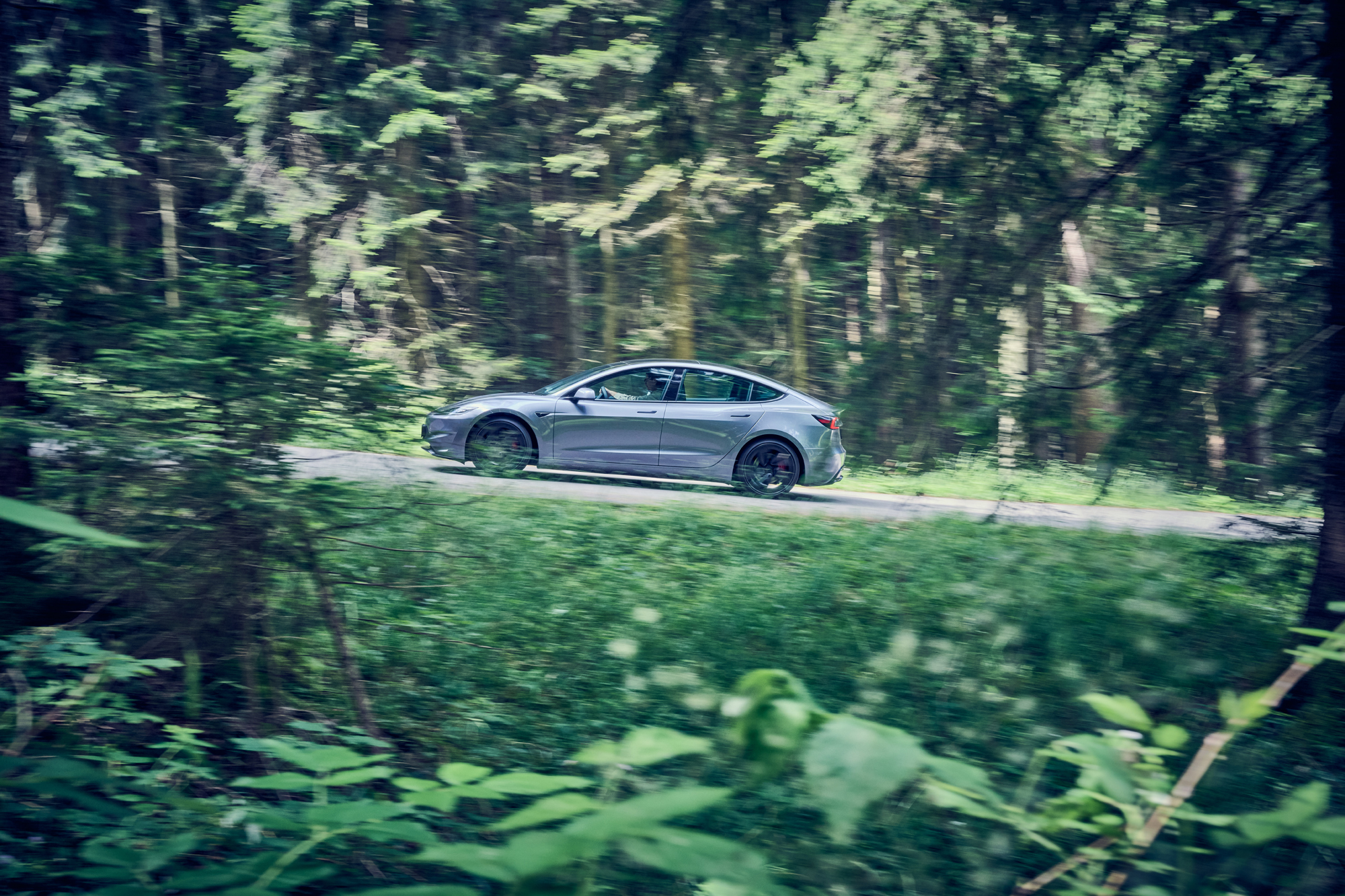
THE GOOD: Constantly refreshed; constantly among the best EVs
THE BAD: Even fewer conventional controls. Indicators on the steering wheel, anyone?
THE UGLY: Panel gaps that’ll swallow Elon’s ego
NEED TO KNOW: Although the Tesla Model 3 has long been one of the easiest electric cars to recommend, the recent-ish facelift gives us even more reasons to be cheerful. Tweaks to the styling and aero help eke out a bit more range, despite the motors and batteries being unchanged.
The interior gets reworked with a crisper touchscreen and a greater feeling of quality, although there are even fewer physical controls than before. Main beam and indicators are now controlled by touch-sensitive icons on the steering wheel, with virtually everything else done via the touchscreen or voice. The kids will love the new rear screen, with Netflix, Disney+ and You Tube plumbed in.
You won’t find Taycan levels of fun and involvement here, although it is good to drive. The suspension has a firm, well-controlled edge that allows the Model 3 to corner quickly and deploy its reserves of power easily, and the steering feels razor sharp.
For the moment there’s the single-motor version, the Long Range dual-motor and the Performance.
They don’t just accelerate quickly – they’re among the fastest cars to charge, too. A sub-30 minute 10-80 per cent time is nothing to be sniffed at, and it’s likely you’ll actually see figures like that. Rather than the patchy public charging network, you’ll be able to use Tesla’s Superchargers which are more abundant and generally faster.
And the best bit? The range now starts at less than £40k, or £50k if you want the dual-motor. Brilliant value.
THE ONE TO BUY: Entry-level single-motor less than £40k, but we’d take a dual-motor Long Range for £10k more
KEY DATA: Range 390 miles; efficiency 4.0 miles per kWh; max DC charging 27 minutes 10-80%
8 Polestar 3
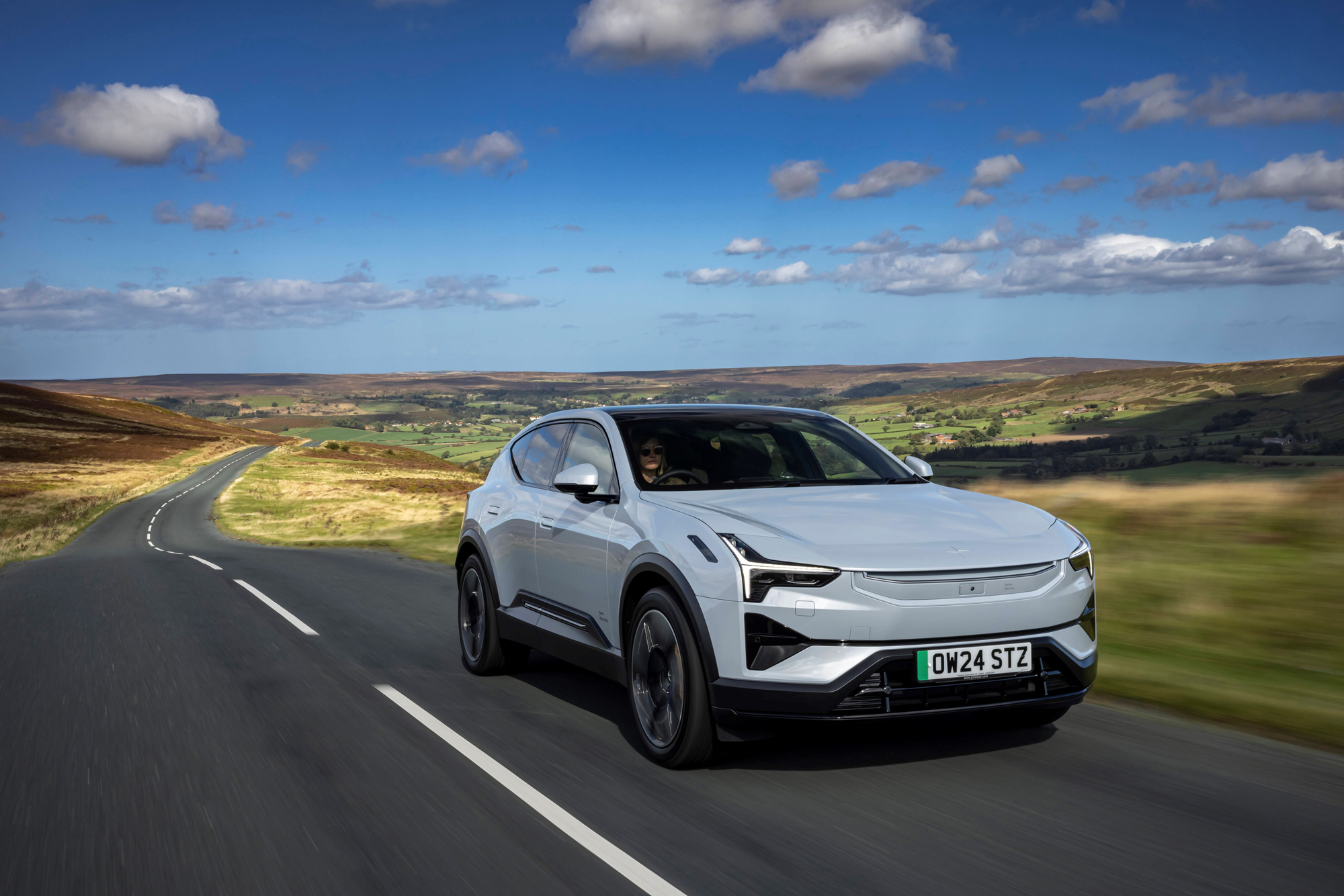
THE GOOD: Uncommonly good handling; super-plush interior; generous rear space
THE BAD: Relatively small boot, stiff ride with Performance Pack
THE UGLY: Completely baffling logic to the naming of Polestar’s cars
NEED TO KNOW: The Polestar 3 is the biggest model in the range, at the moment, and sits on the same platform as the Volvo ES90. For such a big, plush, luxury car it really is remarkably good to drive, while the interior is Scandi-gorgeous and the infotainment is the best that Polestar offers and will be pretty easy to live with. Initially, the Polestar 3 came only in Long Range Dual Motor form, with a 107kWh battery for a WLTP range of up to 395 miles (352 if you go for the full-fat Performance model).
The Long Range Single Motor adds a rear-wheel-drive option combined with a 88kWh battery, for a handy touring range of 375 miles. All of the Polestar 3 variants are a sumptuous delight to drive, but we’d sacrifice the all-wheel drive and savage acceleration of the Dual Motor models, and would be very happy with the more modest Single Motor. It’s quite a bit slower yet still feels more than fast enough, and you can still revel in the sumptuousness and surprisingly responsive handling. Plus, it’s usefully cheaper and that long range is still going to make life easy for high mileage drivers.
As of the end of 2025, all Polestar 3 models were upgraded from 400-volt to 800-volt ultra-rapid charging, too, cutting charging times by around 25 per cent.
Overall, it’s a really lovely premium electric SUV – one of our favourites despite tough competition.
THE ONE TO BUY: The Polestar 3 Single Motor Long Range is our pick of the lot. Sometimes, less is more
KEY DATA: Range 375 miles; efficiency 3.5 miles per kWh; max DC charging 22 minutes 10-80%
7 Renault Scenic: best family car
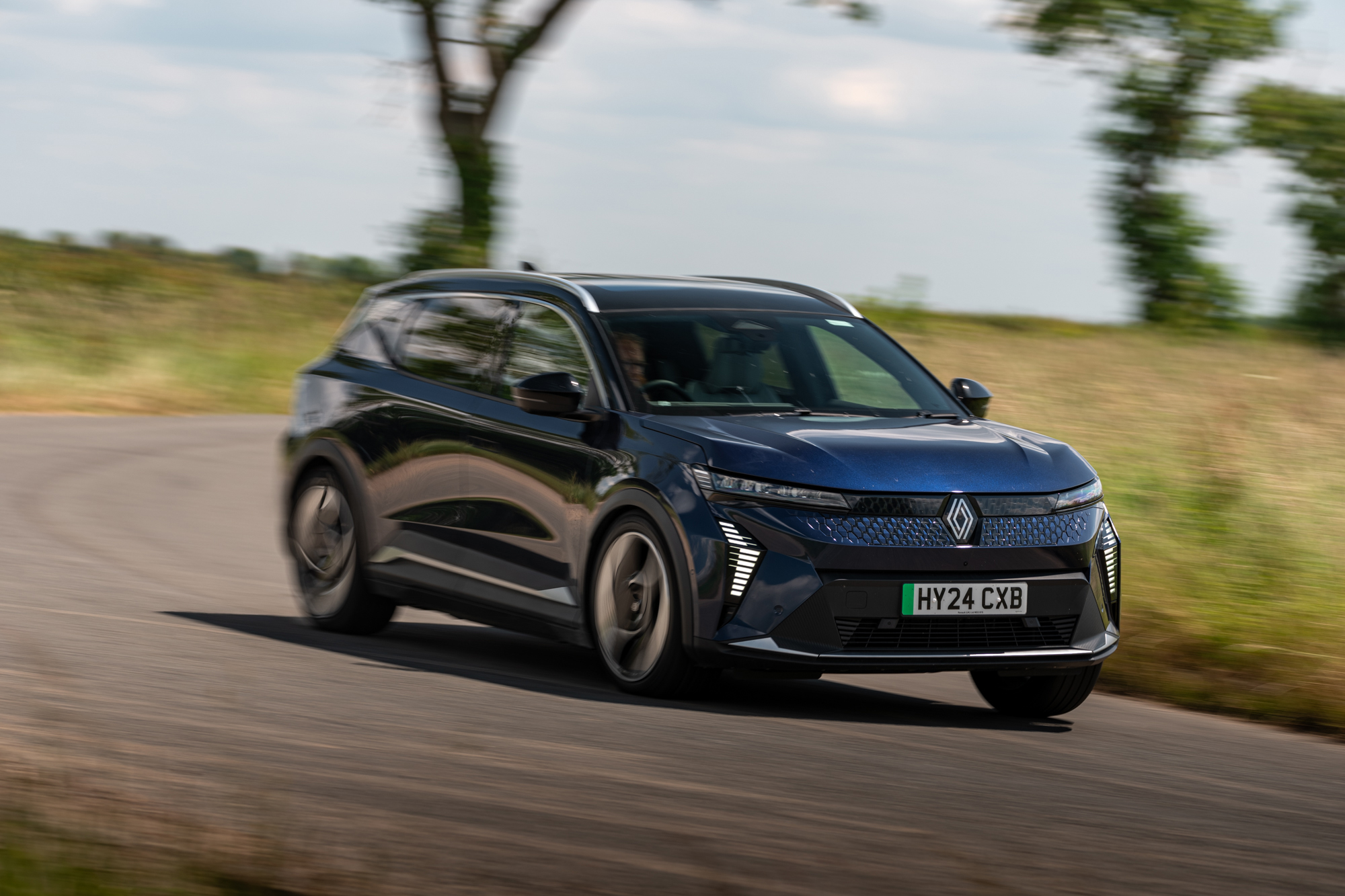
THE GOOD: Good value; long range; pleasant to drive; looks smart inside and out
THE BAD: Sometimes lumpy ride; poor rear visibility
THE UGLY: The boot is very deep; but not actually that big, and you have to pay extra for a variable floor
NEED TO KNOW: The Scenic E-Tech is another of Renault’s reborn icons. There are two batteries offering a range of either 260 or 379 miles, both of which are great value for a spacious 4.5-metre-long family SUV-hatchback-MPV-crossover thing like this. It’s also got a rather smart interior with lots of lovely textiles, a big touchscreen with Google maps and software built-in, and even a centre rear armrest with charging sockets and fold-out phone holders.
Our only niggle is that we’d like sliding rear seats and generally a bit more versatility to the Scenic’s interior, which is spacious yet doesn’t really have any practicality tricks. You even have to pay extra to get a variable boot floor. Nonetheless, we’ll forgive it because the Scenic’s rivals are no more imaginative on the practicality front, and the Renault is the comfiest, most generously equipped, best-value long-range family EV in a very crowded class.
THE ONE TO BUY: Go for the big battery in techno trim. Avoid Iconic if you’ve got young kids; it gets pale, coarse-weave upholstery that your little darlings will immediately press chocolate into
KEY DATA: Range 379 miles; efficiency 3.7 miles per kWh; max DC charging 40 minutes 10-80%
6 Kia EV3: best compact SUV
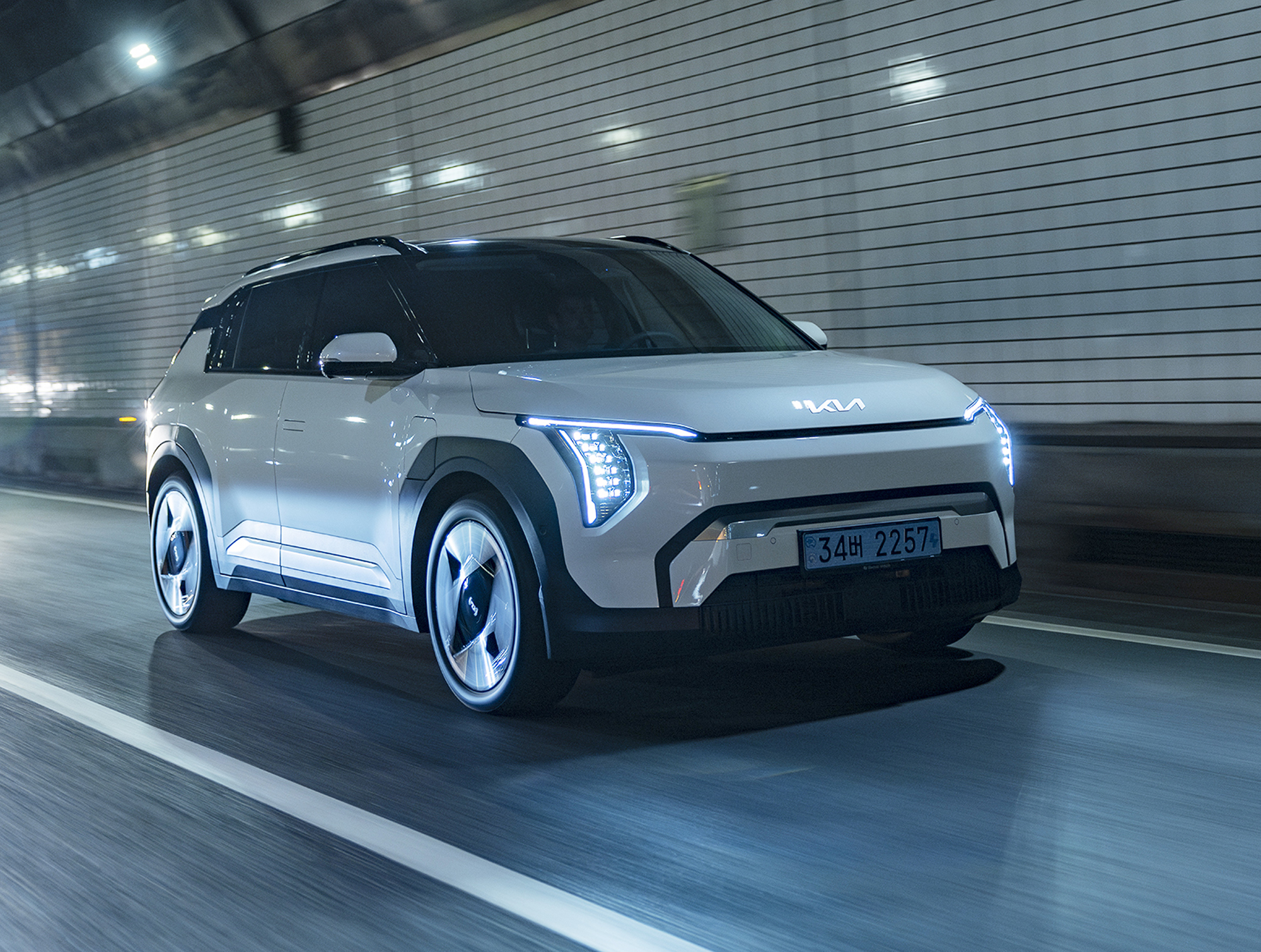
THE GOOD: Roomy and clever interior; funky looks; great value for such long range
THE BAD: Air trim feels cheap inside
THE UGLY: That weird climate-control screen
NEED TO KNOW: The EV3 is basically a shrunken EV9, and there’s a lot that’s right about that. So much so that it’s our favourite compact family SUV. For a start, it’s virtually on price parity with comparable petrol cars if you go for the 270-mile model, but even the big-battery, 375-mile car is great value – and the cheapest way you can get into a car with that kind of touring range.
It’s not all about money, though; the EV3 is a clever family car. With loads of space in a fairly compact 4.3-metre body, this is Kia’s answer to the VW ID. 3, and it stacks up well with a bigger 460-litre boot and roomy back seats. It’s got some neat tricks, too; high-spec cars even get an airplane-style tray table that pulls out of the centre console. Which is a bit unnecessary, but nice to have. It has all of the space, tech, comfort and usefulness you want of a family car – and it’s slick and confident to drive, too. Nice.
THE ONE TO BUY: The 270-mile-range car is brilliant value but most will want the longer-range option. GT-Line is our pick for value-to-comfort goodness
KEY DATA: Range 375 miles; efficiency 4.2 miles per kWh; max DC charging 31 minutes 10-80%
5 Porsche Taycan
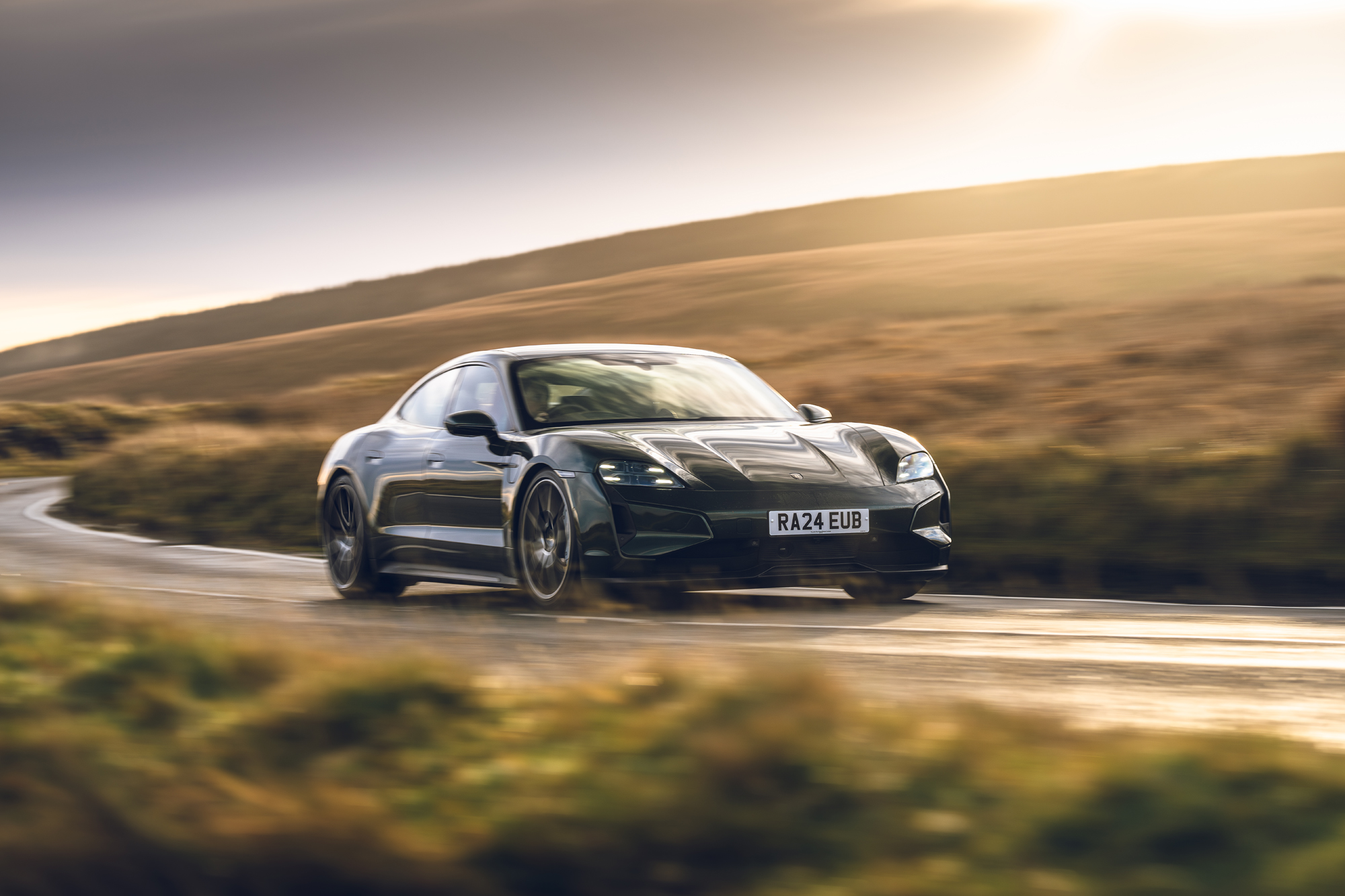
THE GOOD: Sublime to drive; long range; interior finish
THE BAD: Tyre and insurance costs; depreciation
THE UGLY: The standard 19-inch alloy wheels really are ugly, so make sure to spec some of the excellent optional wheels
NEED TO KNOW: The Porsche Taycan is so good it’s firmly near the top of our list of the best electric cars on sale today, and it’s no wonder that it’s become the second-bestselling range in the company’s line-up. As is typical of Porsche, there’s a Taycan for everyone, ranging from the ballistically quick Turbo models with their sub-3.0 second 0-62mph times, through to the more moderate 4S and the entry-level rear-wheel-drive model. A facelift saw the Taycan gain a longer range, among various other tweaks, so even the entry-level Porsche Taycan will do 0-62mph in 4.8 seconds and gets a WLTP range of up to 422 miles. In fact, the base Taycan is one of our favourites, but the 4S is probably the pick of the lot on balance of performance, all-weather confidence, range and cost.
Whichever Taycan you go for, the handling is beautifully balanced between everyday refinement and usability, while still delivering tactile steering, precise pedal response and remarkable agility for a big car. It’s one if the finest EVs you can hope to drive, yet it’ll also get the kids in the back and be a smug-inducingly cosseting long-distance tourer. And don’t forget that you can get the fastback Sport Turismo and slightly rugged Cross Turismo if you want a more practical boot. The interior is beautifully finished, too.
Be very careful with the options list. It’s long, complicated, very expensive and weirdly addictive.
THE ONE TO BUY: We’ll take a Taycan Sport Turismo 4S, please. In Neptune Blue with Turbo Sport 20-inch wheels, the Race-Tex grey interior, adaptive sports seats, rear-axle steering, torque vectoring plus, electric sport sound, Porsche entry, Burmester sound system, heated steering wheel…
KEY DATA: Range 384 miles; efficiency 3.4 miles per kWh; max DC charging 18 minutes 10-80%
4 Mercedes-Benz CLA
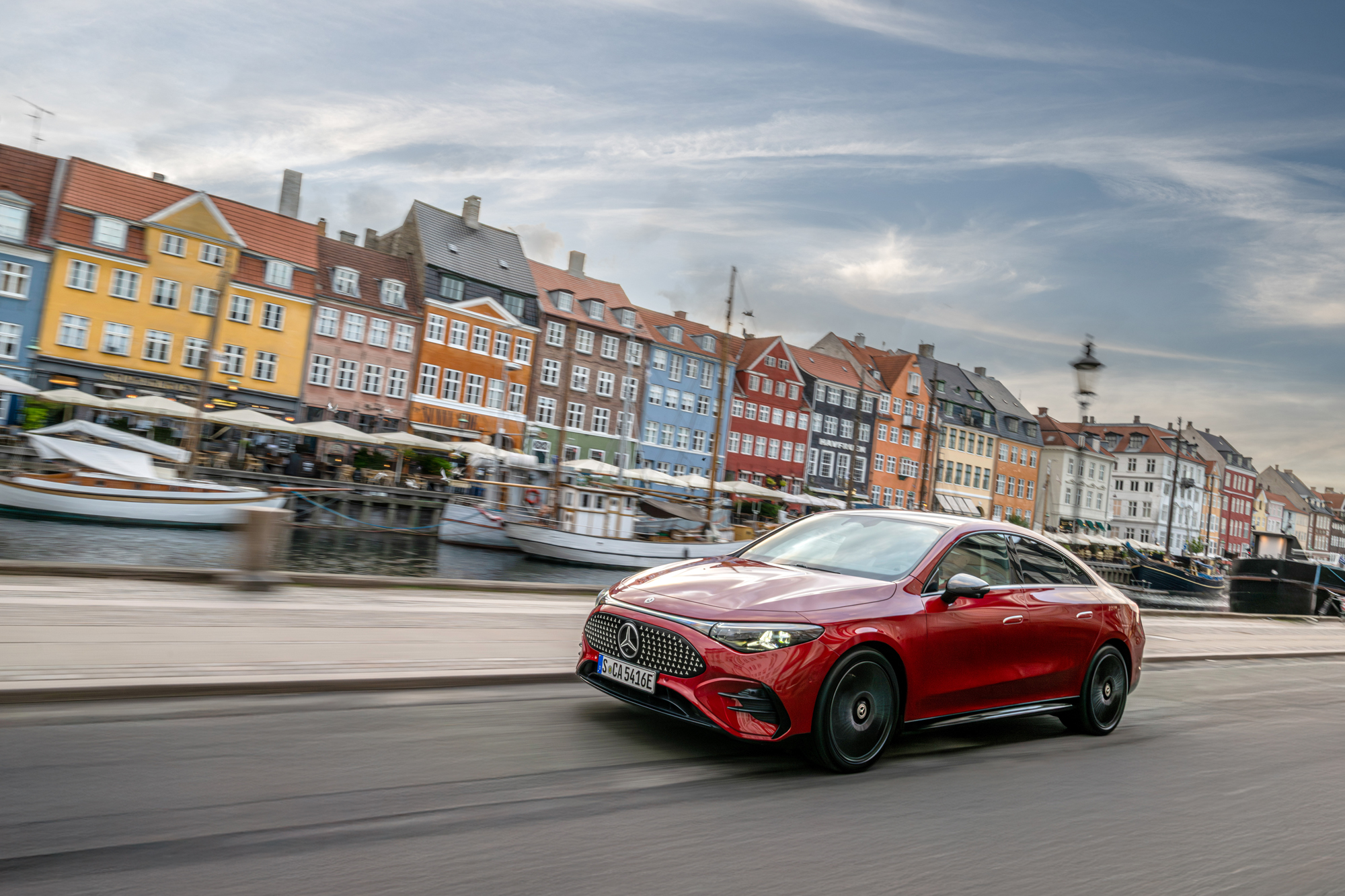
THE GOOD: Great ride and handling; real-world efficiency
THE BAD: Cramped rear seats; saloon boot isn’t the most practical
THE UGLY: The CLA’s dash feels solidly built, but there’s a lot of gloss plastic – especially in front of the passenger
NEED TO KNOW: The Mercedes CLA is a huge leap forward for Mercedes and is one of the most important new EVs of 2026. The efficiency is the real headline news with the CLA. Initially, this Tesla Model 3 rival is offered only as the Mercedes CLA 250+ with EQ Technology, which gets an 85kWh NMC battery and a 265bhp electric motor powering the rear wheels for a WLTP range of 484 miles. An all-wheel-drive CLA 350+ 4Motion get a bit more power and will follow later in 2026, and there may also be a more affordable, smaller-battery version.
The 250+ is peachy to drive. Fast without being overly dramatic, with nicely weighted steering, and ride comfort that’s impressively comfortable yet controlled. More than that, the Mercedes is efficient in the real world, so you’ll see around 350 to 430 miles. It’s not bad value, either, for a premium car with this kind of range and equipment.
THE ONE TO BUY: The 250+ is all the electric CLA that you need, and the mid-spec AMG Line Edition has all the kit you need including a big panoramic glass roof and style upgrades
KEY DATA: Range 484 miles; efficiency 5.1 miles per kWh; max DC charging 15 minutes 10-80%
3 Hyundai Ioniq 5 N: best performance car
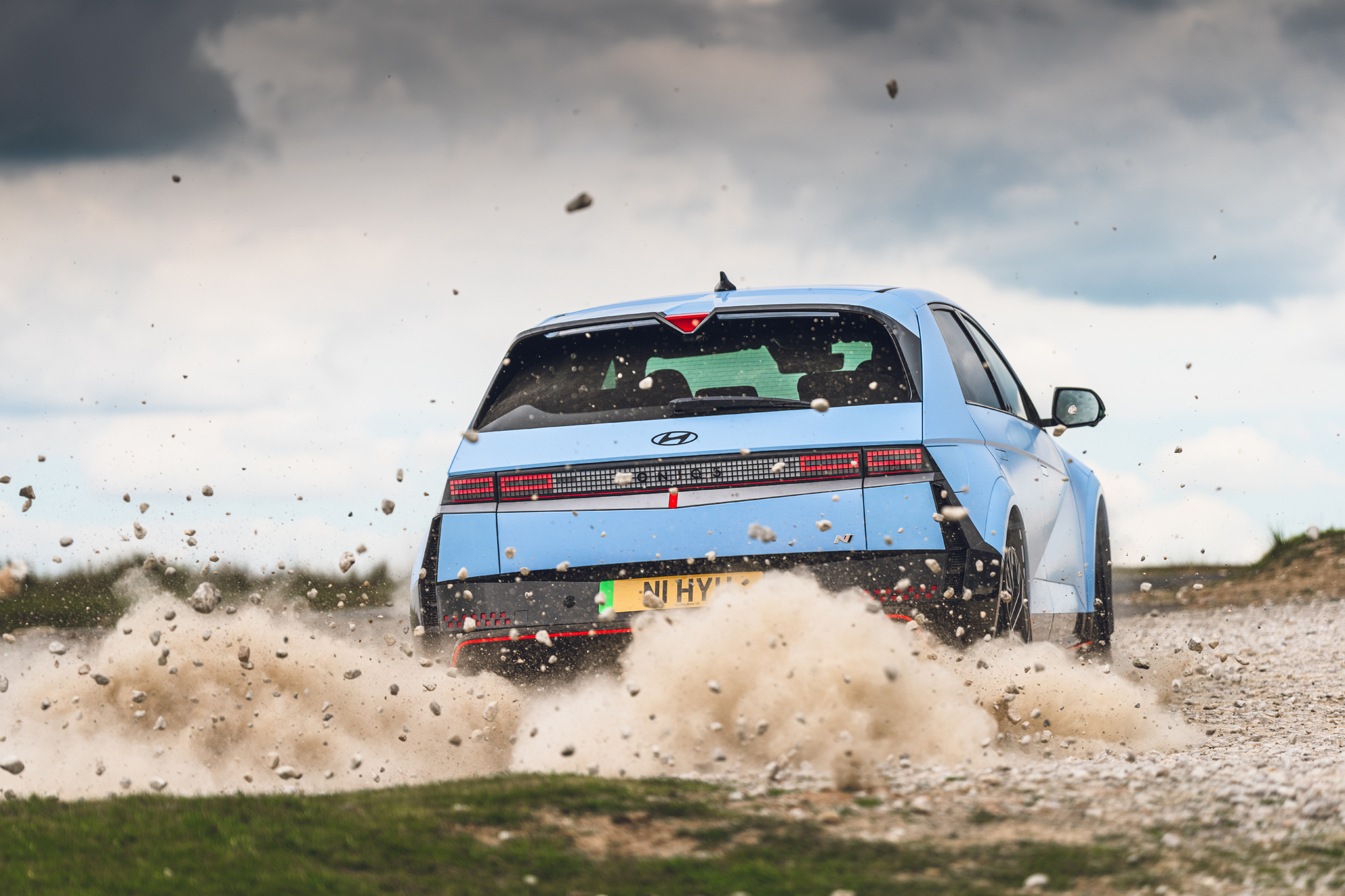
THE GOOD: Raucous yet surprisingly easy to live with; good value if you view it as a practical BMW M3 rival
THE BAD: Breadth of configurability takes some getting used to
THE UGLY: Interior quality could be better
NEED TO KNOW: The Hyundai Ioniq 5 N reminds us of the Nissan GT-R. It has that same, slightly demented but endlessly lovable aggression to the way it bullies nonchalantly through corners at improbable speeds.
For all that, the Ioniq 5 N is more notable for being playful and engaging, as well as stupidly capable. This is a 641bhp (601bhp when not in ‘N Grin’ full-bore overtake mode) electric hyper-hatch that you can make fully front-wheel drive, or fully rear-wheel drive. You can make it sound like a jet fighter, a computer game, or a good old-fashioned petrol engine that pops and bangs on the over-run (it doesn’t have an over-run, obviously). You can change gears (although there are no real gears, either) and bounce off the redline (nope, no real rev limit). This is a level of configurability that only an electric car can offer, and the Ioniq 5 N is unashamed about making the most of that.
But Hyundai hasn’t forgotten the critical stuff; the mechanical bits that make it drive beautifully. The tautly-sprung yet well damped suspension, talkative steering, a front end that feels nailed to the road… This is one of those cars that generally sounds horribly complicated and falsified when described, but trust us on this: the Ioniq 5 N is the best performance electric car out there. That’s what all our testers – even the cynical ones – thought after driving it.
THE ONE TO BUY: There is only one Ioniq 5 N
KEY DATA: Range 278 miles; efficiency 3.4 miles per kWh; max DC charging 20 minutes 10-80%
2 Renault 5: best compact hatch
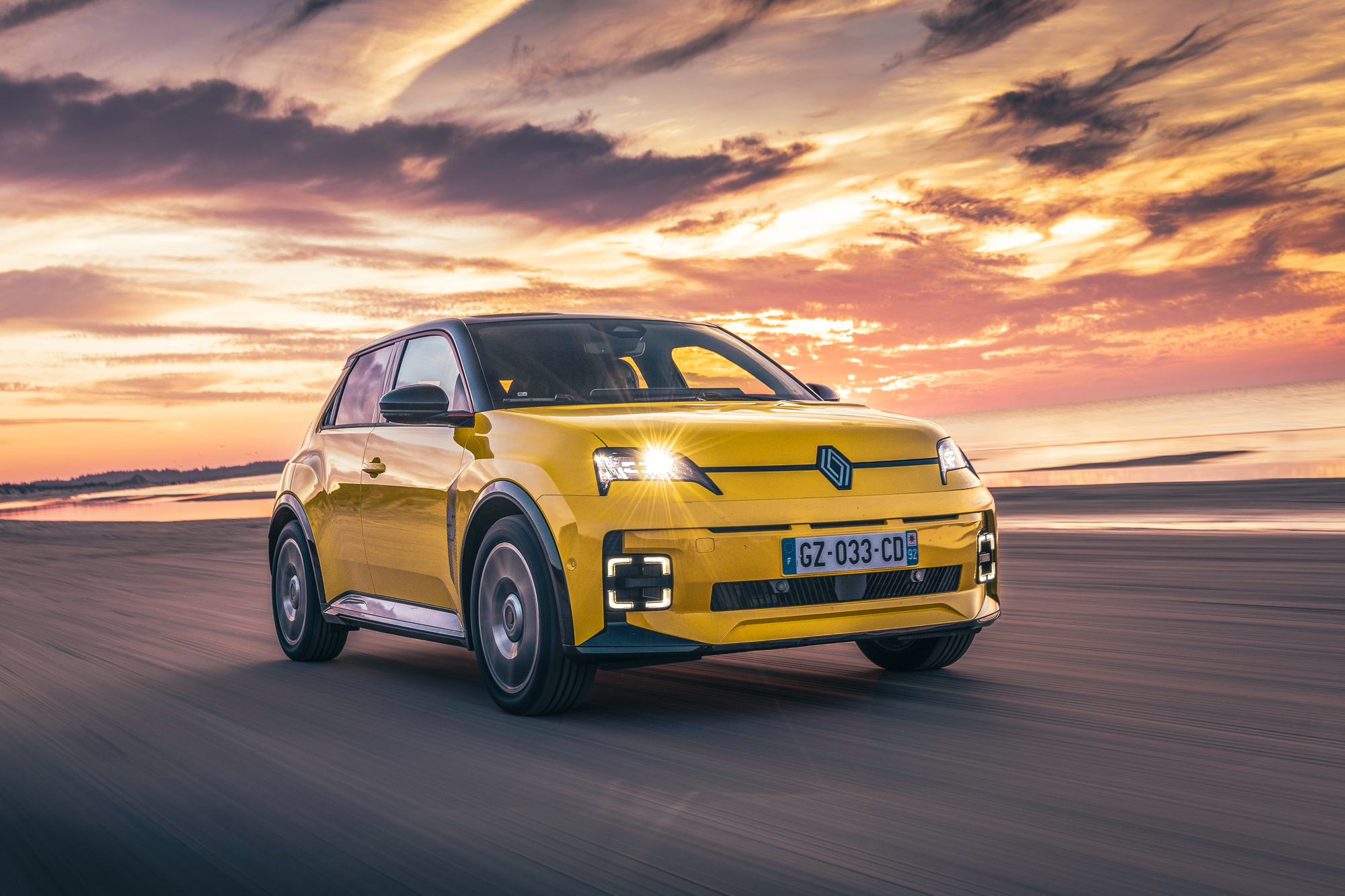
THE GOOD: The way it looks, the way it drives, surprisingly practical, the price… You need more?!
THE BAD: Fiddly gear selector stalk; no frunk
THE UGLY: What ugly? Just look at it
NEED TO KNOW: The Renault 5 E-Tech is an absolute gem, and the last time we did this ranking we declared it king of the whole bunch. It’s usefully compact at just under 4.0 metres long yet also gets five doors, a usable rear bench (a couple of kids will be absolutely fine) and a surprisingly roomy boot.
There’s the choice of a 40kWh LFP or 52kWh li-ion NMC battery; we’d go for the bigger battery as it brings a range of 255 miles as well as slightly faster charging. And you’ll want to make use of it, too, as the 5 is peachy to drive. It’s fairly lightweight, at under 1500kg, and that pays off with tidy handling and cushy ride comfort, while the fast steering rack and 10.3-metre turning circle make it feel satisfyingly zippy about town or on a fast road, while it’s confident and laid-back everywhere else.
The real joy of the Renault 5 is that it ticks those sensible boxes, but it’s also a car you want just for the sake of it. It’s an everyday, affordable EV that even die-hard purists mutter about with a tinge of yearning. It’s a common-sense budget EV that’s also aspirational. For that reason it’s our best compact hatch, and our overall runner-up, ahead of the Taycan, which is quite some achievement given how much we like the Porsche.
THE ONE TO BUY: Mid-spec Techno, which gets the ‘5’ charging indicator on the bonnet and other useful bits of kit, plus the option of the bigger, ‘comfort range’ battery
KEY DATA: Range 255 miles; efficiency 4.77 miles per kWh; max DC charging 35 minutes 10-80%
1 Renault 4: best electric car
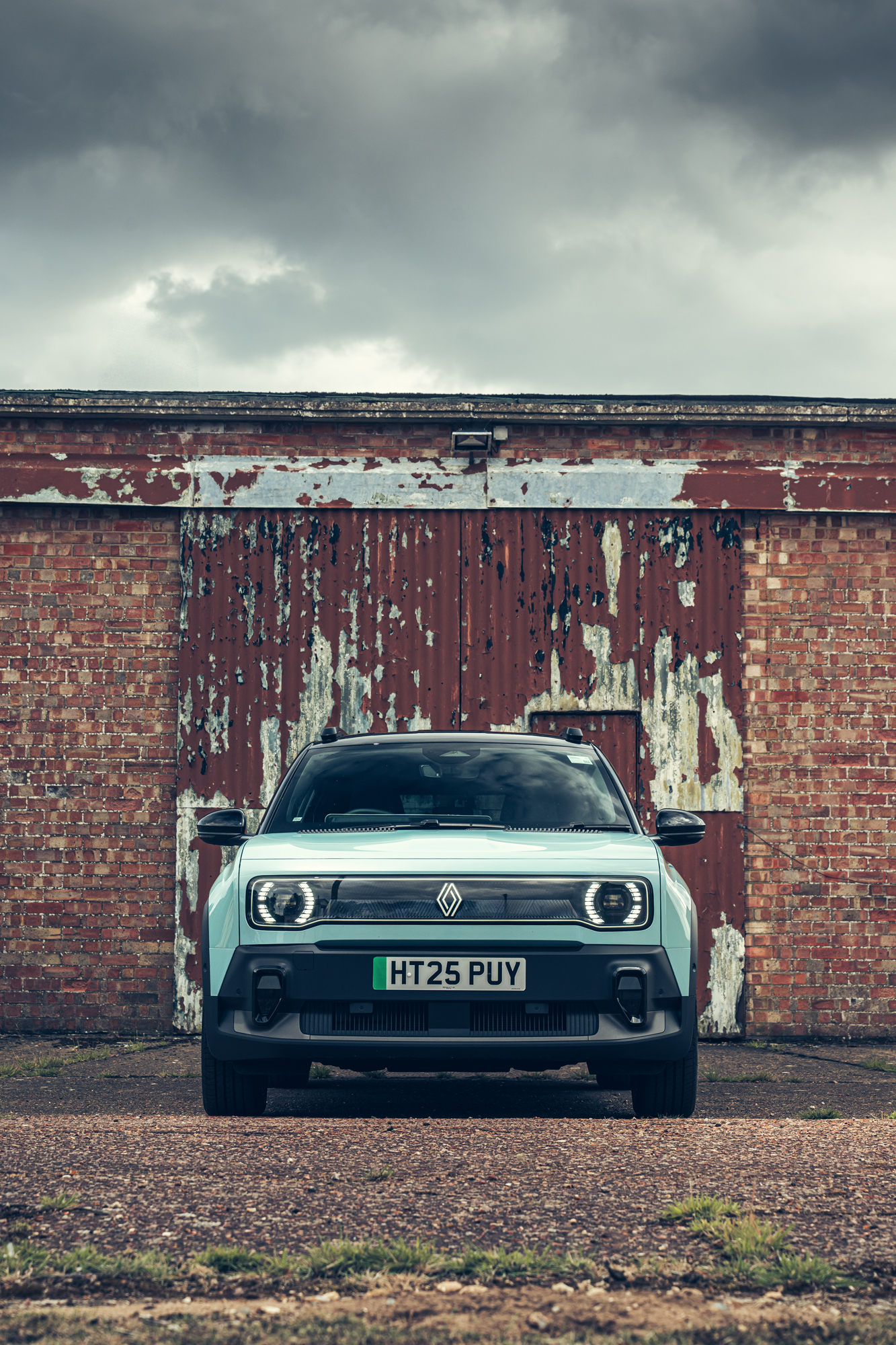
THE GOOD: Cute looks; great value; big boot
THE BAD: Others have better passenger space; heated seats only on top-spec cars
THE UGLY: Absolutely nothing ugly about this one
NEED TO KNOW: The Renault 4 E-Tech is the slightly more practical version of the Renault 5. It’s the same platform and battery underneath, and the same dashboard and infotainment – which is no bad thing given that it’s a cute, well-finished dash and a user-friendly system with integrated Google maps. As with the 5, you get a 52kWh battery for a 247-mile range, but the Renault 4 is a touch longer, a touch boxier, and is usefully more spacious in the back. You could live with the Renault if you’ve got a small family – especially as the 420-litre boot is actually bigger than the boot in a VW ID. 3. Only the Ford Puma Gen-E offers a bigger boot at this sort of price.
It’s just a great all-round package. It’s almost as cute and desirable as the Renault 5 (especially if you go for one of the top two trims that get the owl-eyed, illuminated grille), it’s fun yet and light-footed to drive, the range is good enough for most drivers to live with, and the price is great.
Renault’s on a roll at the moment with everyday EVs that appeal to the head and the heart, and the 4 is a great case in point. You can even have it with a scrolling fabric roof and a baguette holder.
THE ONE TO BUY: Iconic trim if you want heated seats, but Techno is best value. There’s only one battery, so that choice is made for you, too
KEY DATA: Range 247 miles; efficiency 4.0 miles per kWh; max DC charging 30 minutes 10-80%