
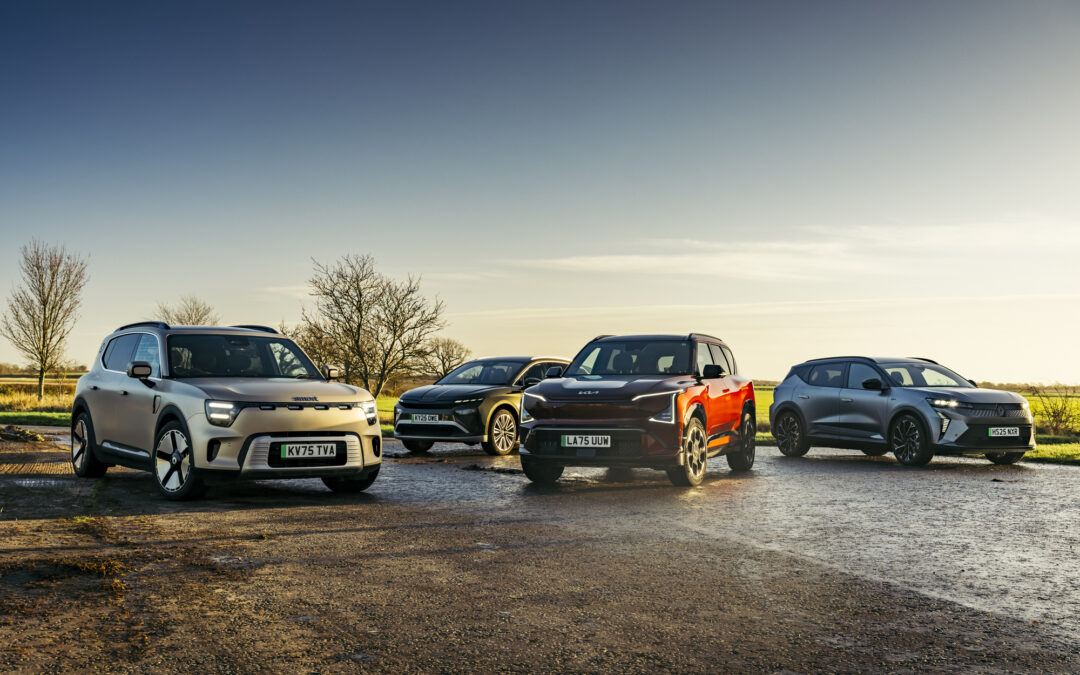
It’s South Korea vs Europe! Which family EV is best?
The mid-size Sportage SUV has driven Kia’s meteoric rise since 2010, and now the Korean maker hopes to emulate its success with the all-new, all-electric EV5 – available from £39,345, it’s the closest zero-emissions alternative yet to Kia’s global best-seller, which remains very much on sale in combustion form.
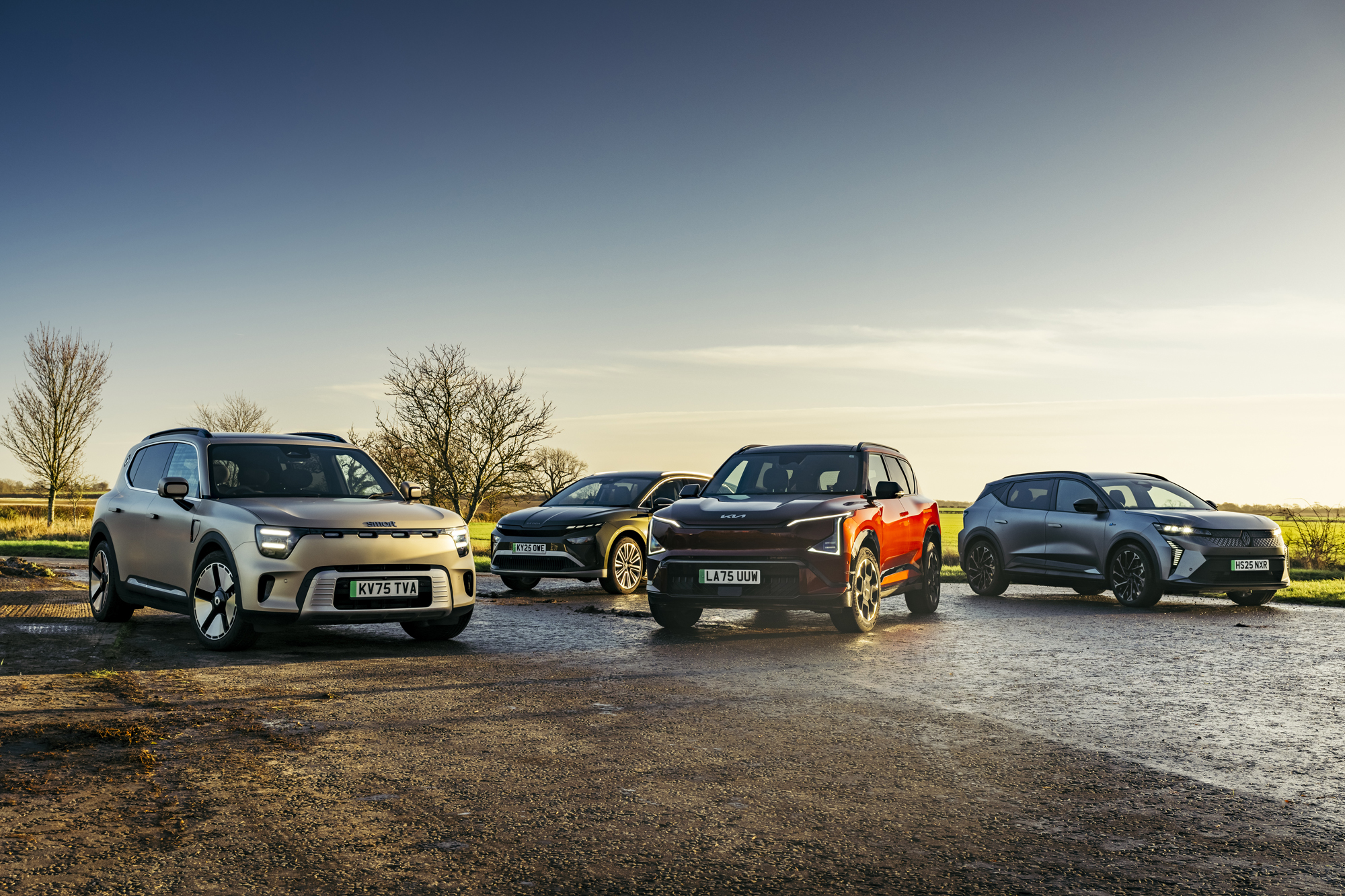
It faces tough competition. C-segment SUV buyers also have their pick of the European electric alternatives we’ve assembled – the Skoda Enyaq, brand new Smart #5 and Renault Scenic E-Tech – all of which hover around £40k.
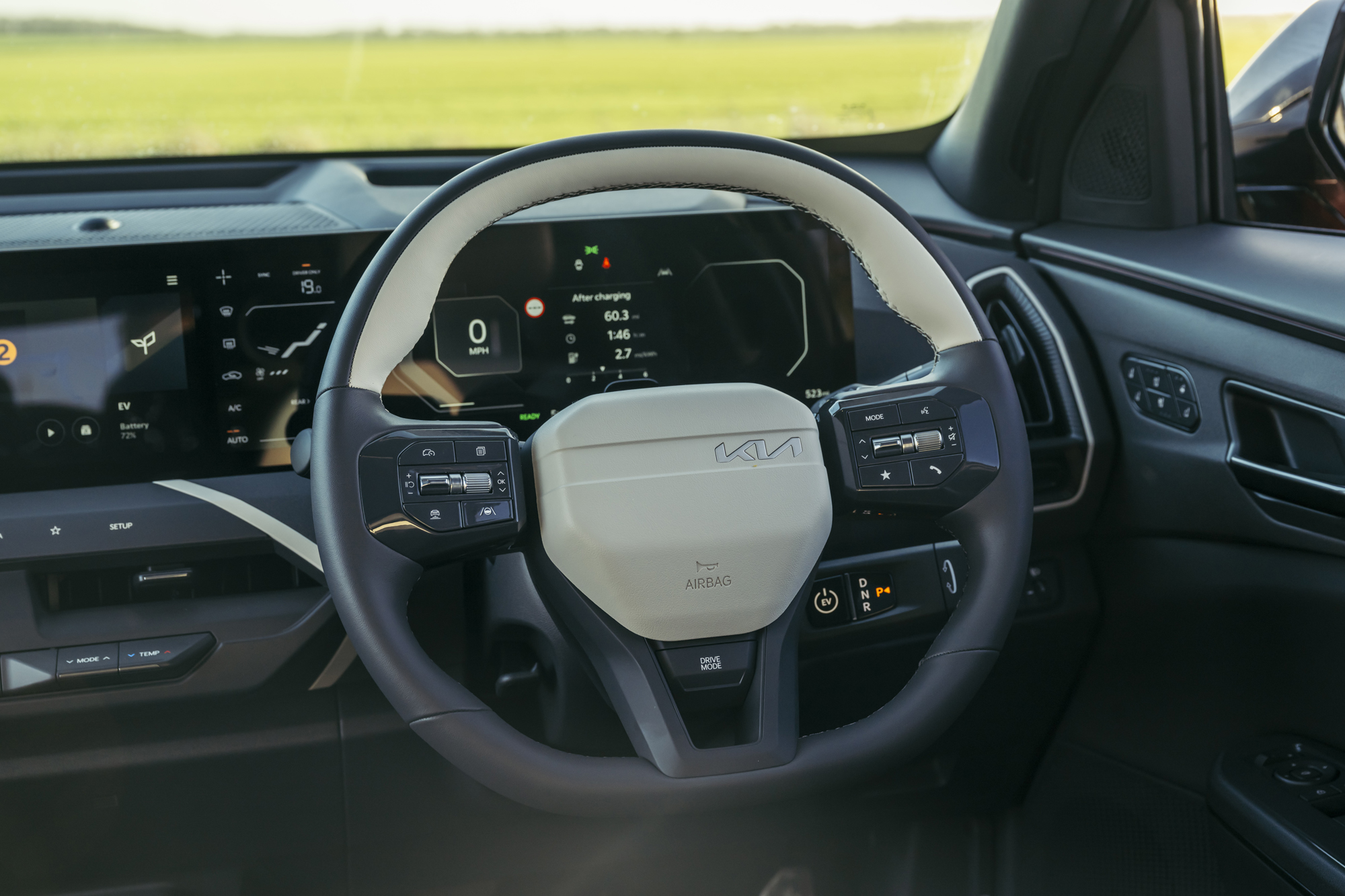
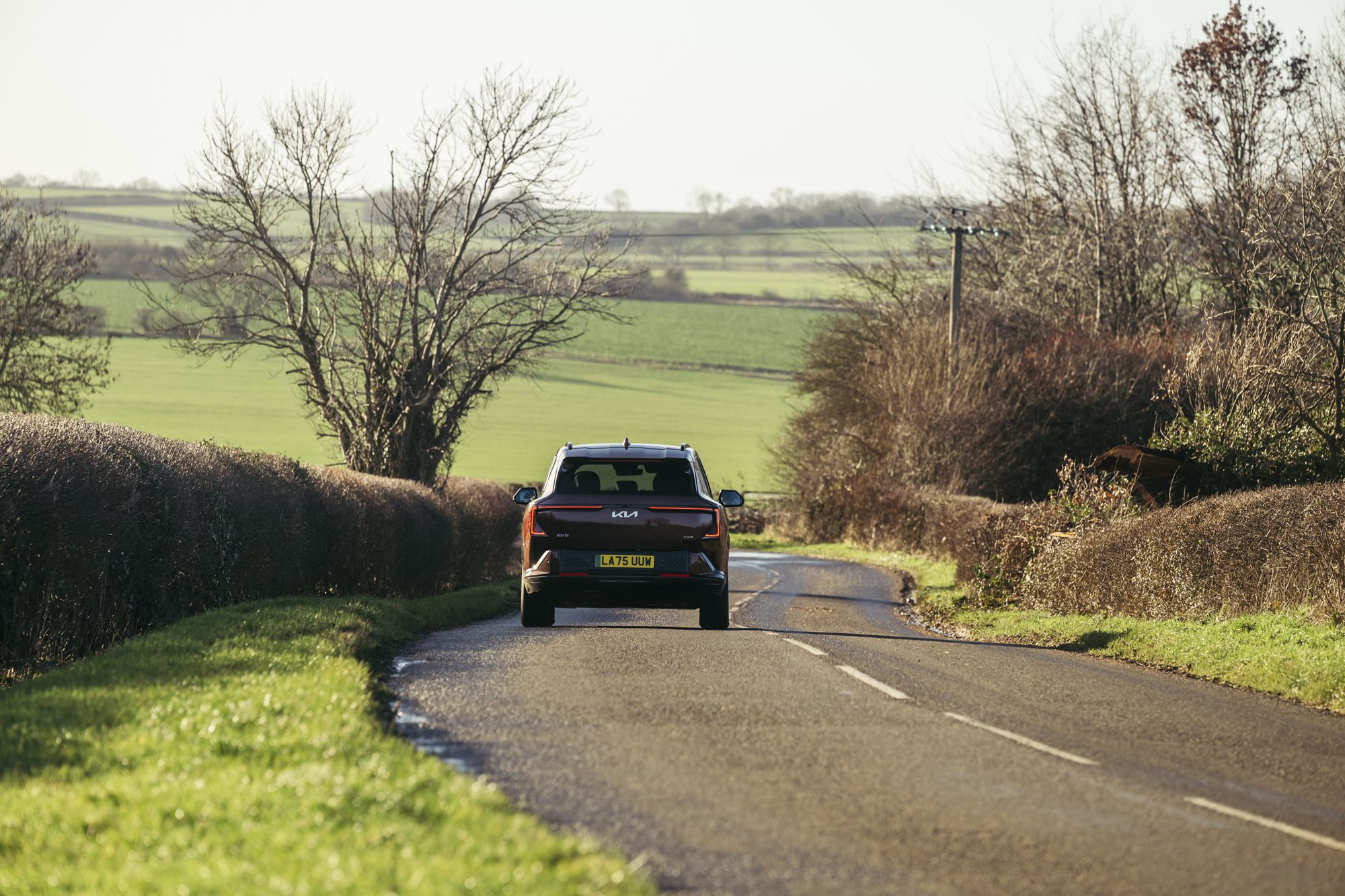
Related only conceptually to the Sportage, the EV5 sits on Kia’s capable and proven E-GMP platform, first seen under the EV6. An 81.4kWh battery charges at up to 127kW and sends 214bhp to the front wheels alone. While its footprint is closest to the Sportage on paper, the EV5 grows in both length and wheelbase, and looks obviously larger in the metal. The bluff, almost digital styling – like a printed circuit board rendered in 3D – is paired with a long rear overhang and high roofline that suggest three-row seating.
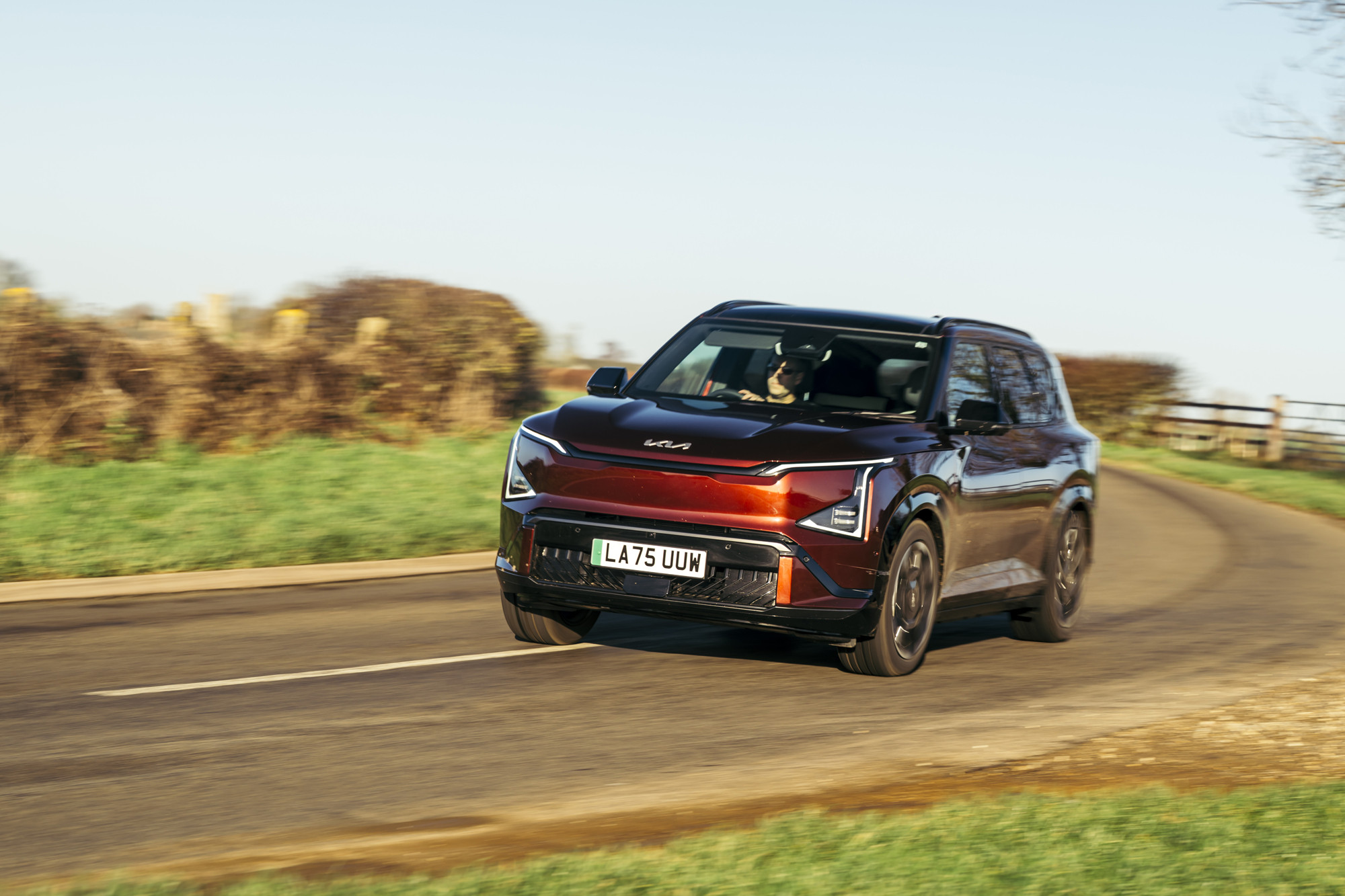
For now, at least, there are only five seats, but space is abundant. The rear floor is flat, legroom is vast and there’s generous storage even if you’ve somehow filled the 566-litre boot. There’s also a small amount of under-bonnet storage if you do. A shame, then, that the cabin itself is so drab, with prominent hard plastics, firm seats and a general lack of flair – and this in the top-spec GT-Line S, which costs £48,045.
The driving experience is similarly vanilla. The EV5 feels softly sprung and lazily damped, so there’s some squidge and delay as you turn. It’s only moderately quick and nips a spinning front wheel abruptly if you hurry it away from a junction. Yet settle into a drive and the Kia works very well, with decent refinement and nicely calibrated throttle and brakes.
Efficiency testing adds another string to the EV5’s bow. Its battery is marginally the smallest on test, it has the lowest peak charging rate at 127kW and the shortest claimed range at 313 miles, yet on our test route – a mix of brisk B-road driving, steady urban running and dual carriageway cruising – it averaged a best-on-test 3.2 miles per kWh. That’s good for around 245 miles of real-world range. As fellow tester Alan Taylor-Jones neatly puts it: ‘The Kia does nothing to really make you want to buy it – and nothing to really put you off.’
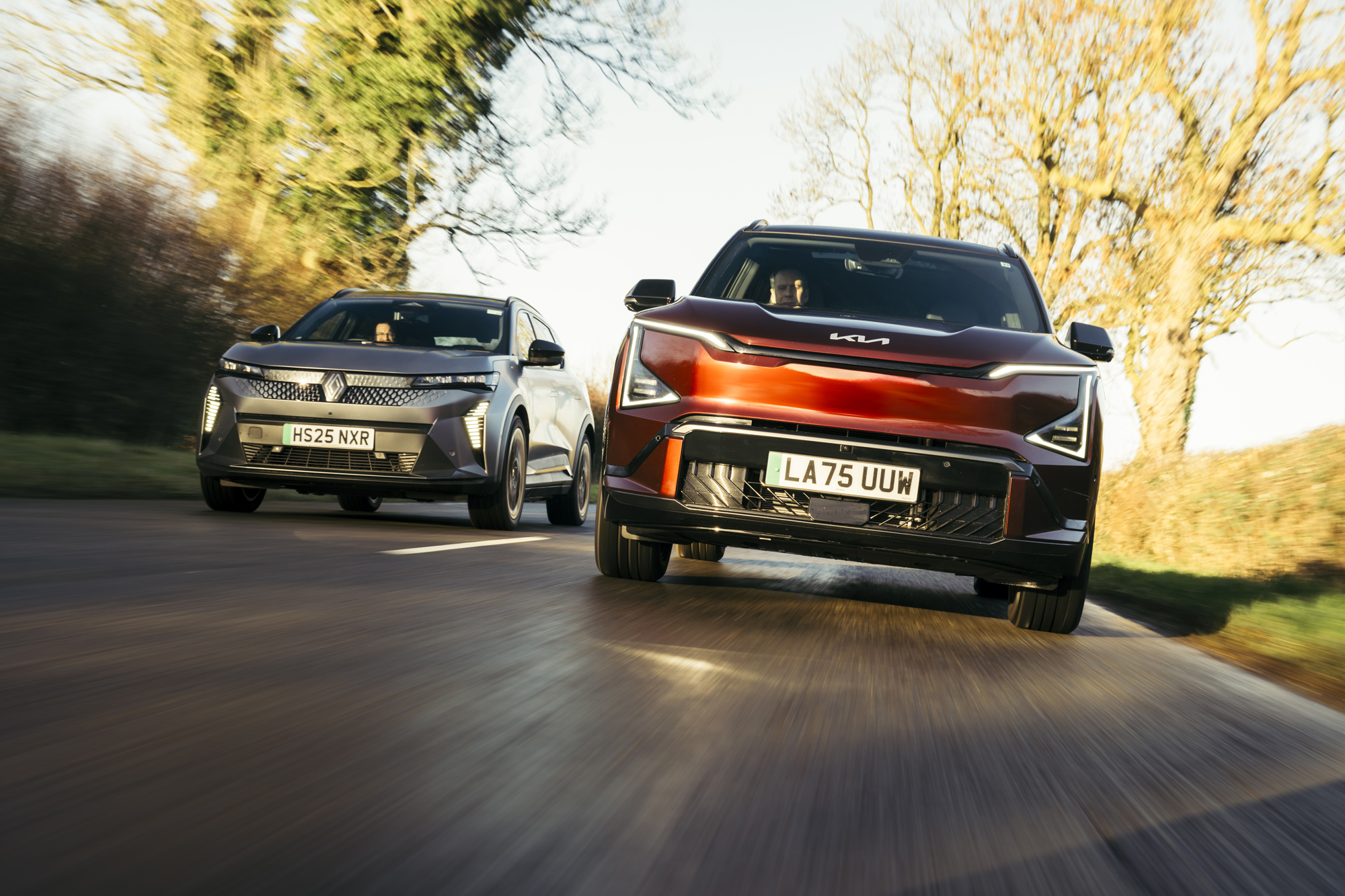
The now purely electric Renault Scenic dances to a different tune. There’s a more overtly sporting character here, a dash of Parisian pizzazz, and a certain swagger after winning the 2024 European Car of the Year award. Unlike the Kia’s one-size-fits-all approach, the Scenic offers a choice of 60 or 87kWh batteries and either 168bhp or 217bhp. Pricing starts from a test-best £35,495, while even our fully loaded 87kWh Iconic Esprit Alpine test car comes in at £41,995. Highlights include 20-inch alloys, an opacifying panoramic roof, nine-speaker Harman Kardon audio and Google built-in to the R-Link infotainment.
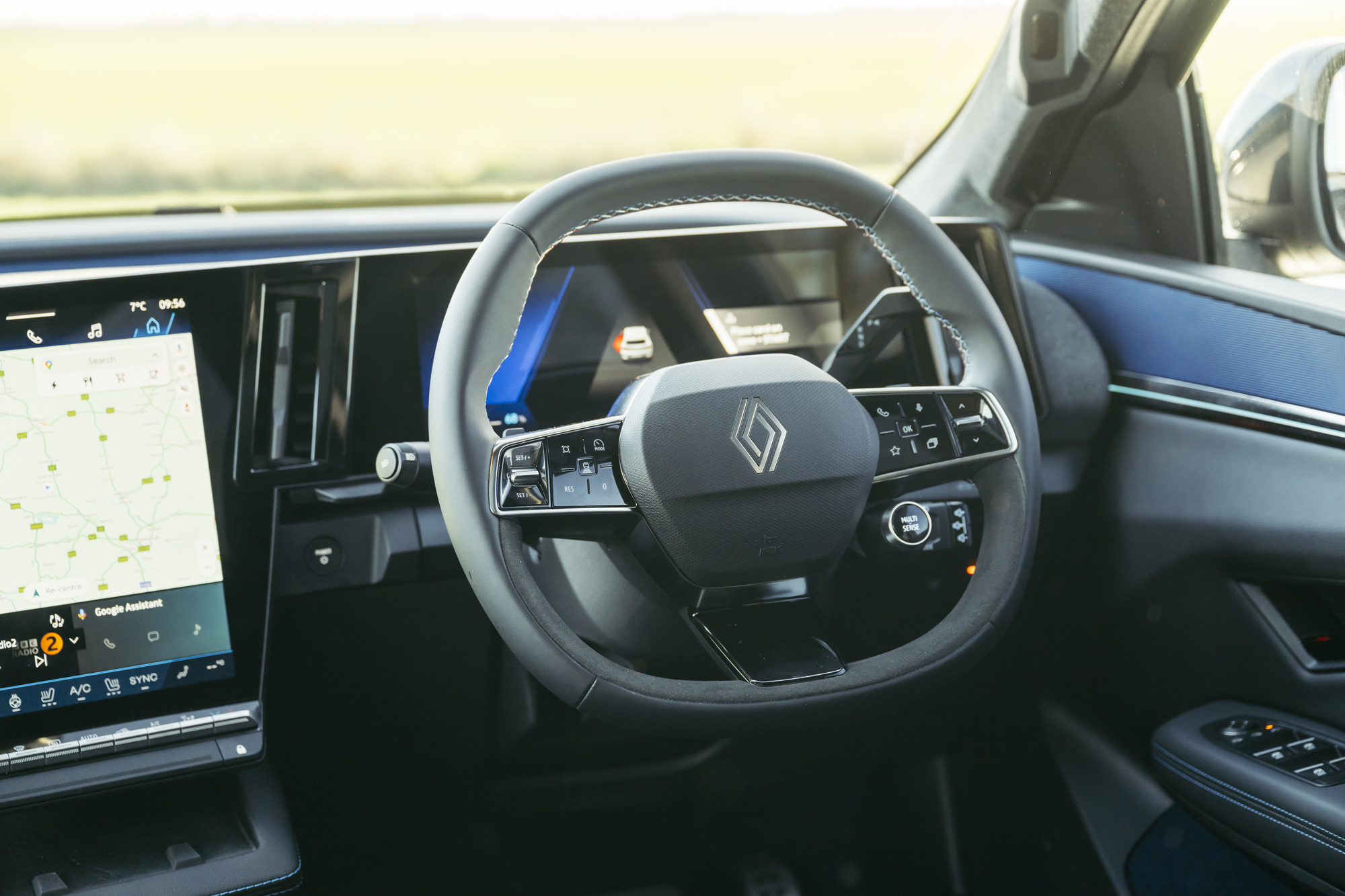
The Scenic sits on Renault’s AmpR electric platform but – true to the nameplate – there’s a comforting familiarity to both its exterior and interior. Outside, it’s a crisp, angular evolution of the Scenic template, with a hint of Avantime in the strong shoulder and D-pillar. The interior is sensibly laid out, with physical switches for key functions, deep cubbies, generous storage trays and a clever rear armrest that folds out to reveal cupholders, stands and charging ports.
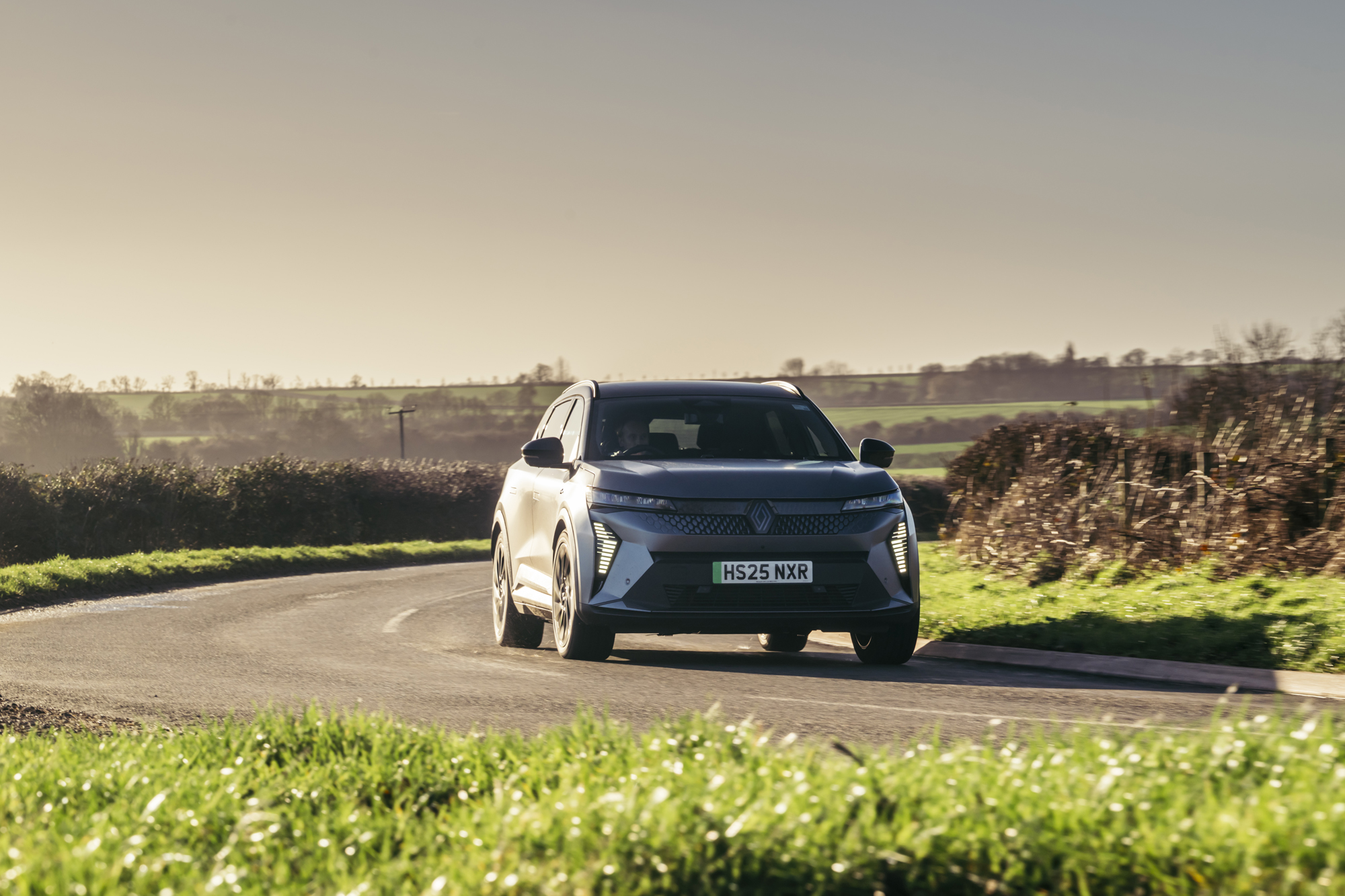
At under 4.5 metres long, the Scenic is the shortest car here and palpably more compact on the road, yet rear legroom remains generous and the 545-litre boot is impressively large for the footprint, even if a pronounced load lip makes it awkward to reach into.
There’s also a dash of daring to the Renault’s interior that’s absent from the Kia. A curved digital driver’s display flows into a portrait central screen that appears to hover above a large storage tray. Fashionable fabrics line the dash top, and the sports seats lead the pack for comfort and support.
Dynamically, the Scenic splits our team. Acceleration builds nicely and the Renault has the spriteliest handling of our four, but I found the steering needlessly quick and nervous, the ride too jittery on poorer surfaces and the brake pedal maddeningly difficult to modulate – like playing some foot-based theremin. For me, a more relaxed gait would better suit the brief. Editor Ben Miller and Alan Taylor-Jones enjoyed it much more, and happily swap tales of lift-off oversteer.
Conditions have deteriorated by the time we run the Scenic’s efficiency test, with wipers and headlights in constant use, yet it still returned 2.7 miles per kWh – good for around 220 miles of real-world range. Also in its favour are a 150kW peak charging rate, a standard heat pump (for swift and effective cabin heating in winter) and the ease of finding fast chargers via Google integration, with intelligent battery pre-conditioning when a charge stop is programmed into the navigation.
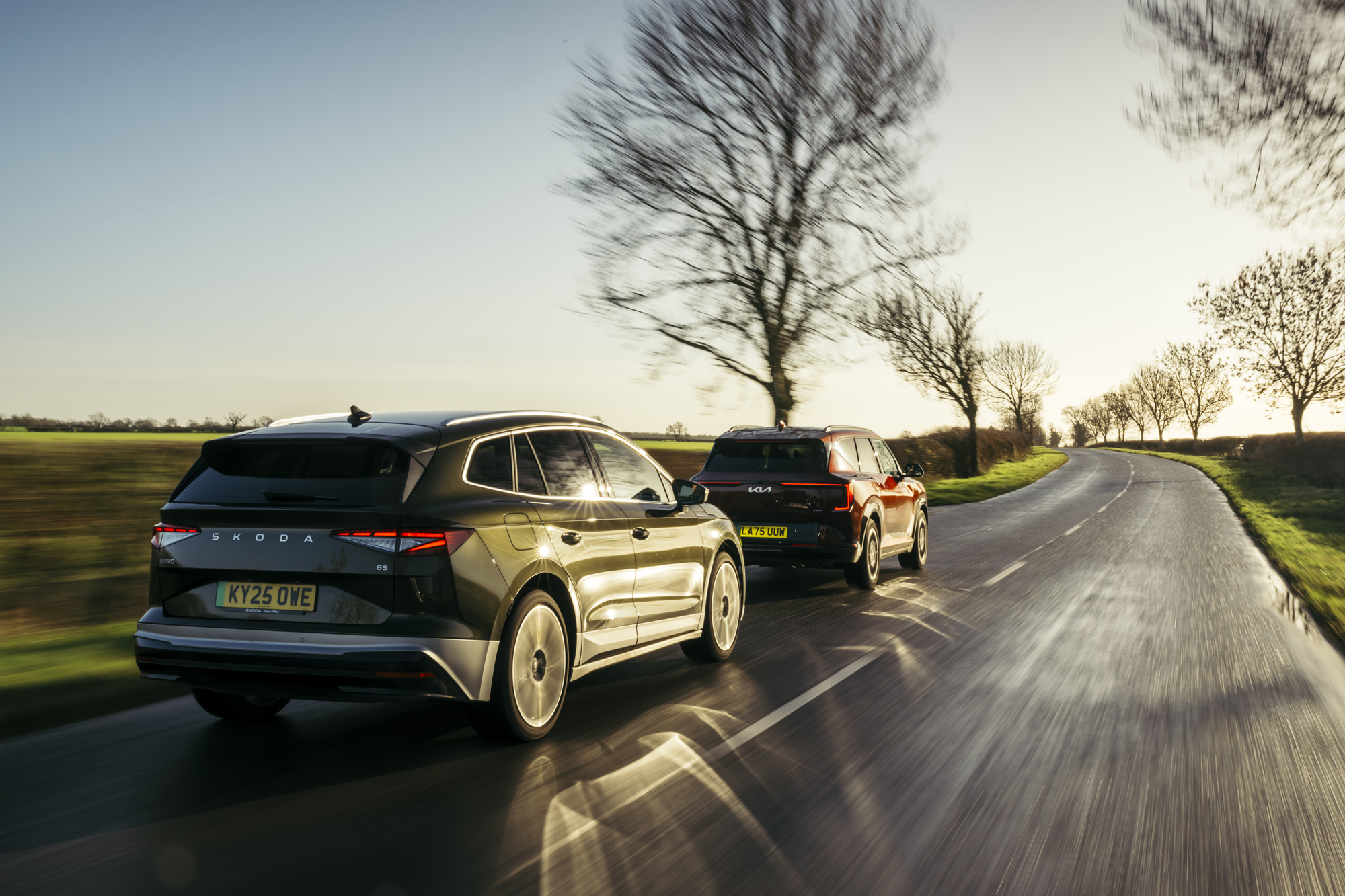
The Skoda Enyaq sits somewhere between the Kia and Renault in feel and concept. Launched in 2020 as Skoda’s first electric car, it’s since been refreshed with extra performance and range, and most recently facelifted with a dose of ‘Modern Solid’ design that helps drop its drag coefficient to an elbows-in 0.245Cd.
There’s a choice of either 63 or 82kWh batteries and outputs of 201 or 282bhp, with the larger pack offered in rear- or all-wheel drive. The most affordable Enyaq starts from £39,010. Our test car is in RWD Edition 85 Lounge trim, its £44,550 price inflated to £47,710 by Olive Green metallic paint, 21-inch alloys and the Lounge Design Selection pack.
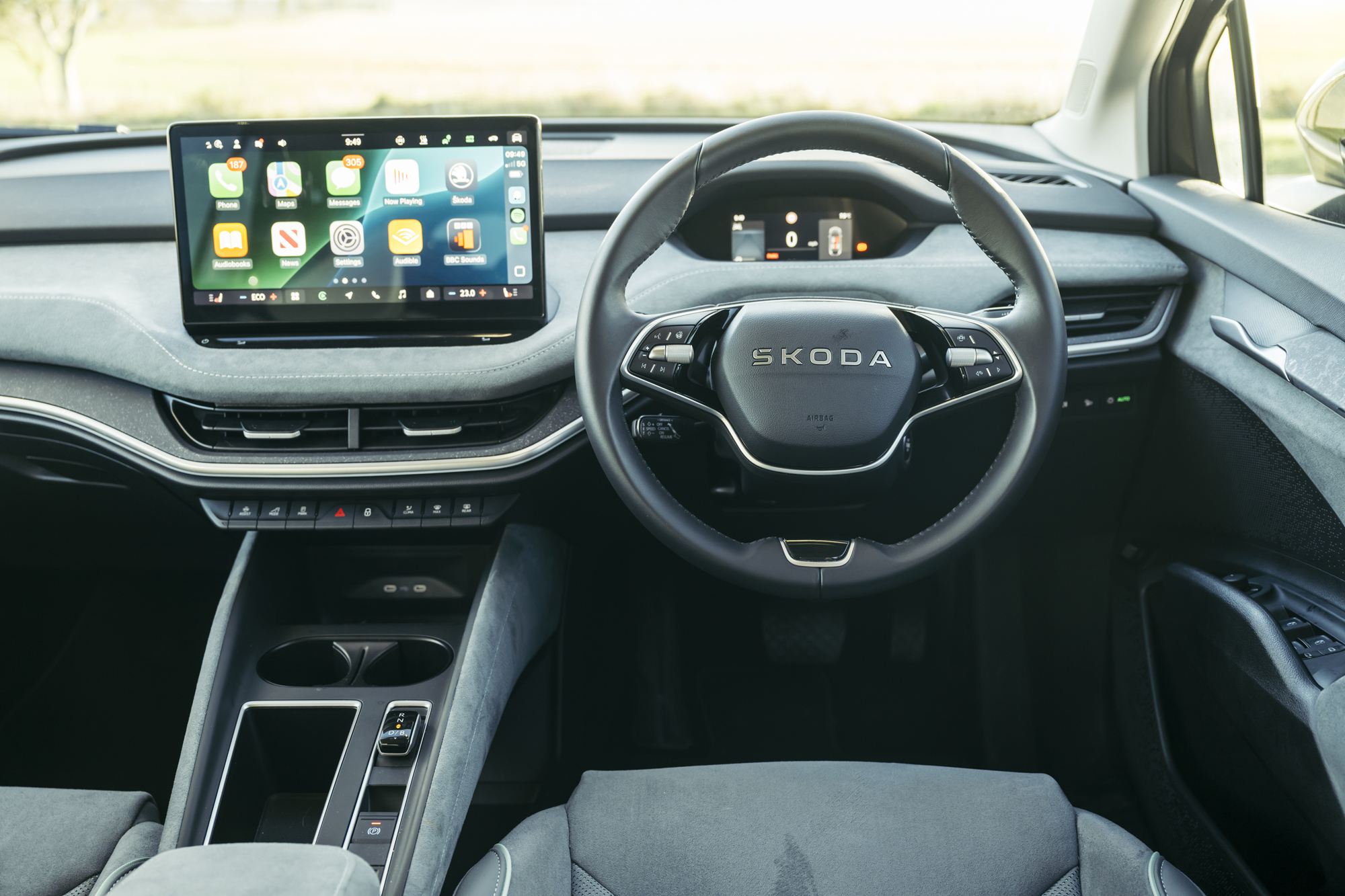
It’s a striking, expensive-looking thing, with crisp surfacing, slim headlights and a relatively low-slung profile that should appeal to those with SUV reservations but a need for space. And there’s certainly space. Rear headroom is immense, the back seats feel vast and the boot is a huge 585 litres. Natural fabric and wool upholstery lend textural warmth, the minimalist layout encourages calm and a few hard plastics fail to dent the overall impression of quality. The small digital instrument display feels oddly modest by modern standards, but it’s clear and well placed, and there’s a large 13-inch central touchscreen to handle infotainment duties.
The Enyaq isn’t perfect to drive. It can fidget over broken surfaces at low speed, body control unravels over faster undulations, and the brake pedal is disappointingly inert when hurried. But for the most part it is serenely refined and relaxing, with a compliant ride, effortless surges of acceleration and better traction when pulling away from junctions than the Kia.
In the same wet conditions as the Scenic, the Skoda averages an identical 2.7 miles per kWh, translating to 208 miles of real-world range. Just remember that in this 85 RWD guise its peak charge rate is 135kW – decent enough, but both the AWD 85 and smaller-battery Enyaq 60 offer higher peaks.
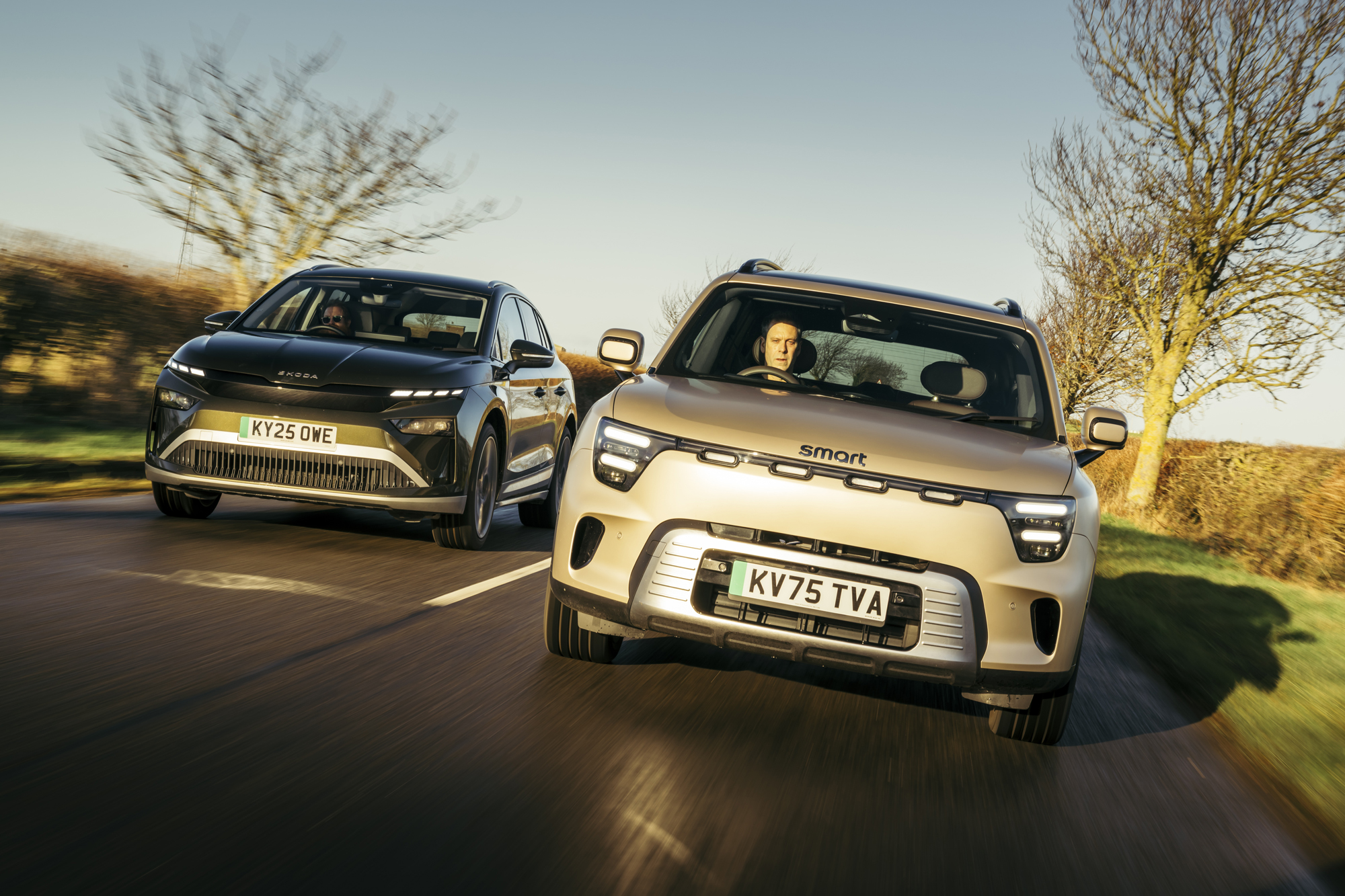
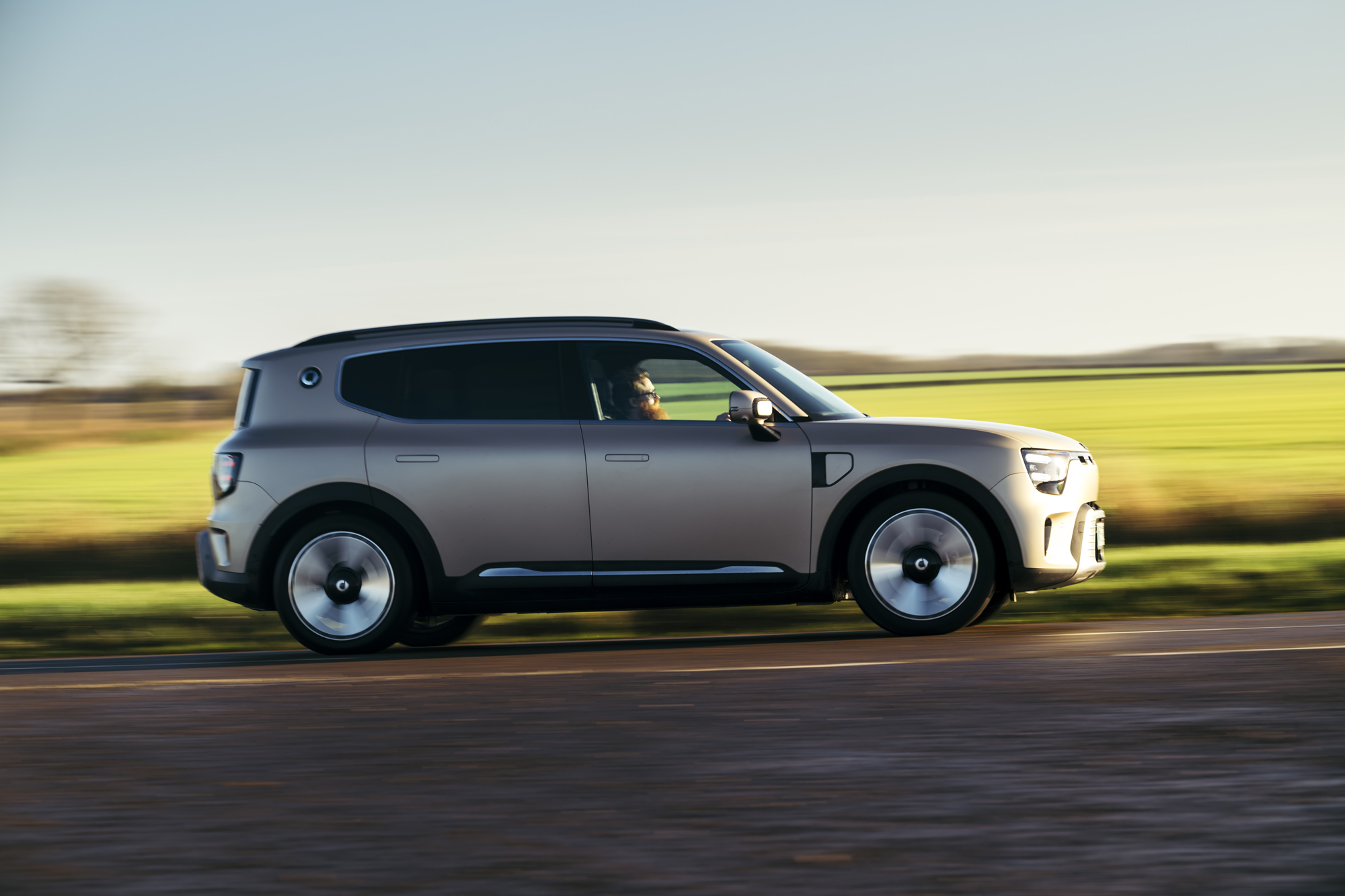
The Smart #5 is the enigma of our group. The name is familiar but is hard to square with the original Smart concept, and its modern backstory – Mercedes-Benz on crayons, Geely leading engineering – is largely unknown.
Our Premium test car sits in the middle of a congested range. With 358bhp, a 100kWh battery and rear-wheel drive, its £47,300 is a £7500 step up from entry-level Pro.
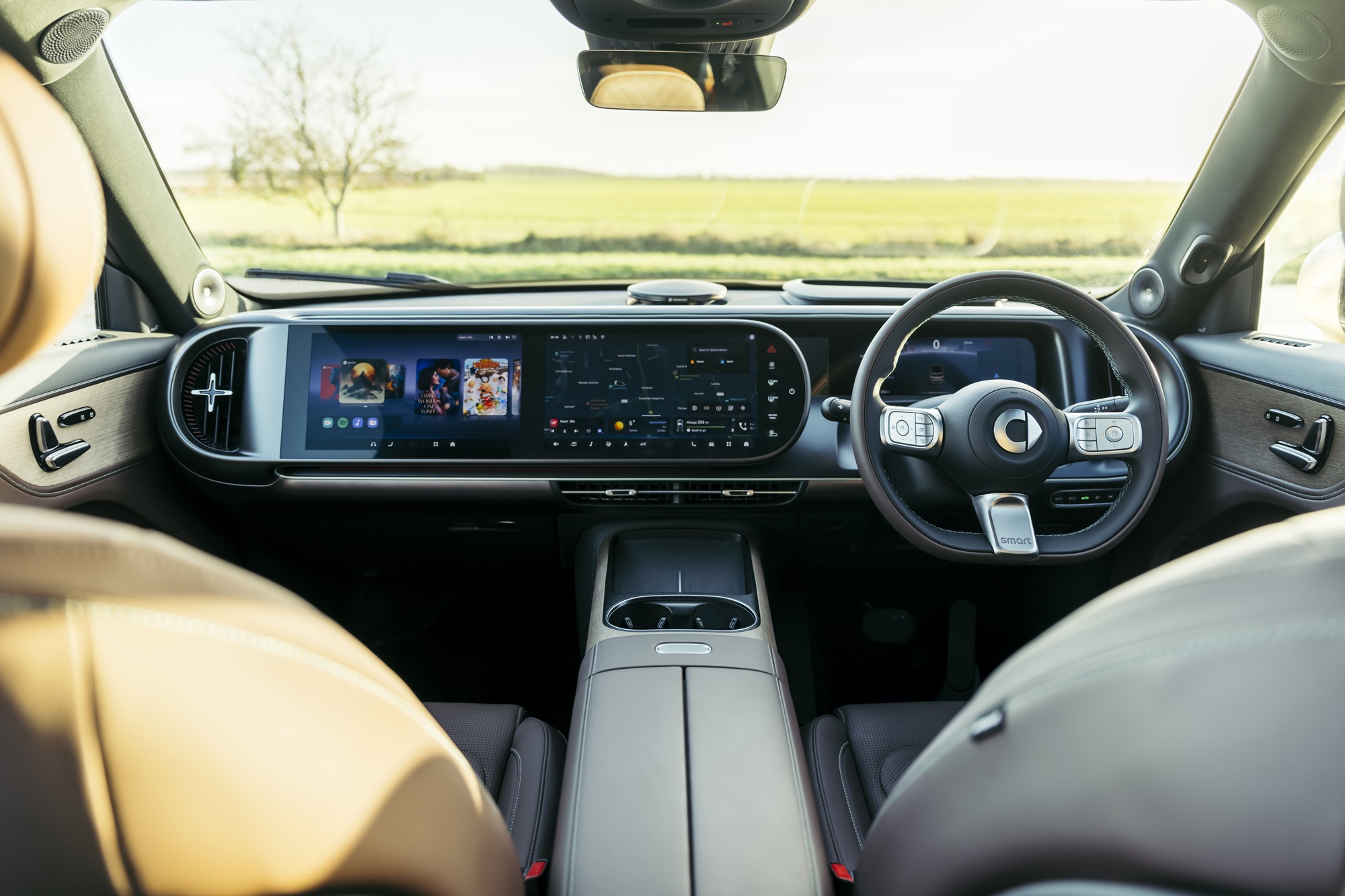
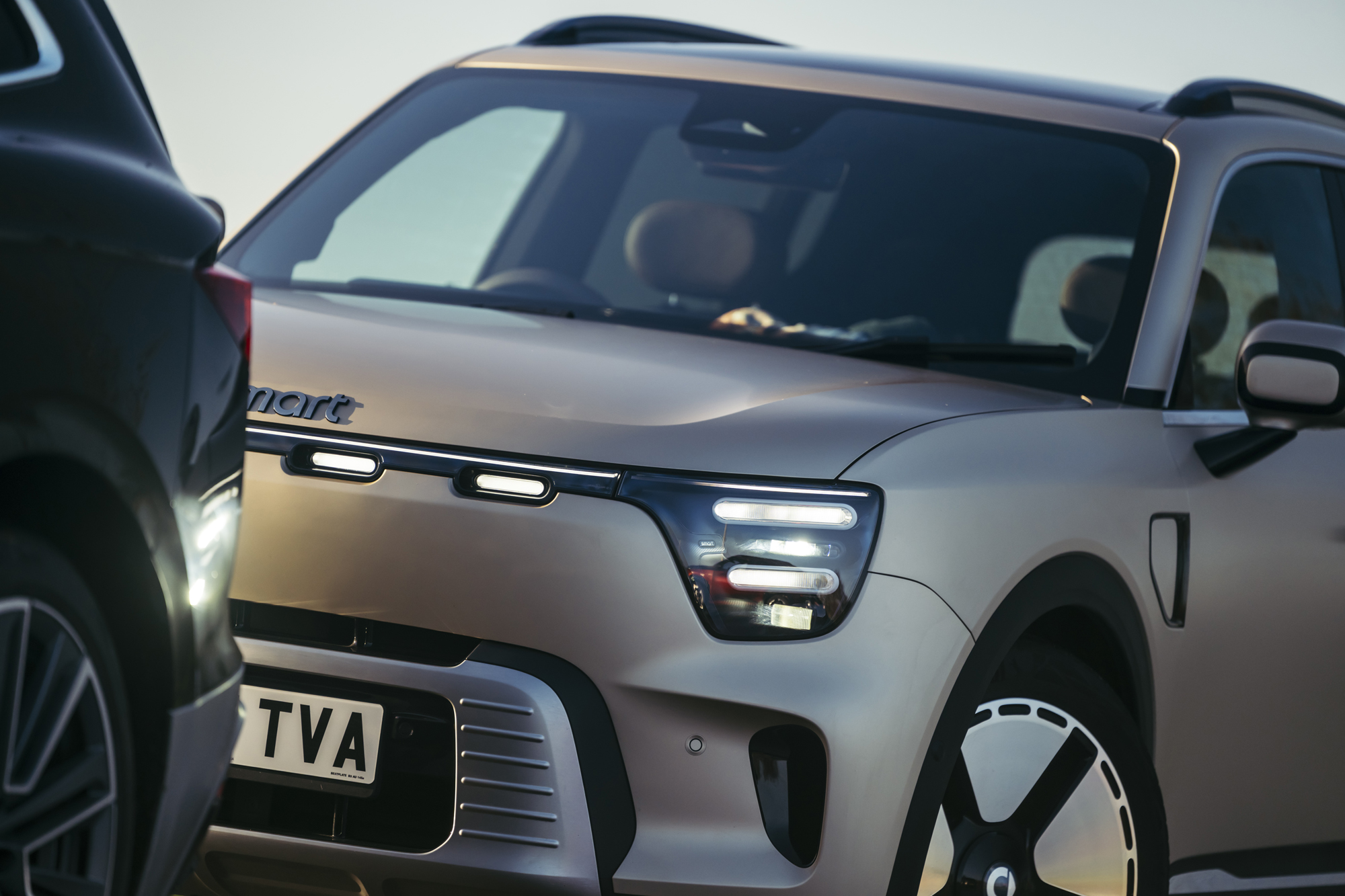
Exterior styling blends the toyish charm of the Kia Soul and Nissan Cube with the kind of SUV maturity normally associated with the likes of Land Rover or, yes, Mercedes. Inside, it immediately feels more lavish than the others and yet there’s still a fresh youthfulness at play. Frameless doors open to reveal double-glazed glass and comfortable ‘duo-leather’ seats, twin 13-inch AMOLED screens stretch across the dashboard, ambient lighting glows softly and brushed metal inserts sit alongside convincing synthetic leather.
Big too – at 4.7 metres long, the Smart is the largest car on test, with the longest wheelbase and a huge 630-litre boot, plus a useful 47-litre frunk.
VERDICT
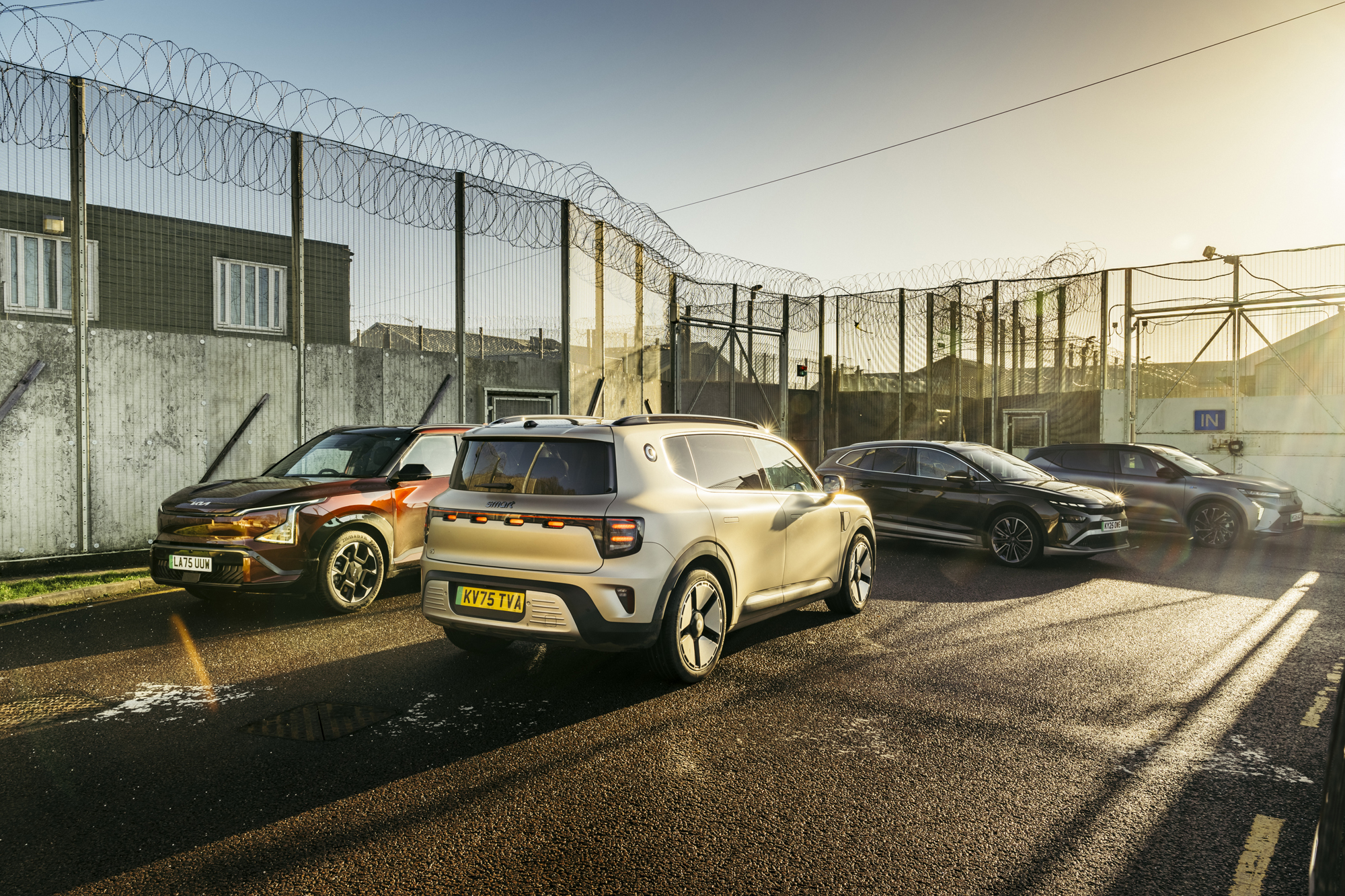
On the road the Smart delivers the polish its nicely resolved design promises. It feels more alert than both the Kia and Skoda, handles cohesively when chucked about and offers a plusher ride than the Skoda. It’s the most satisfying car here to drive and spend time in.
The problem is a lack of efficiency, with the Smart managing just 1.47 miles per kWh on our test loop. A 400kW peak charging capability and the large battery soften the blow, but our as-tested range dips below 150 miles, bringing frequent stops and higher charging costs.
That leaves three other flawed but likeable cars battling for the top spot, and a consensus that while the Smart’s efficiency is undeniably poor, the rest of the package is so accomplished it simply cannot place last. Instead, it’s the Kia that falls first, let down by its drab cabin and unremarkable driving experience, even as it holds its head high with best-on-test efficiency and an easy-going nature. The trusty kitchen appliance of our group.
Second and third come down to a close call between the Scenic and the Smart, but ultimately the Renault takes bronze. Less polished to drive than the Smart and not as richly appointed inside, it still makes a strong case on account of its highly competitive price and strong efficiency that may well suit many buyers better. That leaves the Skoda Enyaq as our pick of the £40k electric SUVs. It isn’t perfect, but it is a relaxing, well-rounded family car that takes the sting out of daily life, feels special inside and out, offers masses of space and delivers second-best efficiency. The Skoda Enyaq is our winner, and a well-deserved one at that.