
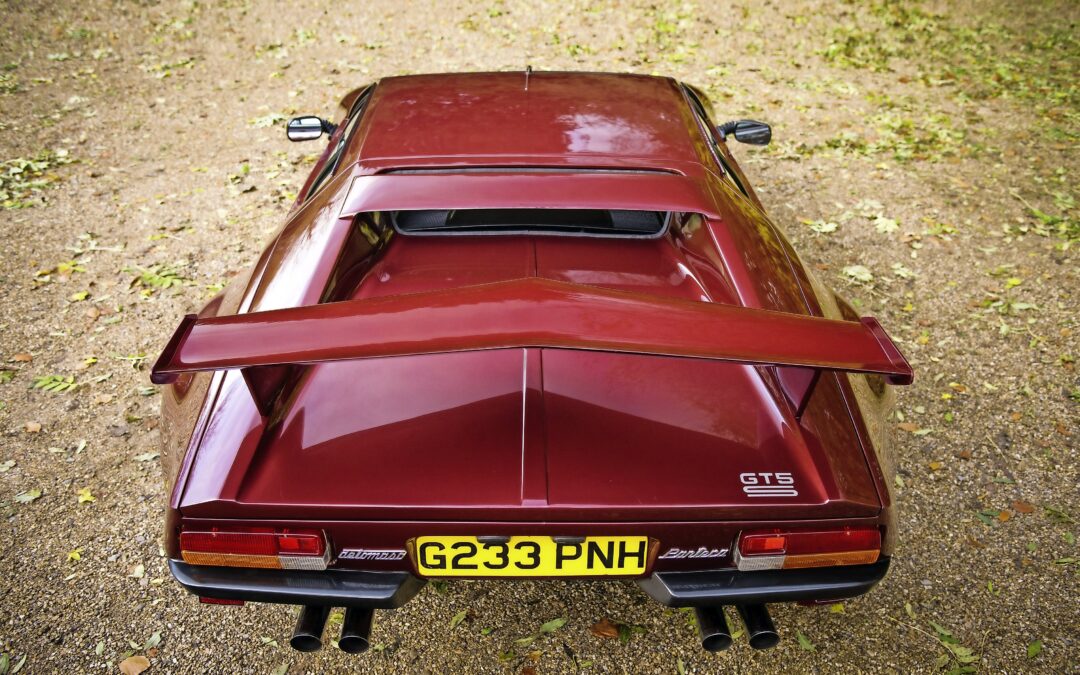
The life story of a De Tomaso Pantera GT5S
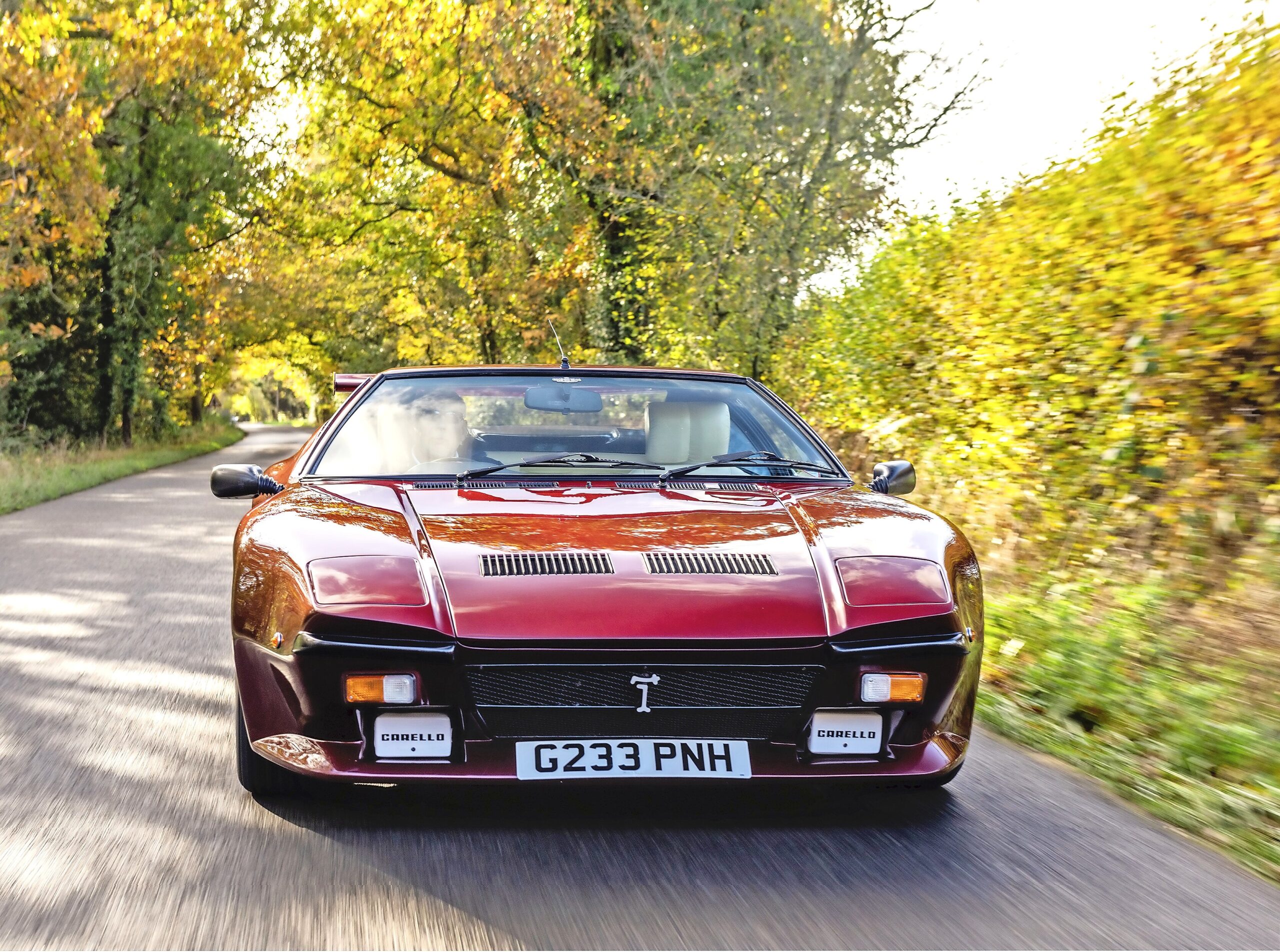
Exactly 30 years after taking delivery of this Pantera GT5S, its only owner tells its tale of wedding parades, engine meltdowns and hot laps with Whizzo Williams
A few honest stone chips prove this Pantera GT5S is a track veteran
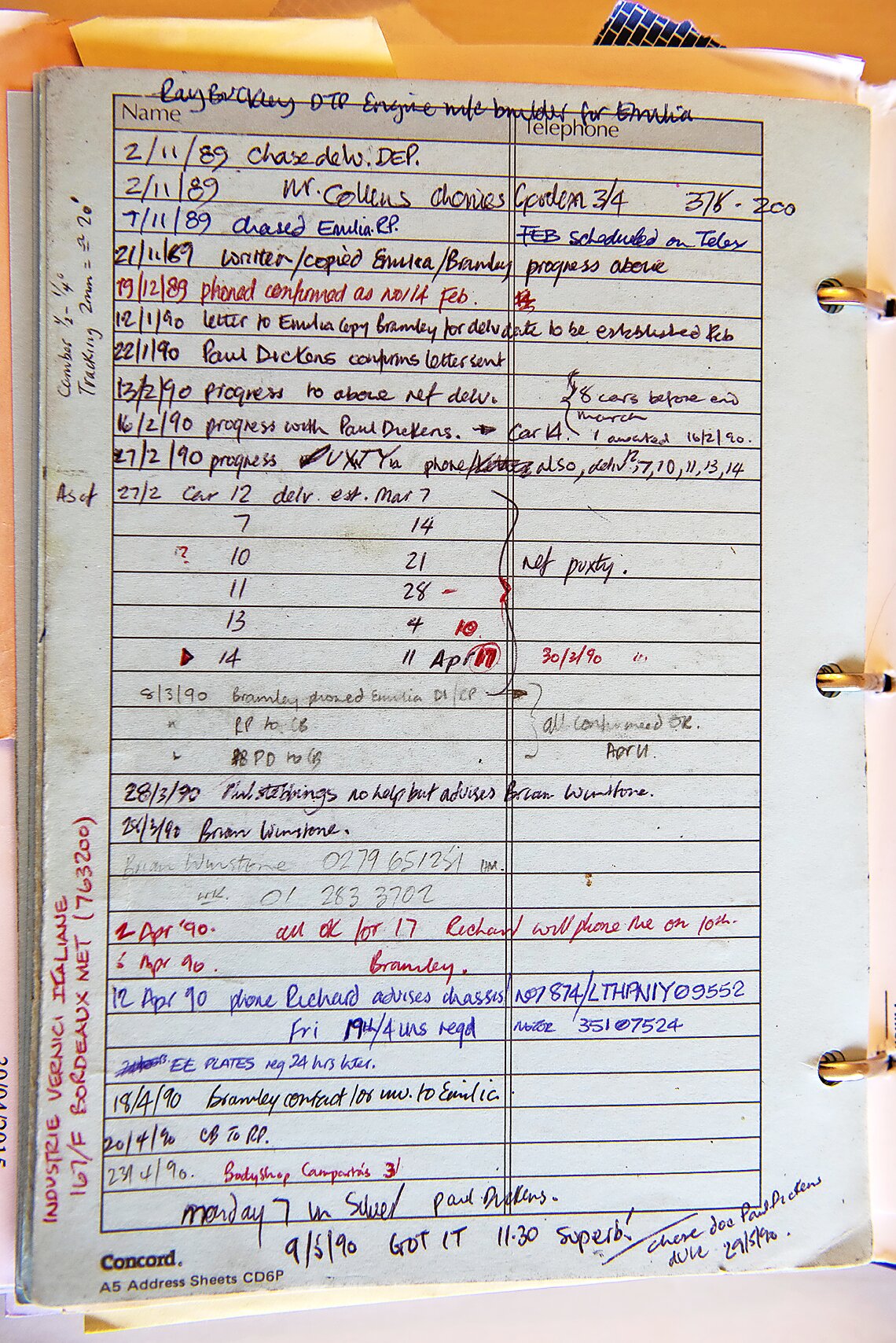
Colin Bradshaw buys a De Tomaso Pantera in 1989
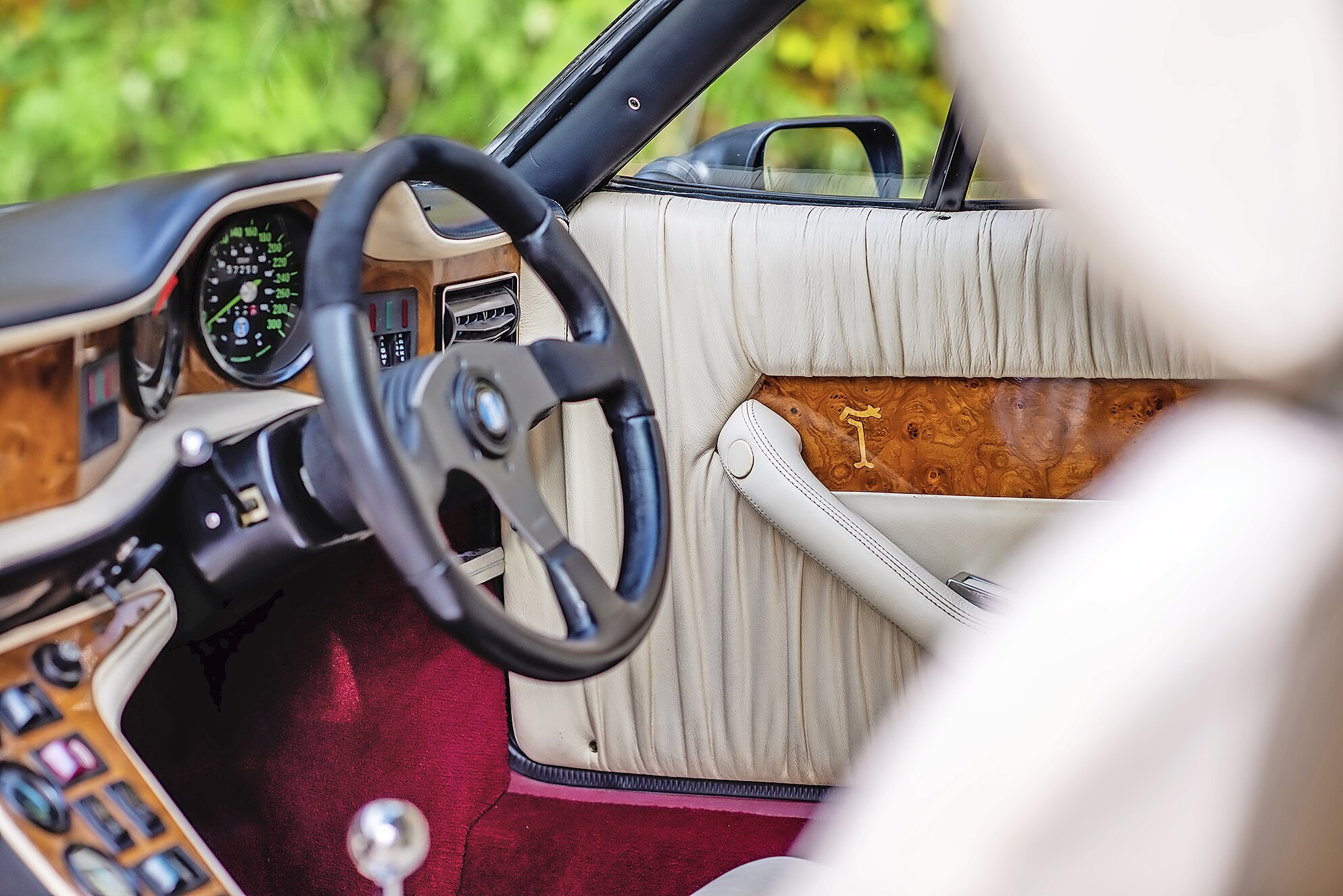
Veneer and marquetry part of then-compulsory 1989 GT5S spec
‘It was during the Lotus phase when a black earlySeventies De Tomaso Pantera pulled up alongside my Esprit S2 at a petrol station while I was filling it up, and I thought to myself, “I will have one of those one day,” but at the time I couldn’t afford one, and I moved on to Porsche 911s instead.
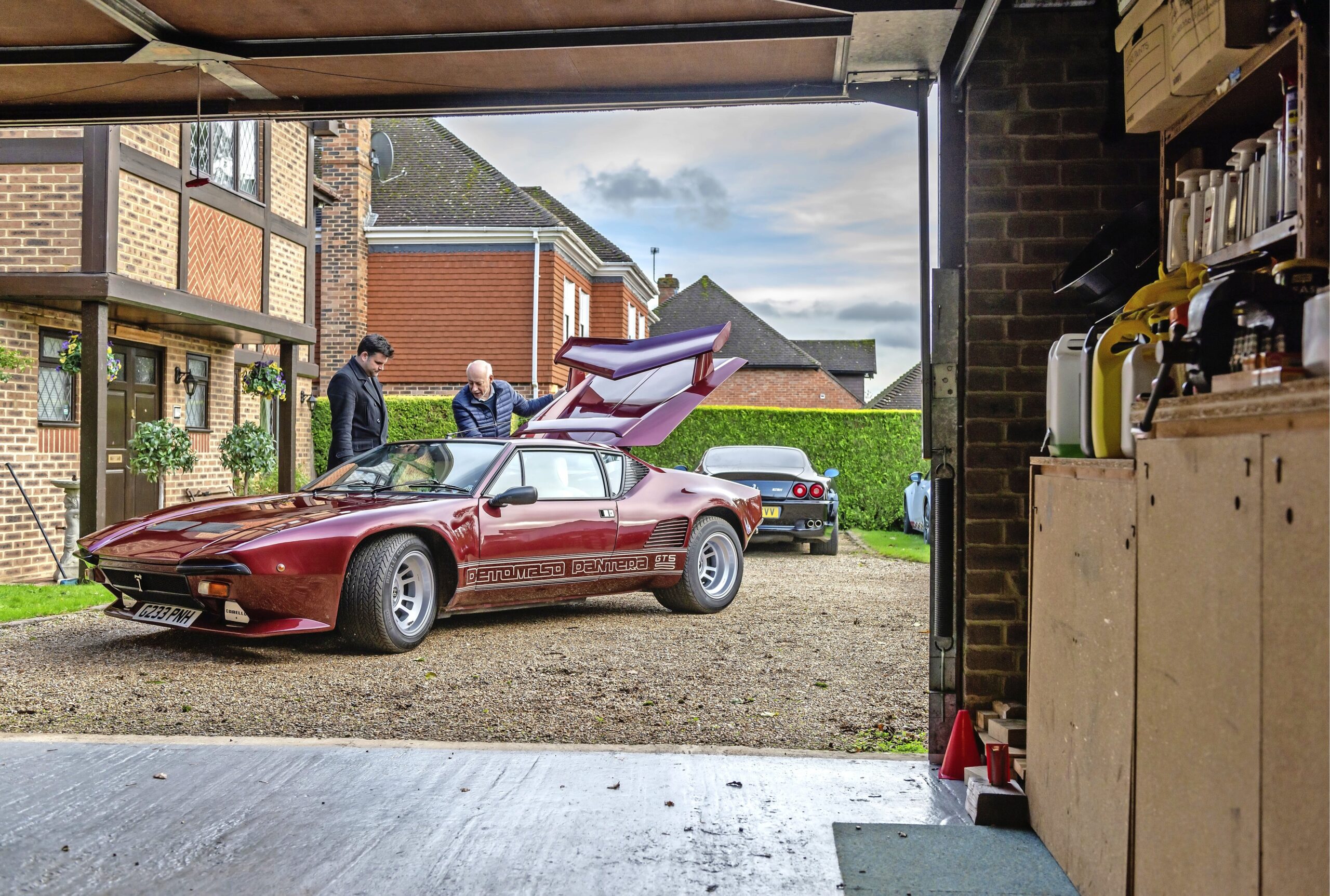
‘However, Pantera prices were going up along with all supercars in the late Eighties, and people were buying them for silly money. I originally had a budget of £40,000, wanted a GT5, and started looking for a second-hand one. But people were mucking around with the prices back then. I found one for £40,000, then before long it was £45,000, then £46,000, and I thought to myself, what does a new one cost, £48,000?
‘I got in touch with the UK De Tomaso importer, and he told me I’d have to place an order soon as they were stopping production of the current model imminently. When I went to order the car, they said they were only doing full-spec GT5S cars – 400bhp, 0-60mph in 5.1 seconds, 170mph top speed, marquetry inlay in the doors, bucket seats, radio kit, rear wing, side-stripes and a 4.00:1 differential. De Tomaso wouldn’t build me one otherwise. We agreed on a price of £52,000, and it was supposed to arrive in October 1989.
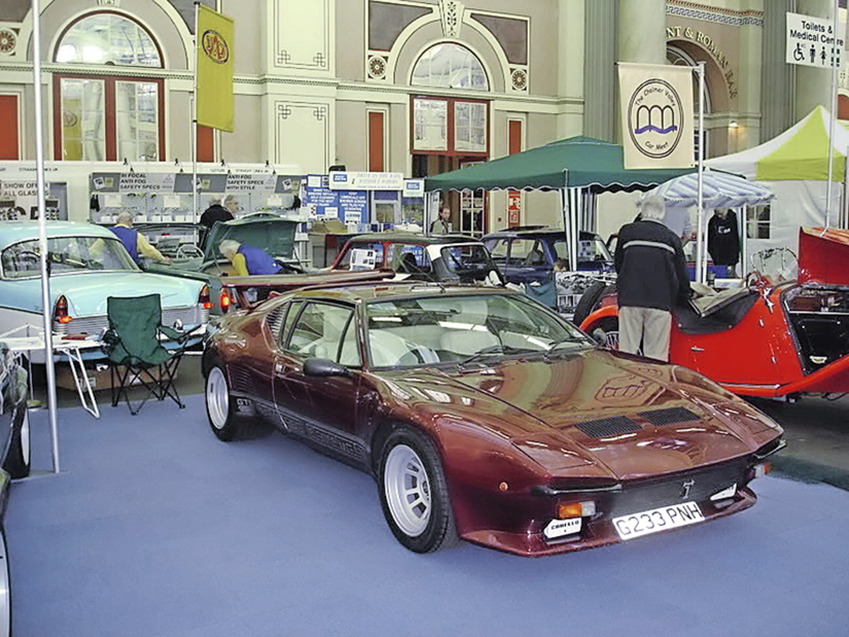
1990s: representing the Drivers’ Club at Alexandra Palace
‘I was using dealer Bramleys as an agent, and the deal involved them buying my Porsche, but the only De Tomaso importer was Emilia Concessionaires at Silverstone. Despite the importer’s promise, it didn’t arrive until 9 May 1990 at 11:30am. The delay was because people were jumping the queue by paying more money. It was the height of the Eighties supercar-investment boom, and some speculators weren’t using the fixed rate. Some people were paying more than £60,000 for them! The crash inevitably came in 1990, but in truth I had bought the Pantera for me, at a price I was happy with, and intended to enjoy driving it.
‘It was said at the time that it was the last right-hand-drive Pantera of the original Tom Tjaarda-styled shape to be delivered to the UK. I’ve since found out it was actually the 14th from last before the Marcello Gandini-restyled 90Si version came out. But either way, I went to Silverstone to collect it, made sure the paperwork from Italy was all present and correct, then my first drive in it was home to Beaconsfield down the A413. Bloody marvellous!
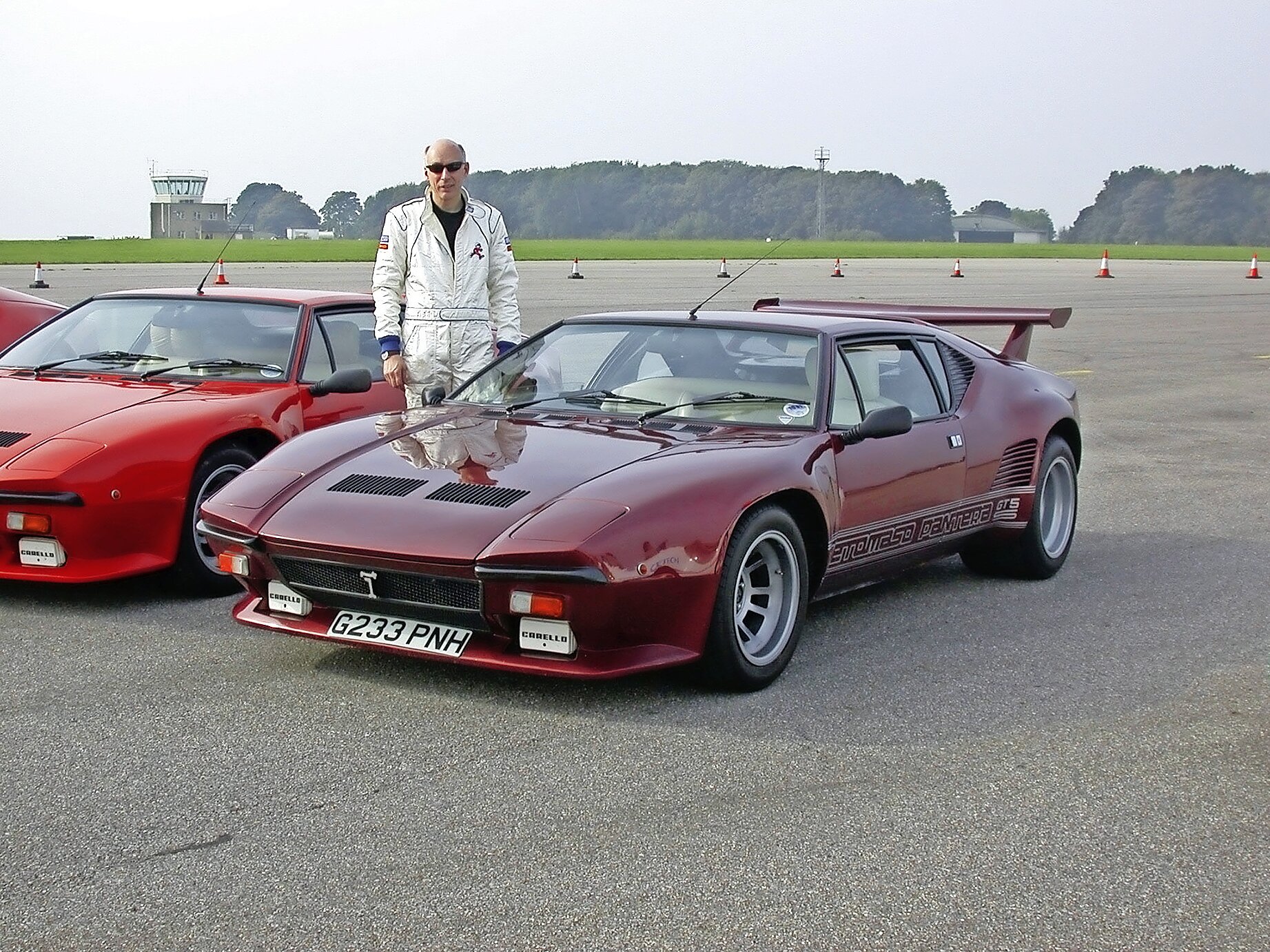
1990s: airfield day, before the car got an appetite for cones
‘Immediately, I started driving to work in it. I’m a mechanical design engineer specialising in robotics and special-purpose equipment, I had my own business and was just driving the Pantera to my own office. However, I drove it to clients’ places a few times and got given a hard time. Then again, it was exactly the same when I used my Jaguar XJR – you can’t win! So I bought a second-hand Talbot Sunbeam-Lotus as a runaround, and when people saw it they started asking, “What’s the matter with your business?” They were used to me turning up in a Porsche, which oddly enough no-one had a problem with.
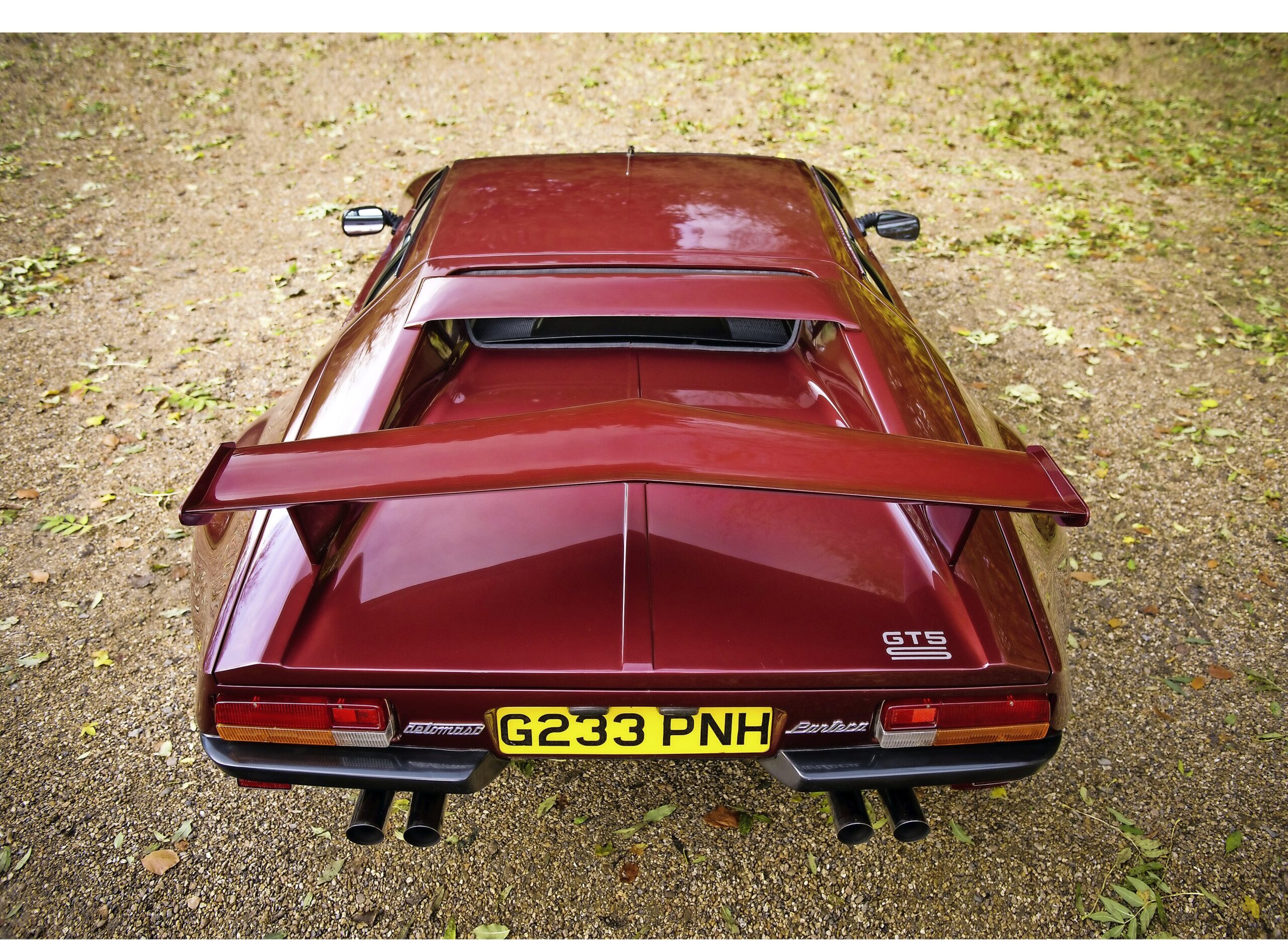
In 1991 Top Car found the Pantera was faster without its rear wing
‘The next year, 1991, was a tough one. I’d just bought the car, bought a house and had a baby, and then the recession struck. We ended up temporarily relocating and renting the house out, which meant we didn’t have to sell the Pantera, and thankfully I didn’t lose the business either, but we were lucky.
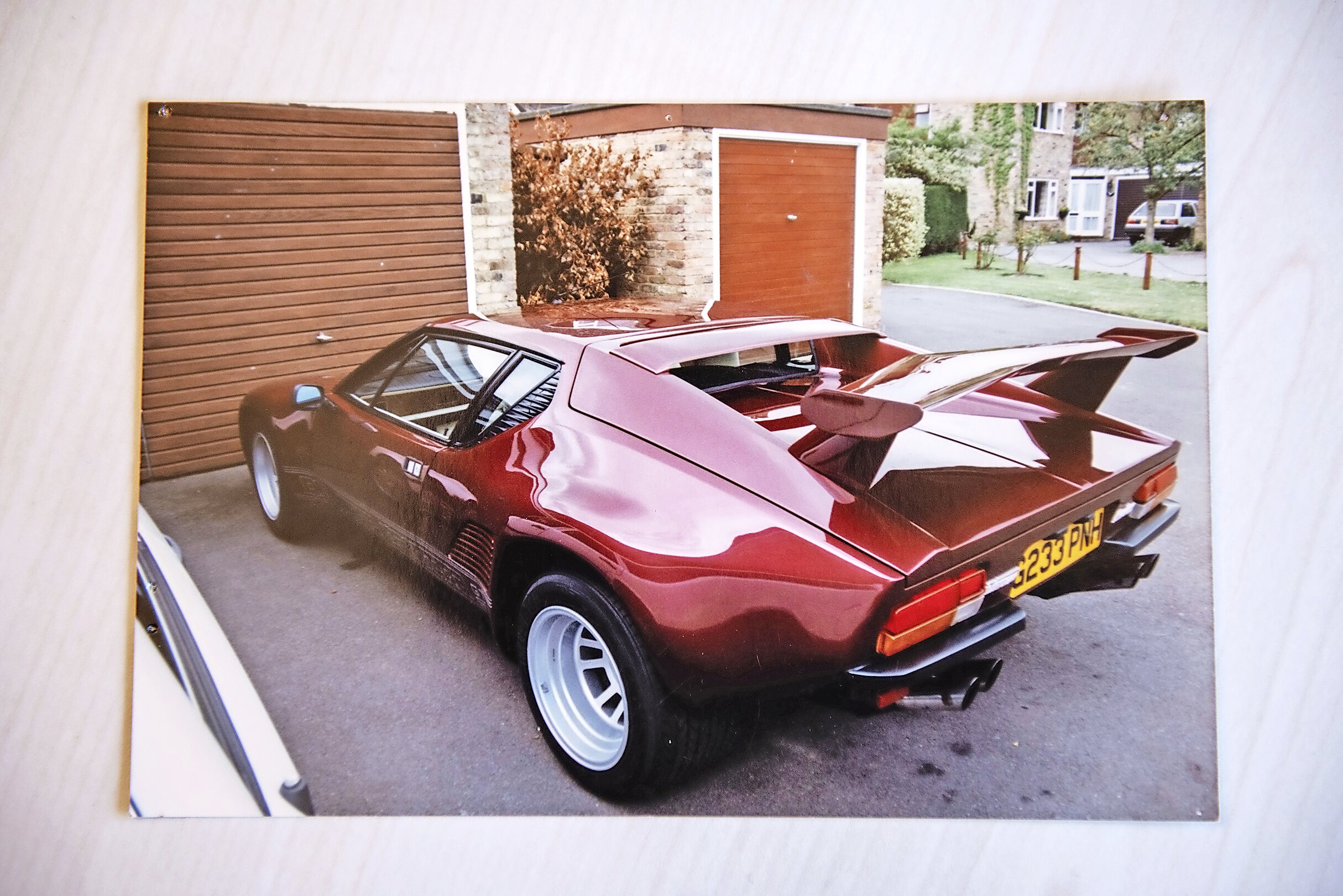
1991: the Pantera settles into its temporary home
‘In September 1991, Top Car magazine – a performance and supercar magazine of the Eighties and Nineties – got in touch and asked if they could use my car for a cover feature. Rally driver Terry Kaby track-tested it, and they put speed-measuring equipment on both my Pantera – a Ford Windsor-engined car – and a Cleveland-engined example to see which was the fastest. Mine was of course! It measured 400bhp, 0-60 in 5.6 seconds, and a maximum speed of 147mph, but they ran out of room on the test straight. They took the rear wing off to reduce the drag, and the top speed climbed to more than 155mph before the throttle pedal broke off! It was only held in with a clevis pin, so I clipped it back on and went home.’
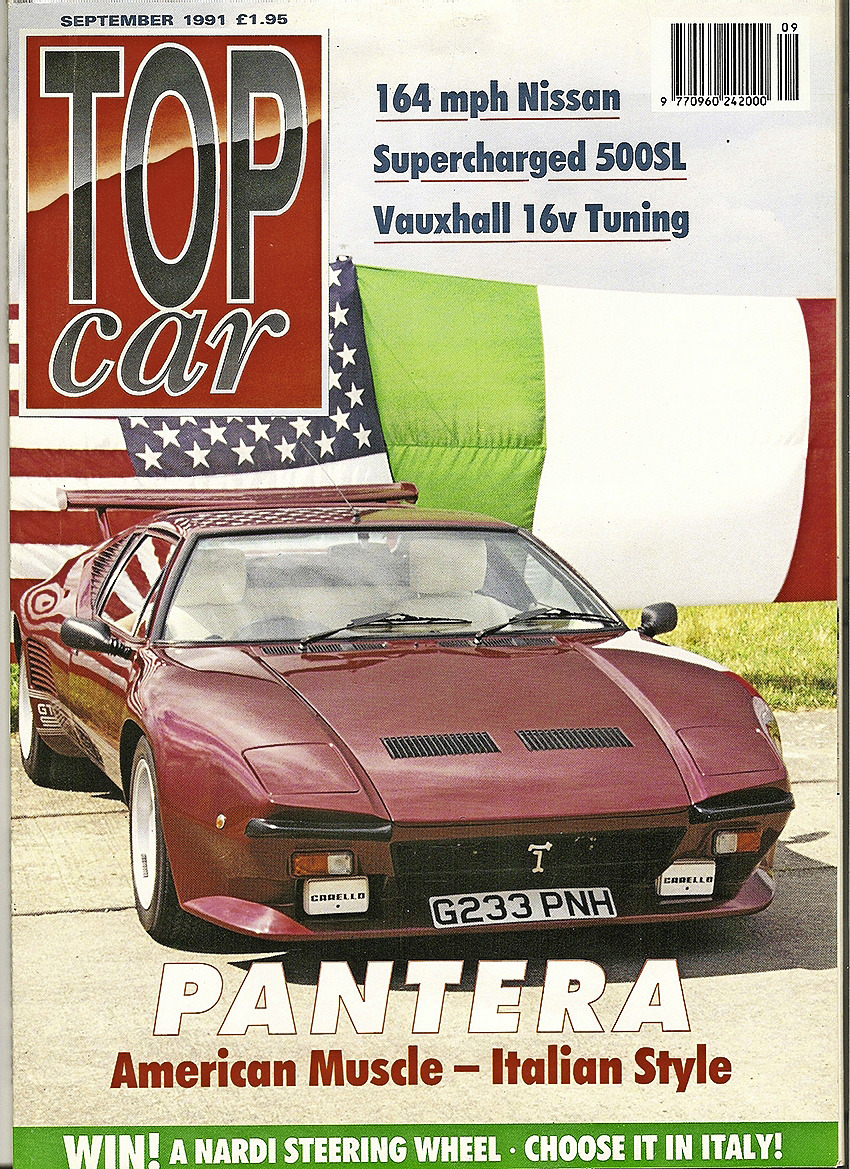
1991: Pantera has a full magazine performance test
The Cleveland, by comparison, managed 0-60 in 5.87 seconds and 140mph. ‘In order to be an official speed run, it had to have headlamps up, fuel in the tank, the spare wheel and two people on board. Theoretical top speed without these things measure at 162.8mph at 6500rpm. A Ford Sierra Cosworth they were testing on the same day had hit 180 before blowing up!
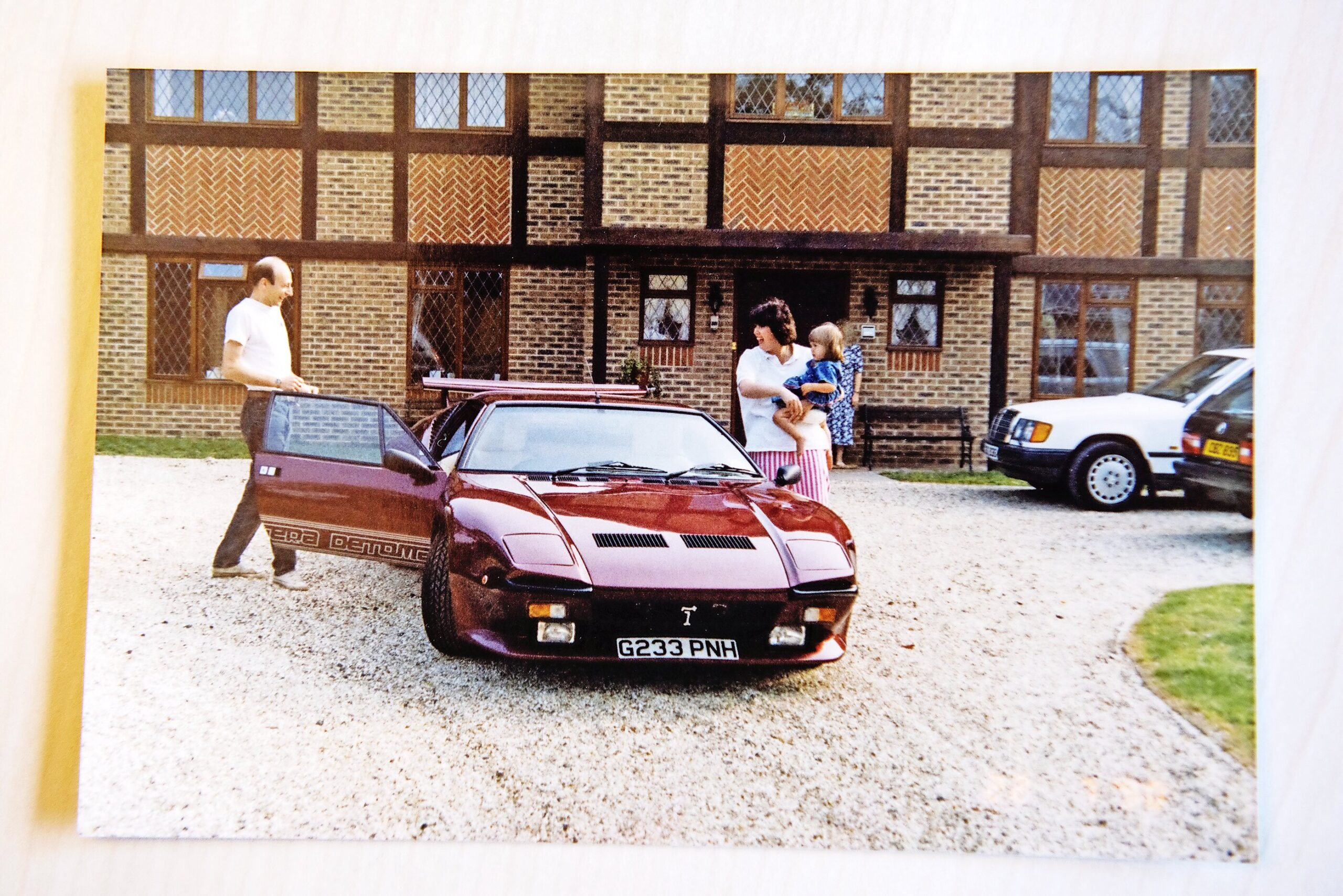
1992: home at last for the Pantera and the Bradshaws
‘It gave me the idea to try some motor sport in it, entering local car club sprints on airfields, but it was no good for sprints, with their little circuits laid out with cones. However, back then – 1993 by this point – you could buy half an hour at the Goodwood Motor Circuit for £60 and just go out for some fun on the track. A guy called Peter Saywell, who became a good friend, ran 105-decibel-limit charity track days at Goodwood three times a year.
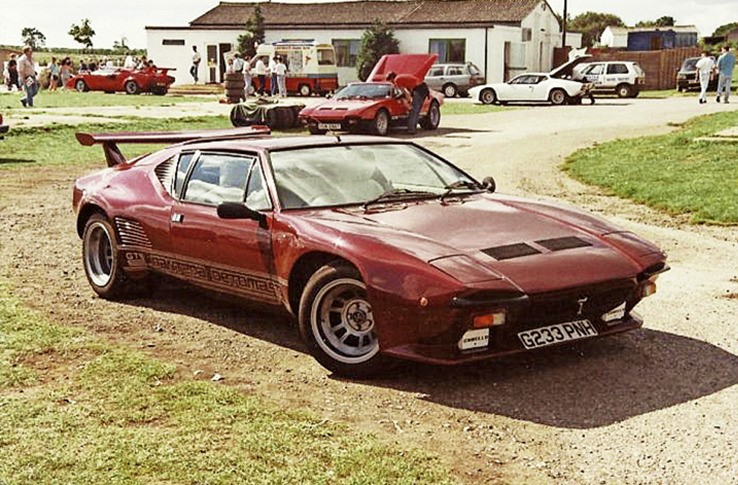
1992: joining Lamborghinis for an early track day
‘I’d just bought the car, bought a house and had a baby, and then the recession struck’
‘For some reason around about this time, I thought the car would look good with stripes on it and a roundel on each door. It was possibly the influence of going to Le Mans in it, because a lot of people sticker their cars up to look like racers – I can get all my camping gear in the luggage tray at the back of the Pantera – but by 1995 the stripes were gone, having only lasted a year. I could never really decide whether I liked them or not.
‘I did a lot of track days in the late Nineties, especially at Castle Combe, where I totalled 160 laps. I also completed 42 laps of Silverstone, and 600 laps of Goodwood. And it was at Silverstone that Barrie Williams drove it.
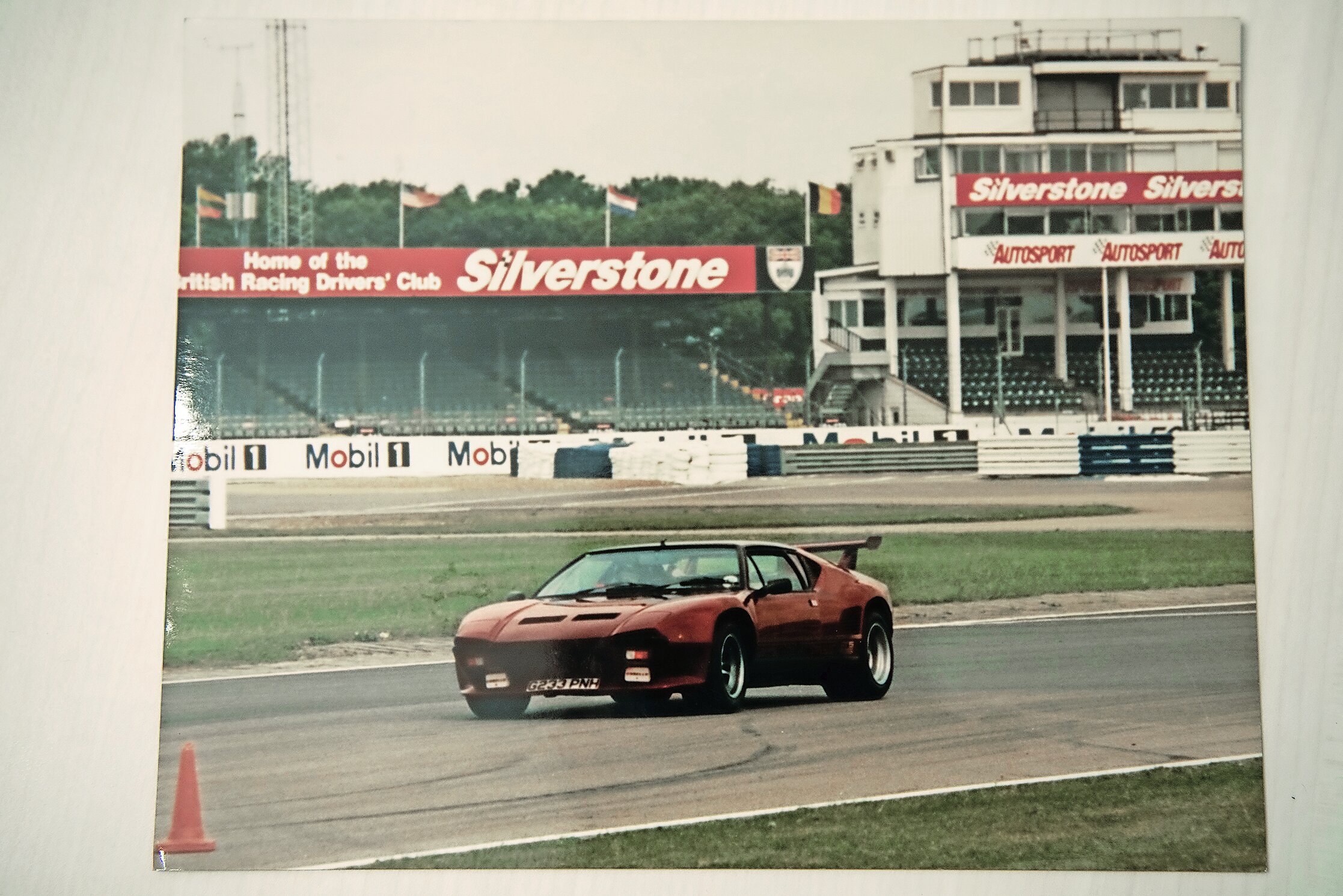
1995: flat out at Silverstone, where the car was originally bought
‘When I was 16, I was in the Harrow Car Club, and Barrie, Tony Lanfranchi and Gerry Marshall used to come to club nights and give talks in return for us buying them beers. Barrie was racing a Ford Fiesta at the time, and was in the pits when I came in for fuel. He recognised me, came over and said “I’ve never driven one of these… I’d like to though,” and was full of admiration for it. How could I refuse?’
The prospect of being given a masterclass in how to drive his own car saw Colin hand the keys over and climb into the passenger seat. ‘There were some seriously fast Porsches on slick tyres on track that day, but Barrie was pointing at them and calmly say things like, “We’ll have that one in two bends’ time, he’ll be in the wrong place. These people come here all the time but they don’t know how to drive the track.”
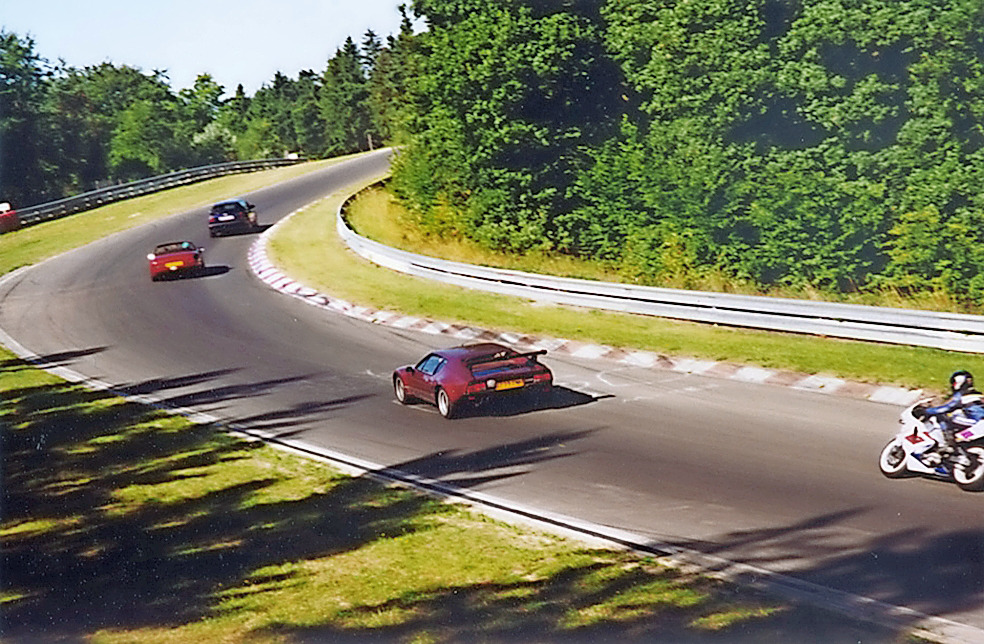
1998: chasing friends in their TVRs at the Nürburgring
‘In 1998, I took it on an epic trip to Spa-Francorchamps and the Nürburgring. Going round the ’Ring, the car suddenly lost power under acceleration, getting 40mph at most. I limped back to the pits, examined the distributor drive, and found that I could move its spring pin around with my thumb – it was fractured, causing the timing to slip with every throttle opening. I crawled the car back to the bed and breakfast we were staying in, and the husband of the owner revealed that he worked in an Audi dealership. He went out and came back with a pin roller to make a replacement! It’s led to an approved fix in the club, doubling-up with two pinions.
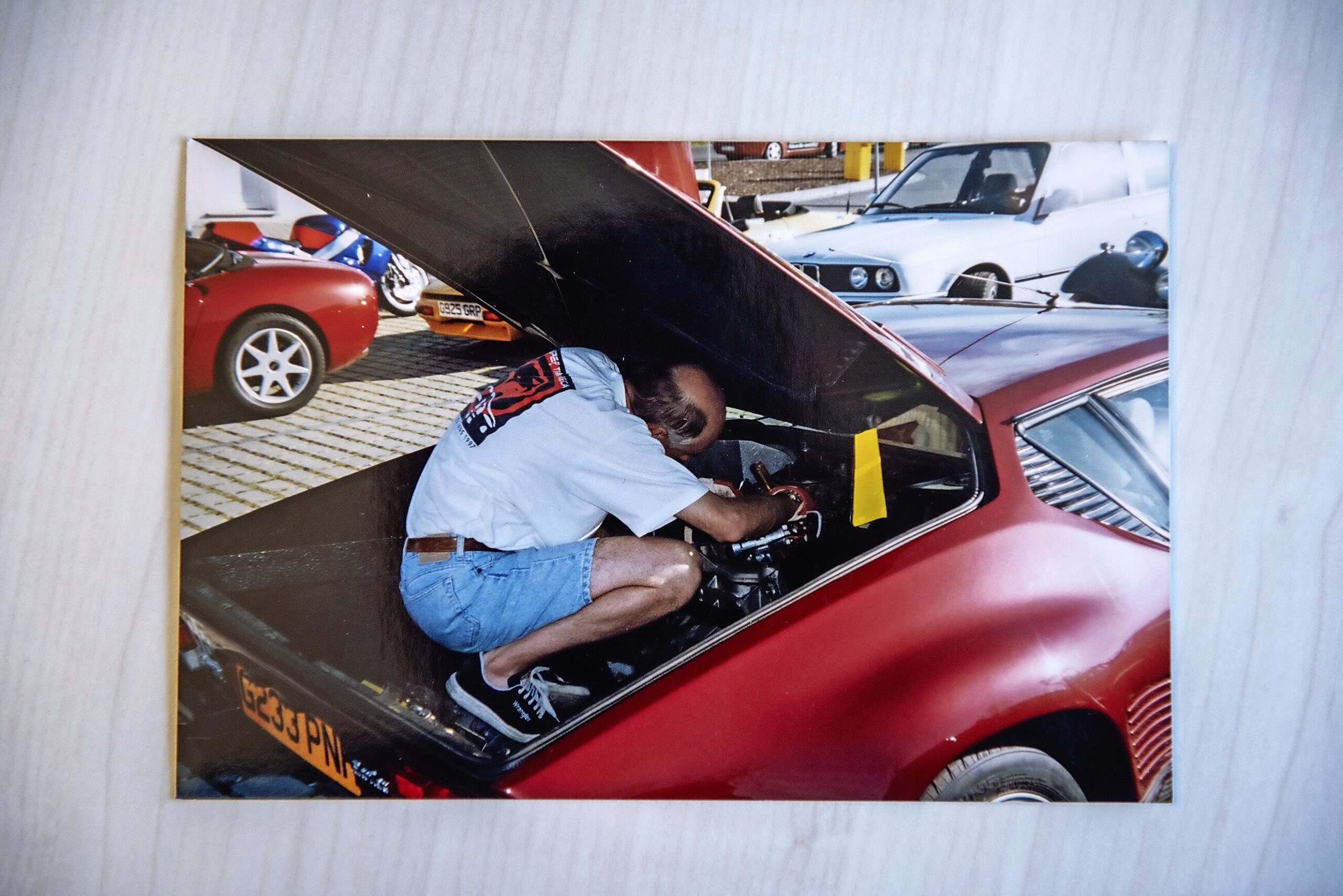
1998: tackling the loose distributor drive at the Nürburgring
‘All this use earnt it the nickname ‘Honest Chips’ in the De Tomaso Drivers’ Club on account of its stonechips picked up on track days, although it’s undamaged apart from the times when a baby chair and an aluminium strip fell on it in the garage. Both Gemma, my eldest daughter, and Emily, my youngest, have driven around Goodwood in it, although Emily couldn’t quite reach the pedals properly. She wants me to sell it to her when I’ve finished with it though.
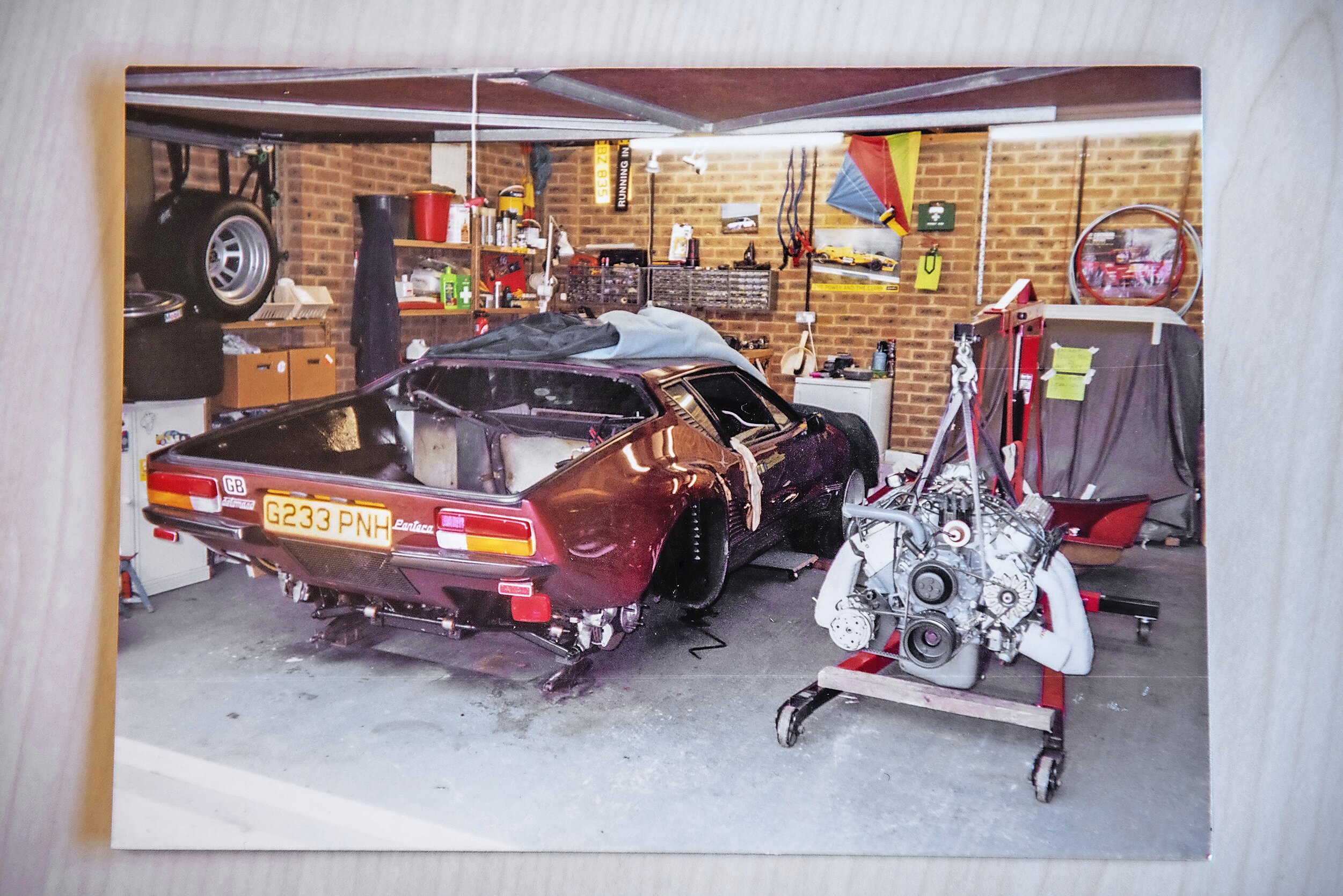
1999: Pantera’s first rebuilt engine ready for home installation
‘In 1999, I was just minding my own business reversing the Pantera out of the garage and onto the drive, when a valve guide plate sheared and dropped a valve through to the piston, stopping it dead. It took the car off the road for a year, and I decided to use the opportunity to uprate the engine, because I was planning on doing more track days.
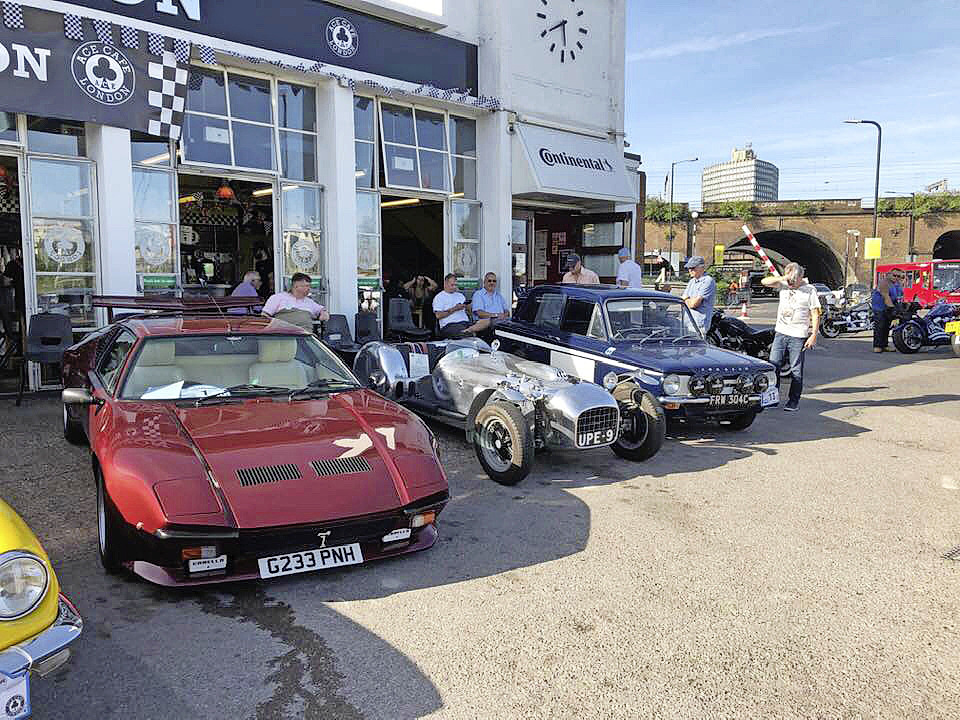
1999: a taste of the gentle life at the Harrow Car Club Concours
‘I went to a US specialist in Orange County, California, which recommended a crate engine with separate headers, but I just wanted a turnkey package on an original engine, with a warranty. I ended up getting Real Steel in Uxbridge to rebuild the original engine, then paid for 48 hours’ dyno time, to try ideas out. I found things like using smaller carburettors made more power than big ones. Eventually I brought the engine home in an estate car and installed it in the Pantera myself. It was back on the road and track in 2000 for more of the same, the rebuilt engine helping it to set a one minute, 28-second lap of Goodwood.
‘Both my eldest daughter and my youngest have driven round Goodwood in it’
‘In 2002, after hitting some cones on a track day at Longcross, I decided to change the steering wheel. The organisers had laid out a chicane on the home straight to slow us down, and the rim of the original wheel was just too slippery to complete the high-speed manoeuvre accurately without my palms sliding around on it, so I decided to get one with handgrips. I’m still keeping the original – they’re worth a fortune now. The gearknob trim was broken too, so I changed it for a chrome one.
‘In 2007, I made a set of slip-on exhaust silencers, which took it down to 104db and made it acceptable on a wider range of track days and charity events. I also started exhibiting it at shows with the De Tomaso Drivers’ Club – Alexandra Palace, the NEC, Goodwood – as well as trips to Le Mans six or seven times.
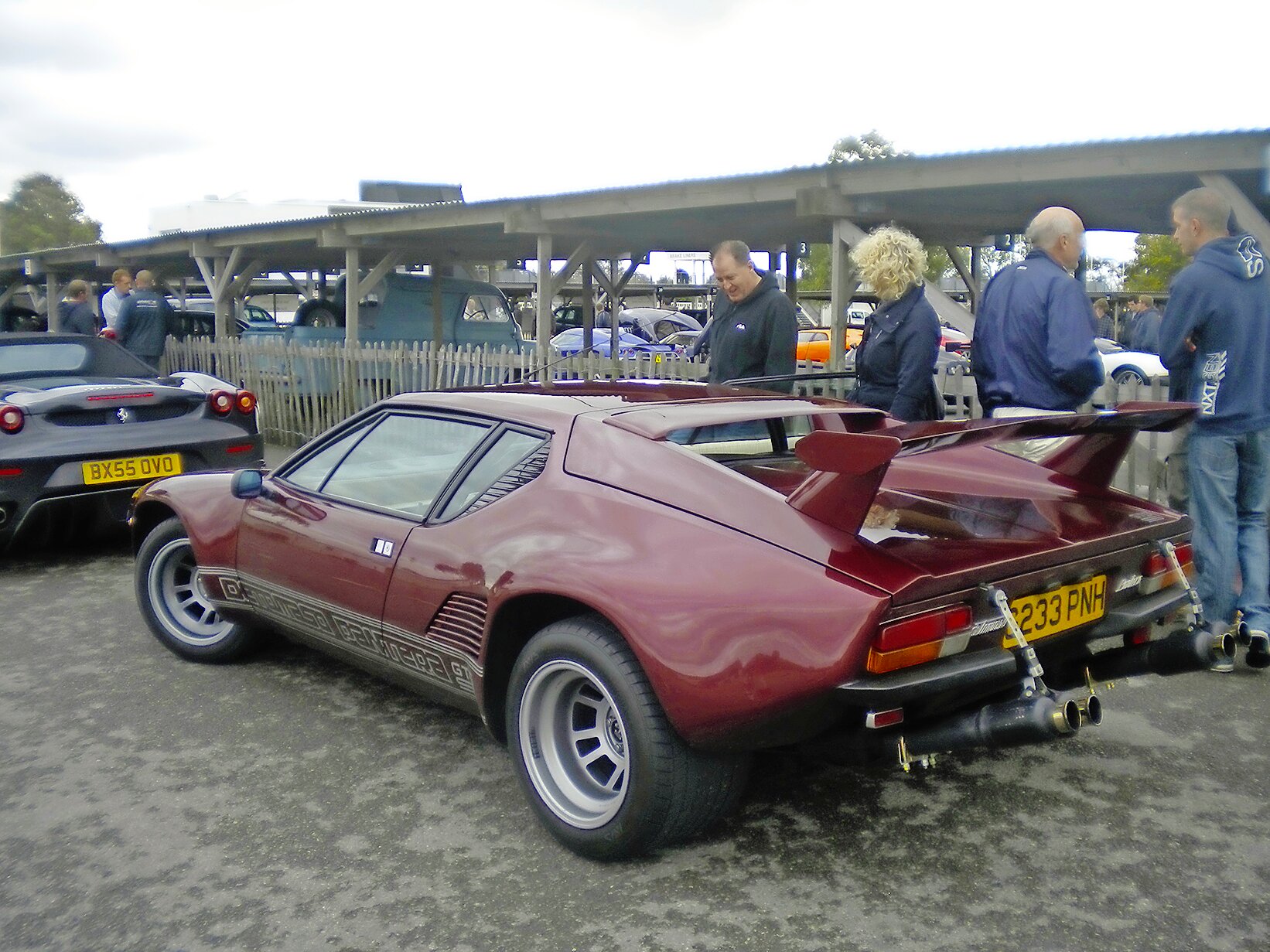
2007: wearing Colin’s silencers at a Goodwood charity track day
‘But the gearbox rebuild, in 2008, is an exciting occasion in my life that I really don’t want to repeat,’ Colin recalls ironically. ‘With the track days, the gearbox took more wear and tear than usual, and I started to find second gear difficult to select. I took the gearbox out and had it tested by a company who should’ve been able to fix it, whose staff said they had the right contacts for ZFs. I told them the synchro rings were hard to get – “no problem”, apparently.
‘When I got the gearbox back, I still couldn’t get second, and third was even worse! I sent it back and this specialist still said it was fine. It went back and forth three times in total, and eventually it turned out he’d subcontracted the job to someone with no setting tools. Also, when he disconnected the speedometer drive a bolt had dropped into the bottom of the gearbox, taking a tooth off the gearwheel. The speedometer needle still bobs to this day as a result. It was half-way through 2009 by the time the gearbox was finally sorted – and the Pantera had just spent 18 months off the road. I couldn’t wait to get it back on the track after that.
‘It was off the road again in 2014-15, getting all its suspension rebuilt. It was getting squeaky and tired, and lots of people at track days tried to convince me that I should upgrade the dampers, fit polybushes all round and so on, but I’d been perfectly happy with the standard setup for 24 years – why should I change it?
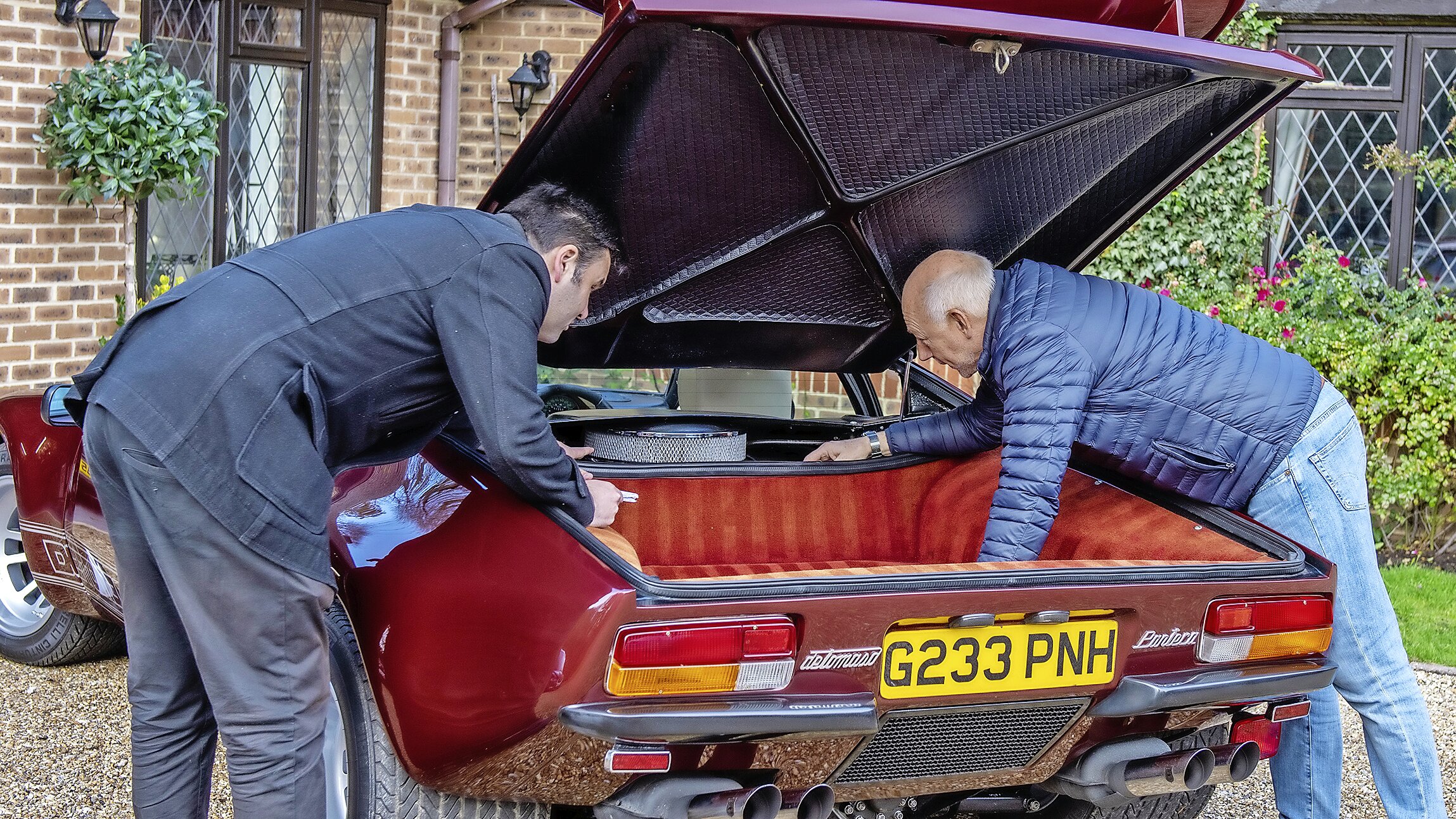
The Pantera is on its second engine rebuild, and going stronger than ever
‘So I totally restored the original suspension. I had to saw out the original, worn-out bushes, but I kept everything for reference. I did it as a project with my friend Phil Hudson. I was still working, but he’d taken early retirement. He was an engineer too, and was bored! He’d owned TVRs so he was used to fixing things, and did all the work on my car free of charge – what are friends for, eh? He completed 70 percent of the work, and I finished it off.
‘We rebuilt the brakes while we were at it. The GT5S’s brakes are different from the standard Pantera’s; they’re larger in diameter, and ventilated. All the suspension components were cleaned and powder-coated, and the magnesium wheels rechromated. I took them to a bloke in Wiltshire, who used to work for Dynomag, to do the job properly. Fortunately they hadn’t been kerbed, but I had them X-rayed as a precaution because magnesium wheels can become porous and explode at speed without warning.’
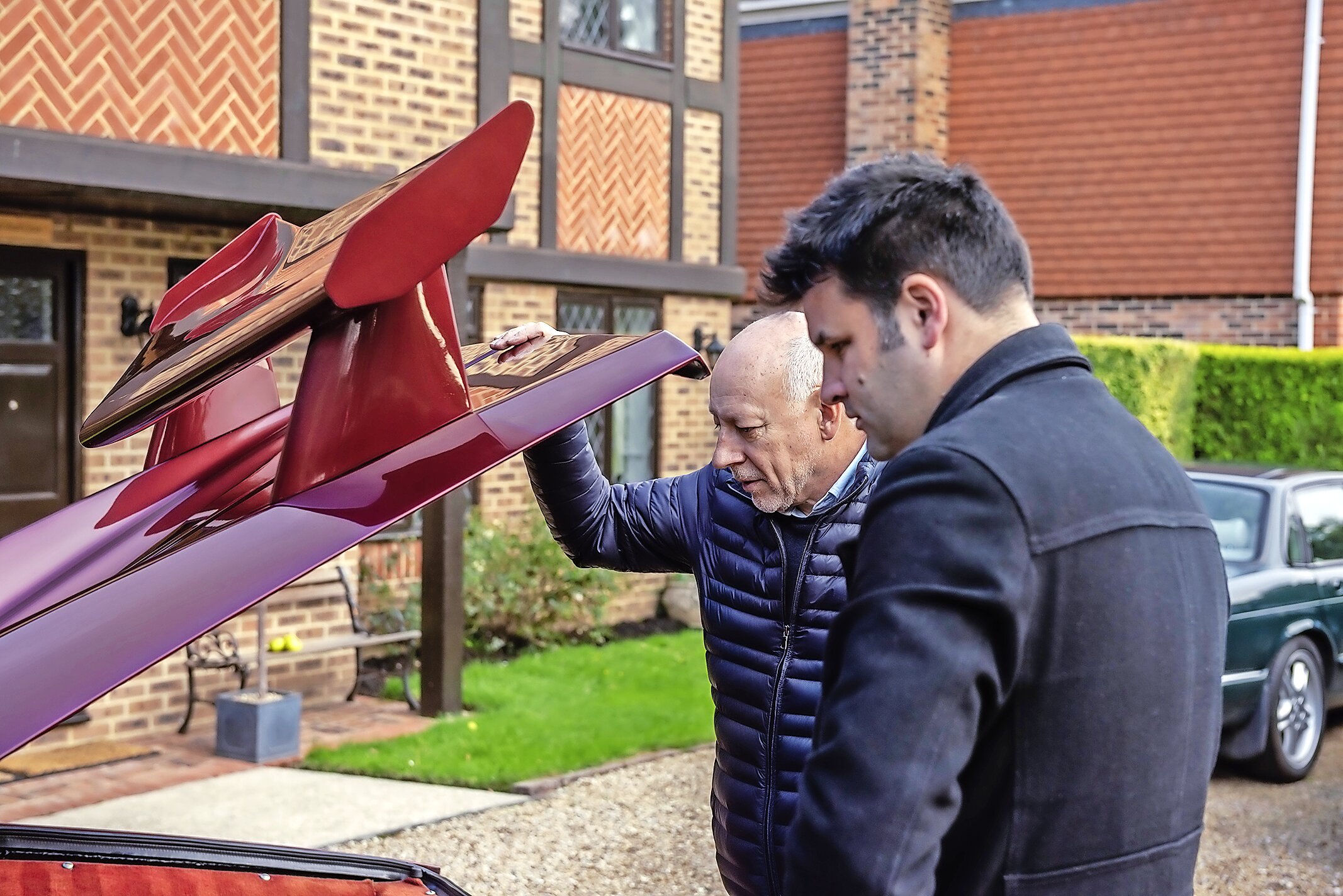
Colin does much of his own maintenance on the Pantera
Emily may want the Pantera when Colin’s finally had enough of it, but it was Gemma, Colin’s eldest daughter, who used the De Tomaso next. ‘Gemma wanted the Pantera for her wedding,’ says Colin, ‘and so on 30 June 2016, we bundled Gemma, in her wedding dress, into the Pantera to be driven to the church. The bridesmaids followed behind in a Volkswagen Transporter, and I lent my Morgan Aero 8 to the groom for him and the best man to use. Emily wants the Pantera for her wedding when it comes around, but I expect she’ll want to drive it!’
‘My youngest daughter wants it as her wedding car too, but I expect she’ll want to drive it!’
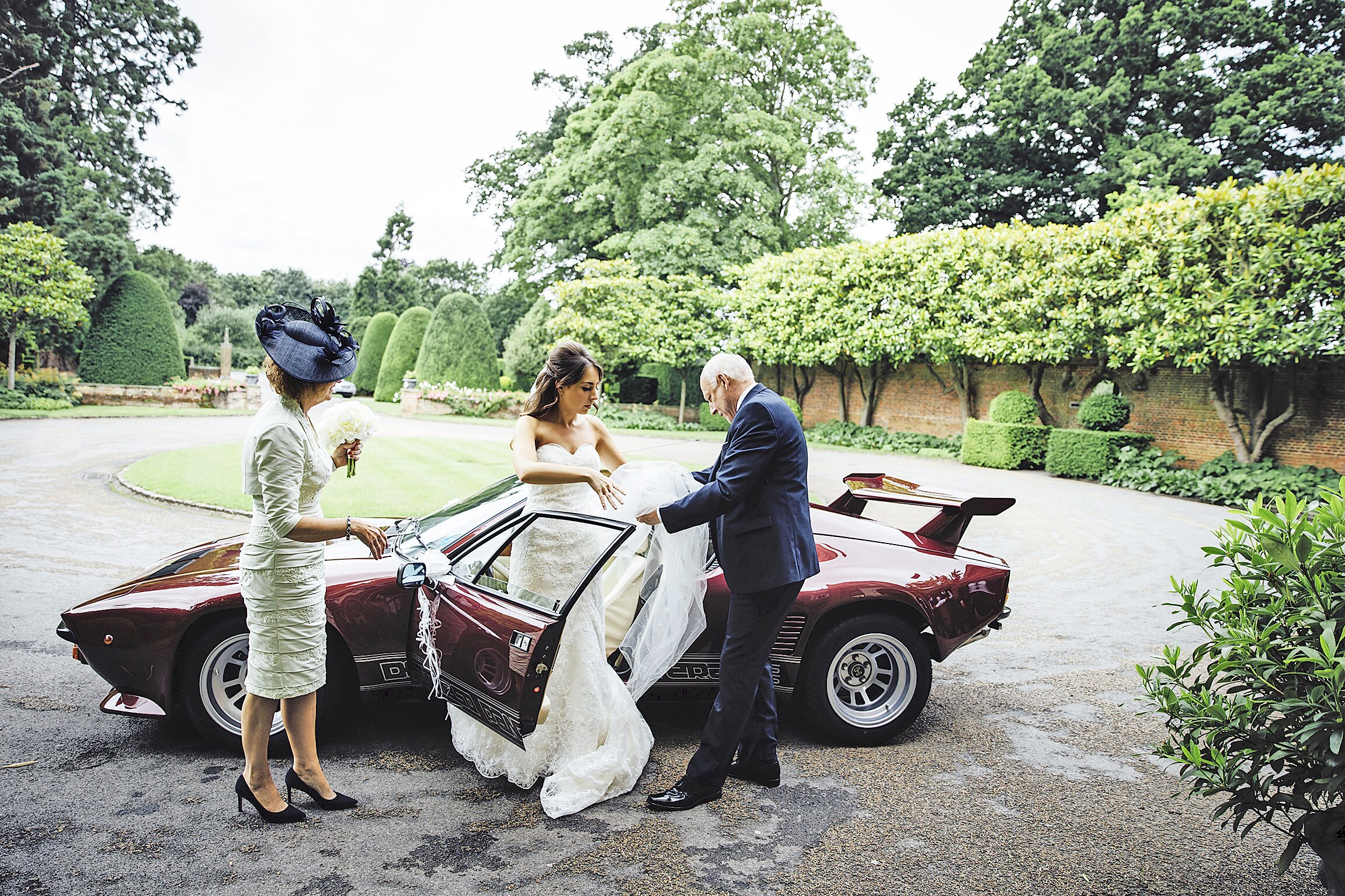
2016: daughter Gemma uses the Pantera as her wedding car
But that won’t stop Colin driving the Pantera just has hard as ever in the meantime, although the rebuilt engine was lucky to avoid a second meltdown back in 2017. ‘I’d taken it out to a car-club summer show, and was driving home on the motorway,’ Colin recalls. ‘Two junctions away from my turn-off, I heard a crash-bang-wallop, which felt like I’d driven over something, and smelt burning rubber.
‘The fan belt had broken, and had got caught up at the front of the engine. Stupidly, I figured I just needed to get through town to my house, without stopping, maintaining the airflow to the radiator, and it’d be OK. I drove all the way home keeping an eye on the temperature gauge, which showed the car was keeping its cool, and turned it off when I pulled up on the drive. Then I heard a loud clunking sound as the engine cooled. A cylinder head had warped and cracked. Oh no. Another engine rebuild needed.
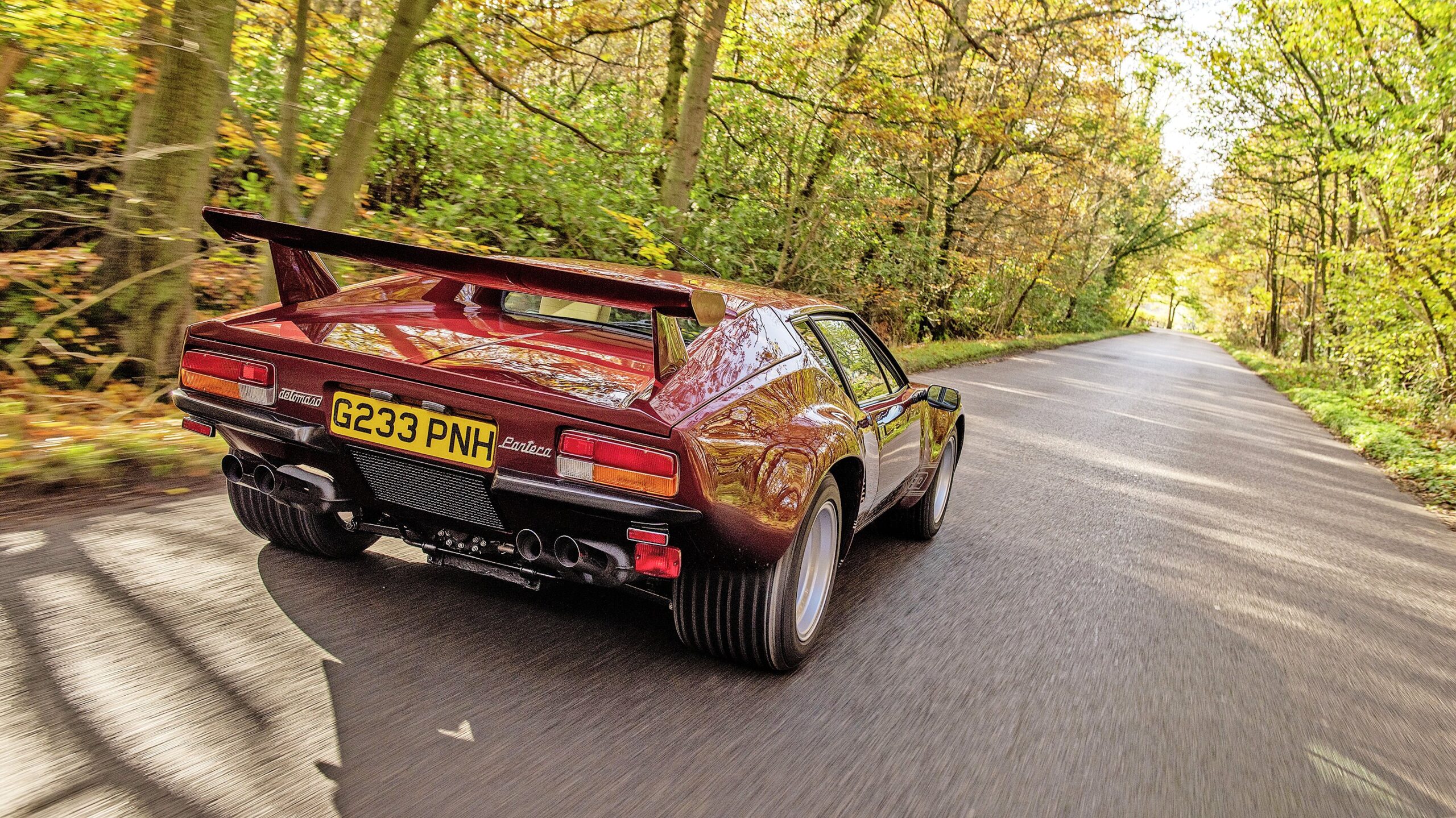
New Pirelli Cinturatos are Colin’s latest addition
‘I thought I’d get Real Steel to do the rebuild again, but they no longer offer engine rebuilds, so I went to Peter Knight of Knight Racing Services. He offers a 408 cubic-inch ‘Stroker’ Ford Windsor engine for £10,000, so I thought I’d do it properly this time.
‘When Peter took the engine apart and stripped it down to its constituent parts, he said it had been built properly, and didn’t want to put second-hand parts in it, so the Stroker kit was fitted with new parts rather than any need to re-machine the block. We changed the specification of the pistons though – JAE rather than Ross pistons, with more silicon in the liners, helping them to retain their shape better with temperature variations. Ross pistons have a habit of deforming, wearing on their skirts and slapping if they’re used for day-to-day tasks rather than simply racing. We also converted it to an electric, rather than mechanical fuel pump, for the sake of reliability.’
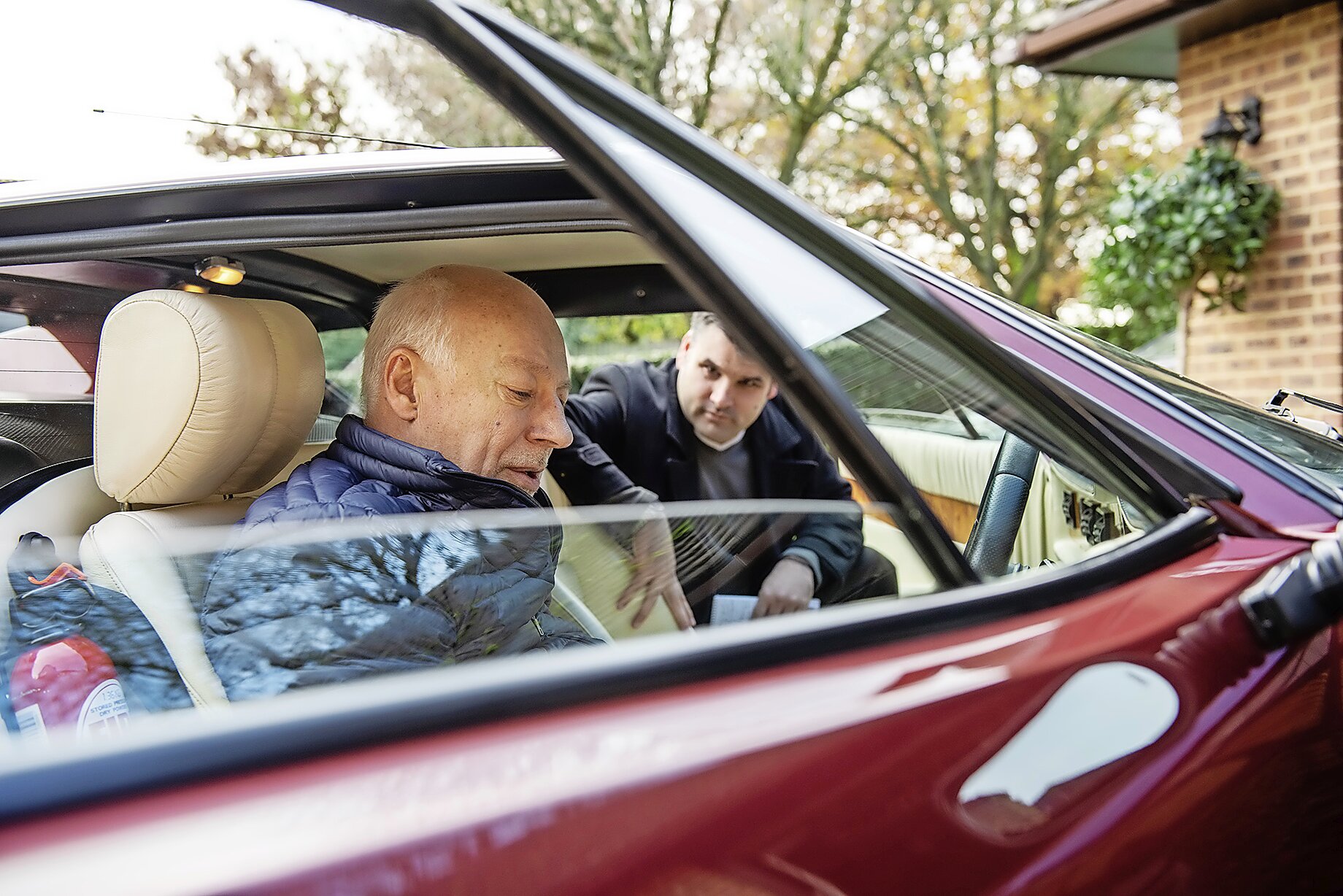
The Pantera has covered fewer than 1000 miles since 2017 rebuild
However, despite this latest engine rebuild three years ago putting the car in its highest-ever state of tune, Colin’s Pantera has led a more sedate life than usual, entering the Harrow Car Club’s inaugural Ace Café Concours in 2019, and as yet not returning to the track. He’s considering it though, and the car wears new boots in preparation. ‘I’ve done fewer than 1000 miles since 2017, but I’ve got a set of tyres from a new batch of Pirelli Cinturatos from Longstone, requested by the De Tomaso Drivers’ Club,’ says Colin. ‘Despite having ‘VR’ printed on the side, the rating for 150mph, they’re actually rated to 170.
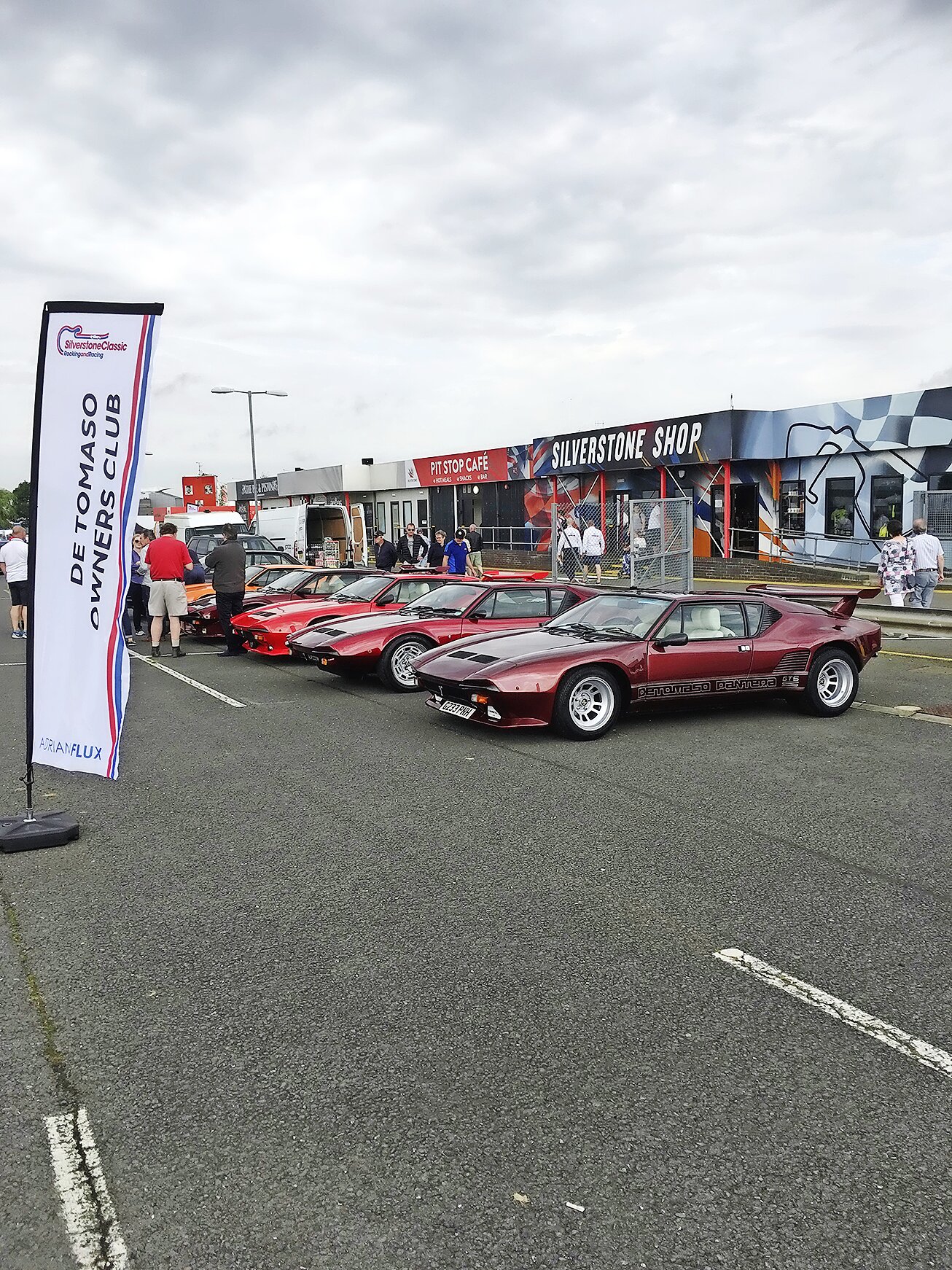
2018: lining up with fellow Panteras at the Silverstone Classic
‘Of course, it will return to the track soon. Unlike some owners of Italian supercars, I’ve always used it as it was intended, and I always will.