
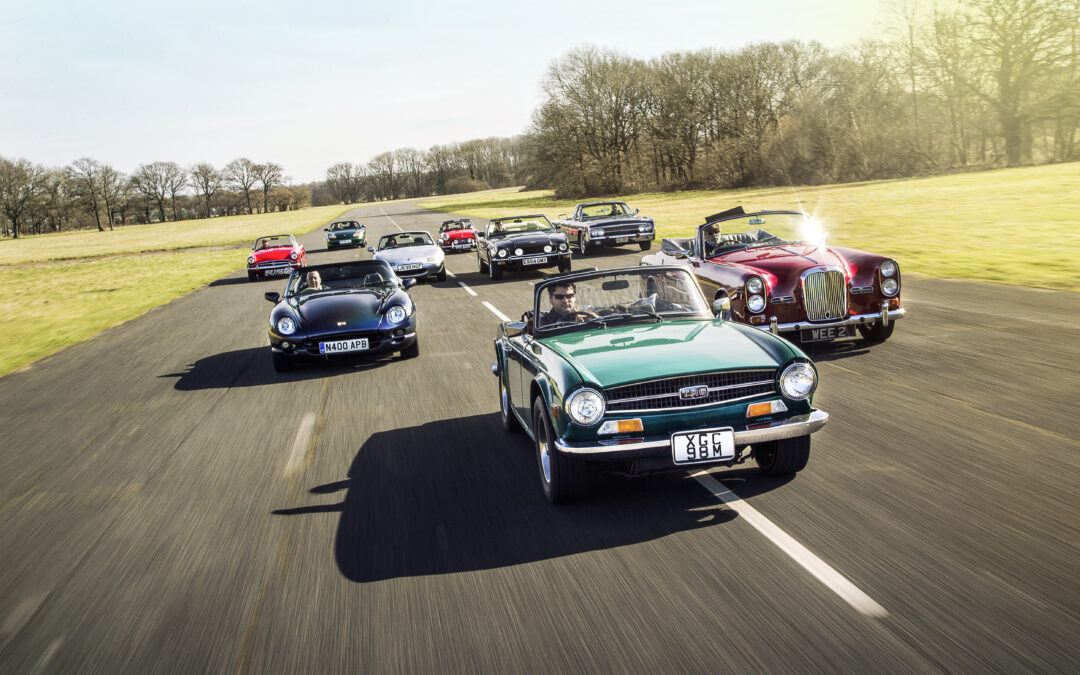
Convertibles for All
Affordable classics, raw thrillers and luxury wafters – we’ve coralled the finest drop-tops to find out which are worth getting sunburnt for this summer
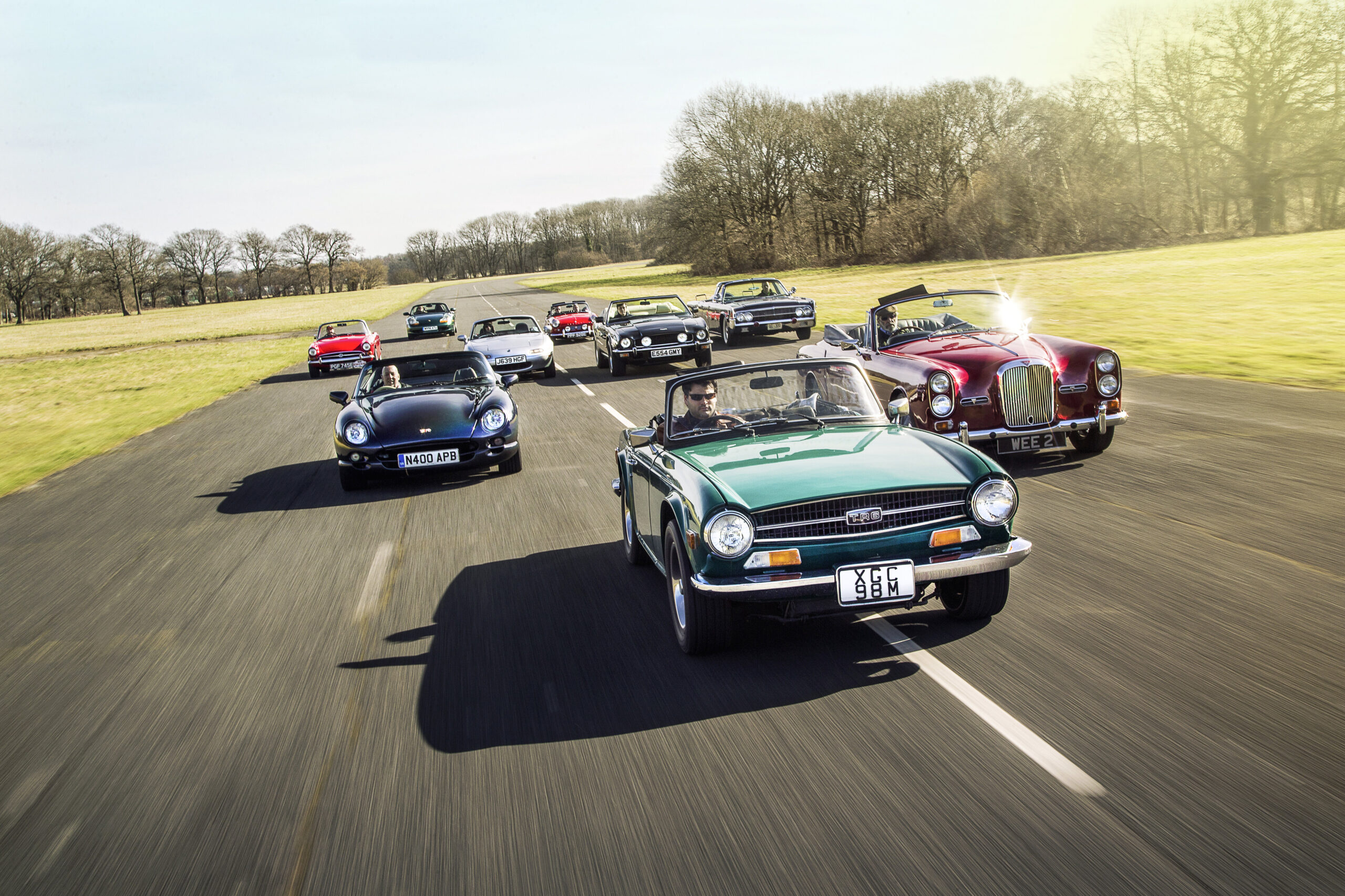
Retro Sixties roadster meets the real thing; both fizz with driver involvement
Mazda MX-5
Whether it’s badged MX-5, Miata or Eunos, Mazda’s little roadster is fast replacing MGs and Triumphs as the entry-level roadster of choice for new arrivals to the classic world. It’s faster, more reliable and easier to live with, but does a car that Mazda product planner Rob Hall devised so calculatingly to emulate classic British sportsters that he tasked International Automotive Design with replicating the Lotus Elan’s wrist-flick gearchange and the MGB’s exhaust snort still deliver the requisite fun?
Oddly enough, the car I’m most reminded of after just a few minutes in the driving seat is the Peugeot 205 GTi 1.6. The engine – also a 1600 – overcomes its lack of torque with free-spinning, eager character, urging you to rev it ever-higher. The grip from its Firestone 185/60 R14s – just enough for safety, but not to a numbing extent – encourages hard cornering.
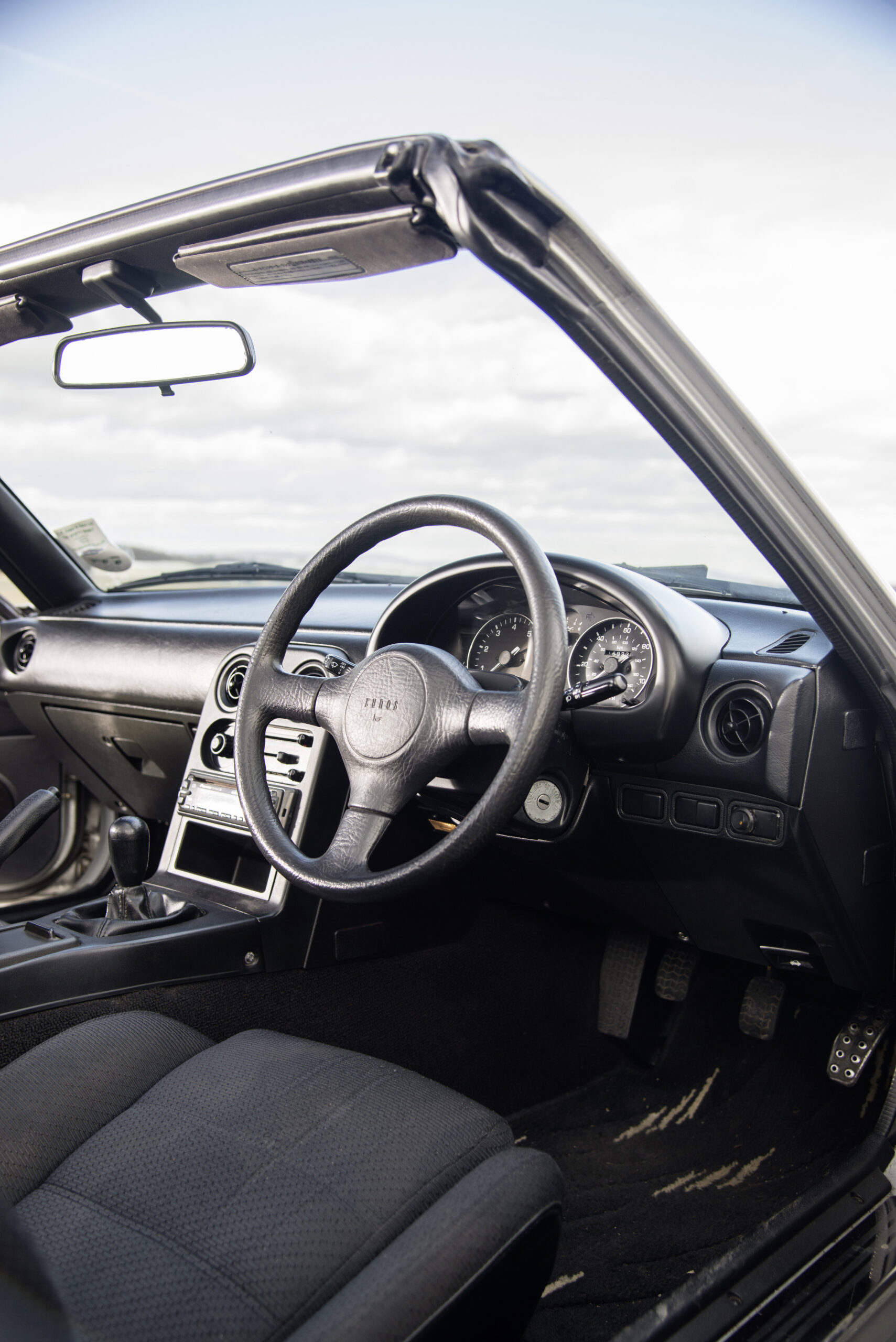
Mazda’s interior is more functional than aesthetically sensational
But what isn’t hot-hatch-like is the way it feels mid-bend. The steering feels uncorrupted and light, the nose tracking your intentions faithfully. Decelerate hard into a corner and the forward weight transfer makes the back end lift, but the modern rubber and supple damping means it’s predictable, never threatening uncontrollable oversteer unless you’re reckless. But that frisson of lightness will con you into thinking that you’re balancing it on the limits of adhesion. This side-order of carefully metered fun makes everyday driving joyful in a way most hatches daren’t attempt.
It’s not absolutely perfect, mind. The driver’s seat in this early Japanese import feels more saloon than sports car, novice-friendly but not particularly supportive for me and too high in relation to the fixed, low-set steering wheel. The steering itself, though pure, lacks the minute feedback you get in the older cars the Mazda tries to emulate. It’s obvious that Mazda felt a generation of drivers weaned on hot hatches might like the idea of an Elan, but would feel disconcerted by the sheer sensory overload the Lotus offers. As a result the MX-5 stops just short of the genuine nostalgia trip that would have seen Mazda create a Morgan with a Sixties muse.
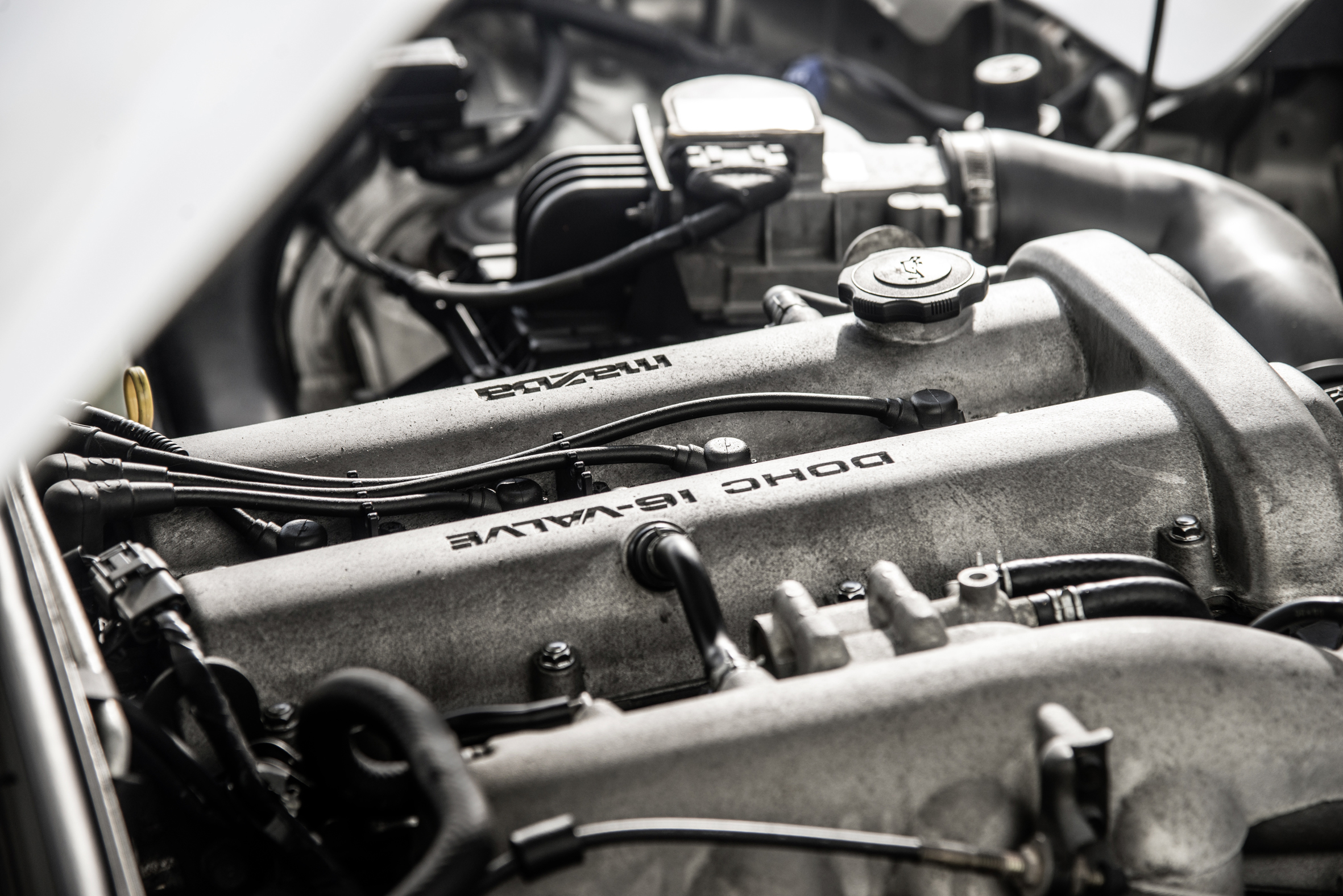
MX-5’s 1.6-litre engine races like a terrier’s heart; styled to evoke Lotus twin-cam
Instead, it hints at the past while being a thoroughly competent Nineties sports car – one that started a market revolution.
Owning a MAZDA MX-5
I’ve only had it a week, but I’m already planning to do some track days,’ says Adam Turner, whose car was prepared by Garath Smith of The MX5 Restorer. ‘Rust in the rear arches and sills is becoming a major issue, especially as Mazda’s parts supply dwindles,’ says Smith. ‘The only mechanical issue is the lightweight crankshaft in early 1.6s. People tend to take the centre-nut off it when they change the cambelt and don’t put it back on properly, which causes the lower pulley to wobble and knock the timing out.’

Engine 1597cc in-line four-cylinder, dohc, electronic fuel injection
Power and torque 116bhp @ 6500rpm; 100lb ft @ 5500rpm
Transmission Fivespeed manual, rear-wheel drive
Steering Rack and pinion
Suspension Unequal-length double wishbones, coil springs, anti-roll bars
Brakes Servo-assisted discs
Weight 989kg
Performance Top speed: 114mph; 0-60mph: 9.1sec
Fuel consumption 28mpg
Value now £1800-£5000
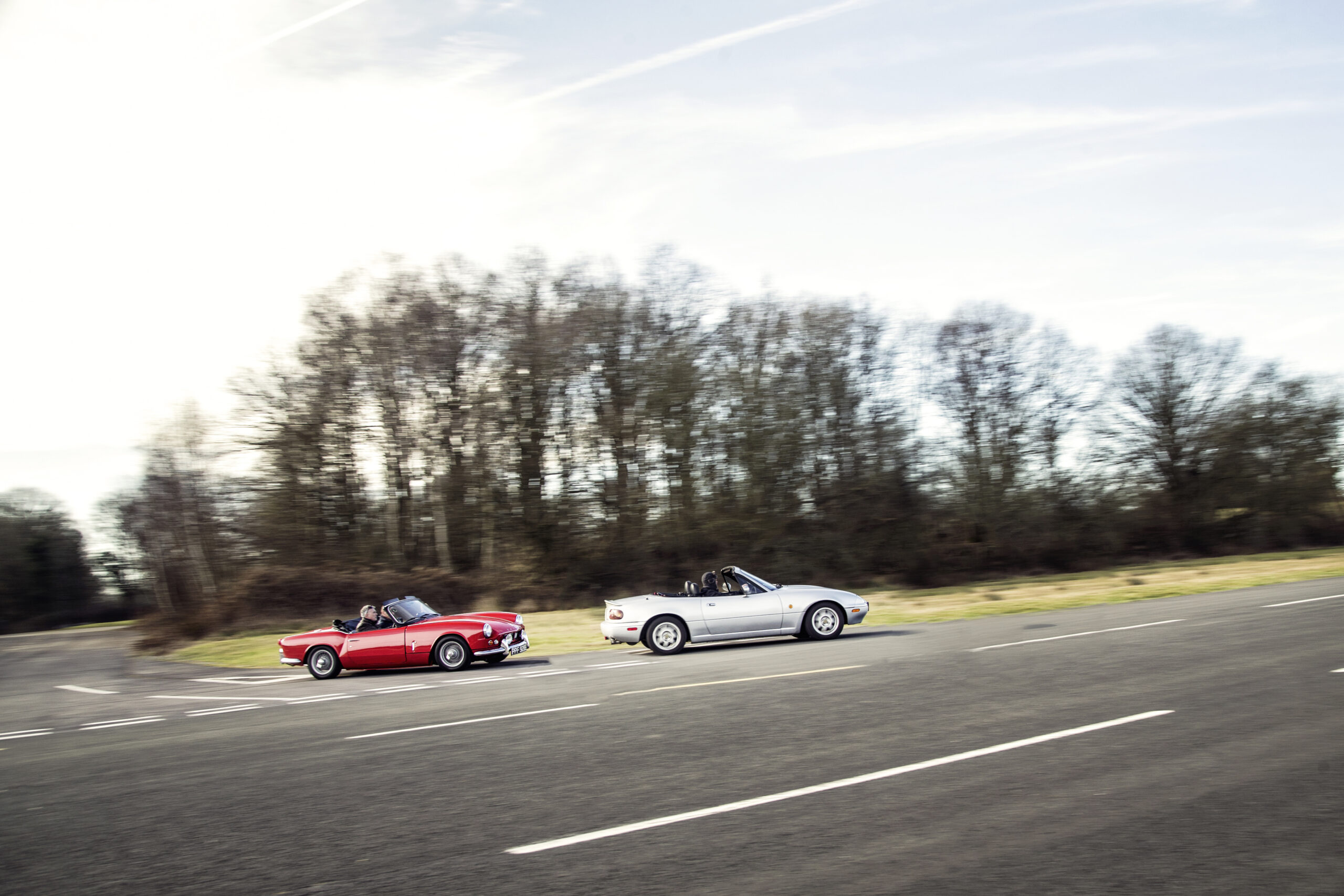
Swing-axle rear suspension makes Spitfire edgy at the limit; double-wishbone Mazda is more predictable
Triumph Spitfire
After the MX-5, how does one of Hall’s original influences – the Triumph Spitfire – compare? Before I’ve even turned the ignition key I can already tell that Mazda would have benefitted from copying the Spitfire’s driving position. You sit low and reclined, legs straight, arms stretched Fangio-like towards a tiny (albeit non-standard) steering wheel with the gearknob sitting just under the left palm. It’s a layout straight out of a single-seater, hinting at seriousness in defiance of the Spitfire’s separate-chassis Herald basis.
The engine erupts with an unsilenced, loosely chattering racket as the cluster of gauge needles – even bigger in this case thanks to a very rare period Hopkirk ‘Rally pack’ (oil pressure, water temperature and ammeter) – quiver into life. Unlike the MX-5, you’re aware of everything the engine is doing, from each carburettor gulp and ignition spark to the buzzing thrum of the propshaft between the seats and the pulsating barks from the exhaust. It’s a crude, raw car, a sensation emphasised by the low cutaway line of the doors.
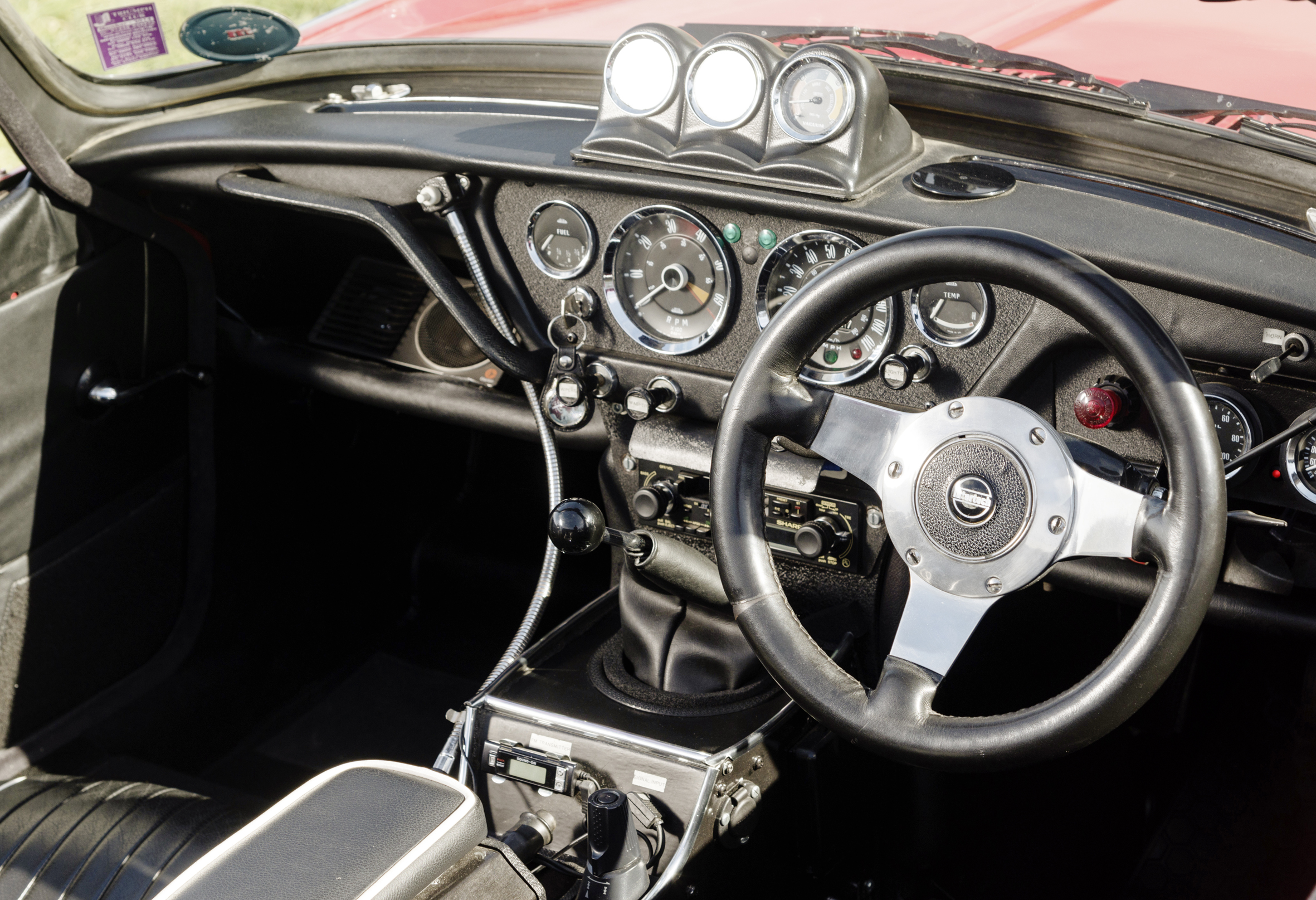
Triumph’s low-slung seating makes you feel fast even before you turn the key
The first aspect to fall short of expectation is the gearshift, which is precise but too long-travel, with second and fourth causing my wrist to clash with the centre armrest squab, and my knuckles punching the dashboard for first and third. Acceleration feels urgent, especially as it sounds like a Formula Junior up to 3000rpm, but it runs out of urge around 1000rpm later, demanding another long-winded gearshift. This might suggest that the Spitfire is all about rowdy showing-off at boulevardier speeds, but in reality it’s just a shortcoming of 1147cc and 67bhp of early Sixties overheadvalve technology. Work it up into overdriven fourth and while it’s never civilised, the Spitfire will cruise acceptably at 70mph.
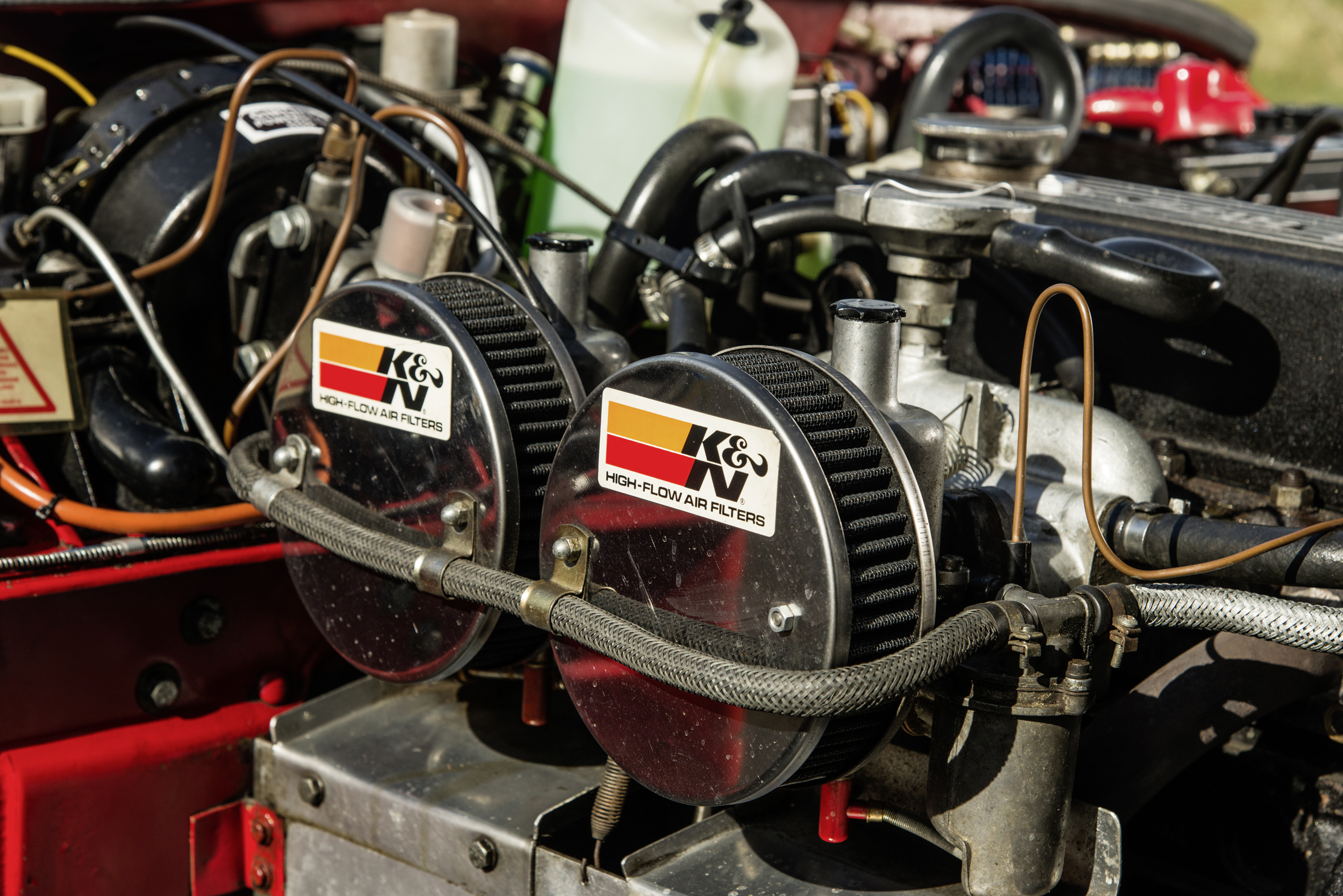
Two carburettors help the Spitfire to a rorty 67bhp
But it’s fun in the bends. Weighing just 700kg, it responds to the merest twitch of the wheel, squirreling under braking and threatening to whip sideways in tight corners as the 165/70 R13 tyres squeal with your right elbow mere inches from the tarmac.
The Spitfire feels dangerously alive in a way the MX-5 just isn’t allowed to. There’s no way you’d want to drive it every day, of course, but to do so would be missing the point anyway.
Owning a 1966 Triumph Spitfire 4 Mk 2
‘I’ve owned Spitfires for years. They’re so easy to live with and refurbish if they’re tatty as everything unbolts very easily,’ says Triumph enthusiast and dealer Bruce Minchin. ‘This car is very special – one owner before me, who fitted it with all the Paddy Hopkirk dealer-fit options when new – the extra gauges, spotlights, steering wheel and so on – which are near-impossible to find now.

Engine 1147cc, in-line four-cylinder, ohv, two SU HS2 carburettors
Power and torque 67bhp @ 6000rpm; 67lb ft @ 3750rpm
Transmission Fourspeed manual with overdrive on third & fourth, rear-wheel drive
Steering Rack and pinion
Suspension Front: independent, coil springs, wishbones, telescopic dampers, anti-roll bar. Rear: independent, transverse leaf spring, swing-axles, radius arms, telescopic dampers
Brakes Discs front, drums rear
Weight 711kg
Performance Top speed: 92mph; 0-60mph: 15.5sec
Fuel consumption 30mpg
Cost new £666
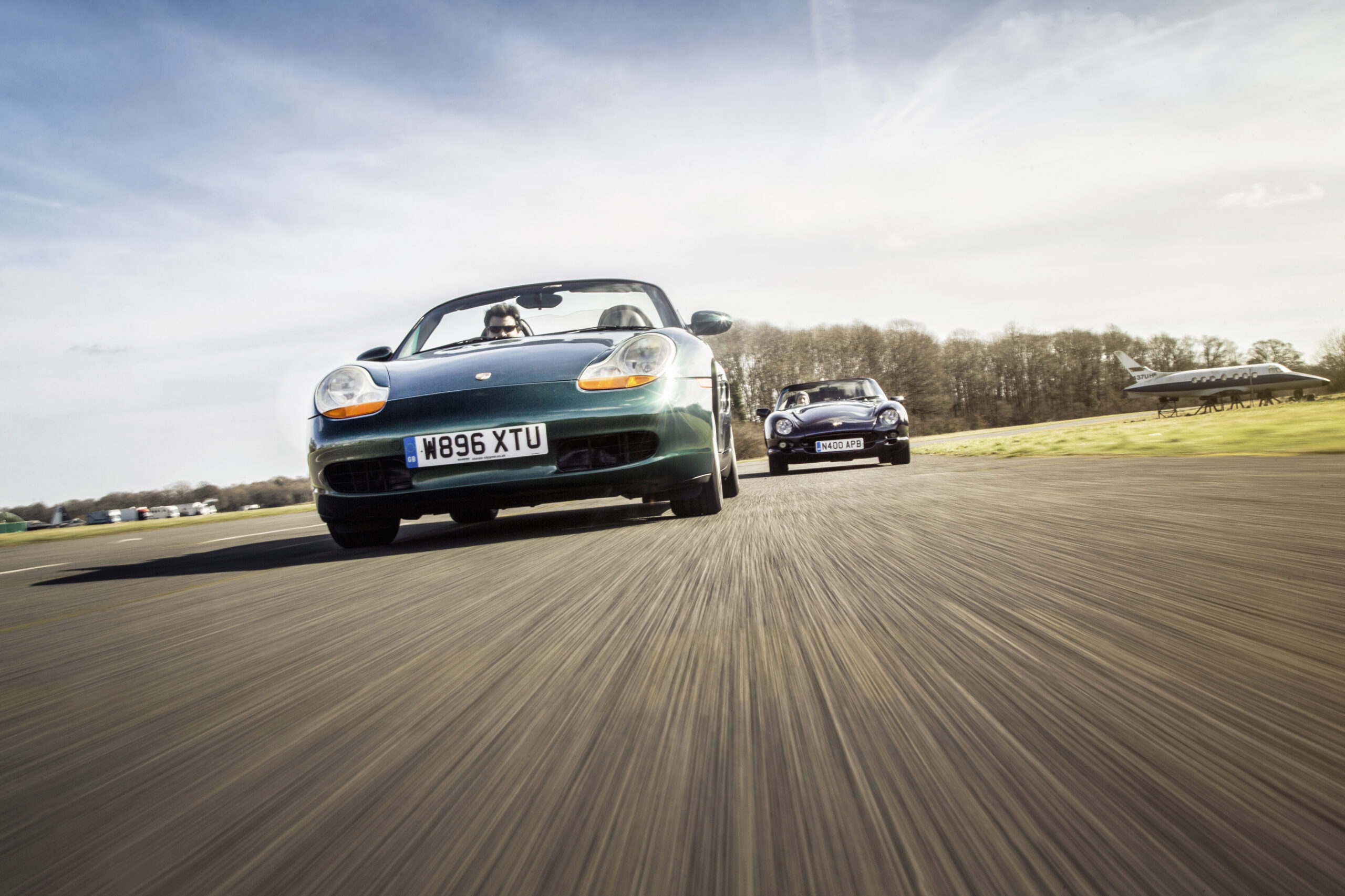
Boxster 2.7 hits the sweet spot between underwhelming 2.5 and more pricey 3.2; Chimaeras are a riot whatever the capacity
Porsche Boxster 2.7
Forget mere fun – never before have stock performance figures like the Porsche Boxster 2.7’s been reliably available for as little as £5000. A top speed of 155mph, 0-60mph in 6.6 seconds and 220bhp is exciting enough. The fact that it comes packaged in a mid-engined, rear-drive roadster with six bespoke, normally aspirated cylinders and one of the world’s most desirable badges on its nose is nothing short of a miracle. In terms of what it offers, the Boxster warrants comparison with the Ferrari 308 GTS.
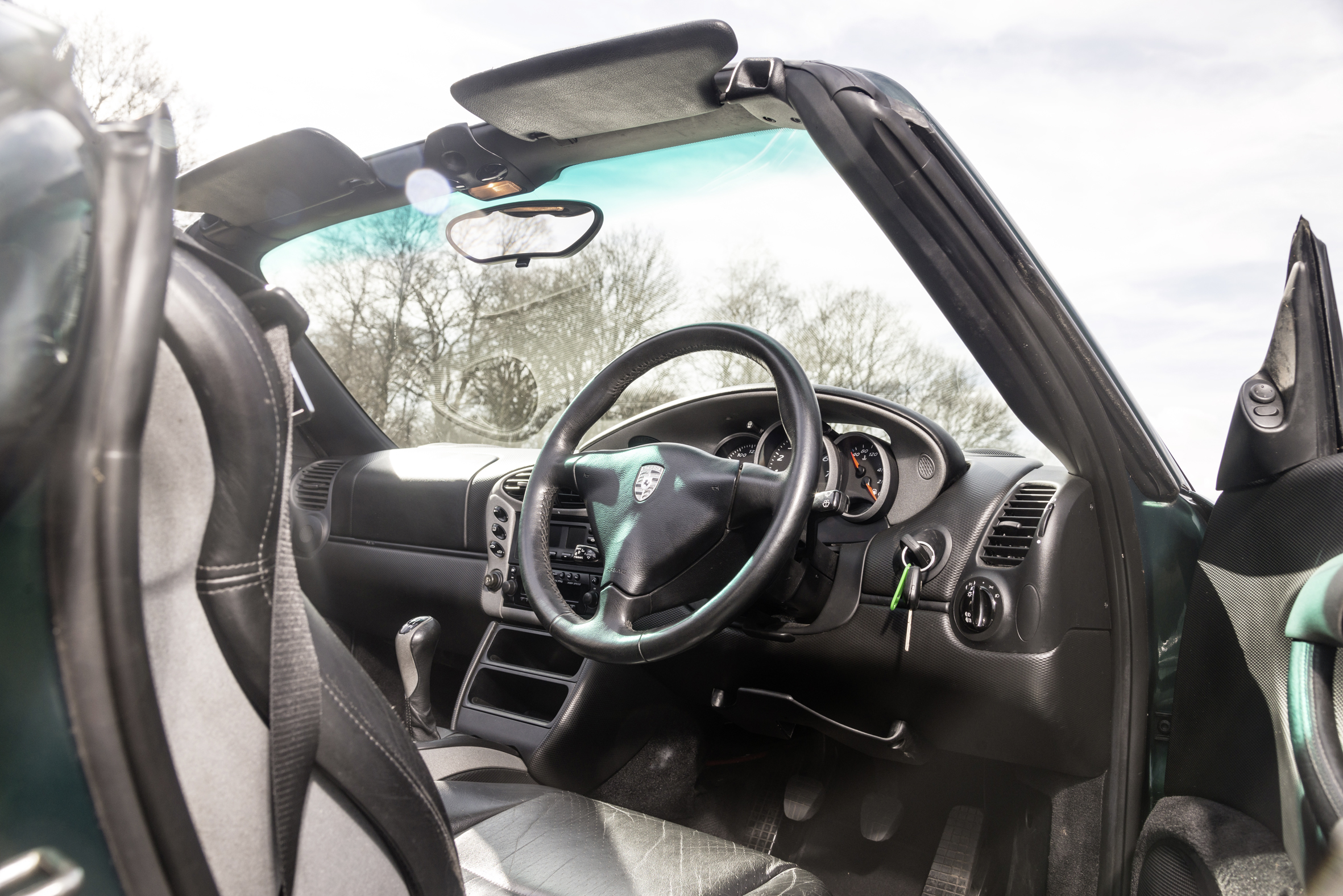
It feels special the moment you enter, with a busy array of hooded gauges thrusting out behind the steering wheel. The firmly upholstered seat seizes your back like a racer’s bucket. Compared to the MX-5 and Spitfire, this is a serious performance car.
Porsche’s interior is accomplished, if not heartwarming
However, turn the ignition key and you barely hear anything, even with the roof down. The flat-six whispers so quietly at idle that you have to check the rev counter to make sure it’s running.
There are no such qualms when you accelerate, though. At 3000rpm, the engine’s unimpressive mumble becomes an otherworldly scream. And unlike any other small roadster you might consider at this price, there’s no power fall-off once you’ve passed cruising speeds either.
As with all Porsches featuring the VarioCam system, you’re always ‘on cam’, the car seemingly attached to a distant horizon by an endless elastic band.
You’ll know it’s mid-engined – and not a 911 – the second you turn into a corner. There’s no sense of weight or inertia from either end of the car, it just pivots around you and goes where you point it, comparatively massive 205/50 ZR17 tyres up front and 255/40 ZR17 rears minimising any chance of breakaway.
However, all this hints at the Boxster’s only real problem. It’s a little too efficient for its own good. It’s a supercar without the drama, with very little wheel or pedal feedback, a gearchange that’s Golf-smooth rather than Ferrari-notchy, and a sense that all this competence is getting in the way of the low-speed fun at which the MX-5 and Spitfire excel. It’s easy to live with, but it’s only truly exciting when you’re going fast enough to lose your licence.
Owning a 2000 Porsche Boxster
Classic Chrome’s Garry Shortt says, ‘The aircon condensers and coolant radiators can trap road dirt and corrode. Rattles on tickover and metal bits in the oil filter indicate an intermediate shaft bearing failure and a scrap engine.’
Engine 2687cc horizontally opposed six-cylinder, dohc per bank, Bosch M7.2 fuel injection
Power and torque 220bhp @ 6400rpm; 192lb ft @ 4750rpm
Transmission Five-speed manual, rear-wheel drive
Steering Power-assisted rack and pinion
Suspension Front: independent, MacPherson struts, longitudinal and transverse links, coil springs, dual telescopic dampers per wheel, anti-roll bar. Rear: independent, MacPherson struts, lateral and trailing links, coil springs, dual telescopic dampers per wheel, anti-roll bar
Brakes Servo-assisted discs
Weight 1260kg
Performance Top speed: 155mph; 0-60mph: 6.6sec
Fuel consumption 28mpg
Cost new £31,140
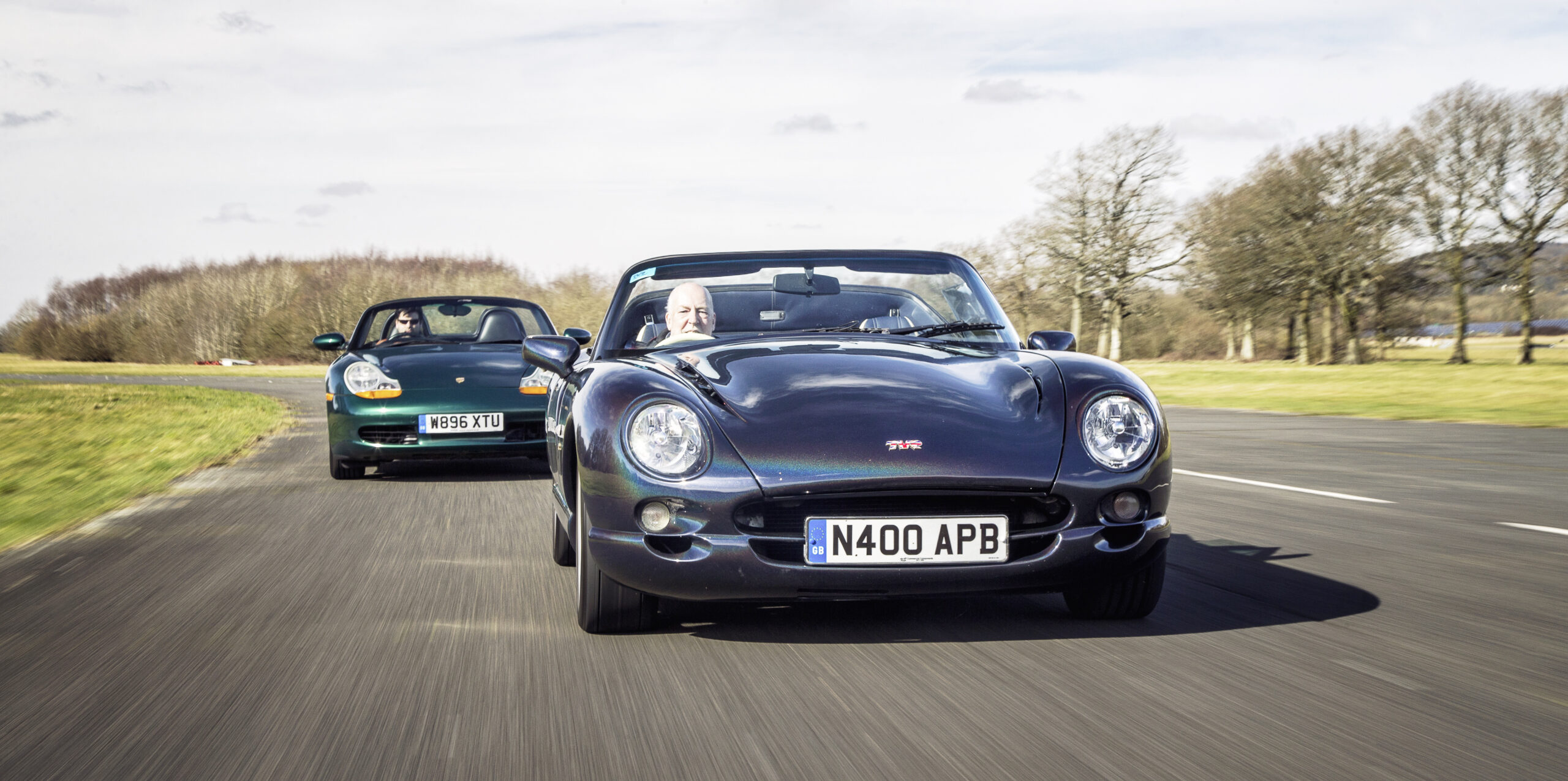
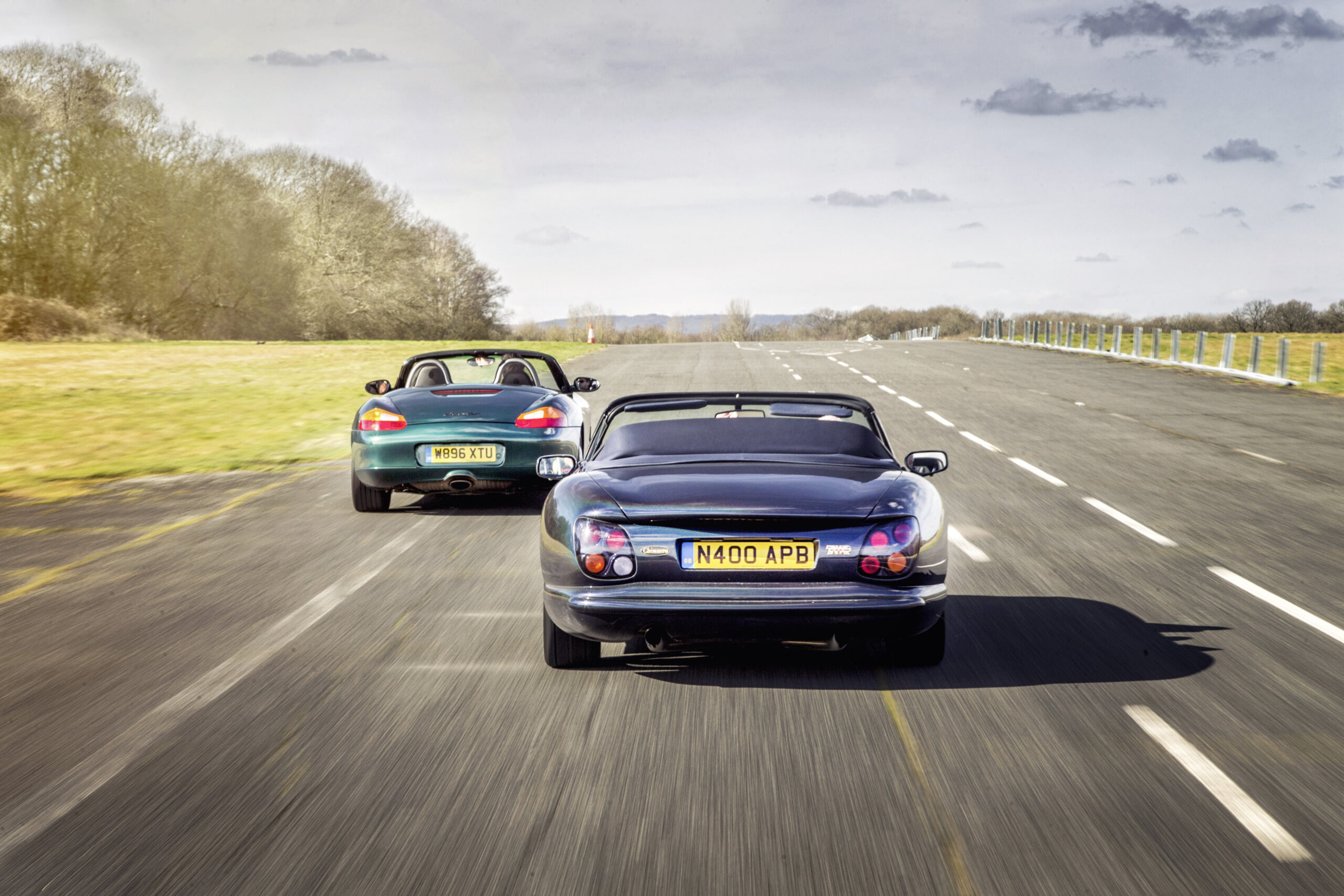
TVR is more than ready to mince the clinical Porsche
TVR Chimaera 4.0
The TVR Chimaera is everything the Porsche isn’t – raw, loud and scary in a way that severely hampers its everyday-use credentials. Or is it? In the wet perhaps, but a drive reveals a far friendlier machine than its reputation would have you believe. After all, this was TVR’s big-booted touring model, which rivalled the Boxster during the marque’s Nineties heyday.
It channels comparable figures – 240bhp, 0-60 in 5.2 seconds and on to 158mph – with bare Spitfire-style mechanistic overtness rather than novice-appeasing civility. You can tell there’s a V8 under the bonnet from the second you turn the key, hear the distant-storm rumble and feel the vibrations through the bulkhead.
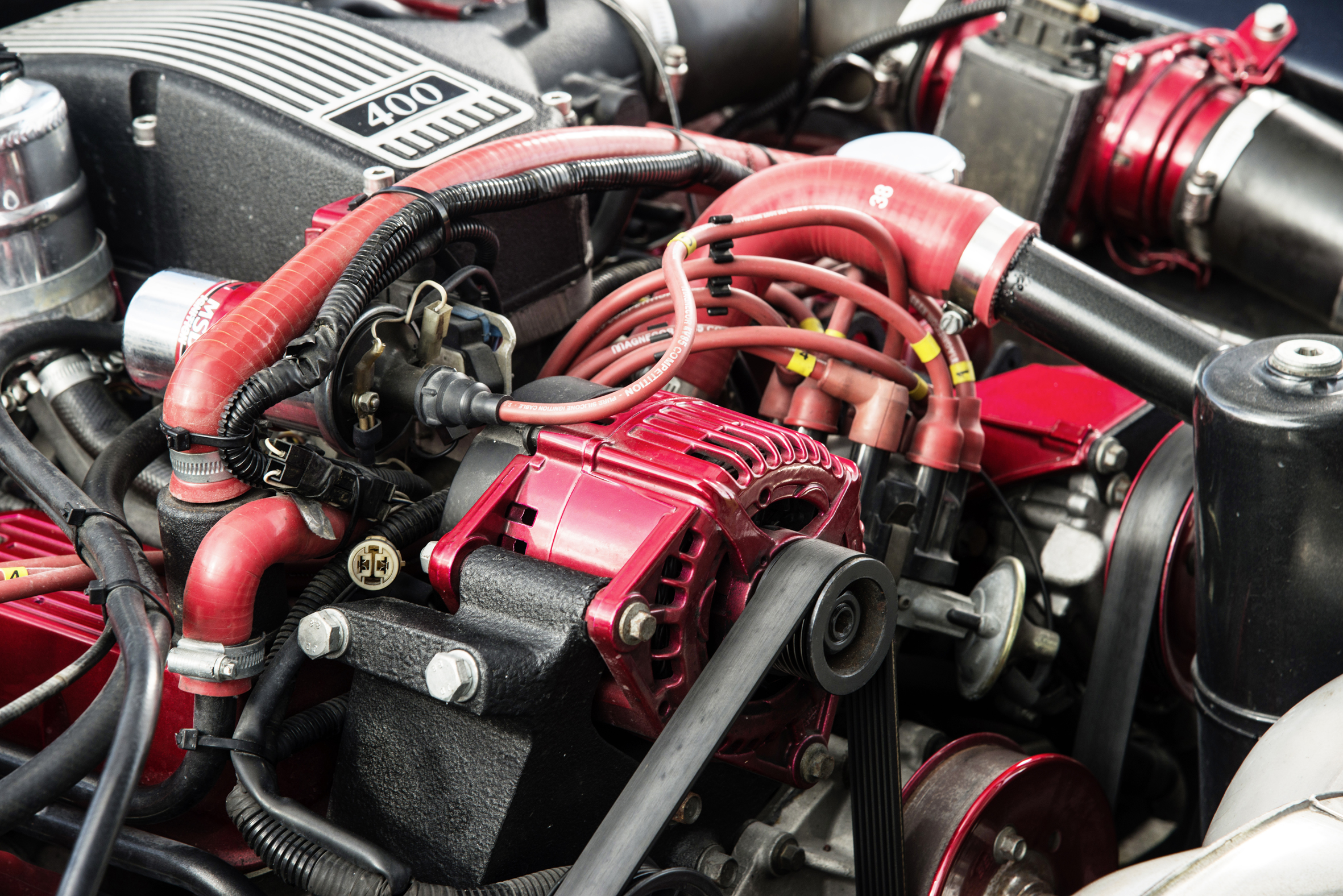
4.0-litre Blackpoolhoned V8 hurls 240bhp into the asphalt
Being a V8, it accelerates like a muscle car, with a wave of noisy torque arriving immediately. But that’s when any comparisons with that cheaply engineered breed end. There’s no threat of excess wheelspin or fishtailing – instead, it squats slightly on its rear 225/55 ZR16 tyres and keeps itself stable and in check long after the engine note has transcended an American-style uncouth rumble around 3000rpm and headed decisively into the realms of highoctave, hand-tooled supercar fortissimo.
This may be a Rover V8 at heart, but its development – and the chassis – came via the Tuscan Challenge of the late Eighties, making Nineties TVRs every bit as race-developed as Ferraris even if they came via Snetterton rather than San Marino.
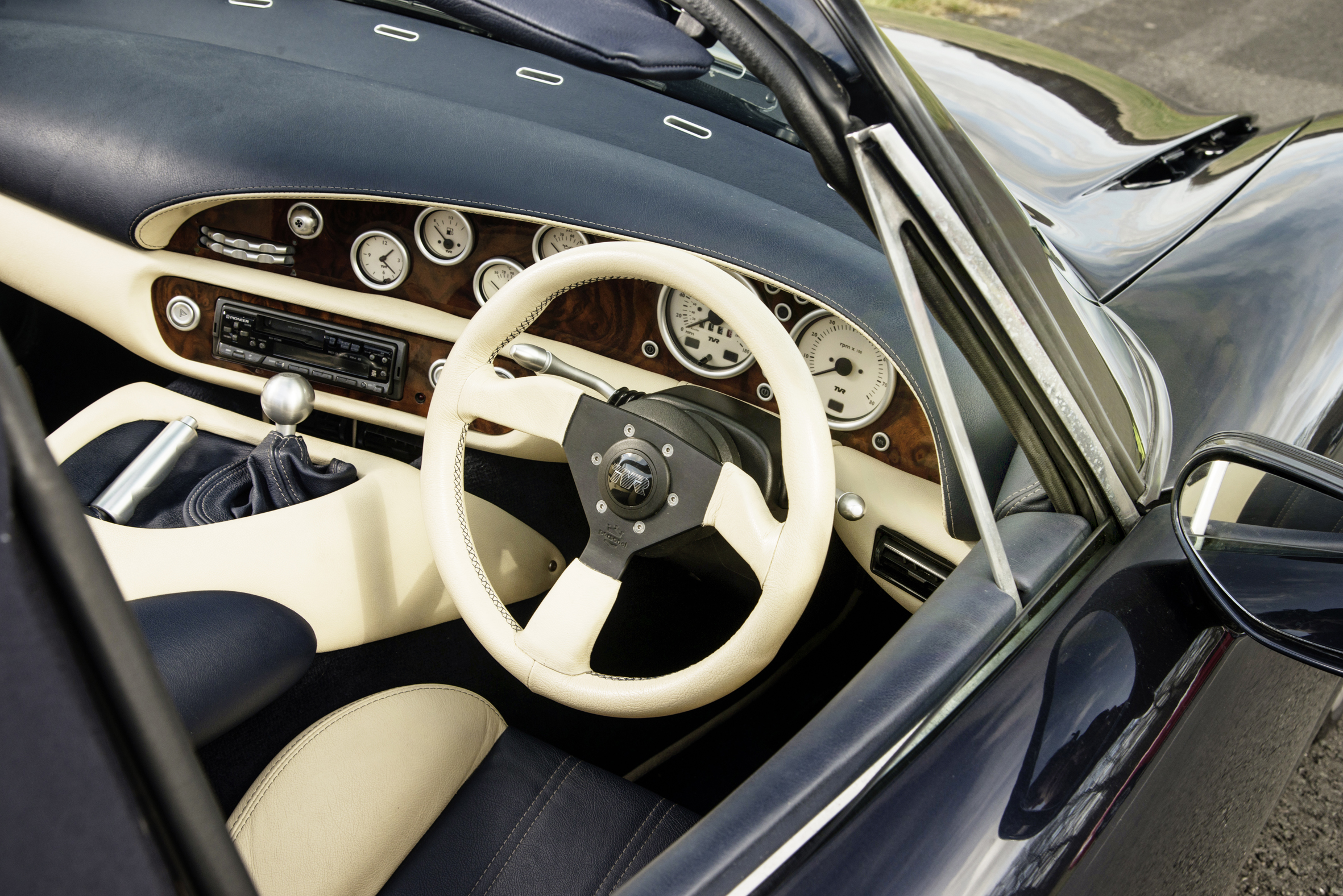
Beautifully trimmed interior is in contrast to the engine’s rawness
As befits something descended from a racer, you have to be disciplined when driving it but there are no nasty foibles. There’s no dead zone in the steering’s centreline and while the scuttle-shake of the old Tasmin-based convertibles is thankfully gone, the damping is unyieldingly stiff and the clutch is Lamborghini-heavy. The gearchange is satisfyingly positive, with a short mechanical throw like the Mazda’s, but the lever is a slightly awkward stretch away.
Once you get used to the TVR, it’s easy to bond with, and you can treat it like an exotic-looking V8-engined MX-5, nicely balanced with an excitable rear end enlivening neat cornering. Be warned, though – unlike the little Mazda, when the TVR goes light at the rear you’ll be going much, much faster.
Owning a 1999 TVR Chimaera 4.0
‘It’s my third TVR,’ says hillclimb racer Tony Ballard. ‘I’ve owned it for two years and taken it abroad twice – it’s very pleasant to tour in. Chassis outriggers are their Achilles heel. The powdercoating lifts and they rot. Every year, I have mine inspected and recoated by a TVR specialist in Warminster, but even then they’ve probably only got two years left in them, then I’ll have to have a pair made for £650 a side from a more manly piece of metal!’
Engine 3950cc V8, ohv, MBE Sequential fuel injection
Power and torque 240bhp @ 5250rpm; 270lb ft @ 4000rpm
Transmission Five-speed manual, rear-wheel drive
Steering Power-assisted rack and pinion
Suspension Front and rear: double wishbones, coil springs, telescopic dampers, anti-roll bar
Brakes Servo-assisted discs
Weight 1024kg
Performance Top speed: 158mph; 0-60mph: 5.2sec
Fuel consumption 22mpg
Cost new £27,850
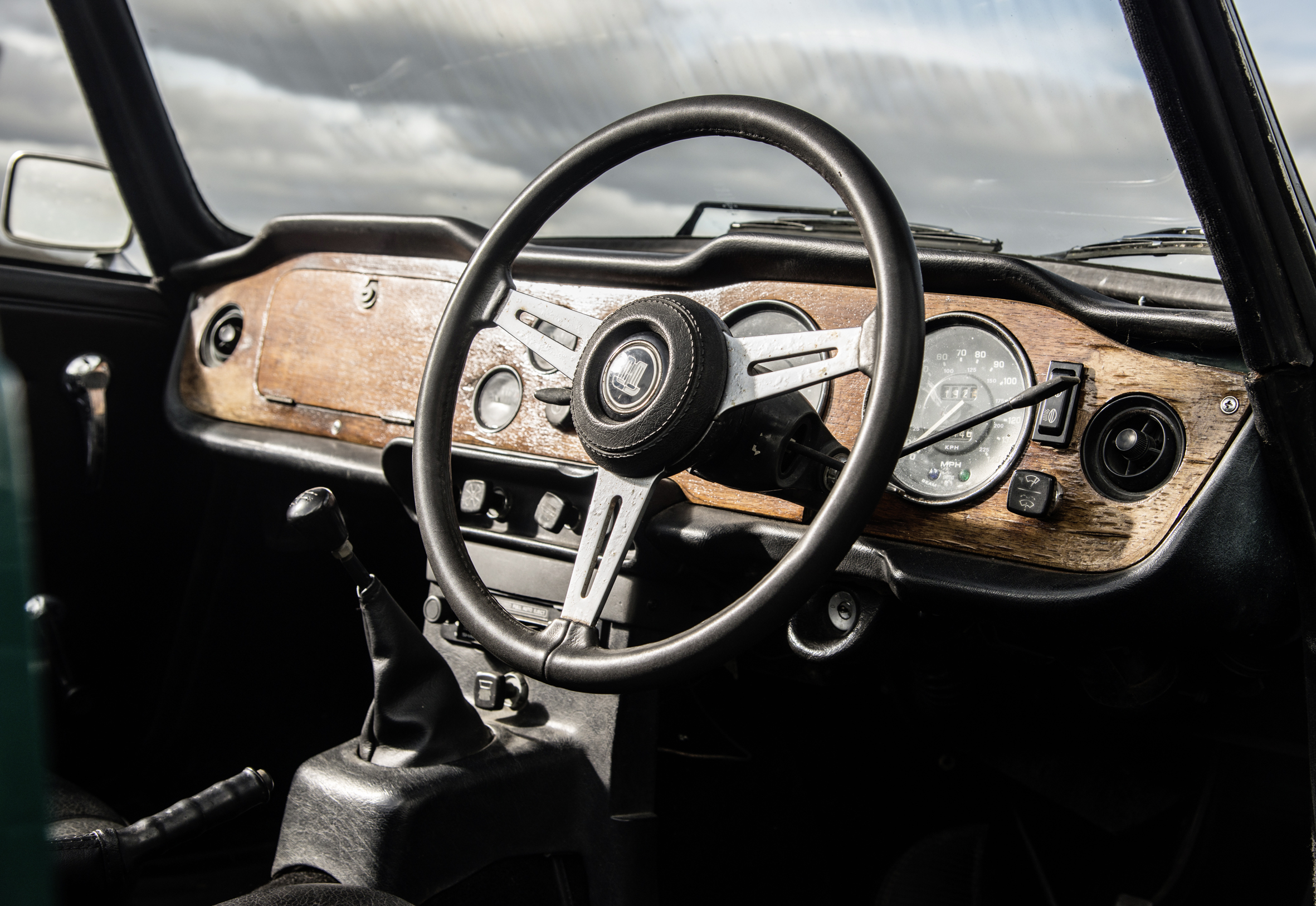
Stripped-back interior of the TR6 is more suited to thrashing than cruising
Triumph TR6
If the TVR represents a modern, supercar-threatening take on the classic British sports car, then how does its source material compare? The Triumph TR6 is surely a prehistoric Chimaera, with its large acreage, driver’s seat back near the rear axle and sizeable – for the Seventies – straight-six engine promising uncomplicated, satisfying performance.
Not quite. Although it feels urgent from a standing-start, this TR6 only has 125bhp, and hits a flat spot at around 3500rpm. It’s happy to cruise at 70mph with very little effort, overdrive on fourth gear proving as effective as any modern five-speed gearbox, but its aesthetics – all rattling panels, hard suspension, wind roar and exhaust drone – discourage this. It’s no GT.
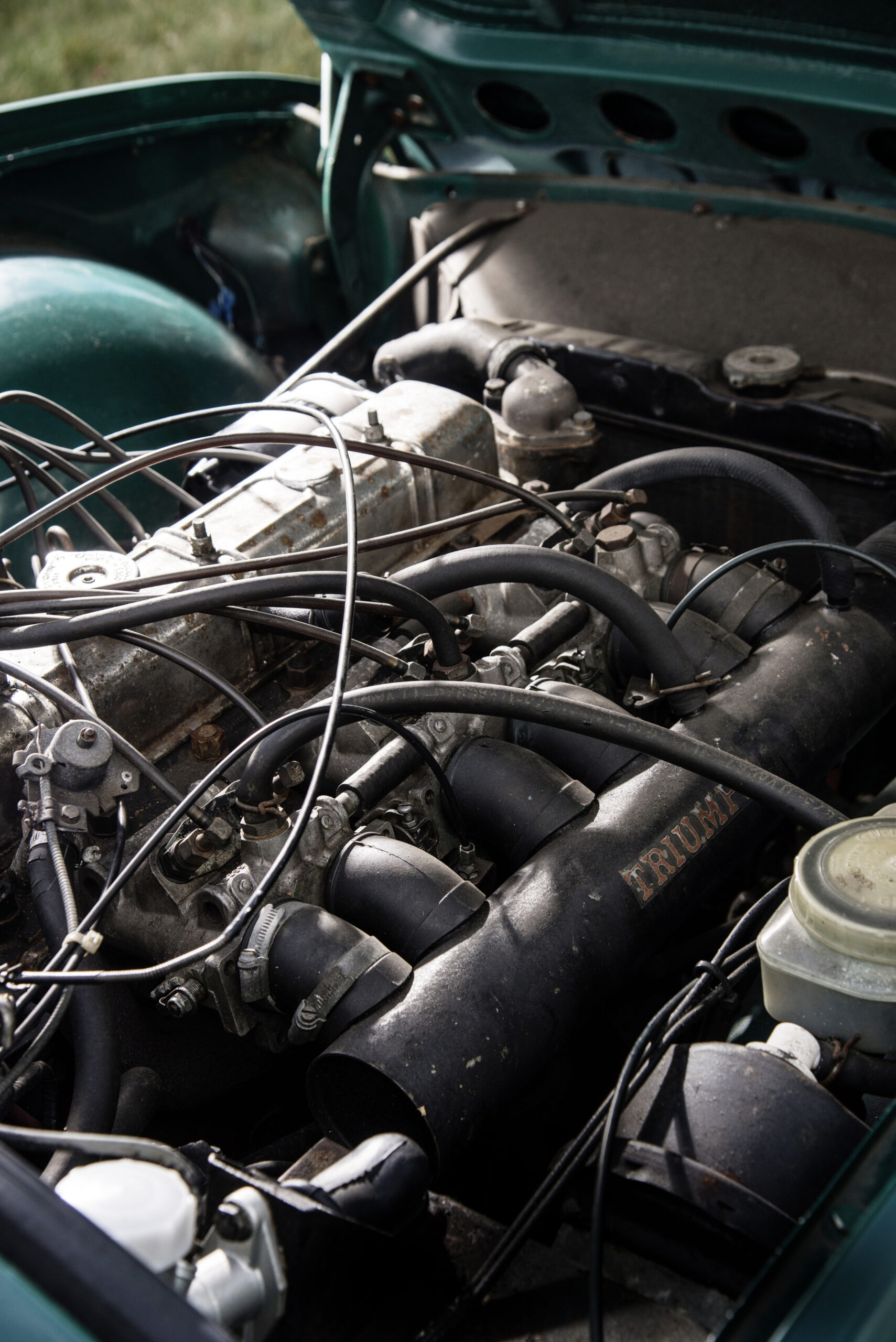
2.5-litre six-cylinder doles out 125bhp in pleasing dollops
Problem is, it’s not that great as a nimble sports car either. It handles wide, sweeping bends with ease – you gently, gradually ‘lean’ the car into corners rather than hurl it – but it pitches all too easily into understeer on tighter bends and suffers from scuttleshake above 50mph. Oddly enough, the car it feels most reminiscent of is not the classic Triumph TR4A from which it’s derived, but rather a kind of half-timbered Chevrolet Corvette. That’s no slight on the Triumph, but rather a compliment to Chevrolet for managing to capture the essence of a particularly British kind of car that’s so often forgotten – the open tourer.
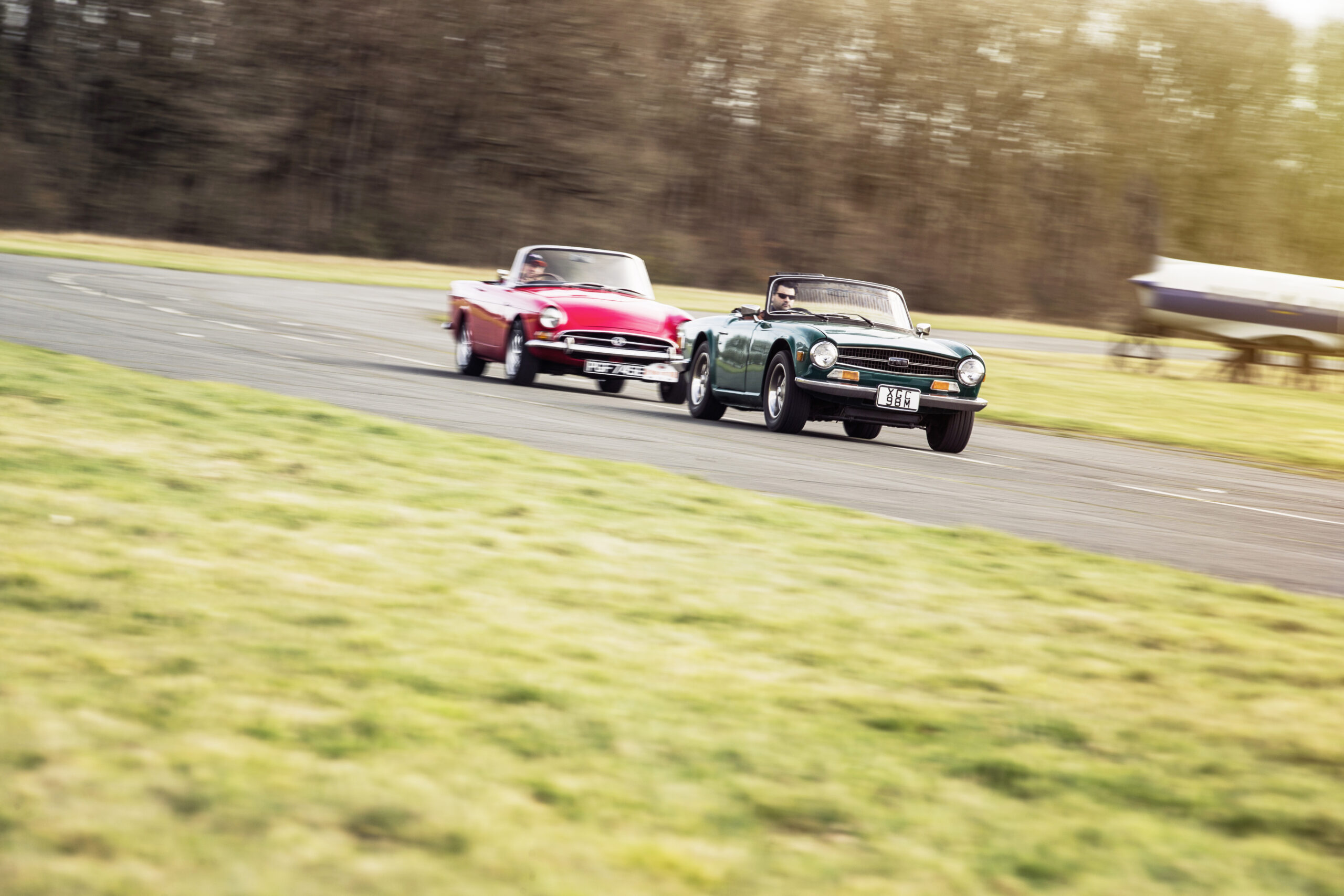
Tiger and TR6 both offer best-in-class exhaust notes
Perhaps it’s a result of its archaic roots – the front and rear sections of the TR6 are essentially a Karmann-penned disguise for a car that was a decade old on introduction – but the TR6 has a very vintage feel. However, rather than detracting from the driving experience, it imbues it with character instead. The long bonnet, bent-elbow driving position, firm-shifting gearlever, big wheel operating the heavy steering and wind whipping around the upright screen put me in mind of an early Morgan 4-4 rather than a contemporary of the Ford Capri and RS Escort. And yet in doing so manages to make the Fords seem underwhelming and bland.
You won’t crack any lap records in a TR6, but that’s not the point – you’ll drive everywhere bathed in the warm glow of nostalgia, something the Boxster can’t even hint at.
Owning a 1974 Triumph TR6
‘Try to use it as much as you can,’ says Triumph TR expert Gary Bates of TRGB. ‘If you have left a TR6 standing for a while, leave the ignition on for 10-15 seconds to prime the injectors and let the choke in as soon as possible, otherwise they’ll flood. They rust everywhere, clutches only last 10,000-20,000 miles.’
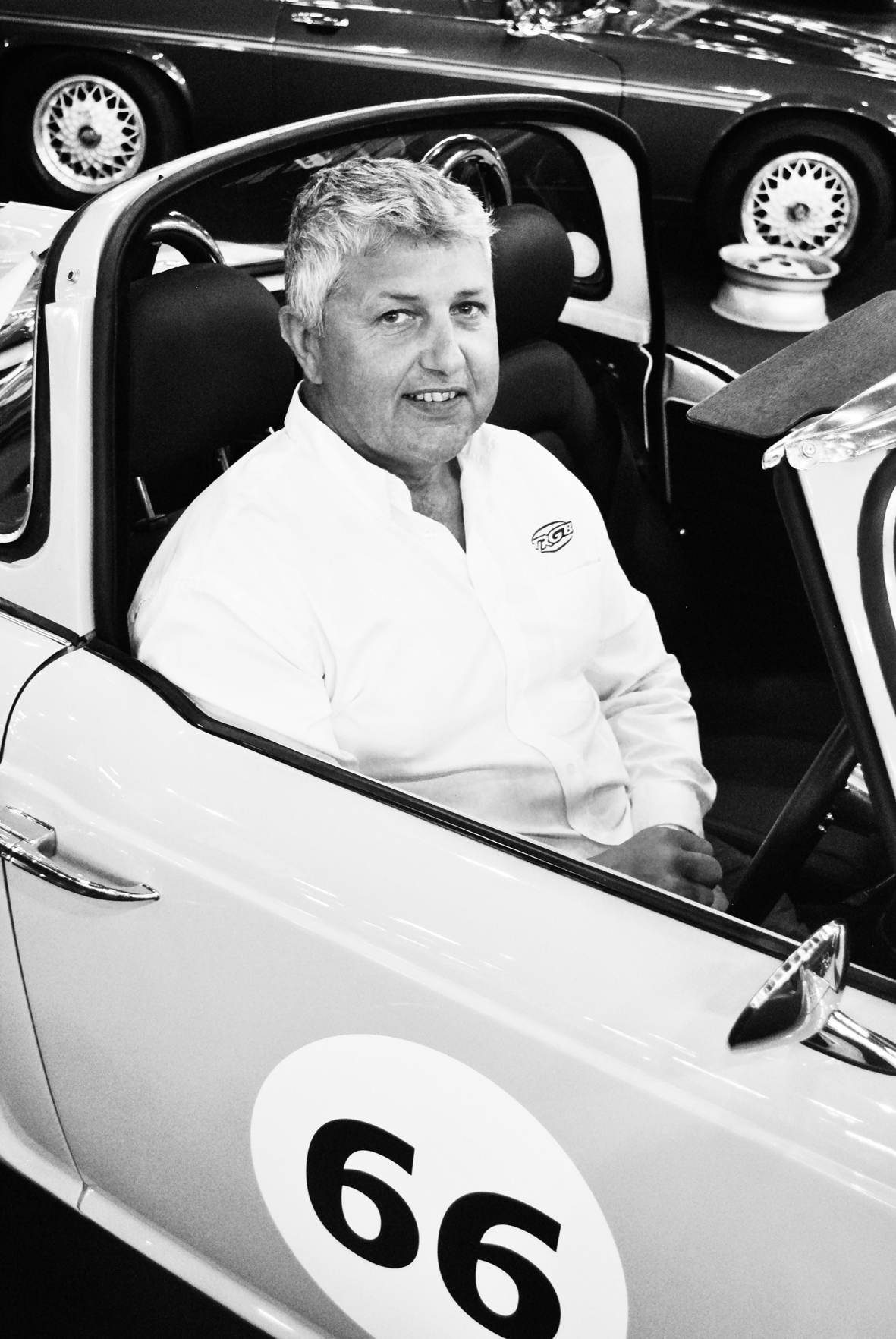
Engine 2498cc in-line six-cylinder, ohv, Lucas PI fuel injection
Power and torque 125bhp @ 5000rpm; 146lb ft @ 3500rpm
Transmission Four-speed manual, overdrive on third and fourth, rearwheel drive
Steering Rack and pinion
Suspension Front: independent, double wishbones, coil springs, telescopic dampers, anti-roll bar. Rear: independent, semi-trailing arms, coil springs, lever-arm dampers
Brakes Discs front, drums rear, servo-assisted
Weight 1053kg
Performance Top speed: 116mph; 0-60mph: 9.5sec
Fuel consumption 22mpg
Cost new £1333
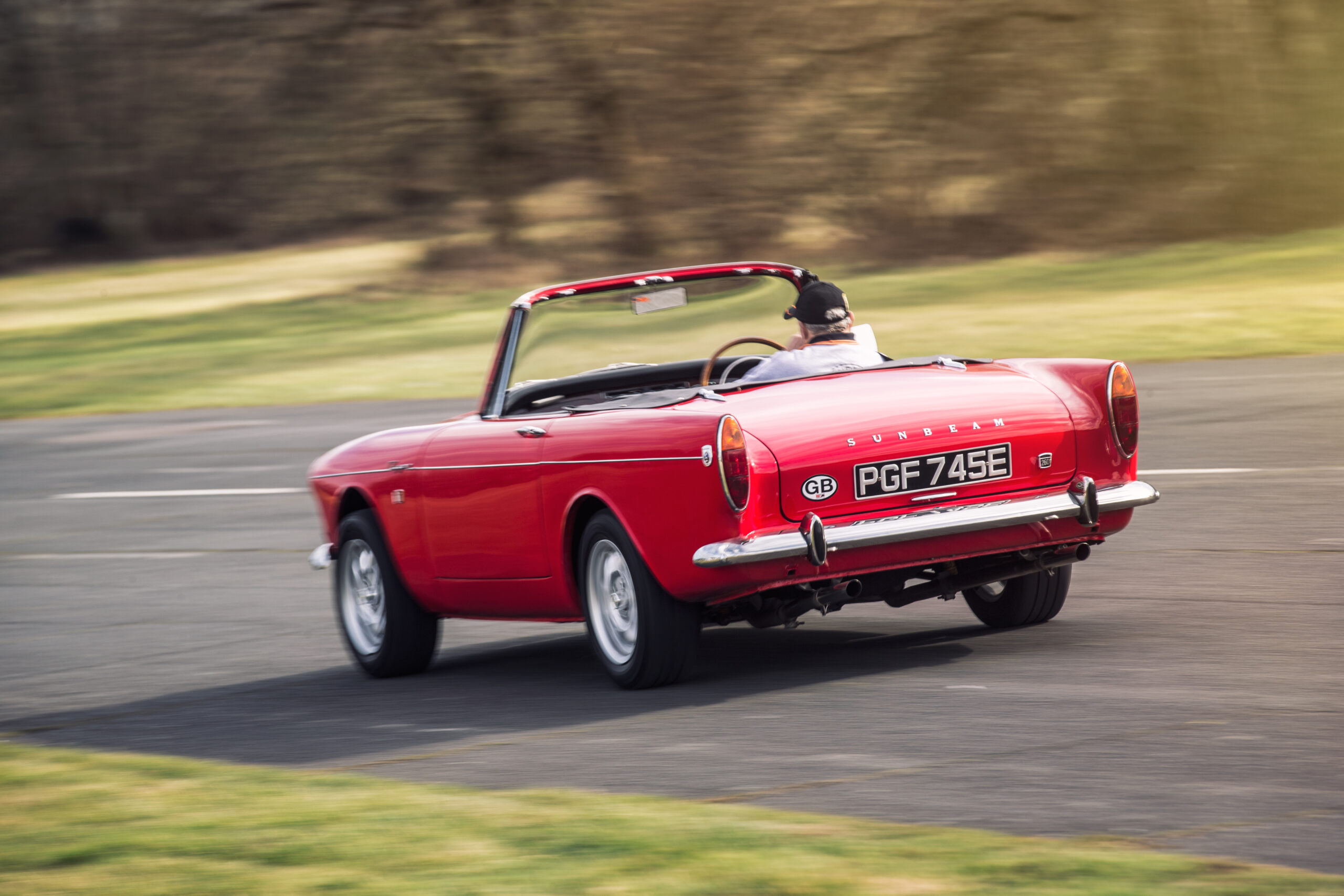
You could almost mistake the Tiger 260 for a demure fourcylinder Alpine, until the loud pedal goes down
Sunbeam Tiger 260
Visually, the Sunbeam Tiger is the antithesis of the TVR. Its tailfinned, high-sided bodywork is prim and upright in the manner of an unapologetically unsporty tourer, a sense reinforced by the cumbersome wood-rimmed steering wheel with its strange horncum-indicator ring running concentrically inside the rim. Squeeze inside – usually on the second attempt after realising you’ll have to slot yourself in left-knee-first – and you’re transported to a Heartbeat world of pottering around country lanes at 50mph between tearooms, guiding the wheel with your fingertips.
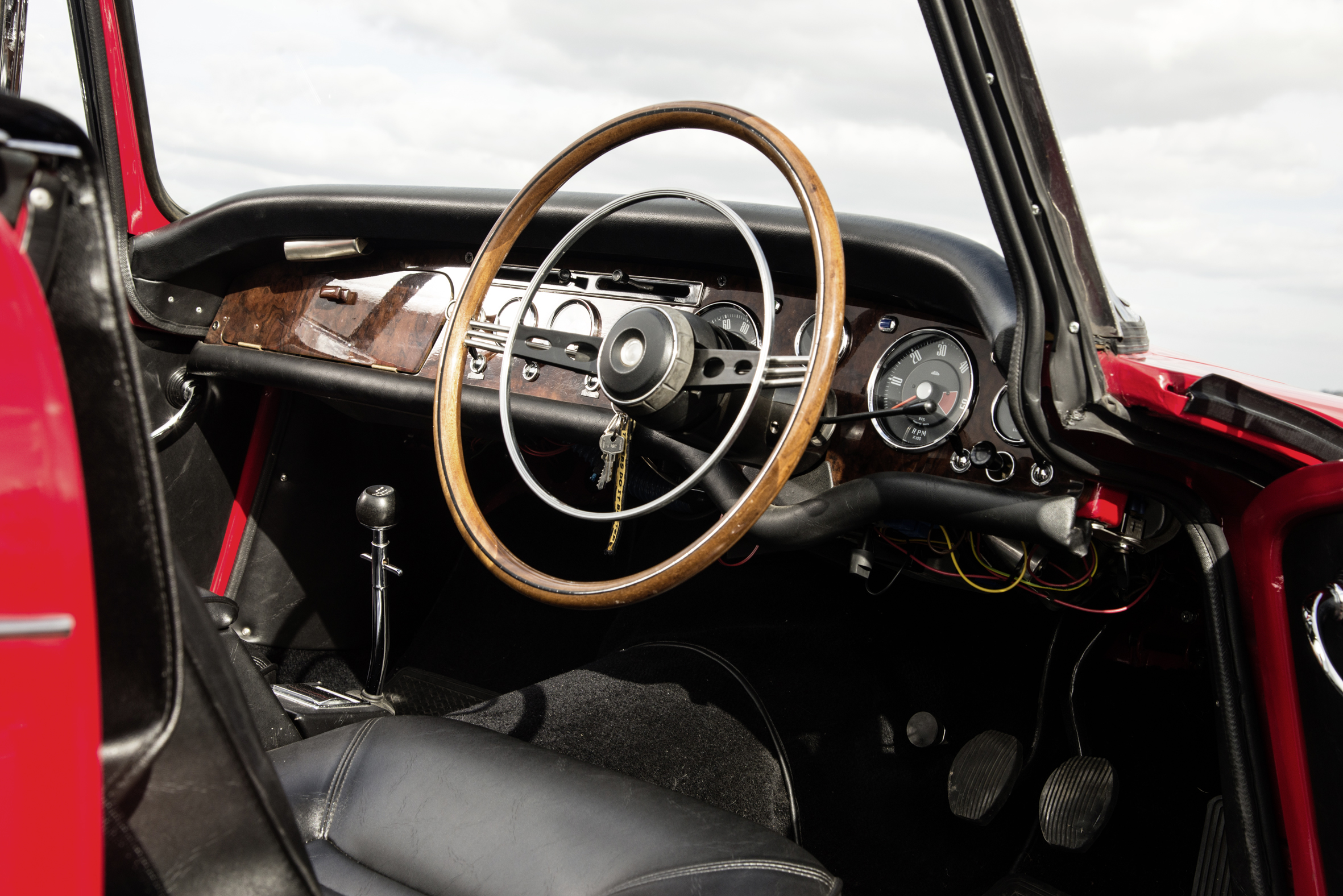
Vast steering wheel is awkward to get your legs past
The brutal-looking shifter with clawed reverse-lockouts is the only clue that not all is as it seems. There is, in effect, a Shelby Cobra rival hiding beneath all this modesty, let loose at the turn of the ignition key. The V8 growls savagely, gearlever clicking neatly into first before the onslaught of torque begins. It’s even louder than the TVR and feels more visceral from a standing start – surprisingly, among its various motor sport endeavours the Tiger proved most adept in stock-class drag racing, winning the American Hot Rod Association championships in 1965, ’66 and ’67.
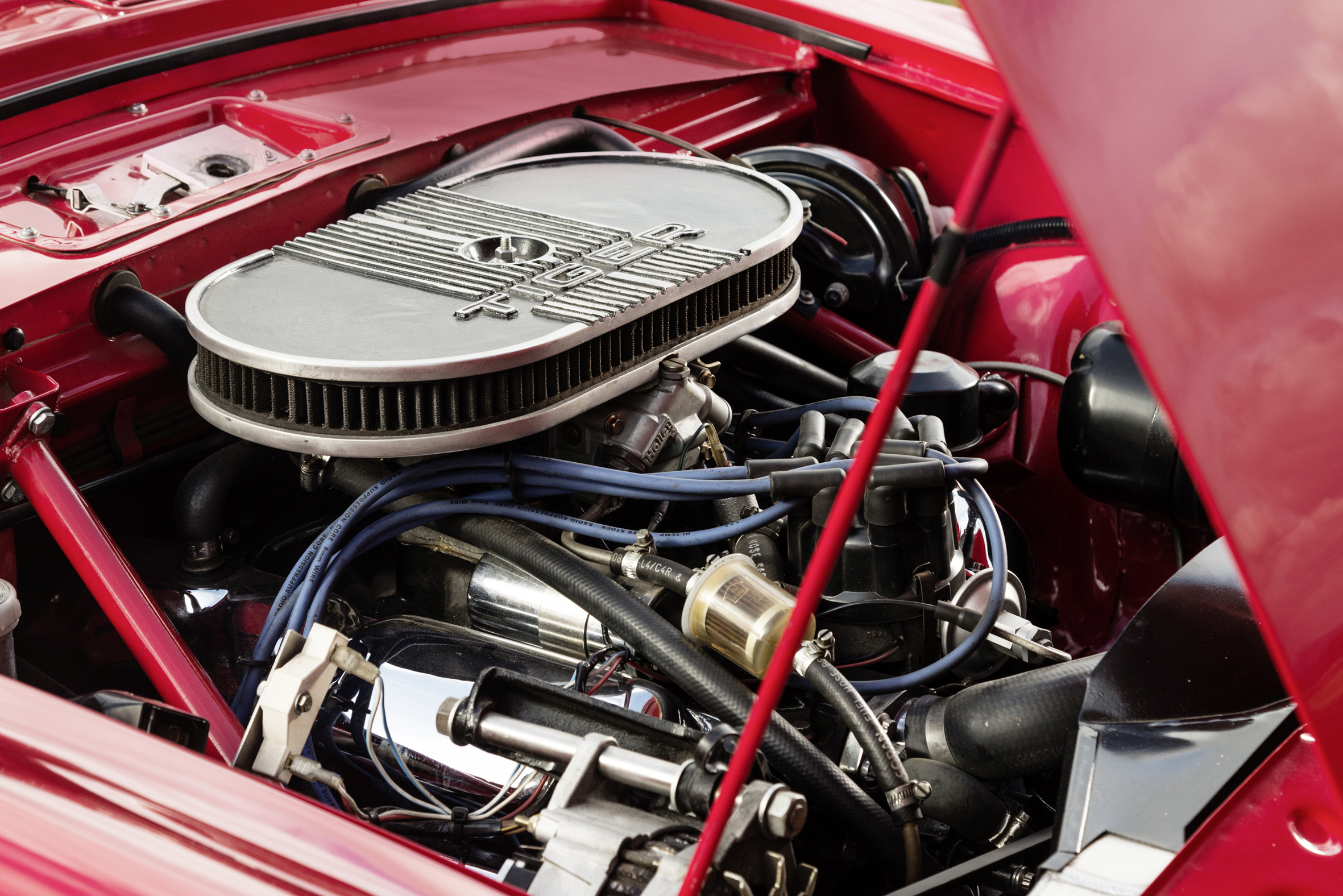
Ford V8 provides plenty of exercise for your eardrums
The reason, surely, is down to a neatly engineered, typically British chassis that manages to contain 258lb ft of torque within a 1163kg roadster. The engine nestles tightly amid the bulkhead and wheelarches, tempting cooling problems and narrowing the footwells, but the result is a well-balanced front-mid-engined car in the TVR idiom. As a result it corners with a neat suddenness most Sixties American cars couldn’t even attempt, while the Panhard rod at the rear manages to keep it from wandering off its line when attempting 0-60mph in 7.5 seconds.
As with many Tigers, this example now has four-piston front brake calipers – a worthy modification given the power and torque.
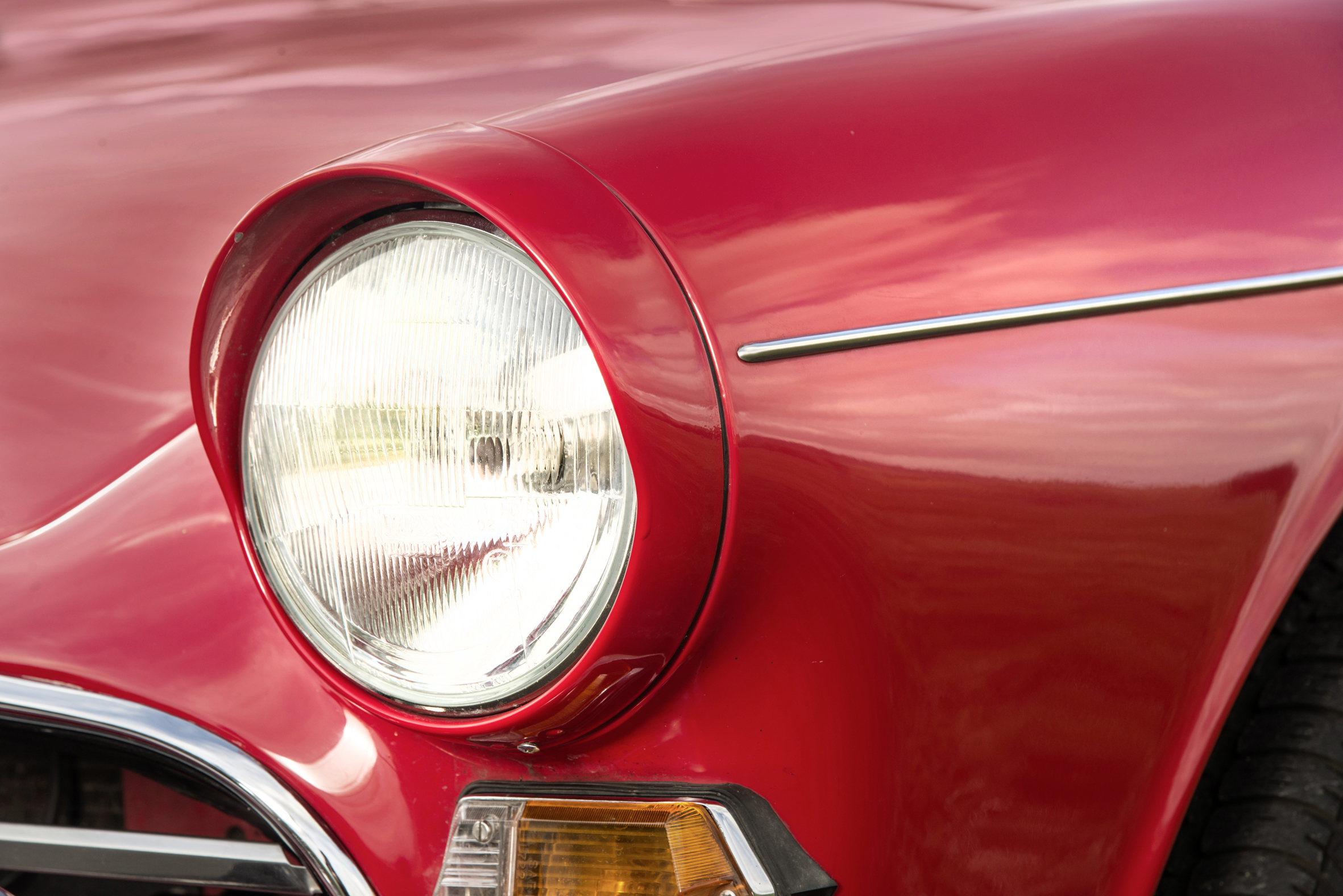
Tiger seeks to charm rather than claw its way into your affections
Sadly, the one aspect that holds it back from being a Cobra rival is one of the things that make it so appealing in the first place – its unaggressive, old-fashioned ergonomics. The driving position is saloon-upright, and the big wheel doesn’t like being hustled around. These are things that could be altered, of course, but to do so would be to spoil the Tiger’s character – such is the price of originality.
Owning a 1967 Sunbeam Tiger 260
‘They’re not as unreliable as legend would have it,’ says Malcolm Sedman of his Sunbeam Tiger. ‘They had a reputation for overheating simply because that big engine was so tightly packed in the engine bay, but a combination of modern coolant and an upgraded fan solves that. I take this on long touring holidays with no problems at all.’
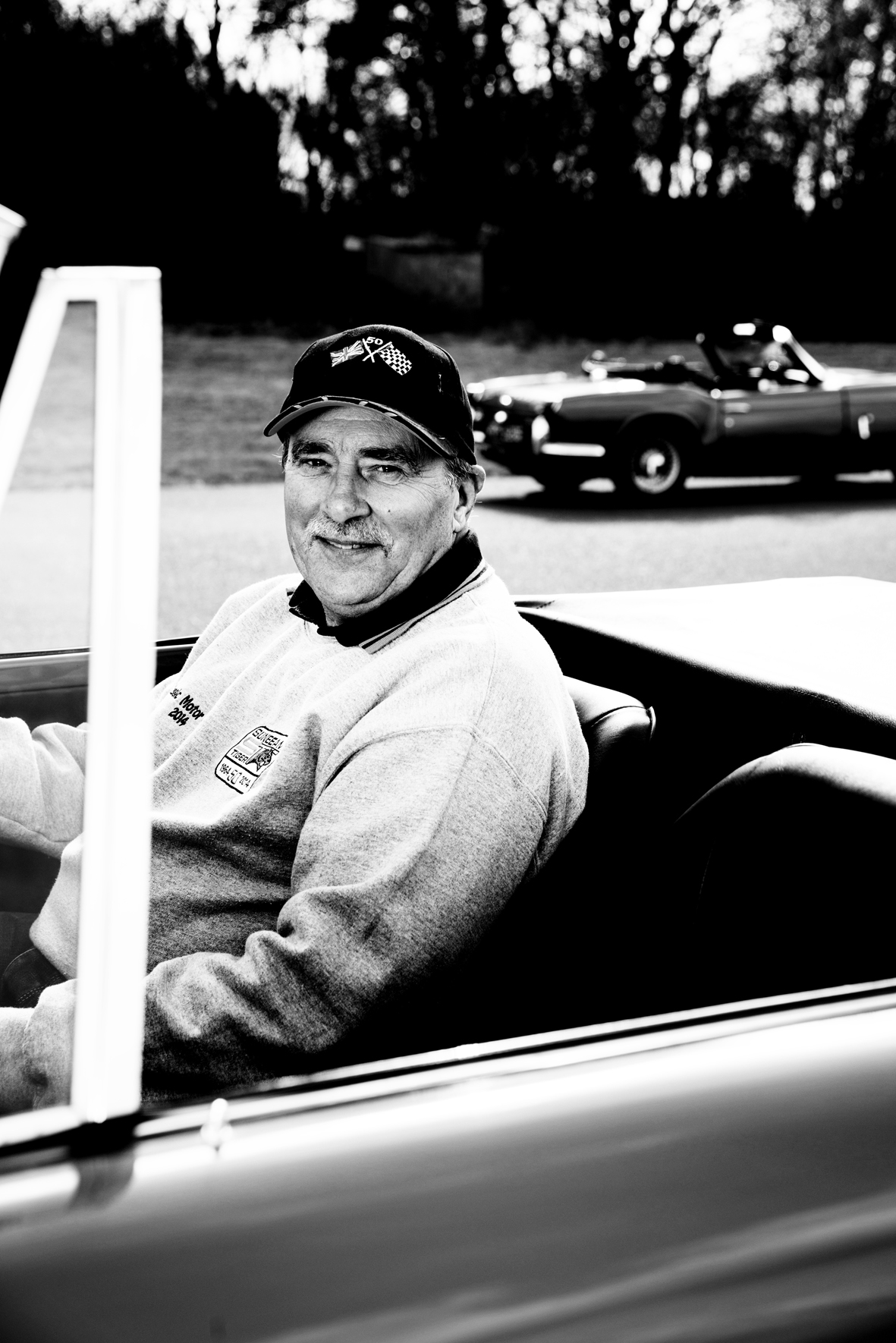
Engine 4261cc V8, ohv, Ford four-barrel carburettor
Power and torque 164bhp @ 4400rpm; 258lb ft @ 2200rpm
Transmission Four-speed manual, rear-wheel drive
Steering rack-and-pinion
Suspension Front: independent, wishbones, coil springs, telescopic dampers, anti-roll bar. Rear: live axle, Panhard rod, semi-elliptic leaf springs, telescopic dampers
Brakes Discs front, drums rear
Weight 1145kg
Performance Top speed: 120mph; 0-60mph: 7.5sec
Fuel consumption 17mpg
Cost new £1446
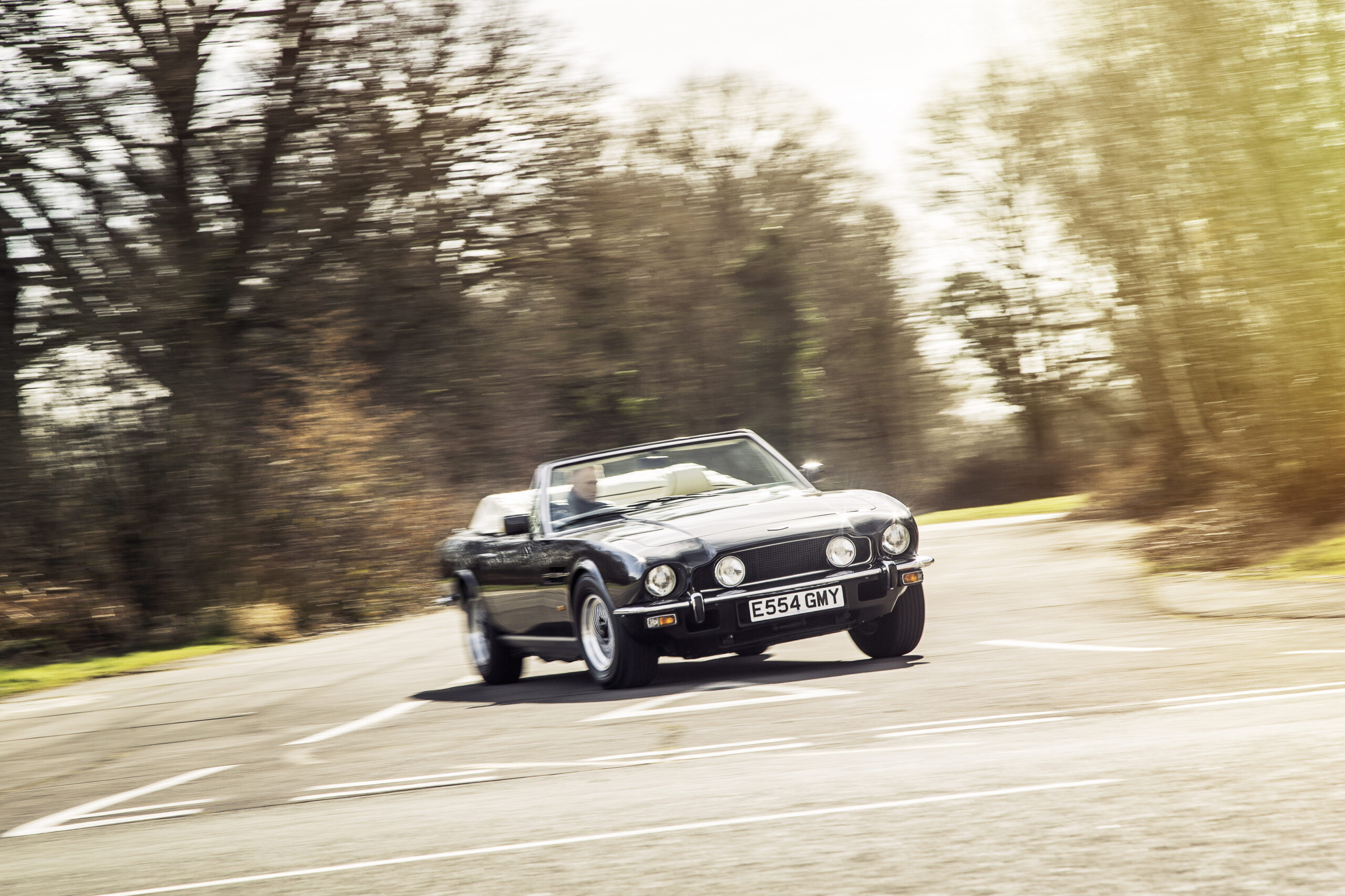
Drop the Volante’s roof and it’s still a civilised place to travel quickly
Aston Martin V8 Volante EFI
We’re into the realms of luxury performance now. The last-of-theline Weber-Marelli fuel-injected versions of the Aston Martin V8 Volante offer a level of comfort to rival a Bentley, plus the kind of near-supercar V8 power to excite – and the roof comes down too.
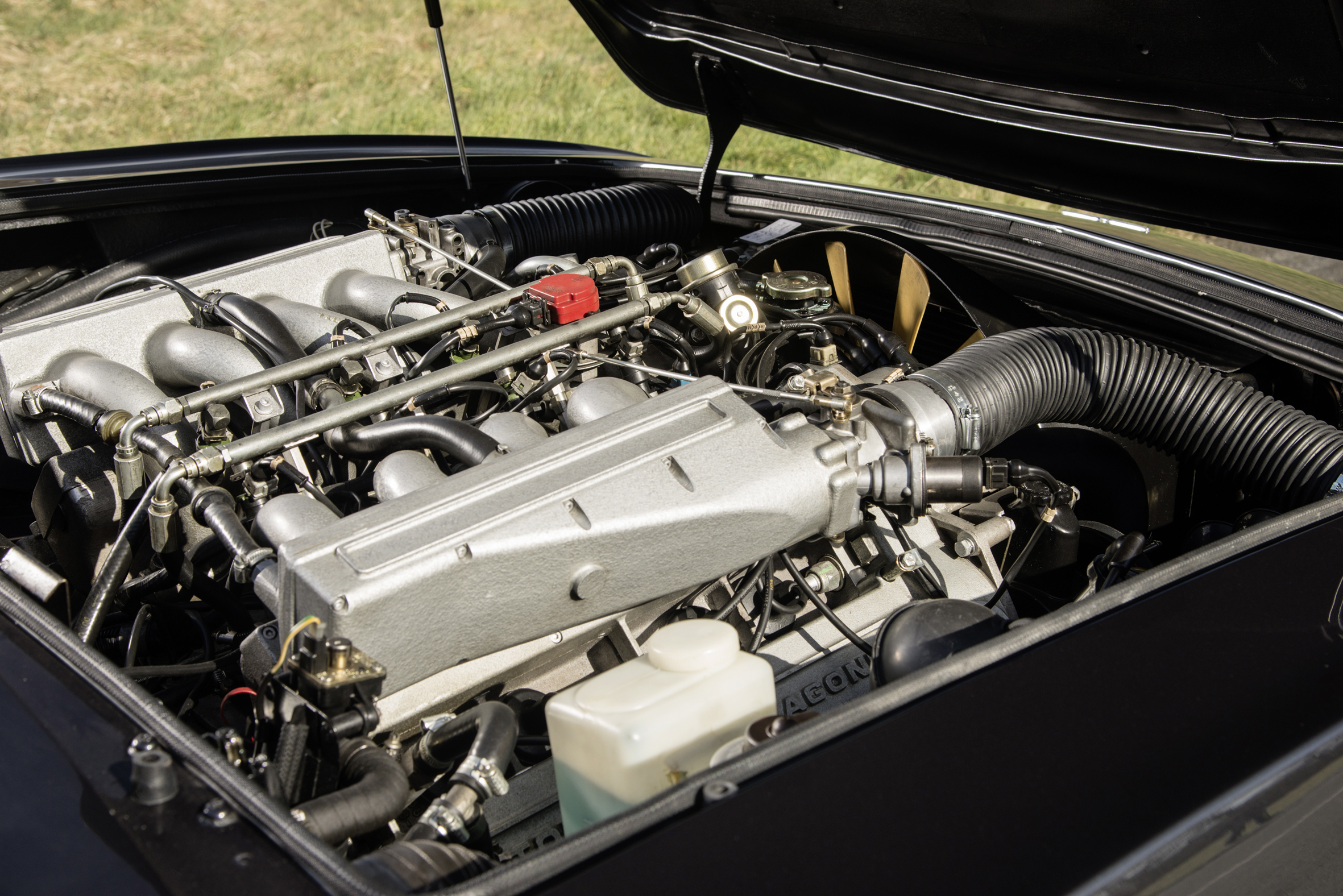
Fuel-injected 5.3-litre V8 issues a 305bhp decree
But Aston V8s often disappoint. They’re like some upmarket lifestyle events – you’re lured in by the sense of exclusiveness and good living, only to be underwhelmed by bland urbanity, secretly hankering after chips-and-beer TVR fun. Early Series 3 V8s in particular feel like privately educated Jaguar XJ12s.
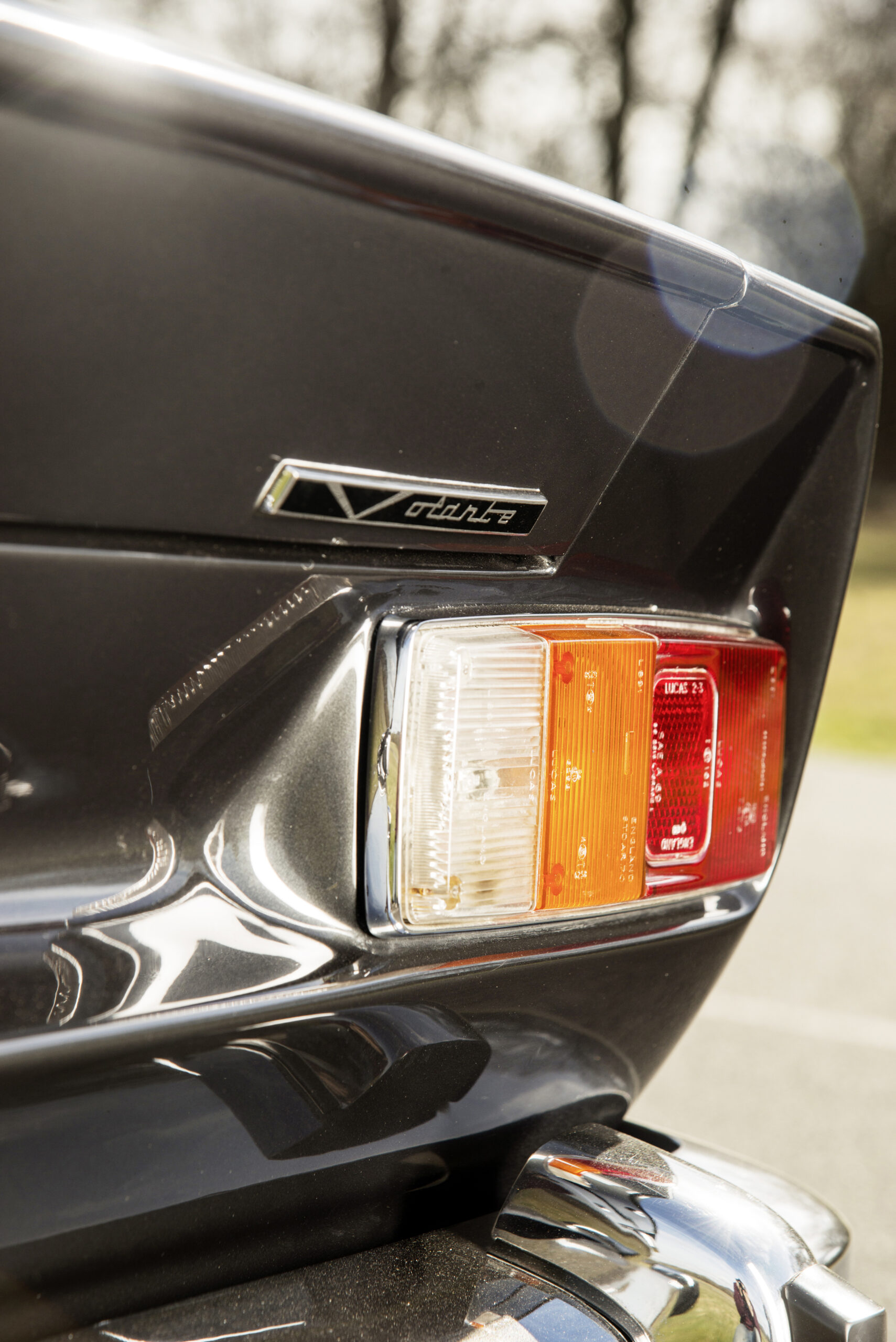
Adding Volante makes any Aston extra special
The driving position is awkward, with the tiny Lagonda-style two-spoke wheel low in your lap while you sit high on plump leather chairs. The tonneau blocks rearward visibility too.
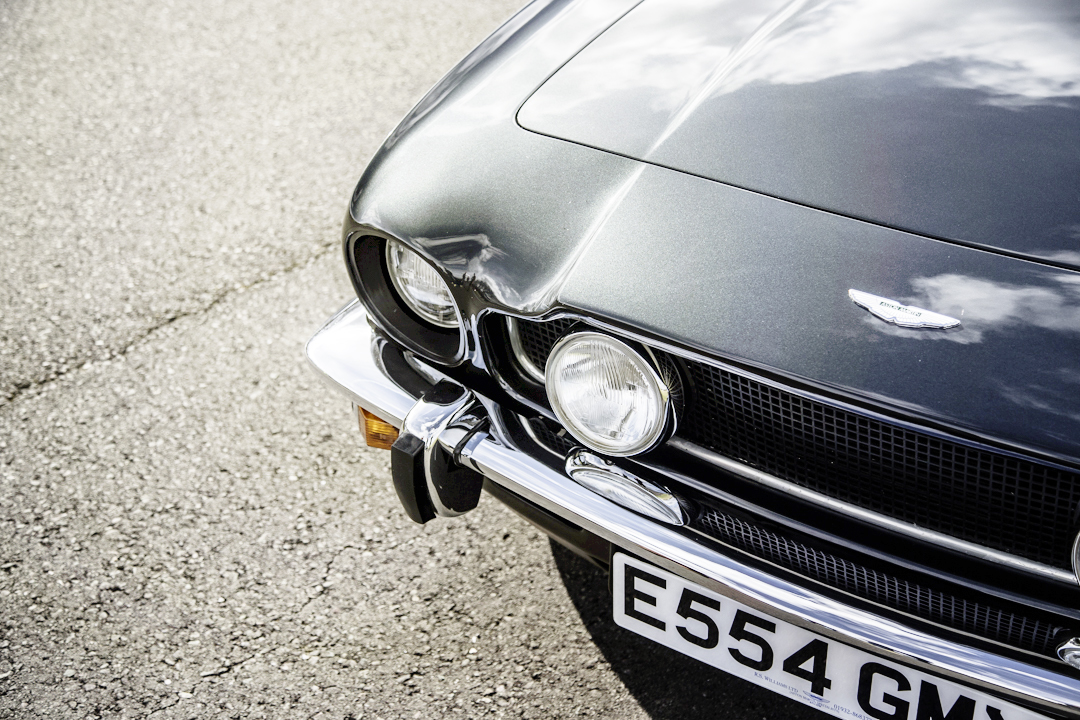
Muscular looks betray a slightly softer driving style
The V8 fires instantly, chattering rather than rumbling like the Sunbeam. Clunk the shifter into Drive, push the accelerator pedal into the deep-pile carpet and it gathers speed in a way that demonstrates 20 years of V8 development, blending explosive pace – you’ll be past 70mph without noticing – with progressive, jet-like smoothness. Any jolts, hesitations or surges are ironed out by reprofiled valvegear and finely metered quantities of fuel. Unlike the V8 Saloon, the Volante’s lack of roof connects you with the action without tearing your ears off – the high-stacked electric hood, deep doors and steeply raked screen shield you from the worst of the wind while still letting it ripple through your hair. But the real surprise comes when you reach a corner. A combination of firmer dampers and lower-profile tyres than the early Series 3 means it resists roll, urging you to push it harder, and the smooth delivery of the fuel-injected ‘V/585’ V8 allows you to feed the power back in mid-corner without the sudden jerk of the carburettor cars.
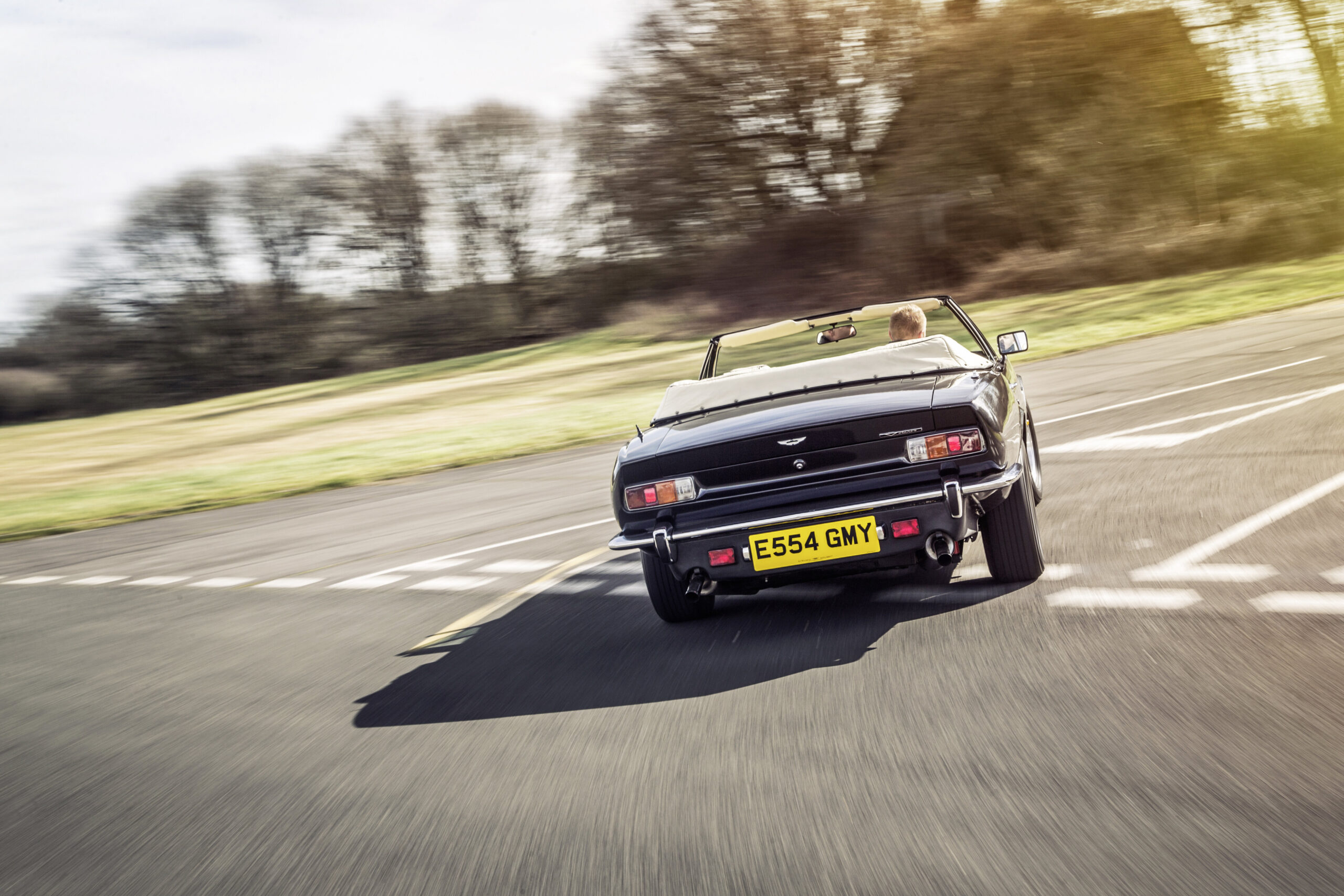
Firmer suspension makes this late-model V8 a delight in the twisties
This translates into a beautiful fluency that belies the Aston’s 1818kg kerbweight. At last, it’s an Aston V8 that’s genuinely entertaining to drive, rather than a mere ‘occasion’. It’s still an aristocrat – the lustrous dashboard veneer and pungent leather say as much – but unlike the garden-party set, this one ditches the louche soft-living and has a kickabout on the croquet lawn instead.
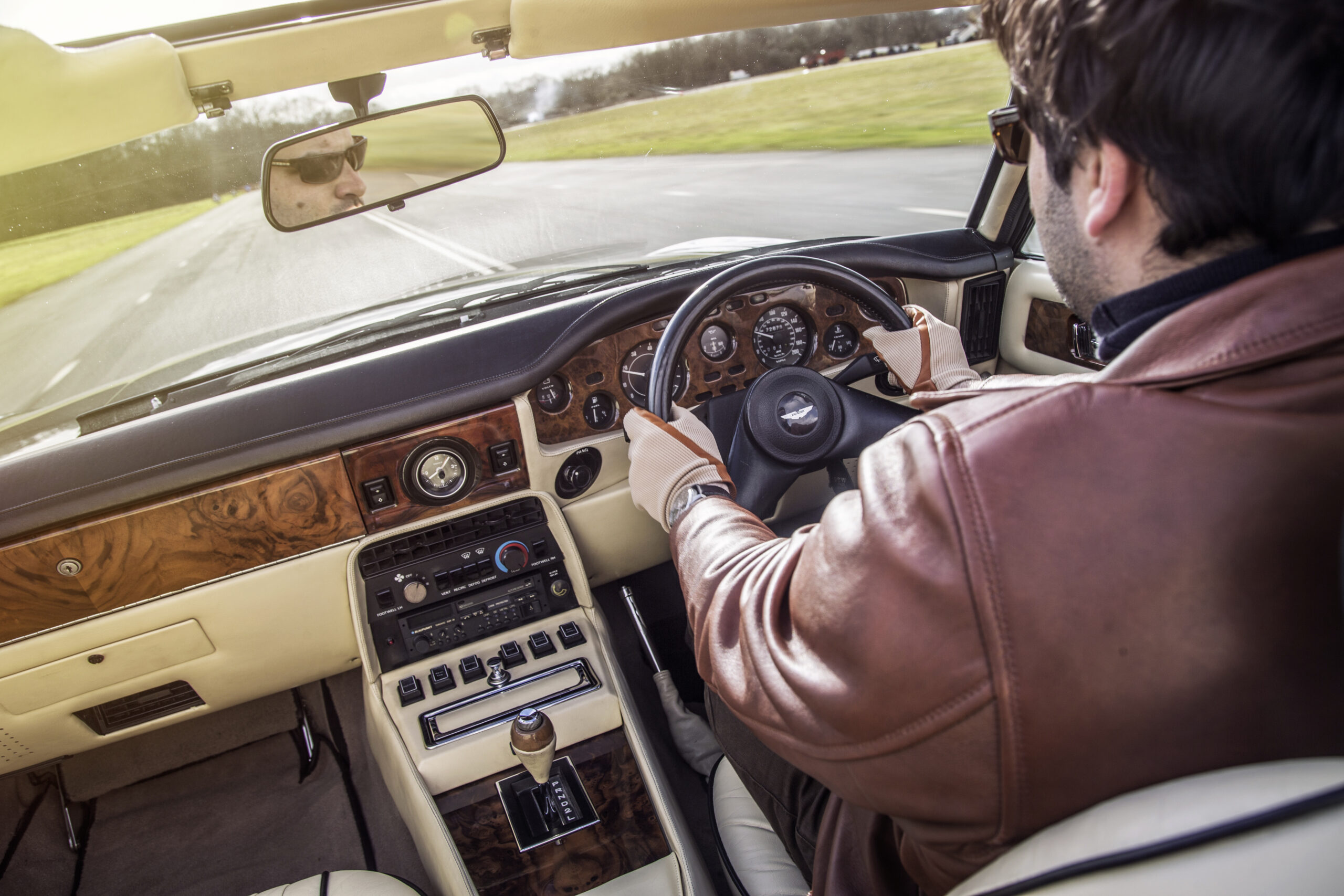
Plush interior is easily the match of any contemporary Rolls-Royce
Owning a 1987 Aston Martin V8 Volante EFI
‘Fergus McIver has been a mechanic at RS Williams since 1991. ‘You need to keep on top of the maintenance,’ he says. ‘Electronics are a problem as parts for the ignition, ECU and aircon systems can only be reproduced by specialists. If you want an EFI car go for an auto. Manual clutches don’t work well with the engines – there’s not enough immediate torque to pull away smoothly.’

Engine 5340cc V8, dohc per bank, Weber-Marelli electronic fuel injection
Power and torque 305bhp @ 5000rpm; 320lb ft @ 5500rpm
Transmission 3sp auto, rear-wheel drive
Steering Powered rack and pinion
Suspension Front: independent, unequal-length double wishbones, coil springs, telescopic dampers, anti-roll bar. Rear: de Dion axle, radius arms, Watt linkage, coil springs, telescopic dampers
Brakes Servo-assisted discs
Weight 1818kg
Performance Top speed: 150mph; 0-60mph: 6.7sec
Fuel consumption 14mpg
Cost new £55k
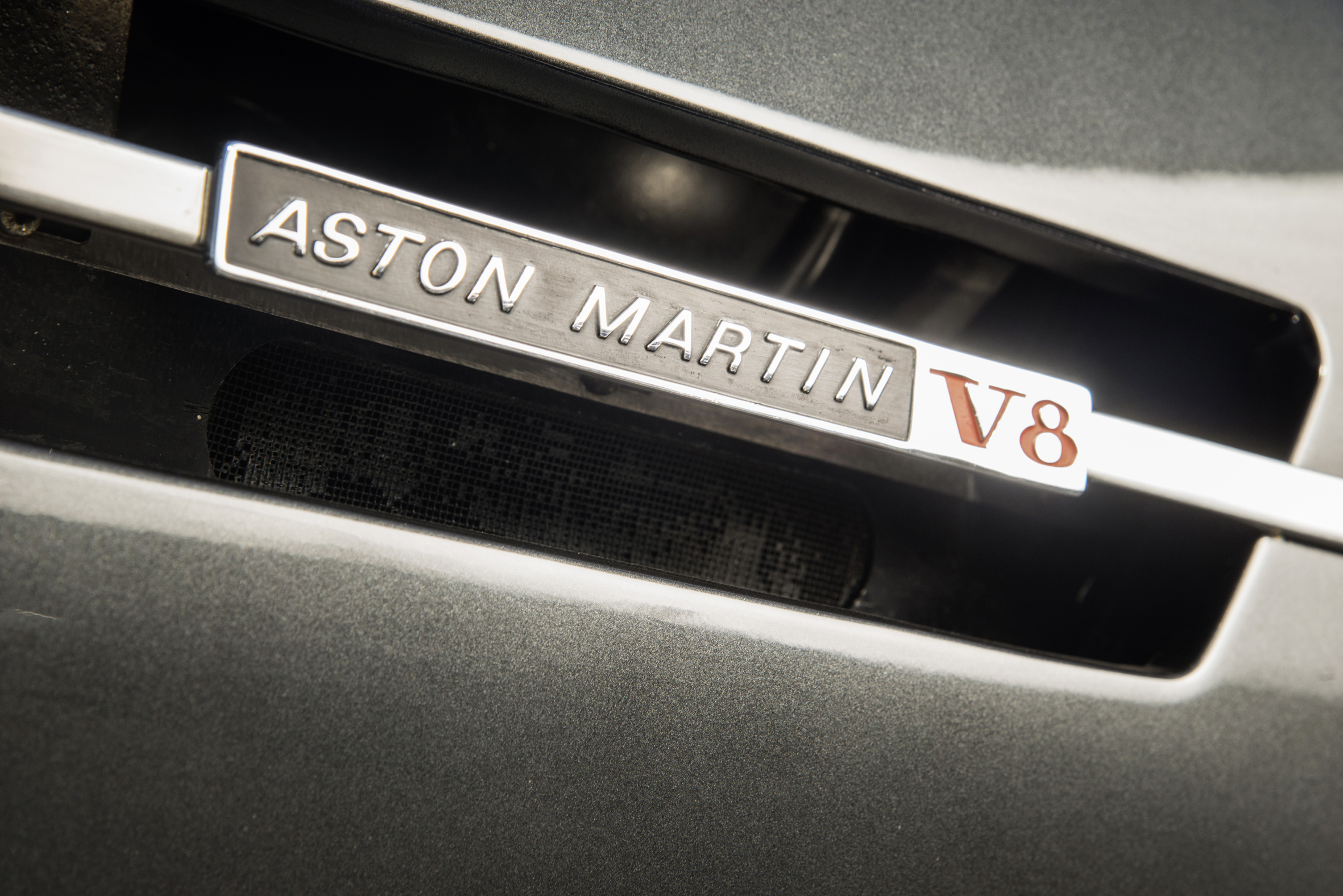
Three words to make any gentleman’s heart soar
ALVIS TF21 DHC
If you are seduced by the aristocratic values the Aston seems to be shrugging off, then is there anything more old-money than an Alvis, especially in a world where you’ll just as likely find rappers and footballers driving roofless Rolls-Royces and Bentleys?
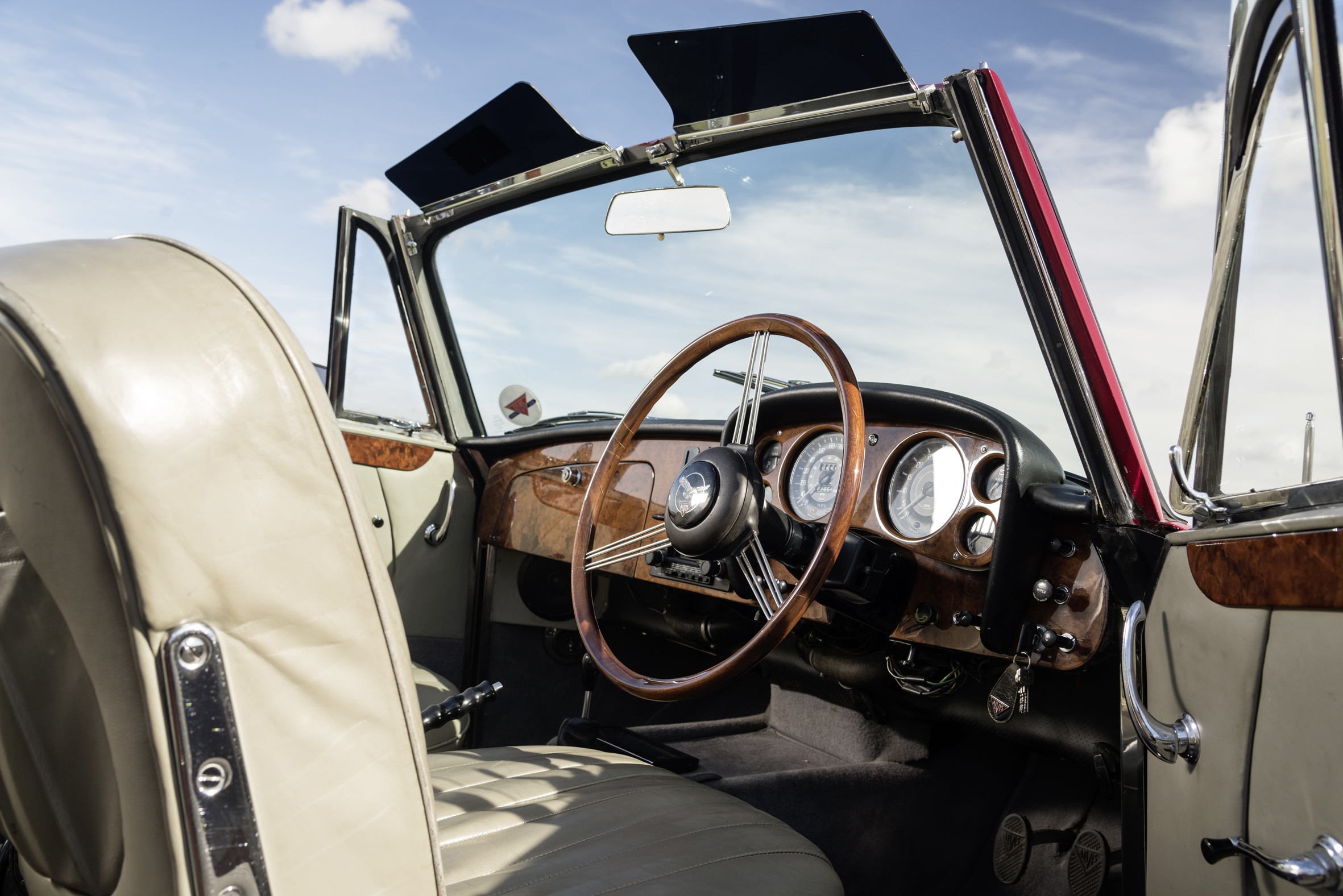
Interior is refined to pencil-tip sharp
The TF21 towers over the low-line Volante, its upright grille and vertically stacked headlights bridling at the very thought of sportiness. It’s a grand tourer with the emphasis on the ‘grand’, but it conducts itself in an admirably discreet way.
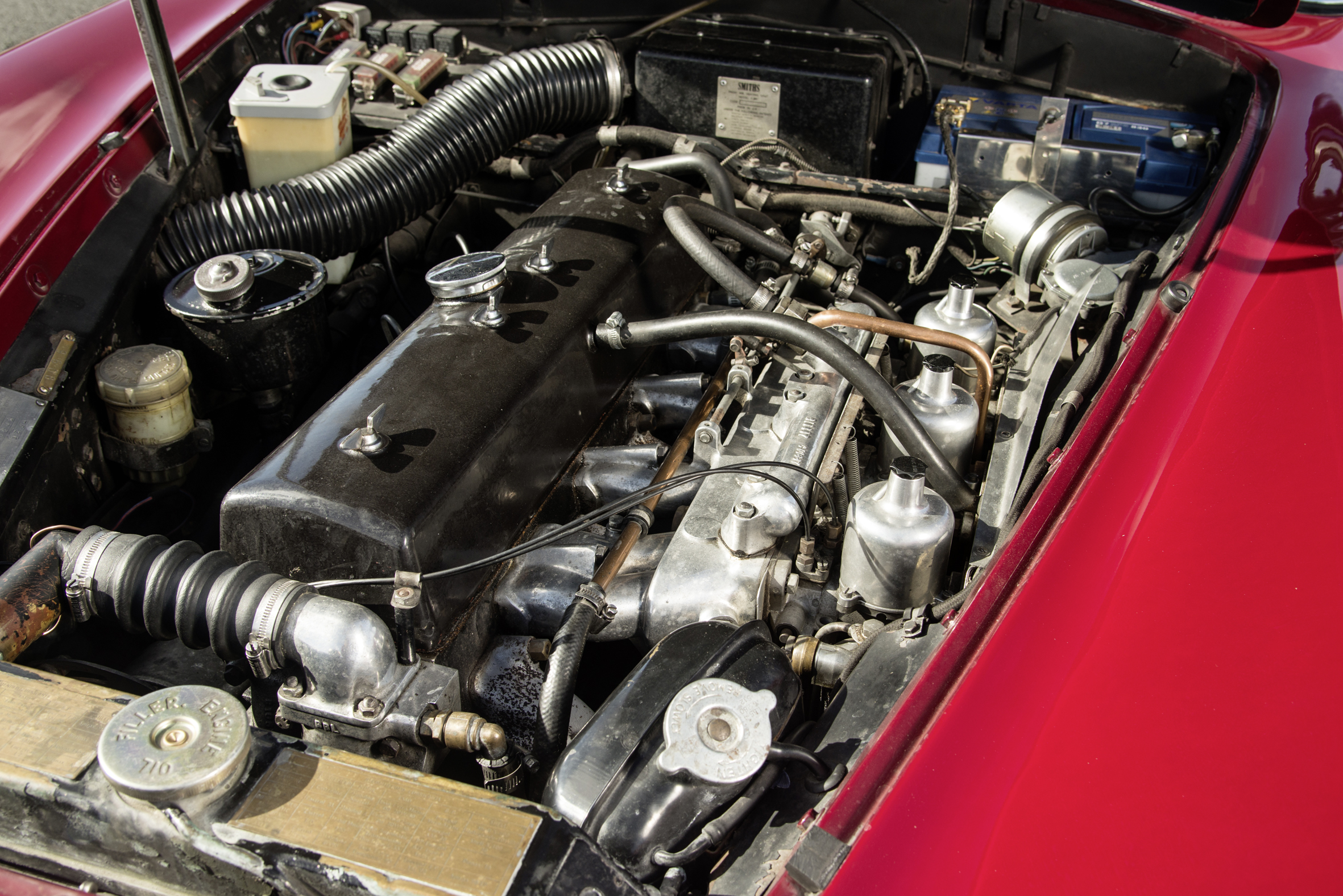
3.0-litre six-cylinder heart is stirred by a four-speed manual
Bodied in aluminium by Park Ward, the Alvis is very much a part of the separate-chassis coachbuilt set, with a beautifully appointed cabin that could easily be a product of Crewe. But unlike a RollsRoyce it’s a driver’s car, as evidenced by its manual gearbox and compact dimensions. Settle behind that huge wheel and the car instills a sense of decorum – you feel compelled to drive it with precision and grace and take satisfaction in your road manners, rather than lord it over other drivers, recline your seat and rest your right arm lazily on the door sill.
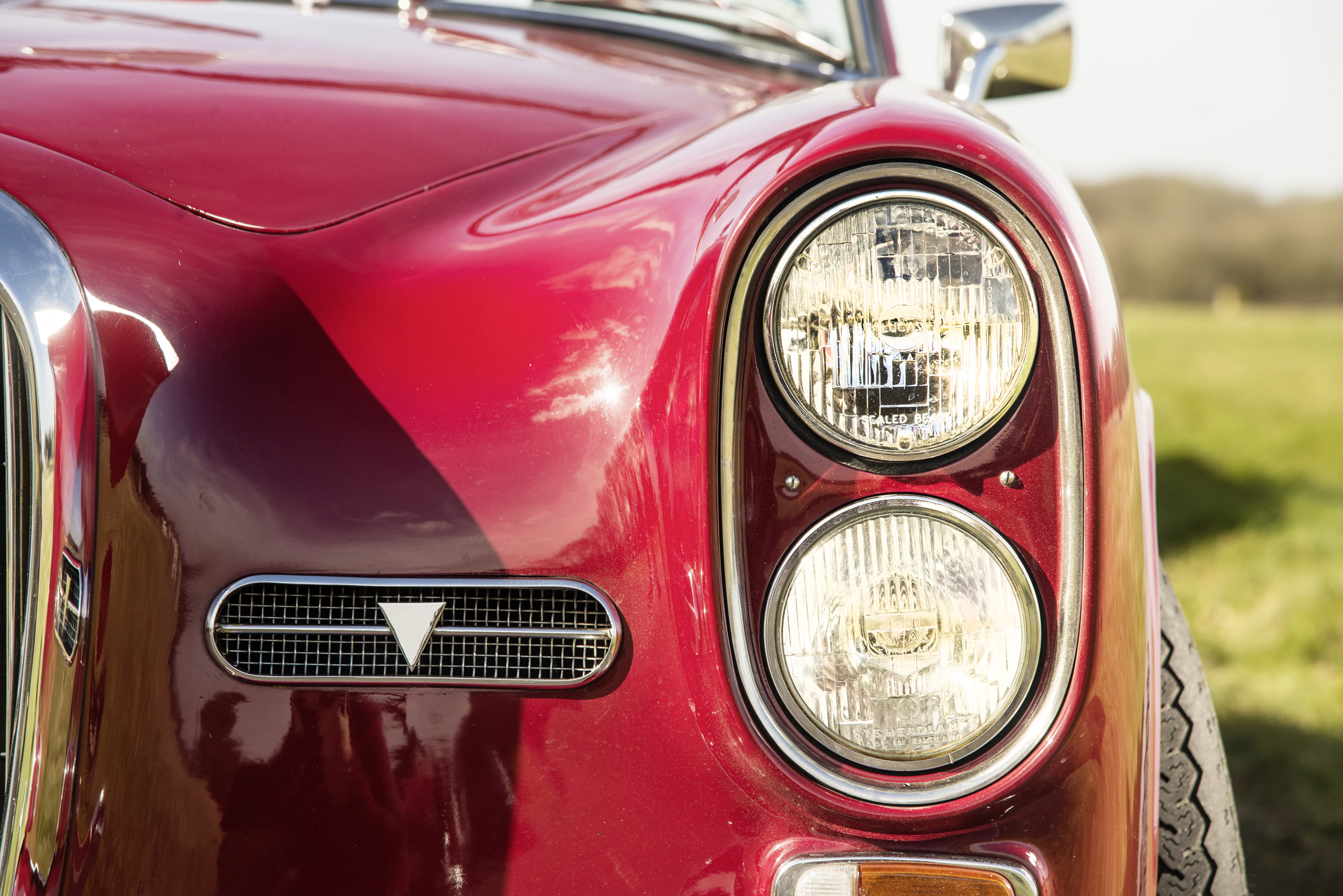
Special headlights ushered in with the TE21
Pull away gently, and it rewards with a cultured, mellifluous exhaust note. The ride is soft, loping and long-legged, avoiding wallow, but you’d never want to push it hard anyway. Precise gearchanges on the stubby little lever become a pleasure, as I try to shift as smoothly as possible, changing at points when an automatic’s torque-converter might, rather than the high rpm of an aspiring racing driver. The modern idea of ‘handling’ seems an affront to the TF21’s unhurried nature, but it corners in a neat, secure way, avoiding ponderousness in the name of safety and stability as much as sporting appeal. There’s no feedback through the massive steering wheel – not that I was expecting any – but the motion of the wheel is disarmingly smooth, with no hint of kickback or protest.
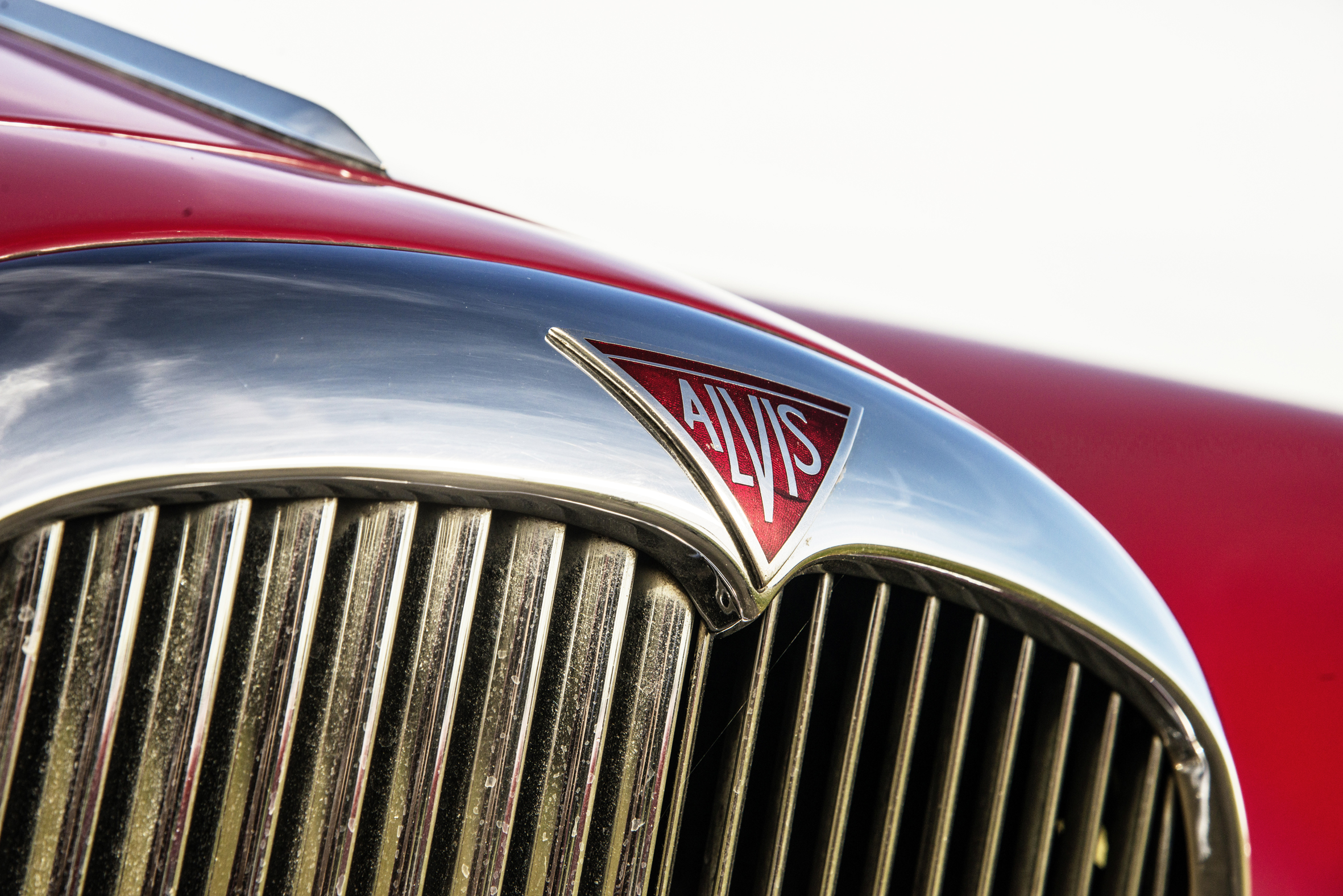
A marque for those who’d rather not leave a mark
All these factors combine to make the Alvis an utterly unique prospect – a luxury car of the highest quality, but as with the Citroën DS the driver must work with it to get the best from it and bask in the sense of satisfaction of getting it right, as well as the open air and the sun’s warming rays.
Owning a 1967 Alvis TF21
‘I’ve had this TF21 for eight years, but I’ve known it for 20,’ says former Alvis Owners’ Club president Mike Baker. ‘All it’s needed is careful mechanical maintenance, but the TF is as good as an Alvis gets. I’ve taken it to Scandinavia and the Alps, and it will shortly leave for Australia for a month touring Tasmania. Don’t let the grass grow under its tyres – that’s the key to reliability.’

Engine 2993cc in-line six-cylinder, ohv, three SU HD6 carburettors
Power and torque 150bhp @ 4750rpm; 182lb ft @ 3750rpm
Transmission Five-speed manual, rear-wheel drive
Steering Worm and nut Suspension Front: independent, wishbones, coil springs, telescopic dampers. Rear: live axle, semi-elliptic leaf springs, telescopic dampers
Brakes Discs front, drums rear, servo-assisted
Weight 1575kg
Performance Top speed: 120mph; 0-60mph: 11.5sec
Fuel consumption 17mpg
Cost new £3433
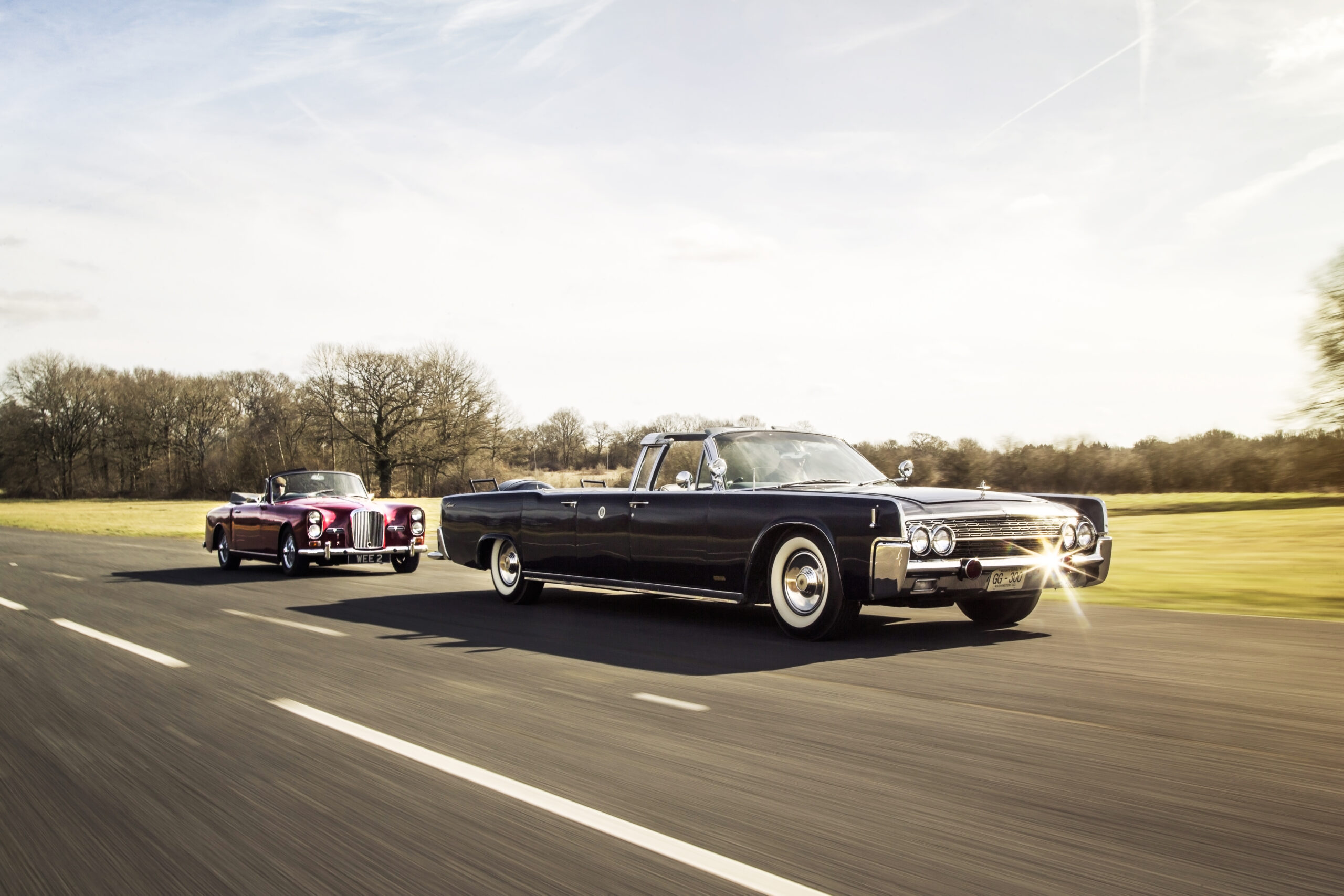
Lincoln’s take on luxury is glamour in literal mechanical form
Lincoln Continental
But if basking in the open air is your only aim, you’d be hard-pressed to beat an American land-yacht, and this Hess & Eisenhardt-bodied open limousine – one of a three-car run produced for government use at the behest of President John F Kennedy himself – is the American equivalent of a Royal Rolls-Royce. It’s far removed from the crude, wallowing barges of the era, all handbuilt from its sizeable yet restrained coachwork to the whispering MEL (MercuryEdsel-Lincoln) 430 7.0-litre V8 under the bonnet.
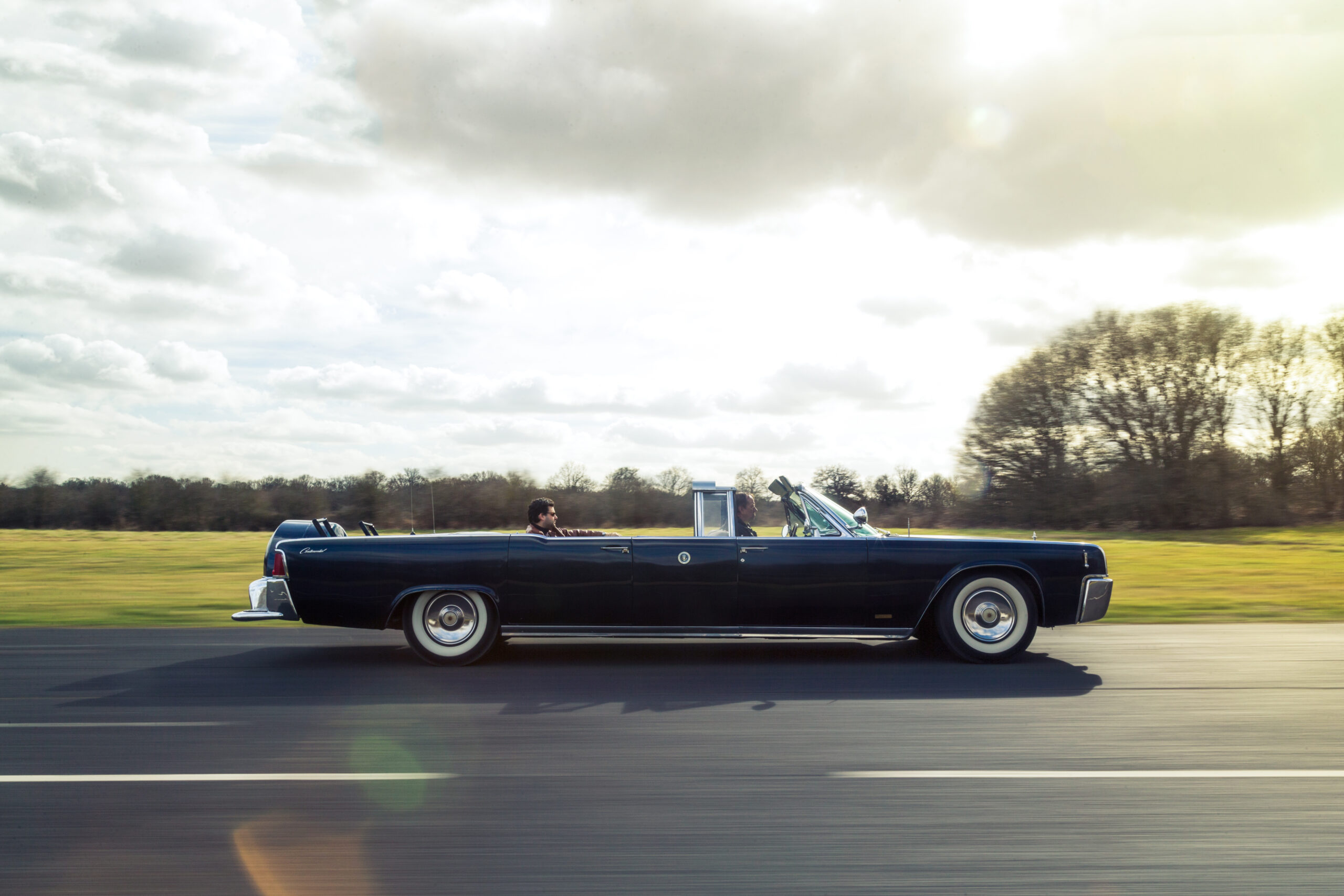
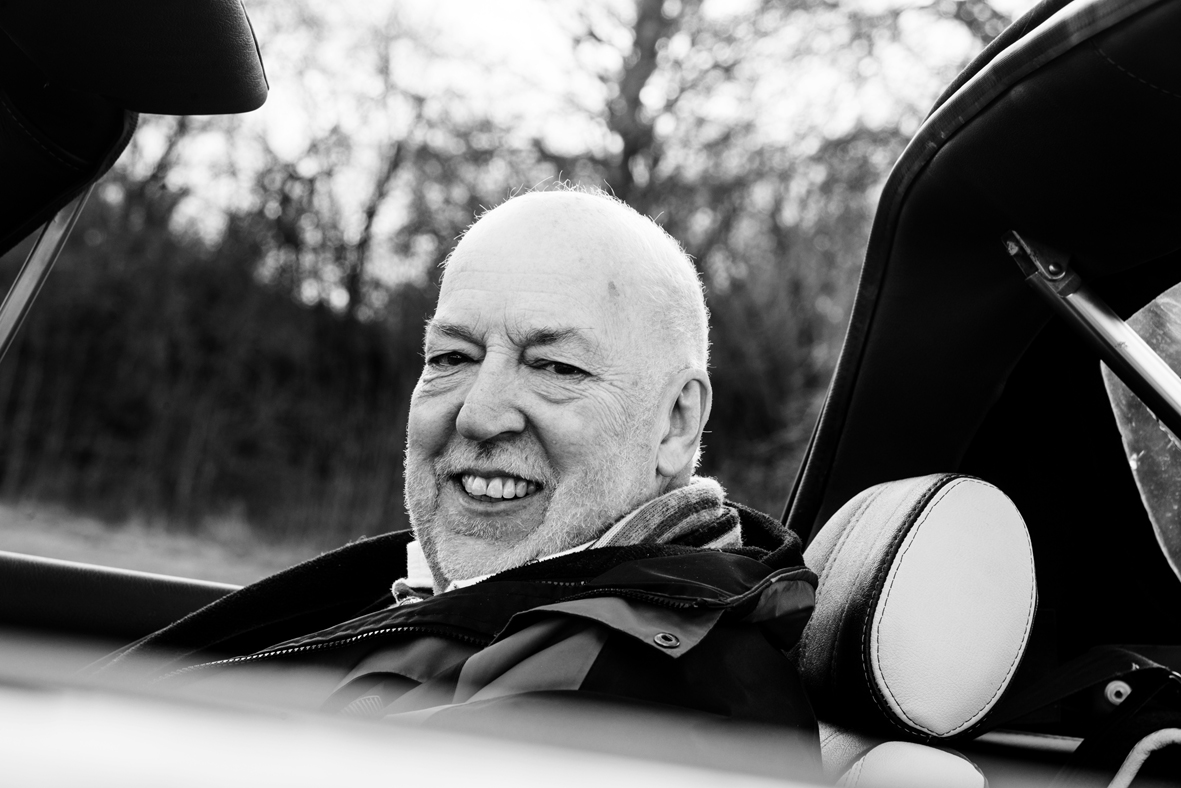
Sam takes a rest from driving in probably the best place
That Ford-derived big-block lived a double life, starring in the Holman Moody NASCAR Thunderbirds, but in this Lincoln it’s amazing what difference redesigned inlet and exhaust manifolds can make. Big-block powered American luxury cars can be persuaded to squeal their tyres off the line, but not this one – deliberately restricted breathing and a 3538kg kerbweight means it corrals its power with decorum, with only a mild flat-spot when I press the accelerator to remind me it’s being reined in. Once this is overcome, it settles to an effortless glide courtesy of 475lb ft of torque at just 2600rpm. It’s as civilised in this respect as any British equivalent.
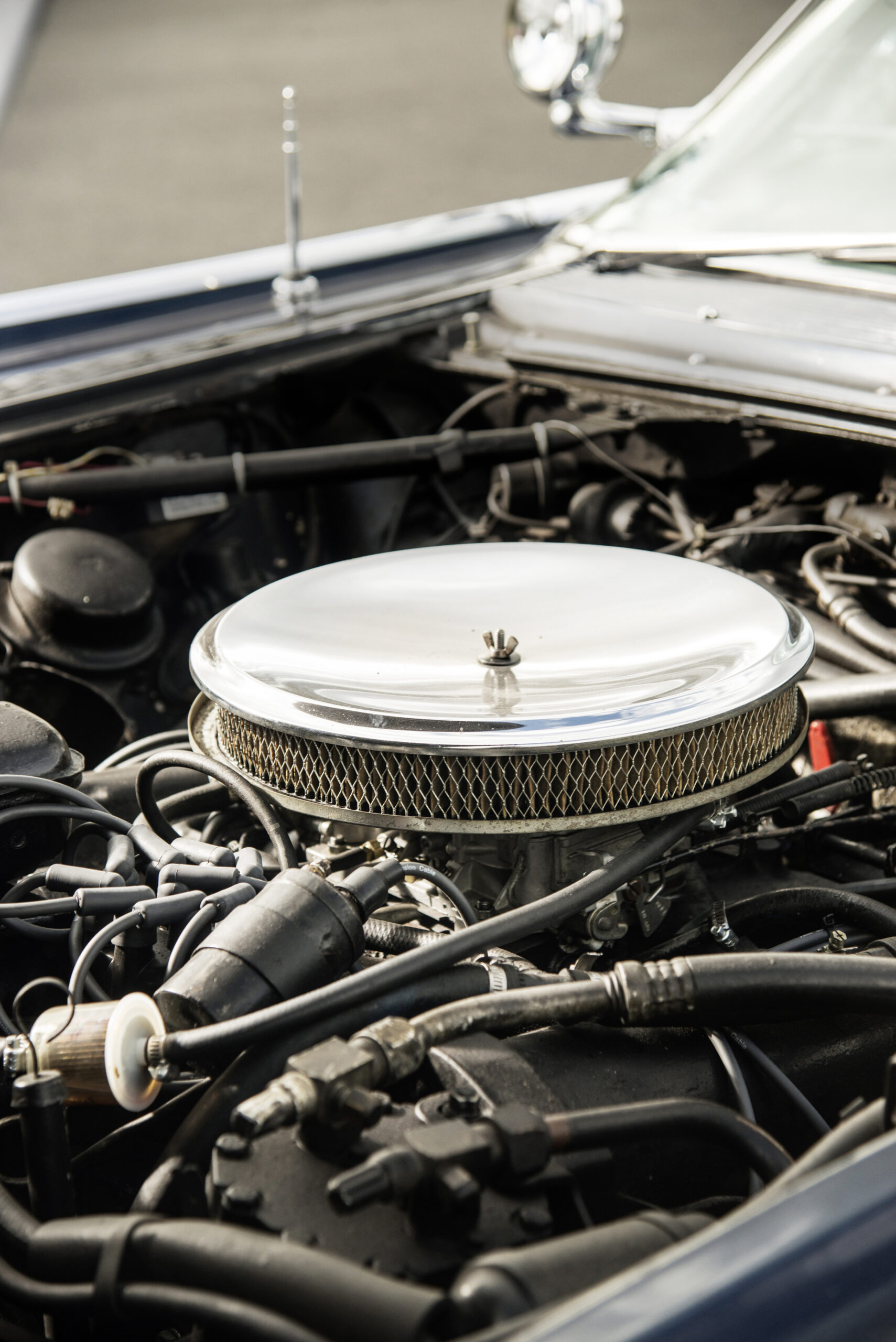
Lincoln’s Ford engine may have seven litres, but that’s needed to shift 3538kg of iron fit for a president
To drive the vast Lincoln hard would be un-presidential, but pitch it into a corner too hard and the nose will dive and bounce like a fishing boat in a storm. However, forcing a car like this to misbehave is pointless – keep steering inputs smooth and measured, and the Lincoln is a refined place to sit. You don’t notice potholes at all. But this is open-air luxury best experienced from the back. Excessive lounging room is to be expected in such a vast limousine, but this is a car to treat your friends and family with. Unlike a hen-night wagon, you relax in a world of tasteful Richard Neutrastyle early-Sixties American modernism, all straight lines, stainless steel and electric adjustment. Provided the weather’s good, riding in this Lincoln is akin to relaxing in an al fresco private lounge.
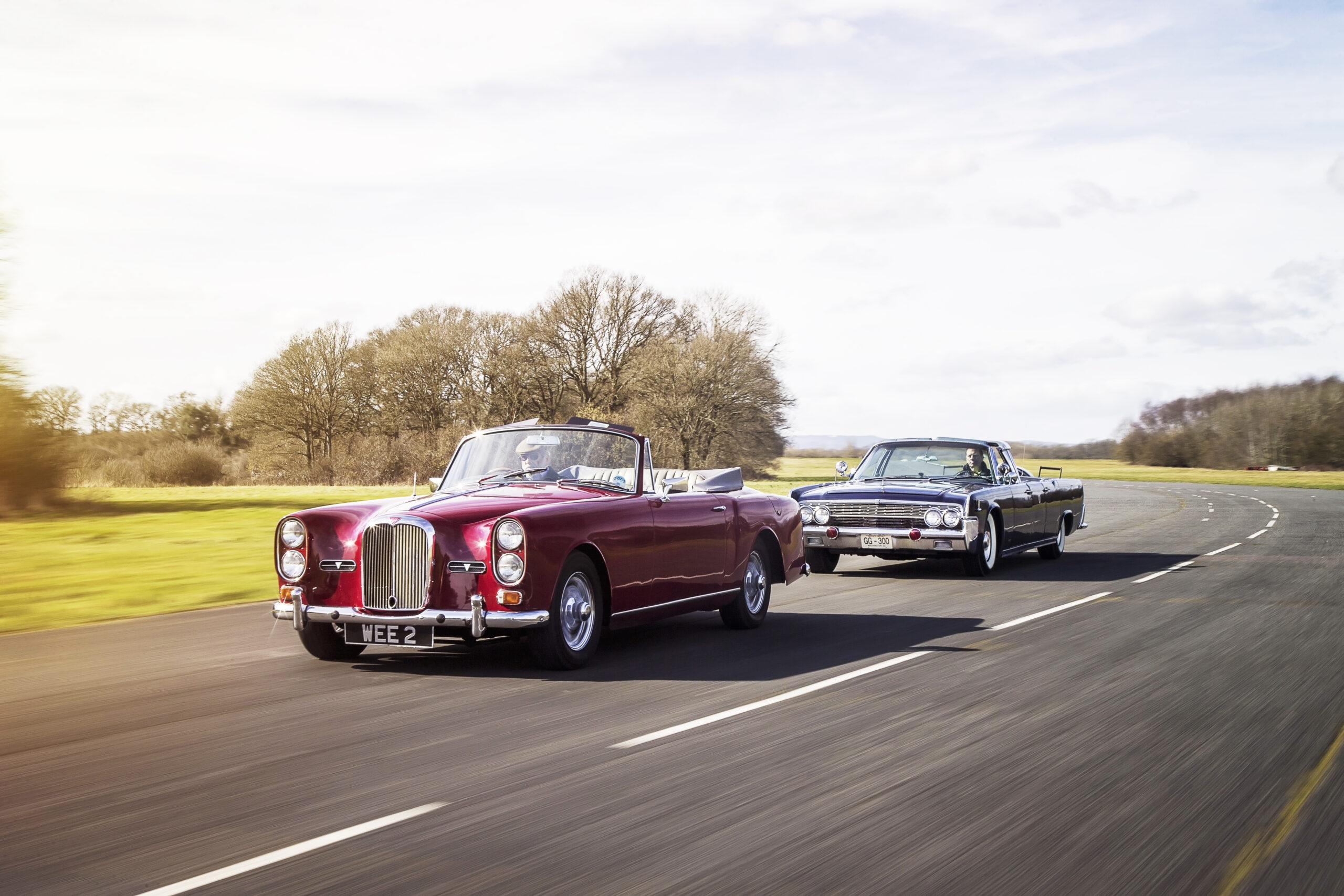
Establishment Alvis meets new age values, American-style
What’s most impressive is the way the Continental manages to be so tasteful for something so huge. Stylist Elwood Engel did it by keeping things simple, erasing the rocket-styled brashness of the Fifties but ignoring the customer-led obvious ‘luxury’ that dominated the Seventies. Style icons don’t come any bigger.
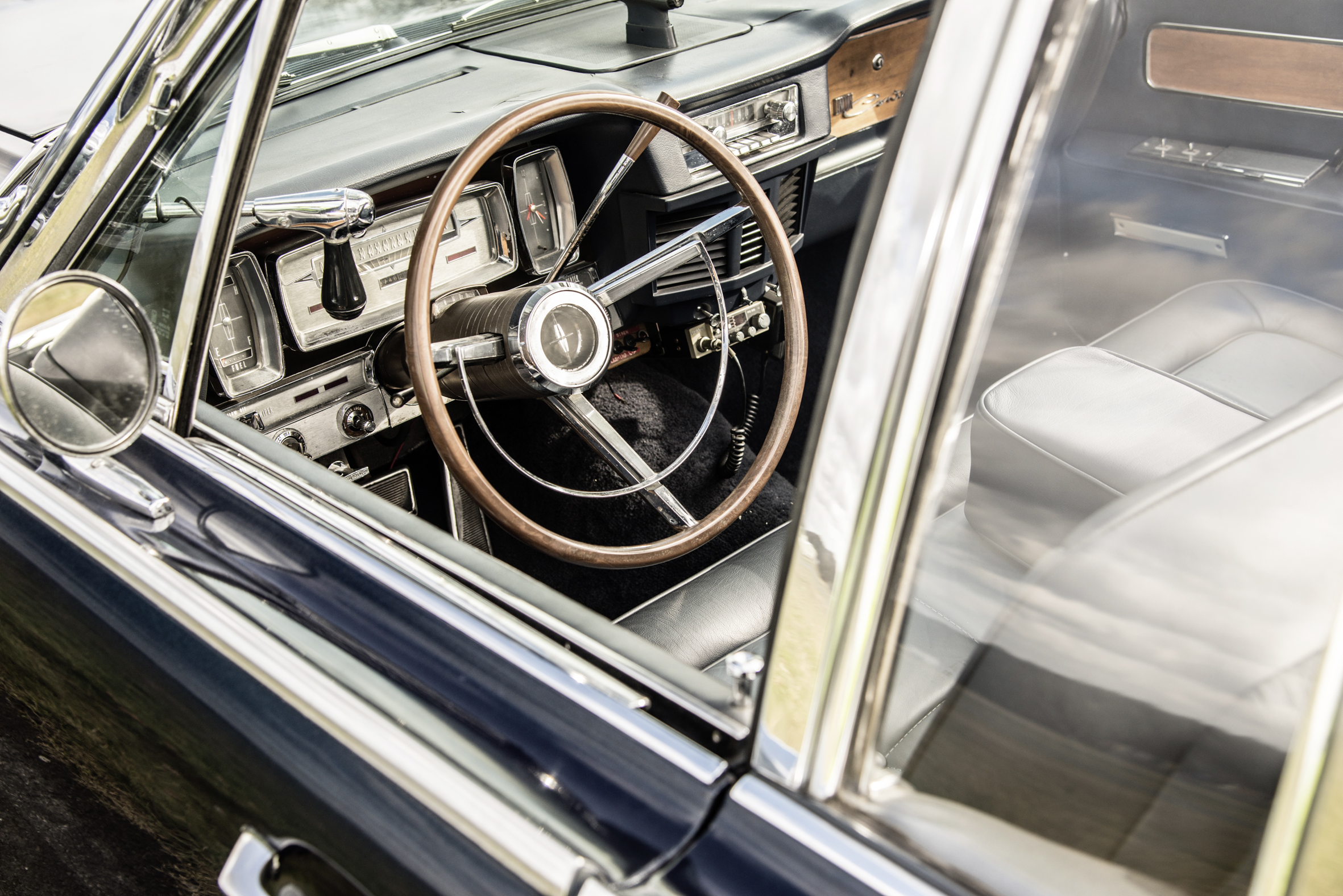
Continental’s interior is as exquisitely detailed as a Montblanc pen
Owning a 1963 Lincoln Continental Presidential Limousine Cabriolet
‘This is an extremely rare car, one of the most expensive in the world when it was new,’ said Robert Turner of Chelsea Cars. ‘Only three Hess & Eisenhardt Y82s were built. With the exception of the section in between the doors it’s all stock Lincoln coachwork, so oddly enough it’s easy to find most parts for.’

Engine 7046cc V8, ohv, Carter AFB four-barrel carburettor
Power and torque 375bhp @ 4800rpm; 490lb ft @ 3100rpm
Transmission Threespeed automatic, rear-wheel drive
Steering Recirculating ball, power assisted
Suspension Front: independent, double wishbones, coil springs, telescopic dampers, anti-roll bar. Rear: live axle, semi-elliptic leaf springs, telescopic dampers
Brakes Servo-assisted drums front and rear
Weight 3538kg
Performance Top speed: 100mph (est); 0-60mph: 17sec (est) Fuel consumption 9mpg
Cost new $200,000 (£71,428)
TVR’s raw thrills trump Porsche’s polished Boxster
Decision time
It seems pointless trying to pick a winner from a group so diverse, both in price and design. All these cars have been brought together because they’re examples of the best of their breed.
However, in among these nine dropheads are a trio of cars that offer more than just luxury or fun, with a combination of genuinely high performance and a relaxing driving environment that’s properly enhanced by lowering the roof – the Mazda MX-5, TVR Chimaera and Aston Martin V8 Volante.
The Mazda offers everything you’d want from a classic small sports car, but without the pain of unreliability. Don’t expect Lotusstyle thrills, though – modern mass-production realities mean it stops short of being an Elan. The Volante comes close to being a complete all-rounder, but even though it’s much sharper to drive than its forebears it’s still a roofless luxury saloon, refinement holding the casting vote over driver appeal.
However, the TVR offers a set of qualities that place it ahead of the others. It’s the most fun to drive and the fastest. But what’s most surprising is how refined it can be, its bespoke-switchgear interior and steeply angled air-deflecting windscreen bearing genuine comparison to the Aston’s arboreal leather cocoon, able to waft gently on a light throttle too. Not that you’d ever do that, of course.
Thanks to Garath Smith, themx5restorer.co.uk, Minchins of Goodwood – minchinsofgoodwood.co.uk, Classic Chrome – classic-chrome.co.uk, TRGB – trgb.co.uk, RS Williams Ltd – rswilliams.co.uk, Chelsea Cars – chelseacars.com.