
Gran Turismo Greats
Gran Turismo is the world’s favourite racing game, but 28 years on, how do its star cars perform in real life?
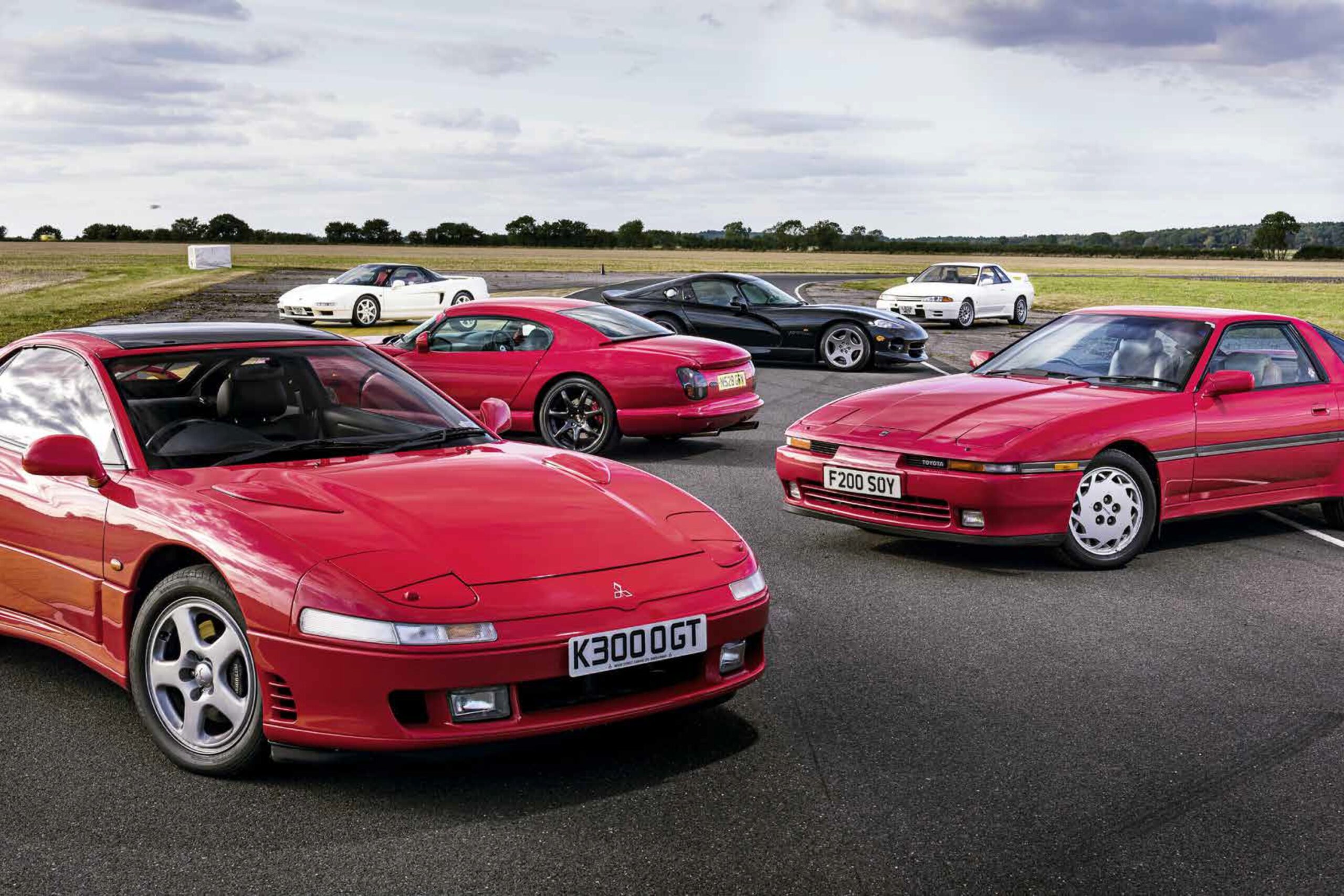
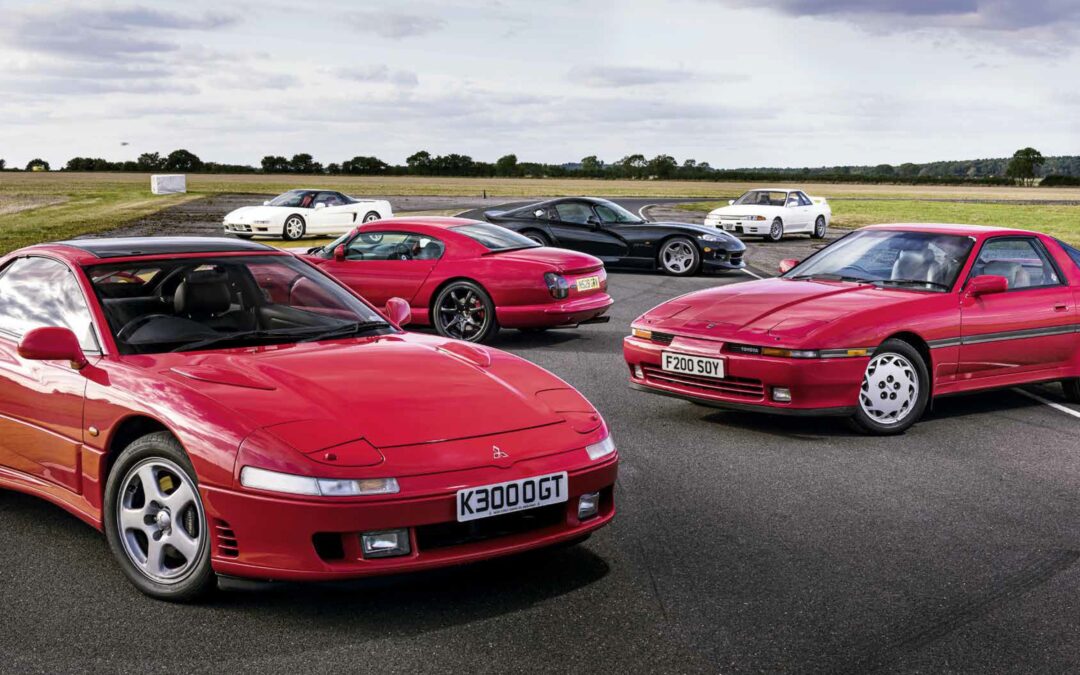
We love Gran Turismo. So do you, according to research we’ve carried out. At least half of you had played it, a third of you still do and many said the game influenced your choice of car in the real world. Over the past 22 years there have been ten incarnations, but the original PS1 version really upped the virtual racing ante. Therefore, we’re celebrating with six of the key cars from the first game.
We start with two of the cars you could buy secondhand with a measly 10,000 credits – the Toyota Supra Turbo MkIII and the Mitsubishi 3000 GT.
Next we bring you two takes on going fast in GT land once you’d banked some money for a new car and its upgrades – the Nissan Skyline GT-R R32 and the Honda NSX-R. Finally, in tribute to the two best ‘prize’ cars, the TVR Cerbera LM and Dodge Viper GTS-R, we bring together the roadgoing versions.
How close do these cars come to the frenzied all-night battles on Gran Turismo? Trial Mountain was not available, so we’re heading to Blyton Park for our virtual reality. Hold on to your joypads…
Toyota Supra Turbo vs Mitsubishi 3000GT
How much horsepower could you get for 10,000 credits? A lot – but what about in the real world?
The third-gen Supra (A70) was the first Japanese car I really desired. Hardly surprising really as my experience of Japan’s automotive products before spotting my first Supra had been limited to my dad’s Nissan Sunny (B11) and a friend of the family’s Subaru Justy.
Then in 1995 a new family moved in next door. The dad was an ex-fighter pilot and drove a white sports car with a Turbo badge and pop-up lights. He was the coolest dad in the village by a mile and his facelifted 1989 Brilliant White 3.0-litre Turbo Supra was like nothing else on the road round my way. A couple of years later on the digital circuit I wasted very little time in pressing X on the Supra selection screen. It didn’t disappoint either, quickly becoming my championship-winning 32-bit steer of choice. Hours perfecting big smoky drifts around Trial Mountain supercharged my desire to drive a Supra for real. Two decades later, I get my chance.
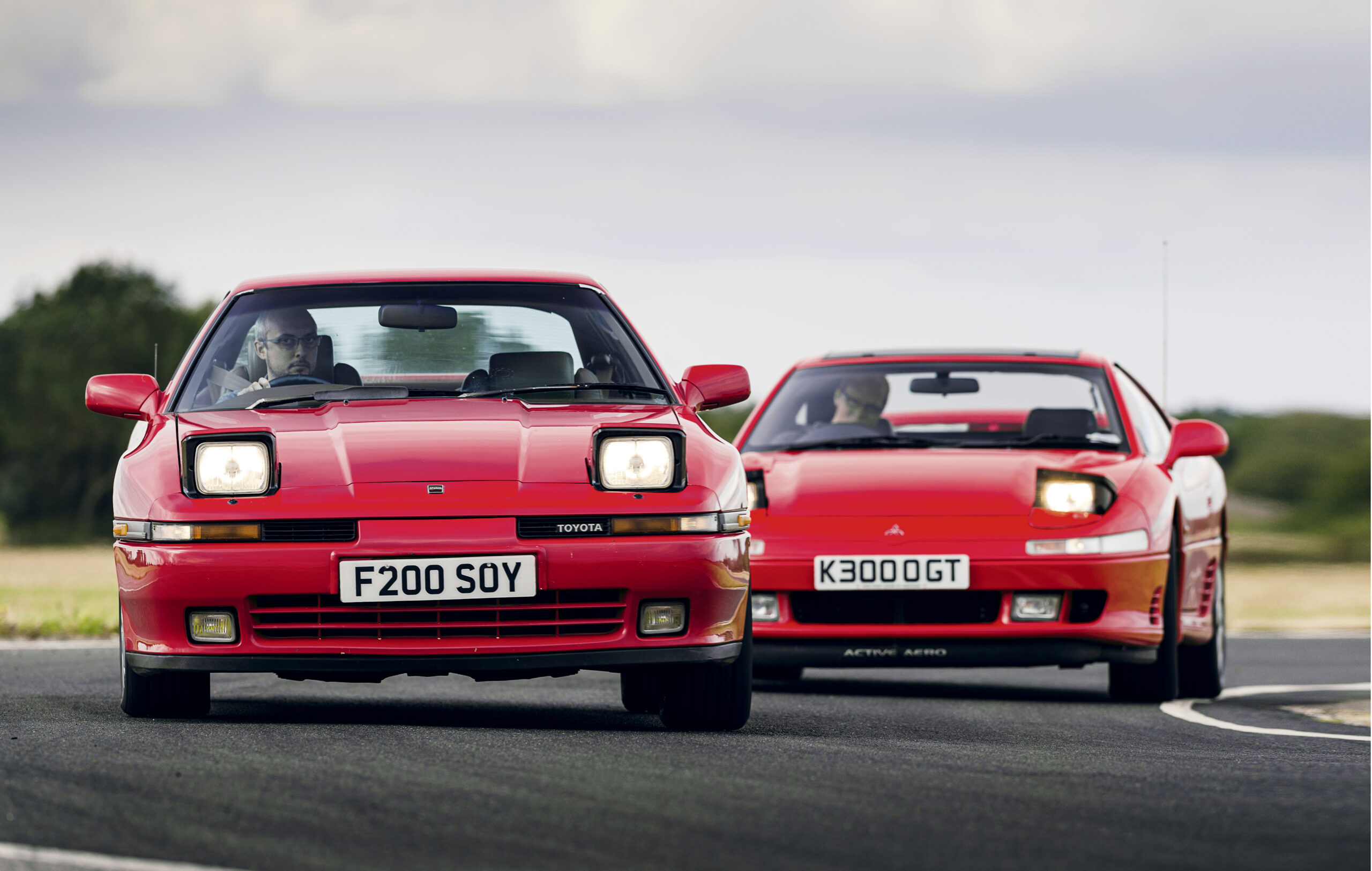
Tech-heavy four-wheel driver or punchy yet conventional front-engine, rear-wheel drive coupe? Grabbing the keys to the Supra over the Mitsubishi 3000GT was an easy choice. Many 4x4s favour grip over fun. Yes, that does mean that they can handle a lot more grunt without flinging you into the scenery, but more than half the fun of Gran Turismo was trying to tame wayward RWD animals, right?
From the off I’m disappointed by the Supra’s optional (yet surprisingly popular) automatic transmission, but it only takes a few laps to discover that it’s still up for a bit of fun. It might not have the power or sophistication to keep up with the 3000GT but as I watch Nathan pulling away, I’m convinced that I’m still having more fun back here. The ride is on the sporting side of soft, basically it’s very much a GT first and sports car second, unlike its successor.
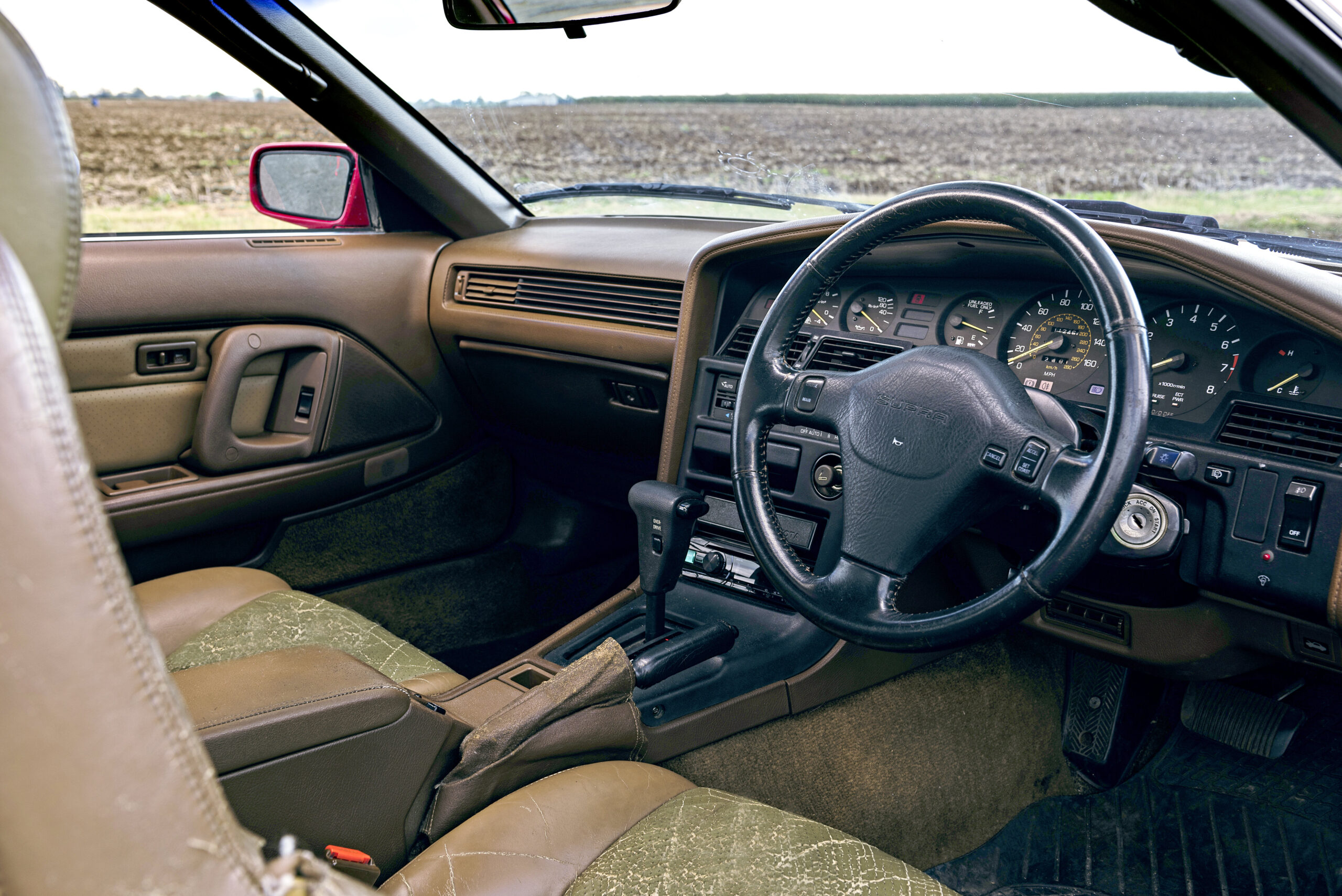
Body control is suggested rather than actually achieved but even so there’s still something so fundamentally right about this Supra. The steering rack is well-judged in both lock and effort, even if your interaction with it seems to have come from an SUV. The chassis is wonderfully balanced with 53% of the car’s weight over the nose and the softness mentioned earlier allowing me to feel where the weight is transferring in an instant. The brakes won’t take too many big stops without fading but they’ll do the job.
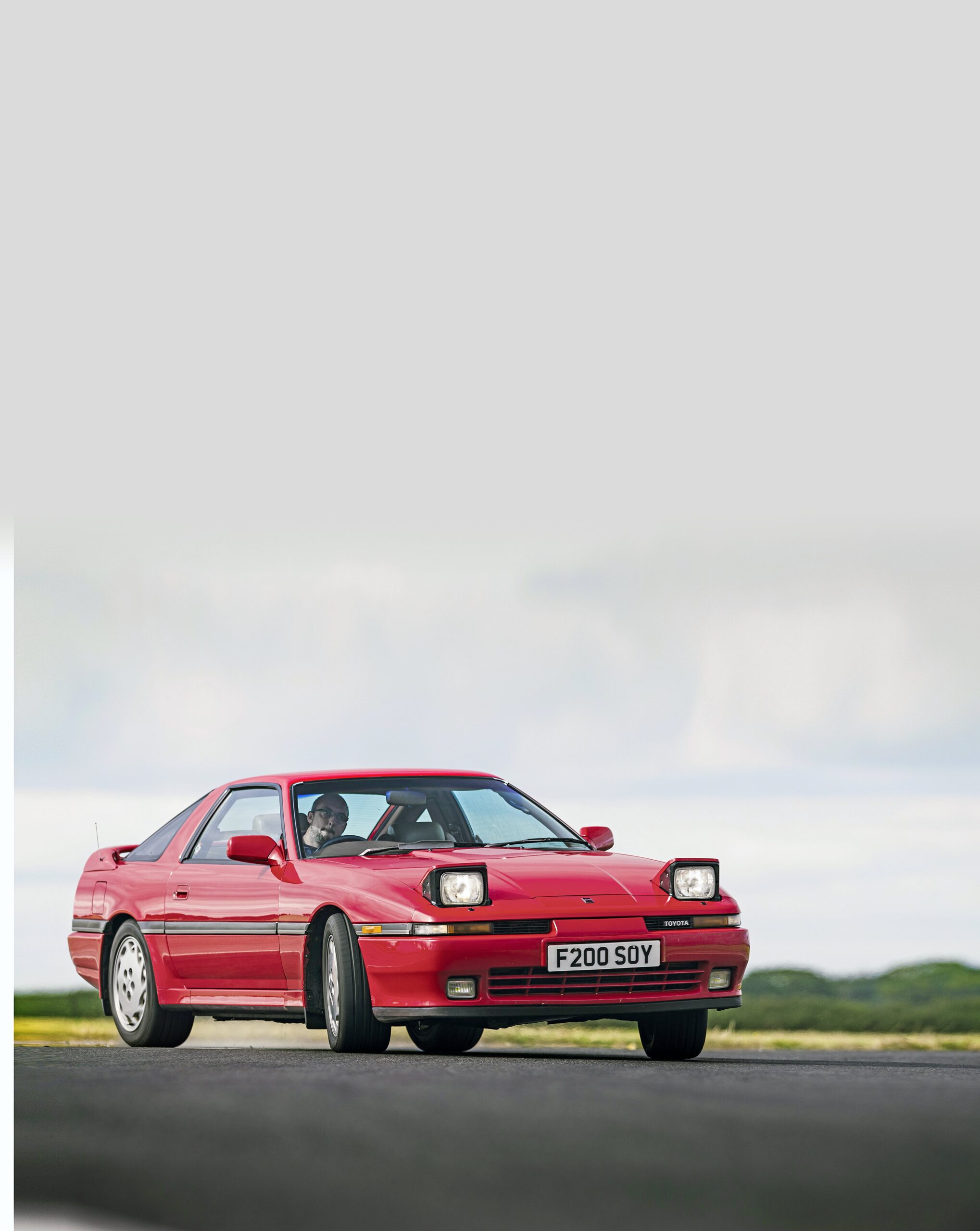
The 7M-GTE straight-six engine is the Supra’s real party piece. It might give away 50bhp to the Mitsubishi’s V6, but its mid-range thrust is ideal for exploring your inner hooligan. I prod the throttle hard before a bend to anticipate the decade it takes for the transmission to clunk down a ratio or two. By the time I’m at the apex the soundtrack becomes a lot more urgent as I get into the power and the rear axles begins to lose grip. Foot down and the factory limited-slip differential apportions what’s left of the grip evenly as the Supra shows its flank and my gurn to the camera. I’m certainly having more fun sliding in reality than I was on the PS, but what’s great is how familiar the Supra feels.
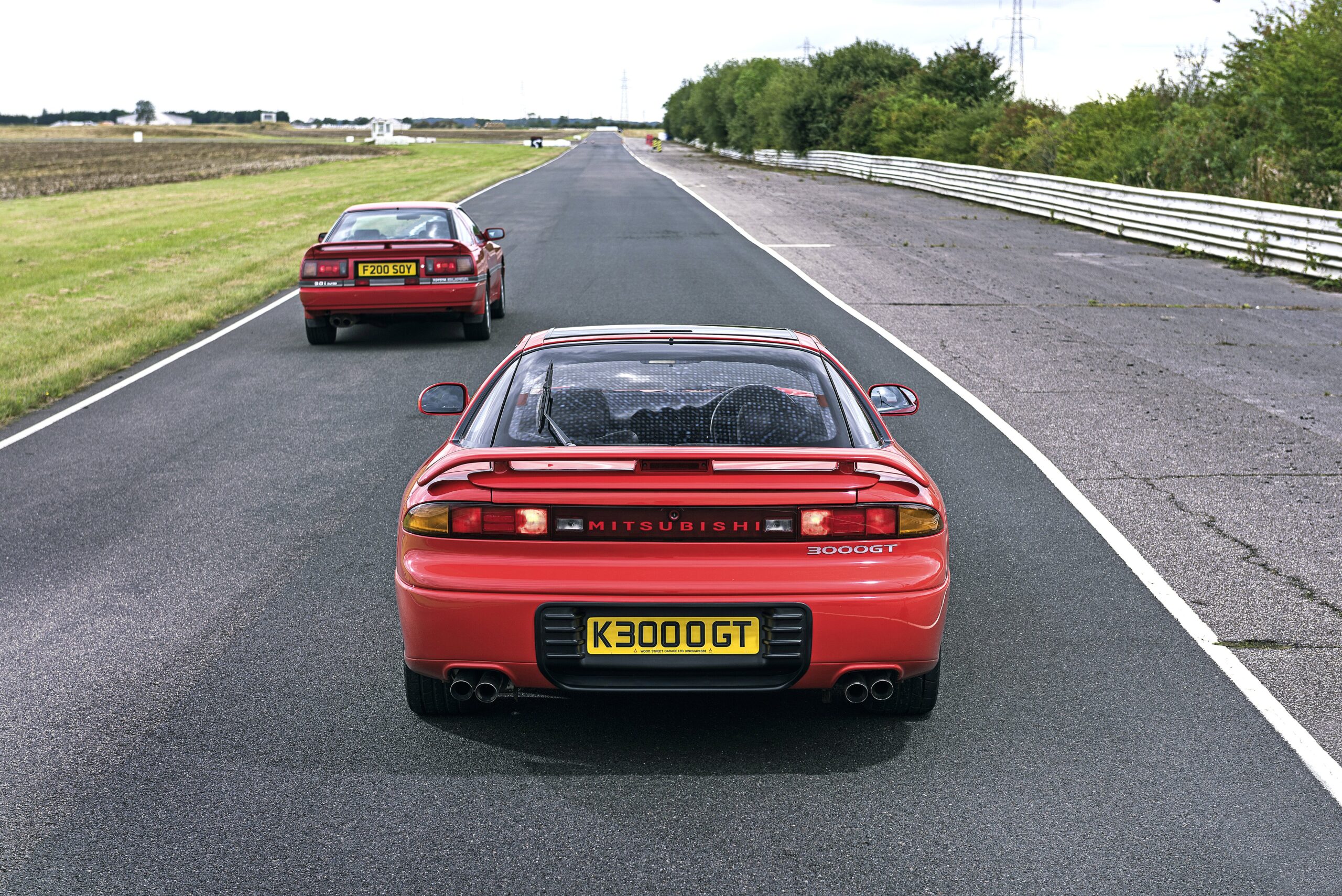
There were a lot of reasons for picking the Mitsubishi 3000GT/GTO – for starters, just look at it. Get the average child to draw a fast car and I’d wager it would look something like this. Every single panel ripples with a steroidal styling detail bicep, all-aggro grilles and vents. It also has pop-up headlights like an F40, which instantly ups the cool level. More critically, it was one of the most powerful secondhand cars you could buy in Gran Turismo for less than 10,000 credits.
‘It was unstoppable, if not delicate’
In the real world, it also had all sorts of electronic tricks to keep it on the not-so-straight and narrow. Four-wheel drive, four-wheel steering, electrically controlled suspension and active aerodynamics – this sounded like the future. Very little else crossed my mind as to my first car as I pressed the X button. Of course, it was monstrously heavy and struggled to shrug off Civics – until the modifying began. From then on, it was unstoppable, if not the most delicate car to drive.
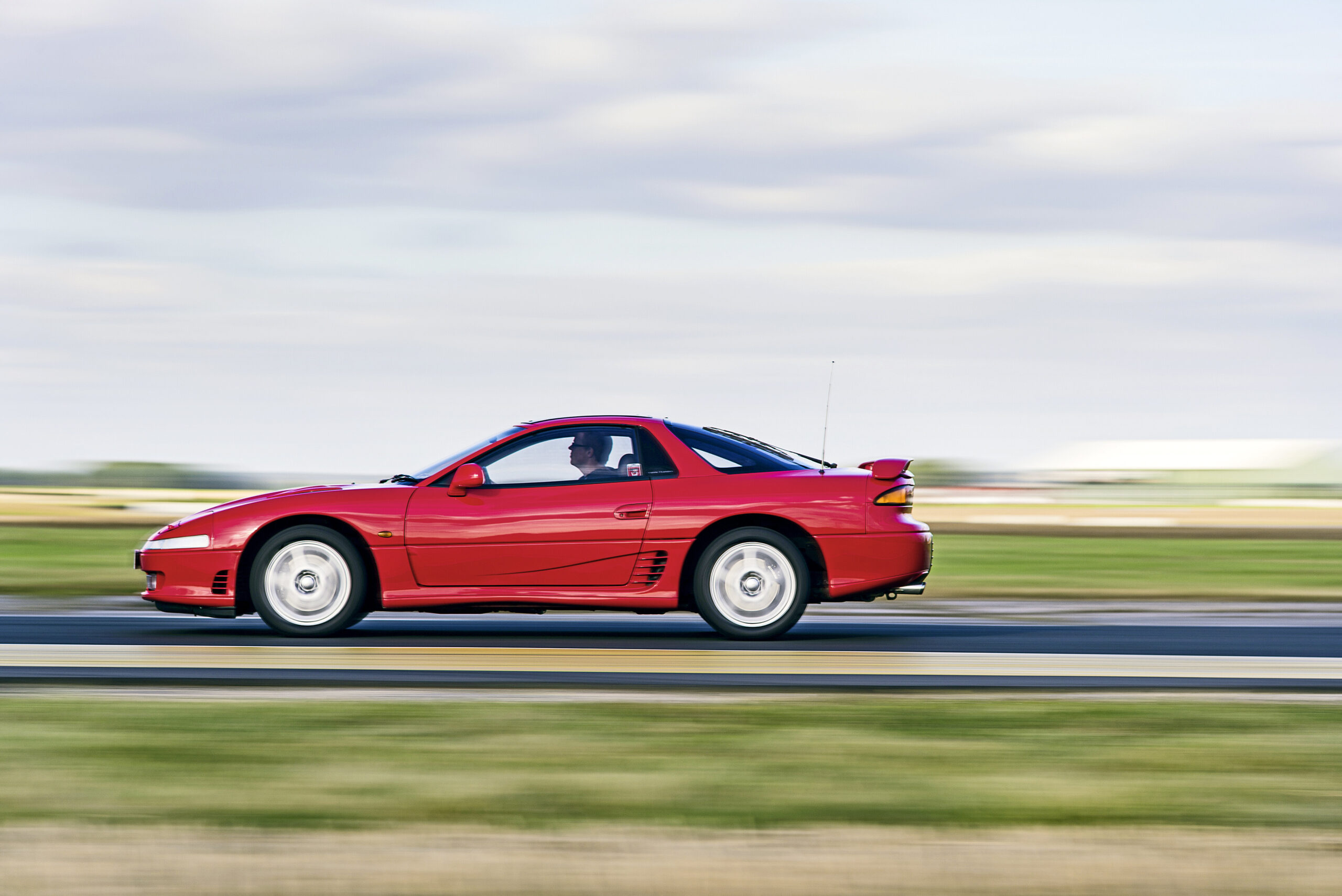
In the real world, the Mitsubishi 3000GT looks even more shocking. Supercars aside, only the current-shape Honda Civic Type R troubles it for eye-popping body addenda assault. Only the castorlike wheels – dwarfed by the high ride height and wheelarches – detune its full-on supercar look. Or illusion. Contemporary reviews of the 3000GT were hardly stellar. It can’t be that bad, can it?
Frankly, no it isn’t. This was always a cruiser in the Porsche 928/BMW E31 mould, despite the extrovert bodywork. It certainly feels like that inside, with lashings of super-plush leather, W124- rivalling interior space and what feels like enough soundproofing to filter out a Rammstein gig. In comfort mode, it’s perfectly damped too, and even in sports mode it’s still comfortable.
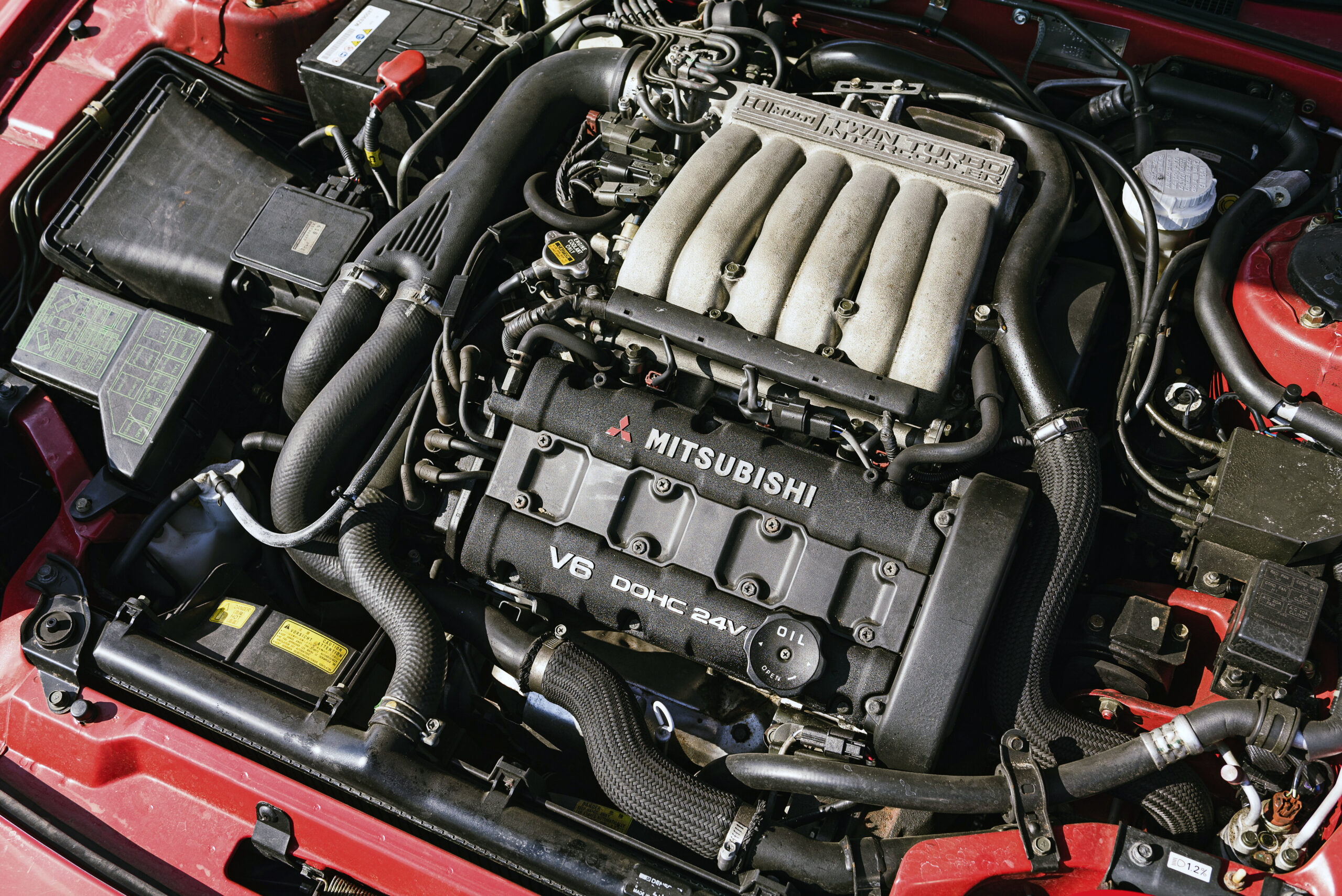
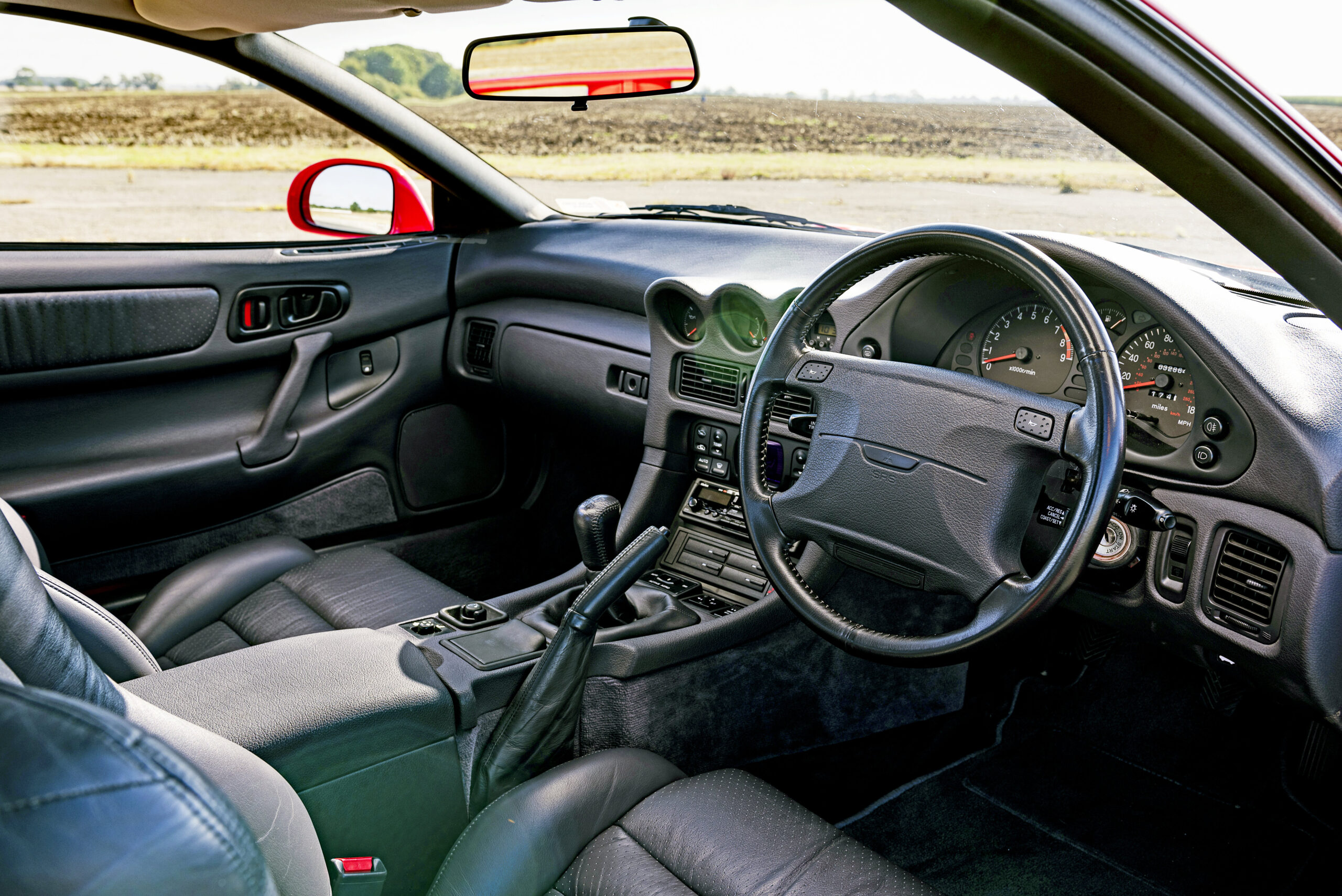
This sense of serenity means there’s plenty of scope for checking out the retro-futuristic interior design that makes Japanese cars of this era so fascinating. I love the dash-integrated gauges.
There’s a price to pay for all this equipment. It tips the scales at 1710kg. That’s 110kg more than the equivalent Porsche 928 GTS, and 140kg more than perhaps its most direct rival, the Nissan 300ZX Twin Turbo. On paper the 3000GT toasts both, with a 5.4-second 60mph sprint (some went as low as 4.8), with the quarter-mile a memory after 13.5 seconds. Only you don’t really feel that involved. Yes, drop it down a ratio or two and the 3.0-litre V6 bounds into life with a growl, but it seems remote, and out of its comfort zone. A far cry from my wideeyed nights on Trial Mountain.
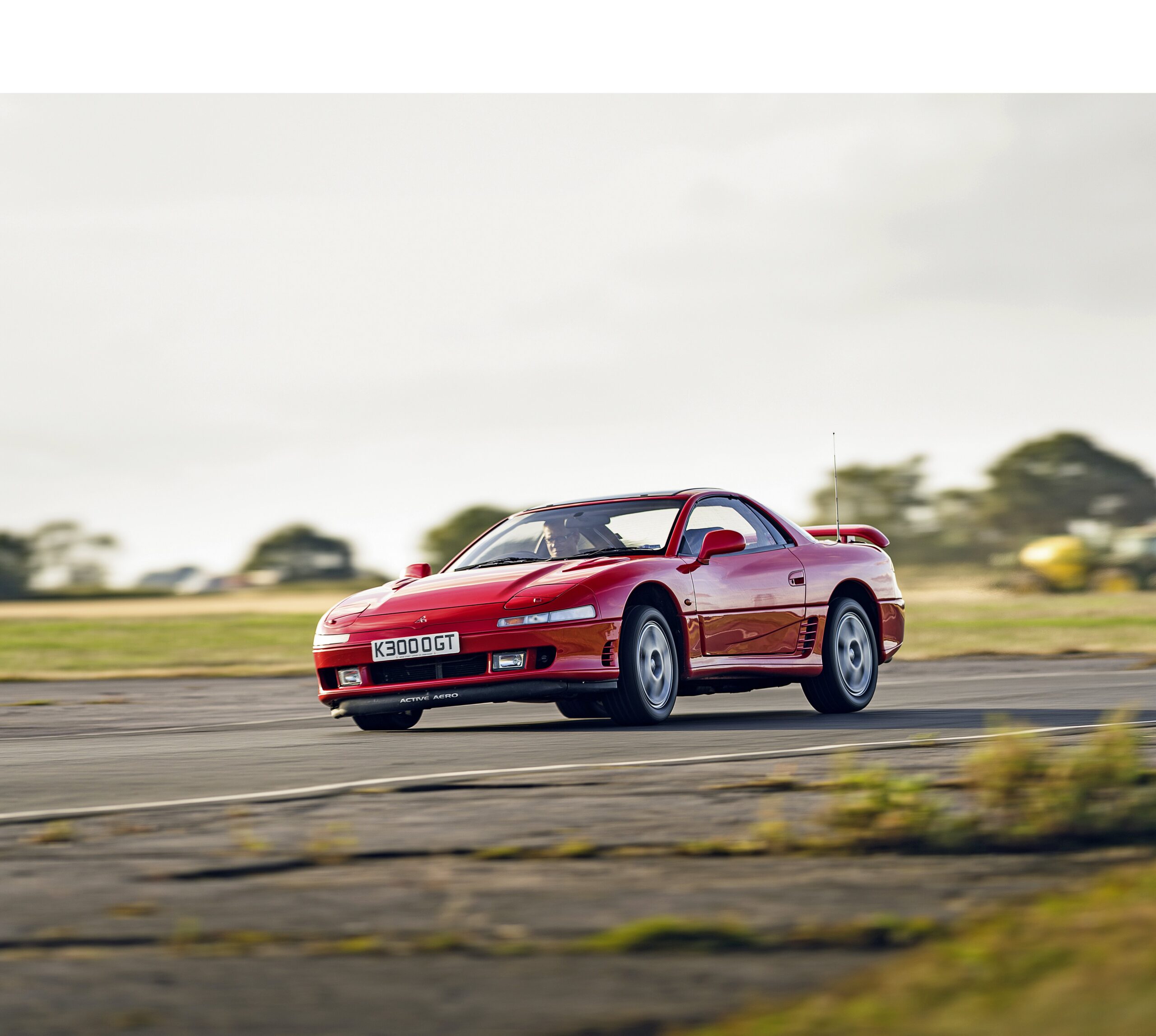
On those twisty routes, my binary inputs were smoothed by the 3000GT’s all-wheel drive. In the real world, with a wholly more analogue steering wheel, the 3000GT experience starts to fall apart.
It starts well, with the sports mode stiffening the suspension and giving some accuracy to the overly assisted steering. The problem comes when you start to lean on the chassis – the four-wheel steering kicks in, tightening your line, making the rear end feel light. With the steering as communicative as an aggrieved adolescent, it feels as if the Mitsubishi’s losing traction – except that it isn’t.
It’s only when you’ve lifted or over-corrected (and upset the car’s momentum) that you realise it’s not misbehaving. It’s not dangerous so much as disconcerting – and it’s certainly not fun. Trying to place it with precision is a challenge. Is it going to drag me wide or have me heading over to the infield? Outright hooliganism, as JJ is displaying in the Supra, is not really on as the steering is so remote. In that sense, the 3000GT doesn’t live up to the game, much in the same way as its character doesn’t live up to the hardcore supercar looks. Judged as a comfortable, high-speed GT missile, it’s a very accomplished machine, just not a B-road brawler.
There is a glimmer of hope. In the mid-1990s Mitsubishi released an MR version for Japan only, which did away with 4WS, ABS, electronic steering and active aero, plus a heap of weight. One of those might just do it…
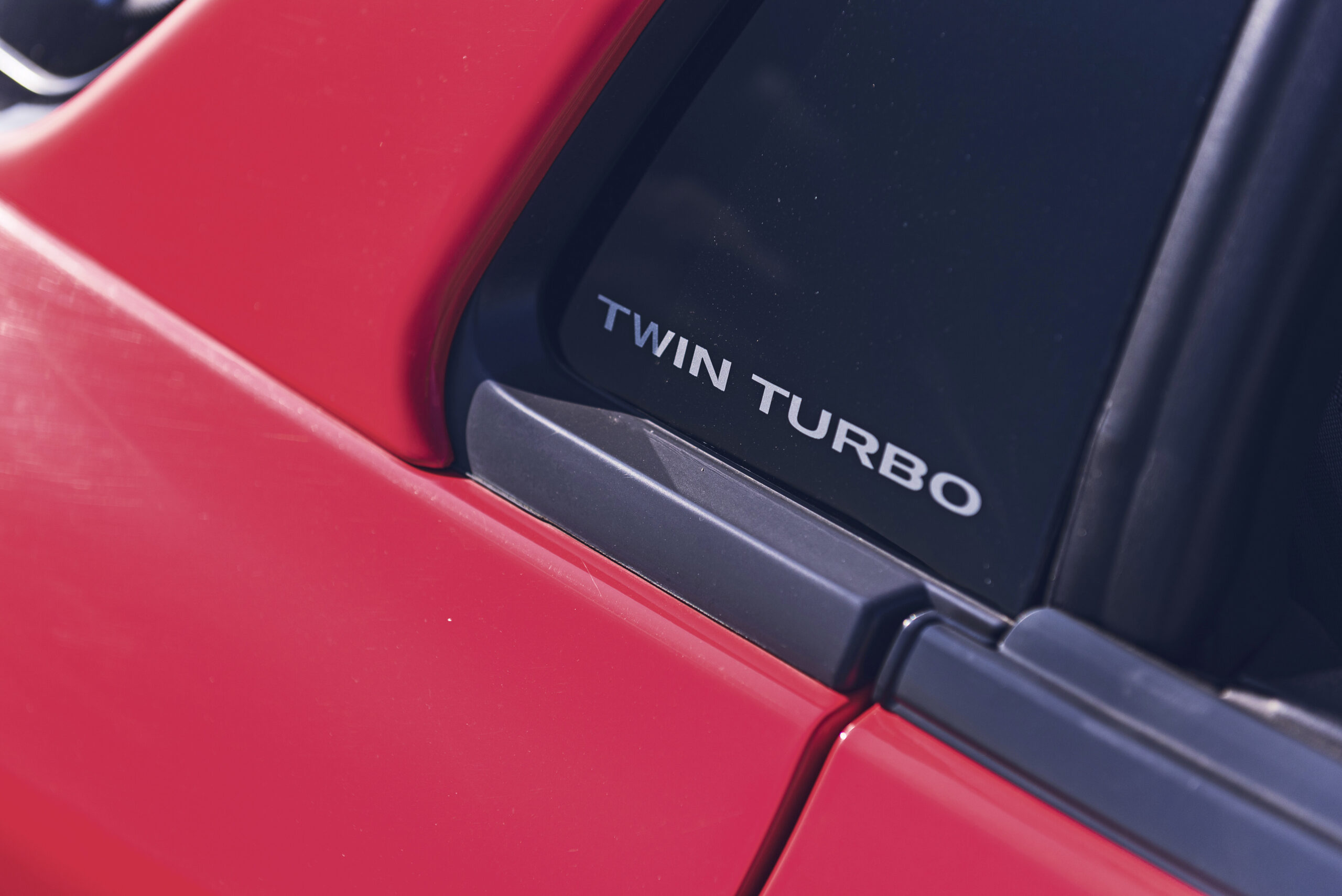
WINNER!!! TOYOTA SUPRA
Picking a winner out of the two is probably the easiest decision we’ll make today. The Supra is victorious, largely thanks to its winning mixture of torquey engine up front feeding its power to playful rear wheels.
Not even the presence of a sluggish automatic gearbox gets in the way of the fun. The Supra is the oldest car here and it feels it, but in a good way. It delivers the same kind of thrills a Ford Capri might, but with added levels of Japanese thrust courtesy of its turbo engine. It’s not quite as adept at cornering as the Gran Turismo version – this is a very soft GT car, after all, but of the two cars here, it comes closest to achieving the flat-screen ideal.
That’s not to say that the Mitsubishi is a bad car – it just doesn’t live up to either the computer game or to the promise of its exterior. Go into the 3000GT experience eyes open, not expecting a handling hero, and you’ll be pleased at its impressive highspeed, long-distance comfort.
That’s not what Gran Turismo is about, though – so the first victory in our real world game-off goes to the Supra.
Specifications Toyota SUPRA Mitsubishi 3000GT
Engine 2954cc, 6-cyl, DOHC 2972cc, 6-cyl, DOHC
Transmission RWD, 4-speed auto 4WD, 5-speed manual
Power 232bhp @ 5600rpm 286bhp @ 6000rpm
Torque 254lb ft @ 3200rpm 300lb ft @ 2500rpm
Weight 1603kg 1710kg
Performance
0-60mph 6.2sec 5.4sec
Top speed 144mph 160mph
Economy 24mpg 26mpg
THE CARS IN THE GAME
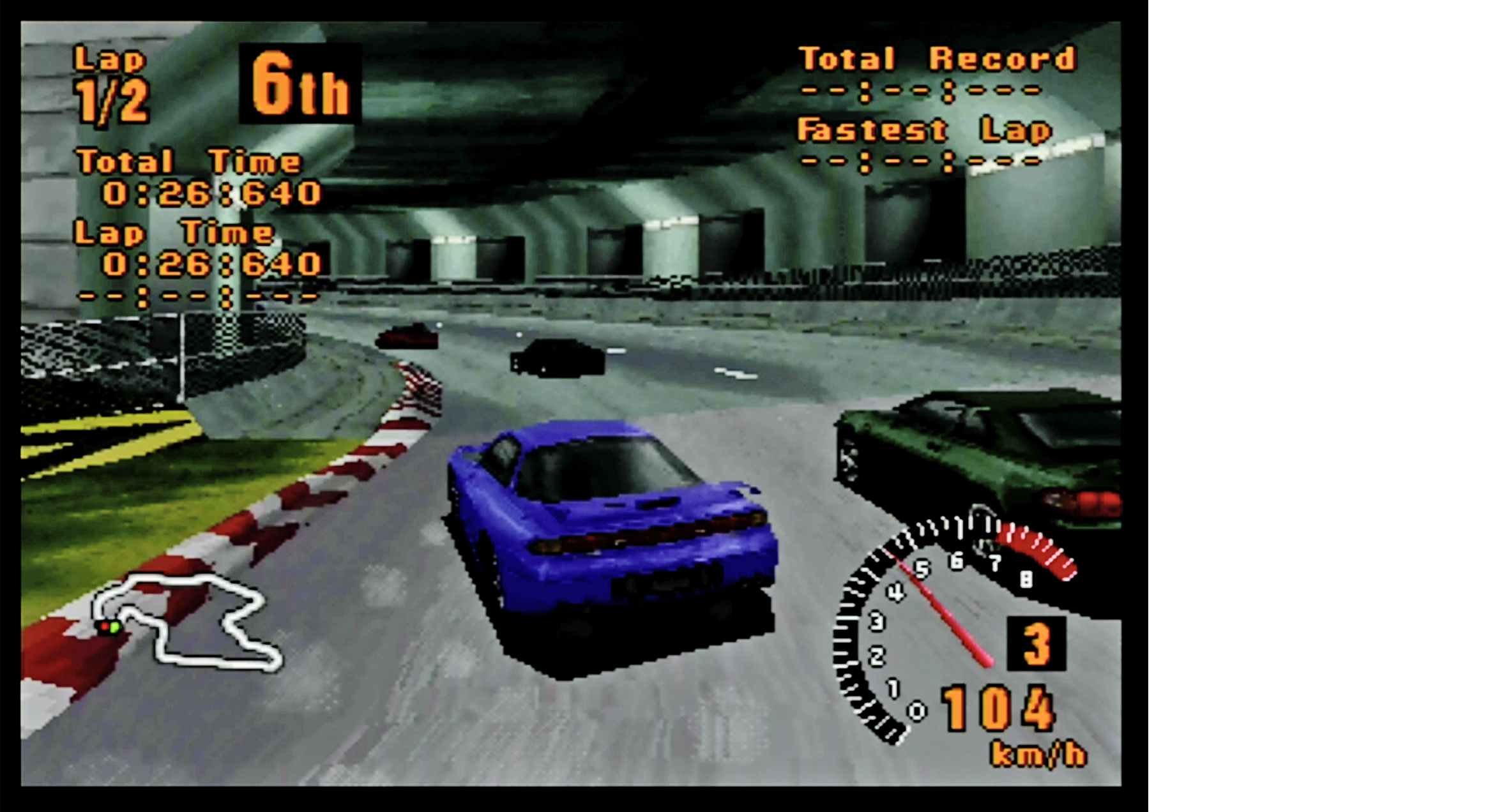
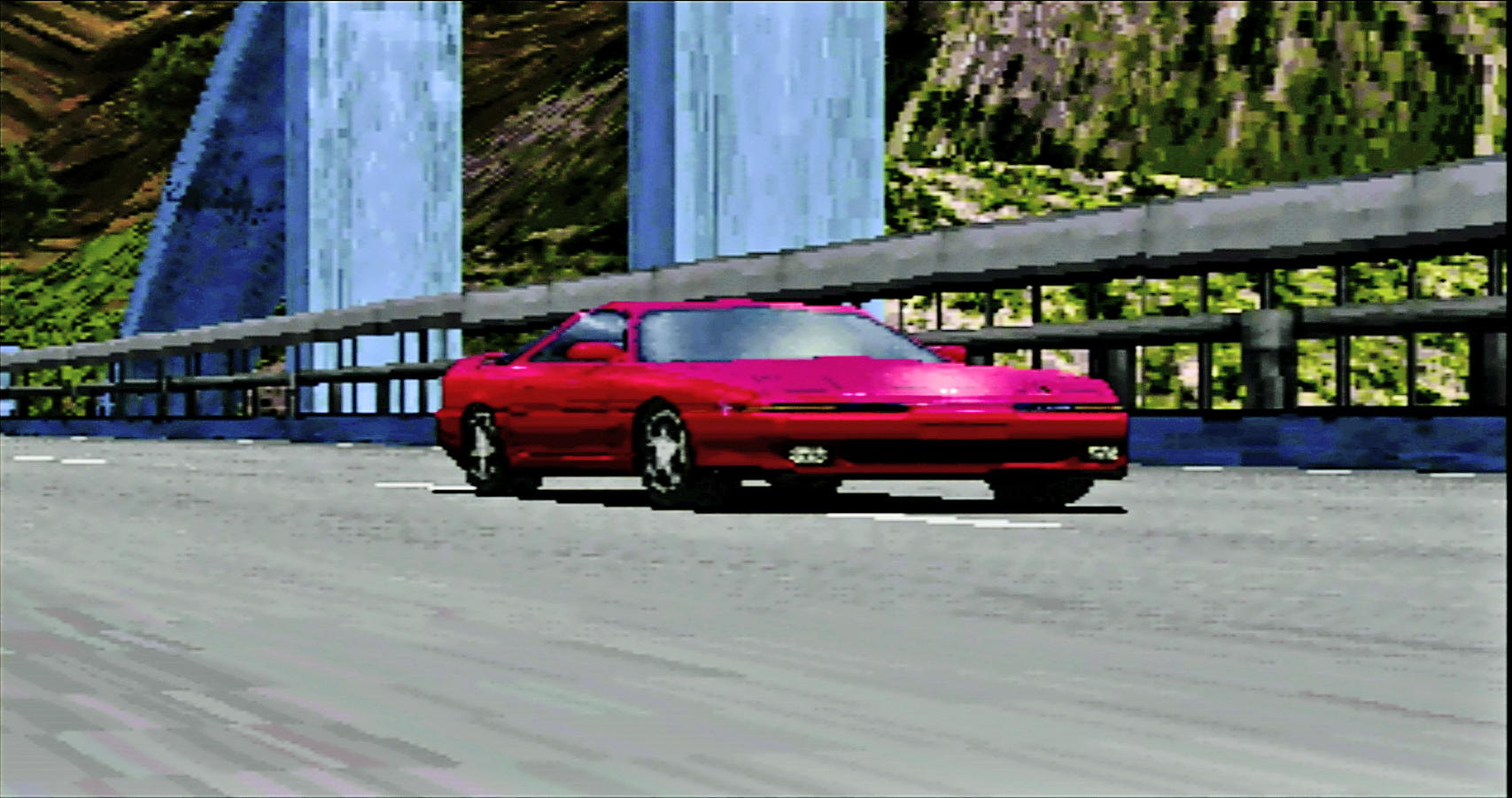
Toyota Supra turbo
Standard car The Supra came in either white or black at the start of the game, though some report red cars being available. Its hefty kerbweight means the 234bhp doesn’t go very far, leading to regular embarrassment by the featherweight CIvic Type R EK9.
After tweaking The sky’s the limit for the Supra – it’s easy to put more power through the turbos; 500bhp plus, anyone? It doesn’t handle brilliantly, but it shifts.
Winner? Yes – it’s far more easily tuned than the Mitsubishi.
Mitsubishi 3000GT
Standard car It’s more powerful straight out of the box but then it weighed significantly more. Then again, its four-wheel drive system made it a bit easier to control using non-Dualshock pads, and the traction helped get you out of corners.
After tweaking Despite the twin turbo setup, 3000 modifications run out of steam quicker than the Supra. While there’s plenty of weight to be lost, you can only remove so much. A limited long-term game prospect.
Winner? For the ham-fisted only.
Nissan Skyline GT-R vs Honda NSX-R
You’ve banked some healthy in-game credits and you need a car to take on the big boys – but do you choose twin-turbo brawn or a lightweight screamer?
The mists of time like to paint the rise of JDM cars as being thanks to Gran Turismo alone, but those of us who are old enough know better. The Nissan Skyline GT-R R32 was a legend in its own wheeltracks way before the Playstation itself was launched.
The R32’s just powered past its 30th birthday, but the celebrations have been surprisingly muted for a car that took on the touring car establishment – and destroyed them. In Group A racing, the GT-R outclassed the all-conquering Ford Sierra RS500 Cosworth, and when it came to Europe to take on the likes of BMW and Porsche in the Spa 24 Hours, it was equally successful. On the streets, its capacity for big power gains made it a legend in the few pages of Max Power that hadn’t been stuck together by its readers. I had to have a Skyline.
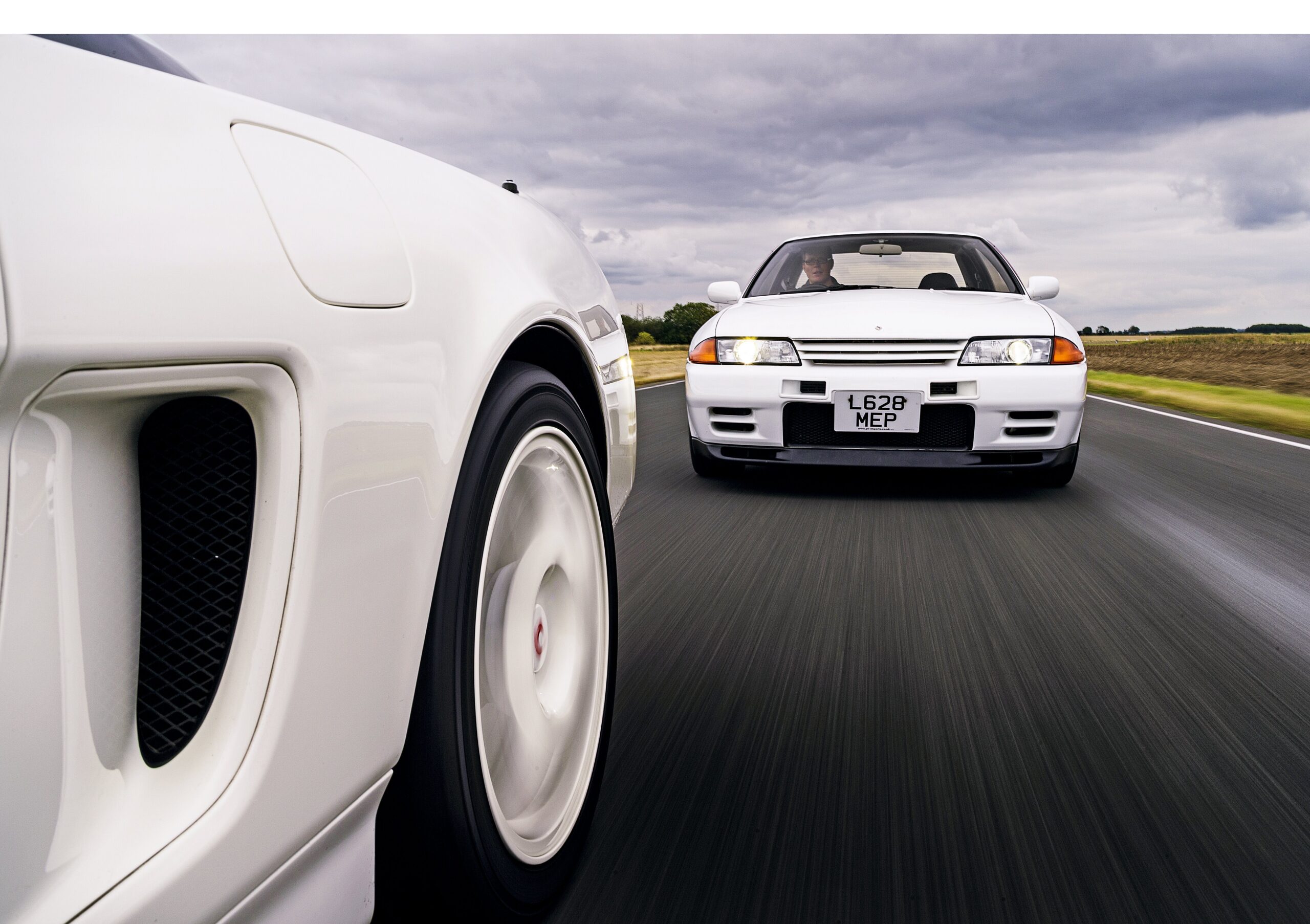
In the flesh, it almost looks coy. Subsequent GT-Rs upped the aggro, so the R32 seems a little tame despite the wide arches and rear spoiler. Of course, there’s nothing tame about this car’s party piece – the twin-turbocharged straight six RB26DETT. It’s remarkably potent straight out of the box, but tuners have taken it to 1000bhp and beyond, with a reliable 500bhp easily achievable with a few simple mods. This tunability was reflected in the game: crank up the boost and it was an absolute monster, easily capable of flattening all its rivals.
On the road, power is delivered via an electronically controlled four-wheel drive system, which might have you thinking it’s a bit of a fun sponge. Far from it. This is how to do technology right – there’s a wonderfully playful rearward bias, meaning you can get it very sideways, with a convenient safety net that sends power to the front wheels. Stop being a hooligan and there’s simply so much grip that barnacles seem somewhat laissez faire.
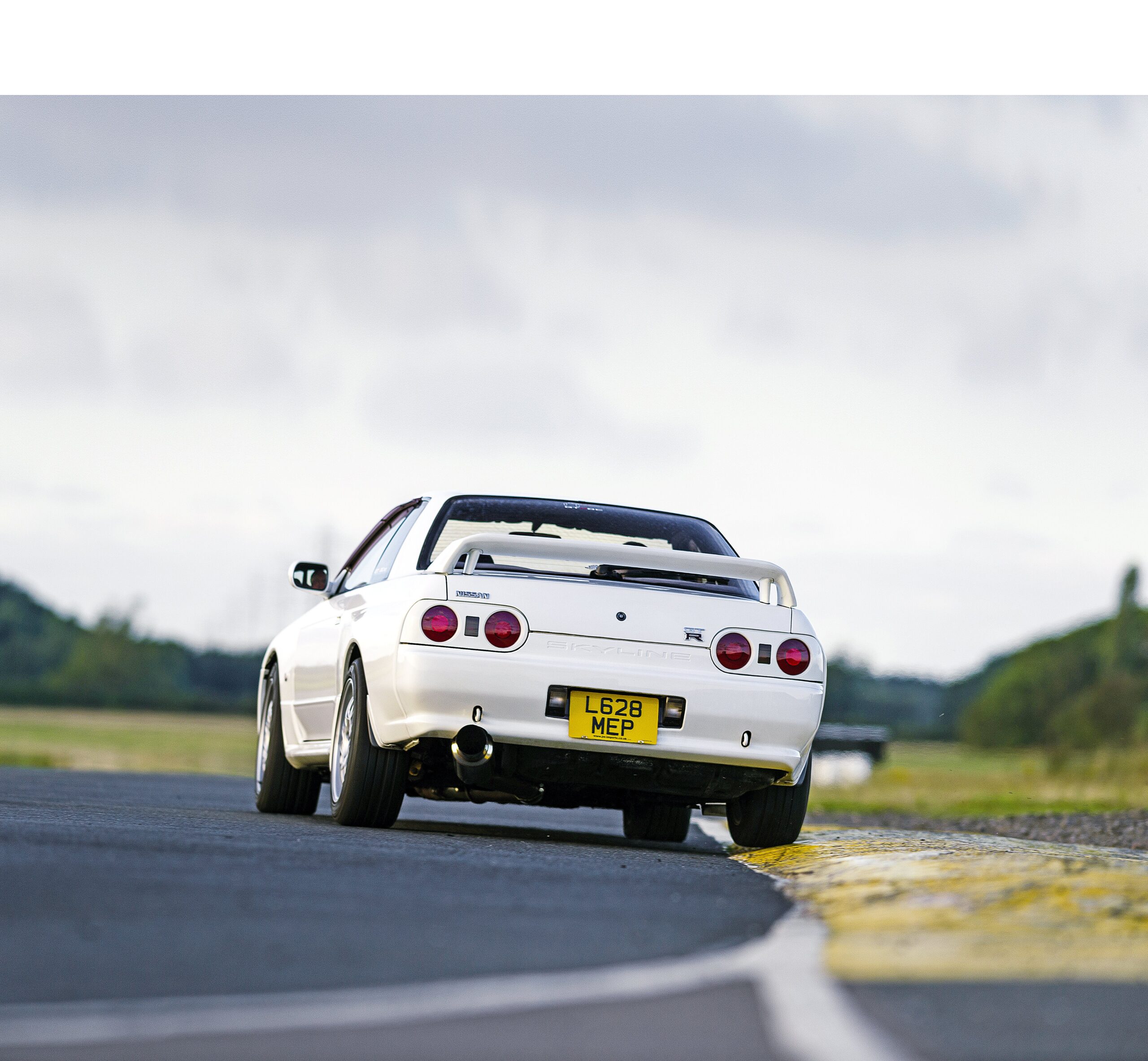
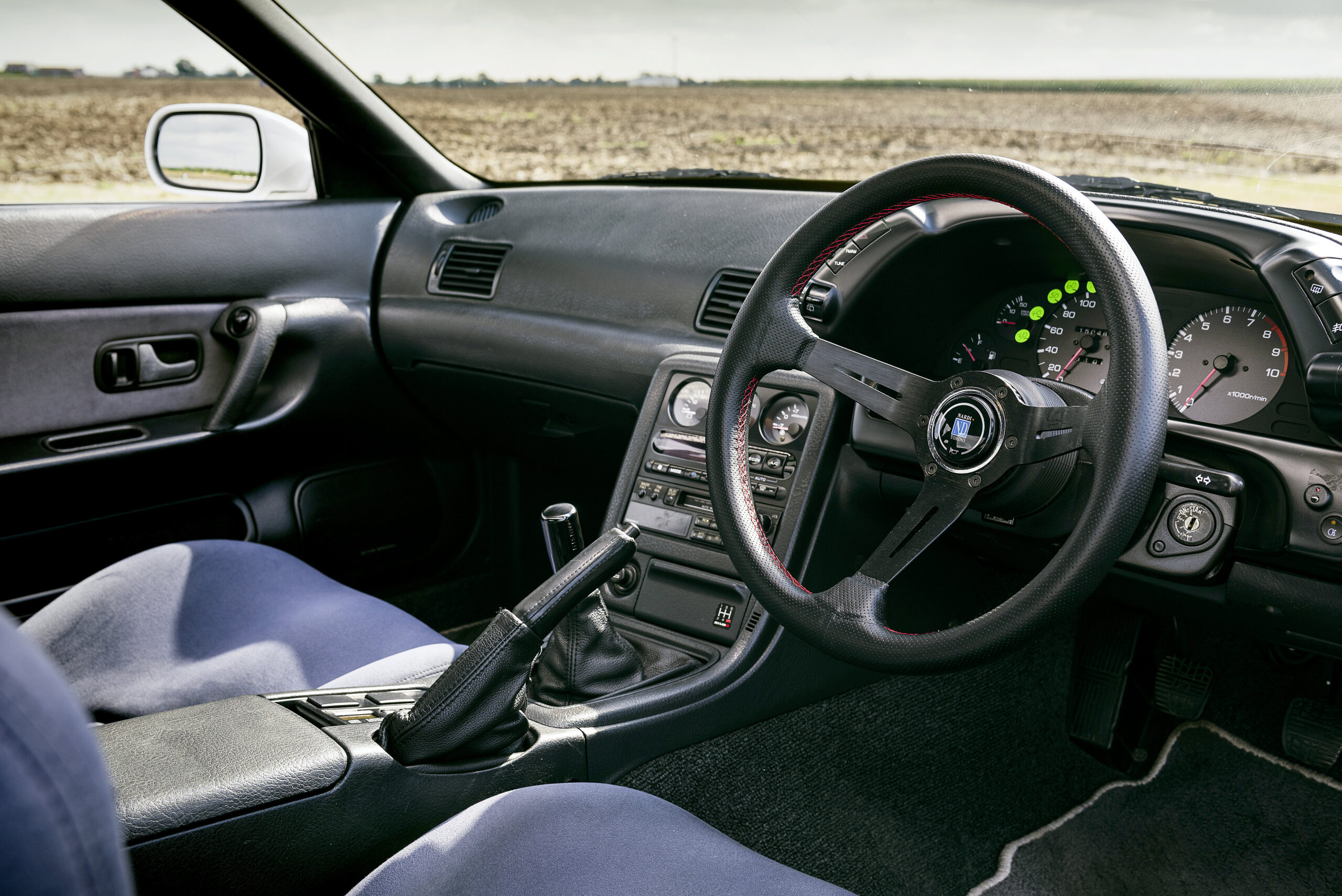
There’s so much more to it than simple thrust and cornering lust. The steering is beautifully weighted, the responses pin-sharp and accurate, and though there’s not the fine telegraphing of what’s going on tyre-side it’s still working with you to push it faster, get that engine soaring to seven grand and let your ears tingle to the rasp of its fizzing straight six. The gear shift is tight, accurate, positive; the brakes feel solid; it all comes together around you. It’s very easy to go very fast indeed – but is it fun? Naysayers claim it’s all a miracle of technology over driver involvement. A bit sterile. Fast, but dull.
They’re wrong – up to a point. Very few cars have such a diverse skillset. It can be a hooligan one second, pulling off lurid slides, yet in another it can be an epically fast point-to-point machine. On the wide open spaces of Blyton, the R32 is the consummate grin-maker.
On the road, though, the Skyline is simply too good. Lighting up the upper end of the rev range and letting the RB26 scream is one of performance motoring’s greatest experiences, but opportunities to do that are fleeting. And sadly, at ‘normal’ speeds, the Skyline isn’t that enthralling. Compared to an Evo or Impreza, the over-endowed R32 doesn’t feel quite as nimble on B-roads – reaching that sweet spot of excitement other than in straight-line bursts is hard without taking some hefty risks.
Should that stop you buying one? Absolutely not – just make sure to book plenty of track time to truly enjoy the song of the Skyline.
I have to admit to a guilty secret. The Honda NSX was one of a handful of Japanese cars that I actually knew something about before Gran Turismo was released. Cars from Japan rarely breached my subconscious in those days, but the magic of the great Ayrton Senna had been sprinkled upon this machine and for me that made its aura electrifying. It became more intense after I watched (on TV) that fateful race at Imola in May 1994. From that point onward I needed to know more about Senna. His collaboration with Honda on its first supercar was top of the list.
‘My lottery garage has a new addition’
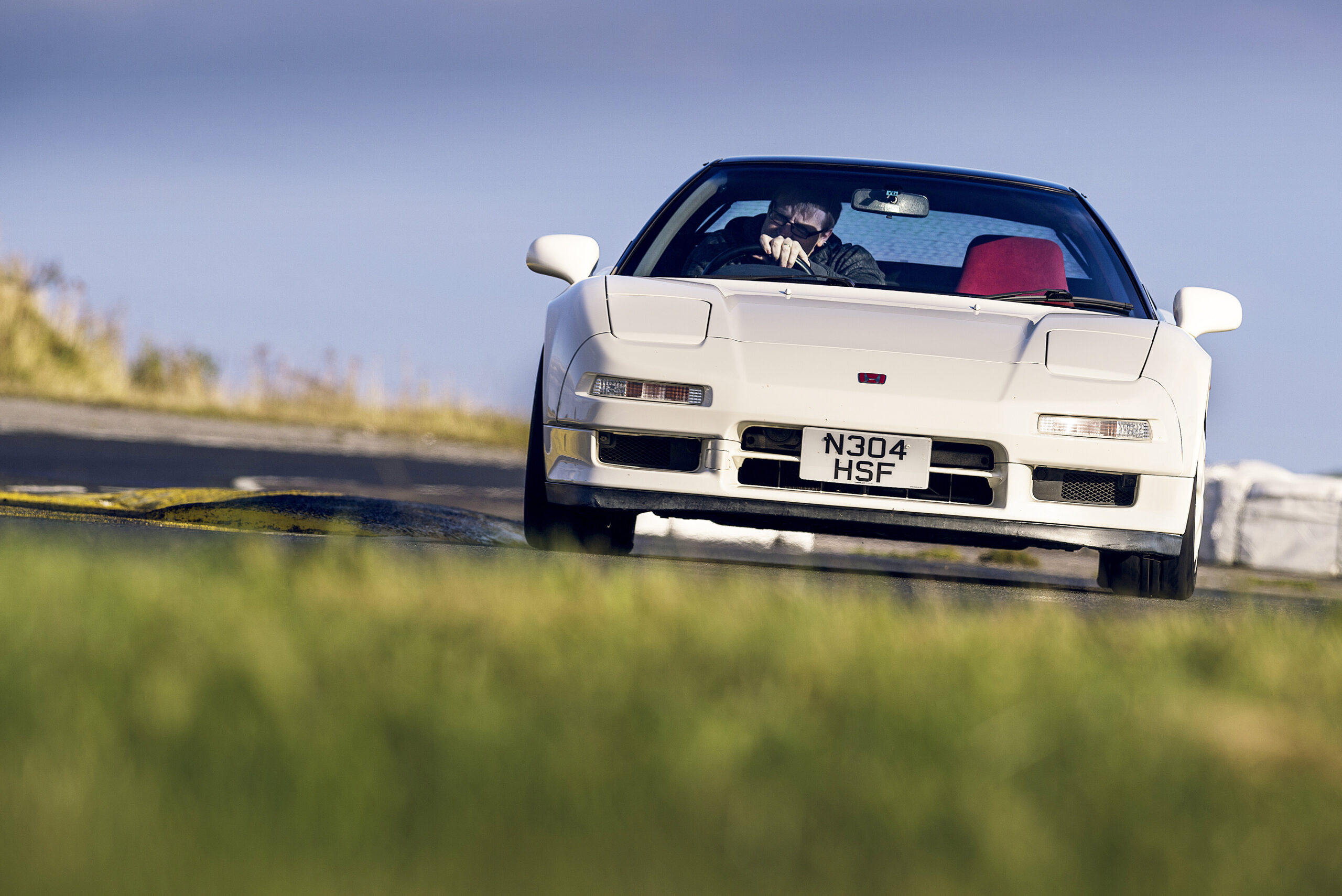
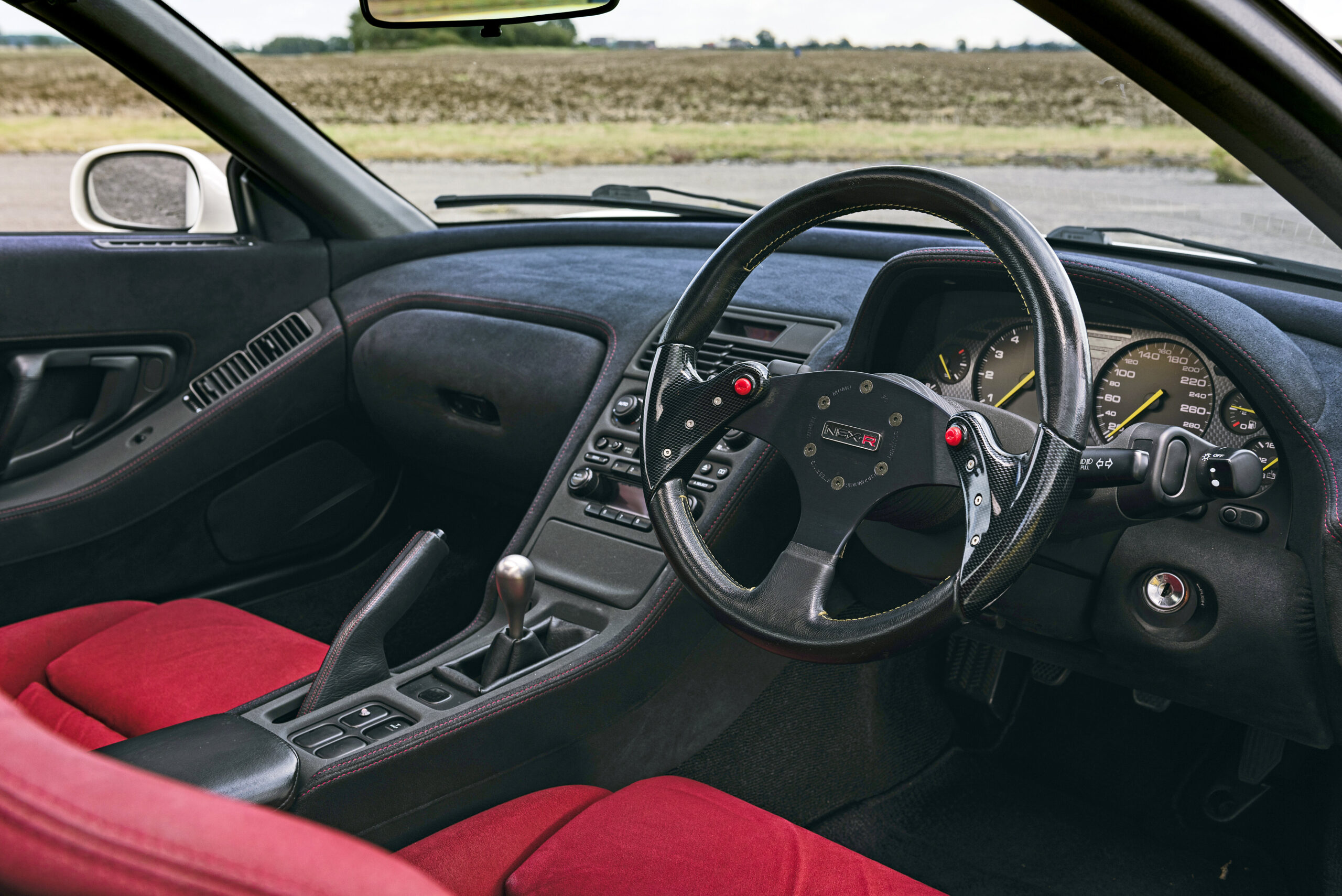
Ergo, even before loading up my Playstation for the first time I knew that the 1992 Honda NSX-R was nearly 120kg lighter than the standard car and that it had carbon-kevlar seats, a chassis that was up to 50% stiffer than the stock NSX, and a freerflowing intake and exhaust that shifted power to around 280bhp (which I knew was a gross underestimate). I also knew that Honda was only going to make 500 NSX-Rs (483 in the end) and that they weren’t coming to the UK. Fast forward twenty-seven years and it’s safe to say that of all of our assembled GT heroes, I am still most looking forward to acquainting myself with this Honda. Visually there’s little to distinguish it from a normal NSX, which raises its kudos still further in my mind. If you know, you know. If you don’t, there’s a small clue by the door handle, another badge on the kick-plate and those gorgeous, featherweight Enkei alloy wheels. Inside there’s a lot more to give this hardcore Honda away. The dash is alcantara and the stock wheel has been replaced by a smaller, racier Momo. The biggest change however is in the magnificent carbonfibre Recaro pews.
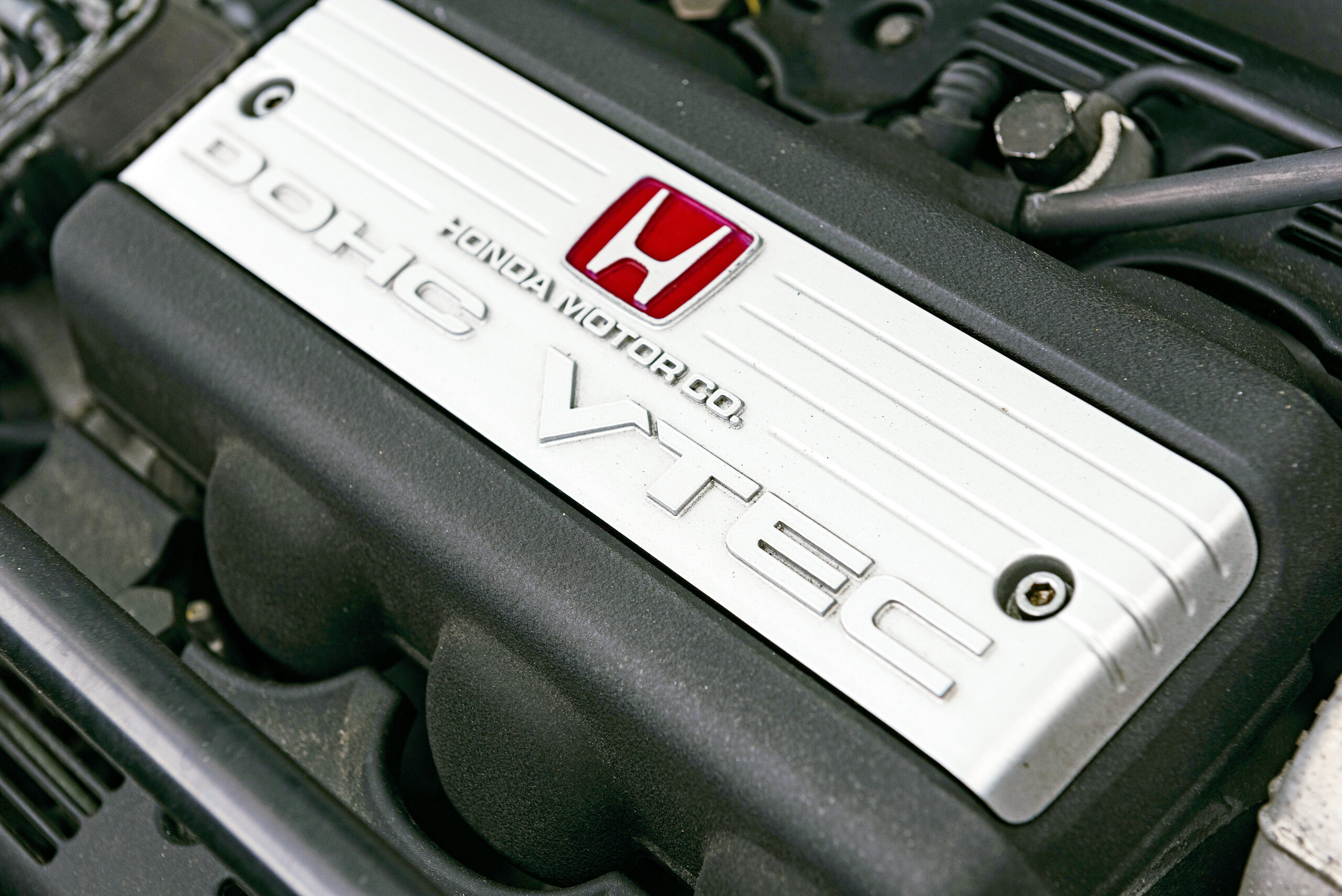
Spin the key in the ignition and there’s another more aural clue that this beast is something special. The sound deadening, underseal and even the alloy cover between that 3.0-litre V6 and the cabin have been removed. The engine is simply nestled behind some mesh and isn’t shy about broadcasting its presence. This NSX is all the better for it too. The standard car was a triumph of balancing everyday usability with driver engagement but for the more focused enthusiast it always felt like there was more to give. They were right too.
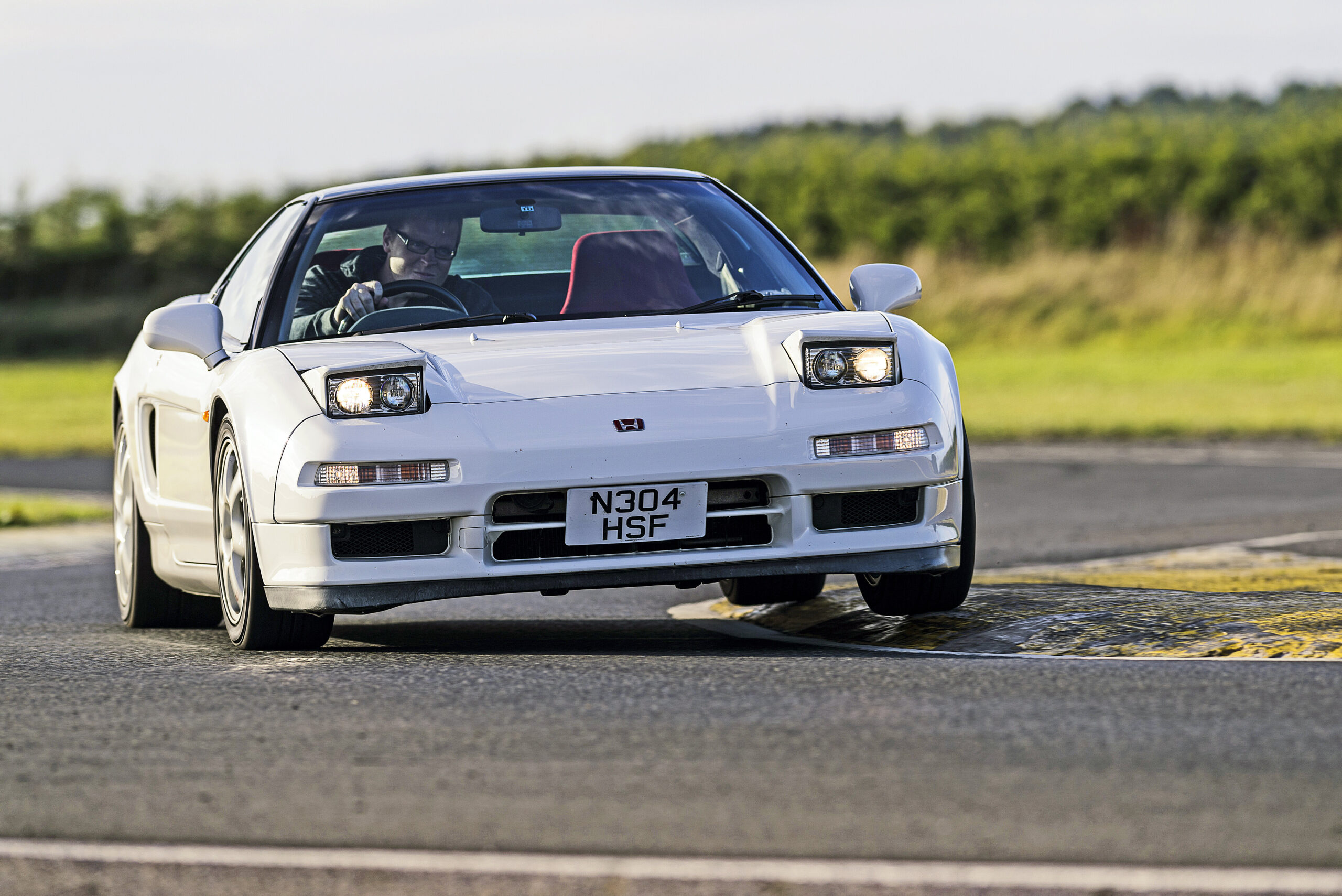
Slotting the NSX into gear via the precise but tiny titanium gear knob I am initially stuck by the severity of the controls. Power steering wasn’t deemed necessary for the NSX-R, making it a bit of a workout at parking pace. Then there’s the ride… Venture onto a rumble strip or pothole at your peril. There’s very little that’s supple in this thing, but what you lose in comfort you win back in driver connection. As soon as you start upping the pace the chassis telegraphs every fidget and wiggle. Get your eye in and start upping the pace and this NSX becomes utterly sublime. Flat cornering should be a given, but this thing feels race-car like composed. Likewise, that stunning V6 is clearly at its best on a circuit. I can keep it in VTEC range lap after lap and soak up the stunning snarl and relentless pace that the high-rpm cam profile provides.
When I can’t simply carry speed through a bend, which doesn’t happen too often, I lean on the brakes, which provide forceful but perfectly controllable deceleration again and again. Matching revs on the downshift is a doddle, as is slotting the gearstick into a lower ratio. It’s a very short shift without even the slightest hint of play. It has to be one of the best mid-mounted gearchanges out there.
The NSX’s nose tucks in sharply and the non-assisted steering lets you know precisely when grip goes away, and more importantly, when it comes back. It might not be ultimately the fastest car here (that’s probably the Viper) but it’s so involving that I always feel I’m intrinsically linked to this machine. It’s a level of immersion that’s common to most Type Rs I’ve driven, but remember, this one started it all.
The real life NSX-R is so much more impressive than its digital cousin. I’m probably slower than I was in the game (Jeremy Clarkson proved as much at Laguna Seca) but I don’t give a hoot. The NSX-R always feels in a perfect state of balance and allows you to delicately unpick every corner lap after lap, shaving tenths off here and there. It’s adjustable and forgiving: nothing this side of an Elise connects you more directly to the road.
The NSX Type R kicked off the hot Honda brand and it’s still the firm’s crowning achievement. Not only is it the greatest Type R, in my mind it’s probably the greatest four-wheeled export from Japan. There’s a tactility and finesse at high speed that’s rarely found in a road car. This halo of talent might tarnish a little if you try and use it to get to Sainsbury’s, but who cares, this car has a far higher purpose. It was built to slay all comers on any circuit and though I’m not capable of recreating Ayrton’s famous loafer-wearing lap of Suzuka (see youtube) this car gives me the confidence to feel like I could. My lottery-win garage has a new addition.
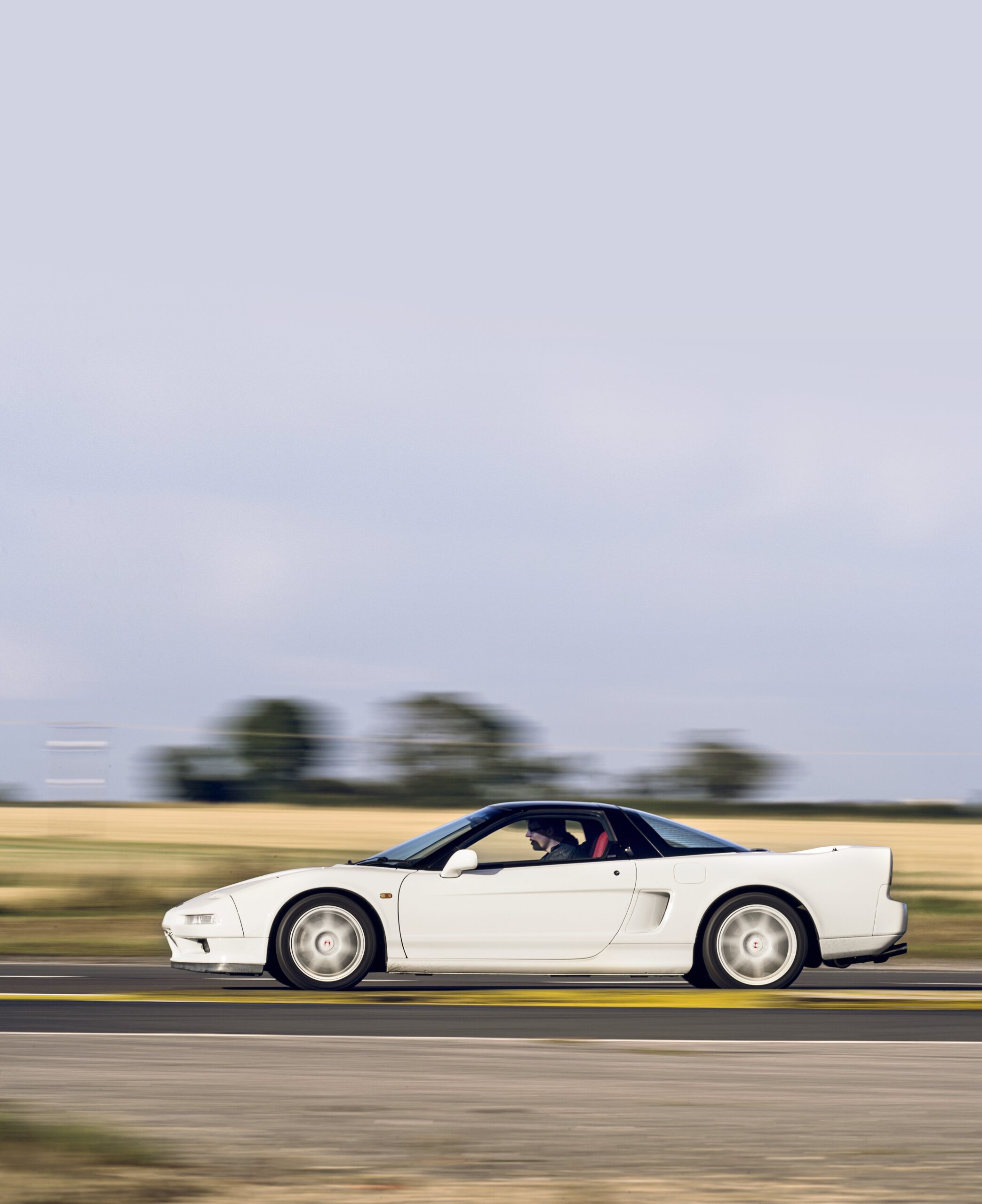
WINNER!!! HONDA NSX-R
Both of these cars comfortably surpass their in-game experience, but it’s by how much that separates the two.
The Skyline is justifiably a legend, and not just for its game exploits. Here was a car that took on Western Europe’s elite racing teams and premium marques, and obliterated them on track and on the road too. The R32, perhaps more than any JDM car, did the most to start the JDM cult. Some might point to the MX-5, NSX, LS400, 300ZX et al, but all of those were European or American blueprints. The R32 GT-R was something else entirely, distinctly Japanese in form and function. It’s one of the greatest cars ever made.
But not quite as great as the NSX-R. The Skyline’s greatest strengths are also its weaknesses. Its omni-competence means that you have to be pushing it really hard before the fun genes shine through. In the NSX-R, it’s very different.
It’s so much more than a fancy NSX. It takes the strong base materials, lightens them, focuses them, and hones them to perfection – and we don’t use that word lightly. The NSX-R fizzes with an energy that only a Ferrari F355 of the same era can come close to, but it manages to step ahead of the Maranello machine for involvement and poise. It really is that good; at whatever speed, the NSX-R is an event, a beautiful symbiosis of machine and you, the fleshy bit. It’s a delightful, analogue experience that works at 60mph as much as at 160mph. For that, it wins this bout.
Specifications Honda NSX -R Skyline GT-R R32
Engine 2977cc, 6-cyl, DOHC 2568cc, 6-cyl, DOHC
Transmission RWD, 5-speed manual 4WD, 5-speed manual
Power 276bhp @ 7300rpm 276bhp @ 6800rpm
Torque 217lb ft @ 5400rpm 260lb ft @ 4400rpm
Weight 1230kg 1430kg
Performance
0-60mph 4.8sec 5.6sec
Top speed 163mph 156mph
Economy 23mpg 20mpg
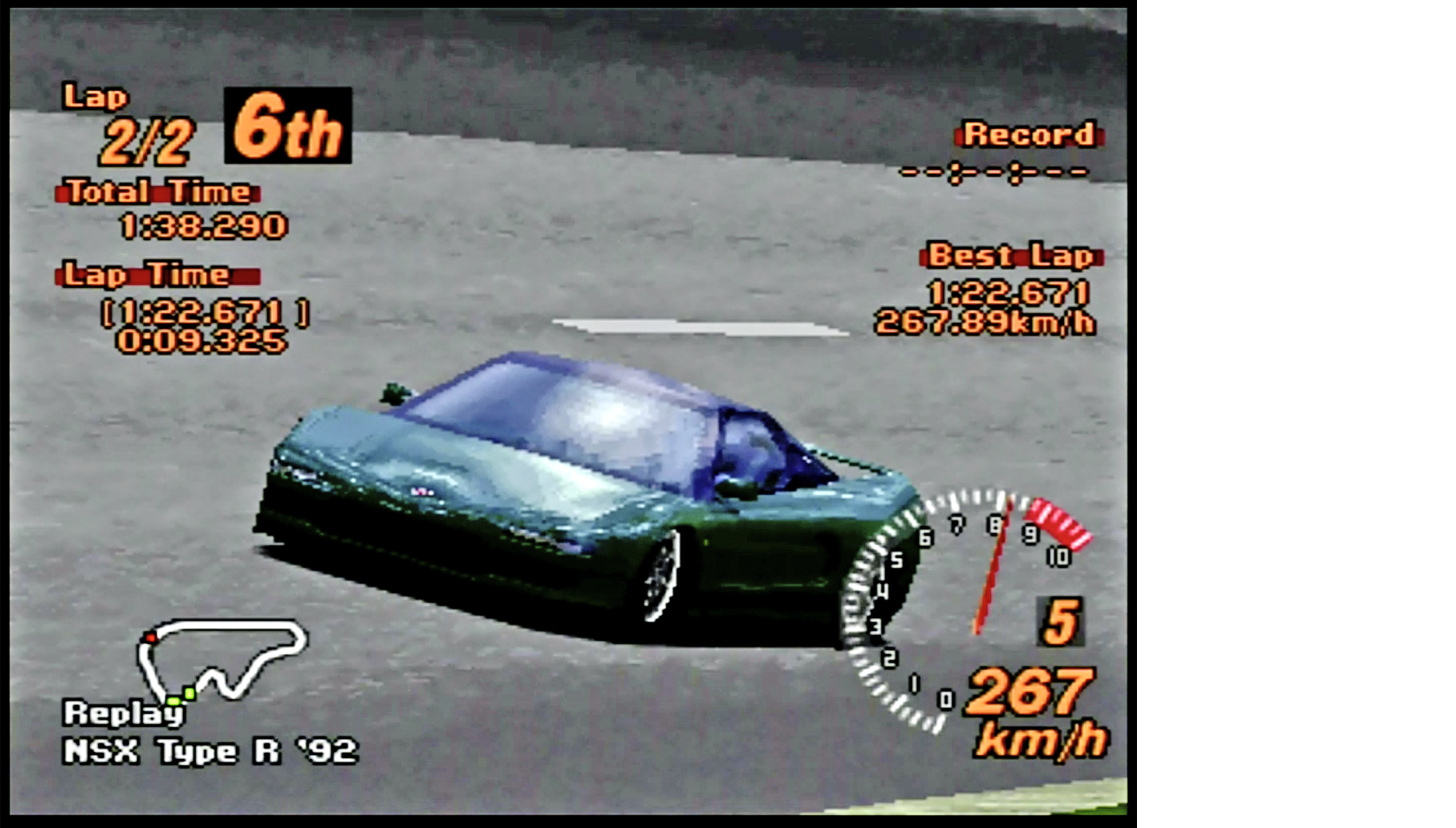
THE CARS IN THE GAME
Honda NSX-R
Standard car Lightness may be a virtue, but on certain tracks the NSX’s relative lack of thump compared to turbocharged rivals made it a tricky car to succeed in, especially if you were yet to upgrade to the analogue pad. On twistier circuits it was sublime, though.
Modified? There aren’t as many NSX-R upgrade options and proper setup is paramount. Nathan moaned that the NSX-R preferred going backwards to forwards. Oddly harder to drive fast in-game than it was in real life.
Winner For skilled pilots only.
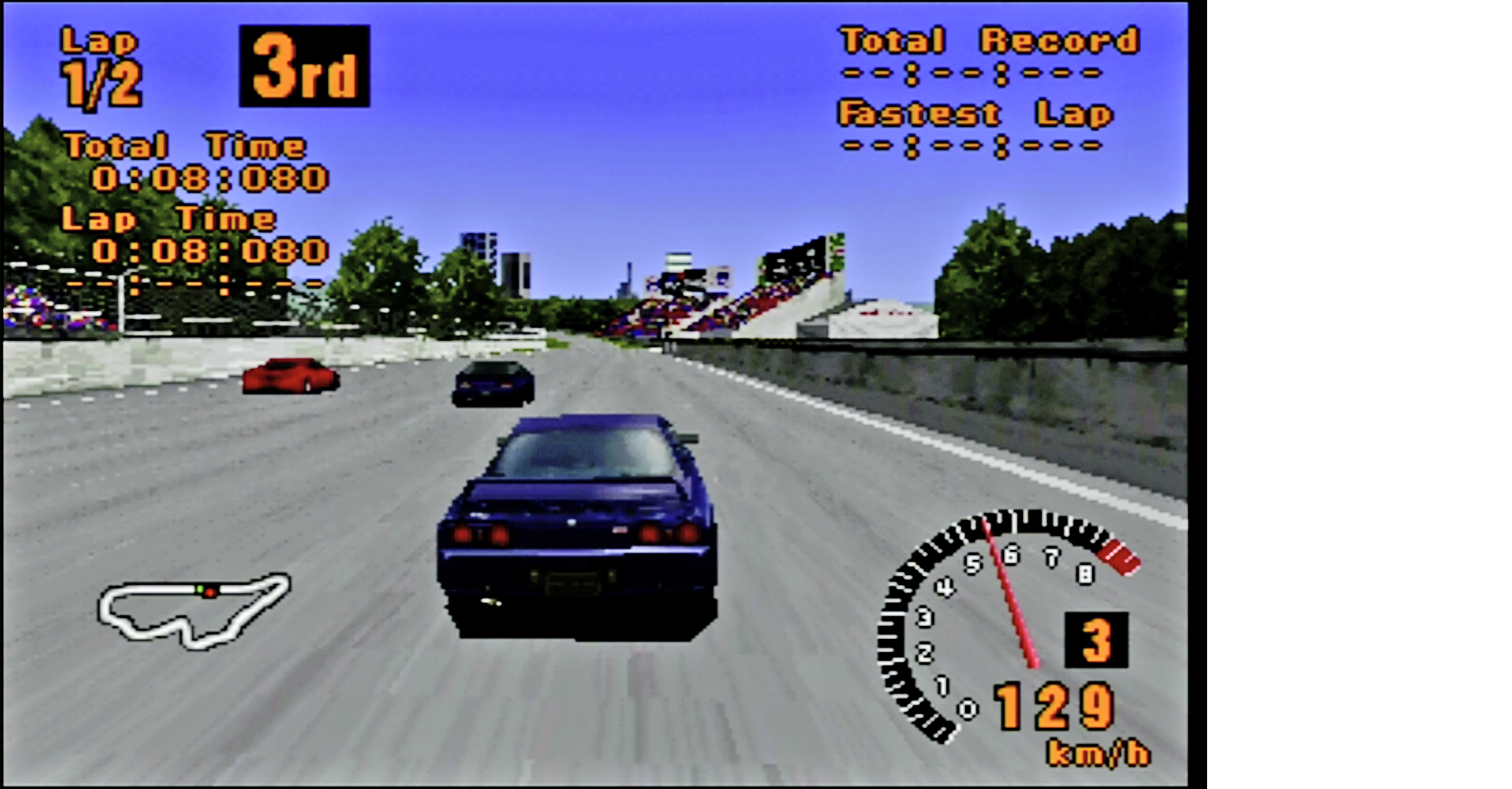
Nissan Skyline GT-R R32
Standard car Four-wheel drive helps the Skyline to be a much easier car to master, though it’s still podgy thanks to all that extra machinery driving all four wheels (it’s around 250kg heavier than the NSX). It really comes alive with a bit of tweaking…
Modified? The ultimate modified in-game car? It’s hard to argue against its easy tuneability, surefooted chassis and predictable handling (well, unless you turned it into a drift warrior).
Winner Absolutely. Not as fun as the NSX, but finishing second isn’t fun either… so we’d pick the Skyline.
TVR Cerbera vs Dodge Viper GTS
GT1’s best prize cars go head to head: but can the Brit defeat the Yank?
The Cerbera looks like it means business straight from the off, like something Salvador Dali would craft after a night on amphetamines. It’s got a fearsome reputation. Tales of owners being spat off into solid bits of the scenery, snap oversteer and the familiar ‘plong’ of deforming fibreglass all form a large part of its appeal.
Of course, you don’t get any of that in Gran Turismo, and prior to our day at Blyton, I’d written off such fears as hyperbole. But then James Agger’s bright red machine throbbed into view and I started to have serious second thoughts.
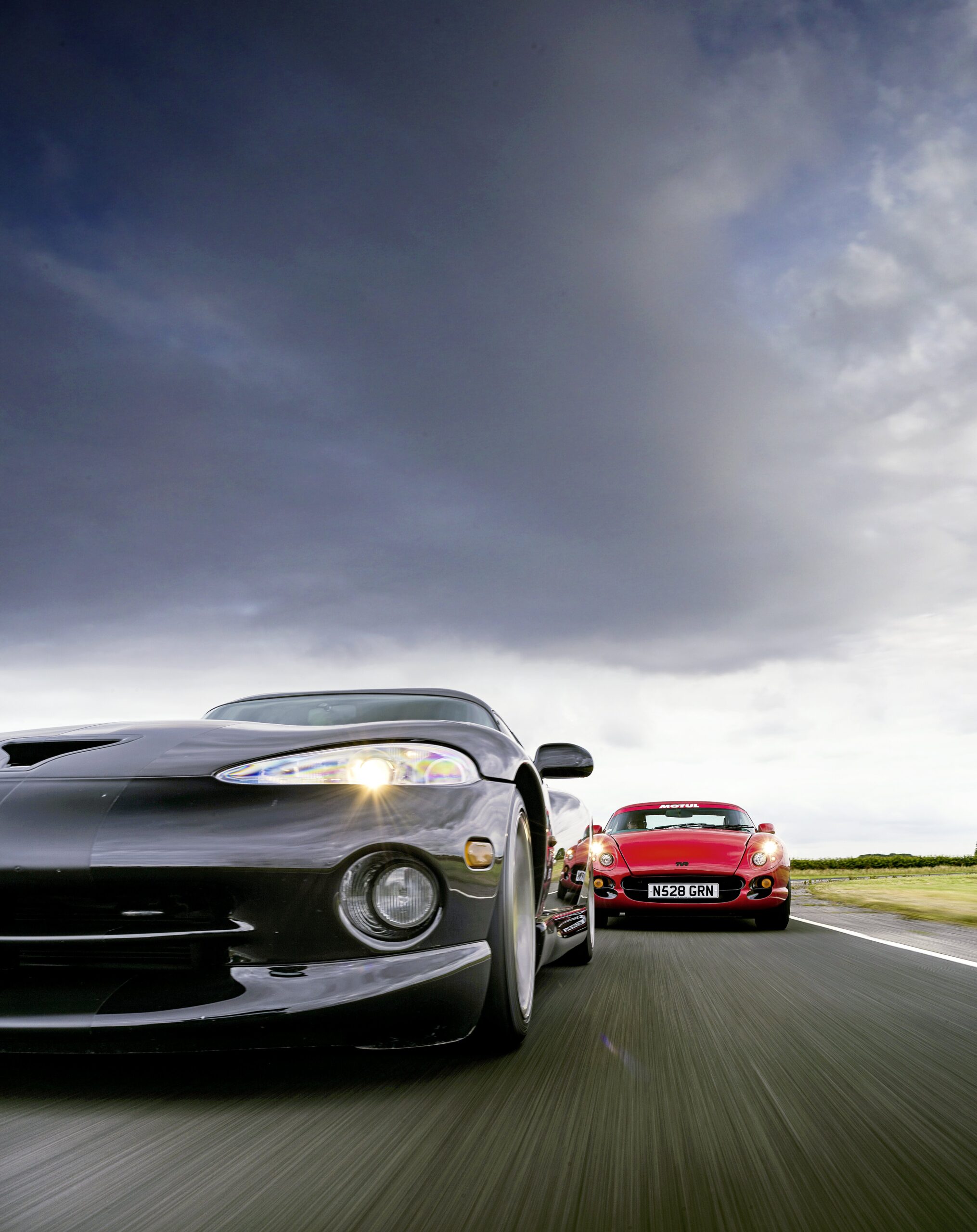
You sit low, the swooping curves of the interior and wide transmission tunnel pinning you down. Gorgeous old-school dials, a meaty manual shift, no traction control, no ABS – just you and your appreciation of your own mortality. Then the 4.2-litre AJP V8 begins to churn, vibrating all parts of your body independently of each other.
Intimidating? No, not really. Peter Wheeler, then TVR boss, said that the greatest form of traction control is your right foot, and he’s right. The Cerbera telegraphs its hard limits fairly obviously – in the dry at least. Treat it with respect and it won’t bite you. It will thrill, astound and addict you though.
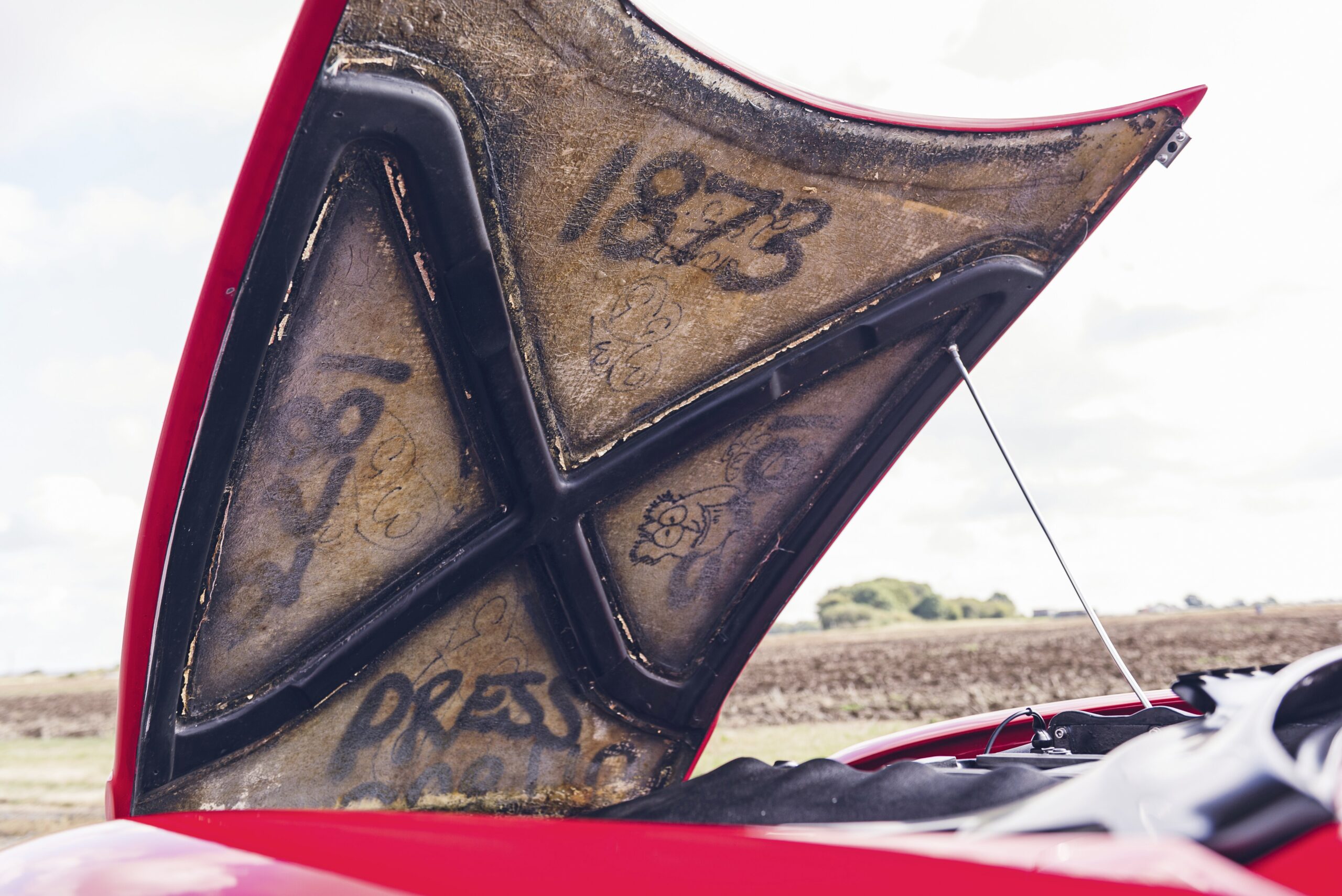
If the NSX feels analogue, then this is really a car that harks back to old-time classics. It’s raw and uncouth, and feels like a racing car that’s got lost on the way to the paddock. The thing about racing cars is that they’re usually beautifully setup – and that’s the case with the Cerbera.
With just two turns lock to lock, the Cerbera’s steering is very sharp, and as the car weighs so little – it tips the scales at just 1100kg– there’s very little body momentum. This means you feel confident exploring the Cerbera’s grip limits, aided by that very long throttle pedal.
True, Blyton is a very smooth stretch of asphalt, and on the bumps, ruts and corrugations of real roads it’s easy to see how it all might become unmanageable in an expensive way, but there’s plenty of poise and good steering feel. Just keep your inputs linear, not binary.
Then there’s the AJP engine, TVR’s first homebrew creation. It might not have been a paragon of reliability, but with it in full song, bellowing to peak power at five grand and beyond, you simply do not care. It’s a baritone roar, the kind of sound that feels like a hole is being ripped in the fabric between this reality and another; a reality free of EVs, social correctness and twitter mob rule. It’s a cliché to say engines have soul, but this one really does: the AJP’s like the car’s place of birth at 2am at the weekend, bright-eyed, raucous, thirsty and begging for more.

The brakes – no ABS here, of course – are strong, and as long as you treat them with respect they’ll more than do the job without locking up. The suspension is firm but compliant, soaking up the bumps rather than pinging the car off them.
The Cerbera is by no means a teddy bear. You’re always aware that one lapse in concentration will have you armwrestling with it for the destiny of your medical insurance. But then that’s the point of a proper driver’s car, you want to be awake, you want your synapses tingling – you want a Cerbera.
This, then, more than any car here, feels the most different from its computer game facsimile. There is no reset button, no assists, no automatic gearbox. And it’s all the better for it.
‘Even digitally, the viper was feral’
The first Gran Turismo outings on the Playstation One have largely been credited with introducing Japanese performance machines to a new generation. While certainly true, the earliest and most influential GT games also showcased a whole host of machines from around the world. Chief among them for me was the Dodge Viper GTS. Even digitally realised, the Viper was a feral beast. It seemed to have roared and snorted its way in from another era. It was seen by many as the ancestral replacement for the Shelby Daytona.
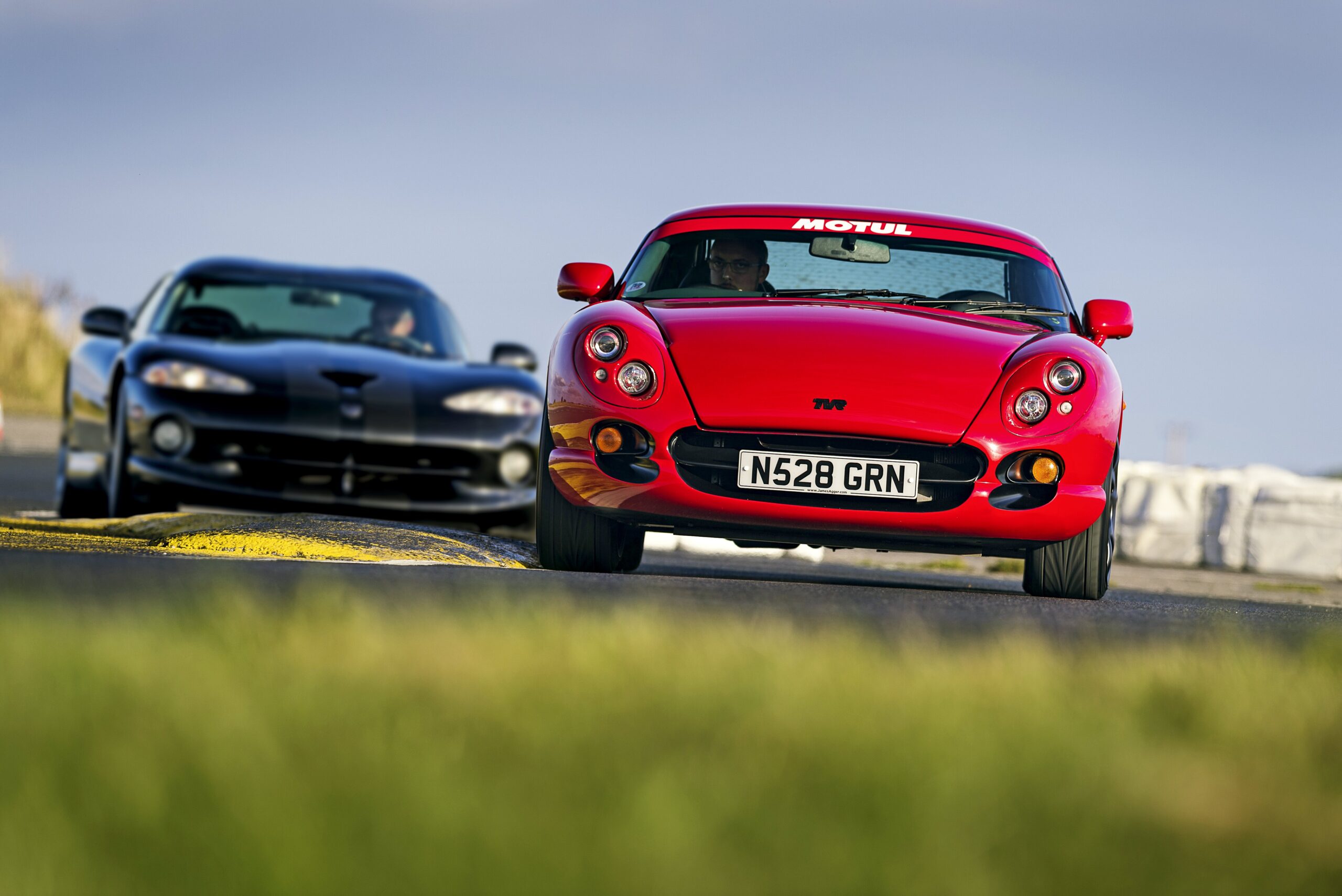
I was 13 when I got my copy of the first Gran Turismo and having passed the requisite amount of licence tests and racked up many championship wins, I could afford some truly exotic machines. With an in-game balance that stretched into six figures I found myself scrolling through what seemed like an overwhelming choice of cars. Suddenly one stood out. A blue-and-white striped Viper GTS, just like the model in my room.
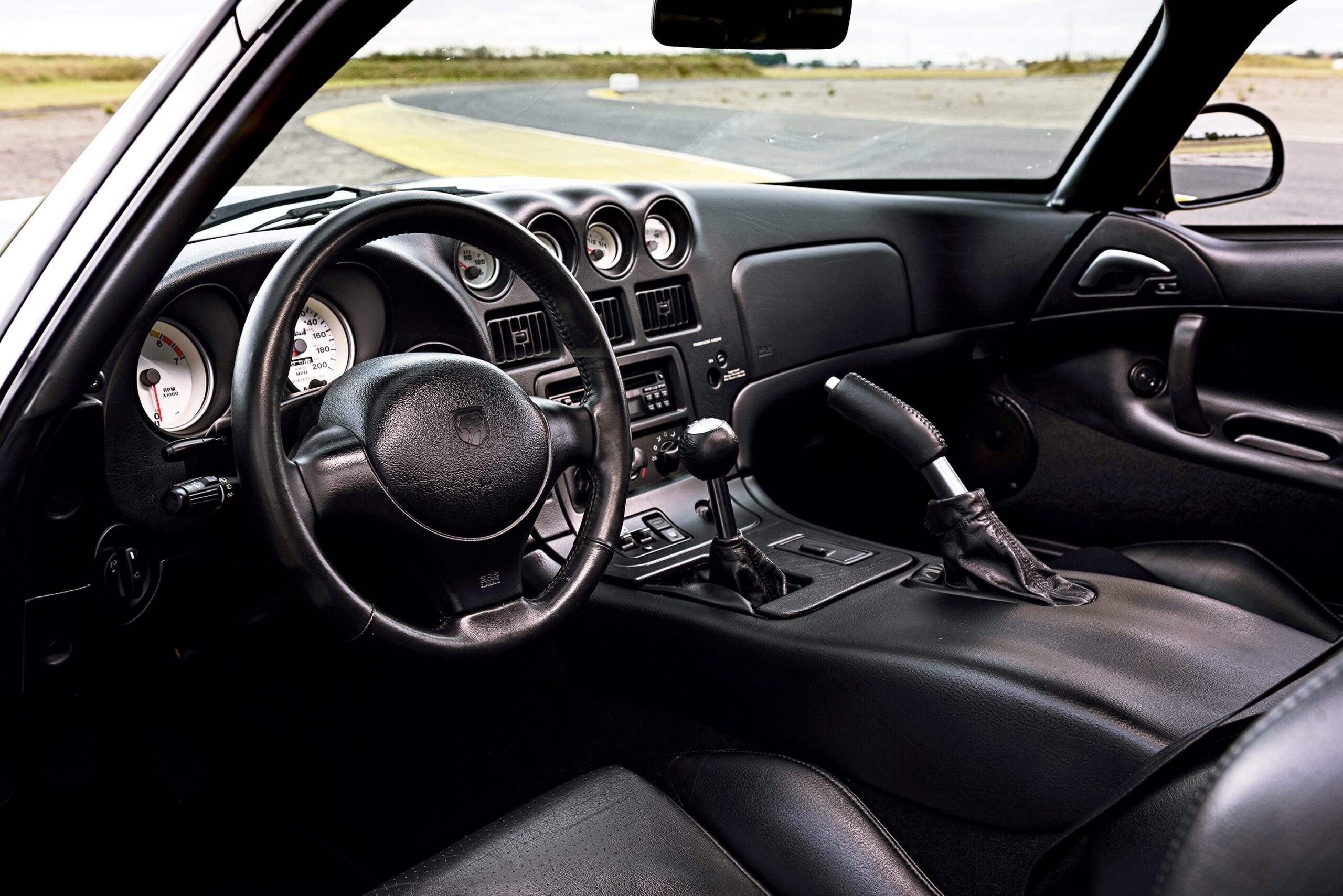
That first Viper looked as though it had been styled by my school mates on the back page of a notebook during a maths lesson. Now meeting it in the metal (well, fibreglass) it’s more like that bloke at the gym with self-esteem issues, all bulges and latent aggression, but unlike the aforementioned meathead, the Viper certainly wasn’t all show and no go. Its V10 engine, despite preliminary work from Lamborghini, is about as exotic as a trip to Widnes, but in true muscle-car tradition it makes up for a lack of technical innovation by displacing nearly eight litres and making 450bhp.
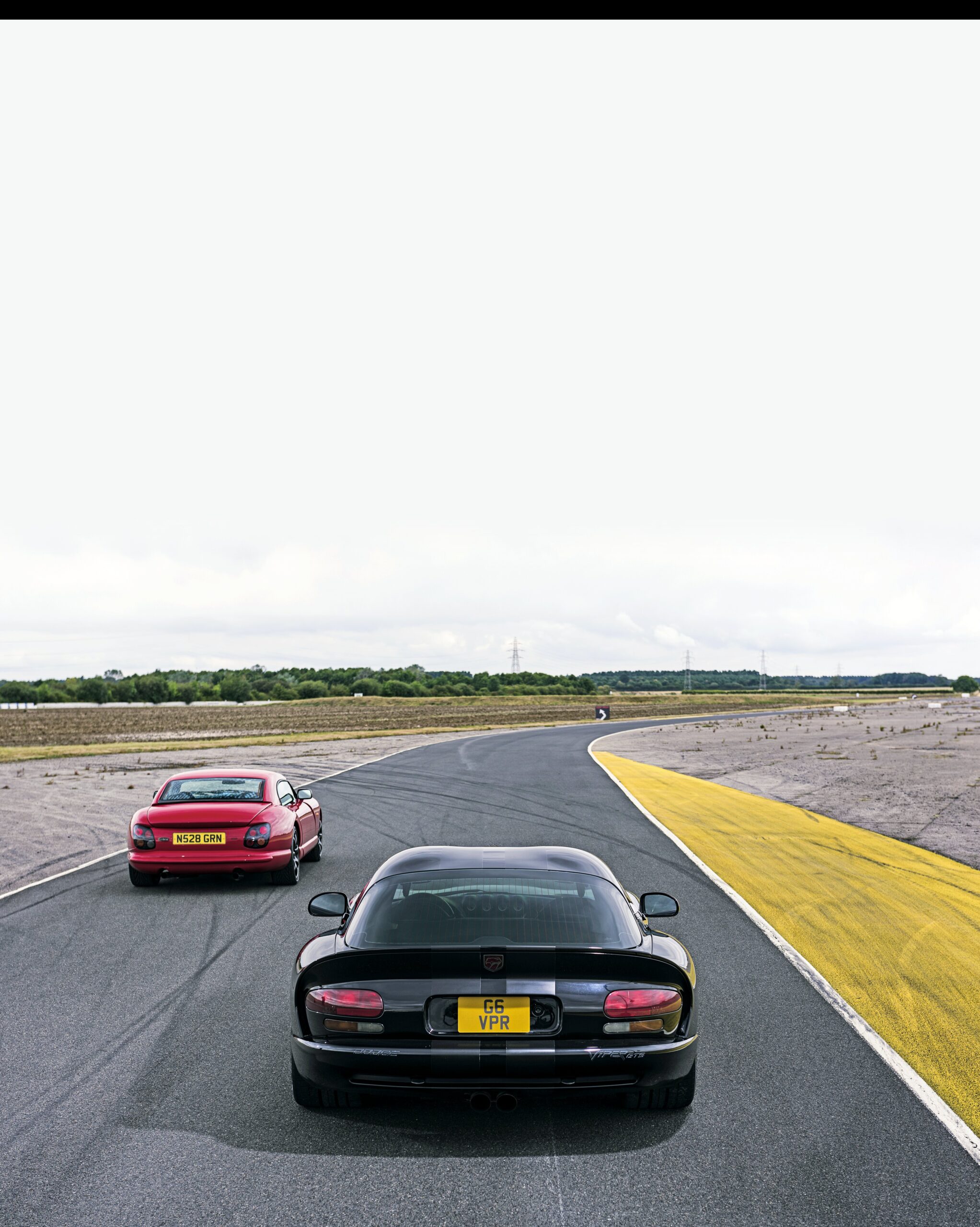
In reality it’s just as impressive as it was back in the digital realm, but there are differences. There was very little sense of scale on the Playstation so it’s surprising to discover that the Viper is vast. I was expecting the extremely long snout, but the width came as a surprise. It’s not an issue on the circuit but I’m glad I don’t have to thread this thing through town traffic.
This Viper GTS is a late SRII so it has a few revisions over the car that appeared in the first Gran Turismo. Airbags were added but more importantly the camshaft (that’s right, just one, it’s a pushrod engine) was revised, as were the exhaust manifolds and pistons. The ‘double-bubble’ GTS roof was there to accommodate helmeted occupants, suggesting that the Viper should be taken seriously as a track weapon, but previous experience of American cars on track isn’t confidence-building.
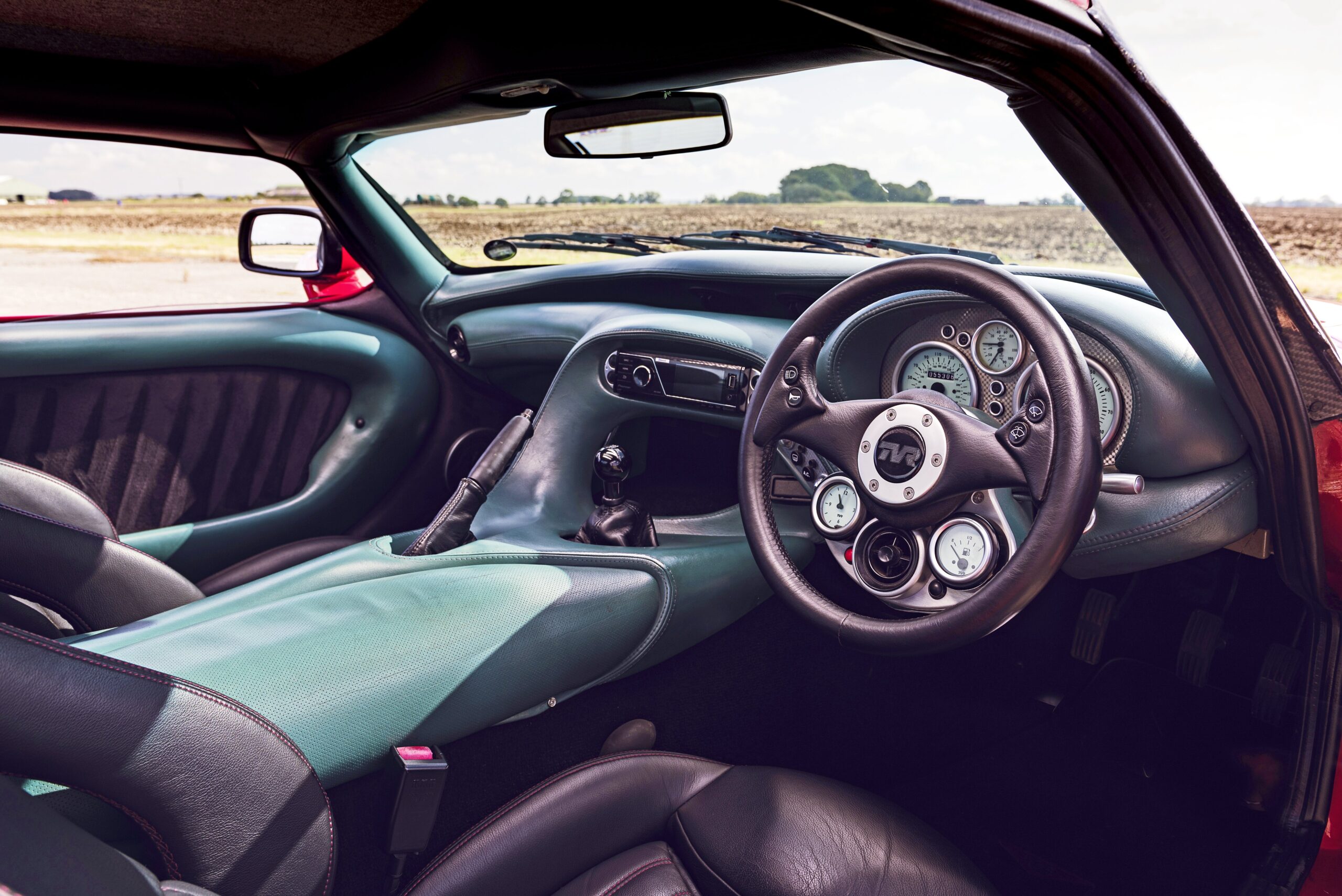
Perhaps with the exception of the NSX and Cerbera, we’re not blessed with quality interiors in this group, but even by 1990s plastic fantastic standards, the Viper’s cabin feels pretty low rent for a £70,000 car. The hard bark of the V10 takes my mind off it. The steering, though power assisted, works out your upper body to shift those 275 crosssection tyres. Using the clutch and brake pedals feels like I’m doing squats and moving the gearstick is like operating railway points. Then there’s the crazy-stiff ride. On anything but perfect tarmac it feels like I’m driving over cobbles.
And yet there’s definitely a sports car here. As speed grows, the tubular chassis and double wishbone suspension allow it to eat high speed corners like a European supercar. There’s enough rubber under me to shoe a mid-west town. That means it’s capable of nearly one G of lateral load. 490ft-lbs of torque arrives at 3700rpm, enough to spin up the rear 335mm tyres even in the dry.
Driving a Viper hard takes considerably more effort than your average sports car. Do everything right and this thing is biblically fast. Do it wrong and you’ll just as quickly find yourself red faced pointing in the wrong direction. Is the reward worth walking the tightrope? Oh yes!
WINNER!!! DODGE VIPER GTS
Both these cars represent the brawling, bruising side of sportscar motoring, but the key difference between them is usability.
The TVR is a great car… no, experience. Everything about it feels like a mildly detuned race car, and while that’s great in short blasts, there comes a point where you want to drive at 5/10ths. On the smooth tarmac of Blyton, the Cerbera seemed benign unless you prodded it. On the open road, with all its randomness and poor surfaces, your efforts to enjoy it can get rather wearing. The Viper, on the other hand, offers all the bombast and pace of the Cerbera, but with a truly surprising twist – it actually handles the power. It might scream muscle car but it seems so much more nailed down than the Cerbera. It might not have the exotic interior, but then it does have 10 cylinders; not a bad trade.
In that sense, the Viper is actually the closest to its videogame counterpart. The Cerbera is nowhere near as benign in real life as the game version, but the Viper is just as exciting down the cathode ray tube as it is in the here and now.
Specifications DODGE VIPER GTS TVR CERBERA 4.2
Engine 7986cc, 10-cyl, OHV 4185cc, 8-cyl, SOHC
Transmission RWD, 5-speed manual RWD, 5-speed manual
Power 450bhp @ 5200rpm 360bhp @ 6500rpm
Torque 490lb ft @ 3700rpm 320lb ft @ 4500rpm
Weight 1531kg 1100kg
Performance
0-60mph 4sec 4.2sec
Top speed 177mph 160mph
THE CARS IN THE GAME
TVR Cerbera LM
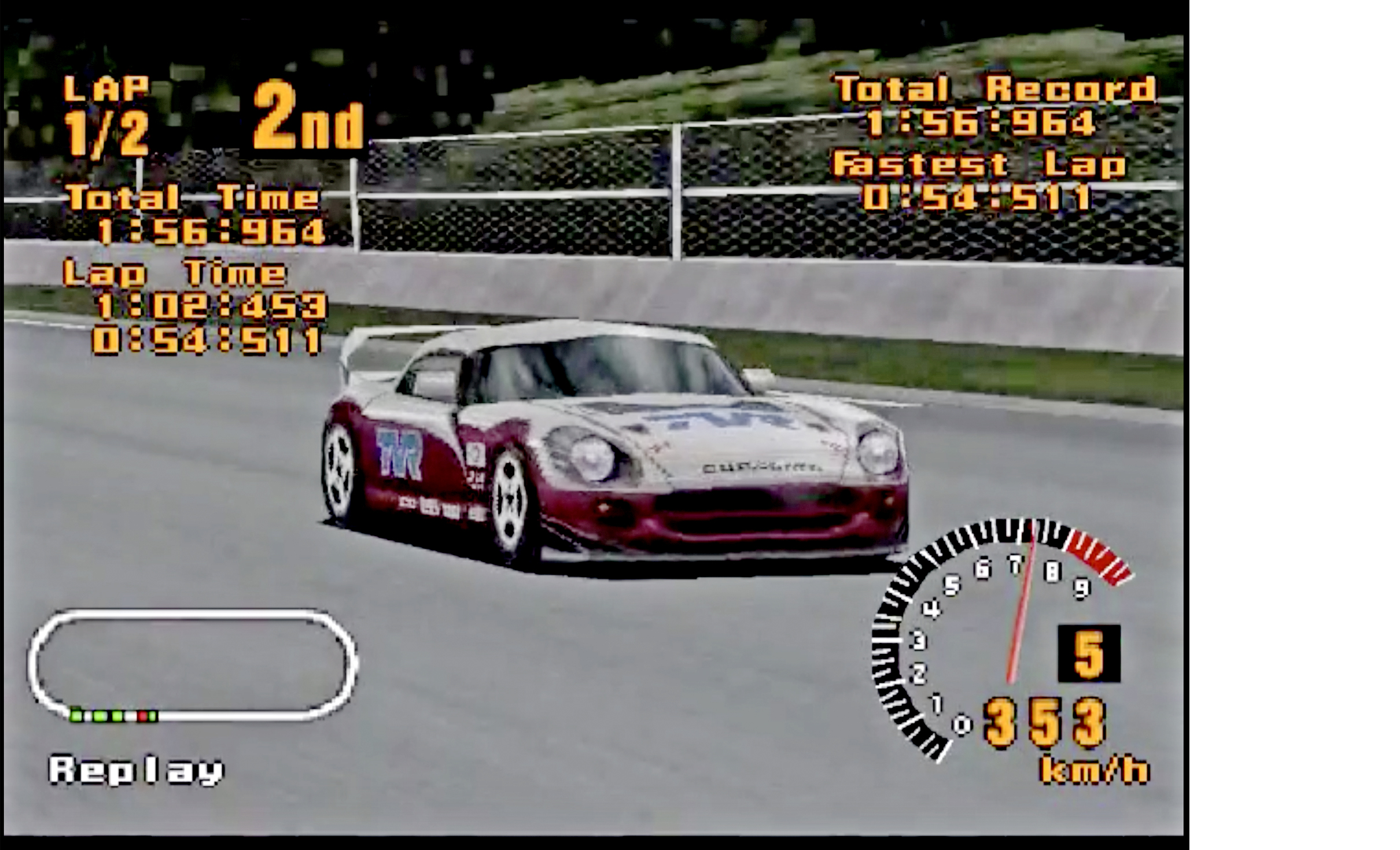
Standard car In GT1, you stood a 50 per cent chance of winning the CLM by being victorious in the Anglo-Japanese Sports Car Championship. In GT2, placing first in the Special Stage Route 5 All-Night race gave you similar odds of adding the TVR to your garage.
Winner? Absolutely – with 624bhp in an 890kg body the Cerbera LM was unstoppable, easily allowing you to complete the game. Almost too good.
Dodge Viper GTS -R
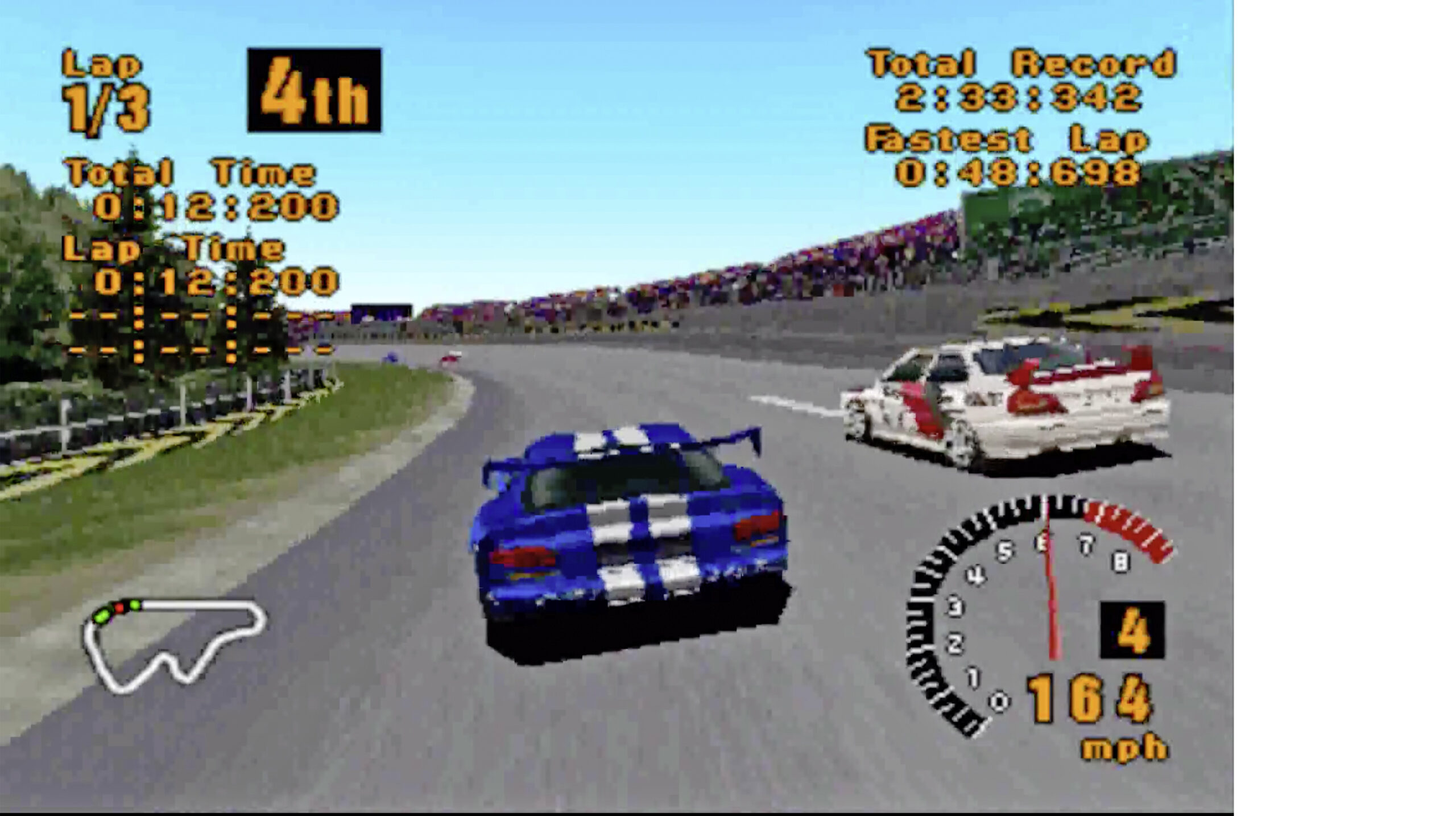
Standard car You had a 50 per cent chance of nabbing it if you won the US-Japan Sports Car Championship in GT1. Similar odds were on offer if you won the Apricot Hill 200km Endurance in GT2.
Winner The Viper certainly trumped the Cerbera for outright punch (680bhp in GT1, 690bhp in GT2), but the Viper weighed around 1249kg, meaning it was a lot less nimble than the Cerbera. Victory to Blackpool!
Let’s think about this
As much as we love Gran Turismo, it’s never going to be quite as exciting as lighting up the naughty end of the rev range mid-corner in most of our cars.
The Mitsubishi and the Toyota had the hardest job. In our adolescent dreams they were unstoppable track beasts, but they only became that after hefty credit investments in the tuning shop. In isolation, both are satisfying cars, but they are soft GT cars at heart. Expecting more from them would be silly.
‘If you want theatre, it ‘s the Viper and Cerbera’
The NSX-R and the Skyline are closer to the hardcore immediacy of their virtual counterparts. If the Skyline was up against any other car, it would toast them – its skill set is so vast, its performance so insistent, its handling so precise. It’s very good, but reaching its ragged edge means pushing the laws of physics. For some that’s part of the appeal, but we’d plump for the NSX-R. A tuned Skyline might well be faster, but it doesn’t win your heart in the way that the screaming VTEC warp-drive does.
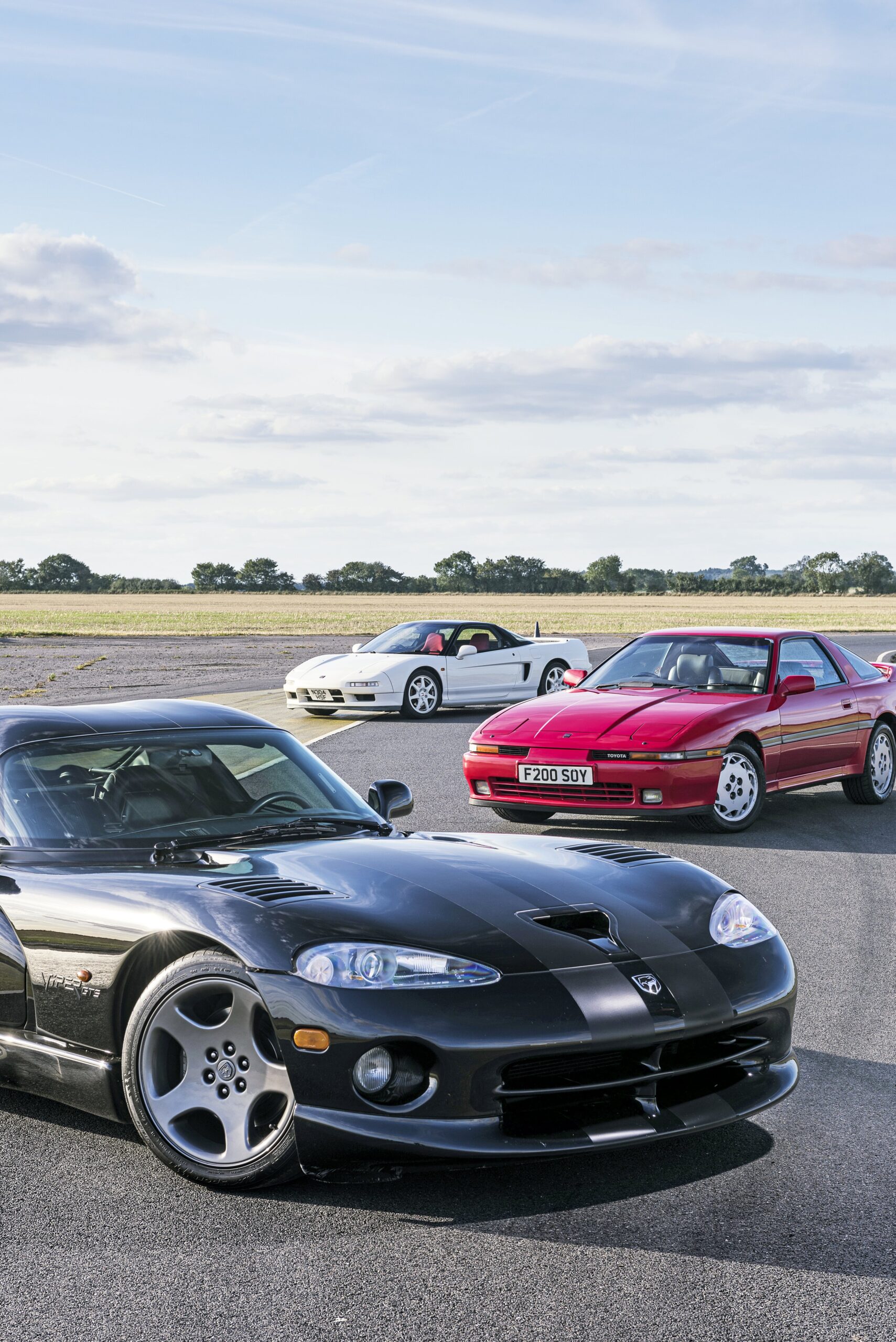
If you want theatre, then it’s the Viper and Cerbera; rousing, crushing, old-schoolers with huge engines up front, light weight, and rear-wheel drive. The Cerbera is not for the faint-hearted, and is a car dominated by its engine. Again, for many that’s the point, but surprisingly it’s the Viper that takes this one. It offers all of the big-hearted thrills of the Cerbera, but with a surprisingly compliant, amenable chassis.
Our overall winner, though, the one that had us putting down the controller and searching the classifieds? The Honda. It’s an intoxicating experience – the exoticism of a Maranello machine, with the handling nous of a GT3 Porsche, and all wrapped up in one of the most seductive shapes to come from Japan. Now, how do we trade our in-game credits for one?