
Mojo
FEATURE
A Portrait Of The Artist
In 2010 MOJO asked… Why is Kate Bush re-recording tracks from her most troubled records? Is there really a proper new album in the works? And will the James Joyce estate let her have her way with Molly Bloom? All these mysteries solved, by the woman who rewrote the rules of pop and learned to say ‘no’ to Richard Stilgoe. “It’s so difficult to do anything that’s at all interesting,” she tells Keith Cameron.
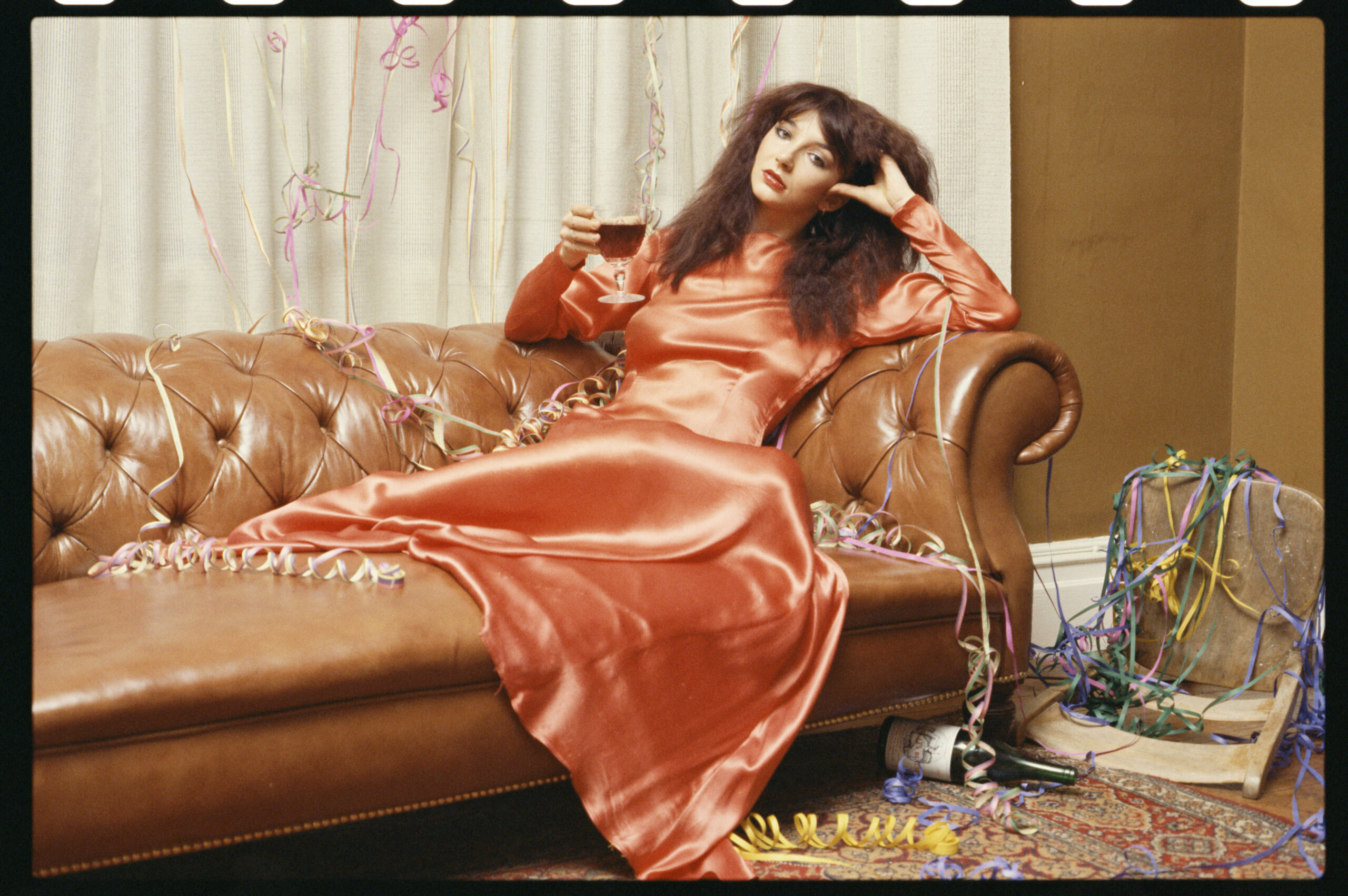
Kate Bush promoting her one-off Christmas TV special, Kate, in 1979.
Kate Bush describes Stephen James Joyce as ‘protective’. Given his litigious reputation, however, perhaps the safest course of action would be not to describe him at all.
Anyone seeking to perform or quote more than a few words by his famous grandfather – James Augustine Aloysius Joyce, author of Ulysses et al. – requires the permission of 79-year-old Stephen, sole trustee of Joyce’s literary estate. So renowned is Stephen’s tendency to refuse such requests that the International James Joyce Foundation drafted a guide for potential suitors: “The Estate’s priorities are to defend the letter, spirit and integrity of James Joyce’s work… to permit interpretations that conform to Joyce’s intentions; and to defend the privacy of the Joyce family.” Based on successful previous applications, the IJJF recommends a certain tone: “Polite but not fawning, respectful but not timorous, direct but not blunt.”
Some applicants were destined never to find favour. Canadian scholar Michael Groden’s multimedia version of Ulysses, for instance, was halted by the demand for a $1.5 million permission fee. “You should consider a new career as a garbage collector in New York City,” Joyce told Groden, “because you’ll never quote a Joyce text again.” Meanwhile, a musical version of Molly Bloom’s climactic – in every sense – soliloquy from Ulysses was banned from the 2000 Edinburgh Festival Fringe, following the trustee’s reproach: “We… have come to the conclusion that you propose to treat the Molly Bloom monologue as if it were a circus act or a jazz element in a jam session. This was clearly not the intention of the author. Therefore we must refuse you permission.”
It was Kate Bush’s turn to feel the censorious hand of Joyce’s grand-fils in 1989. The title track of her album The Sensual World was to have quoted Bloom’s monologue; in the end, Bush would have to find words of her own.
“I’d had this idea to put the words with the music and it just seemed to work very well, very naturally. But I was refused. I had to try and find a way of getting words that had rhythmically the same kind of feel, but of course, I’m not Joyce. So…” Even more than 20 years on she sounds peeved at the response. “It was really disappointing that I couldn’t use them. The Joyce estate basically just said, ‘No.’ Which I felt was a bit ironic, considering the piece is totally centred around the word ‘Yes!’”
Kate Bush can laugh about it now, for she has proof that Joyce’s minder might be mellowing with age. In the spring of 2010, she was finishing work on a song titled Flower Of The Mountain, a new version of The Sensual World which reverts to Bush’s original concept.
“I couldn’t believe it!” says Bush. “They wanted to have a listen to it. And they said, ‘Yes.’ I was just so delighted. To be able to come back to that moment 20 years later and get a positive response was just fantastic.
“From where I stood it was such a compromise that I’d made at the time. Although I thought [my version] was OK, I was disappointed, because I didn’t feel that what I’d done had anywhere near the weight that the original piece has. For me, it was just a complete triumph. I didn’t feel I was messing with history, I just felt I was being able to put it right.”
As an artist who has herself made a feature of saying ‘no’ during a career now spanning more than 30 years – ‘no’ to touring, ‘no’ to interviews, ‘no’ to the corrosive intrusions of celebrity – Bush can sympathise with the default position of the Joyce estate.
“I think it’s fair enough. Because [Ulysses] is an incredibly beautiful piece of work, a classic, and I was just a pop singer wanting to use this in my pop song. Maybe if I’d been them I would have said ‘no’ as well.” She pauses. “Maybe I would have said ‘no’ this time too.” The hint of steel in her voice suggests there is very little ‘maybe’ about it.
It’s just after 9am on a Monday morning, and MOJO examines the long parallel scratches all the way along the near side of his car, reflecting upon how they came to be there. At 8.35am, the phone rang. It was Kate Bush, wondering if this was a good time to conduct the second part of our interview. With a four-year-old’s Shreddies in one hand and the car-keys in the other, I had to admit that it was not. Could she call back at 9.15am?
“I’ll do my best,” she replied, with possibly the faintest trace of annoyance.
Five minutes later, driving along a stretch of single-track road in suburban south London and pondering the advisability of having said ‘no’ to Kate Bush, I failed to allow enough space for a passing vehicle and swerved onto the verge. Fleeting but fateful contact was made with a recently pruned hawthorn. Only later did I appreciate the irony: another man driven to distraction by Kate Bush.
Ever since she first came to public prominence with the ever-startling Wuthering Heights in 1978, the Bush effect has wrought havoc upon the unfairer sex. In his 2010 Bush biography Under The Ivy, Graeme Thomson quotes an unnamed musician who quit working with Bush after becoming “absolutely desperately and totally in love, just besotted” with the singer, who was at that point in a long-term relationship with bassist and recording engineer Del Palmer. Then there is a long and inglorious roll call of male journalists crumpling into condescension and cliché following an audience with Her Kateness.
I didn’t even have the excuse of having met her: Kate Bush has decided that her first press interview in five years be conducted via the telephone. She can do this, because she is Kate Bush. Ever since she was rushed into recording her second album, Lionheart, to capitalise upon the success of her first, The Kick Inside, Bush has sought control of every aspect of her career. She has not played a full live concert since the six-week Tour Of Life in April/May 1979. Subsequent recordings would be owned by her, and licensed to EMI. She would be the producer, whether the record company liked it or not.
“I didn’t feel I was messing with history, I just felt I was able to put it right.”
Kate Bush
Unsurprisingly, they did not, especially when Never For Ever (1980) and The Dreaming (1982), the latter confirming her metamorphosis from pop prodigy to experimental sonic auteur, sold poorly compared to their predecessors. But the massive crossover success of 1985’s Hounds Of Love and the following year’s compilation The Whole Story (subtext: here you go EMI, now please leave me alone) shifted the artist/record company power dynamic conclusively in Bush’s favour. Still bruised from assenting to a frenzy of promotional activity around her first two albums, she began to ration media appearances. The days of Kate enduring Richard Stilgoe’s fearless interview technique (“In the music world there’s a lot of late nights, high living and things, and yet you do not have pimples, spots and all the things the rest of us get if we stay out late at night – how do you manage that?”) or making Waldorf salad on Delia’s Smith’s Cookery Course were long gone. Thereafter she retreated to a domain characterised by the constants of family life and work; indeed, the two forces intersected at her own studio installed in the barn at East Wickham Farm, the rural enclave of south-east London where Bush grew up, with her parents and two elder brothers nurturing a precocious passion for music, reading and dance.
After 1993’s The Red Shoes, Kate Bush made no new music for 12 years, and when the sublime Aerial finally appeared in 2005, the public saw not a trace of her. She did it because she could, because she wanted to maintain her privacy and sense of self despite being one of Britain’s most commercially successful artists. Such are the imperatives of Bush power. It is also the power of the word ‘no’. Many artists pretend “it’s all about the music”, but in the realm of the musical mainstream, only Kate Bush truly walks the walk.
“I think the trouble was when I first started, I didn’t realise that I could actually just say ‘no’,” she says, having duly called MOJO back on the dot of 9.15am. “And then I realised I could. I think if I’d realised that from the start then that’s what I would have done. But I was very young, everything was building up to making an album: that was the thing I really wanted to do, I wanted to make an album. It hadn’t gone beyond that. I think the fact that the first single was such a success was not really something that anybody had expected. And then suddenly I was being asked to do all this stuff, so I thought, Right! I’d better do it! What I didn’t like was spending all my time promoting the thing and a very small amount of time being set aside for the creative process. That wasn’t me. I just put the balance back the way I wanted.”
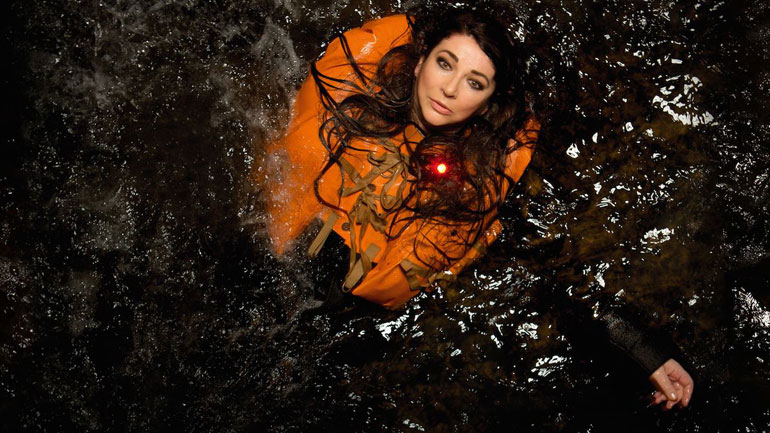
So firmly has Bush reset the balance that any official communiqué feels like the unexpected re-entry to our solar system of a lost comet: by definition, a source of wonder. Whether the message makes any sense is a secondary concern. Thus, the announcement that Kate Bush has a new album coming out rather trumps the devilish detail that it isn’t actually an album of new songs, but new recordings of old songs, called Director’s Cut. The announcement is soon followed bya new photograph of Kate, wielding scissors and negatives in homage to Russian film-maker Sergei Eisenstein, another misunderstood genius who worked to the tick of a different clock.
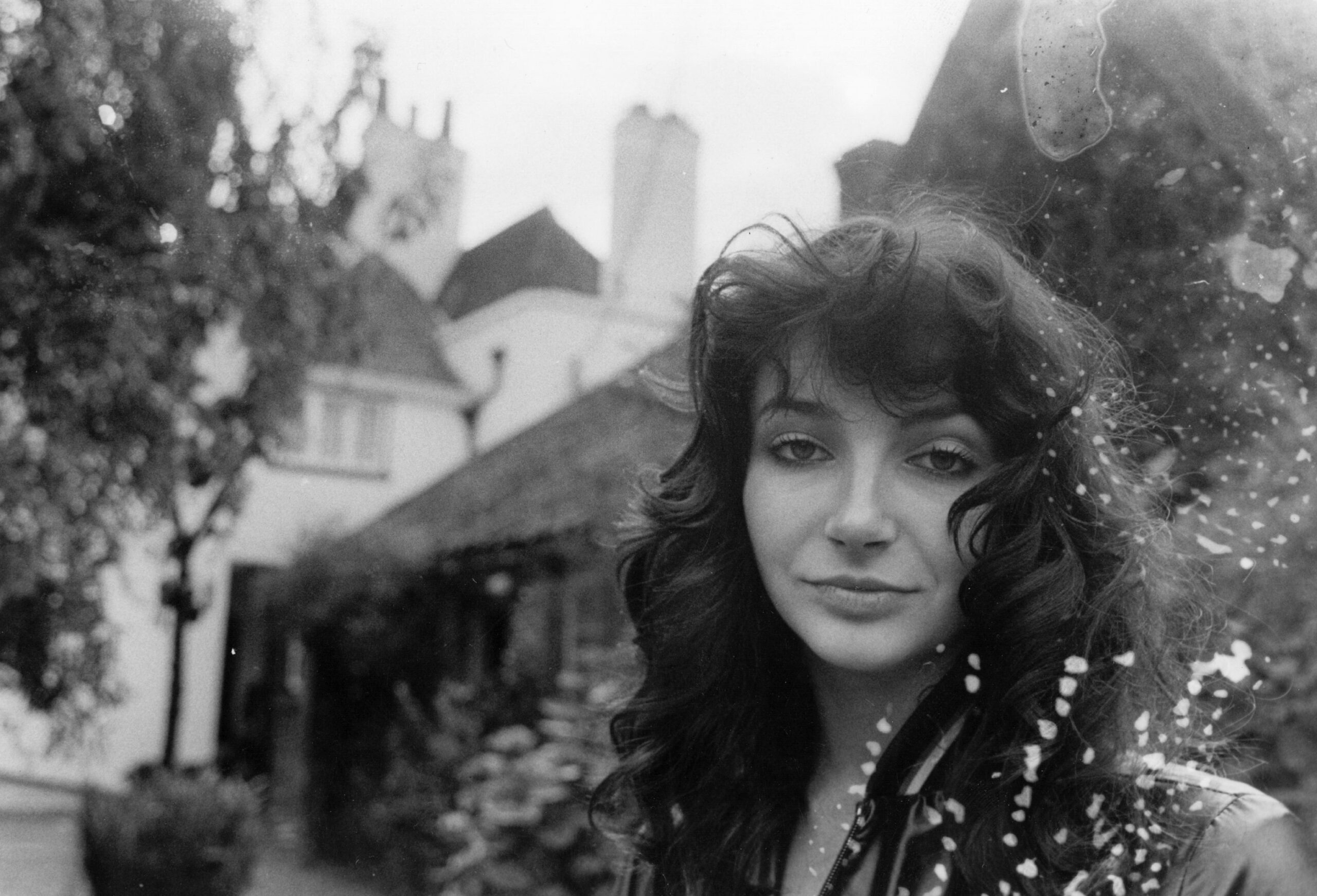
Kate Bush at her family’s home in East Wickham, London, September 1978.
The images on the film strip are the sleeves of the two albums Bush has chosen to revisit in this novel exercise of catalogue curation. Four songs from The Sensual World and seven from The Red Shoes have been partly re-recorded, with the new bits soldered onto elements of the originals. Only a few of the new versions are radically different – Rubberband Girl, for instance, imagines The Rolling Stones fronted by a soused Bob Dylan – but given the obsessive tendencies of her audience, for Bush to alter the texts at all is tantamount to Michelangelo repainting sections of the Sistine Chapel.
A leaked tracklisting provoked consternation on the fan forum at katebushnews.com, with ‘Mike’ concluding that it must be fake, on the basis that: “I have absolutely no idea how she could improve/reinterpret This Woman’s Work.” Meanwhile, ‘Joyce’, though revealing greater faith in Bush’s abilities, summed up the prevailing sense of angst: “OMG. This Woman’s Work, Never Be Mine and Deeper Understanding are my favourites. I trust Kate, but I’m worried :(”
Bush herself has a rather less sentimental attitude to her past work. This, after all, is the woman who, in 1986, re-recorded the vocal to Wuthering Heights for its inclusion on The Whole Story.
“It probably would be the same with every record if I listened to it,” she says. “There’s always something wrong. A bit of lyric: Maybe I’ve overdone that bit… There’s always something wrong! There will always be flaws. But there are flaws that are nice. It’s important that you have flaws, it’s all part of being a human being.”
Of course, those who kept a vigil throughout the 12-year wait for Aerial and who now learn that Director’s Cut took some three and a half years to put together might wonder whether the time could have been more productively spent.
“Sometimes stepping back one step can allow you to take two forward, and in a funny way I think that’s what’s happened. It was always rumbling around in the back of my head that they just could have been better than they were, those two records. I wanted to be able to make them sound the way I would want them to sound now. To be able to listen to them and say, Yeah, that’s all right. Aerial I felt was a much more wholesome-sounding record. And I think, in some ways, because I feel pleased with what I’ve done with the Director’s Cut I think it’s made me feel a bit more… ‘confident’ is not the right word, but just makes me feel more buoyant (laughs), just in terms of moving on.”
And those fans who may feel you’ve broken their emotional connection with a favourite song, that you’ve attempted to improve the unimprovable?
“Well,” says Kate Bush, breezily, “if people don’t like this and they like the old ones, then the old ones are still there, aren’t they?”
When ‘Mike’ and friends on the fan forum finally hear the new version of This Woman’s Work they’ll either gasp at this audacious feat of reinterpretation or else remove Katemas (that’s July 30, or Bush’s birthday, to us civilians) from the calendar altogether. The closing track proper on The Sensual World, this piercing piano ballad with its pristine Bush vocal about a young couple on the verge of parenthood occupies sacred space in the pantheon. The Director’s Cut version is almost twice the length, and with the original’s surging string arrangement replaced by a blank, processed choir, it hangs in a torpid mezzanine between despair and resignation. Through Bush’s weary sighs and the dread resonance of the closing line – “Just make it go away” – we imagine the song’s protagonists 20 years on, reflecting on the hand that time has dealt them. Poring mercilessly over the nuances of real life, it’s hardly the undertaking of an artist marking time.
The treatment meted out to Moments Of Pleasure is just as audacious. Once again, Bush is taking on one of her canon’s most emotive, personal songs – a remembrance of the simple joys of life, paying tribute to lost loved ones – and as well as purging the orchestral theatrics Bush makes drastic changes to the song’s lyric, cutting out the chorus with its preachy line, “Just being alive, it can really hurt…” Intriguingly, gone too are two names from the invocation of the dead: “Maureen” (Bush’s aunt) and “Bill” (Duffield, the lighting engineer who died in a tragic accident on the eve of the Tour Of Life).
“There’s always something wrong. But it’s important that you have flaws, it’s all part of being a human being.”
Kate Bush
With their spare arrangements putting greater emphasis upon Bush’s weathered voice, these new treatments make explicit the melancholia that touched the original albums. Turning 30, the Sensual World-vintage Bush was at a crossroads. Then, amid the recording of The Red Shoes, her mother died of cancer and her relationship with Del Palmer ended. Perhaps this is the true logic behind Director’s Cut’s concept: why not look back at a difficult time from a better place?
The Kate Bush that phones MOJO for our first interview certainly seems in good humour, given that she’s doing one of the things she relishes least. Though guarded and clearly well-practised at evasion whenever talk moves into areas she deems too personal, this just makes her seem refreshingly sane: a 52-year-old mum trying to maintain a semblance of normality in a life that’s been anything but.
“Have you heard the new record?” she asks, and I confess that just an hour earlier I found myself in tears listening to the new version of Moments Of Pleasure. “Oh God, it’s not that bad is it?” she wonders, apparently serious. “Oh, I’m so touched, I can’t tell you! You know, I really don’t know how people will receive this record. It was very much something I did for me.”
On Director’s Cut, is it the case that the more you’ve changed a song, the less you liked the original? Rubberband Girl is almost unrecognisable.
(Laughs) I thought the original Rubberband was… well, it’s a fun track. I was quite happy with the original, but I just wanted to do something really different. It is my least favourite track. I had considered taking it off, to be honest.
It’s your least favourite on Director’s Cut?
Yeah, because it didn’t feel quite as interesting as the other tracks. But I thought, at the same time, it was just a bit of fun and it felt like a good thing to go out with. It’s just a silly pop song really. I loved Danny Thompson’s bass on that, and of course Danny [McIntosh, Bush’s other half]’s guitar.”
Otherwise, it’s all pretty heavy stuff on there…
I just wonder how people are going to get through the whole thing in one go. Because, for a start, it’s quite long. And I think it’s quite intense as well, especially the first, err… hour and a half. Obviously I won’t hear it the way other people do, but I found it quite intense. But then… that’s all right isn’t it? Intense is OK! That’s hopefully what art can do. (The sounds of a dog barking, audible for some time, have now become frenzied) It’s all about an emotional connection.
Do you need to see to that dog?
(Laughs) I think it’s the postman. He just goes nuts every time the postman turns up, so I presume it is. He’s on the other side of the door, so he’s safe!
When you started making The Sensual World, did you feel in any way intimidated by the commercial success of Hounds Of Love?
I don’t think so. I was so knocked out with the response to Hounds Of Love. It wasn’t something I found threatening in terms of making new material, I suppose I found it enormously comforting. It gave my confidence a boost. With The Dreaming, I suppose it was the first time that I was really able to do what I wanted, without working in a collaboration or with a producer, which I had done on the first two records. It was a very difficult album to make. And then it was perceived as being a bit weird, which for me was a compliment. Somehow, my role as producer got tied into the whole “it’s weird, it’s not commercial” view.
People didn’t really ‘get’ The Dreaming, did they?
The biggest problem at the time was that the record company didn’t get it. And that was an uncomfortable experience. So I did Hounds Of Love and it shut them up. By then I had my own studio and I was able to work through an experimental process in one studio. It was a nightmare moving studios, working with lots of different engineers, which is what I’d had to do on The Dreaming.
Weren’t you essentially figuring out how to produce as you went along?
Yes. But I think that’s a continual process. I think I’m just starting to get the hang of it now. Music is continually surprising, and sometimes very difficult. It is so elusive, the way it all comes together, and I think a lot of it is very connected to how I’m feeling, what environment I’m in. I think with Hounds Of Love, it was a nice time for me. It was quite a happy time. And that was very conducive to me being able to feel very creative. Aerial was a happy time. The Sensual World… I haven’t heard that record for a really, really long time. Years and years. It was very challenging. I felt I’d done my best.
Your mother very sadly died during the making of The Red Shoes. Apart from the obvious impact upon you personally, did it also affect the work?
Yes, I think it did. All the songs were written, so I don’t think it was something that got absorbed into the writing. But I think yes, of course, it was devastating, for all of us as a family. So maybe it’s in there as a feeling. Part of what I hear when I listen to some of that stuff is the me then trying so hard, and in a lot of cases trying too hard. I do think there are some quite good songs on that record, but maybe some of the production wasn’t as good as it could have been. It was quite a difficult record, Red Shoes. It was not an easy time in my life. It’s just really nice that I got a chance to go back and strip it out, soften it.
You’ve made significant changes to the lyrics of certain songs. For instance, on And So Is Love, “now we see that life is sad…” has become “that life is sweet…”
Because I thought it was so bloody depressing (laughs). I thought I couldn’t just leave it in such a downer. That was really why. I didn’t want to do it as me then, it was me now.
And on Moments Of Pleasure, a couple of the people you remember in the original version are missing from the new one.
Well, it, um (giggles)… It wasn’t deliberate, actually. When I went to redo the piano, I didn’t (laughs)… I didn’t quite make it long enough. So, er, there you go. And it seemed all right as it was. It wasn’t that I deliberately took people out at all.
Wasn’t The Red Shoes originally conceived as a more stripped-down vehicle with a view to touring again?
Yes, you’re right. And… it just kind of went away. Understandably, people think I didn’t enjoy the Tour Of Life and that’s why I haven’t done it again. But it wasn’t like that at all: it was enormously enjoyable. It was the first time ‘head mikes’ had been used, and we’d pick up taxi cabs on the speakers! But physically, it was absolutely exhausting. I still don’t give up hope completely that I’ll be able to do some live work. But it’s certainly not in the picture at the moment, because I just don’t quite know how that would work with how my life is now. Maybe I will do some shows some day. I’d like to think so, before I get too ancient. Turn up with me zimmer frame! Because of my nature, I guess, it’s really important to me to be involved in the whole process. That’s what I get the buzz from, that’s the turn-on, really. I enjoy singing, but with the albums it’s the whole process I find so interesting. If I was going to do some shows it would be the same thing. So it’s never like anything I want to do is easy. I don’t know. Let’s just… see, shall we?”

The public’s first taste of Director’s Cut will be the release of Deeper Understanding as a single. Depicting a “lonely and lost” woman who becomes so obsessed with her computer (“I neglected my bodily needs”) that her family eventually intervene, The Sensual World’s original was mostly overlooked amid the record’s primary talking points: the title track’s Joycean erotica and the collaboration with Trio Bulgarka. Now, however, its prescience of web-age alienation seems quite remarkable.
Kate Bush was one of the first UK artists to own a Fairlight CMI, the digital sampling synthesizer that would become a staple of ’80s pop records, and perhaps as a consequence her relationship with technology is conflicted. While Kate the sonic pioneer embraces technology’s liberating capabilities, Kate the private individual fears its potential to denude the human spirit. In its original version, Deeper Understanding’s chorus had the computer represented by a mix of vocoder and Trio Bulgarka. Now it’s the turn of the ubiquitous AutoTune pitch processor, but the identity of the solo human voice being digitally manipulated is poignant, given Bush’s efforts to ring-fence her family life from public exposure: it’s her 12-year-old son, Bertie.
“I loved the idea of a child being inside the computer: bringing you ‘love and deeper understanding’,” she says. “I do think that the technology we have now is absolutely incredible. It’s like we’re starting to live the sci-fi world that used to be imagined. Like everything, it’s got enormous pros and cons. The access to information, the speed of communication, it’s fantastic. But mobile phones, their convenience – that was the first enslavement that came to us in a seriously big way, to the point where now everybody is contactable all the time. I try to not use it a lot. The structure of my day is morning and evening with the computer, but in the day I’m normally in the studio and don’t have access to a computer because otherwise I just wouldn’t be able to work. It does make it pretty intense; when I get in in the evening there’s a whole load of stuff I have to do. But I prefer it that way.”
For her son to make his recorded debut so young seems apt, for at an equivalent age Bush was already a prodigious songwriter. Did she sense she was different from other girls?
“No, I don’t think I was different. I think it’s just that I wrote songs as my hobby. Instead of going horse-riding (laughs), that was my thing. Some girls do ballet, and that’s what I did. Because I was brought up in what was a very creative family, and very musical, it felt completely natural for me to do that.”
The rumours are true: Kate Bush is hard at work on a new album. It’s the reason – ostensibly, at least – why MOJO is talking to her on the phone as opposed to meeting in person. “I’m determined to make an album quick, one day,” she laughs. “But you gotta get it right, haven’t you?” As expected, she will reveal nothing about what it might sound like, or indeed, what it actually is. A prudent attitude, given that she just spent three years making a new album of old songs.
So this new album, then. Have you written new songs?
“Yes.”
Have you recorded those songs?
“Yes!”
Are you still working with Del Palmer?
“Yeah!”
Isn’t he sick of you by now?
“Oh, I think so!”
She laughs.
“It’s wonderful, because I’m working with someone I know so well and I’m very relaxed when I’m in those very early stages of the creative process. I suppose I’m a little bit self-conscious, or maybe I am a bit shy. But I feel very relaxed with Del. In some ways, in the nicest possible way, it’s almost like he’s not there. I don’t like to talk about the record before it’s finished because it might suddenly change. But I’m pleased with what we’ve got so far. I think it’s quite different. But then I think I feel that with every record…”
As MOJO thanks her for her time, Bush says she’s worried that because Director’s Cut is so different from a new record people will be disappointed. “But it’s done now – time to move on.”
Why does she keep returning to the fray, if so many aspects of it cause her such anxiety? Is she one of these songwriters for whom the process is therapeutic, clearing out the soul so that life becomes simpler?
“You mean like a creative enema?” she chuckles. “No, I don’t see it like that at all. I just find it fascinating and it’s been a part of me since I was really young. I started doing it when… well, when I was a child, really. I suppose it’s a part of me, but it’s not an emptying-out process. The desire is to make something interesting. It’s so difficult to do anything that’s at all interesting.”
Speaking of interesting things, what did she make of Noel Fielding’s high camp impersonation of her Wuthering Heights dance routine for Comic Relief?
“I loved it! I thought it was hilarious and I thought he came across as such a sweet person.”
How do you feel about people still taking the piss out of that performance?
“(Laughs) Well it was taken the piss out of at the time. But, it’s such a long time ago. It’s quite flattering really, isn’t it?”
That your work endures…
Kate Bush gives a big old cackle.
“Yes. That it endures enough to keep taking the piss out of.”
This article first appeared in issue 319 of MOJO.
Images: Getty