
Mojo
Eyewitness
The Dead Kennedys Obscenity Trial
Including a poster of HR Giger’s risqué painting Penis Landscape with their Frankenchrist LP landed the San Fran punk satirists in court for violating the California Penal Code. How did free speech win out?
Interview by Pat Gilbert
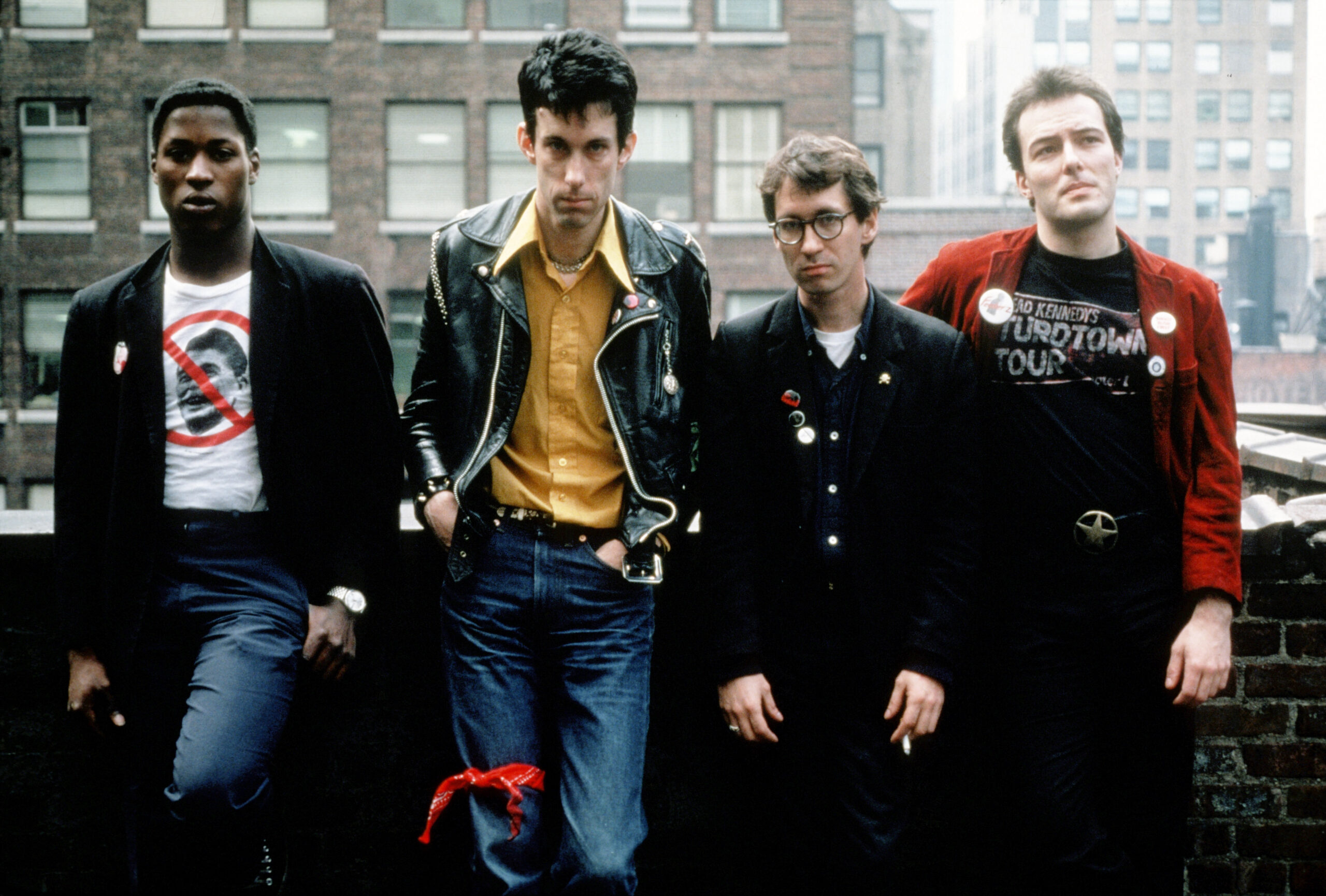
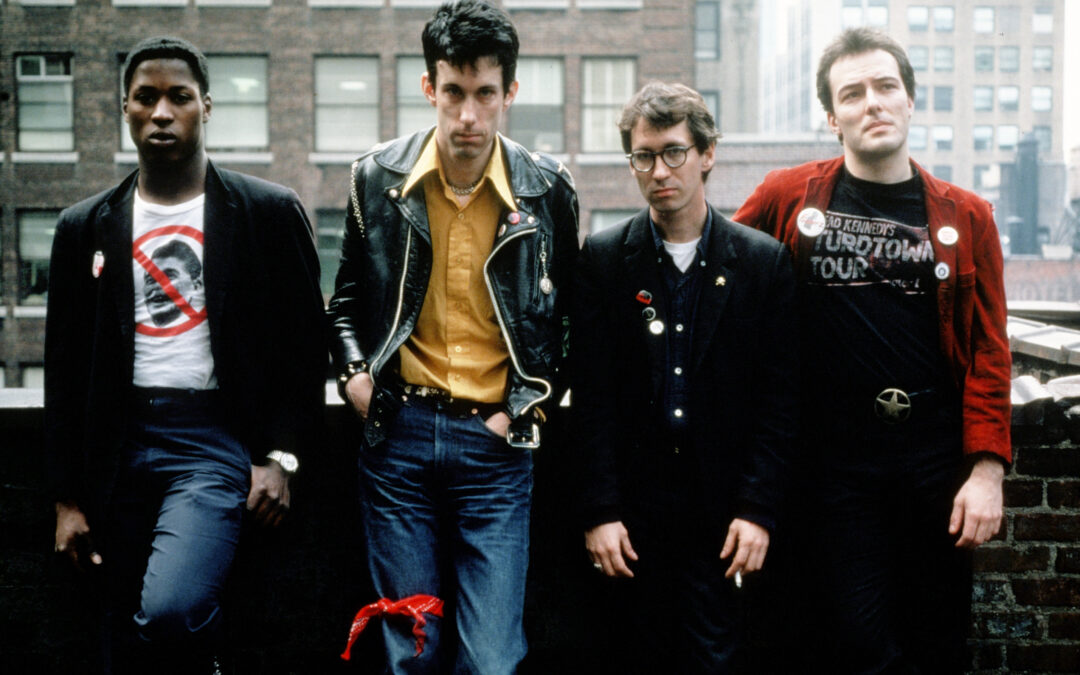
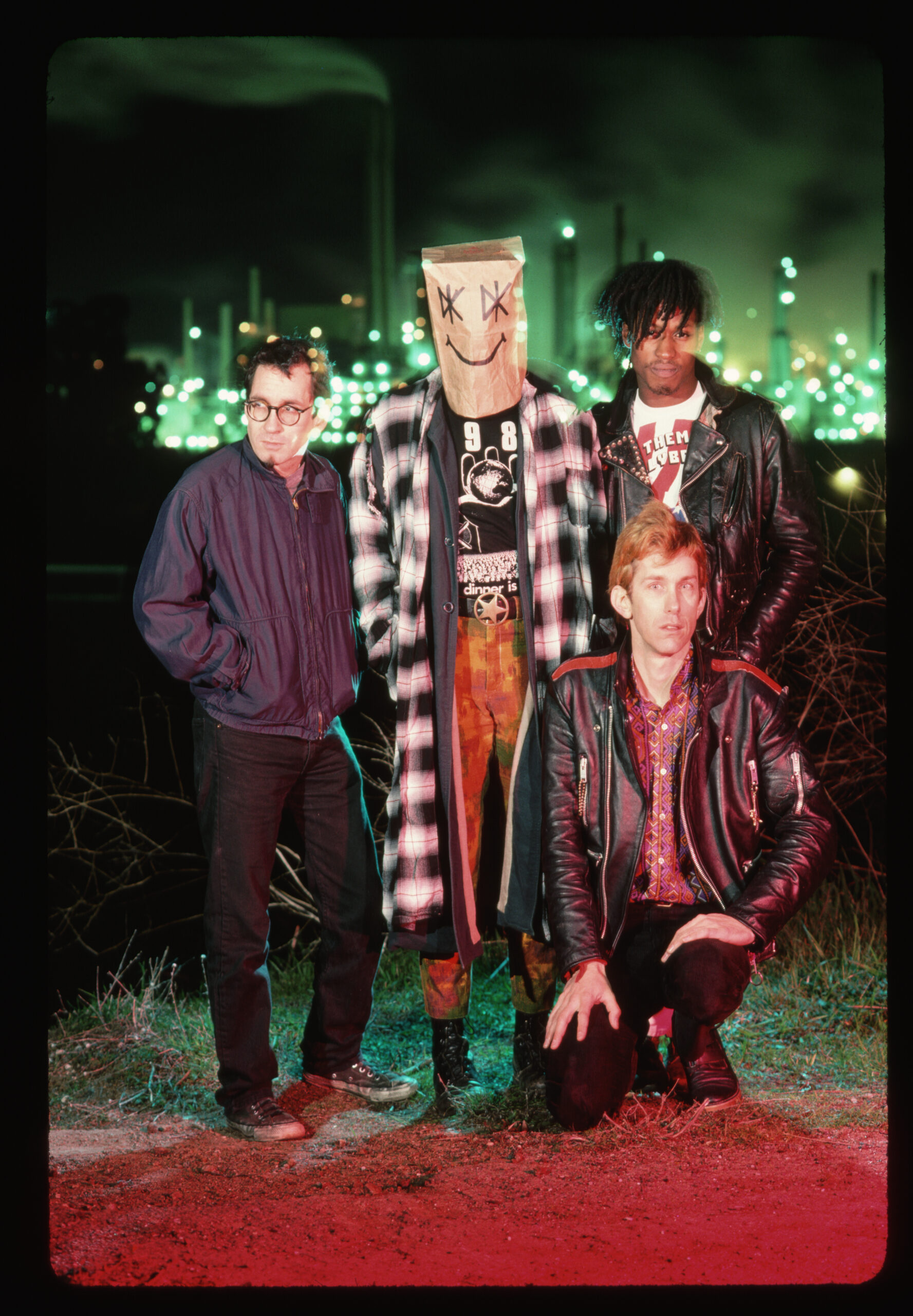
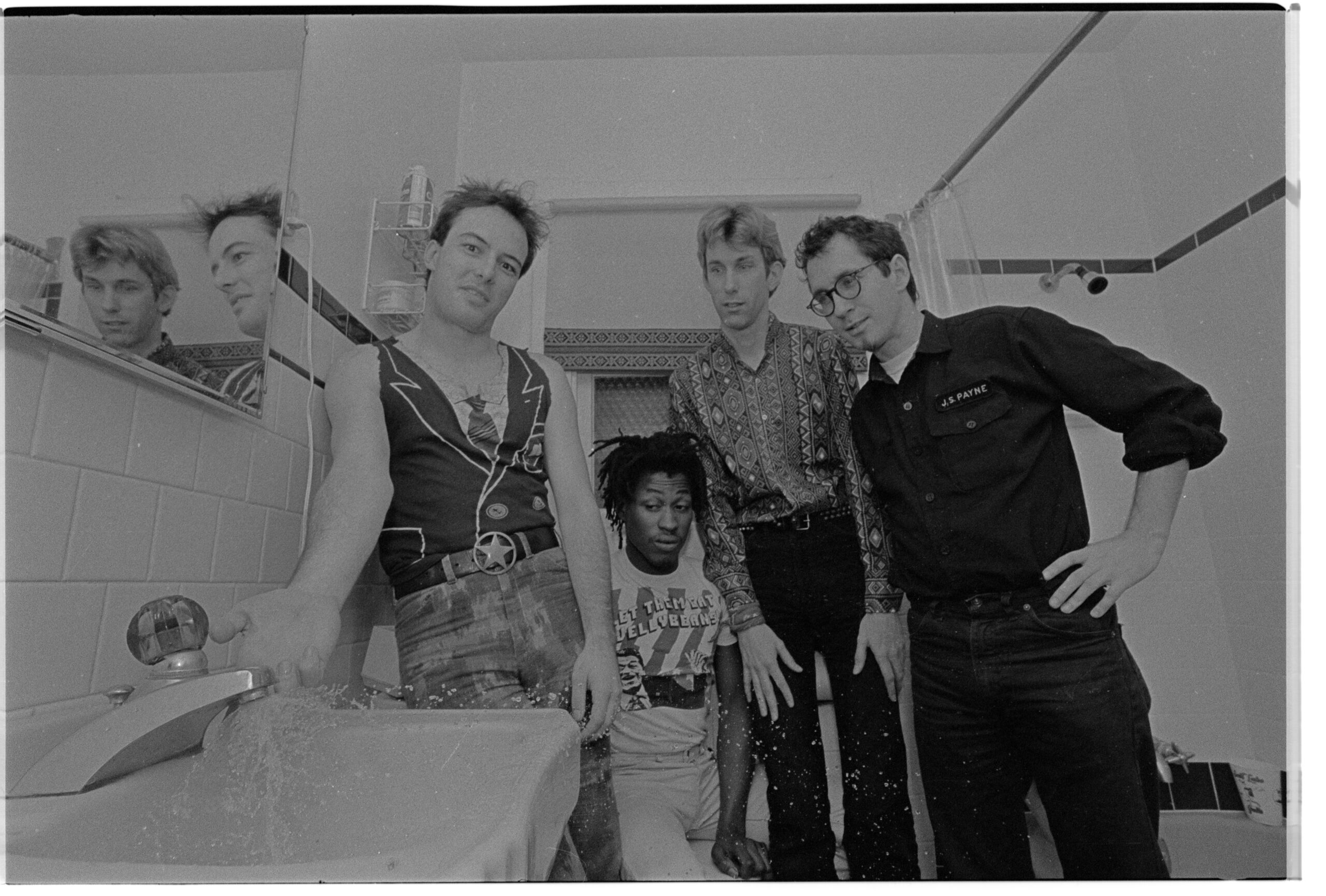
Plastic Surgery Disasters: The Dead Kennedys (l-r) D. H. Peligro, East Bay Ray, Klaus Flouride and Jello Biafra
Part 1: Like America on parade
DKs voice and lyricist JELLO BIAFRA recalls taking on the moral censors, near-ruination and meeting art magus Giger.
“The reason I wanted to use [Work 219: Landscape XX, aka Penis Landscape] at all was the impact it had when it first hit me… it occurred to me, Hey wait a minute, we are in the middle of recording the Frankenchrist album, and this picture is like Reagan America on parade! That’s what the album is about too… if I tweak a word here and there in all these different songs, it would be a concept album!
I’m not sure I would have even flashed on that if I hadn’t seen the Giger painting! So I thought, naturally this should be the front cover! Not everyone agreed. Ruth Schwartz at Mordam, our distributor at the time, said, ‘Well, you realise no store will stock this if that is the front cover.’ So we looked at having the super dark shrink wrap that Roxy Music used in Country Life and Pink Floyd used on Wish You Were Here. Then after initially saying the idea was OK, the other Dead Kennedys freaked out about the picture. After we had secured the rights and everything!
A big quarrel ensued and we finally agreed to put it on the inside, which took care of the stores, as an insert poster…
We know the rest. There was a sticker saying that there was an insert by H.R. Giger “some may find shocking or offensive. Life can sometimes be that way!” This was right when Tipper Gore and her religious-right zealot friends launched their carefully planned attack on music. They need a pigeon. They needed someone they could actually charge with a crime. Little did I guess that it would wind up being me. The prosecutor, Michael Guarino, has even admitted that I was chosen as a ‘cost effective way of sending a message.’ In other words, they wouldn’t have to pay the money to fight lawyers for Prince, Ozzy Osbourne, or Judas Priest or some of the other high profile targets… so Frankenchrist ended up becoming the first album in American history, prosecuted… the excuse was the Giger poster, but it was clear they were after me, Dead Kennedys, and my and the band’s whole legacy.
“I thought, naturally this should be the front cover.”
Jello Biafra
The jury deadlocked 7-5 in favour of acquittal, and when a jury in a criminal case deadlocks it means a mistrial. The prosecutor immediately filed for a new trial. The judge denied it on the grounds that there had been enough playing with the law for one case. Distribution of harmful matter had only recently come on the books and had never been used before in court and may never be used again.
Of course, no, I didn’t go to jail, I didn’t get fined, and I didn’t get convicted, but in the marketplace it meant that Dead Kennedys and Alternative Tentacles were kicked out of a lot chain stores because the McCarthy-style chill factor that they wanted, actually happened! It also meant that the silver linings were getting to meet and hang out with Frank Zappa and my spoken-word shows being pole-vaulted from coffee house readings of alleged poetry to talking at universities about censorship, and I never looked back. And I got to know Hans Ruedi Giger!
I met Giger three times… [the second time was] when I did a spoken word show in Zurich, his sort of adopted nephew and my good friend to this day, Boris Bueller, took me over to Giger’s house. It was agreed that since Giger wanted to check up on the progress anyway, we’d all get in the van and go the two hours or whatever it was, to Gruyères and check out the museum… he hadn’t really hadn’t been filled in all that much on the Frankenchrist legal case, the trial, what had happened and so I filled him in at length on that!
Then into the museum and words cannot describe what those paintings look like when you are right there with them… as I went through the rooms, there was this morbid, almost Schoenbergish piano music going on.
I thought, Wow, that’s a great thing to be playing! This is kind of helping! Then I get to the top floor, and there is Giger himself at the piano. All alone, just enjoying playing some music. The minute he saw me watching him and listening, he stopped and that was the end of that.”
Part 2: “The case was a set-up”
Alternative Tentacles employee Greg Werckman recalls the edge of destruction and other aftershocks.
“I was working at a talent agency in New York and they gave me all the crazy people to look after – Hunter S Thompson, Timothy Leary, Abbie Hoffman – and Jello Biafra. I was a big Dead Kennedys fan, so we became friends and I started working with him at Alternative Tentacles.
The whole Frankenchrist court case was a set-up. I subscribe to Jello’s theory that part of the political realm in America thought the band was an easy target; that they could quietly bring in censorship and then extend it throughout the music industry.
It was scary – with a label like Alternative Tentacles, you think you’re so underground no one would care, but Big Brother is keeping his eye on you.
For me, the disappointing thing was how few mainstream or commercially successful artists came to Jello’s side, as it potentially affected the whole art world. A handful did – Frank Zappa I expected but John Denver, of all people! There were so many people who could have written a cheque or publicised the fight.
“You think you’re so underground no one would care, but Big Brother is keeping his eye on you.”
Greg Werckman
During the trial the prosecution brought up lyrics to the songs to make their case, so it just wasn’t about the art. They weren’t enjoying the message the band was putting out.
The case costs hundreds of thousands of dollars to defend, and I was shocked that the Alternative Tentacles didn’t go under. The only reason it didn’t was because Jello put all his energy and his own financial resources into keeping it afloat. Every penny he had, all the money his parents had in accounts for him, he dumped it all in.
In fact, I think it was a huge factor in the band splitting up [the DKs only made one more album, 1986’s Bedtime For Democracy], because I don’t think all four members agreed with Jello that they needed to put up a fight, whereas Jello was more interested in the message.
The devastation that court case caused to the label was immense. The record wasn’t banned, but several bigger chains and stores wouldn’t carry it. By the time I came on board [in 1989], Alternative Tentacles was limping along and we couldn’t pay our bills every month. But the one positive aspect was the fans. In the eight years I worked at the label, almost every day a donation cheque arrived in the post from some kid in a far-off place. There was a real community in the punk rock world.
The experience could have brought Jello down, but the random punk rockers he bumped into in the street who said he was doing a good job or that $10 from a kid’s piggy bank in Canada, that energised him.
Because the legal action wasn’t successful, it looked like Jello and the label had won but it didn’t feel like a victory. But looking back it was important. The [Penis Landscape] poster is still available and Jello’s still around spreading his message. They couldn’t shut him down. It led directly to the growth of the PMRC [Parents Music Resource Centre] and warning labels on record sleeves – but then the “explicit lyrics contained” sticker became a sales tool, like, ‘That sounds cool!’, so that’s a little ironic.
Ultimately, it’s Jello who has survived and thrived. Nothing will stop Jello.”
This article originally appeared in Issue 249 of MOJO
Images: Getty