
Mojo
FEATURE
The saga of Cheap Trick at Budokan
The cartoony Illinois rockers were making slow progress in the US until a hysteric Beatlemania-like Japanese tour resulted in a breakthrough live album. But what exactly went on there, and was it all just an insane accident?
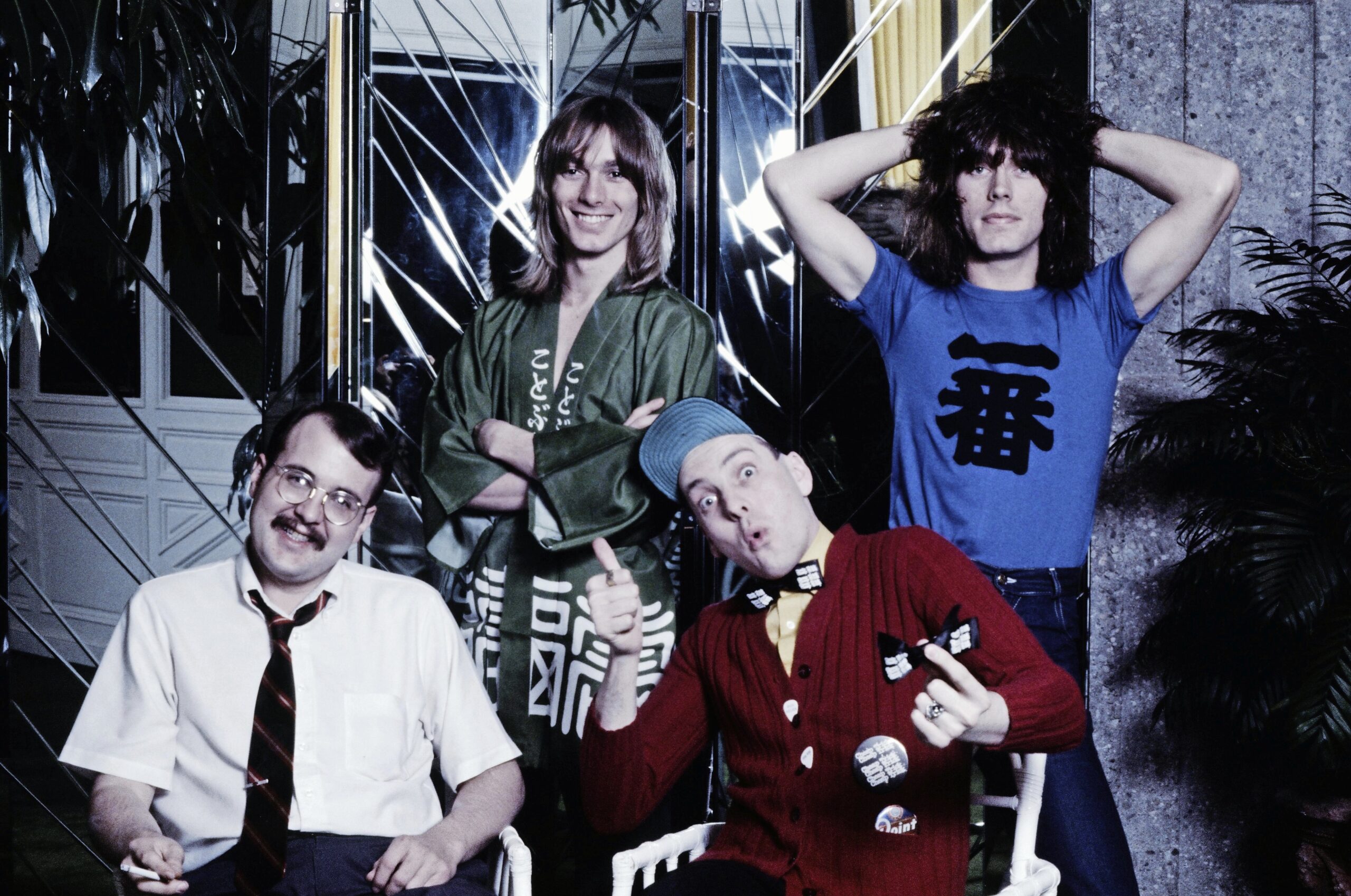
Long ago, high on a mountain in Tokyo: Cheap Trick assume ‘American Beatles’ majesty in Japan (from left) Bun E Carlos, Robin Zander, Rick Nielsen and Tom Petersson
PART 1 – “IT MADE OUR CAREER.”
Cheap Trick bassist Tom Petersson recalls screams, fortuity and offensive vinyl.
“In our minds, we were doing all right. We’d recorded three albums, for a major label, and we’d had great press and reviews. But none of the first three Cheap Trick albums had sold. We’d had a bit of regional popularity, like in Buffalo and San Diego, but we were still playing dumpy clubs, Shakey’s Pizza Parlor, places like that. Audiences didn’t know what to make of us, they thought we looked weird, or like The Monkees, a put-together act. They didn’t get the lyrical content either: we had songs about suicide and mass murder, like scary nursery rhymes. To us, we were pop, but heavier, funny, scary, dark. Epic didn’t know how to promote us. We’d get comments like, ‘You guys would be great if you dressed the guitar player [Rick Nielsen] up like Hendrix, and the drummer like Bowie.’ For us, it was just us being us, being natural. Which is what the Japanese liked about us.
We’d toured with all sorts of acts, like The Kinks, Kiss, Rush, Kansas, Queen. Whether it made sense or not, we did it, but the Japanese music press were at all those shows, and that’s when it started to roll for us. We’d started getting drawings of the band and all sorts of funny stuff from Japan, they clearly got a kick out of this strange-looking group. They saw us as cartoon characters, and they liked the music too. So we went off to Japan. We discovered I Want You To Want Me had been a hit there, but we’d dropped it from our set – we thought it hadn’t caught on anywhere, and we were really unhappy with the studio version, it was really wimpy. Epic had pushed for a radio-friendly version that ruined it. But the promoter couldn’t believe we’d dropped it, he said to throw it back in, and it became the biggest hit from the live At Budokan album when it was released.
“The manager said, ‘No one outside of Japan is going to see this…’”
First, Epic in Japan wanted to do a TV documentary, so they filmed a few shows, and then said they’d love to release a live album, just for Japan. We said, Sure, though Robin and I hated the photo they chose for the cover, it looked like we were midgets, with our teeth knocked out, and no necks. The manager said that classic line, ‘Don’t worry, no one outside of Japan is going to see this…’
Then we got back to the US, to the normal grind, touring like crazy. But the album started to get radio play worldwide, and started selling on import, but outselling our other records, and at three or four times the price of a normal album. So Epic finally decided to release it worldwide. Our producer Tom Werman fought against it, because we had a new studio album in the can, but the bean counters prevailed. First At Budokan was released in the UK, on what they called ‘Kamikaze yellow vinyl’, which was pretty insulting, but we didn’t find out until afterwards. Then came Canada, and it went platinum there before the US released it, which shows how much faith Epic had in us then! Live albums aren’t my favourite, but it does sound exciting because of the audience. It was like Beatlemania, all the young girls screaming. People thought we had dubbed them in but we had a hard time getting them out of the mix.
I also think we got lucky. Peter Frampton had sold something like 20 million of his live album [Frampton Comes Alive!]. We didn’t sell nearly as many, it was a few million, but since we’d only sold around 75,000 of our studio albums, we weren’t complaining! Without it, Epic probably would have dropped us. But Budokan dragged our other records along and really made a career for us. If there was one downside, it was that people thought acts who were big in Japan were a novelty, or teenybopper act, meaningless every- where else, and not heavy enough to be a rock act. And for a year, we had to do press in Japanese restaurants. But what the hell, we’ll take it.”
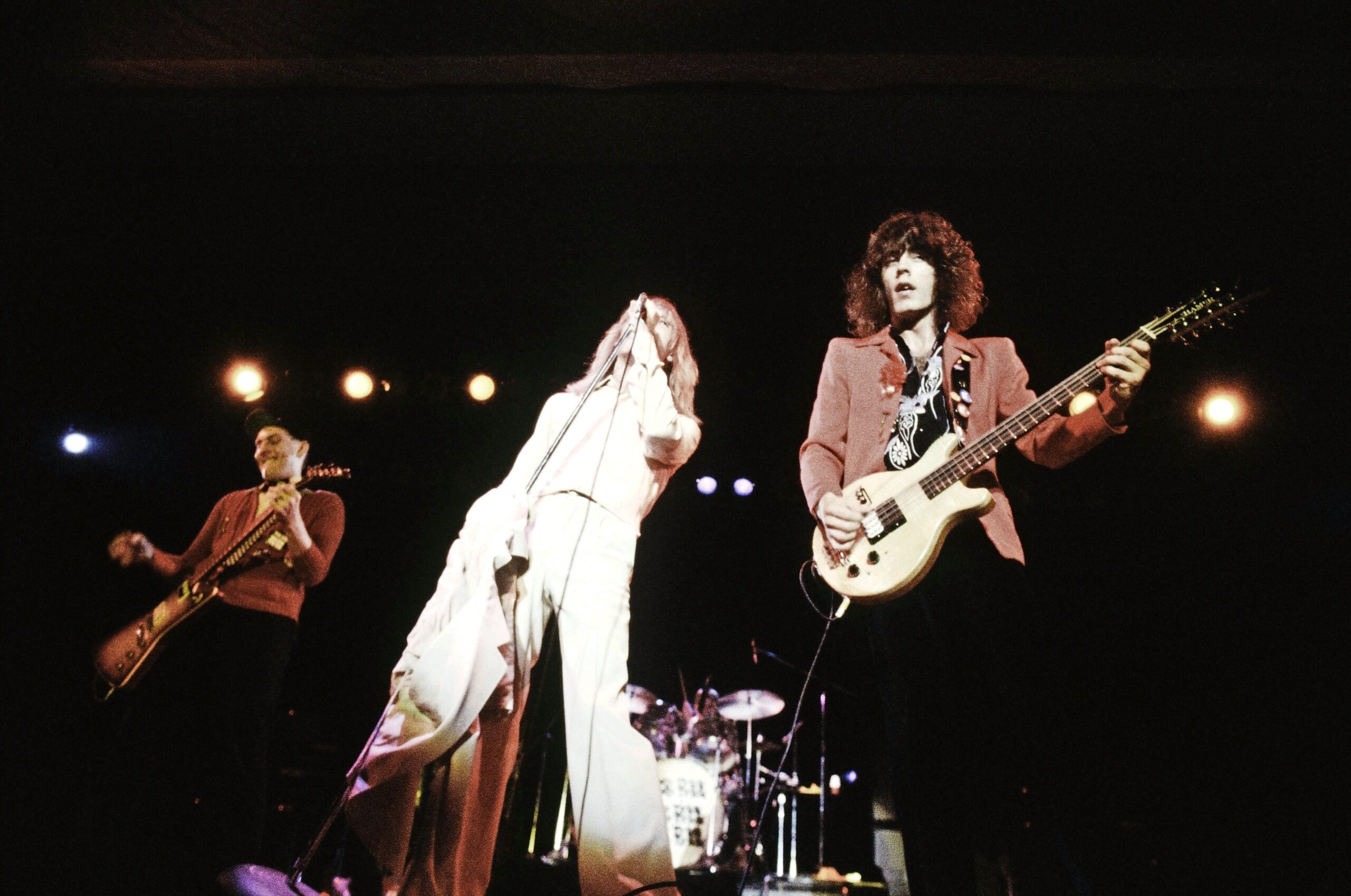
Cheap Trick on stage at Nippon Budokan, Tokyo, April 1978
PART 2 – “A DREAM… AND A BIT OF A NIGHTMARE.”
Cheap Trick singer Robin Zander on excitement, danger and guerrilla hairdressing.
“We’d received some interesting Japanese fan mail, especially these comic books. The Japanese like to turn actors and musicians into comic books – they’d have Kiss and Queen and then us as their younger brothers. We anticipated people would come see our shows in Japan, but when we got to Tokyo, we were taxiing down the runway and I looked outside and saw a commotion on the rooftop of the airport, I thought the president must be here or something. We got off the plane and there must have been five thousand there, screaming and yelling our names! Security was totally unprepared, we got chased through the airport, there was a stream of 50 cars following us down the freeway. At the hotel, they’d closed off the windows in our rooms with masking tape and sheets, with security on every exit. Everyone was in shock. We almost got thrown out of the hotel when Tom and I waved at some fans. They went mad, and ran across the road, and almost got hit by a bus. It was wonderfully exciting but dangerous and scary too.
For the first Budokan gig, they sent mail trucks to pick us up, with no windows, or even seats, so we’d be incognito. Budokan was this iconic building in the centre of Tokyo, they’d had many political rallies there, and sumo wrestling, but we were the first show there since some fans had been trampled and killed at a Deep Purple show, so security was really tight. Shows in Japan are on the early side, so it was like playing in daylight, which meant the atmosphere was calmer. The audiences were allowed to scream and clap and react only at certain times, like between songs, and when we played, they’d quieten down to almost nothing.
“Security was beating the crowd back with batons.”
We played two Budokan shows, and then other cities around Japan. We mostly travelled by bullet train, but getting to the stations was chaos too. Kids were getting pushed out of the way by cars that were jamming us in, just for a glimpse or a photo of us, and then we’d be literally carried through, four guys around each of us, a thousand kids there, all those piercing voices, screaming. One girl tried to cut some of my hair off with scissors, and jabbed me in the back of the neck, one tore the sleeve off my jacket, the security officers were beating the crowd back with batons, complete mayhem. Bun E [Carlos] and Rick got the same attention, if not more. They were after Rick’s hat and Bun E’s glasses. We did go out to eat once or twice, but only as a gang. Everyone around us had to be bodyguards, even our road crew and tour manager – their briefcases became weapons and shields. So it was like this dream come true, and a bit of a nightmare too. But it was unforgettable, one of the high points of my life.”
This article originally appeared in Issue 271 of MOJO
Images: Getty Images